Dr Kashyap Patel is a renowned oncologist in the US who works with terminally ill cancer patients. In Between Life and Death, through him, we meet Harry, who, after a life full of adventure, is diagnosed with terminal lung cancer. As he stares death in the face, Harry leans on Dr Patel, an expert in understanding the process of death and dying. His questions and fears are addressed through the stories of many other patients that Dr Patel has treated-from the young and vivacious to those who had already lived full lives, from patients who could barely afford their rent to those who had been wildly successful. What ties these stories together is the single thread of the lessons Harry learns along the way, lessons that ultimately enable him to plan his own exit from the world gracefully-dying without fear.
We caught up with Dr Patel on his motivation behind turning to writing, his changed perspective on life as a result of his professional experiences and the advice he’d give to terminally-ill patients. Keep reading to find out his answers!
Question:From a renowned oncologist in the US to a now published writer of a book, this seems like quite a journey to undertake. Please share with us what drove you to write this book?
I have lived in three different continents and treated cancer patients in multiple cities from Mumbai
to Manchester and then onwards to New York, US. My purpose of writing this book is to prompt
communal and personal preparation for a profound human experience that is unavoidable,
yet—paradoxically—too seldom a subject of open conversation. I personally feel that humans will
have more meaningful and comfortable experiences of death if we do not treat death as a taboo
subject, or an event to be delayed through extreme, often painful measures that yield meager
improvement in longevity or quality of life. I, therefore, took on this arduous journey to share my
own experience of learning and teaching my patients about the process of death and dying so that
they can have a meaningful life until their scheduled departure from this planet into a blissful
infinity.
Question: Has your job as an oncologist changed your perspective on life? Do you think coming in contact with terminally-ill patients every day has made you value life more?
Indeed my professional role as an oncologist and walking against the horizon of facing death and
finitude every single day, week, month and year for almost three decades has enabled me to peep
through my own mortality. More than half of the patients I take on to treat for cancer are not likely to
live beyond a few months to years. I have come to value life a whole lot more every second as I could
be one of them, with our roles reversed, having to prepare for my own journey.
Question:How difficult was it for you personally to face a terminally-ill friend and be their doctor? In what ways was it different from treating a stranger?
I have a difficult time detaching and distinguishing between professional and personal relationships
when it comes to treating cancer patients. I tend to draw very close to my patients and eventually
they tend to become my own family members. Treating all cancer patients as if they were all my
family members allows me to put a complete closure and provides me with a sense of fulfillment and
yet, leaves behind the lasting struggle of separation.
Question:Could you share with us any instances in which a patient or their loved ones showed extraordinary courage in the face of mortality? Do you think such stories should be discussed more often?
Harry falls, one of my patients who was also a retired pilot from the Royal Air Force, when was told
about his grim diagnosis of terminal cancer with life expectancy measuring in weeks decides not to
pursue chemotherapy or any other treatments. He told me “After evaluating where I stand and how
I’ve lived all these years, I feel it would be best for me to start packing my bags for the ultimate and
infinite journey. … God blessed me with a life that I have no regrets over … Let’s face it, Doc. From
everything you’ve told me, treating my cancer is like trying to save an exploding plane in mid-air.
Chances are it’s not going to happen… I think of it like I’ve just received an upgrade on a long flight.
I’ve collected so many miles that God has granted me a charter flight to a destination unknown.
Now the only issue is the waiting time.” This book is based on my weekly conversations with him
until he dies.
Question: If you could give one advice to the loved one of someone who has cancer, what would it be?
“Live life to the fullest and be prepared to leave gracefully when treatment stops working.”
No Rules Rules, written by Netflix CEO Reed Hastings, lets the readers in on the eclectic and revolutionary culture prevalent at Netflix, which has allowed the company to turn into a streaming superpower. From unlimited holidays to abolishing approvals, Netflix offers a fundamentally different way to run any organization, one far more in tune with an ever-changing fast-paced world. For anyone interested in creativity, productivity and innovation, the Netflix culture is something close to a holy grail. Written with INSEAD business school professor Erin Meyer, the book makes the company and its creator fully accessible for the first time.
The excerpt from the book below throws light on some of the ways in which Netflix has turned established norms on its head to pave the way for its immense success.
**
With my next company, Netflix, I hoped to promote flexibility, employee freedom, and innovation, instead of error prevention and rule adherence. At the same time, I understood that as a company grows, if you don’t manage it with policies or control processes, the organization is likely to descend into chaos.
Through a gradual evolution, over many years of trial and error, we found an approach for making this work. If you give employees more freedom instead of developing processes to prevent them from exercising their own judgment, they will make better decisions and it’s easier to hold them accountable.
This also makes for a happier, more motivated workforce as well as a more nimble company. But to develop a foundation that enables this level of freedom you need to first increase two other elements:
+ Build up talent density.
At most companies, policies and control processes are put in place to deal with employees who exhibit sloppy, unprofessional, or irresponsible behavior. But if you avoid or move out these people, you don’t need the rules. If you build an organization made up of high performers, you can eliminate most controls. The denser the talent, the greater the freedom you can offer.
+ Increase candor.
Talented employees have an enormous amount to learn from one another. But the normal polite human protocols often prevent employees from providing the feedback necessary to take performance to another level. When talented staff members get into the feedback habit, they all get better at what they do while becoming implicitly accountable to one another, further reducing the need for traditional controls. With these two elements in place you can now . . .
– Reduce controls.
Start by ripping pages from the employee handbook. Travel policies, expense policies, vacation policies— these can all go. Later, as talent becomes increasingly denser and feedback more frequent and candid, you can remove approval processes throughout the organization, teaching your managers principles like, “Lead with context, not control,” and coaching your employees using such guidelines as, “Don’t seek to please your boss.”
Best of all, once you start developing this type of culture, a virtuous cycle kicks in. Removing controls creates a culture of “Freedom and Responsibility” (a term Netflix employees use so much that they now just say “F&R”), which attracts top talent and makes possible even fewer controls. All this takes you to a level of speed and innovation that most companies can’t match. But you can’t reach this level in one go.
We have acquired to publish a collection of poetry by Indian activist, poet, teacher and writer Varavara Rao. Titled Varavara Rao: India’s Revolutionary Poet, this book is being edited by N. Venugopal and Meena Kandasamy. It will be published under Penguin’s Vintage imprint and released in 2021.
Varavara Rao is one of India’s foremost revolutionary poets, and this book will be a commemoration of his immense talent and passion for poetry. His body of work is recognized as one of the strongest documents and critiques of Indian history since independence, and this collection of poems, translated into English, will be a record of his political beliefs and his assertion of the primacy of people’s rights. Rao is currently incarcerated in the Bhima Koregaon case. About two-thirds of the poems featured here were picked by the poet himself before his arrest.
Commenting on the book, N. Venugopal, who is one of the editors and the nephew of the poet, says, ‘This is like fulfilment of a long-cherished dream, as making Varavara Rao’s work accessible to English readers has been my dream for decade. As a person who has closely watched the making of his poems, as one of the first readers in manuscript form, I believe his poetry is an expression of his complete personality that blended social history, alternative people’s politics, people’s right to self-determination and unceasing urge for freedom. I am overwhelmed at this volume in English, and I thank Penguin Random House India, and particularly editor Elizabeth Kuruvilla, for taking up this wonderful project.’
Varavara Rao: India’s Revolutionary Poet is a book of firsts—this is the first time an authentic, representative collection of Rao’s poems is coming out in a single volume and the first time for some of Rao’s poems to be translated into English, exclusively for this edition. Editors N. Venugopal and Meena Kandasamy are working through various translations of the poems done over the course of six decades.
Meena Kandasamy says, ‘I am fascinated and incredibly excited to be taking on this enormous task of co-editing an anthology of writings by Varavara Rao. I remember looking at his name as a teenager in the newspapers of the day—a fierce and uncompromising poet. In my imagination, he was an icon, the very image of a rebel poet. Never did I imagine that I would one day have this rare honour of working so closely with his words, especially alongside my generous and brilliant co-editor, Venugopal. I am delighted that Penguin Random House India has decided to publish this anthology of his poetry, pooling his lifetime’s work into a comprehensive selection.’
Varavara Rao is a teacher, journalist, translator, public speaker, revolutionary writer, organization builder and has been a steadfast supporter of Naxalbari politics for five decades. But more than anything else, he is a revolutionary poet. He is the author of thirteen collections of poetry and sixteen books of prose (including seven books of literary criticism), all in Telugu. A collection of his letters from prison, Captive Imagination, was published by Penguin.
Elizabeth Kuruvilla, executive editor, Ebury Publishing & Vintage Publishing, Penguin Random House India, who commissioned the book, says, ‘The image of Varavara Rao, smiling and fist raised, as he was taken into custody is imprinted on our minds. He exuded an aura of optimism, fortitude and strength. Who is Varavara Rao? What does he stand for? Where better to turn for answers than to his own words, the poems that convey with such extraordinary power his emotions, his thoughts and purpose. Editors Meena Kandasamy and N. Venugopal are giving life and shape to this attempt to bring Varavara Rao and his work to readers in English. This is a collection that promises to stir emotions.’
Commenting on the publication of such a unique collection, Milee Ashwarya, publisher, Ebury Publishing & Vintage Publishing, Penguin Random House India, says, ‘Varavara Rao has been a symbol of gentle and graceful defiance. His fiery words and innate strength give hope to others to stay strong and follow what they believe in amidst challenging times. I am delighted that Varavara Rao’s poems will be available in English for a wider audience, and I congratulate the editors Meena Kandasamy and N. Venugopal to have made it possible. Thank you for choosing Penguin Random House India as the home for this exquisite collection.’
About the editors
N. Venugopal has been a poet, literary critic, journalist, public speaker and translator for the last four decades with about twenty-five books in Telugu and as many in translation from English to Telugu to his credit. He was in mainstream journalism for more than twenty years and has been running his own little magazine, Veekshanam, a monthly journal of political economy and society, for the last sixteen years.
Meena Kandasamy is a poet, translator and novelist who divides her time between London and Tamil Nadu. She’s published two collections of poetry, Touch and Ms Militancy, and three novels, The Gypsy Goddess, When I Hit You, and Exquisite Cadavers. She’s worked on poetry translations of Tamil feminist poets for Titled Axis (UK), female guerrilla poets for Guernica (US) and Tamil Dalit poets for Muse India.
Inside a Dark Box is a simple book about what depression can feel like. When you get trapped in darkness, finding your way out can be a long and lonely battle, especially when the war is within your own head.
Today, we have with us Rujuta Thakurdesai, the illustrator of the book, who talks about her own experience of suffering from depression and what prompted her to take up the project of illustrating Inside a Dark Box.
By Rujuta Thakurdesai
Inside a Dark Box || Ritu Vaishnav
Till about I was fifteen, I would call each and every negative emotion boredom. It may be anxiety, dullness, anger, agitation, sadness, missing, but I would just be ‘bored’. I was thought of as a fickle-minded and disinterested child. In reality, I never meant ‘bored’, but I just had absolutely no idea about how to convey these feelings I was experiencing.
Most of us belong to communities that don’t treat physical and mental wellbeing equally. We don’t talk about anxiety and heartbreaks as openly as we talk about indigestion and fractured bones. This leaves kids with no safe space to understand their minds or tools to diagnose themselves. “You are too young to understand this!” is not a true remark about mental health issues anymore. With changing societal structures, technology, violence and kids’ exposure to it, makes them as susceptible to depression and anxiety as adults.
The opportunity to work on creating this safe space to address these issues came to me in the form of Ritu Vaishnav’s Inside the Dark Box. Ritu had expressed her journey with depression in the form of a short piece reflecting emotions and a few doodles. She wanted to work with someone who had their own experience with depression and could relate to the writing in order to create visuals for it.
Our first meeting was not about discussing the illustration briefs and layouts like any other picture book but was mostly a very deep and personal conversation about our experiences and how our art (writing for her and for me, illustrating) helped us process it. We agreed that we wanted to create a book that would be a conversation starter rather than a how-to guide.
A spread from the book showing the overwhelming darkness
We focused on relatable and friendly yet dark and unsettling art style. Developing a character that has no gender, skin colour or cultural connotations made them just a human, representing all of us. The world around this character is a surreal space that can exist in one’s mind and doesn’t really have physical boundaries. As the book is also intended for kids and young adults, we never tried to dumb it down or overly simplify things. We both believe that kids are much smarter and emotionally evolved than we give them credit for. We created layered images that would evoke emotions every time you look at them.
We used darkness and light as the central metaphor to depict bleakness and hope. Banking on a simple concept like this that everyone can inherently comprehend, we made the story more accessible for all ages. The visual vocabulary used to express the angst in the scribbly ink strokes and calm of the whites is not really hard to decipher either.
The process of developing an artwork from thumbnail to print
Even though it was not easy to talk about my own experience with depression, it gave me deeper understanding and a voice to show what it means to be in the dark box.
The simplicity of Ritu’s writing makes the topic less intimidating and in a way her voice echoes that little voice in your head, making it so much more relatable. Our journey from words to rough thumbnails and then rendered artworks was focused on highlighting the discomfort felt by someone going through a mental illness and creating situations in the book that would resonate with you. The book is one of the most seamless mediums to discuss the delicate topic of mental health. It gives you the freedom to pace it the way you want, interpret it in a way relatable to you and if it becomes too intense, you can close the book and take a breather to open it again and find something new you didn’t see before.
Five ways in which And We Came Outside and Saw the Stars Again takes inspiration from Dante’s Divine Comedy
In this rich, eye-opening anthology, And We Came Outside and Saw the Stars Again , dozens of esteemed writers, poets, artists and translators from more than thirty countries offer a profound, kaleidoscopic portrait of lives transformed by the coronavirus pandemic.
As COVID-19 has become the defining global experience of our time, writers transcend borders and genres to offer a powerful antidote to the fearful confines of isolation: a window onto corners of the world beyond our own.
The anthology harks back to one of the most famous works of ‘pandemic literature’ Dante Alighieri’s Divine Comedy, especially the first part, the Inferno. Read on to learn more about the fascinating intertextuality of And We Came Outside and Saw the Stars Again
Just as Virgil in the Divine Comedy is the voice of both compassion, empathy and reason, thinkers, artists and authors are the ones we turn to for guidance and answers in difficult times.
The perspectives of scientists are indispensable, but we must also listen to philosophers, anthropologists, intellectuals, artists, and creators. . . Literature also experiences an inevitable renaissance in these times of collective fear: when we cannot understand what is happening around us, as a society we turn to books to see if they offer any answers.
Pandemics seem to not only inspire creativity, but also a need within readers to seek meaningful insights into the more metaphysical aspects of illness, of death and the afterlife. Just as the first part of the Divine Comedy was written during the Black Death-the bubonic plague that ravaged Europe in the 14th century, it’s the Covid 19 pandemic that serves as the unlikely muse for this anthology.
Or, like religion tells us, is there a mythical divide between heaven for the good and hell for the bad, with our final destination decided by a whimsical god? Perhaps there is a different kind of afterlife altogether, one that remains undiscovered by philosophers, theologists, and scientists? The plague brings these questions to the fore, which in normal times are confined to the depths
of the human psyche, making them essential to the present moment.
Some of the most iconic lines from the Divine Comedy serve to structure the anthology, as the titles of the five parts into which the fifty-two contributions are divided.
Part I, “A Mighty Flame Follows a Tiny Spark,” focuses on the eruption of the plague; Part II, “The Path to Paradise Begins in Hell,” on the need for a road map; Part III, “I’m Not Alone in Misery,” on empathy; Part IV, “Faith Is the Substance of Things Hoped for,” on hope; and Part V, “Love Insists the Loved Loves Back,” is the door through which we might come outside again and see the stars.
The pandemic itself seems to be an evocation of the seven circles of hell described in the Inferno, growing increasingly more frightening with progression
I’m afraid for myself and my family. I see lines in stores and people quarreling over basic goods at the cash registers. I see an administration that’s taking advantage of the opportunity and dismantling democracy even further. And big companies, untouchable in all this, who will soon be able to make all of us even more dependent on them. I see borders closing, the police using excessive force, and cruel looks from people on the streets.
.
With its notes of positivity amidst the turmoil, the title of the anthology is inspired by the last line of Dante’s Inferno, in which the poet and Virgil emerge from their journey through hell to once again view the beauty of the heavens—‘Thence we came forth to rebehold the stars.’
The day after the plague it will be summer, and finally we’ll be able to have a coffee at the corner cafe, go to the beach, and for a brief moment we’ll value our restored liberty.
Among the chief struggles of raising little bundles of joy is making sure that they eat (and enjoy) their daily dose of wholesome and nutritious meals! Bringing the ultimate solution is Uma Raghuraman-aka @Masterchefmom a super- popular food blogger and Instagrammer who has packed My Genius Lunchbox with recipes for creative dishes that are nutrition packed, vibrant and appeal to both the eye and the very discerning palate of fussy little eaters.
Here are eight very useful tips straight from a Masterchef Mom that will help you create healthy and tantalizing treats that guarantee happy, healthy and well-fed children who look forward everyday to their own ‘genius lunchbox’!
Dry fruits make a delicious addition to any meal and are a powerhouse of essential fatty acids and vitamins. Whether powdered or used whole, the possibilities are endless, whether used in the crunchy-munchy Makhana Profiteroles or the Khajoor Rock Buns.
Chole Chimichangas
¬
When you want to switch up cuisines a little, while still using easily available and essentially Indian ingredients—Mexican is a great alternative, as seen in the flavor and protein-packed CholeChimichangas!
¬
Behold the wonderful versatility of Hung curd! With its probiotic properties, and packed with calcium it makes for a great addition as a spread or dip. Check out the lip-smacking Haydari Sandwich.
My Genius Lunch Box || Uma Raghuraman
¬
Go vocal for local! A little ingenuity works for even most tricky ingredients as in the brilliant substitute of muthia for sausages to make the Muthia Hotdogs. Play around a little with traditional ingredients and see what positively genius substitutes you can come up with.
¬
Tired of fat and preservative filled sandwich spreads? Whizz up your own veggie-tastic versions using vegetables and legumes to make the Guacamole Chutney Sandwich or Pakwan Lavash and Dal Hummus instead!
Steamed Rainbow Frushke
¬
Gluten-free can be made tension-free as well. My Genius Lunchbox uses a number of wonderful maida substitutes that are easily available and packed with their own unique nutrients such as singhara, millet flour and cornmeal . We recommend trying the Singhara and Paneer Tarts.
Muthiya Hotdogs
¬
Want to reduce waste while not letting leftovers kill your buzz. My Genius Lunchbox offers us number of super creative ways to turn leftovers into something unrecognizably delicious as seen in the Vermicelli Pancakes.
**
Play around with harness the natural sweetness of vitamin packed fruits to make delicious vibrant treats like the Steamed Rainbow Frushke.
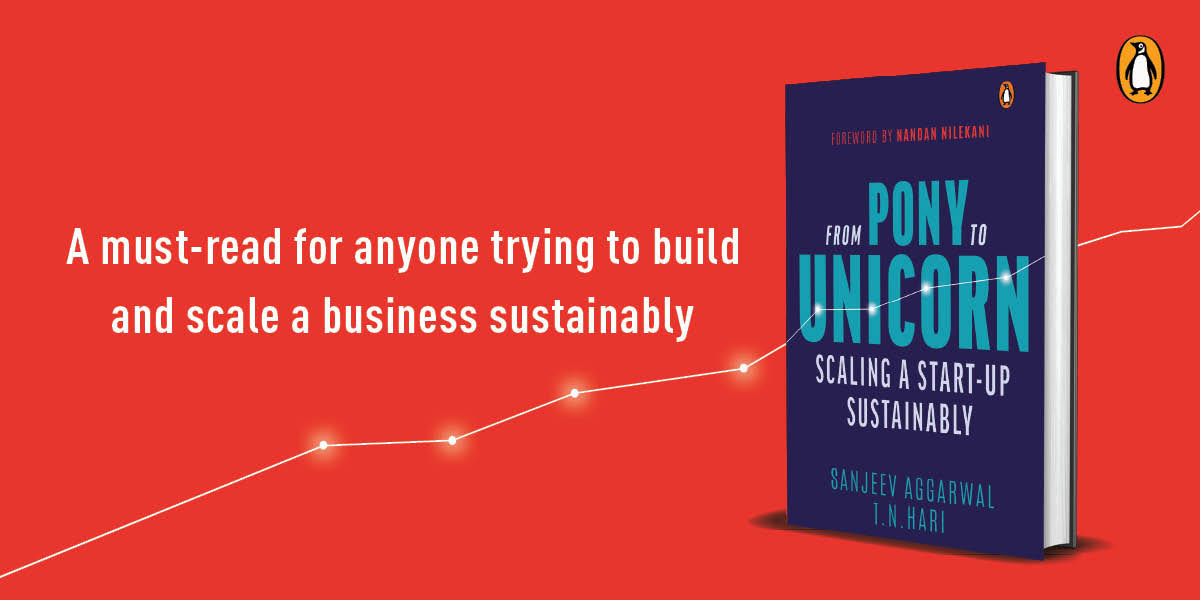
Are you finding it tough to fund your start-up? Especially in the post-COVID-19 world, where money is scarce? Well, then, this book is for you.
It not only takes you through stories of early-stage start-ups and how they successfully managed to raise funding, but also culls important lessons from -start-ups that failed to raise funding for various reasons. The authors also interview some of the most accomplished founders in the world of business, such as Deep Kalra of MakeMyTrip, Yashish Dahiya of PolicyBazaar, Dinesh Agarwal of IndiaMART and Sairee Chahal of SHEROES, bringing their stories together in as useful ‘PERSISTENT’ framework, which helps make a start-up investment-ready. Read on to learn about the people who act as ‘angels’ in start-up heaven!
—
Angel investors are the first external investors in your business. Those who do not know you. Why are they willing to invest in your business?Very simply because they want to make money. They have tried fixeddeposits and debt funds, and have learnt that they don’t make morethan 7 per cent or so—and, of course, they pay tax on this interest.Some of them have tried out the stock market and made money, but they have realized that stock markets can at best give you around 15 per cent returns over the long term. That’s it. Real estate is a good option, but the amounts involved are very large and the investments are illiquid. And anyway, real estate seems to be stagnating, at least in the foreseeable future . . . And therefore, investors are constantly on the lookout for new avenues of investment. Something that can potentially get them much higher returns than these traditional investment options. Where they can park a small part of their investments, even if the risks are substantially higher. And what better place for this than start-ups? Look at it this way. What are our unicorns such as Flipkart, Oyo Rooms and Ola Cabs valued at? Over a billion dollars each, isn’t it? And in some cases, several billion dollars—Flipkart, for instance, was valued at $21 billion when Walmart bought it. Now, can you buy shares in any of these companies at this valuation? Unless you are a direct descendant of some royal family and have inherited pots of gold, certainly not. But—and this is a very important but—could you have bought shares in these companies when they were toddlers and just about starting off? Aha! Sure you could have.
Funding Your Start-Up || Dhruv Nath, Sushanto Mitra
And that, ladies and gentlemen, is the concept of the angel investor. QED. Angel investors—sometimes simply called angels—are people who are either rich or at least comfortably off, and are looking atinvesting in companies at an early stage. In the hope that they will become the next Flipkart or Naukri.com. And since they have invested at an early stage, they own a large chunk of the company’s shares, whose value could increase dramatically when these companies grow ever so rapidly. So the word ‘angel’ is probably a bit of a misnomer— they are very, very keen to make money. But they are also willing to take a risk. They are, therefore, willing to help you out with funding when your business has not really stabilized and no one else is willing to fund you. And that is how they came to be called ‘angel’ investors. After all, angels are those who help you when you’re in trouble, isn’t it?
It’s that time of the month again when we bring you a fresh list of books to take care of all your reading blues. Whether you’re a fiction fan or a non-fiction nerd, whether you have the hidden skills of a chef or a special inclination towards fitness, there’s something for everyone in our October list.
Make sure you have a pen and paper at the ready before you begin scrolling down!
**
The Cowherd Prince
Krishna Udyashankar
The Cowherd Prince || Krishna Udayasankar
Govinda, son of Nanda-one of the many cowherds in the verdant kingdom of Surasena, in Aryavarta-was content with his tough but wonderful life. That was until the king’s men came looking for him and his brother, Balabadra, spewing death and destruction in their wake. Forced to leave behind those they love in order to save them, the brothers are now on the run—all the while being hunted by the tyrant king, Kans, and his bloodthirsty adviser, Chanuran, who will stop at nothing to kill them. Even as their journey reveals Govinda’s true identity as a prince and the rightful heir to the Surasena crown, it pulls them deeper into the murky secrets surrounding the throne-and its bloody legacy.
What will it take for an ordinary cowherd boy to grow into a master strategist who will always have a plan?
Get Moving!
Shwetambari Shetty
Get Moving! || Shwetambari Shetty
Shwetambari Shetty’s Dance Fitness workouts and training programmes are a phenomenon that’s taken the country by storm. Her philosophy is simple: you have to get moving. She shows you how to incorporate beneficial movements and exercises into your day-to-day activities, without devoting extra time to them. Get Moving! will help you design your own training programme according to your goal-whether it’s weight loss, muscle gain or just better fitness-and show you how to enjoy the exercises you do. This book will help you get results and become the best version of yourself.
Insomnia
Rachna Bisht Rawat
A retired General is haunted by voices of dead men.
Insomnia || Rachna Bisht Rawat
Soldiers from two enemy nations manning posts in freezing Siachen form a strange connection.
A young Lieutenant dying in the jungles of Arunachal is watched over by three men, one of whom would have his destiny changed forever.
What surprise is a train bound for Agra bringing to the all-male bastion of 13 Para?
Who are the invisible people a little girl awaiting brain surgery in the Lansdowne Military Hospital talks to?
Insomnia will take you into the olive-green world of army cantonments, through stories that will delight and disturb in equal measure.
Singing in the Dark
Edited by K. Satchidanandan and Nishi Chawla
Singing in the Dark || K Satchidanandan, Nishi Chawla
Singing in the Dark brings together the finest of poetic responses to the coronavirus pandemic. More than a hundred of the world’s most esteemed poets reflect upon a crisis that has dramatically altered our lives, and laid bare our vulnerabilities. The poems capture all its dimensions: the trauma of solitude, the unexpected transformation in the expression of interpersonal relationships, the even sharper visibility of the class divide, the marvellous revival of nature and the profound realization of the transience of human existence.
Celebrating Life
Rishi Nitya Pragya
Celebrating Life || Rishi Nityapragya
The universe has bestowed limitless powers and infinite siddhis on the human consciousness. But in our attempt to be effective and successful in the personal and professional spheres, we often forget that the purpose of human life is also to ensure the complete blossoming of the individual consciousness. In Celebrating Life, Rishi Nityapragya shares the secrets that can help you explore your infinite potential. He offers an in-depth understanding of how to identify and be free from negative emotions and harmful tendencies, and how to learn to invoke life’s beautiful flavours—like enthusiasm, love, compassion and truth—whenever and wherever you want.
The Learning Factory
Arun Maira
The Learning Factory || Arun Maira
In The Learning Factory, Arun Maira narrates people-centric episodes that bring alive the values of the Tata Group, standards that combine the high-velocity practices as well as the old-fashioned principles that make the Tata Group the giant it is today. With insightful stories of conduct that are as practically implementable as they are inspiring, this is a blueprint for the individual as well as the business that seeks success through its community of leaders, workers and thinkers.
Preparing for Death
Arun Shourie
Preparing for Death || Arun Shourie
The one certainty in life, the one appointment which each of us will just have to face, is the one for which we do the least to prepare-death. From the lives and last days of the Buddha, Ramakrishna Paramahamsa, Ramana Maharshi, Gandhiji, Vinoba; from our religious texts; from the teachings of great meditation masters; from santhara to sannyas to practices by which we may tame our mind-leavening all these by his personal experiences-Arun Shourie presents clues to ensure that we face our end with equanimity.
How to Read Amartya Sen
Lawrence Hamilton
How to Read Amartya Sen || Lawrence Hamilton
Nobel Laureate Amartya Sen is one of the world’s best-known voices for the poor and the downtrodden, and an inspiration for the proponents of justice across the globe. Lawrence Hamilton provides an excellent, accessible guide to the full range of Sen’s writings, contextualizing his ideas and summarizing the associated debates. In elegant prose, Hamilton reconstructs Sen’s critiques of the major philosophies of his time, assesses his now famous concern for capabilities as an alternative for thinking about poverty, inequality, gender discrimination, development, democracy and justice, and unearths some overlooked gems.
Night of the Restless Spirits
Sarbpreet Singh
Night of the Restless Spirits || Sabrpreet Singh
A young Indian in the USA embraces a cause rooted in his motherland, but one that he doesn’t fully understand. A student’s world is turned upside down when his friend and her family are caught in the crosshairs of volatility and violence. A train burns as it enters Delhi, and the sole Sikh survivor shares with the nation the harrowing tale of his survival.
These and many other stories form this heart-rending collection that evokes the horrors and uncertainties of 1984, through the tales of ordinary people caught in something bigger than themselves. Set during a time of monumental upheaval, Night of the Restless Spirits blurs the lines between the personal and political, and takes the reader on a journey fraught with love and tinged with tragedy, frayed relationships, the breaking down of humanity and resilience in the face of absolute despair.
Off the Beaten Track
Saeeda Bano
Off the Beaten Track || Saeeda Bano
Saeeda Bano was the first woman in India to work as a radio newsreader, known then and still as the doyenne of Urdu broadcasting. Over her unconventional and courageous life, she walked out of a suffocating marriage, witnessed the violence of Partition, lost her son for a night in a refugee camp, ate toast with Nehru and fell in love with a married man who would, in the course of their twenty-five-year relationship, become the Mayor of Delhi. Though she was born into privilege in Bhopal-the only Indian state to be ruled by women for four successive generations-her determination, independence and frankness make this a remarkable memoir and a crucial disruption in India’s understanding of her own past.
Stephen Hawking
Leonard Mlodinow
Stephen Hawking || Leonard Mlodinow
An icon of the last fifty years, Stephen Hawking seems to encapsulate genius: not since Albert Einstein has a scientific figure held such a position in popular consciousness. In this enthralling memoir, writer and physicist Leonard Mlodinow tells the story of his friend and their collaboration, offering an intimate account of this giant of science. By weaving together their shared story with a clear-sighted portrayal of Hawking’s scientific achievements, Mlodinow creates a beautiful portrait of Stephen Hawking as a brilliant, impish and generous man whose life was not only exceptional but also genuinely inspiring.
More than a Woman
Caitlin Moran
More than a Woman || Caitlin Moran
A decade ago, Caitlin Moran thought she had it all figured out. Her instant bestseller How to Be a Woman was a game-changing take on feminism, the patriarchy, and the general ‘hoo-ha’ of becoming a woman. Back then, she firmly believed ‘the difficult bit’ was over, and her forties were going to be a doddle. Now with ageing parents, teenage daughters, a bigger bum and a To-Do list without end, Caitlin Moran is back with More Than A Woman: a guide to growing older, a manifesto for change, and a celebration of all those middle-aged women who keep the world turning.
The Memory Police
Yoko Ogawa, Stephen Snyder (translator)
The Memory Police || Yoko Ogawa, Stephen Snyder(tr.)
To the people on the island, a disappeared thing no longer has any meaning. It can be burned in the garden, thrown in the river or handed over to the Memory Police. Soon enough, the island forgets it ever existed.
When a young novelist discovers that her editor is in danger of being taken away by the Memory Police, she desperately wants to save him. For some reason, he doesn’t forget, and it’s becoming increasingly difficult for him to hide his memories. Who knows what will vanish next?
Flavour
Yotam Ottolenghi, Ixta Belfrage
Flavour || Ottlenghi
In this stunning new cookbook Yotam and co-writer Ixta Belfrage break down the three factors that create flavour and offer innovative vegetable dishes that deliver brand-new ingredient combinations to excite and inspire.
Ottolenghi’s Flavour combines simple recipes for weeknights, low-effort high-impact dishes, and standout meals for the relaxed cook. Packed with signature colourful photography, the book not only inspires us with what to cook, but how flavour is dialled up and why it works.
The Boy from the Woods
Harlan Coben
The Boy from the Woods || Harlan Coben
Thirty years ago, a child was found in the New Jersey backwoods. He had been living a feral existence, with no memory of how he got there or even who he is. Everyone just calls him Wilde. Now a former soldier and security expert, he lives shunned by the community – until they need him.
A child has gone missing. With her family suspecting she’s just playing a disappearing game, nobody seems concerned except for criminal attorney Hester Crimstein. She contacts Wilde, asking him to use his unique skills to find the girl. But even he can find no trace of her. Days pass and on the fourth day, a human finger shows up in the mail.
And now Wilde knows this is no game. It’s a race against time to save the girl’s life – and expose the town’s dark trove of secrets.
The Kingdom
Jo Nesbo
The Kingdom || Jo Nesbo
When Roy and Carl’s parents die suddenly, sixteen-year-old Roy is left as protector to his impulsive younger brother. But when Carl decides to travel the world in search of his fortune, Roy stays behind in their sleepy village, satisfied with his peaceful life as a mechanic. Some years later, Carl returns with his charismatic new wife, Shannon – an architect. They are full of exciting plans to build a spa hotel on their family land. But it’s only a matter of time before what begins as a jubilant homecoming sparks off a series of events that threaten to derail everything Roy holds dear, as long-buried family secrets begin to rise to the surface.
The Kingdom is a simmering and complex thriller full of unexpected twists, devastating family legacies and an ever growing body count.
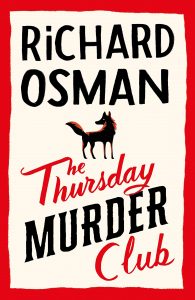
The Thursday Murder Club
Richard Osman
In a peaceful retirement village, four unlikely friends meet up once a week to investigate unsolved murders. But when a brutal killing takes place on their very doorstep, the Thursday Murder Club find themselves in the middle of their first live case.
The Thursday Murder Club || Richard Osman
Elizabeth, Joyce, Ibrahim and Ron might be pushing eighty but they still have a few tricks up their sleeves.
Can our unorthodox but brilliant gang catch the killer before it’s too late?
Another Now
Yanis Varoufakis
Another Now || Yanis Varoufakis
Imagine a world with no banks. No stock market. No tech giants. No billionaires. In Another Now world-famous economist Yanis Varoufakis shows us what such a world would look like. Far from being a fantasy, he describes how it could have come about – and might yet. This boundary-breaking book confounds expectations of what a good society would look like and reveals the uncomfortable truth about our desire for a better world.
Ten Lessons for a Post-Pandemic World
Fareed Zakaria
Ten Lessons for a Post-Pandemic World || Fareed Zakaria
In this urgent and timely book, Fareed Zakaria foresees the nature of a post-pandemic world: the political, social, technological and economic consequences that may take years to unfold. In ten surprising, hopeful ‘lessons’, he writes about the acceleration of natural and biological risks, the obsolescence of the old political categories of right and left, the rise of ‘digital life’, the future of globalization and an emerging world order split between the United States and China. He invites us to think about how we are truly social animals with community embedded in our nature, and, above all, the degree to which nothing is written – the future is truly in our own hands.
The Tyranny of Merit
Michael J. Sandel
The Tyranny of Merit || Michael J. Sandel
These are dangerous times for democracy. We live in an age of winners and losers, where the odds are stacked in favour of the already fortunate. Stalled social mobility and entrenched inequality give the lie to the promise that “you can make it if you try”. In The Tyranny of Merit, Michael J. Sandel argues that to overcome the polarized politics of our time, we must rethink the attitudes toward success and failure that have accompanied globalisation and rising inequality. He offers an alternative way of thinking about success – more attentive to the role of luck in human affairs, more conducive to an ethic of humility, and more hospitable to a politics of the common good.
The Serendipity Mindset
Dr Christian Busch
The Serendipity Mindset || Dr Christian Busch
Modern life is full of chance encounters, changing plans, delayed journeys, human errors and other mishaps. So, what if we use such unpredictability to our advantage? The Serendipity Mindset is a revolutionary, well-researched exploration of a well-researched and essential life skill that we can all develop in a few simple steps. By learning to identify, act on and share serendipity, we can use uncertainty as a pathway to more joyful, purposeful and successful lives.
This Gandhi Jayanti, we bring you a list of books that highlight the nuances of the man who became larger than life in our national and political consciousness. ‘Every man’s life is a fable’, says Raja Rao. These books help us understand the fable of Gandhi a little better.
**
Gandhi: The Years That Changed the World, 1914-1948
Ramchandra Guha
Gandhi || Ramachandra Guha
As one of the most prolific historians of modern India, Ramchandra Guha traces the life of Mahatma Gandhi in the three decades preceding his assassination. Examining archival material, Guha explores the details of Gandhi’s anti-colonial struggle, his take on untouchability, and his desire to strengthen India’s moral compass. This book is a record of not only Gandhi himself but also the people in his life.
An Autobiography or The Story of My Experiments with Truth
M.K. Gandhi
An Autobiography || M.K. Gandhi
Gandhi’s Autobiography is one of the most widely read and translated Indian books of all time, is a classic that allows us to glimpse the transformation of a well-meaning lawyer into a Satyagrahi and an ashramite. In this first-ever Critical Edition, eminent scholar Tridip Suhrud shines new light on Gandhi’s life and thought. The deeply researched notes elucidate the contexts and characters of the Autobiography, while the alternative translations capture the flavour, cadence and quirkiness of the Gujarati.
The Man Before the Mahatma
Charles DiSalvo
The Man Before the Mahatma || Charles DiSalvo
As the first biography of Gandhi as a lawyer, DiSalvo’s book traces the change of the man from a reticent 18-year-old who left Gujarat to the titan who became one of the biggest thorns in the British colonial side. The book focuses on Gandhi’s legal work in South Africa and his encounter with the racist policies of white colonialists, which left an inedible mark on him and changed the trajectory of his career.
Gandhi Before India
Ramachandra Guha
Gandhi Before India || Ramachandra Guha
Guha’s book explored the lesser known parts of Mahatma Gandhi’s life, spanning the years from his birth right up to when he returned to India from South Africa after his legal training. The book is a rare insight into the shaping of the Mahatma, the childhood and formative years that chiselled his ideological bent and made him the man he turned out to be.
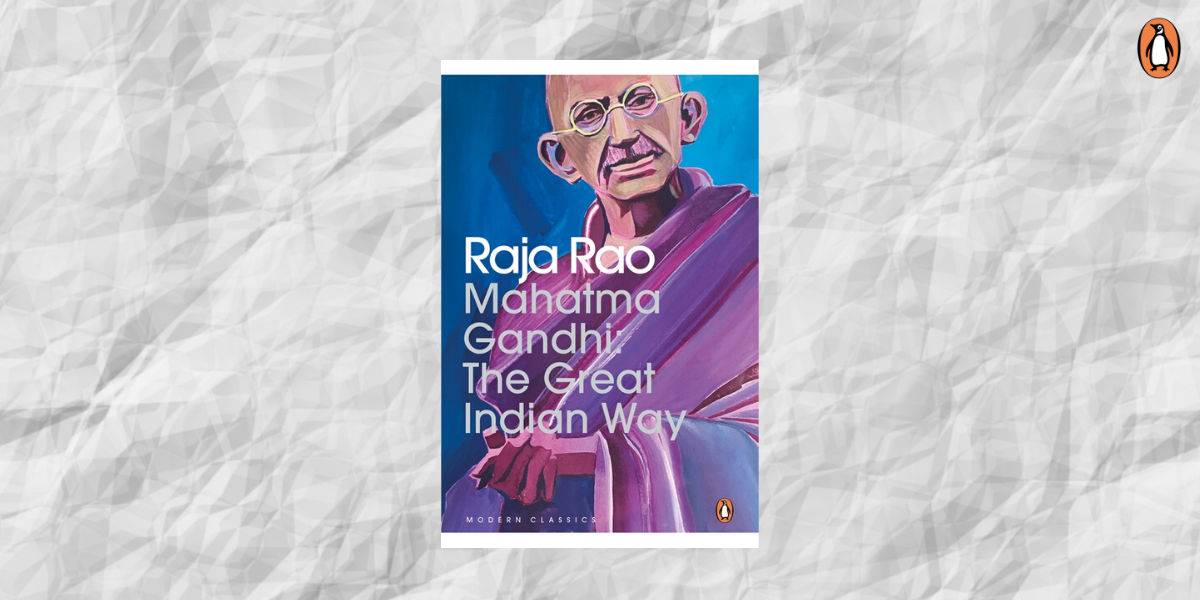
Mahatma Gandhi: The Great Indian Way
Raja Rao
Mahatma Gandhi: The Great India Way || Raja Rao
Raja Rao experiments with narrative linearity and chronological sequence to brings us this unique work on Gandhi that stands out to this day. Using dialogue and anecdotes, Rao maps the progression of Gandhi’s life in a way that contemporises him, making his work and values relevant to the present as well.
The Death and Afterlife of Mahatma Gandhi
Makarand Paranjape
The Death and Afterlife of Mahatma Gandhi || Makarand R. Paranjape
Paranjape meticulously studies Gandhi’s last six months in Delhi. He analyses the factors that facilitated Gandhi’s assassination, the meaning of his death and what that reveals about the country at large.
As readers, we love that our world is enriched by books from various languages, cultures, and countries. This has only been made possible by the immense contribution of translators from all around the world. To celebrate World Translation Day, which is celebrated on 30th September every year, and honour the work of translators everywhere, we have compiled a special list of works translated from various Indian languages into English.
Happy reading!
**
Chowringhee
Sankar, translated from Bengali by Arunava Sinha
Chowringhee || Sankar
Set in 1950s Calcutta, Chowringhee is a sprawling saga of the intimate lives of managers, employees and guests at one of Calcutta’s largest hotels, the Shahjahan. Shankar, the newest recruit, recounts the stories of several people whose lives come together in the suites, restaurants, bar and backrooms of the hotel. As both observer and participant in the events, he
inadvertently peels off the layers of everyday existence to expose the seamy underbelly of unfulfilled desires, broken dreams, callous manipulation and unbidden tragedy. What unfolds is not just the story of individual lives but also the incredible chronicle of a metropolis.
Raag Darbari
Shrilal Shukla, translated from Hindi by Gillian Wright
Raag Darbari || Shrilal Shukla
Raag Darbari’s plot is set in Shivpalganj, which is a small village located in Uttar Pradesh. The narrator of this novel is Ranganath, who is a research student of History. He comes to visit his uncle, Vaidyaji, who serves as the head of the village and his supporters are placed at key locations in the village. Vaidyaji is a highly corrupt ruler who has defeated every individual who tried to stand against him. The readers are also introduced to Langad, who desires to carry out dealings in an honest manner. Things take a turn for Vaidyaji when some people try to bring him down from his influential position. The novel exposes the helplessness of intellectuals in the face of a strong and corrupt nexus between criminals, businessmen, police and politicians.
Tamas
Bhisham Sahni, translated from Hindi by Daisy Rockwell
Tamas || Bhisham Sahni
In a city in undivided Punjab, Nathu, a tanner, is bribed to kill a pig. When the animal’s carcass is discovered on the steps of the local mosque the next morning, simmering tensions explode into an orgy of bloodlust. But in the midst of the ensuing carnage, despite the darkness of the times, rare moments of unexpected friendship and love also surface.
Winner of the Sahitya Akademi Award, Sahni’s iconic novel about the Partition of India tells the tale of an unfolding riot from different vantage points. In Daisy Rockwell’s definitive translation, this magnificent work comes vividly to life.
One Part Woman
Perumal Murugan, translated from Tamil by Aniruddhan Vasudevan
One Part Woman || Perumal Murugan
Kali and Ponna’s efforts to conceive a child have been in vain. Hounded by the taunts and insinuations of others, all their hopes come to converge on the chariot festival in the temple of Ardhanareeswara, the half-female god. Everything hinges on the one night when rules are relaxed and consensual union between any man and woman is sanctioned. This night could end the couple’s suffering and humiliation. But it will also put their marriage to the ultimate test.
Hangwoman
K.R. Meera, translated from Malayalam by J. Devika
Hangwoman || K.R. Meera
The Grddha Mullick family bursts with marvellous tales of hangmen and hangings in which they figure as eyewitnesses to the momentous events that have shaped the history of the subcontinent. When twenty-two-year-old Chetna Grddha Mullick is appointed the first woman executioner in India, assistant and successor to her father, her life explodes under the harsh lights of television cameras. When the day of the execution arrives, will she bring herself to take a life?
Lajja
Taslima Nasrin, translated from Bengali by Achinta Ghatak
Lajja || Taslima Nasrin
The Duttas-Sudhamoy and Kironmoyee, and their children, Suranjan and Maya- have lived in Bangladesh all their lives. Despite being members of a small, vulnerable Hindu community, they refuse to leave their country, unlike most of their friends and relatives. Sudhamoy believes with a naive mix of optimism and idealism that his motherland will not let him down. And then, on 6 December 1992, the Babri Masjid is demolished. The world condemns the incident, but its immediate fallout is felt most acutely in Bangladesh, where Muslim mobs begin to seek out and attack Hindus. The nightmare inevitably arrives at the Duttas’ doorstep, and their world begins to fall apart.
Cobalt Blue
Sachin Kundalkar, translated from Marathi by Jerry Pinto
Cobalt Blue || Sachin Kundalkar
A paying guest seems like a win-win proposition to the Joshi family. He’s ready with the rent, he’s willing to lend a hand when he can and he’s happy to listen to Mrs Joshi on the imminent collapse of our culture. But he’s also a man of mystery. He has no last name. He has no family, no friends, no history and no plans for the future. The siblings Tanay and Anuja are smitten by him. He overturns their lives and when he vanishes, he breaks their hearts. Elegantly wrought and exquisitely spare, Cobalt Blue is a tale of rapturous love and fierce heartbreak told with tenderness and unsparing clarity.
A Gujarat Here, A Gujarat There
Krishna Sobti, translated from Hindi by Daisy Rockwell
A Gujarat Here, A Gujarat There || Krishna Sobti
Delhi, 1947. The city surges with Partition refugees. Eager to escape the welter of pain and confusion that surrounds her, young Krishna applies on a whim to a position at a preschool in the princely state of Sirohi, itself on the cusp of transitioning into the republic of India. She is greeted on arrival with condescension for her refugee status, and treated with sexist disdain by Zutshi Sahib, the man charged with hiring for the position. Undaunted, Krishna fights back. But when an opportunity to become governess to the child maharaja Tej Singh Bahadur presents itself-and with it a chance to make Sirohi her new home once and for all-there is no telling how long this idyll will last.
Part novel, part memoir, part feminist anthem, A Gujarat Here, A Gujarat There is not only a powerful tale of Partition loss and dislocation but also charts the odyssey of a spirited young woman determined to build a new identity for herself on her own terms.
Goat Days
Benyamin, translated from Malayalam by Joseph Koyippally
Goat Days || Benyamin
Najeeb’s dearest wish is to work in the Gulf and earn enough money to send back home. He achieves his dream only to be propelled by a series of incidents, grim and absurd, into a slave-like existence herding goats in the middle of the Saudi desert. Memories of the lush, verdant landscape of his village and of his loving family haunt Najeeb whose only solace is the companionship of goats. In the end, the lonely young man contrives a hazardous scheme to escape his desert prison.
While we are at it, how can we forget our young readers? So here’s a special list just for them!
Timeless Tales from Marwar
Vijaydan Detha, translated by Vishes Kothari
Timeless Tales from Marwar || Vijaydan Detha
For centuries, Rajasthan has been a gold mine of oral traditions and histories with Padma Shri Vijaydan Detha being one of the foremost storytellers of all time. Timeless Tales from Marwar gives a new lease of life to his folk tales. Retold in Detha’s magical narrative style complete with imagery, this selection offers some of the oldest and most popular fables from the Thar Desert region. Discover tales of handsome rajkanwars, evil witches, exploitative thakars, miserly seths, clever insects, benevolent snakes and more. Vishes Kothari’s vivid English translation introduces one of the most venerated figures in Rajasthani folk culture to a wider audience.
Tales from the Kathasaritsagara
Somadeva, translated from Sanskrit by Rohini Chowdhury
Tales from the Kathasaritsagara || Somadeva
Do you know the story of Phalabhuti, who narrowly escaped a grisly fate?
Or of the kind-hearted Jimutavahana, who was willing to give his life to save a snake from death?
Or of young Shringabhuja, who married a rakshasa’s daughter?
These are just some of the many tales that make up Somadeva’s Kathasaritsagara, a classic work of Sanskrit literature that is full of memorable characters. Within the pages of this book, you will encounter demons and demi-gods, faithful guards and foolish villagers, golden swans, magic pots and even automatons made of wood! Adapted and wonderfully retold by Rohini Chowdhury, this is a timeless classic that will entertain and enchant readers everywhere.
The Final Adventures of Professor Shonku
Satyajit Ray, translated from Bengali by Indrani Majumdar
The Final Adventures of Professor Shonku || Satyajit Ray
In this last volume of Professor Shonku’s escapades, the brilliant and benevolent scientist travels around the world once more to face near death situations. Each nerve-wracking experience is faithfully recorded in his diary. We learn of Shonku being outwitted by his own invention, the Tellus computer; his helplessness when his arch-rival in Rome deliberately misplaces his wonder drug, Miracurall; and the thrilling discovery of a three-and-a-half-thousand-year-old sparkling diamond necklace and a papyrus in an ancient tomb in Cairo.