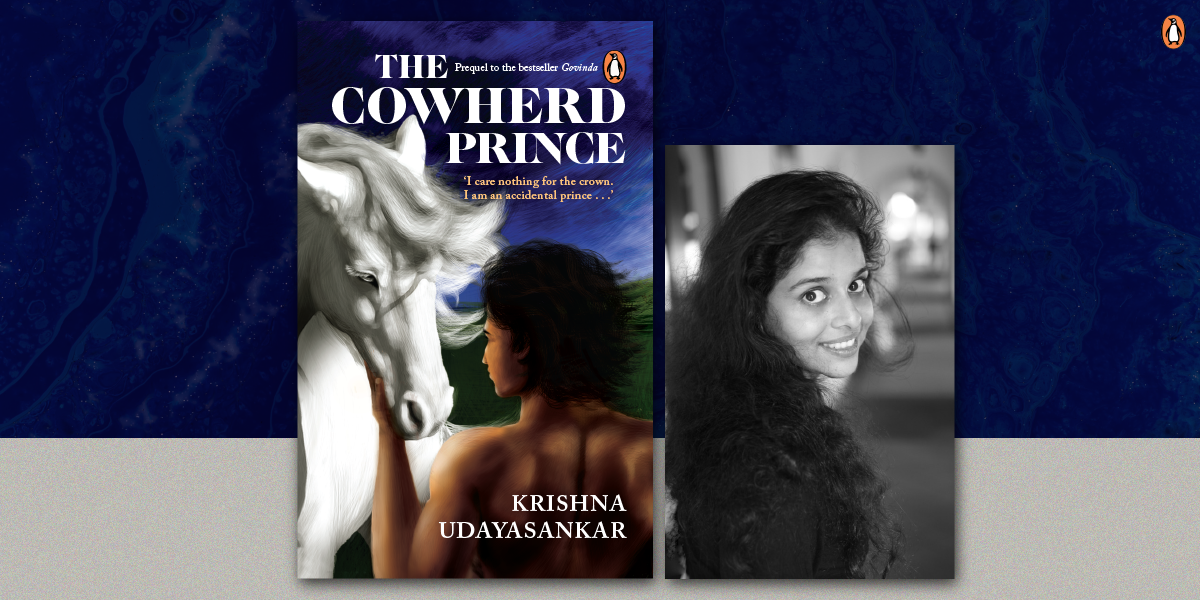
In Deepak Dalal’s latest adventure story, we meet our beloved duo, Vikram and Aditya, on the chilly terrains of Ladakh! Joining them on this super exciting journey is nine-year-old Tibetan boy called Tsering.
Before you head into their world, we are taking you on a quick walk through Ladakh so that you are well-prepared for the adventure coming your way. Read on!
**
Brrr…the summers are cold!
August is the warmest month in Ladakh, and it is still…COLD!
‘Judging from the half-frozen contents of his water bottle, ice must have formed on the lake too. Yet the birds seemed unaffected.
It was August, the warmest time of the year in Ladakh. If this was ‘peak summer’, wondered Vikram, then what could winter possibly be like? He shuddered at the prospect.’
Ladakh Adventure || Deepak Dalal
¬
Bird-watching
In India, black-necked cranes are found only in Ladakh.
‘Vikram was aware that the spectacle he beheld was a rare one. In India, black-necked cranes are found only in Ladakh. Just fifteen pairs nest in the far-flung corners of the Changthang plateau. Local people treasure the birds, never harming them.’
¬
Hilly Desert
Ladakh is a desert, with sandy and barren slopes.
‘Although it had been obvious all along, it struck [Aditya] only now that there was not a single tree on its great expanse. There was absolutely no cover on the plain; no place to hide, or for that matter, no spot to shelter behind and plot an ambush. The lack of cover wasn’t confined to the lake basin alone. It extended to the mountains. The slope on which Aditya rode was sandy and barren. Ladakh, as everyone had said, was indeed a desert.’
¬
View from up above
In the high-altitude landscape of Ladakh, it is possible to see for miles on end.
‘Vikram was visible in the distance, trotting along on his horse. He was in plain sight of the jeep driver, and Aditya was sure that the man was tracking his movements. […] Up there the intense clarity of vision overcomes the distortion of distances.’
—
So now that we have got you invested in just a few of the most fascinating facts about Ladakh, we look forward to you joining Aditya, Vikram and Tsering on the journey of a lifetime!
India has a relationship of great adulation with cricket, marked by unbridled excitement. The game has shaped our national consciousness in many different ways, and is the lynchpin of patriotism and camaraderie in the country – even if we have nothing in common, there will always be cricket. A colonial inheritance, cricket exists at all the coordinates of our culture, from advertisements of soft drinks with cricketers smiling through the screen to entire feature films like Ashutosh Gowariker’s Lagaan. But we cannot talk about cricket without talking about Sachin Tendulkar. And we cannot talk about Sachin Tendulkar without talking about Vasoo Paranjape.
Ramakant Achrekar is the name we tend to associate with Sachin Tendulkar, but Vasoo Paranjape was the quiet pillar of influence who shaped the journey of the legendary batsman. Paranjape never laid any claims on his relationship with Tendulkar, and this is perhaps what makes Paranjape stand out as a mentor. There was no impulse of self-gratification in his interactions with the players, and at no point did he invest time and energy in them hoping for fame in return. This relationship was not unreciprocated; Cricket Drona tells us that Paranjape was the second person Tendulkar called when he had decided to announce his retirement from international cricket. Paranjape was bewildered about the call; he felt that he had played no significant part in Tendulkar’s life. But Tendulkar didn’t agree. ‘Sir, I know what you have done for me’, he said.
In his segment in Cricket Dhoni, Tendulkar recalls how Paranjape’s recommendation was instrumental in getting him selected for the West Indies tour. He knows Paranjape always had his best interests at heart, and from the chronicles of their interactions, this becomes amply clear. Paranjape had an eye for talent which he had carefully cultivated and which proved his words time and again. But the impact Paranjape had on Tendulkar was not limited to the pitch. There was a deep emotional influence as well, which is natural to any solid mentor-mentee relationship. In a part of his essay on Paranjape, Tendulkar discusses such an event:
“Vasoo Sir was watching this Irani Trophy match with my father. My father would never watch me play—he had this superstition that if he watched me play, I would get out early. But apparently, Vasoo Sir had convinced him to come to this game. Sir took out his 1955 Fiat and drove my father to the venue, telling him, ‘Don’t worry, he won’t get out… If your presence was reason enough for him to get out, all the schools in Mumbai would want to hire you as their principal.’ My father simply laughed and got into the car. I am forever indebted to Sir for this. My father watched me play live only on two occasions, and this was one of them. The memory makes me very emotional.”
Paranjape worked with players as individuals with their unique propensities and characteristics. “I had a very unorthodox batting grip, with both hands way down the bat’s handle”, writes Sachin. But Paranjape did not try to change this. Instead, he focused on the strategies of the game, studying the opposition, playing a good stretch at an innings, things that opened up the beauty of the game for Tendulkar. “[W]hen I worked a little more closely with him, I understood that Sachin had another great power: the power to forget. He was able to erase the memory of the previous ball or the previous innings from his immediate focus. This is the factor that separates the greats from the non-greats: the ability to shut out what’s happened in the past and stay in the present. This, to me, is one of his biggest strengths”, writes Paranjape about Tendukar, revealing how nuanced his reading of the player was. He was able to notice every detail of what makes a player stand out.
Behind every person who is outstanding in their field is the work and influence of mentors, coaches and teachers, people who shape and modulate individual talent into a set of redoubtable skills. These skills become indispensable, and become the characteristic element of people who are larger than life, whose lives and performances are scintillating to a degree where they become more than human. In more ways than one, Vasoo Paranjape drove Tendulkar to become what he is. Cricket Drona is an homage to the man who became the strength and support of many cricket legends.
[To read more about Vasoo Paranjape, order you copy of Cricket Drona here!]
A rich, eye-opening anthology, And We Came Outside and Saw the Stars Again , dozens of esteemed writers, poets, artists and translators from more than thirty countries offer a profound, kaleidoscopic portrait of lives transformed by the coronavirus pandemic.
As COVID-19 has become the defining global experience of our time, writers transcend borders and genres to offer a powerful antidote to the fearful confines of isolation: a window onto corners of the world beyond our own.
UNPRECEDENTED was the ubiquitous term first used to describe the COVID-19 pandemic that swept the world in 2020, as if the event were unlike any other. The truth is that it has been rather routine in its procedure, part of the eternal cycles of nature. Even in the Bible, similar disasters—earthquakes, deluges, famines, plagues of insects, pestilence of livestock, boils, thunderstorms of hail and fire—are recurrent visitors in the theater of human affairs. Which doesn’t mean, of course, that newcalamities such as this one aren’t extraordinary.
It isn’t surprising that the official approach to the pandemic was initially forensic, with an insistence on numbers: how many deaths and infections per day in a given hospital of a given city in a given country, how long a possible vaccine could take to bring us all out of purgatory, and so on, as if suffering could be quantified, ignoring that each and every person lost was unique and irreplaceable. The Talmud says that death is a kind of sleep and that one person’s sleep is unknowable to others. Although the misfortune arrived at a time when the essential tenets of globalism were being questioned—tariffs imposed, borders closed,immigrants seen with suspicion—the pandemic was planetary, hitting wherever people did what people do. It preyed with distinct fury on the poor and vulnerable, as natural catastrophes always do, especially in countries ruled by tyrants responding with disdain and hubris. Inevitably, the lockdown also forced a new method to everything everywhere. The sound of the kitchen clock suddenly felt new, the warmth of a handshake, the taste of fresh soup. As an antidote to numbers, it was once again left to writers to notice those changes, to chronicle them by interweaving words. That’s what literature does well: it champions nuance while resisting the easy tricks of generalization. This international anthology includes over fifty of those writers representing thirty-five countries and arriving in about a dozen languages. Cumulatively, their accounts are proof of the degree to which COVID-19 brought about the collapse of a hierarchy of principles we had all embraced until then. Call it the end of an era Shenaz Patel, from Mauritius, for instance, realizes that “suddenly, like an octopus disturbed in its sleep, everything kept hidden under the placid surface latched onto us with its many arms and spit its ink into our faces.” She adds: “We are faced with a true ‘civil war’ of speech, echoing through radios and social media, between those who respect the lockdown and those who don’t; those who understand and the ‘cocovids,’ the empty heads who go out anyway; between the ‘true patriots’ and the selfish few who knowingly put others in danger.”
In 1994, twenty-year-old Gunjan Saxena appeared for the selection process of the fourth Short Service Commission (for women) pilot course. Seventy-four weeks of back-breaking training later, she passed out of the Air Force Academy in Dundigal as Pilot Officer Gunjan Saxena.
In 1999, The Indian Air Force launched Operation Safed Sagar, when local shepherds reported a Pakistani intrusion in Kargil. While female pilots were yet to be employed in a war zone, they were called in for medical evacuation, dropping off supplies and reconnaissance.
It was then that Gunjan Saxena proved her mettle. From airdropping vital supplies to Indian troops in the Dras and Batalik regions and casualty evacuation from the midst of the ongoing battle, to meticulously informing her seniors of enemy positions and even narrowly escaping a Pakistani rocket missile during one of her sorties, Saxena fearlessly discharges her duties, earning herself the moniker ‘The Kargil Girl’.
This book is her inspiring story and it’s co-authored by Kiran Nirvan, the pseudonym used by authors Kirandeep Singh and Nirvan Singh. Kirandeep Singh is the former head of the department of management studies, Global Institutes, Amritsar, and is currently pursuing his doctorate in the discipline. Nirvan Singh is a serving officer in the Indian Army, while also being an avid artist, writer and adventurer.
We interviewed Kiran Nirvan about the motivation behind writing The Kargil Girl, the first readers of their finished draft, and more. Read on to find out what they had to say.
Question: What propelled you to co-write The Kargil Girl?
Answer: It has always been our endeavour to write stories of grit and determination, wisdom and valour, of men and women from the Indian Armed Forces and other exemplary men and women of this nation and Flt Lt Gunjan Saxena (Retd) is a pathbreaker who broke stereotypes to achieve her dreams, paving way for future generations of women to do wonders. This book had to be written to celebrate Gunjan Saxena’s achievements, with an aim to inspire others.
Question: Were there any parts in the book that you found more difficult to write about as compared to the others?
Answer: Writing the entire book was challenging. We wanted the narrative to not be jingoistic but measured, sticking to the facts and wanted to educate and entertain the reader at the same time. So, the difficult part was writing about Gunjan ma’am’s SSB process where we had to relate each test to one of the memories from her childhood which ingrained in her the qualities for becoming an airforce officer.
Question: Which is your favourite section in the book and why?
Answer: Our personal favourite part in the book is where we have written about Gunjan ma’am’s training days in the academy. It was simply amazing to learn about the challenges she faced, from following a strict training schedule to getting regular punishments by senior cadets, from being nominated for test sortie with lesser training than others and still being able to clear it to emerging as the best performing flying cadet among her peers at the end of the training, it only shows us what it takes to become a winner. Gunjan Saxena is not the best for no reason.
Question: Who were the first readers of the finished draft of your book?
Answer: A couple of chapters were read by Air Chief Marshal Birender Singh Dhanoa, 25th Chief of Air Staff of The Indian Air Force. The finished draft was read by Pragya Narain, daughter of Flt Lt Gunjan Saxena (Retd), Arushi (Nirvan’s fiancée at the time), management students of Kirandeep, Suhail Mathur, our literary agent and of course, our most talented commissioning editor Gurveen Chadha.
Question: If you could give one message to the youth of the country, what would it be?
Answer: Our message to the youth of the country- discipline, determination and perseverance help achieve all dreams, but you must work harder than the previous day.
Acclaimed tech reporter, Alex Kantrowitz, gives a fascinating insight into the inner workings of the Tech Titans —Amazon, Google and Facebook, playing with the Amazon mantra of ‘Day One’— code for inventing like a startup, with little regard for legacy and prioritizing reinvention over tradition and collaboration over ownership.
Through 130 interviews with insiders, from Mark Zuckerberg to hourly workers, Always Day One shows the way forward for everyone who wants to compete with–and beat–the titans!
*
“Day One” is everywhere at Amazon. It’s the name of a key building, it’s the title of the company’s blog, and it’s a recurring theme in Bezos’s annual letter to shareholders. And though it’s tempting to read it as an order to work ceaselessly, particularly at the notoriously hard- charging Amazon, its meaning runs deeper.
Always Day One || Alex Kantrowitz
“Day One” at Amazon is code for inventing like a startup, with little regard for legacy. It’s an acknowledgment that competitors today can create new products at record speeds— thanks to advances in artificial intelligence and cloud computing especially— so you might as well build for the future, even at the present’s expense. It’s a departure from how corporate giants like GM and Exxon once ruled our economy: by developing core advantages, hunkering down, and defending them at all costs. Getting fat on existing businesses is no longer an option. In the 1920s, the average life expectancy of a Fortune 500 company was sixty- seven years. By 2015, it was fifteen. What does Day Two look like? It looks a lot like death. From its origins as an online bookseller, Amazon has lived its Day One mantra, inventing new businesses with abandon, with a near-complete disregard for how they might challenge its existing revenue streams. The company remains a bookseller, but it’s also a clearinghouse for almost every imaginable product, a thriving third party marketplace, a world- class fulfillment operation, an Academy Award–winning movie studio, a grocer, a cloud services provider, a voice- computing operating system, a hardware manufacturer, and a robotics company. After each successful invention, Amazon returns to Day One and figures out what’s next.
*
Find out more about the secrets behind the tech giants’ sustainable success, in Always Day One.
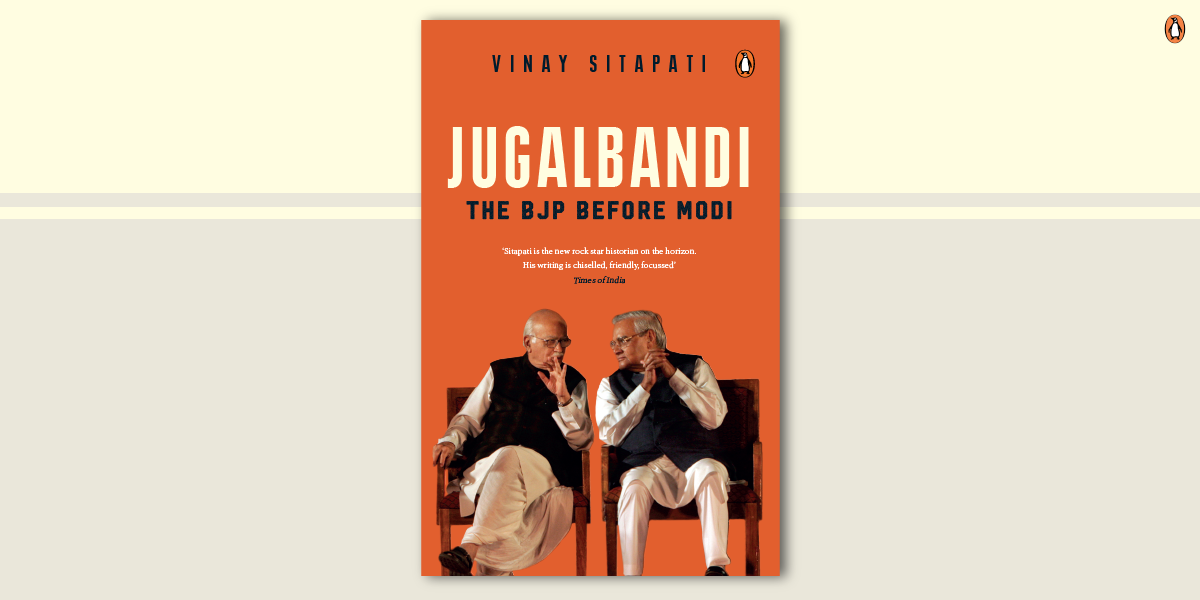
Since its inception in 1925, the RSS has perplexed observers with its organizational skills, military discipline and single-minded quest for influence in all walks of Indian life. Often seen as insidious and banned thrice, the pace of its growth and ideological dominance of the political landscape in the second decade of the millennium have been remarkable
Relying on original research, interviews with insiders and analysis of current events, Dinesh Narayanan’s, The RSS and the Making of the Deep Nation traces the RSS’s roots and its pursuit for ideological dominance in a nation known for its rich diversity of thought, custom and ritual.
Read on for a look at the evolution of the RSS across a nearly a century of operations.
Keshav Baliram Hedgewar, a Maharashtrian Brahmin from Nagpur, founded the RSS on the day of Vijaya Dashami in 1925.
The name RSS was hotly contested. Many questioned that if Hedgewar wanted to unite Hindus, how could it be called rashtriya (nation). Hedgewar prevailed. He conceived the Sangh as an independent organization that bowed to no human. It bows to a saffron flag symbolizing the Hindu nation.
¬
Hedgewar kept the RSS largely removed from radical involvement in the freedom movement in the 1930s though it was seen as a pro-independence organization
Yet, Hedgewar kept RSS politically aloof from V.D. Savarkar’s Hindu Mahasabha. Aligning with Savarkar politically would have positioned the RSS as a rival to the Congress, which was a more broad-based platform, and Hedgewar did not want to be antagonistic to the Congress of which he was a member.
The RSS || Dinesh Narayanan
¬
Madhav Sadashiv Golwalkar, who took charge in 1940 too kept the RSS largely apolitical.
Golwalkar scrupulously kept the Sangh away from agitations and took care to not upset the authorities in any way. His disinterest in politics prompted a large section, including the Bombay province sanghchalak, K.B. Limaye, to leave the organization.
¬
By the time Madhukar Dattatreya Deoras took over as sarsanghchalak 1973, the RSS had lost a lot of ground, but he undertook a complete turnaround by focusing on work with a ‘social content’.
After he took over, Deoras quickly began deploying the Sangh’s numerical strength and reach, strategically using it to back political movements and agitations. ‘Deoras had seen that a political mind that was distinctly Hindu in character had emerged in the polity. His motto was: seva [service], samrasta [equitability], sangharsh [struggle].
¬
The anti-Emergency agitation of the 70s galavanized the RSS, laying the foundation for its influential student arm –the ABVP.
The spectacular success of the anti-Emergency agitation and the consequent formation of the first, though short-lived, non-Congress government of independent India, however, demonstrated that agitational politics could be rewarding for organizational growth. There were valuable learnings. Its student arm, the ABVP, the principal agitational instrument in the early 1970s, had 1.7 lakh students and teachers in 1977.
¬
It could not deeply tap the Hindu political consciousness until the 1980s when it began meticulously planned agitation to mobilize the divided Hindu community around Lord Ram.
The RSS needed a symbol, something potent and with a national resonance, to rally Hindus around. It found it in Ayodhya, the birthplace of Lord Ram, the hero of Ramayana, an epic told and retold in practically every Hindu, and often non-Hindu, household from Kashmir to Kanyakumari.
¬
Strangely, during the economic liberalization of the 1990s the RSS, opposed to globalization seemed more aligned with the left in opposition to its own government.
The Vajpayee government picked up where the Narasimha Rao government had left off and the RSS behaved as if it was still in opposition. It was a curious situation where the RSS opposed several aspects of the economic policy of the government, and in a sense seemed more aligned to the left than to a government of its own.
¬
As Narenda Modi took charge as Chief Minister in Gujarat, he slowly emerged as the man who would rescue the RSS from the doldrums of the decade of UPA government.
Over the next fourteen years, Modi, the consummate swayamsevak, emerged as someone who could seamlessly merge business and Hindu cultural supremacy, a formula that had eluded the Parivar.
¬
Although Narenda Modi was initially viewed with suspicion by the RSS, a letter from a friend to Mohan Bhagwat was instrumental in cementing the rift.
Mohan Bhagwat read the executive’s missive with concern. The letter hinted that the rift between the rising star of Hindutva and the RSS leadership was the creation of vested interests within the Sangh. Bhagwat immediately invited the executive to Nagpur for a detailed conversation. In a meeting that went on for hours, the executive further elaborated to Bhagwat how a few leaders within the Sangh and the BJP had created misunderstandings between the RSS top leadership and Modi.
¬
Destroying all opposition the Modi-led BJP won 303 seats in the Lok Sabha, twenty-one seats more than in 2014, shifting the power balance between the BJP and RSS.
Ideologically, the party and the parivar reflect the Sangh more than ever in its history. At the same time, some RSS leaders who tried to influence political decisions and appointments have been clearly told by the BJP leadership that it was not their place to decide what was in the best interests of the party.
Mohammad Ali Jinnah has been both celebrated and reviled for his role in the Partition of India, and the controversies surrounding his actions have only increased in the seven decades and more since his death. Ishtiaq Ahmed places Jinnah’s actions under intense scrutiny to ascertain the Quaid-i-Azam’s successes and failures and the meaning and significance of his legacy. Using a wealth of contemporary records and archival material, Dr Ahmed traces Jinnah’s journey from Indian nationalist to Muslim communitarian, and from a Muslim nationalist to, finally, Pakistan’s all-powerful head of state.
Here’s an excerpt from this thoroughly researched and deeply perceptive book.
**
The establishment of Pakistan in mid-August 1947 is proverbially attributed to the sterling leadership of Mohammad Ali Jinnah. The British writer Beverley Nichols, who met Jinnah in 1943, described him as ‘the most important man in Asia’. The chapter on Jinnah was titled ‘Dialogue with a Giant’. The Pakistan government’s officially appointed biographer for Jinnah, Hector Bolitho, noted in his introductory chapter that ‘Pakistan and India were irrevocably divided, largely through Mohammad Ali Jinnah’s imagination and persistence . . .’ Jinnah’s other famous biographer, Stanley Wolpert, paid him the ultimate tribute in the following words: ‘Few individuals significantly alter the course of history. Fewer still modify the map of the world. Hardly anyone can be credited with creating a nation-state. Mohammad Ali Jinnah did all three.’3 In the Pakistani national narrative, homage paid to him is understandably hagiographical. Founders of religion and founders of a state always enjoy sui generis status among their devotees. One can therefore quote many other lavish remarks extolling Jinnah’s extraordinary achievements, but he has his detractors as well who accuse him of being the villain of the piece who bears most responsibility for the bloody partition of India, which claimed more than a million Hindu, Muslim and Sikh lives.
Jinnah had to surmount stiff opposition from the Indian National Congress (hereafter referred to also as the Congress Party, the Congress or the INC), which was then the biggest political party in India, a grass-roots mass organization since the 1920s, with branches all over undivided India and long years of political organization and activity. It demanded freedom from British rule in the name of all Indians in a united India. In opposition to it, the All-India Muslim League (hereafter referred to also as the Muslim League, the League or the AIML) demanded separate states for the Muslims in the north-western and north-eastern zones of India, where they constituted a majority, on the grounds that they were a distinct and separate nation and not merely a large minority (one-fourth of the total population of India). It was an elitist party till 1940, which thereafter rapidly acquired popular support and became a mass party by the time the future of India was put to vote in 1945–46.
Although Jinnah won the case for Pakistan, the partition of India and the two Muslim-majority provinces of Bengal and the Punjab resulted in unprecedented violence and rioting, in which more than a million Hindus, Muslims and Sikhs died, and the biggest migration in history, mostly to escape death and injury, took place; some 12–15 million crossed the international border drawn between India and Pakistan.
Over the last decade, conversations around constitutional rights and state directives have taken precedence. Facts and opinions ebb and flow into each other, and in some instances, it becomes difficult to separate their boundaries and compartmentalise. Public perception and our understanding of our own locations within structures of the state and state power have shifted to a great extent, and how we understand the nation and nationhood has also been coloured by communal differences, identity politics and an onslaught of conservative discourse around human rights and minority communities.
We The People, the fourth volume in the series Rethinking India, does the difficult work of trudging through this quagmire. It agglomerates the most visionary thinkers and the sharpest minds in the political and sociolegal sphere and brings us a volume packed with indispensable insights into the construction and mechanism behind the functioning of the nation, and our relationship with it.
In their essay ‘Fighting Inequality: Rights and Entitlements’, Amitabh Behar and Savvy Soumya Misra write about how even someone like Manmohan Singh, who was pro-liberalisation of the market, had highlighted the necessity to consider carefully the status of inequality in the country. He elaborated on his warning, explaining how despite being one of the fastest growing economies of the world, some groups have been marginalised and remain divested of access to social and economic reform. In fact, he also links this fast growth to this very inequality, stating that its speed and scope is actually achieved at the expense of peripheral groups who are left behind.
India is a country where 63 billionaires own more wealth than the union budget for 2018-19, and the wealth of the nine richest people equals the wealth collectively owned by the poorest 50% of the population. Behar and Misra explore how India, due to its population, is a major factor in the global development and inequality trends. The writers also highlight social inequalities, no doubt a key agent in economic inequalities. Citing the work of Jean Drèze and Amartya Sen, they discuss how caste hierarchies have created deep seated roots of inequality, breeding discrimination through the fabric of our society.
Prashant Bhushan and Anjali Bharadwaj take up another extremely important strand of discussion around the structures of the nation in their essay, ‘The Role of Independent Institutions in Protecting and Promoting Constitutional Rights’. They discuss how an effective rule of law can only be guaranteed by independent and efficient institutions, and how this is the primary safeguard of democracy. The Indian judiciary has passed some landmark judgements in the recent past, securing the rights of citizens in the process. But, the writers note, it is not enough to merely have the skeletal promise of these rights. There is a need for independent and reliable networks that ensure at ground level that these rights are secured, and that theory is indeed translated into practice. Delving into the judiciary as one such system, Bhushan and Bharadwaj discuss fault lines that have been exposed in the system, and how despite the Right To Information Act being applicable to courts as well, courts have resisted making their workings in certain cases transparent. The writers also give a clear picture of the Lokpal and Lokayuktas Act of 2013, and pick up many more tensions in the conversation around the institutions which are supposed to be the guarantors of rights, like the Central Bureau of Investigation.
We The People spans crucial ideas like economic rights, social democracy, right to education and health, and the MGNREGA among others, bringing into sharp focus important discussions that too often do not engage the public. But the public is the most crucial aspect of these constitutional directives; after all, these conversations affect us and our positions as citizens directly. This volume breaks down these important concepts into accessible essays, and is a much-required reading.
[To delve deeper, get your copy of We The People today.]
A regime of economic rights constitutes a blow against the spontaneity of capitalism. Therefore, this regime cannot be instituted except through struggles, that is, through collective action. Hence, even though the rights may be individually enjoyed, they can come into being only through a collective struggle. The collective struggle of the workers that is needed for achieving a set of individual rights, including above all a set of economic rights, already makes the workers transcend their individualism.
…Furthermore, the unprecedented crisis caused by the pandemic and the lockdown have created both a clear necessity for the state to meet its obligations with regards to these rights, and greater public awareness of the costs of not meeting them. This can therefore provide an opportune moment in which to rethink the social contract between people and the state in ways that would ensure the future realization of these basic rights.
Oxfam released its 2019 inequality report titled Public Good or Private Wealth? during the World Economic Forum at Davos… The fulcrum of the Oxfam report is the trend of growing inequality in the world, which is reflected in the tremendous concentration of wealth amongst a few individuals and a small number of TNCs (transnational corporations). The report says that twenty-six individuals (not surprisingly, all men) have more wealth than the bottom 50 per cent of the global population. Globally, the number of billionaires has doubled since the financial crisis. India has added eighteen new billionaires in the last year, raising the number of billionaires in the country to 119. In 2018, the total wealth of India increased by $151 billion (Rs 10,591 billion). However, the wealth of the top 1 per cent increased by 39 per cent, whereas the wealth of the bottom 50 per cent increased by a dismal 3 per cent.3
We the People || Nikhil Dey, Aruna Roy, Rakshita Swamy
According to the India Inequality Report 2018, India is home to 17 per cent of the world’s population; it is also home to the largest number of people living below the World Bank’s international poverty line measure of $1.90 per day… In the chapter titled ‘Grip of Inequality’, in the 2013 book An Uncertain Glory: India and Its Contradictions, economists Jean Drèze and Amartya Sen state that inequality may be rising in the last couple of decades but India has a historical legacy for multiple social inequalities… Drèze and Sen show how caste hierarchies have bred inequality. They look at a 1901 study12 that compared the literacy rates of Brahmins and Dalits. The study showed that in most regions, a majority of Brahmin men were already literate (in Baroda, up to 73 per cent). At the other end of the spectrum was the literacy rate among Dalit women, which was zero in most states. Dalit men achieved a literacy rate of at the most 1 per cent and Brahmin women a maximum of 6 per cent. The data showed a clear gender and caste monopoly of education back then.13
Education and health are central to achieving a dignified life for all. While the Constitution of India now explicitly recognizes the right to education, a number of Supreme Court judgments and the spirit of the Directive Principles of the Indian Constitution imply that the right to healthcare is also something that is accepted… While there have been significant improvements, health and education outcomes in India still remain poor and uneven, calling for continued and greater investments in these sectors with reforms to strengthen the government programmes in a manner such that they deliver.
The crisis in public health became even more apparent in the wake of COVID-19, which exposed the huge gaps in health infrastructure and access to personal protective equipment (PPE), staff, test kits and so on… Health allocations have been historically low, with currently only about 1.4 per cent of GDP being allocated to health, while the National Policy on Health, 2017, makes a commitment of spending 2.5 per cent of GDP on health by 2025.2 The Union government’s spending on health as a percentage of the GDP reached an all-time low in 2015–16, even lower than in the much-tainted early 1990s.3 Given such a low base, the Government of India announced only an additional Rs 15,000 crore (~0.1 per cent of GDP) in March 2020 for COVID-19 emergency response and health system preparedness.
[In Kerala, redistributive] measures—such as land reforms, collective bargaining for higher wages and public provisioning of education, healthcare, food and social security and so on—ensured that the average citizen is assured of the basic needs that uphold human dignity… Access to government schools and hospitals was given to all sections of society, even in the first quarter of the twentieth century. Rights-consciousness among the backward classes, inculcated by social reform initiatives, enabled them to fully utilize these opportunities.
It was against such a background that the People’s Plan was launched in August 1996… The People’s Plan approach consciously embodied the spirit of rights-based development… Most of the people-related functions such as health, education, women and child development, SC/ST development, agriculture-related development, poverty alleviation, the provision of basic needs like housing, sanitation, water supply, etc. were entrusted to local governments at the cutting-edge level—village panchayats, municipalities and corporations.
[…] The big lesson from Kerala is that the potential for participatory rights-based development is real and achievable in local governments. But nothing is ‘per se’ or ‘ipso facto’; there is a need for proactive policy by the government, which has to be translated into purposive processes and procedures with active involvement, support and guidance from the fraternity of believers in democratic decentralization, inclusion and participatory development from all sections of the society.
“You couldn’t miss Vasoo Paranjape”, writes Dilip Vengsarkar, opening his essay on the legendary cricket coach who changed the lives of everyone who crossed paths with him in marvellous and indelible ways. Cricket Drona is a portrait of the life and times of Vasoo Paranjape, created through first-hand accounts and stories told by the people who were shaped by his wisdom and his compassion. Get a glimpse into the illustrious mentor’s life trough this extract:
“ I must have been ten or twelve years old when I watched Denis Compton and Vinoo Mankad playing at the Cricket Club of India in a Ranji final. By 1947–48, I was training at the New Hind Club nets and became a member of the Dadar Union Sporting Club at Matunga. I was given a two-year playing membership by the P.J. Hindu Gymkhana in Mumbai. I was a left-arm slow-spin bowler, and I used to bowl the chinaman as a regular part of my armoury. It was a big occasion for me when, one day, I saw all the Indian players playing at the adjoining Matunga Gymkhana ground, including the great Vijay Merchant. Watching me bowl, Merchant called me over for a chat. However, I was so awestruck that I couldn’t muster the courage to respond. In retrospect, my love for the game of cricket originated with that encounter!…
I studied at the King George School and was the captain of the junior team there… During this period, I had the advantage of being coached by the great Homi Vajifdar, who was the first Bombay captain. Vajifdar was a big man with powerful wrists…Leading by example, Vajifdar taught us the value of being a good person. He was disciplined, meticulous and had an eye for detail. If you trained with him, your shoes had to be properly polished and your cricket attire had to be perfect. He always said, ‘Whatever you do, you must be the best at it.’
…I joined Dadar Union in 1953, when Madhav Mantri was captain. We never had any meetings but focused on fielding a month before the league. Mantri used to come from work at 6.05 p.m., remove his tie, get into his cricket attire, and we practised like maniacs…‘A family atmosphere. Terrific bowlers, terrific batsmen and even more terrific fielders. We were a great fielding unit. Daya Dudhwadkar, Suresh Tigdi, Avinash Karnik, Ramnath Parkar, with Sunny in the slips and myself…When I saw him for the first time, Sunny was a young boy who would accompany his father to Dadar Union games. Right from that time I could sense how serious he was about batting. He would play on the sidelines, with one of the team members chucking balls at him endlessly. He played with a very straight bat—quite uncommon for a beginner, as your instinct is to put power into the shot with your bottom hand, which then changes the angle of your bat from the vertical to the horizontal…
On all his English tours, though, he invariably excelled. He had an intuitive ability to adjust to the varying conditions of the English atmosphere and pitches. The matchless 221 he scored at the Oval, during the 1979–80 season, in challenging conditions was possibly the pinnacle of his career, though the 101 he made at Old Trafford in typical English conditions probably gave him greater satisfaction. But for all his successes in England, he could never fulfil the ultimate dream that every batsman has—to score a hundred at Lord’s, the Mecca of cricket.”
Cricket Drona is out now! To read more inspired accounts of how Vasoo Paranjape impacted and changed lives of the most famous cricketers, get your copy here.