Publish with Us

Follow Penguin

Follow Penguinsters

Follow Penguin Swadesh

Celebrating the legendary R K Laxman on his birth anniversary

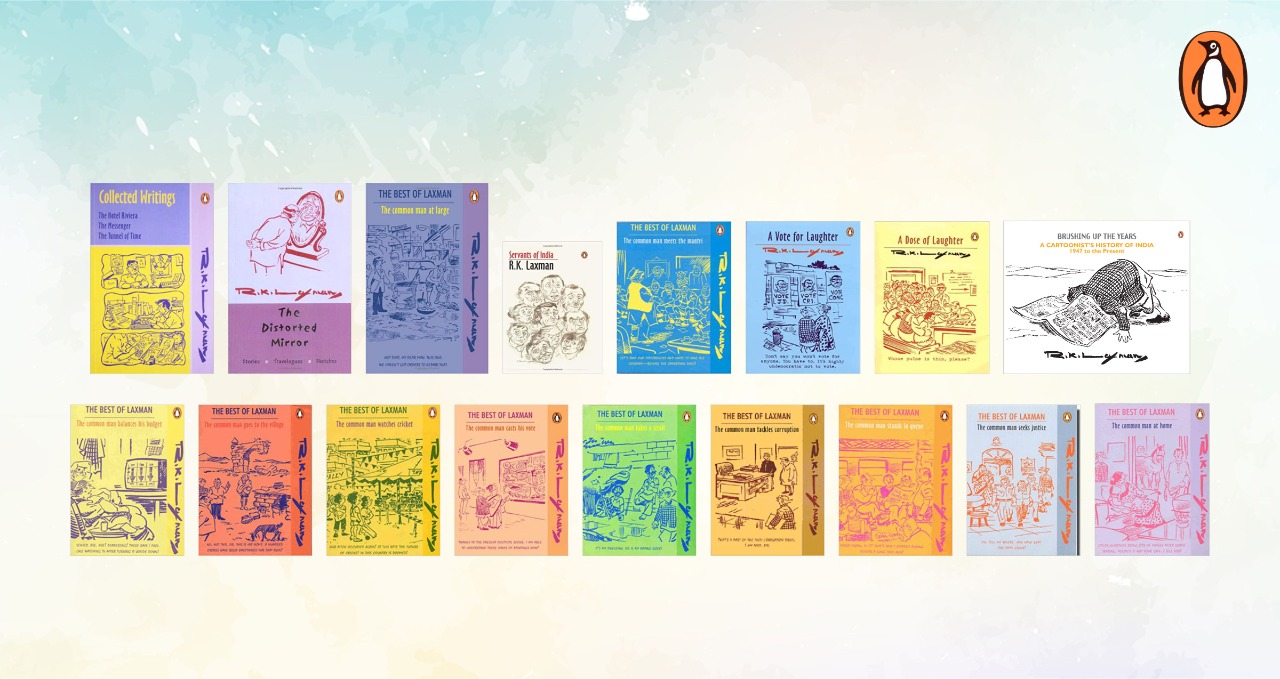
For many of us, opening The Times of India meant being drawn first and foremost to R.K. Laxman’s ‘You Said It’ cartoon strip in a tiny corner. In 2015, ISRO marked the success of the Mars mission by sharing the beloved cartoonist’s work ‘Common Man reaching Mars’. This was one of his last works, and he had sent them to the space agency. For a man who created ‘The Common Man’, Laxman was extraordinary, with an uncommon and unparalleled understanding of Indian life. On his birthday, catch up with some of his most wonderful works:


Brushing Up The Years: A Cartoonist’s History Of India, 1947 To The Present
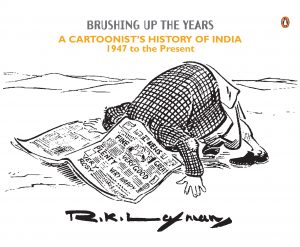
This includes a collection of cartoons from one of India’s most beloved artists, R K Laxman, as he chronicles the journey of India in his illustrations with the help of his famous creation – the common man. India’s journey since its independence and several significant political, economic, and social events have been aptly captured through the imaginative eyes of Laxman.


Collected Writings

R.K. Laxman is one of India’s most gifted storytellers. The same acerbic wit and quizzical insights that characterize his cartoons are in ample evidence in his writings as well. This ominous volume contains his two novels, The Hotel Riviera and The Messenger, and The Tunnel of Time, his autobiography.


The Common Man Meets The Mantri

From financial crises to the woes of householders, from political instability to rampant corruption, Laxman’s cartoons capture the entire gamut of contemporary Indian experience.


The Common Man Balances His Budget

Hilarious and thought-provoking at the same time, this is a treasure house of humour from one of the most striking voices commenting on Indian socio-political life.


The Common Man Stands In Queue

According to Time magazine, the common man is ‘a witness to everything: scheming politicians, rapacious bureaucrats and gossiping housewives. What’s common about this character is that like most Indians, he sees his country being forced through endless indignities by its leaders and yet doesn’t even whimper in protest.’


The Common Man at Home

The fourth volume in the series The Best of Laxman, ‘The Common Man at Home’ is a funny and incisive glimpse into quintessential Indian life.


The Common Man Goes To The Village

A collection of gems from India’s best-loved cartoonist as he explores Indian life with sharpness and humour.


The Common Man Watches Cricket
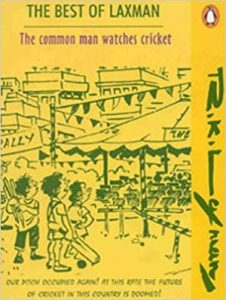
From financial crises to the woes of householders, from political instability to rampant corruption, Laxman’s cartoons capture the entire gamut of contemporary Indian experience.


The Common Man Takes a Stroll
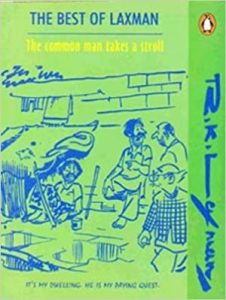
The seventh volume in the series The Best of Laxman is another solid dose of Laxman’s sharp humour which drills into the Indian social temperament.


The Common Man Tackles Corruption

Another wonderfully insightful work by Laxman, exploring the idiosyncrasies of ordinary life in this country.


The Common Man Seeks Justice

Laxman’s frazzled character, known as the Common Man, confronts India’s daily navigations with a kind of wry resignation.


The Common Man At Large

R.K. Laxman’s humour never fails, and his most beloved creation, the Common Man once again serves as a microscope through which Laxman studies and maps Indian society.


Common Man Casts His Vote

Laxman’s Common Man takes on the political scenario, packed with wit, a humorous scrutiny, and a funny exposition on life in general.


The Distorted Mirror

The Distorted Mirror brings together some of Laxman’s best short stories, essays and travelogues. The collection begins with ‘An Accident’, a most unusual mystery story where the murder weapon is a newspaper.


A Dose of Laughter
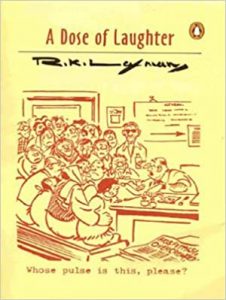
Laughter, they say, is the best medicine. A Dose of Laughter is an exhilarating collection of cartoons and jokes about doctors and their practices that will bring a smile to the lips of those who wield the stethoscope as well as those who yield to it.


Servants of India

In Servants of India, R.K. Laxman profiles ten hilariously idiosyncratic people, who are among the countless men and women who run the lives of the middle class in India. The tales are put together by Ganesh, a freelance journalist trying to write a feature article on servants he has known. As his chronicle progresses, what emerges is a richly embellished narrative starring unforgettable characters.


A Vote for Laughter
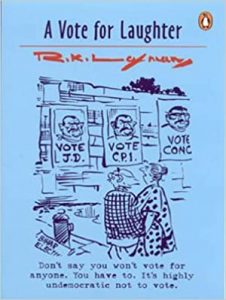
A Vote for Laughter contains a hundred of R.K. Laxman’s classic Common Man cartoons that have to do with a range of political subjects, from party meetings, election campaigns and VVIP movements to cabinet reshuffles, horse trading and foreign tours, not to forget the activity that for Laxman defines the Indian politician: the impulse to rush to the well of the House.

***

R.K. Laxman is a national treasure, and has provided a soothing antidote to the expected daily devastation carried by ‘front-page news’.

Worlds apart but together with love

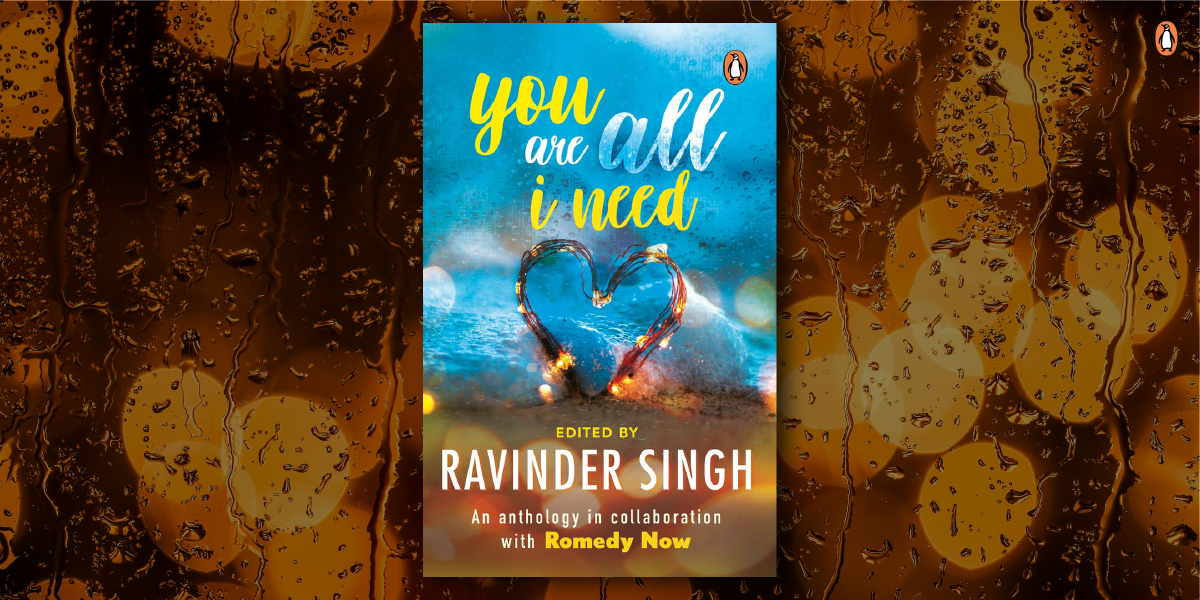
‘We are full of stories’, writes Ravinder Singh as he opens up his collection of love stories from vastly different lives. Stories create empathy, they open up the seams of our capacity for wonder and compassion, and broaden our understanding of the vagaries of human lives. In You Are All I Need, twenty-five authors share their stories and their worlds with us. Today, we bring you a few of those:


‘Something in the Rain’ by Kaustubhi Singh

I take a little walk in my cubicle for one last time because I’ll be given a clearance today. I sit on the brown wooden chair I used to kick when I was so miserable that the doctors had to tie my hands up. Alcohol was my escape. The idea of alcohol was not pleasure but an escape, because when that warm liquor burns your throat, it starts dissolving the hurt stuck down there and slowly numbs you so you don’t feel the hurt. Heartbreak isn’t beautiful; it isn’t some literature; it’s not listening to sad songs or something like that. It’s feeling okay for a minute and then starting to feel their ghost around you, their touch on your skin. You miss them, you miss them so much that you choke on your memories with them.

Dr Mayank Sharma, my shrink, almost my age, tells me that it will always hurt, and it will make one cry and scream till one’s nose is blocked and eyes puffy; that hurt is inevitable but it will hurt less, and I will see and understand why someone did what they did. And I think I understand. When I look back to the day Robbie left me for another woman, he said he had grown out of love and I stood there thinking: Where did I go wrong? But thinking about it now makes me realize I did everything to truly belong to Robbie. I changed myself for him, I changed my ways and choices for him when I should have let him love me for who I was, because that’s what love is, that’s what love is supposed to be—loving someone for who they are.


‘A Tender Ray of Love’ by Nandita Warrier

She was six; he was eight. He found her irritating and called her a ‘complaint box’; she found him obnoxious and called him a ‘monster’. They fought in every get-together.

…She was twelve; he was fourteen. He secretly detested her scholarly attitude; she was swept by his charm and wrote about him in her secret diary.

…She was eighteen; he was twenty. She aspired to be a doctor; he was determined to be one of the ‘Men in Blue’.

Their paths were growing apart, just like their personalities. They rarely met, and when they did, she was more awkward than before. He didn’t seem interested in her and she was torn whether or not to share her feelings with him.

And then something happened. He did something terrible—unforgivable! She had held him in such high regard all along, loved him with all her heart, but he had treated her like trash. She was shattered.

…She was twenty-seven; he was twenty-nine. She was a bright, young surgeon winning people over; he was a lost and bitter soul, spewing venom at everyone.

She was twenty-eight; he was thirty. She was full of dreams; he was broken.

Front cover of You Are All I Need
You Are All I Need||Ravinder Singh

That night, she slept early because she had a morning duty in the ICU. That night, he slept late after emptying a bottle of sleeping pills.

Just as Ramya reached the hospital, she was summoned to the OT for an emergency procedure. ‘Suicide attempt,’ someone whispered. Dr Iyer was instructing the team when Ramya joined them in her OT scrubs. She threw a casual look at the patient and immediately recoiled. It was Rohan! Oh no, how could this be? Memories from her childhood, locked away in some corner, defiantly barged in, making her want to sob.

He looked so pale and pitiable—a mere shadow of the handsome young man she remembered from their last meeting years back! Rohan had had everything going for him—what could have possibly gone so wrong? Sensing her discomfort, Dr Iyer enquired, ‘You know him?’

‘Family friend,’ she uttered nonchalantly, hiding the wave of sadness sweeping over her.


‘Love in the Times of Marriage’ by Aparajita Shishoo

When Adil saw her across the room, his heart skipped a beat. He couldn’t take his eyes off Meera’s radiant face. He decided to walk up to her.

‘Hi,’ Adil said.

Meera was standing alone, enjoying the party her friend, Kanika, had thrown. Meera turned to look at Adil and smiled back at him with a soft ‘hi’.

Adil continued, ‘You seem to be the arty-farty type. What are you doing at a filmy party?’

Meera was a bit tipsy by that time, so she retorted, ‘I am definitely farty, but with some arty. What about you?’

Adil laughed out loud at her candour and asked her again what she was doing at such a party.

‘I am fishing for some juicy stories for my publication. You?’

‘I am trying to make some juicy stories!’ Adil winked at Meera.

Meera laughed and asked, ‘Are you flirting with me?’ ‘Are you noticing?’ Adil said.
Meera shot back, ‘I am ignoring . . . I don’t flirt with boys who have just entered puberty.’
‘Oh! That hurt . . . really hurt!’ Adil said, imitating a heartbreak. ‘By the way, I am twenty-five, well beyond my puberty years.’

Meera laughed again at Adil’s dramatics, and they continued their conversation.

Adil was a cinematographer in the Hindi film industry and the camera was his first love, but right now his own lenses were fixed on Meera’s face. ‘So what brings you to Mumbai?’

‘Change,’ said Meera, after a pause.

…At the other end of the room, Kanika noticed the chemistry between the two and was happy that her friend was finally enjoying flirting and chatting up guys.


Lose yourself in stories that will stay with you for a long, long time. 

Transformative life lessons on trusting ourselves

Soulful and uproarious, forceful and tender, Untamed is both an intimate memoir and a galvanizing wake-up call on trusting ourselves.

For many years, Glennon Doyle denied her own discontent. Then, while speaking at a conference, she looked at a woman across the room and fell instantly in love. Three words flooded her mind: There She Is. This was her own voice—the one she had buried beneath decades of numbing addictions, cultural conditioning, and institutional allegiances. Glennon decided to quit abandoning herself and to instead abandon the world’s expectations of her. She quit being good so she could be free. She quit pleasing and started living.

Read on for six life-changing lessons we learnt from Untamed, on finding ourselves, honouring our anger and heartbreak, and unleashing our truest, wildest instincts.

 *


Embrace sensitivity as an emblem of bravery, as it takes courage to sense and to stand by that response amidst dismissal.

The opposite of sensitive is not brave. It’s not brave to refuse to pay attention, to refuse to notice, to refuse to feel and know and imagine. The opposite of sensitive is insensitive, and that’s no badge of honor…The culture depends on the sensitivity of a few, because nothing can be healed if it’s not sensed first.


Never undermine or under-value the validity of your own desires, feelings and ambitions.

I was wild until I was tamed by shame. Until I started hiding and numbing my feelings for fear of being too much. Until I started deferring to others’ advice instead of trusting my own intuition. Until I became convinced that my imagination was ridiculous and my desires were selfish. Until I surrendered myself to the cages of others’ expectations, cultural mandates, and institutional allegiances.


Pain and the feeling of sorrow are not meant to be avoided, it is meant to be felt-for resurrection and evolution.

I can use pain to become. I am here to keep becoming truer, more beautiful versions of myself again and again forever. To be alive is to be in a perpetual state of revolution. Whether I like it or not, pain is the fuel of revolution. Everything I need to become the woman I’m meant to be next is inside my feelings of now.


Be still and know. When you block out the distractions, and reach within yourself, you find the answers, the meaning already there waiting to be trusted.

It’s my daily reminder that, if I am willing to sit in the stillness with myself, I always know what to do. That the answers are never out there. They are as close as my breath and as steady as my heartbeat. All I have to do is stop flailing, sink below the surface, and feel for the nudge and the gold. Then I have to t rust it, no matter how illogical or scary the next right thing seems.

Untamed Front Cover
Untamed || Glennon Doyle
Don’t be afraid to ‘destroy’ your life, because it’s only then that you can begin anew, to rise like as phoenix from the ashes of destruction.

Destruction is essential to construction. If we want to build the new, we must be willing to let the old burn. We must be committed to holding on to nothing but the truth. We must decide that if the truth inside us can burn a belief, a family structure, a business, a religion, an industry— it should have become ashes yesterday.


Sometimes the best way to reclaim your life is to simply cede the need to control, to restrain, yourself

I quit spending my life trying to control myself and began to trust myself. We only control what we don’t trust. We can either control ourselves or love ourselves, but we can’t do both. Love is the opposite of control. Love demands trust.


Extracts from Untamed by Glennon Doyle (2020)

Tales as old as time: Mythological reads for you!

This month, we have been revisiting tales as old as time from the immersive world of Indian mythology and our favourite epics!

Scroll down to have a look at our reading list and join us on this journey!


The Aryavarta Chronicles


Govinda: The Aryavarta Chronicles Book 1
Front cover of Govinda
Govinda || Krishna Udayasankar


For generations, the Firstborn dynasty of scholar-sages, descendants of Vasishta Varuni and protectors of the Divine Order on earth, has dominated here. For just as long, the Angirasa family of Firewrights, weapon-makers to the kings and master inventors, has defied them. In the aftermath of the centuries-long conflict between the two orders, the once-united empire of Aryavarta lies splintered, a shadow of its former glorious self.

Kaurava: The Aryavarta Chronicles Book 2
Front cover of Kaurava
Kaurava || Krishna Udayasankar


Emperor Dharma Yudhisthir of the Kauravas and Empress Panchali Draupadi rule over a unified Aryavarta, an empire built for them by Govinda Shauri with the blessings of the Firstborn and by the might of those whom everyone believes long gone – the Firewrights.

Now the Firewrights rise from the ashes of the past, divided as before in purpose and allegiance, and no one,

His every dream shattered, Govinda is left a broken man. The only way he can protect Aryavarta and the woman in whose trusted hands he had left it is by playing a dangerous game. But can he bring himself to reveal the terrible secrets that the Vyasa has guarded all his life – secrets that may well destroy the Firstborn, and the Firewrights with them?

Kurukshetra: The Aryavarta Chronicles Book 3
Front cover of Kurukshetra
Kurukshetra || Krishna Udayasankar


The empire that was Aryavarta fades under the shadow of doom. As the bitter struggle to gain control of the divided kingdom ensues, both Krishna Dwaipayana Vyasa of the Firstborn and the Secret Keeper of the Firewrights can only watch as their own blood, their kin, savage and kill on the fields of Kurukshetra. Restraint and reason have deserted the rulers who once protected the land and they manipulate, scheme and kill with abandon – for victory is all that matters.

Reforging the forsaken realm in the fire of his apocalyptic wrath, Govinda prepares to destroy everything he loves and make the ultimate sacrifice for the sake of one last hope: that humanity will rise.

**

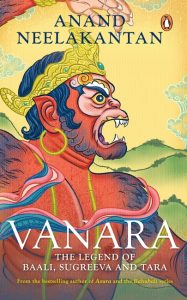
Vanara: The Legend of Baali, Sugreeva and Tara
Front cover of Vanara
Vanara || Anand Neelakantan


Baali and Sugreeva of the Vana Nara tribe were orphan brothers who were born in abject poverty and grew up as slaves like most of their fellow tribesmen. They were often mocked as the vanaras, the monkey men. Sandwiched between the never-ending war between the Deva tribes in the north and the Asura tribes in the south, the Vana Naras seemed to have lost all hope. But Baali was determined not to die a slave. Aided by his beloved brother, Sugreeva, Baali built a country for his people.

The love triangle between Baali, Tara and Sugreeva is arguably the world’s first.

Vanara is a classic tale of love, lust and betrayal. Shakespearean in its tragic depth and epic in its sweep, Vanara gives voice to the greatest warrior in the Ramayana-Baali.

**

The Mahabharata (Box Set)
Front cover of The Mahabharata boxset by Bibek Debroy
The Mahabharata (Box Set) || Bibek Debroy


The greatest Indian story ever told of a war between two factions of a family, The Mahabharata has continued to sway the imagination of its readers over the past centuries.

While the dispute over land and kingdom between the warring cousins-the Pandavas and the Kauravas-forms the chief narrative, the primary concern of The Mahabharata is about the conflict of dharma. These conflicts are immense and various, singular and commonplace.

The complete and unabridged Sanskrit classic, now masterfully and accessibly rendered for contemporary readers by Bibek Debroy.

**

Ramayana, Mahabharata, Bhagvata: Illustrated Retellings of the Greatest Indian Epics Box Set


Jaya: An Illustrated Retelling of the Mahabharata
Front cover of Jaya by Devdutt Pattanaik
Jaya || Devdutt Pattanaik


High above the sky stands Swarga, paradise, abode of the gods. Still above is Vaikuntha, heaven, abode of God.

The doorkeepers of Vaikuntha are the twins, Jaya and Vijaya, both whose names mean ‘victory’. One keeps you in Swarga; the other raises you into Vaikuntha. In Vaikuntha there is bliss forever, in Swarga there is pleasure for only as long as you deserve.

What is the difference between Jaya and Vijaya? Solve this puzzle and you will solve the mystery of the Mahabharata.

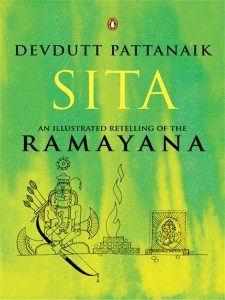
Sita: An Illustrated Retelling of the Ramayana
Front cover of Sita by Devdutt Pattanaik
Sita || Devdutt Pattanaik


It is significant that the only character in Hindu mythology, a king at that, to be given the title of ekam-patni-vrata, devoted to a single wife, is associated with the most unjust act of abandoning her in the forest to protect family reputation.

This book approaches Ram by speculating on Sita—her childhood with her father, Janak, who hosted sages mentioned in the Upanishads; her stay in the forest with her husband who had to be a celibate ascetic while she was in the prime of her youth; her interactions with the women of Lanka, recipes she exchanged, emotions they shared; her connection with the earth, her mother; her role as the Goddess, the untamed Kali as well as the demure Gauri, in transforming the stoic prince of Ayodhya into God.

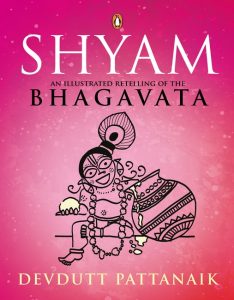
Shyam: An Illustrated Retelling of the Bhagavata
Front cover of Shyam by Devdutt Pattanaik
Shyam || Devdutt Pattanaik


The Bhagavata is the story of Krishna, known as Shyam to those who find beauty, wisdom and love in his dark complexion. It is the third great Hindu epic after the Mahabharata and the Ramayana.

This book seamlessly weaves the story from Krishna’s birth to his death, or rather from his descent to the butter-smeared world of happy women to his ascent from the blood-soaked world of angry men.

**

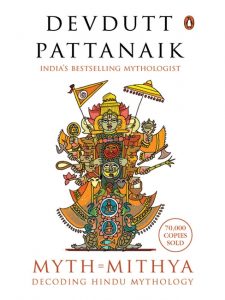
Myth = Mithya
Front cover of Myth = Mithya by Devdutt Pattanaik
Myth = Mithya || Devdutt Pattanaik


In this groundbreaking book Dr Devdutt Pattanaik; one of India’s most popular mythologists; seeks an answer to these apparent paradoxes and unravels an inherited truth about life and death; nature and culture; perfection and possibility. He retells sacred Hindu stories and decodes Hindu symbols and rituals; using a unique style of commentary; illustrations and diagrams. We discover why the villainous Kauravas went to heaven and the virtuous Pandavas (all except Yudhishtira) were sent to hell; why Rama despite abandoning the innocent Sita remains the model king; why the blood-drinking Kali is another form of the milk-giving Gauri; and why Shiva wrenched off the fifth head of Brahma.

The comfort of a bunker

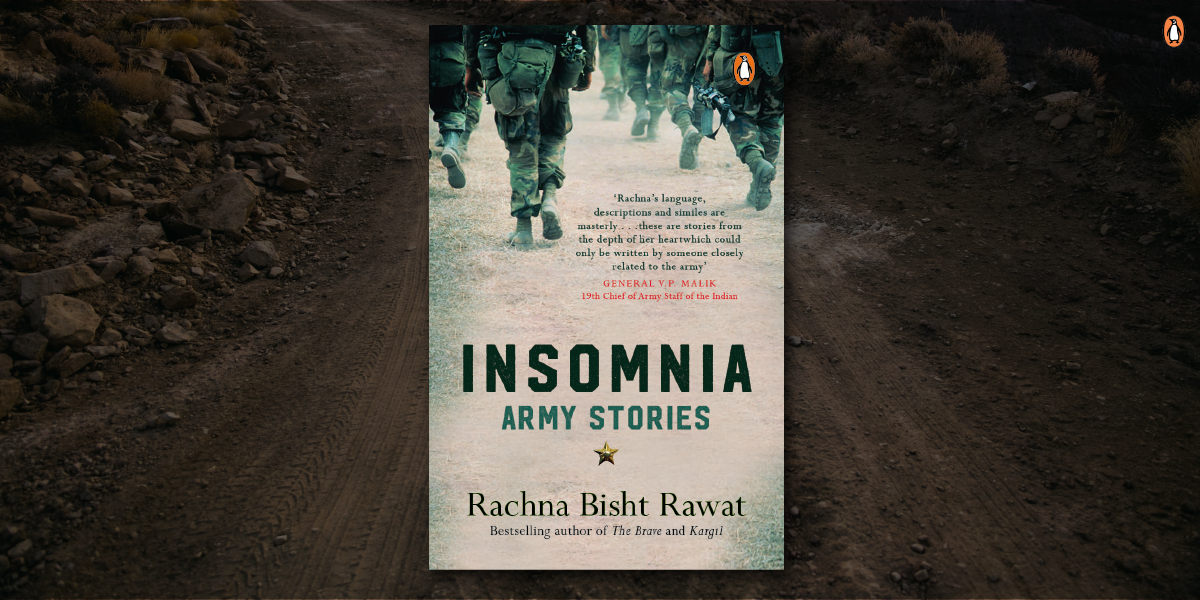
Insomnia || Rachna Bisht Rawat

A retired General is haunted by voices of dead men.
Soldiers from two enemy nations manning posts in freezing Siachen form a strange connection.
A young Lieutenant dying in the jungles of Arunachal is watched over by three men, one of whom would have his destiny changed forever.
What is the dark secret held by a Major and his men operating incognito in Kashmir?
What surprise is a train bound for Agra bringing to the all-male bastion of 13 Para?
Who are the invisible people a little girl awaiting brain surgery in the Lansdowne Military Hospital talks to?

From the bestselling author of The Brave, 1965 and Kargil comes a book that will take you into the olive-green world of army cantonments, through stories that will delight and disturb in equal measure.

Here’s an excerpt from this perceptive collection of army stories.


**

One morning, Satyapal told Javed that he would not be on guard duty the next day. He and Rifleman Ramesh had been detailed for a routine check of communication lines. Every ten days, three soldiers were sent to check the wires that kept the telephone connection, between the post and the company headquarters about two kilometres away, running. The post and the HQ each had the responsibility to maintain 1 km of the communication line—to ensure the wires were intact and working, not broken or buried in the snow. Since their very lives depended on it, the soldiers carried out the task with complete sincerity.

The empty jerry cans that had been used to cart kerosene to the post were put to good use here. They were filled with snow, which would quickly freeze into hard ice. The heavy jerry cans were then used as support for the telephone lines, which were tied on top of them, so that the wires would not get buried after heavy snowfall.

‘We plan to leave by 8 a.m. and return before noon,’ Satyapal told Javed, who nodded. Every soldier on Siachen knew that the weather usually turned late afternoon, so all activities were planned in such a way that the soldiers would be back in their bunkers by lunchtime.

Javed had received a letter, brought by a new soldier reporting on duty from leave. His daughter was unwell, he told Satyapal. ‘I can’t do anything for them from here. I feel so helpless,’ he said. He sounded sad that morning.

‘Don’t worry, saathi, she will be fine. Children keep falling sick all the time,’ Satyapal consoled him. Soon after, Satyapal told Javed he would now see him after a day.

‘Khuda hafiz, saathi,’ Javed called out to him. ‘Apna khayal rakhna.’

‘You too, Javed Bhai. And don’t worry so much about your daughter. I am sure she is absolutely fine by now,’ Satyapal reassured him and, with a casual wave of his hand, stepped inside his bunker.

**

The next afternoon, a sudden avalanche took the soldiers by surprise. Icy winds screamed outside their huts, as they huddled together inside their bunkers, drawing comfort from each other’s presence and from the warmth of the kerosene stove.

Around 2 p.m., Javed was in his sleeping bag, rereading his wife’s letter. Omar, the designated cook for the week, was cooking rice to go with the meat tins they planned to open for lunch. Their four other soldier comrades were playing cards, and radio operator Rifleman Faizal Sharief, quiet and withdrawn by temperament, was, as always, sitting in a corner by himself, listening to Skardu Radio. ‘Do Hindustani sipahi Siachen Glacier ki Rana Post mein baraf ke neeche zinda dafan,’ the newsreader was saying. None of the soldiers was paying attention to the news but the moment they heard Siachen mentioned they all started listening.

‘Aawaaz unchi kar, Faizal,’ Javed called out, placing the letter under his pillow.

The woman reading the news in her crisp Urdu was not giving many details, but she clearly stated that three Indian soldiers had been caught in an avalanche that afternoon. While one had been found, two were reported missing, presumed buried in the snowpack created by the avalanche.

For a moment there was abject silence in the bunker. Then, one of the card players spoke: ‘So we have two less enemy soldiers to fight. The glacier got to the bastards before we did. Achhi khabar hai. Miyan, tum patte baanto.’

The four of them chuckled loudly and got back to their game. They did not notice the disquiet that shadowed Javed’s face, but Faizal was watching him thoughtfully. ‘Apne niche wali post ke bande lagte hain,’ he said to Javed. ‘Isn’t that Rana Post? Javed bhai aap toh baat karte ho na unmein se ek se?’ Faizal sounded concerned. Javed just nodded.

Javed remembered that Satyapal had to go and check the communication lines that day and desperately hoped that he was not among the men missing.

**

Get to know your author – A factual glimpse into Bilal Siddiqi

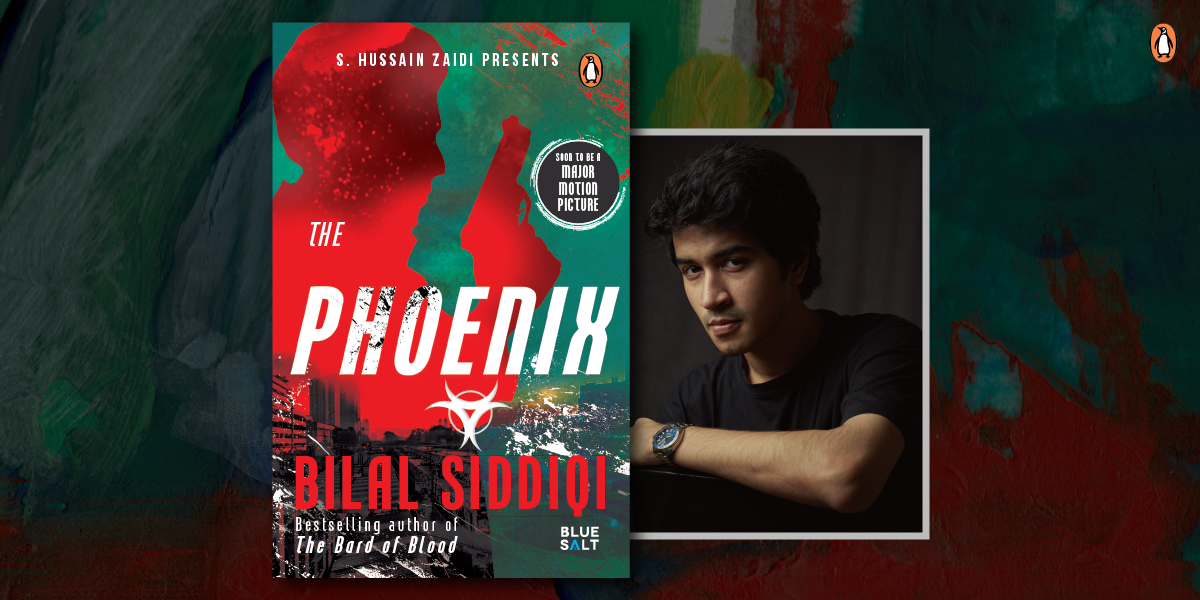
Bilal Siddiqi, a shining star among the young authors has authored four novels. His fifth – The Phoenix – is an exciting new release, hot off the press and will transport you into a world of secret missions, uncertain loyalties and retribution.

Siddiqi is a fan of the world of espionage and thrillers. His novel The Bard of Blood has been adapted into a Netflix series.


Upon the release of his new book, we bring you some fascinating facts about the dazzling author who has brought us one nail-biter after another.


1. His first novel was called The Bard of Blood, which he wrote he was 19 years old. It was published when he was 20.


2. It wasn’t only James Bond, Robert Ludlum and Fredrick Forsyth that drew him to the genre of the spy thriller. His interest in studying the patterns of religious conflict and the roots of extremism drove him to write The Bard of Blood


3. He is an avid reader, and loves fiction.


4. Not only did Bollywood actor Emraan Hashmi star in the Netflix adaptation of The Bard of Blood but he also co-authored The Kiss of Life with Siddiqi (bet you didn’t know this one!)


5. Siddiqi enjoyed reading Shakespeare in college.


6. The first and only advance copy that Penguin India gave Siddiqi was presented to him by Shah Rukh Khan.


7. Siddiqi is not bound by genre. He likes to write in different styles. The Bard of Blood was a spy thriller, The Kiss of Life a biography, The Stardust Affair a romantic thriller, and The Pheonix is a fast-paced thriller.


8. He considers author Hussain Zaidi his mentor. He started working with Zaidi after Zaidi had asked for 10 volunteers to help him with research for his novel Mumbai Avengers in 2014. Siddiqi was shortlisted.


Siddiqi says he started writing his novel but getting published was not his goal. He was writing for himself, so that years later, he would have something to look back upon as a piece of himself from the past. Well, he did get published. And the rest is history.


[The Phoenix is out now.  Get your copy today!]

Epic tales for the young readers!

From fierce women warriors to never-told-before stories behind your greatest epics, we are bringing to you some eternal tales to introduce the next generation of readers to!

Scroll down for stories of EPIC proportions!


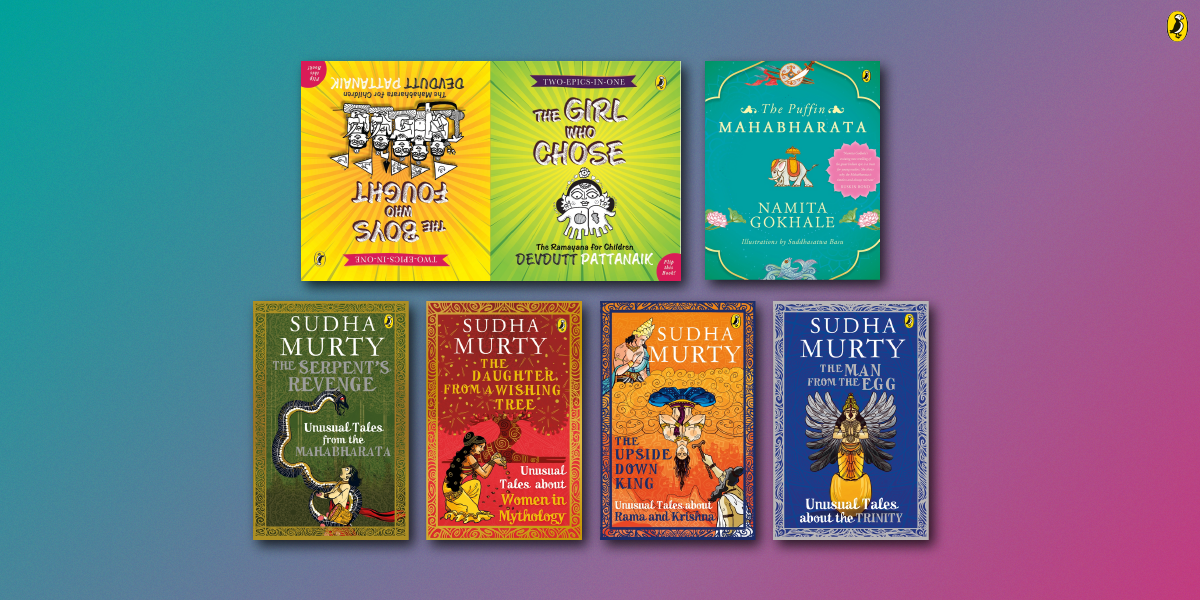
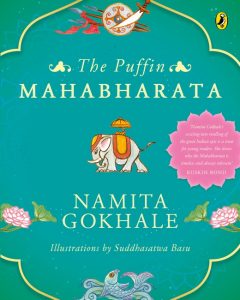
The Puffin Mahabharata
by Namita Gokhale
The Puffin Mahabharata Front Cover
The Puffin Mahabharata || Namita Gokhale (Author), Suddhasattwa Basu (Illustrator)


‘A long, long time ago, in the ancient lands of India, known in those days as Bharatvarsha, a family quarrel grew into a bloody war. There had been wars before, and there have been wars since, but that mighty battle between warring cousins of the Kuru clan has become a part of the mythology and history of India. Told and retold a million times, the story of the Mahabharata is about defeat as much as victory, about humility as much as courage. It is the greatest story ever told.’

Like a modern-day suta or storyteller, Namita Gokhale brings alive India’s richest literary treasure with disarming ease and simplicity.

*

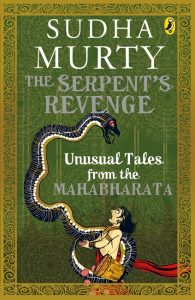
The Serpent’s Revenge: Unusual Tales from the Mahabharata
by Sudha Murty
The Serpent's Revenge
The Serpent’s Revenge || Sudha Murty


How many names does Arjuna have?
Why was Yama cursed?
What lesson did a little mongoose teach Yudhisthira?

Award-winning author Sudha Murty reintroduces the fascinating world of India’s greatest epic through the extraordinary tales in this collection, each of which is sure to fill you with a sense of wonder and bewilderment.

*

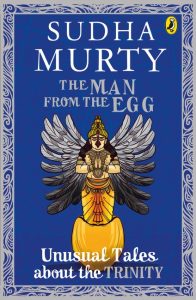
The Man from the Egg: Unusual Tales about the Trinity
by Sudha Murty
The Man from the Egg Front Cover
The Man from the Egg || Sudha Murty


Did you know that Brahma once had five faces?
Why do snakes have a forked tongue?
Do gods cheat?
Why does Shiva sport a crescent moon on his head?

Sudha Murty walks by your side, weaving enchanting tales of the three most powerful gods from the ancient world. Each story will take you back to a magical time when people could teleport, animals could fly and reincarnation was simply a fact of life.

*

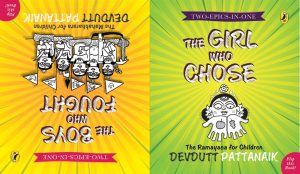
Two-Epics-in-One (The Girl Who Chose and The Boys Who Fought)
by Devdutt Pattanaik
Two-Epics-in-One Flipbook Cover
Two-Epics-in-One || Devdutt Pattanaik


What were Sita’s choices?
What was the outcome of the fight of the five brothers against a hundred princes?
A tale told two thousand years ago, of Ram and Ravan-the sun-prince of Ayodhya who follows the family rules and the king of Lanka who had little respect for others’ choices-is one that has been reinterpreted in myriads of ways, exalting the virtues of the princes. Few notice, however, that the story is actually lead by the girl who chose, Sita.

The other is the tale of the five Pandavas and their cousins, the hundred Kauravas, who threw out the family morals. Instead of taking care of their five orphaned cousins, the princes burnt their house, abused their wife and stole their kingdom. This is the saga of the boys who fought not for revenge but for dharma.

The country’s favourite mythologist, Devdutt Pattanaik, empowers and entertains with a double bill of the Ramayana and the Mahabharata for a whole new generation of readers!

*

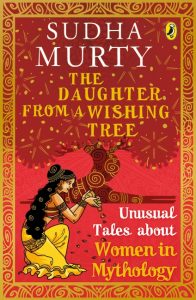
The Daughter from a Wishing Tree: Unusual Tales about Women in Mythology
by Sudha Murty
The Daughter from a Wishing Tree front cover
The Daughter from a Wishing Tree || Sudha Murty


Did you know that the Trinity often turned to goddesses to defeat the asuras?
Did you know that the first clone in the world was created by a woman?

The women in Indian mythology might be fewer in number, but their stories of strength and mystery in the pages of ancient texts and epics are many. They slayed demons and protected their devotees fiercely. From Parvati to Ashokasundari and from Bhamati to Mandodari, this collection features enchanting and fearless women who frequently led wars on behalf of the gods, were the backbone of their families and makers of their own destinies.

*

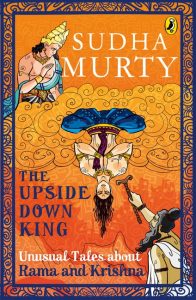
The Upside-Down King: Unusual Tales about Rama and Krishna
by Sudha Murty
The Upside Down King front cover
The Upside Down King || Sudha Murty


Did you know there was a time when bears spoke, the moon laughed and babies were found inside fish?
Have you heard of the two-horned sage who had never seen a woman in his life?
Did you know Ravana’s half-brother was the god of wealth?
Have you ever seen a man with a thousand arms?

The tales in this collection surround the two most popular avatars of Lord Vishnu-Rama and Krishna-and their lineage. Countless stories about the two abound, yet most are simply disappearing from the hearts and minds of the present generation.

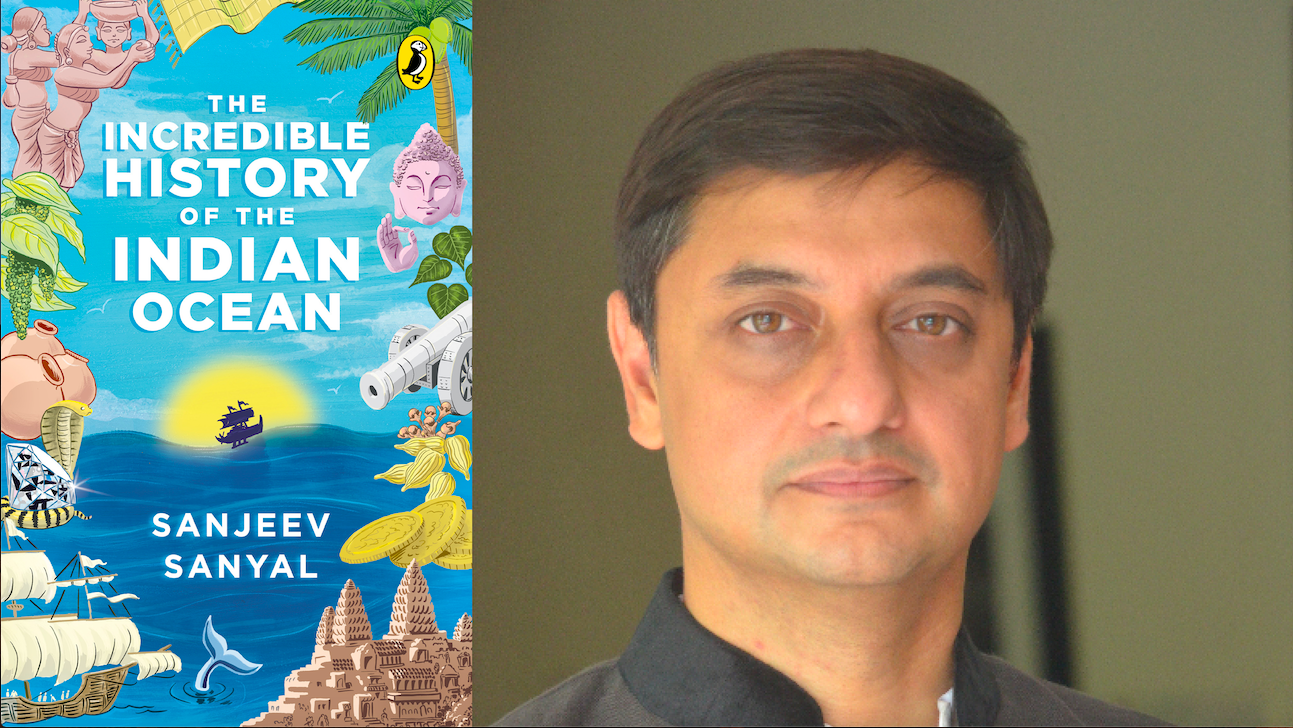
An incredible history of Sanjeev Sanyal

Now that we know that Phoenicians probably sailed around the Cape of Good Hope 2000 years before Vasco da Gama, we’re here to find out more about the man who gave us that amazing fact and others like them! Get to know writer Sanjeev Sanyal a little better.

1) He was one of the first Indians to get a paragliding pilot license. He was part of the first batch of Indians in 1990 to earn a pilot’s license after undergoing training in Himachal Pradesh. Since there was no Indian certification body at that time, the license was given by the British Association of Paragliding Clubs.


An image of a person paragliding

*

2) He also has an Instructor grade certification for kayaking and canoeing from way back in 1991. He was one of the earliest certified instructors of the Indian Kayaking and Canoeing Association.


Illustration of a boy rowing a boat

*

3) He is a martial arts black belt (Taekwondo) which he earned in 2008.


Illustration of a boy in a white Taekwondo attire with a black belt

*

4) He is currently researching a book on the contributions of armed Revolutionaries in India’s freedom struggle


Illustration of a man's silhouette addressing a gathering

*

5) He collects old maps of India, Indian cities and of the Indian Ocean.


An illustration of the world map without borders


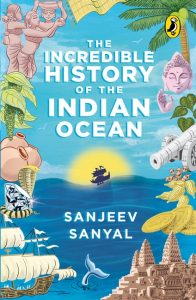
Sanjeev Sanyal has given us a fascinating maritime history of the Indian Ocean, with the most beautiful illustrations.

Front cover of The Incredible History of the Indian Ocean
The Incredible History of the Indian Ocean || Sanjeev Sanyal

First love, first heartbreak and a slice of life

Love, heartbreak, family complications and the nuances of relationships – Jennifer Niven tackles it all with her captivating prose. Through reminiscence or present lived reality, Breathless resonates with us all. Relive your own special moments with an excerpt:

I stand for a long time, staring out over the water, black and endless except for the glow of lights in the far distance. And this, I know, is the mainland. It might as well be light-years away.

I wait for a boat to appear. I wait for Miah to come.
I wait.
I wait.

Suddenly, I don’t feel the rain on my skin or my hair or my clothes because the only thing I feel is the ache in my heart. An ache like I’ve never felt before. It’s both terrible and beautiful. And it fills me. It fills me.

We were supposed to have more time.

We’re always supposed to have more time.

I sink onto the bench, which is damp and which leaves me damper. At some point the rain stops completely. I look up and the stars overhead are a carpet of light. There’s this feeling I have here. Miah’s a part of it. But he’s not all of it. It’s the summers of childhood when I was eight, ten, twelve. And those kinds of beautiful moments where everything is full of love and light and possibility.

I rest one hand on the wood of the seat and my fingers bump into something cool and smooth. I look down. A shark tooth. The largest one I’ve ever seen. And there, drawn around it, a circle.

***

I turn back up the path and walk toward the inn, shark tooth in my pocket. Through the trees, the porch lights shine like beacons, like lanterns illuminating the way to the world beyond. I go up the steps, feet splashing in the little dips inthe wood. I slip on my shoes, brush the hair off my face, but otherwise I don’t bother. This is me, take it or leave it—wet and rumpled and missing Miah.

“Claude?” Mom’s voice calls out to me from the end of the porch. She is perched on the edge of the swing, as if she’s been watching for me. I walk over and sit down beside her, a lump in my throat as large as the ocean.

“Everything okay?” she says. And she knows. I can see it in her face.

Breathless Front Cover by Jennifer Niven
Breathless || Jennifer Niven

“It will be.” But my heart doesn’t believe it.

She takes my hand, and the swing rocks back and forth, back and forth, as we listen to the rain.

At 9:53, I feel it. The island is emptier because he’s no longer on it.

I don’t want to go home yet, so I head to the beach, not caring if I run into alligators or snakes or wild hogs. Under the trees, over the dunes, onto the sand, until I’m beneath the moon and all this sky. I’m too restless to sit. I drop my bag and kick off my shoes and walk. The tide rolls in like thunder and I’m the only one here.

I walk for at least a mile. I’m trying not to look at the lights in the distance, the ones that are the neighboring islands. Because beyond those islands is the mainland, and on that mainland is Jeremiah Crew, who didn’t say goodbye.

***


Breathless is a beautiful celebration of the joys and pangs of stepping into adulthood, and moments that are uniquely memorable to us all.

On startups and the post-COVID world

Was there a specific ah-ha moment or an incident that made you realize how necessary a book like this was?

Oh there were hundreds. Between the two co-authors, we have met several hundred start-up founders, and they have all been looking for that elusive manna from heaven, namely funding. But we were surprised at how clueless most of them were about how to go about it. Many of them had no entry barrier – something that investors insist on. Most of them did not have scalable businesses, without which investors would simply pass. In fact many of them had no real business plan – they were simply executing.

We used to advise mentor these founders on all the above issues. And then it hit us. Why not write a book about it. And reach not hundreds, but thousands of start-up founders. And that’s where out book was born.


Co-authoring a book comes with its own asset of challenges but the authorial voice in this is so consistent. How did you manage that?

Right from the beginning, we realized that the style of writing had to be consistent right through. Both the authors provided content – and each one clearly had his own strengths. Both wrote drafts. There were the usual fist fights over some of the material – ending amicably over beer, of course. But the final version was penned by one of us – with both the authors concurring.


Is there a secret sauce for a successful start-up?

Yes there is, but its not secret. It’s a framework that the authors have developed after studying hundreds of start-ups – both successes and failures. And its called PERSISTENT. To explain, P stands for PROBLEM. In other words, are you solving a problem for your customer? E refers to EARNINGS MODEL, or simply, how will you make money? R is the RISKS associated with the business. S stands for SIZE OF THE MARKET. I refers to INNOVATION, which your product or solution must have. The second S implies SCALABILITY. After all, even if you are operating in a gigantic market, you will not get anywhere unless your business is scalable. T refers to the TEAM – starting with the founders of course. E stands for ENTRY BARRIER, or how the business will keep competitors at bay. N refers to NICHE – if you are in a large, crowded market, identify a non-crowded NICHE within it. And the final T stands for TRACTION. You many have everything else, but are you actually getting customers and rupees?

We have found that successful start-ups are PERSISTENT, whereas unsuccessful ones lose out on one or more of the PERSISTENT  parameters. And that’s what we have focused on in our book.

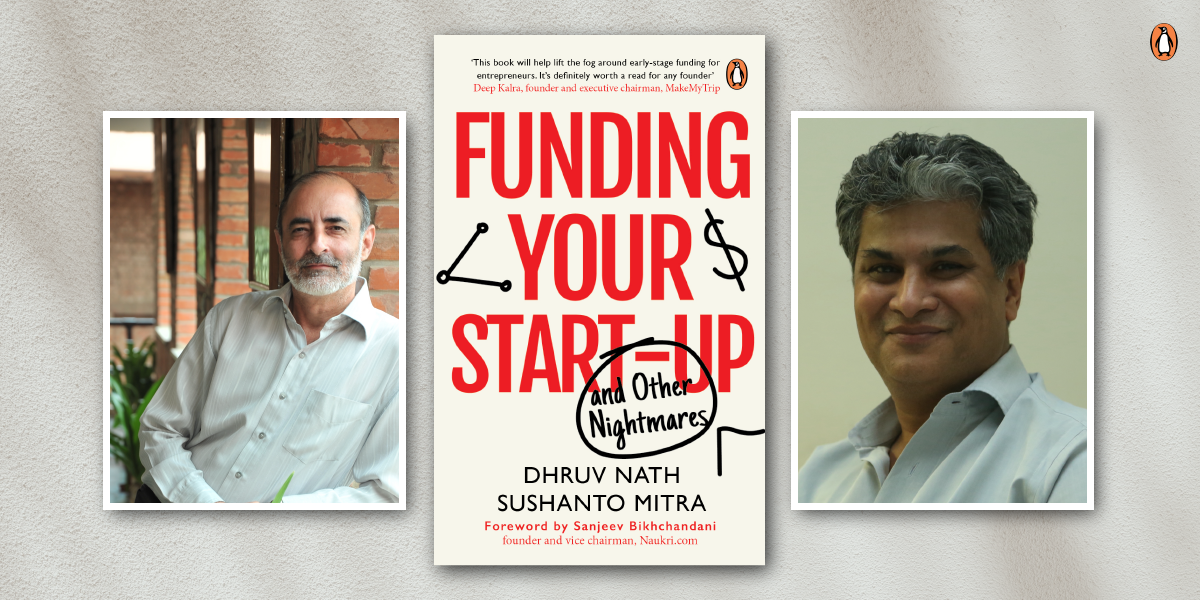
Funding Your Startup Front Cover
Funding Your Startup || Dhruv Nath, Sushanto Mitra
From an investor’s perspectives which sectors do you think would be the best to invest in right now?

We would like to divide sectors into three categories. Those which have been negatively impacted by Covid – such as hotels, restaurants, gyms, movie halls, taxi and bus services, travel, etc. These are a clear no-no for investors right now. After all, why would you invest in such uncertain times?

Then there are those sectors which have not been impacted, either negatively or positively – such as FMCG and agritech. These are evergreen sectors, and will remain so. In fact, Lead Angels has been investing actively in these sectors, even during the pandemic.

Finally, we have the star sectors – those that have been impacted positively by Covid. Sectors that have boomed because people were forced to stay at home and change their lifestyle. On-line gaming is one. After all, what do you do, if you have to sit at home 24×7? You play games, don’t you? Another area is On-line education, all the way from little kids to adults. In fact, several investments that Lead Angels has made in these sectors over the past couple of years, have just skyrocketed beyond our own expectations. And of course there is health. People are getting more and more concerned about health, and that is leading to a surge in businesses in health-tech. As well as businesses which are into organic or natural products. You see, eat healthy, be healthy, and invest healthy is the mantra now.


What kind of impact will the pandemic have on startups?

Apart from the sectoral shifts that we have spoken about earlier, there are two significant impacts. First of all, founders have begun to cut costs dramatically – simply to survive in a low-business environment. Salaries have been reduced, plush offices are being vacated and business are shifting to smaller, lower cost environments. Work from home is becoming a bit of a norm. We believe some of these trends will be permanent – such as the trend in increasing work from home.

The second major impact is that Covid has separated the men from the boys. Here we mean the founders of course. There are those who have simply thrown up their hands and are waiting for God – or the appropriate vaccine – to help. But there are those who are fighting. Those who have pivoted their business model, either temporarily or permanently, to stay afloat in this pandemic. Interestingly, this has given investors a great way to separate out the investible companies from the rest. Namely, look for founders who are fighters. Those who have figured out ways to survive. They are the winners of the future, and they deserve your money, dear investor.


Have you observed some startups that have become successful without funding?

Sure. Unfortunately, funding has become a kind of “In-thing”. You have to get funding because your peers have got it. How else will you hold a glass of beer at the next party and talk nonchalantly about Series A and Series B? Funds should be raised because you need them, and not because it is fashionable to do so. Two highly successful companies mentioned in the book – InfoEdge and IndiaMart – started off over twenty years ago and steadfastly refused to raise funding, except when it was really necessary. They are now both market leaders in their respective fields. Among the recent ones, we have an interesting company called Gadgetrestore, which is into the business of repairing and refurbishing mobile phones. They started just over a year ago, never raised funding, are profitable, and are growing. What more can you ask for? Remember, funding is to be taken when you need it, not when your friend has taken it!


error: Content is protected !!