Sixteen-year-old Ruskin, after having finally finished his school, is living with his stepfather and mother at the Old Station Canteen in Dehradun and planning to leave for England to embark upon his writing journey. But the prospect of saying goodbye to the warm, sunny shores of India looms large.
Following the trail of Looking for the Rainbow, Till the Clouds Roll By and Coming Round the Mountain, A Song of India is the story of Ruskin Bond’s last year in Dehra, the year that later became the basis for his first novel, The Room on the Roof. It’s about love, friendship, dreaming, hoping and just being sixteen. Read on for nostalgic look at being young and in the throes of first love in 1950s India.
—
Raj was a couple of years older than me, studying for her BA exams. She wasn’t pretty, but she had a lively, expressive face and an athletic build. She was also her college’s badminton champion. Every evening, she practised on the court she had laid out in front of their house. There was just enough room for it, as a tall hedge separated their place from the rest of the compound. Sometimes I’d watched her playing with her friends. She moved about the court like a gazelle; and she had long arms, which enabled her to reach the shuttlecock from difficult angles. Barefooted, she darted backwards and forwards without seeming to tire. ‘Do you play badminton?’ she asked me after lunch that day. ‘Not after eating half a dozen puris,’ I said from the comfort of an easy chair in the veranda. ‘I’ve only played once or twice.’ ‘Come in the evening and play with me,’ she said.
A Song of India || Ruskin Bond
So that evening, I borrowed Ranbir’s racket and spent an exhausting hour chasing a shuttlecock all over the badminton court. Raj had me on the run from the start of the proceedings, and there was no let up. The score? I think it was 20–0, 20–1 or something like that, in her favour of course. I spent a lot of time picking up the shuttlecock and politely handing it back to her. She offered me a return match the next day, and I was foolish enough to accept. Another love game! And the same the day after. Was I a glutton for punishment, or was I falling in love?
Not head over heels in love, but something more gradual—the pleasure of being in her presence, of the occasional contact, of the sparkle in her eyes. It was a friendship with a girl, and for Raj it was just that—a friendship—while for me, it was something a little more intense. One day, quite by chance, a small sewing needle lodged itself in her heel when she was running barefoot down the veranda steps. I did my best to extract it, taking her foot in my hands and using a pair of tweezers. But I was no doctor, and the needle had made its way further into her foot. We left it alone, assuming it would work its way out. But it appeared to be travelling further up her leg. I had heard of people who had suddenly fallen dead through having needles embedded in various vital organs. Muscular contractions could send an accidentally stuck needle further up her body, working its way between the muscles for considerable distances, until it reached the heart . . .
When I mentioned this to Raj’s parents, they immediately took her to Civil Hospital and showed her to a surgeon. With the help of an X-ray, he located the needle (now in the region of her calf muscle), removed it surgically and sent her home with her foot in a bandage. No badminton for a week. Respite for me from all those love games. But true love it was, for every day I would find myself on a chair beside her, attempting to entertain her with my bedside chatter. I was much better at conversation than at badminton. And after some time, the conversations became quite personal. Raj told me that she wasn’t interested in marriage—she longed for a career in badminton or athletics—but that her parents were already on the lookout for a suitable young man for her. After all, she was nineteen going on twenty.
‘Too young to get married,’ I said, from my seventeen years of acquired wisdom. (I had completed seventeen that summer.) ‘Wait till you’re twenty-five. By then I’ll be twenty-two, rich and famous, and you can marry me and I’ll be your badminton and long-distance running coach!’
—
A heartwarming addition to Ruskin Bond’s boyhood memoirs, A Song of India is a delightful celebration of the beginning of the country’s most loved writing journeys!
Amidst the stress of juggling high expectations in a highly competitive work environment, how does our generation, achieve our goals while leading fulfilling lives? Saurabh Mukherjea and Anupam Gupta attempt to answer this question by using the principles of Simplicity, Specialization, Creativity and Collaboration. They delve into a treasure trove of material from global gurus and successful business professionals while and drawing on their own careers to show how readers can apply these principles to the fields of business and investment, even to life itself. The Victory Project is the ultimate guide to surviving and thriving in the professional and social domains.
The Victory Project || Saurabh Mukherjea, Anupam Gupta
**
Things were not like this, our parents told us. But our parents lived in simpler times in a world of closed economies, government jobs, cocooned from the rest of the world, happy with 10 per cent increments and one-month bonuses. Their biggest dreams were to send their kids abroad and enjoy a retired life on government pensions in government colonies. T.V. Mohandas Pai, the former chief financial officer (CFO) of Infosys and current chairman of Manipal Global Education, tells us: ‘When I was growing up, we had a very simple life. We were happy with whatever we had—from a radio to a cycle to a company-owned car. We’d go to the library, read a book or read a comic. There was not much growth for us and no impetus to change. We had lower incomes and we didn’t know what more we could do as opportunities were scarce. The economy grew slowly! There wasn’t even a television to show us the world outside.’ Nearly thirty years after India opened up its economy to the world, our lifestyles—and those of youngsters after us—have seen a sea change that makes our lives almost unrecognizable to our parents. The plus side is the immense wealth created and enjoyed as new sectors and new careers propelled us forwards. The minus side is the price we have paid in physical and mental health. India’s weak infrastructure, unable to cope with decades of rapid economic growth, has only added to the pressures. Our aspirations might be on par with developed countries, but we are trying to fulfil those aspirations with gridlocked traffic, overflowing local trains and decrepit bridges. Pai says, ‘China invested in human capital to export to the world. They took the surpluses from that and put the money into improving infrastructure, improving the school and college networks. They incentivized heavy industry and so they went to a commanding position. We never put enough money into infrastructure. Now in India, human capital hasn’t grown much. The economy can grow at 8 per cent compound annual growth rate (CAGR) for a long time but employees simply can’t grow at that pace in their jobs and be more productive, and the infrastructure simply can’t keep up with the economy. As a result, the stress on their managers, on the C-Suite has gone up . . . All these things have resulted in the increased stress of urban living in India.’ When our ambitions get shackled by the limitations of the world around us, we seek help to cope. And the Internet is at our service. In all probability, while you are reading this book, you have notifications for twelve unread emails, fifteen WhatsApp pings and sundry other alerts on your mobile clamouring for your attention. And then there is infotainment—everything from TED Talks to National Geographic documentaries, books on pop psychology and behavioural finance to podcasts on history, science and politics. Thanks to the Internet, we have easy access to enormous amounts of wisdom and—remarkably enough—most of it can be accessed for free or at a nominal charge. And yet this cornucopia of knowledge flatters to deceive. As we show in the next chapter, psychologists and cognitive and behavioural scientists are now moving towards a view that our brains are experts at fooling us. How does this cluttered mind affect us? For one, we lose focus and our attention span suffers. There is also the small matter that this diversity of material does not seem to be making us wiser or happier or less stressed. In fact, stress levels in India are: (a) higher compared to other countries; and (b) rising ever higher for the employed workforce.
Teachers’ Day is a beloved event for the entire nation. While it creates the space for children to connect with their teachers beyond the formality of a classroom setup and express their gratitude in different ways, it is also a gentle reminder for us to ponder upon the immensity of the degree to which we owe our educators. As we grapple with online learning systems and disproportionately increased screen times in this unfamiliar, pandemic-ridden territory, teachers who have had to adapt their entire modus operandi deserve more than simply our appreciation and understanding. They work tirelessly and thanklessly while shaping our minds and futures. This Teachers’ Day, join us as we celebrate books that have marked our learning indelibly, and that we find ourselves returning to time and again. Here are some memorable books to pick up, especially for those of us who will read to or with our young and budding readers:
*
In Custody
Anita Desai
In Custody || Anita Desai
Anita Desai’s novel is a documentation not only of the erosion of a language and its cultural coordinates but also of the formation of small intimacies and unexpected relationships in the midst of loss. This poignant tale takes you along Deven’s journey, a Hindi teacher, as he forms a bond where he learns more about his own language than he ever has in a classroom.
Code Name God
Mani Bhaumik
Code Name God || Mani Bhaumik
Mani Bhaumik’s meditations dismantle the synthetic binary of science and faith, proposing a spiritual completeness that is achieved only when one learns to navigate both belief systems with equal respect. Code Name God is an eye-opening read, following his fame as a pioneer of LASIK surgery and his yearning for a spiritual self-realisation. It comes with the very important lesson that if we succumb to dichotomies, we can never live a fulfilled and conscious life.
Siyasi Muslims: A Story of Political Islam in India
Hilal Ahmed
Siyasi Muslims || Hilal Ahmed
In Siyasi Muslims, Hilal Ahmed navigates difficult questions around the Muslim identity through the portraiture of the quotidian realities of Muslims in India. This is a thought-provoking rendering of important issues, and leaves readers with much to learn and think about. In other words, it is a perfect teachers’ day read.
The Vedas
Roshen Dalal
The Vedas || Roshen Dalal
Historian Roshen Dalal brings us an accessible yet exhaustive introduction to the texts at the cornerstone of Hinduism – The Vedas. Founded on diligent research, this is a work that appreciates not only the philosophical and cultural core of the texts but also the poetic tinge that colours its lines.
In Service of The Republic : The Art and Science of Economic Policy Vijay Kelkar and Ajay Shah
In Service of the Republic || Vijay Kelkar and Ajay Shah
Writing from the nexus of political economics and administrative policy, economists and former civil servants Kelkar and Shah shed a unique light on the economic structures and machinations of our country. This work is an immense resource for anyone hoping to understand policy and economics with more clarity. Teachers’ Day marks a wonderful occasion to learn from In Service of the Republic.
The Penguin History of Early India: From the Origins to AD 1300 Romila Thapar
The Penguin History of Early India || Romila Thapar
Romila Thapar brings us an exhaustive, researched and immensely detailed rewriting of her extremely popular work History of India – Volume One, thirty-four years after it was published for the first time. Once again, Professor Thapar gives us a work that is richer than any classroom, and brings us her brilliant work as a redoubtable educator.
Poor Economics Esther Duflo and Abhijit V. Banerjee
Poor Economics || Abhijit Banerjee, Esther Duflo
Nobel Laureates Esther Duflo and Abhijit V. Banerjee bring us a work based on models of economic impact from the very grassroots. Through the Poverty Action Lab, the duo’s use of randomized control trials has changed the landscape of developmental economics. Undoing the binary between theory and praxis, Poor Economics follows not only the money but also its differential impact, and Teachers’ Day is the ideal occasion to read a work which is an endless resource of learning.
Makers of Modern India Ramachandra Guha
Makers of Modern India || Ramachandra Guha
Ramachandra Guha, “Indian democracy’s pre-eminent chronicler” according to Time magazine, complies selections from the writings and speeches of nineteen Indians whose ideas range across nationalism, gender, caste, democracy and economics. Spanning the development of Indian modernism, Guha gives us unique insights into unique thinkers, from Rabindranath Tagore to Hamid Dalwai, and takes our learning curve on a steady increase.
Ignited Minds A.P.J. Abdul Kalam
Ignited Minds || A.P.J. Abdul Kalam
This teachers’ day, share the spark of endless possibilities with your children. This book will not chart out the path to success or provide readymade formulas; there is no list of hacks or a blueprint for that. Instead, Dr. Kalam dives into various aspects with detailed research and a deep understanding of everything that plagues us as a nation. Narrated with his hallmark humility and profundity, Ignited Minds is a book to return to again and again.
Shiksha: My Experiments as an Education Minister Manish Sisodia
Shiksha || Manish Sisodia
Shiksha is Manish Sisodia’s detailed articulation of the massive changes he brought to the public education sector in Delhi. As an unyielding believer in the power of education, Sisodia altered the fabric of the education system through his focus on bettering institutions and their capacity to impact lives in myriad positive ways. This Teachers’ Day, discover the immensity of what a sound educational structure can achieve, and share the importance of this discovery with your children as they navigate this structure on a daily basis.
India Since Independence
Bipan Chandra, Mridula Mukherjee, Aditya Mukherjee
India Since Independence || Bipan Chandra
Beginning with the framing of the constitution, formulations of foreign policy and anti-caste politics, this tome covers a panorama of the pedestals on which India was founded after independence and the anti-colonial struggle. A brilliant outline of the formation and growth of the nation, India Since Independence is a literary masterclass in post-independence history.
India’s Struggle for Independence || Bipan Chandra
Right from the mutiny of 1857, India’s nascent struggle of anti-British revolt, Bipan Chandra charts the long anti-colonial fight through personal interviews and an astonishing breadth of research. History comes alive through his writing in an incredible learning experience.
The Penguin Gandhi Reader Rudrangshu Mukherjee
The Penguin Gandhi Reader || Rudrangshu Mukherjee
The freedom fighter we revere is explored here through careful selections of his own writings. Mukherjee compiles this reader centring it on the core philosophies of Gandhi’s theories and praxes, and Bapu comes alive for us in his own words mediated through the editorial lens of Mukherjee.
Super 30 Anand Kumar
Super 30 || Anand Kumar
Anand Kumar set up an innovative school in 2002 that uses creative and unconventional learning methods, changing the lives of underprivileged children by preparing them for the IIT JEE. Stirring and inspiring, Super 30 is a story that turns Kumar’s own tribulations and sacrifices into the furnace where the futures of these children are forged, enabling them to rise above the chains of their circumstances.
What Can I Give? Srijan Pal Singh
What Can I Give? || Srijan Pal Singh
Dr. A.P.J. Abdul Kalam’s student, Srijan Pal Singh, asks the question that we should think about, irrespective of whether or not it is Teachers’ Day – what can we give back to the teachers who change our lives? Documenting moments from Dr. Kalam’s life and the time Singh spent with him, this is a loving memoir dedicated to one of the brightest minds and most visionary thinkers of the country.
My Experiments with Truth M.K. Gandhi
My Experiments with Truth || M.K. Gandhi
This autobiography chronicles Gandhi’s odyssey, from his childhood in Porbandar and Rajkot, his school days and marriage, to his journeys to England and South Africa, mapping the movement of a shy young boy to a man who would one day become one of the pioneers of the anti-colonial struggle, and a source of great fear for the British Empire.
IIMA – Day to Day Economics Satish Y. Deodhar
Day to Day Economics || Satish Y. Deodhar
Satish Y. Deodhar, a professor of Economics at IIM Ahmedabad brings us this book to make economics and its intricacies accessible and easily understandable. A great contribution to making academic concepts fun and interesting, Day to day Economics goes a long way in laying out the details of a field that impacts us all at every level.
Master on Masters Ustad Amjad Ali Khan
Master of Masters || Amjad Ali Khan
In this affectionate and warm book, Ustad Amjad Ali Khan unpacks for us the greatest figures in Indian Classical Music. Anecdotal and personal, Khan manages to present artists of mystical stature in a way that is endearing, awe-inspiring and relatable all at once.
~ Don’t forget to invite some young readers along for these ones, or to simply (re)connect with your own younger selves!
Coming Round the Mountain Ruskin Bond
Coming Round the Mountain || Ruskin Bond
Like every other work by Ruskin Bond, this one is difficult to put down. Walking his readership through the years of a young Bond eating jalebis, reading, goal-keeping, and growing up, what makes this book subtly complex is its setting – the year 1947, and the impending partition. A joy for both children and adults, this book is even more rewarding when shared with the young readers in your life.
My India A.P.J Abdul Kalam
My India || A.P.J. Abdul Kalam
Dr. Kalam’s last book for children is a wave of inspiration and energy, a lesson on resilience and determination that we all could learn from. Drawing excerpts from his speeches, this book collates his ideations on science, compassion and nation-building to name a few, and delivers a figment of his genius to us, expressed with his trademark humility and earnestness. This is a work that both you and your children will enjoy, especially if you read it with them!
Gautama Buddha (Junior Lives) Sonia Mehta
Gautama Buddha || Sonia Mehta
This is the fourth in a series of beautifully illustrated books, aimed at making great people and their stories accessible to our young readers. The gorgeous visuals take us through the unique life of Prince Siddhartha as he becomes the enlightened Buddha. Share this wonderful confluence of art and storytelling with the young readers you love!
Readers, can you believe it’s September already? Well, we still can’t wrap our heads around how or where this year went. Oh, right! We were all quarantining within the safety of our homes. As always, books came to our rescue and proved to be our most steady companion through this turbulent period.
To keep this camaraderie going, we have prepared a massive list of twenty-six new books for you. So without further ado, let’s jump right in!

**
Tharoorosaurus
Shashi Tharoor
Tharoorosaurus || Shashi Tharoor
Shashi Tharoor is the wizard of words. In Tharoorosaurus, he shares fifty-three examples from his vocabulary: unusual words from every letter of the alphabet. You don’t have to be a linguaphile to enjoy the fun facts and interesting anecdotes behind the words! Be ready to impress-and say goodbye to your hippopotomonstrosesquipedaliophobia!
Cricket Drona
Jatin Paranjape and Anand Vasu
Cricket Drona || Jatin Paranjape, Anand Vasu
Cricket Drona takes us through the life of cricketing genius Vasoo Paranjape, who left a defining impact on the game, shaping the careers of some of Indian cricket’s greatest figures, from Sunil Gavaskar to Sachin Tendulkar, from Rahul Dravid to Rohit Sharma. This book is a first-hand chronicle of stories, life lessons and game-changing experiences, written in the words of those who were lucky enough to have crossed paths with Paranjape at just the right time in their careers.
The Phoenix
Bilal Siddiqui
The Phoenix || Bilal Siddiqi
The Phoenix tells a dystopian tale of espionage and global terror, of sleeper cells and double agents, of biological warfare and suicide attacks. But at its heart there’s a message of hope and one man’s love for his family and country.
You are All I Need
Ravinder Singh (Ed.)
You are All I Need || Ravinder Singh (Ed.)
Whether it is a distant lover or someone you see every day but can’t confess to; whether it is a love that grows silently or a love that’s not acceptable by society; whether it is a love that will never be yours or a love that is pure and untainted by jealousy-love will always finds a way to survive, to make life more beautiful, more liveable. That’s why we say, ‘Love makes the world go round!’
You Are All I Need is a collection of touching stories selected by Ravinder Singh to bring to the readers the myriad facets of love. This book will make you laugh, cry, think and feel, all at the same time. It is an eclectic collection of love stories that will warm the cockles of your heart.
Funding You Startup: And Other Nightmares
Dhruv Nath and Sushanto Mitra
Funding Your Start-Up || Dhruv Nath, Sushanto Mitra
Are you finding it tough to fund your start-up? Especially in the post-COVID-19 world, where money is scarce? Well, then, this book is for you. It takes you through stories of early-stage start-ups and how they successfully managed to raise funding. Even better, it takes you through stories of failures-start-ups that couldn’t raise funding, and why. After all, you can learn as much from failures as you can from successes.
Rebels with a Cause
TT Ram Mohan
Rebels with a Cause || T.T. Ram Mohan
In his new book, Prof. T.T. Ram Mohan profiles well-known dissenters Arundhati Roy, Oliver Stone, Kancha Ilaiah, David Irving, Yanis Varoufakis, U.G. Krishnamurti and John Pilger to illustrate how, in practice, dissent tends to be severely circumscribed. In the book he underscores that the dissenters are marginalized and even ostracized because as a society we find change of any sort threatening.The book asks hard questions to challenge the way we view, and live in, the world-an important read for anyone who refuses to accept the status quo.
And We Came Outside and Saw the Stars Again
In this rich, eye-opening and uplifting anthology, dozens of esteemed writers, poets, artists and translators from more than thirty countries offer a profound, kaleidoscopic portrait of lives transformed by the coronavirus pandemic. As COVID-19 has become the defining global experience of our time, writers offer a powerful antidote to the fearful confines of isolation: a window onto corners of the world beyond our own.
And We Came Outside and Saw the Stars Again takes its title from the last line of Dante’s Inferno, when the poet and his guide emerge from hell to once again behold the beauty of the heavens. In that spirit, the stories, essays, poems, and artwork in this collection detail the harrowing realities of the pandemic, while pointing toward a more connected future.
Azadi
Arundhati Roy
Azadi || Arundhati Roy
In this series of electrifying essays, Arundhati Roy challenges us to reflect on the meaning of freedom in a world of growing authoritarianism. The essays include meditations on language, public as well as private, and on the role of fiction and alternative imaginations in these disturbing times. The pandemic, Roy says, is a portal between one world and another. For all the illness and devastation it has left in its wake, it is an invitation to the human race, an opportunity, to imagine another world.
Jinnah
Ishtiaq Ahmed
Jinnah || Ishtiaq Ahmed
Using a wealth of contemporary records and archival material, Dr Ahmed traces Jinnah’s journey from Indian nationalist to Muslim communitarian, and from a Muslim nationalist to, finally, Pakistan’s all-powerful head of state. How did the ambassador of Hindu-Muslim unity become the inflexible votary of the two-nation theory? Did Jinnah envision Pakistan as a theocratic state? What was his position on Gandhi and federalism? Asking these crucial questions against the backdrop of the turbulent struggle against colonialism, this book is a path-breaking examination of one of the most controversial figures of the twentieth century.
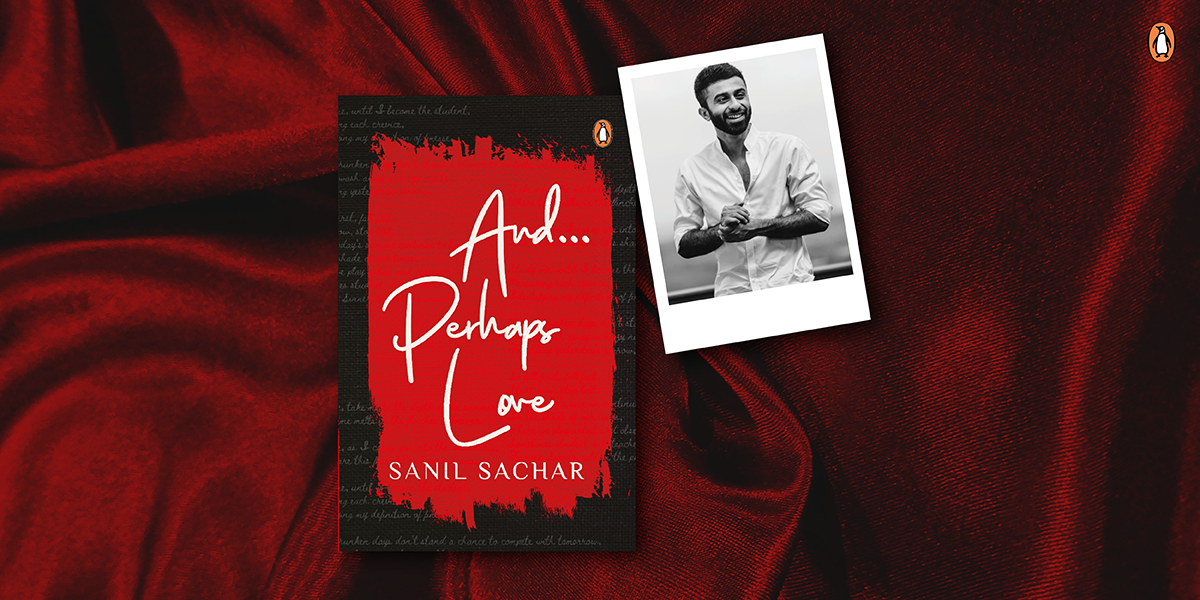
And…Perhaps Love
Sanil Sachar
And…Perhaps Love || Sanil Sachar
A new normal has replaced the established order. Distant relationships, virtual work, blurred futures and measuring our way back to this reality occupy us every day. Negotiating these changes, Sanil Sachar’s And… Perhaps Love will work as your companion. It is a silent observer for when you want to read it, and a patient listener when you wish to communicate with it. Capturing the ideas of love, darkness and the attempt to find balance in life, this is a book for now and forever.
The Bhutto Dynasty
Jones Owen Bennett
The Bhutto Dynasty || Owen Bennett Jones
The Bhutto family has long been one of the most ambitious and powerful in Pakistan. But politics has cost the Bhuttos dear. Drawing on original research and unpublished documents gathered over twenty years, Owen Bennett-Jones explores the turbulent existence of this extraordinary family, including their volatile relationship with British colonialists, the Pakistani armed forces and the United States.
Anxious People
Fredrik Backman
Anxious People || Fredrik Backman
In a small town in Sweden it appears to be an ordinary day. But look more closely, and you’ll see a mysterious masked figure approaching a Bank… Two hours later, chaos has descended. A bungled attempted robbery has developed into a hostage situation – and the offender is refusing to communicate their demands to the police. Within the building, fear quickly turns to irritation for the seven strangers trapped inside. If this is to be their last day on Earth, shouldn’t it be a bit more dramatic? But as the minutes tick by, they begin to suspect that the criminal mastermind holding them hostage might be more in need of rescuing than they are…
Caste
Isabel Wilkerson
Caste || Isabel Wilkerson
The hierarchy of caste is not about feelings or morality. It is about power – which groups have it and which do not’ Beyond race or class, our lives are defined by a powerful, unspoken system of divisions. In Caste, Pulitzer Prize-winning author Isabel Wilkerson gives an astounding portrait of this hidden phenomenon. Linking America, India and Nazi Germany, Wilkerson reveals how our world has been shaped by caste – and how its rigid, arbitrary hierarchies still divide us today. With clear-sighted rigour, Wilkerson unearths the eight pillars that connect caste systems across civilizations, and demonstrates how our own era of intensifying conflict and upheaval has arisen as a consequence of caste.
The 10 Rules of Successful Nations
Ruchir Sharma
The 10 Rules of Successful Nations || Ruchir Sharma
This short primer distils Ruchir Sharma’s decades of global analytic experience into ten rules for identifying nations that are poised to take off or crash. A wake-up call to economists who failed to foresee every recent crisis, including the cataclysm of 2008, 10 rules is full of insights on signs of political, economic, and social change. Rethinking economics as a practical art, 10 rules is a must-read for business, political and academic leaders who want to understand the most important forces that shape a nation’s future.
Mahatma Gandhi: The Great Indian Way
Raja Rao
Mahatma Gandhi: The Great Indian Way || Raja Rao
The life of Mahatma Gandhi is the story of a legend. In Mahatma Gandhi: The Great Indian Way, Raja Rao upends the genre of the literary biography with inventive non-linear chronology, through dialogue and anecdote, situating the physical within the metaphysical, and with a text that is both retrospective and contemporary at the same time. By mapping genealogies and distilling them, Rao focuses on Gandhi’s years in South Africa, the birth of non-violent resistance, and then moves into the epic freedom struggle in India, which brought Gandhi to worldwide renown in his own lifetime.
7 Ways
Jamie Oliver
7 Ways || Jamie Oliver
Jamie Oliver is back with new, achievable, exciting and tasty recipes. Jamie’s done his homework and looked at the top ingredients we buy week in, week out. We’re all busy, but that shouldn’t stop us from having a tasty, nutritious meal after a long day at work or looking after the kids. So, rather than trying to change what we buy, Jamie wants to give everyone brand new inspiration for their favourite ingredients, the kind of things you can pick up in any supermarket. Jamie will share 7 achievable, exciting and tasty ways to cook 19 hero ingredients, and each recipe will have no more than 8 ingredients within it. At least 5 recipes from each 7 way will be everyday options from both an ease and nutritional point of view, meaning you’re covered for every day of the week.
Untamed
Glennon Doyle
Untamed || Glennon Doyle
Soulful and uproarious, forceful and tender, Untamed is both an intimate memoir and a galvanizing wake-up call. It is the story of how one woman learned that a responsible mother is not one who slowly dies for her children, but one who shows them how to fully live. It is the story of navigating divorce, forming a new blended family, and discovering that the brokenness or wholeness of a family depends not on its structure but on each member’s ability to bring her full self to the table. And it is the story of how each of us can begin to trust ourselves enough to set boundaries, make peace with our bodies, honor our anger and heartbreak, and unleash our truest, wildest instincts so that we become women who can finally look at ourselves and say: There She Is.
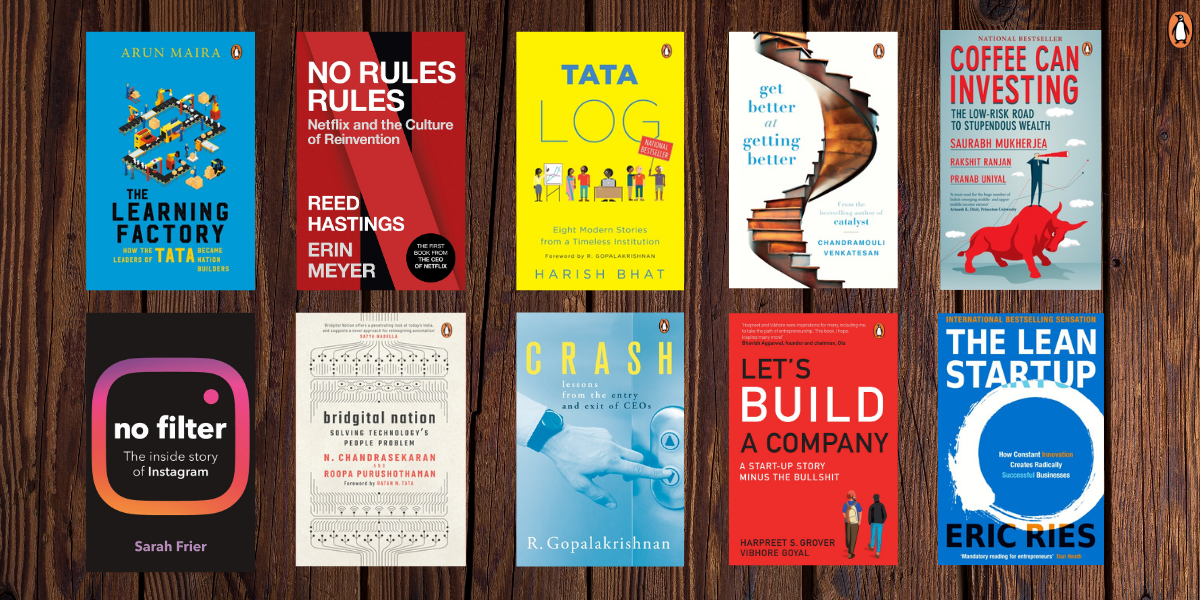
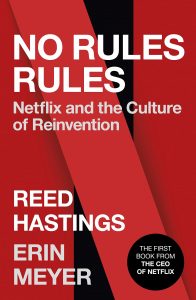
No Rules Rules
Reed Hastings and Erin Meyer
No Rules Rules || Reed Hastings, Erin Meyer
It’s time to do things differently. Trust your team. Be radically honest. And never, ever try to please your boss. These are some of the ground rules if you work at Netflix. They are part of a unique cultural experiment that explains how the company has transformed itself at lightning speed from a DVD mail order service into a streaming superpower – with 190 million fervent subscribers and a market capitalisation that rivals the likes of Disney. Finally Reed Hastings, Netflix Chairman and CEO, is sharing the secrets that have revolutionised the entertainment and tech industries. With INSEAD business school professor Erin Meyer, he will explore his leadership philosophy and how it plays out in practice at Netflix. For anyone interested in creativity, productivity and innovation, the Netflix culture is something close to a holy grail.
The Midnight Library
Matt Haig
The Midnight Library || Matt Haig
Between life and death there is a library. When Nora seed finds herself in the midnight library, she has a chance to make things right. Up until now, her life has been full of misery and regret. She feels she has let everyone down, including herself. But things are about to change. The books in the midnight library enable Nora to live as if she had done things differently. With the help of an old friend, she can now undo every one of her regrets as she tries to work out her perfect life. But things aren’t always what she imagined they’d be, and soon her choices place the library and herself in extreme danger. Before time runs out, she must answer the ultimate question: What is the best way to live?
The Evening and the Morning
Ken Follett
The Evening and the Morning || Ken Follett
It is 997 CE, the end of the Dark Ages, and England faces attacks from the Welsh in the west and the Vikings in the east. Life is hard, and those with power wield it harshly, bending justice according to their will – often in conflict with the king. In these turbulent times, three characters find their lives intertwined. And each in turn comes into dangerous conflict with a clever and ruthless bishop who will do anything to increase his wealth and power.
Thirty years ago we were introduced to Kingsbridge in The Pillars of the Earth, and now in this masterful prequel international bestseller Ken Follett will take us on a journey into a rich past, which will end where his masterpiece begins.
Intimations
Zadie Smith
Intimations || Zadie Smith
Written in the first months of the coronavirus pandemic, as the global situation changed almost hourly, Intimations is a series of six deeply personal essays responding to the ever-evolving experience of lockdown. Crafted with Zadie’s trademark intelligence, wit and style but also suffused with a striking intimacy and tenderness, these essays attempt to organize the feelings and thoughts that the events of 2020 so far have provoked. A vital work of art, a gesture of connection and an act of love, Intimations is an essential book in extraordinary times.
Livewired
David Eagleman
Livewired || David Eagleman
The greatest technology we have ever discovered on this planet is the three-pound organ carried around in the vault of the skull. This book is not simply about what the brain is, but what it does. The magic of the brain is not found in the parts it’s made of, but in the way those parts unceasingly re-weave themselves in an electric, living fabric. Surf the leading edge of neuroscience atop the anecdotes and metaphors that have made Eagleman one of the best scientific translators of our generation. Covering decades of research to the present day, Livewired also presents new discoveries from Eagleman’s own laboratory, from synaesthesia to dreaming to wearable neurotech devices that revolutionize how we think about the senses.
Moonflower Murders
Anthony Horowitz
Moonflower Murders || Anthony Horowitz
So when an English couple come to visit with tales of a murder that took place in a hotel the same day their daughter Cecily was married there, retired publisher Susan Ryeland can’t help but find herself fascinated.
And when they tell her that Cecily has gone missing a few short hours after reading Atticus Pund Takes The Case, a crime novel Susan edited some years previously, Susan knows she must return to London to find out what has happened.
The clues to the murder and to Cecily’s disappearance must lie within the pages of this novel. But to save Cecily, Susan must place her own life in mortal danger…
Final Cut
SJ Watson
Final Cut || S J Watson
Blackwood Bay. An ordinary place, home to ordinary people. It used to be a buzzing seaside destination. But now, ravaged by the effects of dwindling tourism and economic downturn, it’s a ghost town – and the perfect place for film-maker Alex to shoot her new documentary. But the community is deeply suspicious of her intentions. After all, nothing exciting ever happens in Blackwood Bay – or does it?
Breath
James Nestor
Breath || James Nestor
There is nothing more essential to our health and wellbeing than breathing: take air in, let it out, repeat 25,000 times a day. Yet, as a species, humans have lost the ability to breathe correctly, with grave consequences. Journalist James Nestor travels the world to figure out what went wrong and how to fix it. The answers aren’t found in pulmonology labs, as we might expect, but in the muddy digs of ancient burial sites, secret Soviet facilities, New Jersey choir schools, and the smoggy streets of São Paulo, Brazil. Drawing on thousands of years of medical texts and recent cutting-edge studies in pulmonology, psychology, biochemistry and human physiology, Breath turns the conventional wisdom of what we thought we knew about our most basic biological function on its head.
Invisible Girl
Lisa Jewell
When Saffyre Maddox was ten, something terrible happened, and she’s carried the pain of it ever since. The man who she thought was going to heal her didn’t, and now she hides, learning his secrets, invisible in the shadows.
Invisible Girl || Lisa Jewell
Owen Pick is invisible too. He’s never had a girlfriend; he’s never even had a friend.
Nobody sees him. Nobody cares.
But when Saffyre goes missing from opposite his house on Valentine’s night, suddenly the whole world is looking at Owen.
Accusing him. Holding him responsible for Saffyre’s disappearance…
Invisible Girl is an engrossing, twisty story of how we look in the wrong places for bad people while the real predators walk among us in plain sight.
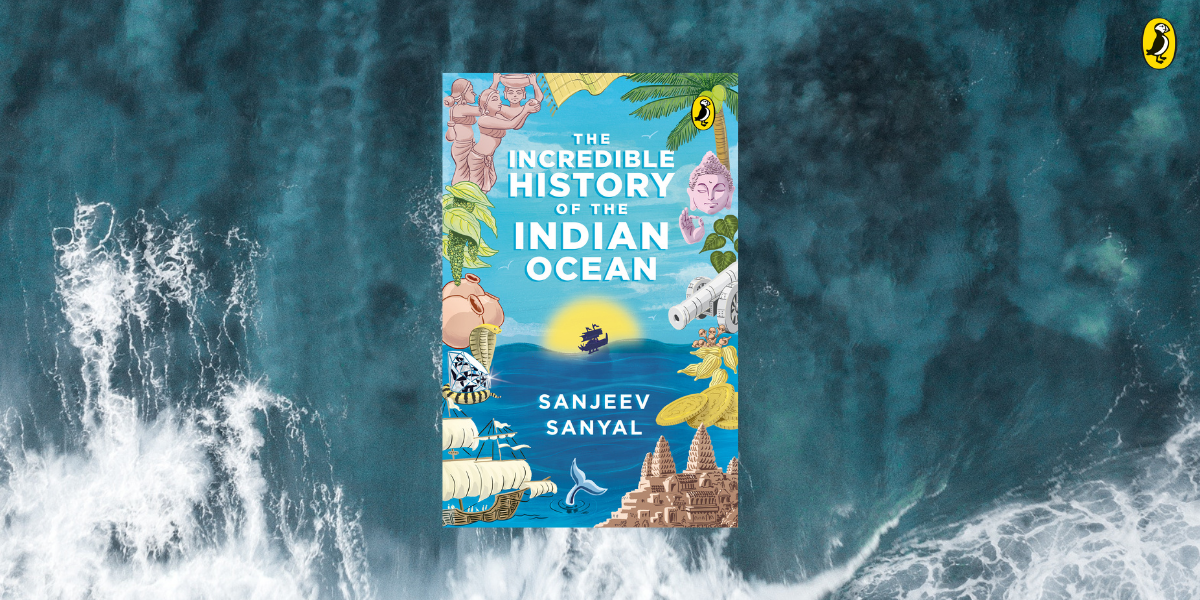
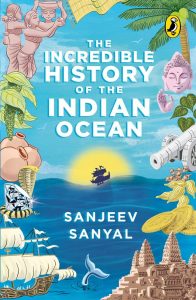
The Incredible History of the Indian Ocean || Sanjeev Sanyal
When did the first humans arrive in India and how did they get here? What are Roman artefacts from hundreds of years ago doing in a town near Puducherry? How did merchants from Arabia end up near Kochi?
Read on to learn about the fearless travellers and sailors, pirates and conquerors who set out to cross the ocean in search of gold and glory!
The Very, Extremely, Most Naughty Asura Tales For Kids!
Anand Neelakantan
The Very, Extremely, Most Naughty Asura Tales for Kids || Anand Neelakantan
Aren’t we chubby, aren’t we cute?
Aren’t we lovely, as sweet as fruit?
Give us a bear hug, give us a kiss
Regret not later for giving it a miss.
Indulge in some very, extremely, most funny naughty tales of asura twins Kundakka and Mandakka, who hate going to school; clumsy Bhasma and pet pig Nakura, who create trouble in the village; brothers Atapi and Vatapi, who like to eat ninety-six cartfuls of fruits as dessert; the great Bana who claps with his thousand hands and so many more!
Mindfulness with Moksha
Ira Trivedi
Mindfulness with Moksha || Ira Trivedi
The practice of mindfulness at any age can have profound effect on your life. So why not get your young one to start early? In this fast-paced world, with so many distractions, it is important to stay grounded and not lose sight of what’s important. Being mindful brings clarity, mental strength, focus and inner peace.
With this calming read-along book, parents and guardians can help their children work through fun exercises-a great way to spend quality family time!
10 Indian Champions Who Are Trying To Save The Planet
Bijal Vaccharajani, Radha Rangarajan
10 Indian Champions || Bijal Vachharajani, Radha Rangarajan
This book tells the stories of ten Indian conservationists working in diverse ways to save the world from human destructiveness, often facing seemingly insurmountable odds.
Get the young readers to learn about the inspiring lives of people who are striving to solve the most pressing problems on this planet—from climate change to habitat degradation, from food insecurity to species loss.
A Vikram–Aditya Story: Ranthambore Adventure
Deepak Dalal
Ranthambore Adventure || Deepak Dalal
This is the story of a tiger.
Once a helpless ball of fur, Genghis emerges as a mighty predator, the king of the forest. But the jungle isn’t just his kingdom. Soon, Genghis finds himself fighting for his skin against equally powerful predators of a different kind–humans.
The very same ones that Vikram and Aditya get embroiled with when they attempt to lay their hands on a diary that belongs to a ruthless tiger poacher.
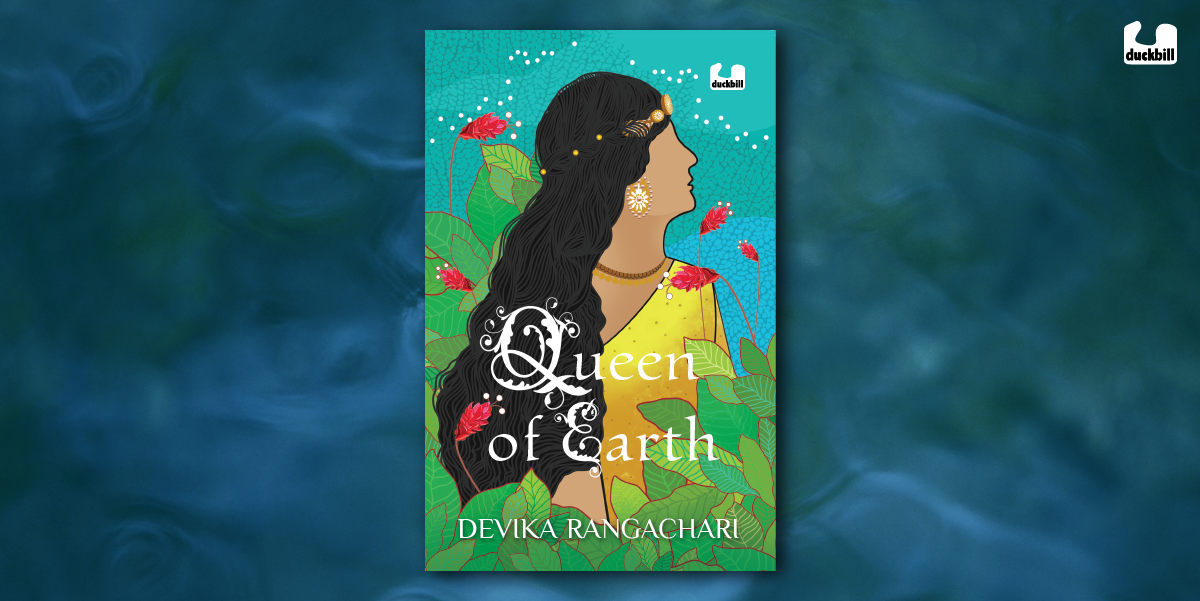
Queen of Earth
Devika Rangachari
Queen of Earth || Devika Rangachari
Prithvimahadevi is the daughter of the powerful Somavamshi king of Kosala. Her life is circumscribed by the rules that govern the existence of women of her royal family.
She is married to her father’s enemy, the Bhaumakara ruler, Shubhakaradeva, who worships strange gods. There seems to be some hope for her to fulfil her dreams of becoming a great queen…But is she willing to play the game of sacrifice and betrayal that this will entail?
We all have a pre-pandemic people-watching streak! If like us, you miss some casual people watching routines in the café or on the metro – scroll down this post to find out which character you would be like if you were a people-watcher from the (extravagant) world of Kevin Kwan’s latest – Sex and Vanity!
**
The Conversationalist – Charlotte
‘Sizing up his outfit of white and blue striped seersucker trousers, crisp white button down shirt conspicuously monogrammed with the initials “MVE” just above his left midriff, navy polka-dot cravat tied around his throat, and Cleverley wing-tips, Charlotte knew exactly how to engage with him.’
If you are a Charlotte, your people-watching skills actually make you a great conversationalist! You are good at gauging people by watching them, their attire, their movements – and know JUST how to talk to them.
*
The Storymaker – Lucie
‘Lucie glanced covertly at the people seated around her. She loved checking people out and making up stories in her mind about them. On her left was a young attractive Italian couple, looking longingly into each other’s eyes, on their honeymoon, possibly? To her right were two smartly dressed men—an American guy with dark blond hair in a blue striped t-shirt and navy 63 blazer talking to an Asian guy with a goatee wearing a pair of round 1930s retro-style sunglasses. They looked like they worked in fashion and were here on business.’
If you are a Lucie, then you are a (pretty good) storyteller! The world is your oyster, everyone around you a potential character with awesome backstories!
*
Sex and Vanity || Kevin Kwan
The Fashion Critic – Mordecai
‘She’s a Barclay. Of course, only a Barclay can afford to look this unfashionable in Capri.’
‘Who on earth was this woman, and what possessed her to think she could join his group wearing those flamingo pink sweatpants?’
Even if you are not one, we bet you have known at least one Mordecai in your life! A Mordecai will judge your entire lineage, character, ancestry on the basis of your fashion sense.
*
The Clueless – Cecil
For us, Cecil incorporates all the folks who need to learn to read a room, with the number of times he has failed to correctly watch and read people. A mortifying flashmob proposal with him singing into a makeshift hotdog microphone is all the visual is all we need to prove that statement!
All the Cecils are the ones who need people-watching lessons!
___
Drop us a line below on which Kevin Kwan-esque people-watcher you are (honest answers only!) and don’t forget to compare notes with your friend-groups!
Don’t forget to step into the world of Sex and Vanity for more of absolute fun people-watching.
Friendships and companionship have proven to be crucial human bonds, even more so in these socially-distant times. We had a chat with Shubha Vilas, motivational speaker and author of The Magic of Friendships – about friends, friendships and maintaining human bonds in these times.
—
Do you feel friendships have acquired a new and deeper meaning in these times?
Was there a time when friendship was not important? But yes, you could say today it is more important than ever because of nuclear families and working parents. Friends have replaced family too. Friendship is the single most relationship that has the potential to make you or break you.
The Magic of Friendships || Shubha Vilas
As the world has become more virtual and relatively more isolated in the pandemic, how can we maintain and strengthen our friendships today?
The virtual world is an important tool in forming and maintaining friendships. If used judiciously. Imagine your friends are accessible at all times? Isn’t that a boon? We may be physically isolated, but together in consciousness.
Principles of friendship are the same in every era. What changes is the context. You can pick any friendship story from any yuga…any century…any country…any culture…the principles will never change. Friendship as a concept is eternal.
What does it mean to be a ‘good’ friend?
You are a good friend if you can – appreciate the good in others, encourage their potential, respect the differences, tolerate the unchangeable and forgive their mistakes.
Social media is a lot about numbers, but it has also helped us stay connected with the world in these times. What would you say the impact of the digital age has been on friendships and companionship?
The digital age has redefined friendship! Now even though I may not know a person, I can end up being friends on social platforms! Therefore, in my book I mention levels of friendship. Not all friends are in the same category. Some are circumstantial, some are dear while some are soulmates.
What prompted you to write The Magic of Friendshipsand what kind of research went behind writing it?
All my books involve a lot of research because I dabble in non-fiction. The USP of my books is the scriptural connect with contemporary life. That’s the focus of my research.
And why a book on friendship? Because I love people…I love making, keeping and understanding friends – and I thought why not share my insights with the world? There’s nothing more important in life than relationships. And no other relationship as important as friendship. Friendship is the crown of all relationships. Friendship for me personally is what makes life special.
Is making friends easier than maintaining friendships while growing up?
Although it may seem to be easier, it is not really true. Growing up years are full of turmoil and confusion. Kids and teenagers grapple with self-image, self-confidence, identity crisis, bullies, living up to expectations…making friends can become a complex phenomenon. Of course, adults have their own set of challenges. But whichever generation you belong to, friends make life worth living.
Did you have a target reader in mind while writing The Magic of Friendships?
Yes actually I did. This time I wanted to focus only on young adults. But given a universal theme like friendship which crosses all barriers, this book appeals to all those who consider friendship to be important.
As concepts, do friendship and companionship always go hand-in-hand?
As concepts, friendship and companionship are probably merging into each other. Society is changing rapidly and in a world which is a global village today, the distinction between friend and companion is obsolete. Friends are companions and companions are friends. There is no divide.
In 1994, twenty-year-old Gunjan Saxena boards a train to Mysore to appear for the selection process of the fourth Short Service Commission (for women) pilot course. Seventy-four weeks of back-breaking training later, she passes out of the Air Force Academy in Dundigal as Pilot Officer Gunjan Saxena.
The Kargil Girl || Gunjan Saxena and Kiran Nirvan
On 3 May 1999, local shepherds report a Pakistani intrusion in Kargil. By mid-May, thousands of Indian troops are engaged in fierce mountain warfare with the aim to flush out the intruders. The Indian Air Force launches Operation Safed Sagar, with all its pilots at its disposal. While female pilots are yet to be employed in a war zone, they are called in for medical evacuation, dropping of supplies and reconnaissance.
This is the time for Saxena to prove her mettle. From airdropping vital supplies to Indian troops and casualty evacuation from the midst of the ongoing battle, to meticulously informing her seniors of enemy positions and even narrowly escaping a Pakistani rocket missile during one of her sorties, Saxena fearlessly discharges her duties, earning herself the moniker ‘The Kargil Girl’. This is her inspiring story, in her words.
Here’s an excerpt from the book that recounts the feelings that Gunjan experienced as she prepared herself to face one of the toughest interviews in the country.
**
Job interviews are generally tailored to judge how well the interviewee can convince the interviewer that he or she is fit for the job. It is even more challenging when the interviewer is hell-bent on finding a good reason to deem the candidate unfit. How do you convince them in such a situation? The answer is—with honesty. That is what is required in the personal interviews of the SSB exam, according to Papaji. He would tell me that if I missed even one of the prerequisite qualities, the armed forces would not even consider my candidature; it would not put the lives of its men and women at risk just because someone like me would lose a job opportunity. So making sugar-coated statements wasn’t going to help at all. If one is not chosen, it’s better to accept the inevitable rather than feel disheartened, prepare well and execute better in the next SSB exam. On the morning of the fifth day, just before the personal interviews were to commence, I promised myself I would not crib or cry if I failed—I would accept the results calmly and go back like a true fighter.
‘I wonder if we’ll get tickets to go back home tonight, in case we don’t get recommended?’ Deepa asked. We were all sitting in rows outside the conference hall, waiting for the interviews to begin. There were two bulbs fitted to sockets above the hall’s door, one red and one green. The red one was glowing, indicating an interview was in progress inside.
‘You think you won’t make it?’ I asked Deepa in a hushed tone.
‘We can’t be too sure, can we?’ she replied.
‘It’s all about being confident,’ Aditi said. ‘I’ve only shown them what they needed to see. There’s no chance I’m going back today without a yes.’
‘Such overconfidence!’ Hema couldn’t keep herself from commenting. Aditi rolled her eyes detestably. ‘If I can see it, surely they can too,’ Hema said to me faintly. ‘I can bet a wager on her rejection.’
I had my eyes fixed on the bulbs. As soon as the green one glowed, I’d be only one candidate away from my interview. I looked at my attire for the day—my pants and shirt were neatly ironed, my hair was tied in a tight bun. I cleared my throat. I was set. And as if on cue, the green light flashed.
As soon as the interviewee went inside, the light turned from green to red. My gaze was fixed on the bulb. It must have been less than ten minutes, but it felt like an eternity before the candidate came out. She seemed relaxed. After about another two minutes, the green bulb lit up again. I could feel my heart flutter as I stood up to go in. Hema wished me luck and I smiled back at her. I pulled open the door of the conference room and, just as I had imagined, I saw in front of me a panel of six officers sitting behind a rounded table. They were all familiar faces I had encountered during our various tests.
‘May I come in?’ I asked.
‘Please be seated,’ Wing Commander Pathak signalled. He was the interviewing officer (IO) I had seen during the PABT.
I seated myself on the edge of the chair, both my hands carefully folded on my lap. Sqn Ldr Yadav and Sqn Ldr Virk smiled at me. I was too nervous to smile back. The others were busy going through the files that had been kept in front of them. I guessed it was my personal information questionnaire form, which each of us had filled up on the first day of the SSB. I patiently waited for the IO to shoot the first question.
‘How was your SSB experience, Ms Saxena?’ he finally lifted his head and asked.
‘Informative, Sir,’ I replied at once, ‘and memorable.’ ‘How many friends did you make here?’ he asked.
I’ve interacted with all the other candidates, and I plan to keep in touch with them, Sir, regardless of how things pan out,’ I replied. I didn’t want them to think I was partial and avoided telling them that Hema was the only one I could call a ‘friend’ there. But the truth was that I had interacted with all of them. The IO then asked me basic questions about my family and education. The more I talked, the more relaxed I felt. But there was one question that made me stop and think for a while.
‘Tell us why you want to join the Indian Air Force?’
I knew the answer to this question. I had prepared for it all my life. What I did not know was how to frame my answer. Should I sound passionate? What if I sounded desperate instead? How could I tackle this? What should I say to convince them? There was no time to plan or prepare. I had to be quick.
The success of a business depends on many factors, the most important of which is the decision regarding what industry it would like to pursue. In management terms, the blueprint for any business as to which niche it would like to operate in is called a ‘business model’. It is imperative to have a business model in place for it provides focus and direction to the management. Without such a structured approach, a business is likely to falter.
In Some Sizes Fit All, Akhil Gupta explains how the most important pillar for the success of any business is clarity on its business model. There are seven main issues which need to be considered and agreed upon for setting up a solid business model.
1. The line of activity
Almost all industries have multiple segments, referred to as ‘lines of activity’, which the management needs to carefully consider and choose from. In most cases, one would have to choose one or some of them as it may be neither necessary nor possible to pursue all possible lines.
2. Geography
It is important to identify the region in which the management would like to operate. The choice of geography would depend on the resources and ambitions of the management.
3. Target Customer
Companies need to carefully choose the segments of customers they wish to serve since the business strategy and required actions will depend upon this.
4. Sequencing and pacing of expansion
If multiple choices exist in any of the parameters above, it would be prudent to decide on sequencing and priorities and the milestones/time period for the introduction of specific products/services or specific geographies.
5. Revenue and profitability model and timing
It is important to have a clear revenue model, that is, a proper understanding of how and from where the revenue will come in, and also to have a time frame within which the revenue will start coming in. Companies that cannot demonstrate a revenue and profitability model do go out of favour sooner or later.
6. Clarity of objective
Every business needs to be clear as to what its main goal is—is it philanthropy or running a profitable business?Ideally, the objective should be to run a successful and profitable business with rapid scale-up using ethical means.
7. Revisit the business model at regular intervals
It is important for every company to revisit and review all aspects of its business model at regular intervals. These intervals can be time-based, say, annually, or can depend on specific events, such as regulatory changes, new technological innovations, the emergence of new markets, etc.
Some Sizes Fit All is an attempt to explain the fundamental pillars for any kind of business. An authentic and lucid presentation of management concepts and practices-which Akhil Gupta has tried and tested first hand through his illustrious career-this is a must-read for anyone trying to build a robust and financially sound business.
Dr Kashyap Patel is a renowned oncologist in the US who works with terminally ill cancer patients. In his book Between Life and Death, we meet Harry, who, after a life full of adventure, is diagnosed with terminal lung cancer. As he stares death in the face, Harry leans on Dr Patel, an expert in understanding the process of death and dying. His questions and fears are addressed through the stories of many other patients that Dr Patel has treated-from the young and vivacious to those who had already lived full lives, from patients who could barely afford their rent to those who had been wildly successful. What ties these stories together is the single thread of the lessons Harry learns along the way, lessons that ultimately enable him to plan his own exit from the world gracefully-dying without fear.
Between Life and Death || Dr Kashyap Patel
Here’s a moving excerpt from the book.
**
‘Hi, Kashyap, this is John.’
I was taken aback. John never called me at home or on weekends. My wife and I were getting ready to go see my son Maharshi at Duke University and take him out to dinner. The only time John had called during non-business hours was when his mother, Lily, was dying. Before I could solve the puzzle of his unusual timing, I remembered that I had promised John I would help him celebrate his fifth year of remission from cancer.
‘Hey, John! So good to hear from you. What’s up?’ I was somewhat apologetic as I had been meaning to call him. ‘I was planning a big party for your victory over your cancer. You chased it away! Let me know some dates, and I’ll start getting things together.’
There was awkward silence at the other end.
‘Are you okay? Is everyone all right in your family? I still recall the funny conversations we had at Maharshi’s send-off to join the Blue Devils at Duke. We had a great time.’
‘I’m afraid it’s over, Kashyap,’ John said sombrely.
‘What do you mean?’
‘Kashyap, it’s all over,’ John said again. ‘The beast came back with a vengeance a month after we dropped Maharshi off at Duke.’
I could feel my heart pounding at his news. ‘Tell me what happened. I know there are many options out there. Latest therapies, new surgical procedures—we can try many things . . .’
‘Sorry to interrupt, but I did some of those promising options, and they did not work. I have, maybe, a few weeks. If I’m lucky, a couple of months. So my docs say. They want to keep trying too. But I feel like I’m done with it all. Time for me to move on.’
John sounded resigned to the inevitable. ‘I wanted to call you and let you know I have decided to pack my bags and move on, literally and figuratively, away from Charlotte and beyond this human life. Do you remember my beach house at Ocean Isle, where we sailed and had lots of fun with jet skis?’
‘Yes, yes, I loved that place. I would love to retire to a place like that.’ My desire now was to cut short the painful parts of the discussion and keep John focused on happier times.
‘Well,’ John continued, ‘I’m going to retire from work and life to move down there to prepare for my journey beyond this life. I’ve packed my bags. I’ve given away whatever I could, while holding on to a few sweet and sour memories. I wish I could erase all memories and press Ctrl+Alt+Del to reboot the bad memories and enjoy the rest of the days. Never mind. We have to go through our destiny.’
‘You sound like a philosopher, my friend! I never knew you were so good at such metaphors!’
‘I was and I wasn’t. Time changes everything, Kashyap. I hope you’ll never have to go through what I have been through in my life. I lost everything. My battle against cancer, my sanity, my house and my sweet wife.’ John paused briefly. ‘Now I am patiently awaiting the Grim Reaper’s arrival for me.’
Understandably, he sounded discouraged and sad. I had no words to console him, no strength to infuse any optimism into him, no language to ease his anguish. Finally, I gathered the courage and asked, ‘Where are you, John? Can I come and see you right now?’
‘Well, I’m moving down to the beach today. Lots to catch up on. I wish I had the time to catch up with you and put some closure to our lives together.’
As John was speaking, Robert Frost’s words were ringing in my ears:
The woods are lovely, dark and deep And I have promises to keep
And miles to go before I sleep
And miles to go before I sleep.
‘Listen, Kashyap, I wanted to say goodbye, forever, for sure.’ His voice sounded choked. ‘Please convey my love to Alpa, Maharshi, TJ, Bobby, Charles and Jim.’
‘John, I will visit you at the beach as soon as I can.’
‘I may not be alive then. See if you can. If not, I sure will wait for you in unknown lands, maybe in heaven. Goodbye for now.’
John hung up.
**
Between Life and Death shows us how we can learn to accept the inevitable with grace and courage.