Publish with Us

Follow Penguin

Follow Penguinsters

Follow Penguin Swadesh

Inside the world of Sisters of the Golden Lotus

I think of the stories I heard growing up. Of women with shadowy faces and daggers glinting in their hands. Women who wear their saris like fisherfolk, who knock down doors and slash into enemies with knives and swords and spells. The Sisterhood of the Golden Lotus.

Gul has spent her life running. She has a star-shaped birthmark on her arm, and in the kingdom of Ambar, girls with such birthmarks have been disappearing for years. In fact, it is this very mark that caused her parents’ murder at the hand of King Lohar’s ruthless soldiers and forced her into hiding in order to protect her own life.

But a group of rebel women called the ‘Sisters of the Golden Lotus’ rescue her, take her in, and train her in warrior magic. Here are some quotes from Tanaz Bhathena’s book that tells us more about the Sisters of the Golden Lotus

Who are they?

“No one is quite sure if the Sisters are legends or common brigands, and no one ever quite remembers what they look like. Appearing and disappearing from villages and towns with a stealth that rivals King Lo- har’s Sky Warriors, the Sisters have no permanent home, successfully melding into their surroundings like color-changing lizards.”

*

Introducing themselves

“People who do not know us think we are ordinary Ambari women. Seamstresses. Midwives. Farmers. Mothers. Daughters. People like your zamindar will offer us food and shelter in exchange for a walk through the fields or a night in their beds.” Juhi’s eyes harden. “Of course, deceptive appearances are a must in our line of work.” She holds up a hand. There, right in the center of her palm, I see a golden tattoo shaped like a lotus.”

*

They have birthmarks.

“To my surprise, Kali lifts her sari petticoat up to the knee. Amira turns around, pushing down the shoulder of her blouse. The woman holds up the lantern to each exposed body part, one after the other.

Each girl has a birthmark. A brown one in the shape of a diamond right next to the dagger strapped to Kali’s calf; a black one in the shape of a falling star on Amira’s shoulder blade.”

*

But not all of them

“Do the Sisters . . . do you all have birthmarks?”

Juhi lowers her hand. “No. Only Amira and Kali. But I don’t limit the Sisterhood to marked girls. There are other women as well who need saving, who need to escape their pasts.”

*

Their current home

“The Sisters live on the street behind the temple—in a two-story building that once housed the village orphanage. Some of the novices mock the villagers for not guessing that it no longer functions as one, for never questioning why we don’t take in boys.”

*

Mealtimes with the Sisters

“I’m unable to keep the envy out of my voice. At mealtimes, some of the Sisters occasionally boast about their exploits. Magically tying up zamindars who deceive farmers into signing over their land—and not releasing the former until the land is restored. Rescuing girls who get harassed by men in marketplaces. Standing up to women who beat their daughters-in-law.”

*

Why are they called Sisters of the Golden Lotus?

“Yes. Amira told me that she and Kali would feel like thorns in my side. Kali countered that they were like the gold lotuses of Javeribad, the kind that bloomed in the mud. That’s how we came up with the name.”

*

Hunted by the Sky || Tanaz Bhathena

Inspired by medieval India, Hunted by the Sky is the first in a stunning fantasy duology by Tanaz Bhathena, exploring identity, class struggles and high-stakes romance against a breathtaking magical backdrop.

What to read as an introduction to Perumal Murugan’s work

Perumal Murugan’s body of work boasts of several novels, short story collections and poetry anthologies. An author and scholar, Murugan writes in Tamil. His works have not only garnered both critical acclaim and commercial success but also have been translated in many languages.

Here are 6 books by him, that are the perfect introduction to his work.


Rising Heat


Rising Heat || Perumal Murugan

Murugan’s first novel, which launched a splendid literary career, is a tour de force. Now translated for the first time, it poses powerful questions about the human cost of relentless urbanization in the name of progress.

Young Selvan’s family’s ancestral land has been sold in order to make way for the construction of a housing colony. In the ensuing years, as the pressures of their situation simmer to a boil, Selvan observes his family undergo dramatic shifts in their fortunes as greed and jealousy threaten to overshadow their lives.

*

One Part Woman


One Part Woman || Perumal Murugan

Kali and Ponna’s efforts to conceive a child have been in vain. Hounded by the taunts and insinuations of others, all their hopes come to converge on the chariot festival in the temple of Ardhanareeswara, the half-female god. Everything hinges on the one night when rules are relaxed and consensual union between any man and woman is sanctioned. This night could end the couple’s suffering and humiliation. But it will also put their marriage to the ultimate test.

*

Songs of a Coward: Poems of Exile


Songs of a Coward || Perumal Murugan

By turns passionate, elegiac, angry, tender, nightmarish and courageous, the poems in Songs of a Coward weave an exquisite tapestry of rich images and turbulent emotions. Written during a period of immense personal turmoil, these verses are an enduring testament to the resilience of an imagination under siege and the liberating power of words in one’s darkest moments.

*

Trial by Silence


Trial by Silence || Perumal Murugan

In Trial by Silence-one of two inventive sequels that picks up the story right where One Part Womanends-Kali is determined to punish Ponna for what he believes is an absolute betrayal. But Ponna is equally upset at being forced to atone for something that was not her fault. In the wake of the temple festival, both must now confront harsh new uncertainties in their once idyllic life together.

Trial by Silence was shortlisted for the JCB Prize for Fiction 2019

*

A Lonely Harvest


A Lonely Heart || Perumal Murugan

In A Lonely Harvest– one of two inventive sequels that pick up the story right where One Part Woman ends -Ponna returns from the temple festival to find that Kali has killed himself in despair. Devastated that he would punish her so cruelly, but constantly haunted by memories of the happiness she once shared with Kali, Ponna must now learn to face the world alone.

A Lonely Harvest was longlisted for the DSC Prize for South Asian Literature 2019 and shortlisted for the JCB Prize for Fiction 2019

*

Current Show


Current Show || Perumal Murugan

Slick, visceral and startlingly inventive, Current Show unfolds in a manner that simulates rapid cinematic cuts. Murugan’s keen eye and crackling prose plumb the dark underbelly of small-town life, bringing Sathi’s world and entanglements thrillingly to life.

*

Interesting snippets from Manohar Parrikar’s extraordinary life

An Extraordinary Life  showcases Manohar Parrikar’s rise in politics from the son of a grocery store owner in a nondescript town, a sanghachalak in Mapusa town, an Opposition MLA and leader, to a chief minister (on multiple occasions) and, finally, to a defence minister.

Over the last two decades, the exploits of one man, an IIT-Bombay alumnus, changed the way mainstream India looked at Goa and the political goings-on in the country’s smallest state.

In An Extraordinary Life, Sadguru Patil and Mayabhushan Nagvenkar explore daily battles of a gifted individual are brought to the fore as he encounters love and vices.

Alongside his public feats and persona, Parrikar was also an intriguing man with some personality quirks that contributed to his political career. We take a look at some of these below:


Finding a way out


‘Falling into trouble isn’t rare when one is young. But even at the age of eight, Manohar had the temperament to find a way out of it.

Avdhoot was nine, a year older than Manohar, when the latter fell into a deep, dry rainwater ditch near their ancestral house in Parra village. The gutter was deep enough to make Manohar’s efforts to climb out of it futile. Like in many rural homes at the time, the Parrikar household also reared a few head of cattle.

‘Manohar told me to fetch at least five bundles of straw. They weren’t too heavy, so I brought them one by one and, on his direction, threw them into the gutter. He piled them one on top of the other and managed to climb out,’ Avdhoot recalled.’


IIT-Bombay


‘A year after the release of the Amitabh Bachchan and Shatrughan Sinha–starrer Bombay to Goa, seventeen-year-old Parrikar left Goa to go to Bombay in 1973. And just like Bachchan was a superstarwaiting-in-the-wings in the S. Ramanathan film, IIT-Bombay gaveParrikar the fertile breeding ground for his personality to blossom and allowed him to come into his own.

As far as Parrikar was concerned, he was to give IIT-Bombay the privilege of having on its rolls the first IITian chief minister in India, and his hostel-mates the pleasure of better meals at the mess at that time.’


Resourcefulness and Keen Eye


‘Even his mother was often stumped by Manohar’s resourcefulness. Radhabai once had enough of her son’s brattish behaviour. So she locked him up in a room one day.

According to Walavalkar, Manohar escaped by breaking the glass windowpanes. Another time Radhabai decided to teach her younger son a lesson once again. She decided to play dead to get Manohar worked up. Avdhoot, who was nearby, saw her lying still and not responding to his call. He called out to Manohar for help. ‘I thought Aai was dead and started crying. But Manohar was obviously smarter than me. He told me not to cry because he could see Aai’s stomach moving with her breath. Her plan to rattle him was foiled,’ Avdhoot said.’


Calligraphic Skills


‘Apart from his special talent at maths, he was regularly complimented by his teachers for his immaculate handwriting, something the media also noticed decades later when his handwritten noting related to the Rafale deal as the defence minister merited a news feature story in February 2019.

‘Cursive font. Sentences so perfectly stacked you wonder if a ruler was involved. No strikethroughs. No smudged ink. A written reply by Manohar Parrikar to India’s defence secretary in 2015, accessed by ANI, would put any schoolteacher’s pet to shame,’ stated an India Today online story headlined ‘Rafale Row Rages.’


Appetite for Reading


‘When he was in school, he loved reading storybooks, instead of ‘boring’ school texts.

‘Often he would pretend that he was reading a textbook when our parents were around, but cached inside was a storybook. Once, a relative got suspicious because Manohar had been going hard at this coursebook for hours and yanked it from his hands. The hidden storybook fell out too,’ said Avdhoot.

Manohar also developed another habit early on. A habit that would hold him in good stead in his later years. Reading newspapers. So obsessed was he with reading newspapers that his parents started worrying about it.’

***

An Extraordinary Life || Sadguru Patil, Mayabhushan Nagvenkar


An Extraordinary Life  showcases Manohar Parrikar’s rise in politics from the son of a grocery store owner in a nondescript town, a sanghachalak in Mapusa town, an Opposition MLA and leader, to a chief minister (on multiple occasions) and, finally, to a defence minister.

Will They, Won’t They?

It is 1995. Tara Taneja lives in the small town of Siyaka, running Ultimate Mathematics Tuition Centre and working for Lalaji, her grandfather, at Lallan Sweets, his famous sweet shop. The laddoos sold at the shop are made using a secret family recipe that contains a magic ingredient known only to Lalaji.

When Lalaji chooses to retire, he decides that Lallan Sweets will not be inherited but earned. He devises a quest for his three grandchildren-Tara, Rohit and Mohit-to discover the magic ingredient.

Tara’s long-time crush and neighbour, fun-loving and good-natured Nikku Sabharwal, returns to Siyaka after years. Within the ensuing competition, we see Tara going through some regular challenges of womanhood – broken hearts and budding romance being at the forefront!

Find a glimpse of this in the excerpt below:

**

‘Can you imagine how things would have turned out if I had stayed here in Siyaka? I would have remained stupid, not knowing anything of the world outside.’

Affronted, I raised my eyebrows. It was classic Nikku to say something like that. ‘What do you mean? You think just because I never went away from Siyaka I am stupid?’

‘No, that’s not what I meant at all. I meant, for me, I needed to go out, I couldn’t have stayed here, I knew that I had to go out and see the world.’

I nodded at him and looked away, trying to fight off the wave of indignation that came over me. He always spoke about going out there as if the rest of us were lazy idiots tonot want to do the same as him, as if our minds were smaller.

‘You turned out completely fine, Taru Taneja,’ he said,almost as if reading my thoughts. ‘It’s a battle I had, or stillhave, with myself. I’m so proud of what you have done,building a name for yourself, Ultimate Mathematics Tuition Centre. But my mother always wanted me to go, she told meto go and make a bigman out of myself, in Delhi or Bombay.’

I still didn’t look at him, continuing to stare at the lakeinstead. It was that time in the afternoon when everything fell quiet. He looked towards me once more.

‘I’m sorry I didn’t keep in touch,’ he spoke abruptly.

I swallowed my tears. ‘You said you would call every week, but you even stopped writing nice letters after a point.’

Out of the corner of my eyes I saw him hang his head.

‘I’m really sorry.’

Of course I wasn’t going to forgive him. Years and yearsof broken promises. I simply got up and ignored whatever he said, putting on a bright smile and walking towards the Kinetic. ‘Come on now, we are yet to have the orange ice cream.’

He looked like he was going to say something, but then thought the better of it and sat behind me.

**


Lallan Sweets || Srishti Chaudhary

What will this journey bring forth for Tara and Lalaji’s grandchildren? And what exactly is the magic ingredient? Join Tara in her quest to find out!

Ten things about Manohar Parrikar you may have not known!

Former Defence Minister and four-time Goa Chief Minister late Manohar Parrikar was one of the most reported personalities in India’s smallest state. But the privilege of researching for his biography ‘An Extraordinary Life: A biography of Manohar Parrikar’ gave us several fresh insights about his personality. And some lesser known nuggets too.

Listed below are ten lesser known facts about Parrikar. And no, this piece doesn’t mention his fetish for fish curry… For that nugget and more, read the book!


By Sadguru Patil and Mayabhushan Nagvenkar


Lucky number 13

Shunned and feared by many, Parrikar, a passionate contrarian, considered ‘13’ as his lucky number. Born on December 13, the number, he would often say, brought him good luck in politics. The registration plate of his last official ride, a Hyundai Santa Fe, bore the number 1313. His mobile phone numbers ended in 1313 and 131213. In 2000, he formed a government and was sworn-in as Chief Minister of Goa for the first time with the help of 13-non BJP MLAs. In 2017, he cleverly manoeuvred his way to the top post yet again with the help of… you guessed it right: 13 BJP MLAs!


Never a full term

Despite being sworn-in as Chief Minister of Goa on four different occasions from 2000-02, 2002-2004, 2012-2014 and 2017-2019, Parrikar never completed a full five-year term in office. Anxious about a revolt brewing within his government, Parrikar got the state assembly dissolved in 2002. In 2004, he was ousted by a resurgent Congress. In 2014, he was handpicked by Prime Minister Narendra Modi to join the central cabinet as Defence Minister. And in 2019, he died in office, after just two years in office as CM.


Accidental electoral debut

This fact has managed to duck attention altogether. After his initial grooming in the RSS, Parrikar’s initial role in the BJP was that of an organizer, as one of the secretaries of the party’s state unit. In 1991, BJP leader late Pramod Mahajan entrusted him with the responsibility of selecting a candidate for the North Goa Lok Sabha seat in the general elections. Parrikar could not shortlist a single credible candidate for his party, because contesting a popular election on a BJP ticket at the time was considered synonymous with certain defeat, and a poor defeat at that. With no candidate available, Mahajan directed Parrikar to contest the election. Parrikar’s defeat in the 1991 Lok Sabha polls was the only electoral loss in his political career.


Bookworm

Parrikar was known to read just about everywhere. In the front seat of his official car, in hotel lobbies, at the airport and even on the seat of his loo. He devoured books like he customarily devoured his political opposition. In 2013, at a book release event, he confessed that his house had two toilets. “I am currently reading a book on the Mahabharata. It’s in one toilet. There’s another book in the other toilet,” Parrikar said then.


Music to the soul

Amid spasms of pain while undergoing treatment for pancreatic cancer in New York, Parrikar looked to Hindustani classical singer Jitendra Abhisheki for solace. He loved to listen to Marathi bhavgeets (devotional songs) too. His favourite singers were Sudhir Phadke, Bharat Ratna Bhimsen Joshi, Pandit Abhisheki and Rahul Deshpande. Phadke’s ‘Dehachi Tejori’ (God’s vault) and Veer Savarkar’s ‘Sagara Prana Talmala’ (O Ocean, my heart is restless) topped his list of favourite songs. In his later years, he liked listening to Rahul Deshpande, whose songs were downloaded to his Ipad.


Mercedes mania

As a young businessman, when his political journey was still some distance away, Parrikar ambition was to own a Mercedes car. Once he walked the political path however, he realised that owning a Mercedes would impair public perception of him.  After all he was beginning to be known for his ‘common man’ identity. So he dropped the idea altogether.


Control-freak

Parrikar’s style of governance was marked by a chronic disregard for existing administrative systems, with excessive power wrested in his person. Ministers were mere puppets in his abrasive style of governance, as Parrikar, his few handpicked bureaucrats and upper caste coterie members pulled all the strings. There was a key reason why Parrikar kept stalling his departure to Delhi as a cabinet minister. Because Modi mirrored his traits, when it came to governance-style and control. “I was a king in Goa. In Delhi, I am just one of the many princes,” Parrikar lamented to his friends.


Tech travails

For an IIT alumnus, Parrikar shied away from using new technology for communication. Apart from using a mobile phone to make and receive calls, he had no other use for the instrument. According to those close to him, accessing emails reluctantly was as far as Parrikar would go, when it came to embracing technology.


Money management

For a man, who is often lauded for planning and vision, Parrikar was pretty much financially broke when he returned to Goa, soon after passing out of IIT-Bombay and marrying Medha. He was so short on money, that his mother, Radhabai, paid some of his insurance premiums for a while.


Swachch Goa

India woke up to the ‘virtues’ of co-branding Mahatma Gandhi’s birth anniversary with a cleanliness gig, as part of Prime Minister Narendra Modi’s Swachch Bharat Mission in 2014. But the initiative was first launched by Parrikar as Chief Minister of Goa on October 2, 2002. He preferred to call it ‘Clean Offices Day’, when government servants were called to their respective offices on the national holiday and directed to spruce up the premises and immediate surroundings.

*


An Extraordinary Life || Sadguru Patil, Mayabhushan Nagvenkar


Sadguru Patil and Mayabhushan Nagvenkar answer questions on the life of Manohar Parrikar and the process of writing a biography

Over the last two decades, the exploits of one man, an IIT-Bombay alumnus, changed the way mainstream India looked at Goa and the political goings-on in the country’s smallest state. An Extraordinary Life traces the life and times of Manohar Parrikar through the informed voices of his relatives, friends, foes, bureaucrats and IIT contemporaries. The daily battles of a gifted individual are brought to the fore as he encounters love and vices. But more importantly, it showcases his rise in politics from the son of a grocery store owner in a nondescript town, a sanghachalak in Mapusa town, an Opposition MLA and leader, to a chief minister (on multiple occasions) and, finally, to a defence minister.

Read below an interview with the authors:


Writing a biography needs an author to write without bias. How difficult is that and how did you make sure of it?
The battle with bias is a constant one. A biography is less about relaying everything about a person’s life. It involves a process of curating a selection of events, personality traits and portrayal of relationships, so as to convey an account of one’s life, which is as accurate as it can get. The key is of course getting the selection right. It’s like a well curated menu, which has the right balance of hors d’oeuvres, main courses and desserts. You simply can’t make do with desserts alone. 


Could you share a moment while writing this book which made you pause in awe of Manohar Parrikar’s life?
The account in the book narrated by a Rashtriya Swayamsevak Sangh functionary Ratnakar Lele. He talks about a young Parrikar drawing water from a well when everyone else was asleep, using a coir-rope tackle and a pitcher for four hours from 11 pm to 3 am, because an electric water pump malfunctioned at an RSS camp attended by hundreds of swayamsevaks.  After he was told about Parrikar’s feat, Lele even checked the calluses on his swayamsevak’s palms to verify the story. 


To make sure you cover all angles while writing biography involves extensive research; could you share with us the research process?
Manohar Parrikar as a subject wasn’t a new one for us. As journalists we had covered developments involving him and the BJP extensively for our respective media publications. There was a blind spot though; his family. We laid a lot of emphasis to weave his family, including all his siblings and children, into the biography’s narrative. Their stories helped add fresh facets of his personality and familial relationships which were rarely discussed before, to the manuscript. 
The discipline of research involved meeting up with Sadguru and drawing up multiple questionnaires for resource persons we had identified. The questionnaires would be constantly updated ahead of second, third visits. Sadguru did a bulk of the information-gathering for the biography. Every time we met, we would discuss the day’s draft which needed to be written which was my responsibility. This research was complimented with both short and long deadlines to complete the daily quota of writing and for finalising individual chapters and eventually the manuscript. 


Do you have any advice for writers wanting to delve into the biography genre?
If you are diligent enough, the obvious won’t be missed. But one still has to look for the scattered pearls. And sometimes, you need to know which oyster to shuck open to get to that missing pearl. 


The life of a politician involves tremendous sacrifice; which one incident from Manohar Parrikar’s life did you think made him rethink how to balance work and personal life?
Just to set the context right, the word ‘sacrifice’ tends to read with a positive overtone. Something about it does not seem to be in harmony with the word ‘politics’, the way we see it in India in general. As far as Parrikar’s life goes, there appeared to be an imbalance between his family life and his political mission. The latter seems to have overwhelmed his time, leaving little for the former. But there is one incident, where Parrikar, who was rarely known to indulge own sons when they were young, made time during an official trip as Defence Minister to China, to buy a toy excavator and a truck from a shopping mall, for his grandson Dhruv. 


Do you think there should be more representation of youth in positions of power?
For the sheer need to break the status quo of stagnant political thought, yes. 


 You’ve covered politics extensively over the past years; any suggestions for people of this generation who wish to join politics?
If you are looking for tips from writers vis a vis joining politics, then maybe you don’t have it in you to make it there. If you feel you are cut out for it, just take the plunge. You will either learn to swim or be cast ashore by the tide. 


Get your copy of An Extraordinary Life here

Curl up with these monsoon reads!

With the monsoon season coming up, there is nothing better than opening your windows and sitting down with a good book and the soothing smell and sound of rain filling your house. Don’t have a good book? We can help you with that, all you have to do is check out the bookshelf below!

An Extraordinary Life

An Extraordinary Life || Sadguru Patil, Mayabhushan Nagvenkar

Over the last two decades, the exploits of one man changed the way mainstream India looked at Goa and the political goings-on in the country’s smallest state. An Extraordinary Life traces the times of Manohar Parrikar through the informed voices of people in his life. His daily battles are brought to the fore as he encounters love and vices, showcasing his rise in politics from the son of a grocery store owner in a nondescript town, a sanghachalak in Mapusa town, an Opposition MLA and leader, to a chief minister (on multiple occasions) and, finally, to a defense minister.

*

Goner

Goner || Tazmeen Amna

She’s a young woman trying to deal with the dark and intoxicating side of life with haunting memories of an abusive ex-boyfriend, a broken family, and obvious mental health issues. Finding herself on a consistent downward spiral, she tries to grapple with her incessant attraction to all things that are bad for her, ultimately culminating in the form of a medical emergency.

With no job, months of expensive therapy, and a mystery man in her life will she be able to recover from her embarrassing wastefulness?

*

Hunted by the Sky

Hunted by the Sky || Tanaz Bhathena

Gul has spent her life running. She has a star-shaped birthmark on her arm, and in the kingdom of Ambar, girls with such birthmarks have been disappearing for years. So when a group of rebel women called the ‘Sisters of the Golden Lotus’ rescue her, take her in and train her in warrior magic, Gul wants only one thing: revenge.

Cavas lives in the tenements, and he’s just about ready to sign his life over to the king’s army to save his father who is terminally ill. As the chemistry between the two grows undeniably, he becomes entangled in a mission of vengeance, bringing Gul and Cavas together in a world with secrets deadlier than their own.

*

Rising Heat

Rising Heat || Perumal Murugan

Young Selvan’s life is no longer the same. With his family’s ancestral land sold to make way for the construction of a housing colony, his childhood has been denuded. In the ensuing years, as the pressures of their situation simmer to a boil, Selvan observes his family undergo dramatic shifts in their fortunes as greed and jealousy threaten to overshadow their lives.

*

Lallan Sweets

Lallan Sweets || Srishti Chaudhary

Tara Taneja lives in the small town of Siyaka, running a Maths Centre and working for Lalaji, her grandfather, at the famous Lallan Sweets. The laddoos sold are made using a secret family recipe that contains a magic ingredient known only to Lalaji. Choosing to retire, Lalaji decides that Lallan Sweets will be earned, devising a quest for his three grandchildren. With the help of her long-time crush and neighbor, Nikku, Tara pursues the quest to battle old secrets, family legacies, and unexpected dangers.

Will this journey bring them together or lead to a bittersweet end?

*

Girl, Woman, Other

Girl, Woman, Other || Bernardine Evaristo

Grace is a Victorian orphan dreaming of the mysterious African father she will never meet.

Winsome is a young Windrush bride, recently arrived from Barbados.

Amma is the fierce queen of her 1980s squatters’ palace.

Morgan, who used to be Megan, is blowing up on social media, the newest activist-influencer on the block.

Twelve very different people, mostly black and female, more than a hundred years of change, and one sweeping, vibrant, glorious portrait of contemporary Britain. Bernardine Evaristo presents a gloriously new kind of history for this old country: ever-dynamic, ever-expanding, and utterly irresistible.

*

Sex and Vanity

Sex and Vanity || Kevin Kwan

The iconic author of the bestselling phenomenon, Crazy Rich Asians, Kevin Kwan returns with the glittering tale of a young woman who finds herself torn between two men: the fiancé of her family’s dreams and the man she is desperately trying to avoid falling in love with. Moving between summer playgrounds of privilege, peppered with decadent food and extravagant fashion, Sex and Vanity is a truly modern love story. Here’s a daring homage to A Room with a View, a brilliantly funny comedy of manners set between two cultures.

*

Yes to Life In Spite Everything

Yes to Life In Spite of Everything || Viktor E. Frankl

Just months after his liberation from Auschwitz, renowned psychiatrist Viktor E. Frankl delivered a series of talks revealing the foundations of his life-affirming philosophy. The psychologist, who would soon become world-famous, explained his thoughts on meaning, resilience, and his conviction that every crisis contains an opportunity. Despite the unspeakable horrors in the camp, Frankl learned from his fellow inmates that it is always possible to say ‘yes to life’ – a profound and timeless lesson for us all.

*

Always Day One

Always Day One || Alex Kantrowitz

At Amazon, ‘Day One’ is code for inventing like a startup with little regard for legacy. Day Two is, in Jeff Bezos’s own words, ‘stasis, followed by irrelevance, followed by an excruciating, painful decline, followed by death.’ Through 130 interviews with insiders, from Mark Zuckerberg to hourly workers, top tech journalist Alex Kantrowitz drills down into exactly how each CEO has implemented their own radically innovative culture – and how your business, startup or team can do the same

*

A World Without Work

A World Without Work || Daniel Susskind

New technologies have always provoked panic about workers being replaced by machines. In the past, such fears have been misplaced, and many economists maintain that they remain so today. In A World Without Work, Daniel Susskind shows why this time really is different. Advances in artificial intelligence mean that all kinds of jobs are increasingly at risk and Susskind argues that machines no longer need to reason like us in order to outperform us.

*

The End of October

The End of October || Lawrence Wright

At an internment camp in Indonesia, forty-seven people are pronounced dead with acute hemorrhagic fever. When Henry Parsons–microbiologist, epidemiologist–travels there on behalf of the World Health Organization to investigate, what he finds will soon have staggering repercussions across the globe: an infected man is on his way to join the millions of worshippers in the annual Hajj to Mecca. Now, Henry joins forces with a Saudi prince and doctor in an attempt to quarantine the entire host of pilgrims in the holy city, in this race-against-time thriller that predicted it all.

*

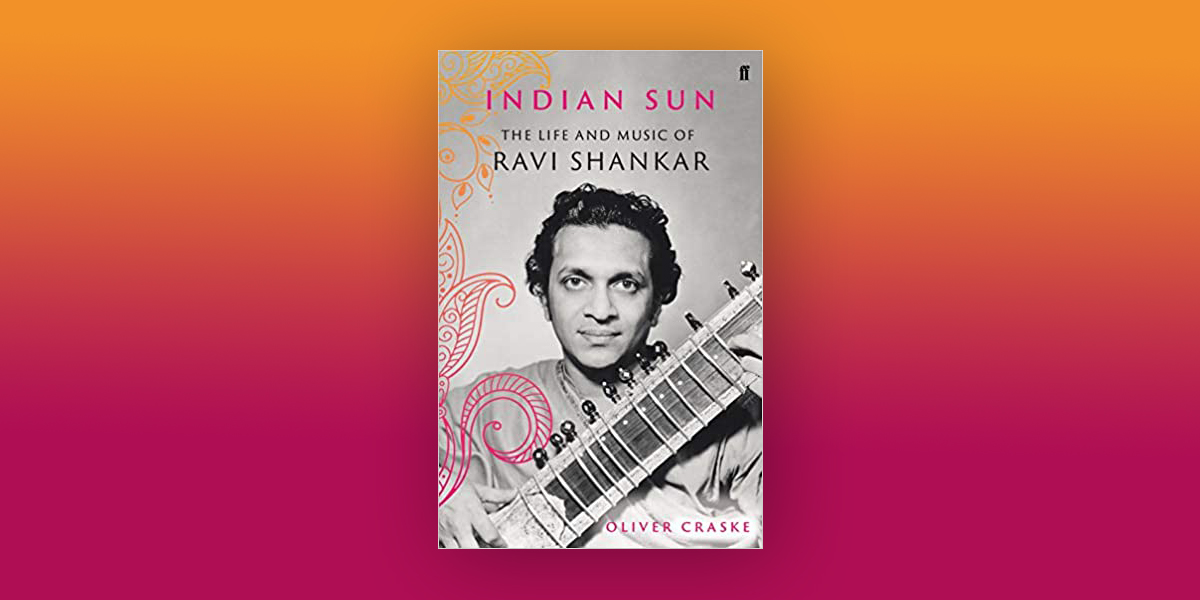
Indian Sun: The Life and Music of Ravi Shankar

Indian Sun: The Life and Music of Ravi Shankar || Oliver Craske

Over eight decades, Ravi Shankar was India’s greatest cultural ambassador who took Indian classical music to the world’s leading concert halls and festivals, charting the map for those who followed. Indian Sun is the first biography of Ravi Shankar. Benefitting from unprecedented access to family archives, Oliver Craske paints a vivid picture of a captivating, restless workaholic, who lived a passionate and extraordinary life – from his childhood in his brother’s dance troupe, through intensive study of the sitar, to his revival of the national music scene; and from the 1950s, a pioneering international career that ultimately made his name synonymous with India.

5 times Evan Purcell’s character had us laughing out loud

All his life, Karma has defended his village from monsters, creatures and forces of darkness. He’s not the bravest or the smartest kid, but he always tries to do what’s right.

Through his latest adventure of stopping one of his classmates, who has shown up to school as a zombie, there are many instances where Karma has us amused. Here are 5 times Karma had us laughing out loud in Evan Purcell’s newest addition to the Karma Tandin, Monster Hunter Series – Karma Meets a Zombie


“Last month, I’d stopped a shark monster from eating my classmates. She was the school librarian. She even wore a fake human head on top of her shark head. I’d scared her off thanks to my bravery (and dumb luck), but not before she (I think) ate one of my classmates.”

*

“We stood in silence for a long time. What else could we say? It’s hard to make small talk with the undead. After a bit, we started walking.”

*

“Quick tip: if you’re surrounded by a screaming mob of people, don’t tell them to calm down. It does not work.”

*

“But I couldn’t ignore a monster. That went against every belief I held dearly, every brain cell in my growing, twelve-year-old brain.”

*

“I love Chimmi. He’s my closest friend. He’s always there for me. But he does not come up with good plans.”


Is this zombie really bad? Is he dangerous, or is he just under some horrible spell? Read Karma Meets a Zombie to find out!

Authors’ roundup: Mental health recommendations for you!

As we collectively grapple with unprecedented challenges, crises and uncertainties, mental health struggles have become more important to address than ever. In a socially distanced world, it is easy to feel cut-off and lonely. But taking care of ourselves and our minds is priority.

As our most trusted companions, finding the right books can go a long way in us helping ourselves feel better and understand how to take care of ourselves. We reached out to some experts and authors for their recommendations for books that can help us cope with our mental health struggles.

*

Seema Hingorrany, Clinical Psychologist/Author/Trauma Expert


Option B: Facing Adversity, Building Resilience, and Finding Joy by Sheryl Sandberg and Adam Grant

Option B || Sheryl Sandberg and Adam Grant

This is a wonderful book for overcoming setbacks and building resilience in these trying times


M is for Mindfulness by Carolyn Suzuki

M is for Mindfulness || Carolyn Suzuki

A book I refer to all my clients for introducing children to concepts of mindfulness.


My Age of Anxiety by Scott Stossel

My Age of Anxiety || Scott Stossel

This one is revealing memoir of life with anxiety.

*

Anjali Chhabria, Psychiatrist


With the world going through a pandemic and a resulting economic crisis, we are going to see a lot of emotional upheaval. Mental health has never been as significant as it is today. It is important that each one of us learns to pick up signs and symptoms of distress in people around us so that we can give them the necessary emotional first aid immediately.

In a time like this, I recommend reading:

Inside a Dark Box by Ritu Vaishnav

Inside a Dark Box || Ritu Vaishnav (Author), Rujuta Thakurdesai (Illustrator)

How to Travel Light by Shreevatsa Nevatia

How to Travel Light || Shreevatsa Nevatia

*

Himanjali Sankar, Author and Editor


I wouldn’t call my recommendations essential mental health reads as much as stories that have stayed with me, because of the intensely troubled, attractive and sensitively drawn protagonists in each. From the young neurotic woman in the very powerful 1892 short story by Charlotte Perkins Gilman, ‘The Yellow Wallpaper’, to the wild and marvelous Antoinette in Jean Rhys’ Wide Sargasso Sea – a feminist, anti-colonial response to the representation of the mad woman in Charlotte Brontë’s Jane Eyre – to more recent explorations of troubled minds as with Theodore Finch (charming, volatile, wise, yet ultimately unable to help himself in a way that is both tragic and life-affirming) in All the Bright Places by Jennifer Niven. These are books that are special to me and I would love for everyone I know to read them if they haven’t done so already.


All the Bright Places || Jennifer Niven.
Jane Eyre || Charlotte Bronte
Wide Sargasso Sea || Jean Rhys
The Yellow Wall-Paper || Charlotte Perkins Gilman

*

Nandhika Nambi, Author


Gone are the days where mental health was stigmatized, misunderstood, cast aside and ignored. Now, more than ever, we need to be conscious of our mental health and its undeniable importance.

What better way to delve into these pressing problems than through the pages of a book? Read to understand, read to help and read to heal. Here are my recommendations:

Turtles All the Way Down by John Green

Turtles All the Way Down || John Green

Fish in a Tree by Lynda Mullaly Hunt

Fish in a Tree || Lynda Mullaly Hunt

First, We Make the Beast Beautiful: A New Story about Anxiety by Sarah Wilson

First, We Make the Beast Beautiful: A New Story about Anxiety || Sarah Wilson

Straight Jacket by Matthew Todd

Straight Jacket || Matthew Todd

This Too Shall Pass by Milena Busquets

This Too Shall Pass || Milena Busquets (Author), Valerie Miles (Translator)

Untamed: Stop Pleasing, Start Living by Glennon Doyle

Untamed || Glennon Doyle

*


Ritu Vaishnav, Author and Journalist


Fear: Essential Wisdom for Getting Through The Storm by Thich Nhat Hanh

Fear || Thich Nhat Hanh

This is the book that I turn to whenever I need to find some calm within. The perspective it offers might be great for your mental health too. I tend to gift this one a LOT!


How to Travel Light by Shreevatsa Nevatia

How to Travel Light || Shreevatsa Nevatia

This is a memoir about living with bipolar disorder. It talks about both depression and mania. The candour and humour keep it from turning too heavy or intense despite the subject matter.


The Bell Jar by Sylvia Plath

The Bell Jar || Sylvia Plath

This one is dark and disturbing, made even more painful by the fact that its brilliant author died by suicide shortly after it was published. This one is not for everyone, but pick it up if you can handle a hard and gut-wrenching look at the mind’s capacity to torment.


The Rabbit Listened by Cori Doerrfeld

The Rabbit Listened || Cori Doerrfeld

I would especially recommend this picture book to those who wish to support someone going through a difficult phase. Go ahead and be their rabbit!


After the Fall by Dan Santat

After the Fall || Dan Santat

What happened to Humpty Dumpty after his great fall? This beautiful picture book talks about recovering from trauma and getting back on your feet.

*

Tazmeen Amna, Author


My life in the recent past has been extremely fast-paced. I often find myself experiencing depressive symptoms, or in an emotionally excessive hyper state. Honestly, there is no better way for me to calm myself down and feel good about myself than reading. There are certain books that smell and feel like home- they’re like a warm cup of hot chocolate, like melting marshmallows over a bonfire on a winter night!

My go-to feel-good books are Penguin Classics: Little Women, Pride and Prejudice, Great Expectations, David Copperfield.

David Copperfield || Charles Dickens
Great Expectations || Charles Dickens
Little Women || Louisa May Alcott
Pride and Prejudice || Jane Austen

Sometimes, for fun, I read children’s fiction such as Sleepovers by Jacqueline Wilson– that book takes me back to childhood days of sincere friendships and miniscule struggles.

Sleepovers || Jacqueline Wilson (Author) Nick Sharratt (Illustrator)

Contemporary Fiction is always relatable and fun to read too; I am a fan of Namita Gokhale, (Paro: Dreams of Passion, Priya: In Incredible Indyaa), and I love me some Sophie Kinsella (My Not-So-Perfect-Life), and Jojo Moyes. I recently enjoyed Ayesha At Last by Uzma Jalaluddin too!

Ayesha at Last || Uzma Jalaluddin
Paro || Namita Gokhale
Priya || Namita Gokhale
My Not So Perfect Life || Sophie Kinsella

*


Jane De Suza, Author


A Long Way Down by Nick Hornby

A Long Way Down || Nick Hornby

A hilarious, life-affirming book about four people who set out to commit suicide. An incisive look at missed opportunities, being left out and finding others like you.


Wild Child and Other Stories by Paro Anand

Wild Child || Paro Anand

Riveting stories about children’s reactions to abuse, loneliness, failure, racism. The story cores down fearlessly to issues that should be discussed with the young.


The Curious Incident Of The Dog In The Night-Time by Mark Haddon

The Curious Incident of the Dog in the Night-Time || Mark Haddon

A young teen who the world dismisses as autistic, triumphs over his disabilities to find the truth.


Em and the Big Hoom by Jerry Pinto

Em and the Big Hoom || Jerry Pinto

A brave account of a mother swayed from manic highs to lows.


***

error: Content is protected !!