Publish with Us

Follow Penguin

Follow Penguinsters

Follow Penguin Swadesh

Remembering some words from India’s most loved storyteller

We recently celebrated our most loved storyteller, Ruskin Bond’s 86th birthday. And as much fun as we had rediscovering his stories and hearing his words again – we can never really get enough of his stories.

As we continue to flip through his words, we decided to do a our own little round-up of some of his most powerful words and quotes that have stayed with us through the years.


On Unequal Struggles


On Human Truths and Sentiments

On Sadness and Fleeting Happiness


On Discomfort and Struggles


On Dreams and Reality


On Friendships 


On Battles of Life


On Making Your Own Music


On Childhood and Adulthood


On Focusing and Spending on the Right Things


Whether writing for adults or for his young audience, Mr. Bond’s words have always had a resounding effect on us, no matter how many times we revisit his stories. Which of his stories are closest to your heart? Share with us in the comments below!

Meanwhile, you can join us in celebrating his work and life at our Kindle Store!


What to Read this Eid

Eid Mubarak, everyone! We wish you and your family lots of positivity and happiness. To be a part of the joy, we’ve put together a list of books you might like to take a look at today!

Prophet of Peace: The Teachings of Prophet Muhammad

Maulana Wahiduddin Khan, one of the most eminent scholars of Islam in the contemporary Muslim world, draws on original Arabic sources to correct misconceptions about Islam’s early history and to establish that the revolution brought about by the Prophet was entirely bloodless. In fact, the Prophet Muhammad formulated an ideal ideology of peace which he faithfully and rigorously put into practice. In his time, there were some minor skirmishes, but no full-fledged wars.

*

Indica: A Deep Natural History of the Indian Subcontinent

Researching across wide-ranging scientific disciplines and travelling with scientists all over the country, biochemist Pranay Lal has woven together the first compelling narrative of India’s deep natural history, filled with fierce reptiles, fantastic dinosaurs, gargantuan mammals and amazing plants. This story, which includes a rare collection of images, illustrations and maps, starts at the very beginning—from the time when a galactic swirl of dust coalesced to become our life-giving planet—and ends with the arrival of our ancestors on the banks of the Indus. Pranay Lal tells this story with verve, lucidity and an infectious enthusiasm that comes from his deep, abiding love of nature.

*

Makers of Modern India

In Makers of Modern India you will see caste, religion, colonialism, the economy language, gender, nationalism, democracy and secularism in a historical context. The book is a treat for those who are curious about the formation of the multifarious collection of people, ideas and religions in India.

The author shows you how the lack of unison in the opinions of the makers of India complemented each other and resulted in the finished product called India.

*

Collected Short Stories 

Ruskin Bond wrote his first short story, ‘Untouchable’, at the age of sixteen, and has written memorable fiction ever since. He is famous not only for his love of the hills, but for imbuing the countryside with life and vibrancy through moving descriptions. The simple people who inhabit his stories evoke sympathy and laughter in equal measure. This wonderful collection of seventy stories, including classics like ‘A Face in Dark’, ‘The Kitemaker’, ‘The Tunnel’, ‘The Room of Many Colours’, ‘Dust on the Mountain’ and ‘Times Stops at Shamli’, is a must-have for any bookshelf.

*

Absolute Khushwant

Absolute Khushwant covers Khushwant Singh’s life since his birth in 1915 in the pre-partitioned Punjab thereby making him a witness of the various political, economic and social changes that the nation had undergone prior to independence and thereafter. Being gifted with a unique style of writing, Khushwant Singh captured the many of the historical events of modern India in his writings. Not only that, Khushwant Singh was a well read man on religion and had at times produced works of highly volatile and controversial issues.

*

Pax Indica

The book Pax Indica: India and the World of the 21st Century, written by an Indian author Shashi Tharoor, is an emphasis on the Indian diplomacy and its role in the global world. The book gives us an insightful and an interesting coverage of India’s foreign policies and how the policies affect the common man. It also explains that in Indian politics why policies are important to an India focused on domestic transformation. Shashi Tharoor surveys and examines the major International relationships, offers suggestion about the country’s need for the required platform, along with the country’s responsibilities to maintain its position globally, making his book an informative text to the people of the world.

*

Sea of Poppies 

A motley array of sailors and stowaways, coolies and convicts is sailing down the Hooghly aboard the Ibis on its way to Mauritius. As they journey across the Indian Ocean old family ties are washed away and they begin to view themselves as jahaj-bhais or ship brothers who will build new lives for themselves in the remote islands where they are being taken. A stunningly vibrant and intensely human work, Sea of Poppies, the first book in the Ibis trilogy confirms Amitav Ghosh’s reputation as a master storyteller.

*

The Mirror of Beauty

It is the sunset of the Mughal Empire. The splendour of imperial Delhi flares one last time. The young daughter of a craftsman in the city elopes with an officer of the East India Company and so we are drawn into the story of Wazir Khanam: a dazzlingly beautiful and fiercely independent woman who takes a series of lovers, including a Navab and a Mughal prince and whom history remembers as the mother of the famous poet Dagh. But it is not just one life that this novel sets out to capture: it paints in rapturous detail an entire civilization.

*

In an Antique Land

Packed with anecdote and exuberant detail, In an Antique Land provides magical and intimate insights into Egypt from the Crusades to Operation Desert Storm. It exposes the indistinguishable and intertwining ties that bind together India and Egypt, Hindus and Muslims and Jews. By combining fiction, history, travel writing and anthropology, to create a single seamless work of imagination, Ghosh characteristically makes us rethink the political boundaries that divide the world and the generic boundaries that divide narratives.

*

Notes of a Dream: The Authorized Biography of A.R. Rahman

Who really is A.R. Rahman? We know the music. But do we know the man? For the first time, a nation’s pride-winner of National Film awards, Oscars, Grammys and hearts-opens up about his philosophies: hope, perseverance, positivity and love. From his early days as a composer of advertisement jingles to his first big break in feature films, from his keenness to integrate new technology with good old-fashioned music scores to the founding of his music school, from his resounding entry on to the international stage to his directorial debut, from his philanthropy to his inner life, Notes of a Dream captures Rahman’s extraordinary success story with all the rhythm and melody, the highs and lows, of a terrific soundtrack by the man himself.

*

The Complete Book of Muslim and Parsi Names

On the day of Qayamat you will be called by your names and the names of your fathers. Therefore keep good names.’―The Prophet The Complete Book of Muslim and Parsi Names is a practical guide for choosing the perfect name for your child. The result of several years of research; it is an erudite and thorough compilation of approximately 30;000 names taken from ten languages. With the actual and the construed meanings and the history or mythology associated with the name given against each entry; this is a precise and invaluable sourcebook for scholars and lay readers alike.

*

Siyasi Muslims: A Story of Political Islams in India

How do we make sense of the Muslims of India? Do they form a political community? Does the imagined conflict between Islam and modernity affect the Muslims’ political behaviour in this country? Are Muslim religious institutions-mosques and madrasas-directly involved in politics?Are Muslims truly nationalists? Or do they continue to remain just an ‘other’ in India?

While these questions intrigue us, we seldom debate to find pragmatic answers to these queries.

*

Ghalib: A Thousand Desires 

In this lively, witty and illuminating account, Ghalib emerges from these pages as a man of his time but also one who looms large over history.
Raza infuses his research with just the right amount of anecdote and trivia, evoking Ghalib as an outspoken genius, a game-changer who never shied away from aiming a witty barb (or three) at his rivals. Moreover, Ghalib also lived in a crucial age that saw the end of Mughal rule and the destruction of his beloved Delhi.

*

The Colours of My Heart: Selected Poems

Faiz Ahmed Faiz is widely regarded as the greatest Urdu poet of the twentieth century and the iconic voice of a generation. Although he is best remembered for his revolutionary verses that decried tyranny and called for justice, his oeuvre also extended to scintillating, soulful poems of love. In this remarkable selection of Faiz’s most memorable poems and ghazals, readers will be able to experience a new dimension of the great poet’s genius.

*

Uparwali Chai: The Indian Art of High Tea

The ultimate teatime cookbook, with an Indian twist

From Saffron and Chocolate Macarons to Apricot and Jaggery Upside Down Cake to a Rooh Afza Layer Cake, Uparwali Chai is an original mix of classic and contemporary desserts and savouries, reinvented and infused throughout with an utterly Indian flavour. A beautifully curated set of recipes full of nostalgic flavours and stories, this is a book every home cook will be referring to for generations to come.

*

Dastan-e-Ghadar: The Tale of the Mutiny

Zahir Dehlvi, an accomplished poet and young official in the court of Bahadur Shah Zafar, lived through the cataclysmic 1857 Revolt that changed the course of history, marking the end of Mughal dominion and the instatement of the British Raj.
Dehlvi’s memoir, written on his deathbed, not only chronicles the fading glory of the Mughal court and his entry into a vanishing way of life, but also, most importantly, pivots on the horrifying spectacle of the Revolt and its aftermath-from the violent siege of Shahjahanabad to the bloody reprisals that followed.

What it take to Build a Happy Family

You can’t have a happy family unless you’re happy yourself. Raageshwari Loomba, an award-winning speaker on mindfulness, shows us how to create an excellent atmosphere for the entire family to thrive in. Her relateable style is coupled with real-life examples, such as that of Albert Einstein, who couldn’t speak till the age of four and was a poor student. His parents encouraged him with love and allowed him to learn at his own pace. This, she shows, is the way to bring up your own little genius.
Building a Happy Family brings to you 11 simple mindfulness philosophies that will enrich and strengthen your and your children’s inner world. Through scientific research and her own intimate story of heartbreak and facial paralysis, Raageshwari emphasises how our thoughts can manifest further struggles or glory, and how teaching children early that our inner world attracts our outer world is key. Parents are taught to encourage their children’s original expressions, creativity and joy, and not lose sight of it in their own lives too. This is the secret to a happy family.


Read an excerpt from the book below:


Why Mindfulness?


There are many inner-work philosophies, just as there are many meditation techniques. To counter anxiety, restlessness, anger, stress and depression, we can turn to the following:
  • The zen method, wherein we build our centre by focusing only on one object.
  • The mantra method, wherein we build our awareness by consistent repetition of a mantra or a shloka.
  •  The t’ai chi, yoga or qigong method, wherein we build our alertness with slow body movements to align with our inner feelings and thoughts.
However, mindfulness is particularly brilliant for parents because it gently reminds us to be present, to live to the fullest now, to not be concerned about getting to the next place. By being present now, we give children what they crave— our complete attention. Not to mention, we learn to be happy, we learn to be grateful and we alleviate stress and anxiety. In short, we become like children.
Santhosh Babu, founder, OD Alternatives, and mindfulness coach, says, ‘Psychologists, whichever branch of psychology they believe or practice, collectively agree that our behavioural patterns are shaped at an early stage of our lives. The most important influence for most of us at an early stage is the influence of our parents. Thus, our parenting styles, our behaviour towards children and the way we bring them up become the most influencing factors in who they end up becoming. Here, the importance of mindful parenting comes into the picture. Are we projecting our unfulfilled dreams on to our children? The way we react or act in front of our children could shape their world view and belief system. So how can we be the role models who allow healthy mental development in our children while we live in a world of distractions? Mindfulness philosophy and mindfulness techniques help us to be fully present for our children which in turn develop empathy and emotional resilience in them.’
Why is mindfulness important?
Do you wake up exhausted, thinking, ‘What needs to be done today?’ Wake up spouse, wake up children, pack the tiffin, get to school, get to work, answer emails, answer texts and oh! We are hosting a dinner tonight!’ Do you keep thinking about what needs to be done next? Do you always seem to be in a rush? All these are classic symptoms that you are never fully HERE and are constantly anxious and stressed about the next action on the to-do list.  You are overwhelmed and constantly snapping. You get irritated and provoked by family, friends and especially your children. Rather than listening and being still for a while, you react impulsively. Then you keep thinking about it and regretting your outburst.  The same pattern of anxiety, restlessness, worry and anger, followed by regret, continues in your life. Hence, mindfulness is important.  With mindfulness, we can train ourselves to slow down so that we can achieve much more. We can learn to enjoy this moment NOW and savour its memories.  Our family, friends and colleagues will then see that we can listen with love and reason with patience. Our relationships will flourish. With a few simple changes and techniques, you will see how your life is in your control again. You will have patience, presence, more focus, less anger and more insight.  The fact that you are able to focus on the present moment will take away a great deal of stress and anxiety from your life.
But what does my mindfulness have to do with the mindfulness of my children?
The philosophy of mindfulness is all about not being judgemental and being present. Today, parenting is the opposite of mindfulness; it is all about judging and rushing around. Children are naturally mindful as they are not culturebound, have zero judgemental qualities, zero prejudices, are happy without a reason and not concerned about getting to the next destination.They are born with the gift to understand that our inner world creates our external world.  Children are naturally curious and filled with wonder. They cheer up quickly and forgive and forget easily. Their desires are simpler; they wish to touch a pebble or wave at another kid passing by or simply play in the rain. They love being present in the NOW and are not even aware of the great gift they possess. Children lose this gift because of conditioning and well-meaning adults. Adults are the ones rushing them and urging them to get to the next moment or next destination. For example, a parent taking their child to a birthday party will say, ‘We don’t have time, get into the car. We don’t have much time, so we must reach soon.’ Once they are at the party, the parent says, ‘Eat the cake quickly and take the balloons if you want to. We don’t have time and we have to leave now to avoid the terrible traffic.’ And before we know it, the child has turned out just like them. Adults unknowingly train children to believe that happiness is a moving target and life is all about reaching the next destination. Hence, it’s ironic and amusing to see adults trying to achieve mindfulness, a quality that we once possessed in abundance as kids and were forced to let go of. Sadly, this terrible cycle continues with our own children. So, as parents, it is vital that we learn how to be mindful all over again so that we can allow our children to grow into mindful individuals.
How can I be mindful when a child irritates me?
Sometimes, when our children take too long to get ready and we have chores to finish, or when they are rude and angry, we immediately want to clarify who’s boss and fire back promptly. But do remember, our anger can never defuse a child’s anger, only calmness can. We are all sensitive to vibrations, and children are brilliant at sensing ours. On an external level, when children see us acting stressed, angry and restless, they internalize this behaviour and present it back to us in their times of distress. Let us remind ourselves that asking someone to hurry up too many times only triggers and escalates stress and anger. Hence, children reflect this behaviour. It is just like a boss hovering around us, waiting for us to finish a task. ‘Hurry up, I said. Hurry up, will you? Are you listening to me? Goodness, how slow are you?’ I wonder how well we would do a task under such circumstances. Just like an irate and hyper individual comes across as weak, so too does an irate and hyper parent. Stress and anger are a chain reaction, just like peace, patience and mindfulness.  An angry parent asking a child to be calm will not work for long. A parent who rarely gives focused attention to a child cannot expect the child to communicate effectively with them in the future. Hence, can you be mindful of your emotions the next time your child upsets you? It is in your control to stop the vicious cycle of helplessness and start the cycle of mindfulness. Just be still, sip some water and breathe. Reframe your thinking, focus on something that brings you joy. Now observe the same child; you will notice a shift in their behaviour too.  When we are at ease and show confidence, our children take us far more seriously and naturally reflect that. This book is about training you to take the onus on yourself in every situation. This book is about you accepting the reality that parenting is all about bringing up the parent and not the child. Once you master this art, you will magically navigate every situation. This is science. This is the magic of mindfulness!

Get your copy of Building a Happy Family here 🙂

A Soldier’s Sacrifice: A glimpse into Captain Vijyant Thapar’s life

Captain Vijyant Thapar was twenty-two when he was martyred in the Kargil War, having fought bravely in the crucial battles of Tololing and Knoll. A fourth-generation army officer, Vijyant dreamt of serving his country even as a young boy. In this first-ever biography, titled Vijyant at Kargil, we learn about his journey to join the Indian Military Academy and the experiences that shaped him into a fine officer.

Told by his father, Col. V.N. Thapar and Neha Dwivedi, a martyr’s daughter herself, the anecdotes from his family and close friends come alive, and we have a chance to know the exceptional young man that Vijyant was. His inspiring story provides a rare glimpse into the heart of a brave soldier. His legacy stays alive through these fond memories and his service to the country.

Here is an excerpt from the prologue of the book that talks about his last few moments, and the reaction of his friends and family as they received the news of his martyr.


28 June 1999

Finally, the time had come. Men with faces covered with camouflage paint, with the white of their eyeballs visible in the dark, started moving forward silently like ghosts, clutching their AKs tightly. Muscles taut, jaws clenched, they advanced towards the crest. Robin raised his right arm and everyone froze as a shell burst in the sky some distance away, followed by a rattle of fire from the hill about 800 metres ahead. It was still dark but soon the almost full moon would rise and light up the entire area.

He looked at his sturdy G-Shock watch, which read 1945 hours, 28 June. In a few minutes, they would reach their destination. Around fifteen minutes ago, at 1930 hours, heavy artillery fire had started. He did not want to wait a minute longer than required, now that he was so close to the enemy. Suddenly, the machine guns opened up behind him. It was time. They held their breath in anticipation for the signal to move, their eyes fixed on the silhouette of the hill in front, from where flashes of fire were visible. And then it happened. A shell from the enemy guns landed in their midst.

29 June 1999

All of India was in the middle of Operation Vijay. The Indian Army was fighting almost impossible battles on the extremely tough and unforgiving heights of Drass and Kargil. After weeks of bloody struggle, the tables had turned. News of spectacular victories and stories of unbelievable courage of the valiant men in uniform were flooding the news channels, newspapers and magazines. While some just read the news with their morning cup of tea, others extended support to the officers and jawans by way of inspirational letters, cards and other gestures. This was the first time the country was privy to inside news from the war zone, thanks to the various reporters, who brought it right into their living rooms.

On this day, the country was waking up to the glorious news of another important feature, namely Knoll, being captured, ever so bravely, by the officers and men of the ‘Ever-Victorious’ 2 Rajputana Rifles, one of the most prestigious units of the Indian Army. But some families were destined to face the flip side of the victory. The painful side of war.

They woke up to the much-awaited call from the front. However, this time, they didn’t hear the voice they longed for.

A brother had no strength left to hold the receiver of the phone after hearing about his only sibling’s brave sacrifice.

A mother had her heart torn out as she was summoned home in the middle of her working day.

A father, who was always planning and building the brightest future for his son, bit by bit, had his dreams shattered into more pieces than he could count.

A young girl, who was busy counting the days until she would meet the handsome young officer her heart belonged to, was left abandoned.

A little child, who had perhaps learnt to smile again because of her angel in uniform, would never see his face again.

A friend, who was oceans away, had just dreamt of his best friend and woken up with a start, oblivious to what the phone call that would come barely a few minutes later had in store.

To the world he was but a man, but to many others he was the world.

The ‘world’, however, did come together, as the people of Noida made their way to Col Virender Thapar’s house on a hot Tuesday afternoon when they learnt of the brave sacrifice of a son of their own. The young boy—who had run on the streets and exercised in the parks till a couple of years ago, who had donned the smart uniform for barely six months after years of preparation—had breathed his last in the highest tradition of the Indian Army. They couldn’t wait to get a glimpse of the courageous son of their soil. The reaction the sacrifice of this young and valiant officer drew from an entire city was the first of its kind. Until that day, no other event had united the people of the city in such a manner. Men, women and children alike, with an overwhelming feeling of love and respect, came together in large numbers to pay respect to the fallen hero and extend their heartfelt support to the bereaved family. The brave soldier deserved the utmost respect from his country, and every person present was determined to give him just that.

Thousands of people surrounded his house and waited for him to arrive, wrapped in the tricolour. His family and friends tried to hold their own. Their eyes were wet and their hearts heavy despite being full of pride. No one said it aloud, but each one of them silently wished: ‘I wish it isn’t our Robin. Not our sweet Robin.’


Get to know the exceptional young man, and brave soldier, Captain Vijyant Thapar by reading his biography, Vijyant at Kargil. Order the e-book here.

Mass Entrepreneurship as a Solution to the Jobs Problem

Since 2012, the number of youth entrants into the labour force has increased at an accelerating pace, while the number of jobs created has decreased. This situation might become graver between 2020 and 2030 as the labour force swells further. Reviving Jobs, the third volume in the Rethinking India series, edited by Santosh Mehrotra, offers suggestions on how India can make the best use of the remaining period of its demographic dividend-any failure to do so will cause millions to suffer in poverty for decades to come.

In this excerpt, Sandhya Thukaram and Madan Padaki talk about mass entrepreneurship as a solution to the jobs problem.


India is a land of radical and substantive change. At any point of time, a revolution is underway. These revolutions are silent and not always evident, but nevertheless on the cusp of influencing change. This constant change affects people on a scale that is unimaginable elsewhere. There is a massive change silently transforming our economy, and this may well set the national discourse around growth and employment for decades to come. This is coupled with the extreme unemployment of our times, and these factors work in tandem and apart. But their interaction, and how we respond to it, can be significant to our economy’s future.

The major change is a demographic one, which all countries have gone through or will go through. India’s massive young population is one of the largest in the world—a double-edged sword which can be channelled to be India’s singular strength. It provides India and its businesses with a large supply of labour. It also means that there are a large number of consumers willing to buy the goods and services that generate income for these very businesses. This is good for the economy; the aggregate supply as well as demand can be high, creating a virtuous cycle that causes growth, employment and better lives for all.

However, simple macroeconomics tells us that an extremely high supply can mean there is an excess of the resource at hand, and very often that excess is simply discarded or devalued to a lower price. Millions now live in unemployment after being discarded by the economy, and millions more subsist through jobs that pay much less than they reasonably should.

But if one looks at it from a broader economic perspective, it doesn’t make sense. Labour is unique in the sense that it can create its own demand. By virtue of having to simply exist, the youth of this country have to consume goods and services. This consumption should boost demand in an economy, creating jobs that employ these same youth.

But amidst the worst unemployment we have seen in decades, this line of thinking is clearly wrong. We have the people, we have the demand, we have the labour, so why are there no jobs?

There are a few explanations. One is bad timing. Due to the NPA crisis, private investment in the economy is falling as firms are afraid to lend and individuals are afraid to borrow. Moreover, demonetization created a cash crunch that severely affected consumption and exports. The government is also in a mood for slow reform and no big projects with massive budgets have been laid that could have stimulated growth. Unlike the bull market of the 2000s, there is no supportive global environment that can boost growth. Had only one of these occurred, the other factors would have probably balanced it out. However, these did occur at the same time, and this hit growth and employment hard, causing high joblessness.

There is probably some truth to this explanation. These conditions could very likely have made the jobs crisis of recent times worse. But it is probable that the explanation is more structural than it being just the result of recent misfortune.

Jobs are not provided by big employers. The world’s largest private employer, Walmart, employs only 2.3 million people, and this number drops fast when you look at the next biggest employer. The next largest private employer, Foxconn, employs just a little more than 8,00,000, a third of Walmart’s figure.These numbers are massive. However, they are minuscule compared to the total workforce of a country (or the world, as these companies operate in several countries). Even if we gave all the jobs across the world at Walmart only to Indian youngsters, it would employ less than 1 per cent of them. So where will all the jobs come from?

To answer this, we refer to the words of Nobel Prize–winning economist Edmund Phelps, who wrote, ‘Most innovation (and job-creation) wasn’t driven by a few isolated visionaries like Henry Ford and Steve Jobs; rather, it was driven by millions of people empowered to think of, develop, and market innumerable new products and processes, and improvements to existing ones (in their local communities).This line captures the essence of mass entrepreneurship as a solution to the jobs problem.

Let us take a closer look at what Phelps is saying. He says that big companies and lone individuals did not and simply cannot provide the volume of employment any economy requires; even the largest of companies are minuscule compared to an economy. Instead, employment at that scale has to be provided by many, many small entrepreneurs. These entrepreneurs are nowhere near the size of large companies like Walmart, but instead employ only a handful of people. This number is usually above five and below twenty. These small entrepreneurs perform basic tasks in a local economy—a barber, a grocer, a pub owner.

This scenario, reproduced across hundreds of communities, creates the millions of jobs and growth that propel an economy. These are the people and businesses that have to provide employment for an economy. And that is the core of mass entrepreneurship.


You can read more about this in Reviving Jobs: An Agenda for Growth, which you can order here.

History of the Coronavirus

On the eve of 31 December 2019, as the world celebrated the start of a new decade, the province of Wuhan alerted the World Health Organization of several ‘flu-like’ cases. Less than a week later, a novel coronavirus, was identified. In February, the disease it caused was named COVID-19.

The symptoms of Coronavirus are dangerously similar to that of the common flu: fever, coughing, breathlessness, tiredness, headache and muscle pain. But in India, that has such a high population density, we will have to do more than just stick to Namaste to greet each other. What we need most right now is credible and comprehensive information from professionals that can help us understand what the Coronavirus is, and how we can prepare and protect ourselves against it.

Panic is historically an integral component of pandemics. Understanding the Coronavirus within a larger, historical context of pandemics and survival is crucial to prepare – mentally, emotionally, and strategically – for the times about to come. Find an introduction to the history of the coronavirus below:

The Coronavirus

The story of the coronavirus (CoV) begins with Dr David Arthur John Tyrrell, a British virologist studying the common cold. Dr Tyrrell was born in Middlesex, United Kingdom, in 1925, and completed his medical training in 1948. The same year, the Common Cold Research Unit (CCRU) was founded under the auspices of the United Kingdom’s Medical Research Council. In 1957, Dr Tyrrell joined the unit, excited at the prospect of developing a cure for the common cold and, in 1982, became its director.

At the CCRU, he experimented on volunteers to study viruses responsible for the common cold. Newspaper advertisements offered a unique ten-day stay at CCRU where

The volunteers would be infected with preparations of a cold virus. They would be paid £1.75 per day and would be housed in small groups, strictly isolated from one another.

In 1965, Dr Tyrrell’s team isolated an unusual virus from a young boy with the common cold. They exposed several volunteers to his nasal washings and they developed a cold. Interestingly, the virus, initially named B814 after the number of nasal washings, grew exclusively on human embryonic tracheal cultures.

In 1966, Dr Dorothy Hamre and Dr John Procknow identified a similar virus in medical students sick with a cold. Later that year, Dr Tyrrell demonstrated under an electron microscope that the new virus resembled the bird bronchitis virus and the mouse hepatitis virus. With this new information, scientists around the world identified related viruses, giving them similarly unimaginative alphanumeric names. Shortly thereafter, these new viruses were collectively named coronaviruses (CoVs) for their crown-like appearance.

Dr David Tyrrell’s brilliant discovery laid the groundwork for modern research on coronaviruses. Scientists have since identified numerous coronaviruses in a multitude of animal species. These include alpha, beta, gamma, and delta coronaviruses. Gamma and delta coronaviruses infect birds and have not been proven to cause human infections. Alpha and beta coronaviruses have infected humans and many other mammals, especially bats. The seven coronaviruses that have infected humans are called human coronaviruses (HCoVs). Of these, HCoV-229E and HCoV-NL63 are two human alphacoronaviruses, while HCoV-HKU1 and HCoV-OC43 are two human betacoronaviruses. Last, there are the three notorious human betacoronaviruses that have caused SARS, MERS and the ongoing COVID-19 pandemic. The WHO has declared COVID-19 as the most dangerous threat to world public health, the first pandemic due to a coronavirus.


To understand responses and possible ways forward by placing COVID-19 in a historical context, the authors mention Lord Byron’s words: ‘The best prophet of the future is the past’.

A complete story of a disease must include the 5 Ws: the what, who, where, when and why. Epidemiologists are the disease detectives who investigate a new disease like COVID-19. They explore the what (health issue of concern), who (person or people affected), where (place in which the disease is occurring), when (time course of the disease) and why (causes, risk factors, modes of transmission).Stories of past pandemics and viruses help disease investigators and scientists build this framework in order to tackle the novel Coronavirus affecting the world currently.

The Coronavirus: What You Need to Know About the Global Pandemic is the first book that addresses the history, evolution, facts and myths around the pandemic.

Esha Deol Thaktani’s Yummy Food Recipe for Your Kids

When can I introduce my baby to solid foods?

Becoming a new mother can be an exciting yet overwhelming time. No matter how prepared you are, there will always be many confusing moments, opinions and a whole lot of drama! And just like any other new mom, Esha Deol Takhtani was faced with many such questions soon after the birth of her two daughters-Radhya and Miraya.

Packed with advice, tips, stories and easy and delicious recipes for toddlers, Amma Mia reflects the personal journey of one woman’s transformation into a mother. Informative and easy to follow, this book will help new mothers navigate the ups and downs of raising a healthy toddler and make their child fall in love with food.


Read a recipe from the book below:


Continental Potato Wrap
Ingredients
1 tbsp. cumin seeds
 ½ tbsp.  mustard seeds
1 small onion, chopped
1 tbsp. ginger–garlic paste
1 potato
 ½ tbsp. turmeric powder
½ tbsp. amchur powder
 ¼ tbsp. garam masala powder
 ½ cup of water
 ½ cup of flour, to which you may add ¼ tsp. salt
 1 tbsp. oil
Direction
  • In a pan add oil and sauté cumin seeds, mustard seeds, chopped onion and ginger–garlic paste. Fry well. Add the spices and mix well.
  • Add enough water and salt to the flour so it achieves the consistency of dosa batter.
  • Mix the potato in with the rest of the mixture till cooked.
  • In a non-stick pan, pour refined oil and spread the flour batter like you would to make a dosa. Fill the stuffing in the centre. Fold it properly and fry on a low flame. Your tasty breakfast is ready to be served.


For more tips and tricks, check out Amma Mia by Esha Deol Takhtani.


Shake a Leg with Mandira Bedi’s Workout Playlist

Mandira Bedi is a fitness icon. But behind the six-pack is also a snotty, complaining, can’t-get-out-of-bed-today girl who, in her own way, is still searching for true happiness. Not conditional, materialistic, transactional happiness, but just happiness. So has she cracked it yet? Mandira says ‘No’. But she genuinely believes that she’s headed in the right direction. In her own chaotic way, she seems to have discovered some kind of non-scientific, non-spiritual and as-yet-non-existent formula for finding peace in everything. Just being happy for no reason.


We are sharing here one of her secrets from Happy For No Reason: her terrific playlist for power-packed workout sessions!


Mandira Bedi’s Top 40 Workout Songs (You Will Never Need Another Playlist)
  1. Have It All (Jason Mraz)
  2.  Woke Up Late (Drax Project)
  3.  Build Me Up Buttercup (The Foundation)
  4.  Old Town Road (Lil Nas X)
  5.  Don’t Start Now (Dua Lipa)
  6.  Close to Me (Ellie Goulding)
  7.  Titanium (David Guetta)
  8.  Keeping Me Under (Two Another)
  9.  Glorious (Macklemore)
  10.  More Mess (Kungs)
  11.  Don’t Matter to Me (Drake & Michael Jackson)
  12.  Empire State of Mind (Jay-Z & Alicia Keys)
  13.  Truth Hurts (Lizzo)
  14.  Don’t Stop ’Til You Get Enough (Michael Jackson)
  15.  The Shape of You (Ed Sheeran)
  16.  Faith (Wham)
  17. Wasabi (Little Mix)
  18. Memories (Maroon 5)
  19. Day ’n’ Nite (Kidi Cudi)
  20. 2 in a Million (Steve Aoki, Sting & SHAED)
  21. Body (Loud Luxury & Brando)
  22.  24k Magic (Bruno Mars)
  23.  Respect (Arethra Franklin)
  24.  Feel It Still (Portugal. The Man)
  25.  Rock DJ (Robbie Williams)
  26.  Feels (Calvin Harris)
  27.  Cake by the Ocean (DNCE)
  28.  Firework (Katy Perry)
  29.  Dancing in the Moonlight (Toploader)
  30.  Middle of a Heartbreak (Leland)
  31.  Classic (MKTO)
  32.  Wild Thoughts (DJ Khaled)
  33.  Hand in My Pocket (Alanis Morissette)
  34.  Attention (Charlie Puth)
  35.  Sweet like Cola (Lou Bega)
  36.  Desert Rose (Sting)
  37.  Good Thing (Zedd & Kehlani)
  38.  Talk (Khalid)
  39.  Catch & Release (Matt Simmons)
  40.  Sky Full of Stars (Coldplay)

    To find out more of Mandira’s secrets for being Happy For No Reason, get the book here 🙂

How the Onion Got Its Layers – An Excerpt

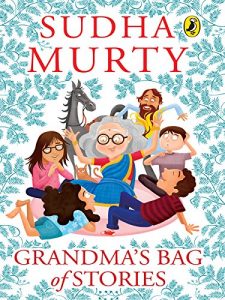
Have you noticed how the onion has so many layers? And have you seen your mother’s eyes water when she cuts an onion? Here is a remarkable story to tell you why. India’s favourite storyteller brings alive this timeless tale with her inimitable wit and simplicity. Dotted with charming illustrations, this gorgeous chapter book is the ideal introduction for beginners to the world of Sudha Murty.


Read below an excerpt from the book:


The kingdom of Ullas was very prosperous. The subjects were happy, the farmers had grown a bumper crop and the kingdom was surrounded by friendly allies. But the king and queen of Ullas were very sad. Their sadness seemed to envelop them wherever they went. This was because they really longed for a child and did not have one.


One day, they learnt of a place in the forests in the kingdom where, if you prayed hard and well, you were granted your wish.
They went there and for many days, prayed to the goddess of the forest for a long time. Finally, their prayers were heard and the goddess appeared before them in a flash of green light.
‘What do you wish for, my dear children?’ she asked.
The king and queen, overjoyed, bowed low and said, ‘We wish to have a child.’
‘So be it, you will soon have a little girl,’ said the goddess, shimmering in the greenery. ‘But remember, though she will be a loving child, she will have one flaw: She will love new clothes too much and it will make life difficult for you. Do you still want such a child?’
The king and queen looked at each other with their eyes full of hope and love. ‘Yes, we do,’ they said to the goddess. ‘We can’t think of anything else we want more in this world.’
The goddess smiled and vanished back among the trees.

Get your e-copy of How the Onion Got its Layers here 🙂

Best of times, Worst of Times: Momspeak Perspectives

Momspeak: The funny, bittersweet story of motherhood in India is an original, provocative book that peels off the layers of social propriety and delves deep into the visceral reality of motherhood, much glorified but barely understood in India. Exploring the spectrum of experiences mothers have as women, as humans—from ecstasy to depression, jealous possessiveness to indifference, exhaustion to sensual desire—Pooja Pande reveals the personal, social and emotional roller-coaster that motherhood can be.


This Mother’s Day, Pooja Pande shares her thoughts on the experience of motherhood during these unprecedented times, and shares an excerpt from Momspeak. Read on below.


These may be the best of times and the worst of times


It’s the best of times because a pandemic the intensity of which they say is still to come has already caused the human race, every single human being on the planet, to take stock, in different ways, of their lives, their selves, their pasts, presents, and futures.

It’s the worst of times because a pandemic, the intensity of which they say is still to come, has already crippled nations, it’ peoples, its leaders, its economies, claiming lives by the millions, affecting many more. The uncertainty is a never before experienced event for all of humanity.

The uncertainty has caused a never before experienced event of togetherness. As always, even with this global health crisis worsening by the day, perspective is everything. And there’s no other experience that works wonders for putting things into perspective – by first shattering and then reshaping it – than motherhood. Right from carrying the life inside her to birthing, going onto watch her grow, shaping what she can, and above all, letting her go, for she has to ultimately forge her path in the world, a mother’s only lesson is one in perspective.

Thoughts I gathered on this lesson holds me in stead during these best and worst of times – it asks of me to turn the worst of times into the best. I explored them deeply in the chapter titled Letting Go, in my new book Momspeak, and On Mother’s Day today, I’d like to share them with you.

The letting go has to do with the future too, and a preparation, affirmation, acknowledgement of it. We all know we’re going to die, but do we ever mindfully contemplate a world where we have ceased to exist? Nisha, mother to Nakul and Neel, voices this, but she poses a string of fun questions to me, ‘Like, have you ever thought how one day your daughter might be a super-famous pop singer and you will become the famous X ki maa? And then you’ll be a Wikipedia entry when you’re dead? What does that mean?’ Even as I reel from Nisha’s clairvoyant probing—how does she know about Ahaana’s predilection and penchant for crooning Ariana Grande songs?—she goes all existential, but in a good way, ‘It’s a deep, changing the centre of the universe, kind of truth. Genetically, sure, it’s a perpetuation of your pool. But, for all practical purposes, they’re a memento mori—a symbol of your death, your mortality—from the moment they are born. And really, nothing else.’ When they say birth and death are intrinsically intertwined, this is what it means for the mother who has done the birthing business—not only is the certainty of death a given for the one who has just been born, the mother, in her near-death experience of giving birth, is also, in effect, that much closer to it. This universal truth draws attention to itself bang in the middle of her giving life. (…) It is up to us to seek the affirmation inherent in it then, because letting go does not mean you do not care. Oh no. There is much too much building and shaping and crafting and moulding to be done here, with a lot of care. Oh yes. It is, in some sense, an ultimate letting go, because you have made a bid for reaching out to the universe.


Read the many funny, bittersweet stories of motherhood in Pooja Pande’s Momspeak. Get the book here.

error: Content is protected !!