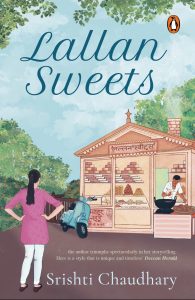
The first characteristic that I gave Tara was that she’s great at Maths, and that’s very funny, because I’m not, and it’s like projecting my fantasy of being a maths whiz onto my character. I had this image in my mind of this super sharp, entrepreneurial girl, one of those people you can’t pull one over. She’s always on her feet, boys her age are afraid to mess with her, and all of this stems out of the fact that she’s always felt put down by her cousins and her uncle, so she’s always trying to over-prove herself. It’s justa. mixture of some things I wished I was, some things I am, and also a synthesis of different people I have met in my life.
What is it like being a young author in India today?
I am not sure, because I actually don’t meet that many writers my age. To me it is a way of life and I can’t imagine not doing it. It’s really nice as well because I think India is a country hungry for stories, but also full of them, so I feel like a middleman trying to capture these stories and narrating them. The not-so-nice part is that there is a huge expectation on writers to have a huge following, so I feel many writers focus on that, being ‘authorpreneurs’ which is a bit of a ridiculous term- as a writer, one’s job is to write a good story, everything else should be secondary.
Your first book, Once Upon a Curfew, was set during the Emergency, while Lallan Sweets is set in the 90s. Is the element of nostalgia deliberate and where does it come from?
Once upon a Curfew was a bit more serious because it was a severe, dangerous time. There were great challenges, and it needed a lot of research because it’s so far in the past for me. 90s, however, was a much more fun time- there was all this foreign culture coming in after 1991, candies and food that people before never dreamt of. There was more to watch than Doordarshan, this great Bollywood era of Shah Rukh Khan and Yashraj and the feeling that love conquers all- I think it was a very fun and optimistic time, unencumbered by the limitless possibilities that technology offers, rendering an innocence to the time. I grew up in the nineties, and simply sought to capture my childhood by making it a setting for Lallan Sweets.
Lallan Sweets || Srishti Chaudhary
Lallan Sweets also talks about themes of family and traditions. What do those words mean to you – as an individual and as an author?
Family of course is the most enriching part of being human- there are these four or five humans around you who drive you absolutely nuts, but at the same time are crazy about you. Nobody else in the world is more annoying and more loving, and that is the dichotomy of family- they are there for you all the time (even when you don’t want). Traditions are nice and fun, if taken lightly; if you ask me, traditions are meant to be flouted, just like rules are meant to be broken. Traditions stop being important the moment they curtail someone’s freedom. Lallan Sweets shows that a traditional magic ingredient may be passed down for generations- but in the end, it’s what you make of the journey that counts.
What was the process of writing Lallan Sweets like and what kind of research did you do for it?
I had to find out about different cities since the story goes across Mathura, Agra, Bareilly, Delhi, Chandigarh and Ludhiana. The most fun part was creating my own little small town, Siyaka, which was a mixture of several small towns I have seen, but mostly a manifestation of my own childhood memories, which although was in a big city, yet my world was very small, so it had the feeling of a small town. Since it’s set in the 90s I got to revisit the pop culture of the time, which was honestly so fun- going back to Hum Paanch, Filmi Chakkar, Shaktimaan- all these series we used to watch. The games were different, past times had nothing to do with a screen- research was super fun because it was going back to an old me, like a friend I had forgotten about.
What advice do you have for other young authors aspiring to break out in the publishing space today?
Just to focus on writing a good story, make your friends read it, get sound feedback, and pitch like there is no tomorrow. Never ever be afraid of rejection- I go by the philosophy ‘fail faster, succeed sooner’ 🙂
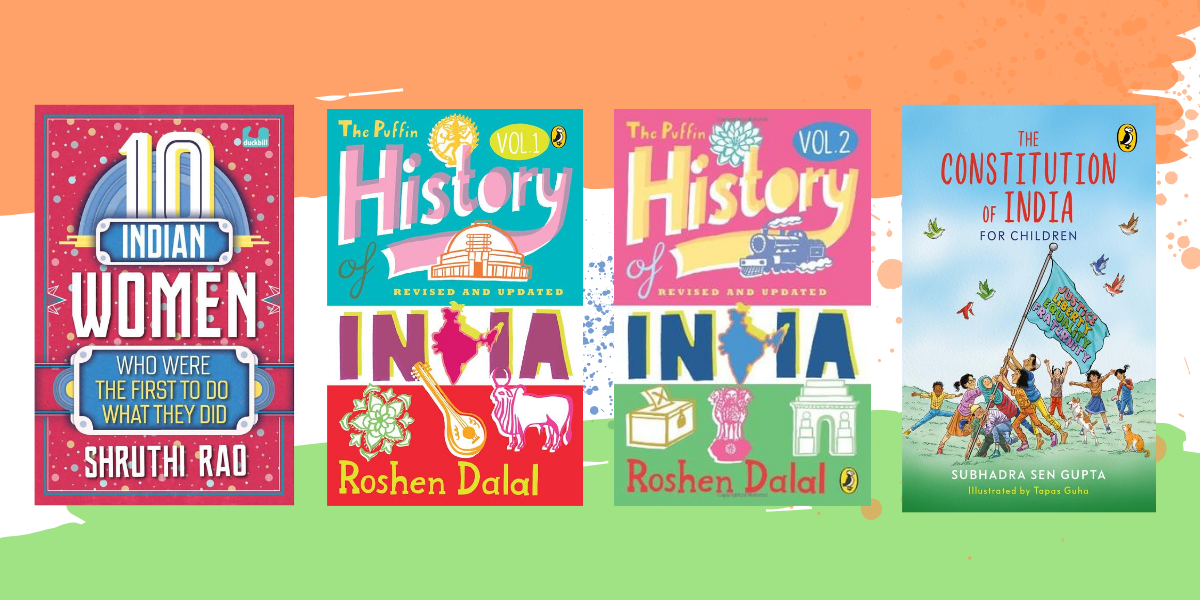
This Independence Day, we recommend some immersive reads to help children understand our country, its triumphs and its struggles. Here are our top three picks for the curious minds. Read on!
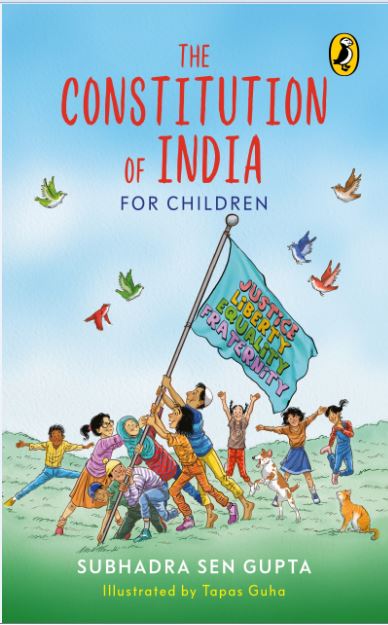
Constitution of India for Children
The Constitution of India for Children || Subhadra Sen Gupta
Which language is our Constitution written in?
Were women a part of the team that drafted the Constitution?
Why do political parties have symbols next to their names?
What is the official language of India?
An essential handbook for every student and denizen of India, here is a compendium of knowledge that serves as an insightful introduction to the most important document of Independent India.
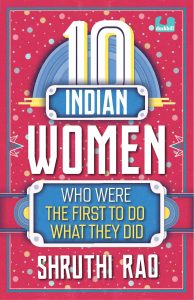
10 Indian Women Who Were the First to do What They Did
10 Indian Women Who Were the First to Do What They Did || Shruthi Rao
This book tells the stories of ten Indian women who were pioneers in diverse fields. While their stories and challenges are different, what is common is that they all opened up the way for all women to achieve their dreams. Shruthi Rao writes absorbing tales of the lives, times and societies that these women lived and worked in.
The Puffin History of India (Volumes 1 and 2)
The Puffin History of India (Volumes 1) || Roshen Dalal
Pick up these books for a rollercoaster ride through centuries of our country’s history! They pack in exciting trivia, numerous maps and illustrations that provide a breathtaking overview of Indian history. Ideal for students and young readers, this amazing reference guide helps to bring the past to life like never before.
The Puffin History of India (Volumes 2) || Roshen Dalal
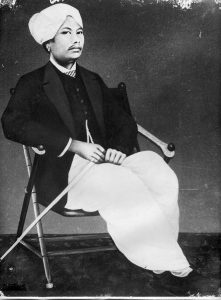
The Anglo-Manipuri War of 1891 was hotly debated for months in Australia, Singapore, Great Britain and the United States. Highly controversial in the unfolding of the events of 1891 was the execution of Crown Prince Tikendrajit of Manipur. Today, the 13th of August, the day of the execution, is observed as Patriots’ Day in Manipur.
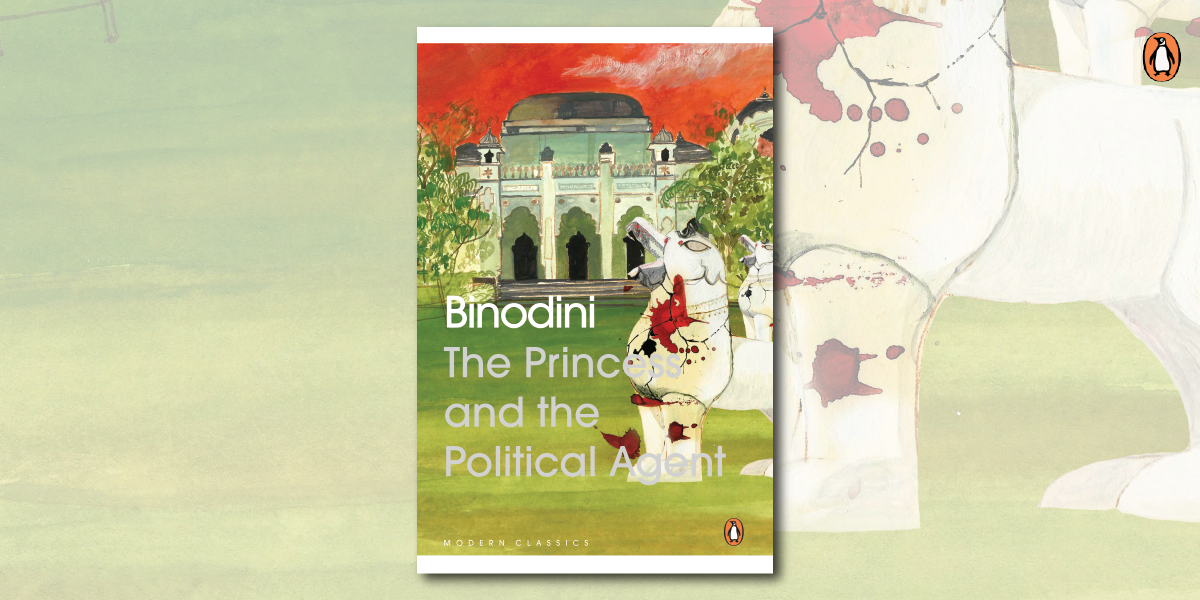
The day her uncle Crown Prince Koireng Tikendra Bir Singh was executed on the Mound of the Eunuchs by the royal market. Sanatombi saw this vividly before her eyes. It was the last time she saw her uncle. She leaned on a post and stood stock-still. She thought, ‘My uncle, hanged! Was the Indian who was also hanged for siding with the crown prince the Indian my uncle talked about? No, that was Niranjan the subedar. Then who was it? … … … Uncle, so was this what you meant when you said you would be back?’ Binodini, ‘The Princess and the Political Agent’.
Bir Tikendrajit
The Anglo-Manipuri War of 1891 was a highly controversial war that deeply convulsed the British Empire. In 1825, after seven years of occupation of the Tibeto-Burman kingdom of Manipur by the Burmese kingdom of Ava, the army of the East India Company and an army of Manipuri princes called the Manipur Levy joined forces to expel the Burmese. The subsequent Treaty of Yandabo of 1826 recognised the independence of Manipur.
The kingdom became a buffer state between the British and the Burmese. In 1834, under the regency of Crown Prince Narasingh, the Political Agency of Manipur was instituted by the British as a medium of communication between the East India Company and Manipur about the frontier between Manipur and Burma. The function of the Political Agent was dependent on the will and pleasure of the Maharaja of Manipur. British records described him as a British officer under Manipur surveillance.
The 1850s and the 1860s, however, saw a series of succession wars after the death of the popular and able Maharaja Narasingh in 1850. The instability led the British to provide a unilateral guarantee of protection of Manipur in 1865 by declaring Maharaja Chandrakirti Singh as an “Asiatic power” in alliance with the Queen of Britain.
In 1874 Chandrakirti and Lord Northbrook, Viceroy of India, reaffirmed the Anglo-Manipuri treaty of 1833. In 1886, the powerful and friendly Chandrakirti died and the British annexed Upper Burma as well. The weakened Manipur’s importance as a buffer state for the British came to an end. But the kingdom remained strategically important as it was located between Burma and Assam, two important possessions of the British Empire.
After the accession to the throne by Maharaja Surchandra, the eldest son of Chandrakirti, there was a palace coup in September 1890 led by his younger brother Prince Tikendrajit. The rebel faction deposed Surchandra and proclaimed Kulachandra, the next oldest brother, the king. Surchandra fled to Calcutta where he appealed to Viceroy Lord Lansdowne to reinstall him on the throne.
Instead, the British dispatched James Quinton, the Chief Commissioner of Assam, with an army to Manipur. His mission was to recognise Kulachandra as the king under the condition that they be allowed to arrest the coup leader Crown Prince Tikendrajit and deport him from Manipur. This aggressive imposition of British law in a sovereign state was rejected by the king, precipitating the Anglo-Manipuri War of 1891. The Anglo-Manipuri War was fought for over a month in the spring of 1891.
In its first phase, the British under the cover of night before daybreak attacked the palace of Manipur, in present day Kangla Fort. Defeated, they retreated but Manipuri forces surrounded the British Residency and five British representatives — Quinton, Frank Grimwood, the Political Agent in Manipur, and three other officers — emerged from the Residency under a flag of truce. A durbar was held with the king at Kangla Fort.
The British representatives were asked to surrender their arms. Upon their refusal, the officers were arrested and tried in the royal military court. The five were executed in Kangla Fort for their crime against the monarch. In the second phase of the war, the British invaded Manipur with three columns from the west, north and east. The Manipuris were defeated at the decisive Battle of Khongjom and in April, the British captured the palace of Manipur at Kangla Fort.
Maharaja Kulachandra and his brothers were deported to the British penal colony in the Andaman Islands. Queen Victoria tried to save Tikendrajit. She thought hanging him “would create very bad feeling in Manipur and in all India.”The Viceroy threatened to resign and refused to comply. He proceeded with the death sentence of Tikendrajit. The Crown Prince was hanged to death in August 1891. The deposed Surchandra died in British custody in Calcutta later that year.
The House of Parliament in Westminster debated the future status of Manipur. The British Raj declared that Manipur state was forfeited to the Crown, but decided to regrant it to a scion of another branch of the dynasty. Eight-year-old Churachand, great grandson of Maharaja Narasingh, was installed as the new king of Manipur in September 1891 by Political Agent Henry St. P. Maxwell. The Anglo-Manipuri War was hotly debated by the international community and remained for months on the front pages of newspapers in Great Britain, the US, and the crown colonies of Australia, New Zealand and Singapore.
Representatives of Great Britain had, in an act of defiance of the British Empire, been beheaded by the public executioner in the presence of a big crowd. The imperial British could not accept the capital punishment meted to their five officers by a small kingdom. They termed it as “treachery” and “rebellion”, and as an act of barbarism. The New York Times opined that the conflict was a serious and threatening blow to British prestige, for instead of being the result of a casual riot, the murder of the English representatives was a quasijudicial act on the part of the native government.
International opinion also held Quinton guilty of attempting to capture Tikendrajit and for attacking a sovereign state without a proclamation of war. The international community censured the subsequent execution: “They were soldiers, but they were taken from their prison, led to a scaffold and there hanged like ordinary murderers.”
Coming after the Sepoy Mutiny of 1857, native Indian newspapers condemned it as British colonialism, declaring the war as part of the general uprising against foreign rule in India.
Somi Roy is a film and media curator, cultural conservationist, and the translator of the works of his mother M.K. Binodini Devi. His latest translation, ‘The Princess and the Political Agent’, Binodini’s historical novel set in the years and events around 1891, is published by Penguin Random House India. Wangam Somorjit is a historian and the author of ‘The Chronology of Meetei Monarchs’ (2010) and ‘Manipur: The Forgotten Nation of Southeast Asia’ (2016). He lives in Imphal.
This article was first published in The Daily Guardian.
The Princess and the Political Agent || Binodini (Author), L. Somi Roy (Translator)
From stories of hope to the charm of friendships – our bookshelf for this month is all about life, love, companionship, and individual potential. We are sure everyone will have something to take away for those growing TBR piles!
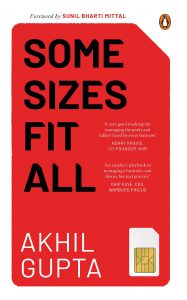
Some Sizes Fit All
Some Sizes Fit All || Akhil Gupta
An oft-repeated dictum every time a company fails to replicate its past successes when introducing a new product or entering a new market is that one size does not fit all. Business gurus advise that every new situation, market and environment calls for a fresh approach and requires ‘unlearning’ what one might have learnt elsewhere, even if that had met with great success.
This is a must-read for anyone trying to build a robust and financially sound business.
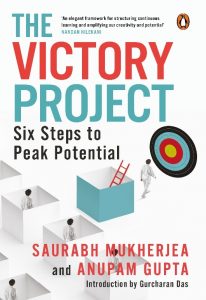
The Victory Project
The Victory Project || Saurabh Mukherjea, Anupam Gupta
India’s economy has tripled in size over the past twenty years. And yet, the generation that propelled this growth is facing rising levels of stress and depression. Furthermore, the new generation entering the workforce today dreams big but faces a highly competitive work environment. How can both these generations fire on all cylinders and lead fulfilling lives?
The Victory Project is the ultimate guide to surviving and thriving in the professional and social domains, which are increasingly becoming tough, competitive, often cutthroat and deeply political.
Between Life and Death
Between Life and Death || Dr. Kashyap Patel
Dr Kashyap Patel is a renowned oncologist in the US who works with terminally ill cancer patients. Through him, we meet Harry, who, after a life full of adventure, is diagnosed with terminal lung cancer. As he stares death in the face, Harry leans on Dr Patel, an expert in understanding the process of death and dying.
His questions and fears are addressed through the stories of many other patients that Dr Patel has treated-from the young and vivacious to those who had already lived full lives, from patients who could barely afford their rent to those who had been wildly successful.
The Magic of Friendships
The Magic of Friendships || Shubha Vilas
Today, more than ever, friendship has become more important than any other relationship. The warmth and companionship that a good friend can provide is unmatched and each one of us craves for that special friend to whom we can unburden our heart or seek help from in troubled times.
Shubha Vilas discusses, in a simple and straight-forward manner, what is missing in our friendships today and the various scenarios that prevent people from making and maintaining good friends.
To You, With Love
To You, With Love || Shravya Bhinder
Right from their childhood, Sahil and Arya have been very different from each other. While Sahil is careless, carefree, ‘new money’ and ‘the brat’, Arya is too sensitive, reserved, shy and not easy to talk to. Slowly and very delicately their story progresses, and in comes love and things begin to take on a golden hue.
However, soon their life begins to unravel. Sahil learns why Arya is so private when the most damning truth about her life is revealed. And as soon as they cross that bridge and move on, another cruel blow threatens to tear them apart.
Running Toward Mystery
Running Toward Mystery || The Venerable Tenzin Priyadarshi
The Venerable Tenzin Priyadarshi’s profound account of his lifelong journey as a seeker. At its heart is a story of striving for enlightenment, the vital importance of mentors in that search, and of the many remarkable teachers he met along the way, among them the Dalai Lama, Archbishop Desmond Tutu, and Mother Teresa.
Running Toward Mystery is the beautiful story of a singular life compelled to contemplation, and a riveting narrative of just how exciting that journey can be.
You People
You People || Nikita Lalwani
The Pizzeria Vesuvio looks like any other Italian restaurant in London – with a few small differences. The chefs who make the pizza fiorentinas are Sri Lankan, and half the kitchen staff are illegal immigrants.
At the centre is Tuli, the restaurant’s charismatic proprietor and resident Robin Hood, who promises to help anyone in need. But when Tuli’s guidance leads them all into dangerous territory, and the extent of his mysterious operation unravels, each is faced with an impossible moral choice.
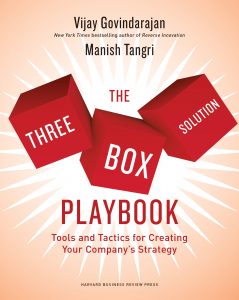
The Three-Box Solution Playbook
The Three Box Solution Playbook || Vijay Govindrajan, Manish Tangri
Along with Manish Tangri, a corporate dealmaker at Intel, Govindarajan goes deeper into the most crucial box of all: creating the future. Together they provide a repeatable process for companies to create new breakthroughs–from ideation through incubation to scaling.
Full of worksheets, exercises, tools, and examples, The Three-Box Solution Playbook is the guide you and your team need to drive innovation and growth–and continually revitalize your company.
Coronavirus: Leadership and Recovery (Insight Series)
Coronavirus: Leadership+Recovery || Harvard Business Review
Lead through the crisis and prepare for recovery.
As the Covid-19 pandemic is exacting its toll on the global economy, forward-looking organizations are moving past crisis management and positioning themselves to leap ahead when the worst is over. What should you and your organization be doing now to address today’s unprecedented challenges while laying the foundation needed to emerge stronger?
Think Like a Rocket Scientist
Think Like A Rocket Scientist || Ozan Varol
In this accessible and practical book, Ozan Varol reveals nine simple strategies from rocket science that you can use to make your own giant leaps in work and life — whether it’s landing your dream job, accelerating your business, learning a new skill, or creating the next breakthrough product. Today, thinking like a rocket scientist is a necessity. We all encounter complex and unfamiliar problems in our lives. Those who can tackle these problems — without clear guidelines and with the clock ticking — enjoy an extraordinary advantage.
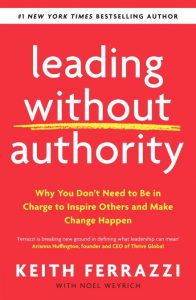
Leading Without Authority
Leading Without Authority || Keith Ferrazzi
The world of work is changing at an unprecedented rate leaving many organisations struggling to cope. At a time when constant innovation, agility, and speed often mean the difference between success and failure, we can no longer afford to waste time navigating the complex bureaucracy present in most companies.
Drawing on a decade of research and over thirty years helping CEOs and senior leaders drive innovation and build high-performing teams Ferrazzi reveals how we can all transform our business and our relationships with the people around us.
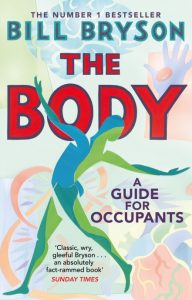
The Body
The Body || Bill Bryson
Full of extraordinary facts and astonishing stories The Body: A Guide for Occupants is a brilliant, often very funny attempt to understand the miracle of our physical and neurological make up.
A wonderful successor to A Short History of Nearly Everything, this new book is an instant classic. It will have you marvelling at the form you occupy, and celebrating the genius of your existence, time and time again.
Rodham
Rodham || Curtis Sittenfeld
‘Awfully opinionated for a girl’ is what they call Hillary as she grows up in her Chicago suburb. Smart, diligent, and a bit plain, that’s the general consensus. Then Hillary goes to college, and her star rises. At Yale Law School, she continues to be a leader- and catches the eye of driven, handsome and charismatic Bill. But when he asks her to marry him, Hillary gives him a firm No.
How might things have turned out for them, for America, for the world itself, if Hillary Rodham had really turned down Bill Clinton?
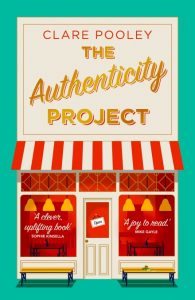
The Authenticity Project
The Authenticity Project || Clare Pooley
Julian Jessop is tired of hiding the deep loneliness he feels. So he begins The Authenticity Project – a small green notebook containing the truth about his life.
Leaving the notebook on a table in his friendly neighbourhood café, Julian never expects Monica, the owner, to track him down after finding it. Or that she’ll be inspired to write down her own story.
Redhead by the Side of the Road
Redhead by The Side of The Road || Anne Tyler
Micah Mortimer isn’t the most polished person you’ll ever meet. He is content with the steady balance of his life.
But then the order of things starts to tilt. His woman friend Cassia (he refuses to call anyone in her late thirties a ‘girlfriend’) tells him she’s facing eviction because of a cat. And when a teenager shows up at Micah’s door claiming to be his son, Micah is confronted with another surprise he seems poorly equipped to handle.
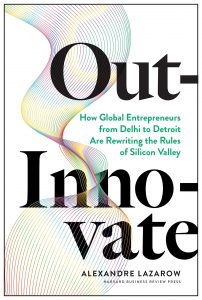
Out-Innovate: How Global Entrepreneurs – from Delhi to Detroit – Are Rewriting the Rules of Silicon Valley
Out-Innovate || Alexandre Lazarow
Startups have changed the world. In the United States, many startups, such as Tesla, Apple, and Amazon, have become household names. The economic value of startups has doubled since 1992 and is projected to double again in the next fifteen years.
For decades, the hot center of this phenomenon has been Silicon Valley. This is changing fast. Thanks to technology, startups can now take root anywhere–and they are, from Delhi to Detroit to Nairobi to Sao Paulo.
With rich and wide-ranging stories of frontier innovators from around the world, Out-Innovate is the new playbook for innovation – wherever it has the potential to happen.
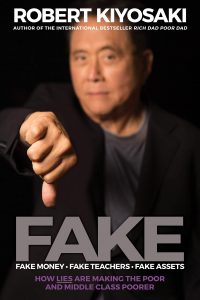
FAKE: Fake Money, Fake Teachers, Fake Assets: How Lies Are Making the Poor and Middle Class Poorer
Fake || Robert Kiyosaki
Robert kiyosaki ― author of the #1 personal finance book of all time ― has built a legacy around simplifying complex and often-confusing subjects like money and investing. He continues to challenge conventional wisdom and asks the questions that will help readers sift through today’s information overload to uncover ways to assess what’s real… and what isn’t. And use truth and facts as a foundation for taking control of their financial lives.
It’s a new month and we have new friends and new adventures lined up for the young minds!
Which ones would they like to begin with?
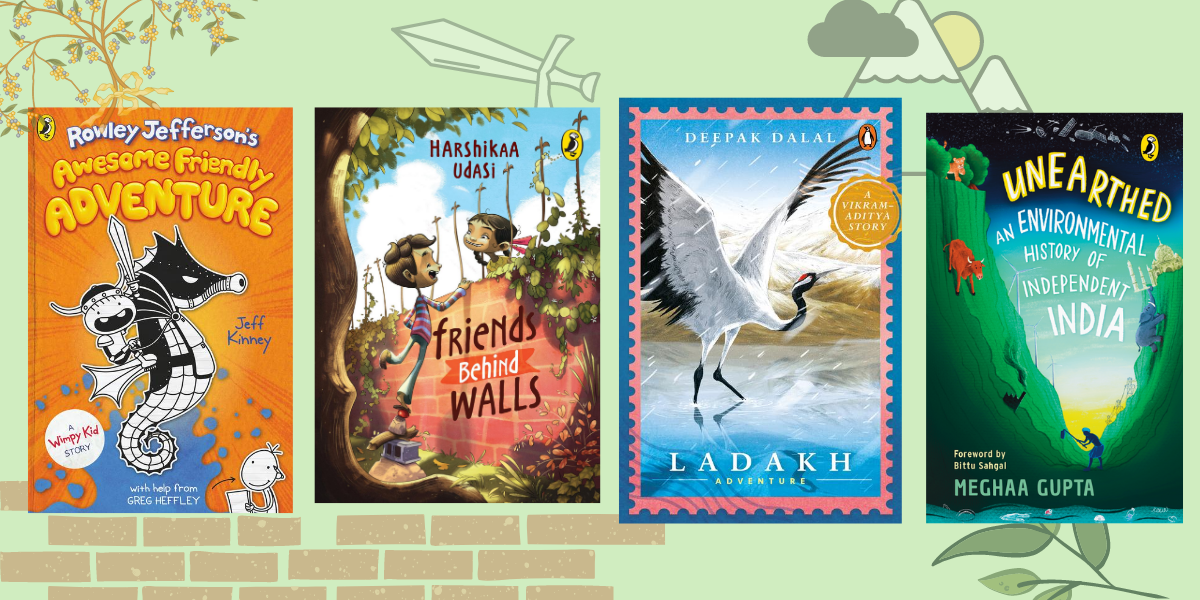
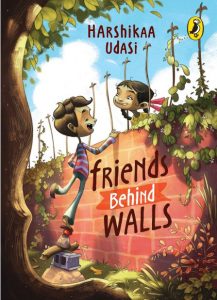
Friends Behind Walls
Friends Behind Walls || Harshikaa Udasi
Why won’t anyone let Inu and Putti be friends?
Putti is spending his summer vacation in Deolali and he thinks life is going to be fun with his new friend Inu. But with their parents FORBIDDING them from playing with each other, the two kids are flabbergasted. Flab-ber-gas-ted. Means shocked. Nothing to do with food and farts.
Join the two of them have decided to find out why.
*
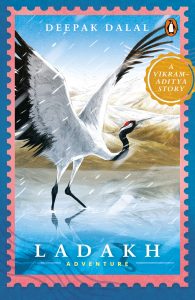
Ladakh Adventure
Ladakh Adventure || Deepak Dalal
On their visit to the Changthang plateau of Ladakh, Vikram and Aditya find themselves on the run along with Tsering, a young Tibetan boy they meet while camping on this grand yet barren frontier of India.
Determined to protect Tsering from the mysterious band of men chasing him, the three boys traverse the majestic land beyond the Himalayas in search of answers.
Join them to journey across journey across one of India’s most splendid destinations.
*
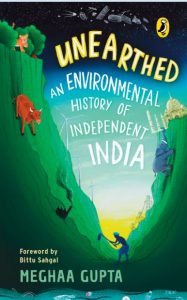
Unearthed
Unearthed || Meghaa Gupta
Protesting against dams, protecting tigers, hugging trees, saving seeds, making room for elephants, battling mountains of waste, fighting air pollution, coping with soaring temperatures-India and its people have shared a remarkable relationship with the environment.
Full of trivia, tales of eco-heroes and humorous cartoons, this easy-to-read account uncovers the story of a past with the hope that we will rewrite India’s future.
*
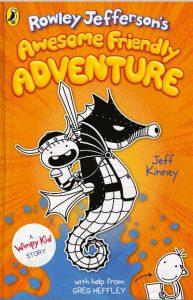
Rowley Jefferson’s Awesome Friendly Adventure
Awesome Friendly Adventure || Jeff Kinney
You’ve never seen the Wimpy Kid World like this before – an entirely new, awesome, friendly, truly fantastic fantasy quest from #1 international bestselling author Jeff Kinney!
From the imagination of Wimpy Kid’s Rowley Jefferson comes an adventure of epic proportions! Join Roland and his best friend, Garg the Barbarian, as they leave the safety of their village and embark on a quest to save Roland’s mum from the White Warlock. Will our heroes survive?
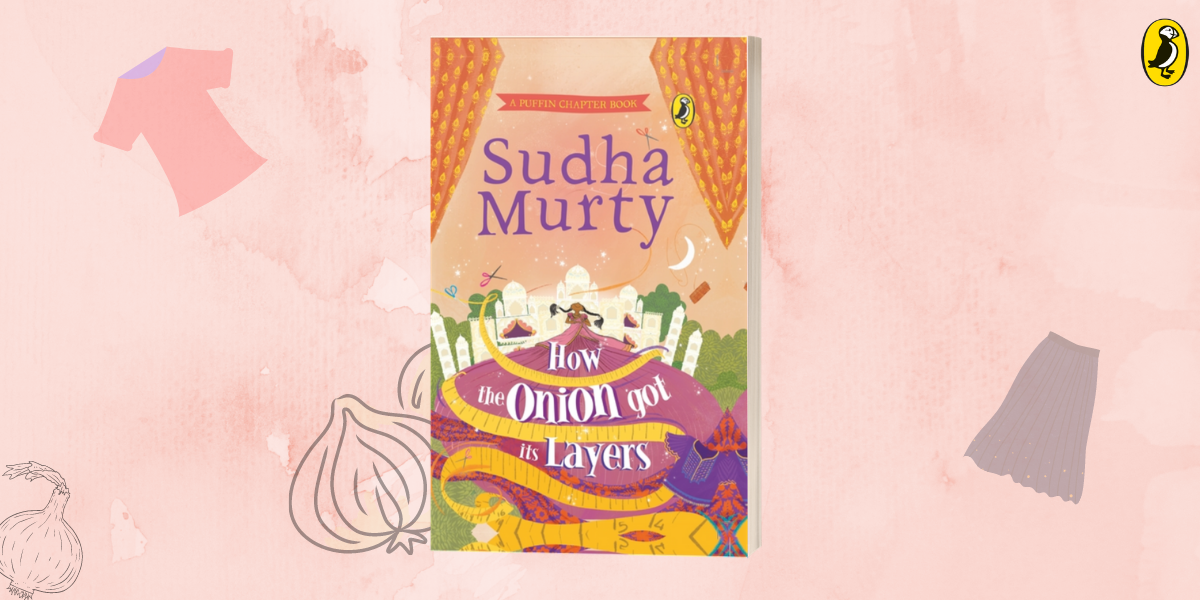
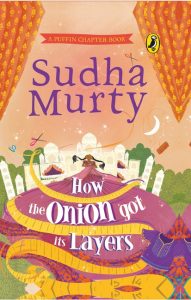
Have you wondered how the onion got so many layers? The story begins with the king and queen of the kingdom of Ullas, who really wanted a child.
Have a peek below!
**
The kingdom of Ullas was very prosperous. The subjects were happy, the farmers had grown a bumper crop and the kingdom was surrounded by friendly allies. But the king and queen of Ullas were very sad. Their sadness seemed to envelop them wherever they went. This was because they really longed for a child and did not have one.
One day, they learnt of a place in the forests in the kingdom where, if you prayed hard and well, you were granted your wish.
They went there and for many days, prayed to the goddess of the forest for a long time. Finally, their prayers were heard and the goddess appeared before them in a flash of green light.
‘What do you wish for, my dear children?’ she asked.
The king and queen, overjoyed, bowed low and said, ‘We wish to have a child.’
‘So be it, you will soon have a little girl,’ said the goddess, shimmering in the greenery. ‘But remember, though she will be a loving child, she will have one flaw: She will love new clothes too much and it will make life difficult for you. Do you still want such a child?’
How the Onion Got its Layers || Sudha Murty
The king and queen looked at each other with their eyes full of hope and love. ‘Yes, we do,’ they said to the goddess. ‘We can’t think of anything else we want more in this world.’
The goddess smiled and vanished back among the trees.
**
What will happen now? Will the king and queen be happy? And how will this lead to the onion’s many layers?
Your favourite storyteller, Sudha Murty, is back to tell you all this and more!
Some read to escape the burden of their lives, while others read because it is the only way they can face their realities. Whatever be your reason, we can all agree that reading affords us the freedom to be our authentic selves. This August, come celebrate with us as we make our way through twelve books that will help liberate your spirit and mind.
India’s Struggle for Independence
India’s Struggle for Independence by Bipin Chandra, Mridula Mukherjee
This is the first major study to examine every one of the varied strands of the epic struggle for individually and collectively and present it in a new and coherent narrative and analytical framework. Basing themselves on oral and other primary sources and years of research, the authors take the reader through every step of the independence struggle from the abortive Revolt of 1857 to the final victory of 1947. More important while incorporating existing historiographical advances, the book evolves a new and lucid view of the history of the period which will endure.
My Seditious Heart || Arundhati Roy
My Seditious Heart: Collected Non-Fiction by Arundhati Roy
My Seditious Heart collects the work of a two-decade period when Arundhati Roy devoted herself to the political essay as a way of opening up space for justice, rights and freedoms in an increasingly hostile environment. Taken together, these essays trace her twenty year journey from the Booker Prize-winning The God of Small Things to the extraordinary The Ministry of Utmost Happiness. Radical and readable, they speak always in defence of the collective, of the individual and of the land, in the face of the destructive logic of financial, social, religious, military and governmental elites.
Train to Pakistan || Khushwant Singh
Train to Pakistan by Khushwant Singh
Khushwant Singh, one of India’s most widely read and celebrated authors, makes his readers share the individual problems of loyalty and responsibility faced by the principal figures in a little village on the frontier between India and Pakistan where the action takes place. In the summer of 1947, a train full of dead Sikhs stirs up a battlefield in the peaceful atmosphere of love and loyalty between the Muslims and the Sikhs. It is then left to Juggat Singh-the village gangster who is in love with a Muslim girl- to redeem himself by saving many Muslim lives in a stirring climax.
Republic of Rhetoric || Abhinav Chandrachud
Republic of Rhetoric : Free Speech and the Constitution of India by Abhinav Chandrachud
Exploring socio-political as well as legal history of India, from the British period to the present, this book brings to light the idea of ‘free speech’ or what is popularly known as the freedom expression in the country. Analysing the present law relating to obscenity and free speech, this book will evaluate whether the enactment of the Constitution made a significant difference to the right to free speech in India.Deeply researched, authoritative and anecdotal, Republic of Rhetoric offers arguments that have not been substantially advanced before.
Sixteen Stormy Days || Tripudaman Singh
Sixteen Stormy Days by Tripurdaman Singh
Sixteen Stormy Days narrates the riveting story of the First Amendment to the Constitution of India-one of the pivotal events in Indian political and constitutional history, and its first great battle of ideas. Drawing on parliamentary debates, press reports, judicial pronouncements, official correspondence and existing scholarship, the bookchallenges conventional wisdom on iconic figures such as Jawaharlal Nehru, B.R. Ambedkar, Rajendra Prasad, Sardar Patel and Shyama Prasad Mookerji, and lays bare the vast gulf between the liberal promise of India’s Constitution and the authoritarian impulses of her first government.
Ambedkar’s Preamble || Aakash Singh Rathore
Ambedkar’s Preamble by Aakash Singh Rathore
On 26 January 1950, the Constitution of India was adopted formally and came into effect. Its preamble set out in brief the enlightened values it enshrined and hoped to engender. In a radical shift from mainstream constitutional history, this book establishes Dr B.R. Ambedkar’s irrefutable authorship of the preamble by uncovering the intellectual origins of its six most central concepts-justice, liberty, equality, fraternity, dignity, and nation.
The Man Who Saved India || Hindol Sengupta
The Man Who Saved India by Hindol Sengupta
The Man Who Saved India is a sweeping, magisterial retelling of Sardar Patel’s story. With fiercely detailed and pugnacious anecdotes, Hindol Sengupta brings alive Patel’s determined life of struggle and his furious commitment to keep India safe. Through ravages of a failing body broken by decades of abuse in and outside prison, Patel stands out in this book as the man who, even on his deathbed, worked to save India.
India’s Most Fearless || Shiv Aroor, Rahul Singh
India’s Most Fearless by Shiv Aroor, Rahul Singh
The book covers fourteen true stories of extraordinary courage and fearlessness, providing a glimpse into the kind of heroism our soldiers display in unthinkably hostile conditions and under grave provocation. The Army major who led the legendary September 2016 surgical strikes on terror launch pads across the LoC; a soldier who killed 11 terrorists in 10 days; a Navy officer who sailed into a treacherous port to rescue hundreds from an exploding war; a bleeding Air Force pilot who found himself flying a jet that had become a screaming fireball, the book narrates their own accounts or of those who were with them in their final moments.
We, The Children of India || Leila Seth
We, the Children of India by Leila Seth
Former Chief Justice Leila Seth makes the words of the Preamble to the Constitution understandable to even the youngest reader. What is a democratic republic, why are we secular, what is sovereignty? Believing that it is never too early for young people to learn about the Constitution, she tackles these concepts and explains them in a manner everyone can grasp and enjoy. Accompanied by numerous photographs, captivating and inspiring illustrations by acclaimed illustrator Bindia Thapar, and delightful bits of trivia, We, the Children of India is essential reading for every young citizen.
Fearless || Amneh Sheikh Farooqui, Aziza Ahmad
Fearless by Amneh Sheikh Farooqui, Aziza Ahmad
Through the ages, strong, inspirational women and girls have risen in response to uncertainty and injustice. A timeless call to arms that many like Fatima Jinnah, Asma Jehangir, Sheema Kirmani, Nighat Dad and Malala Yousafzai have always been answering.Demonstrating that one girl can change everything.
Fearless: Stories of Amazing Women from Pakistan chronicles the lives of fifty such incredible women-scientists, lawyers, politicians, activists and artists-who incite hope, inspire action and initiate dialogue. Fiercely bold, this beautifully illustrated book holds up a mirror to South Asians across the world and highlights that their voices are crucial.
Let’s Go Time Travelling || Subhadra Sen Gupta
Let’s Go Time Travelling by Subhadra Sen Gupta
Go time travelling through the alleys of history and take a tour through the various ages, from Harappa to the Maurayan, Mughal to the British. Through short snapshots and wacky trivia, this book gives you a glimpse into the vibrant culture of India, as you learn about the life and times of kings, queens, viceroys and even ordinary children!
The Handmaid’s Tale || Margaret Atwood
The Handmaid’s Tale by Margaret Atwood
The Republic of Gilead offers Offred only one function: to breed. If she deviates, she will, like dissenters, be hanged at the wall or sent out to die slowly of radiation sickness. But even a repressive state cannot obliterate desire – neither Offred’s nor that of the two men on which her future hangs.
Brilliantly conceived and executed, this powerful evocation of twenty-first century America gives full rein to Margaret Atwood’s devastating irony, wit and astute perception.
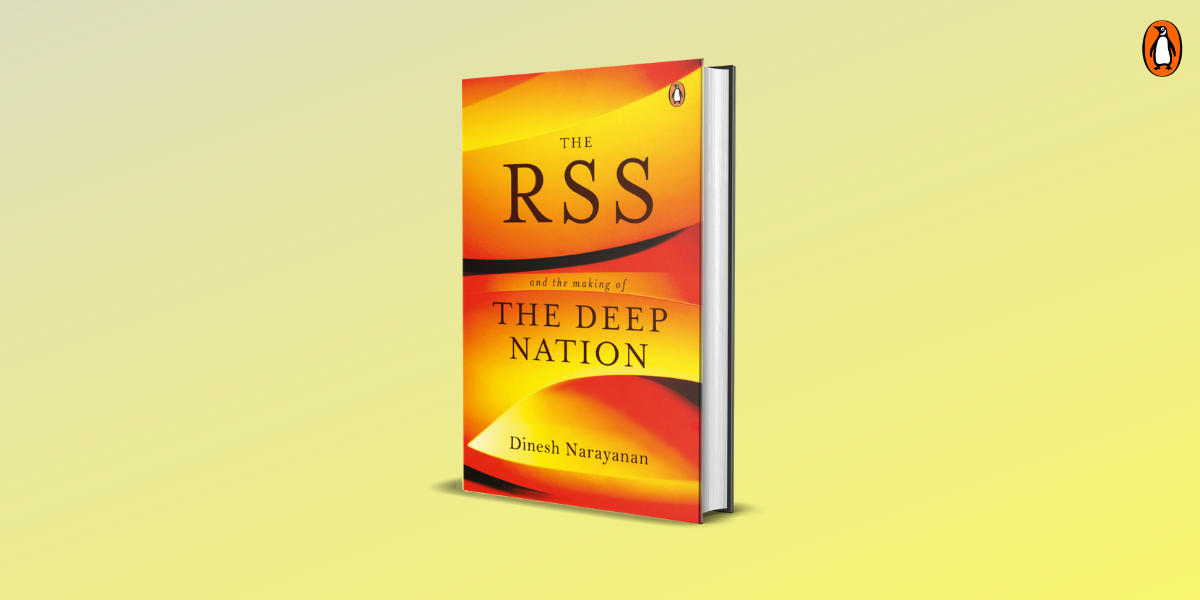
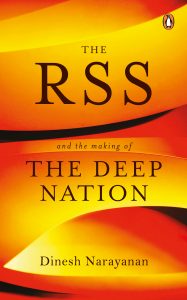
Since its inception in 1925, the RSS has perplexed observers with its organizational skills, military discipline and single-minded quest for influence in all walks of Indian life. Often seen as insidious and banned thrice, the pace of its growth and ideological dominance of the political landscape in the second decade of the millennium have been remarkable.
Delhi-based journalist Dinesh Narayanan is deeply interested in understanding the interplay of politics, society and business and the impact of these on our lives, both as individuals and collectively as a nation.
**
In June 2018, the Ministry of Defence and the Prime Minister’s Office (PMO) discussed a proposal to train a million young men and women annually to prepare them for the purpose of creating a disciplined nationalist force of youth. Titled the National Youth Empowerment Scheme (N-YES), the year-long training was proposed to be an essential qualification for enrolment in the army and paramilitary services. The scheme was aimed at instilling values of discipline, nationalism and self-esteem in young people, the Indian Express reported. The government called the report sensationalizing but did not deny the meeting in the PMO. It said the meeting had discussed strengthening the National Cadet Corps (NCC) and the National Service Scheme (NSS).
Established in 1948, at the instance of then prime minister, Jawaharlal Nehru, and home minister, Sardar Patel, in the wake of the invasion of Kashmir by Pakistan-supported tribesmen, the NCC’s stated aim is ‘developing character, comradeship, discipline, a secular outlook, the spirit of adventure and ideals of selfless service amongst young citizens . . . and creating a pool of organized, trained and motivated youth with leadership qualities in all walks of life, who will serve the nation regardless of which career they choose’. The NSS was established to provide ‘hands on experience to young students in delivering social service’. These organizations’ values aligned with those of the RSS although the latter’s definition of ‘secular outlook’ is different. It contends that India is a Hindu nation, and a Hindu by nature and definition can be nothing but secular. Like the NCC, the RSS also considers itself as a reserve force.
The RSS || Dinesh Narayanan
The N-YES proposal sounded very close to the RSS’s idea of creating a militaristic society. Sarsanghchalak Mohan Bhagwat has claimed that although the RSS was not a military organization, its discipline was like that of the army. While the army may require six to seven months to ready a force, the RSS could raise a trained force of its volunteers in three days.
Organizers of Hindus often rue that they are pusillanimous compared to other communities. V.D. Savarkar, one of the early ideological mentors of the RSS, wrote: ‘At the time of the first inroads of the Muhammadans, the fierce unity of faith, that social cohesion and valorous fervour which made them as a body so irresistible, were qualities in which the Hindus proved woefully wanting.’
**
The RSS is a close and relevant insight into the current socio-political landscape of our country.
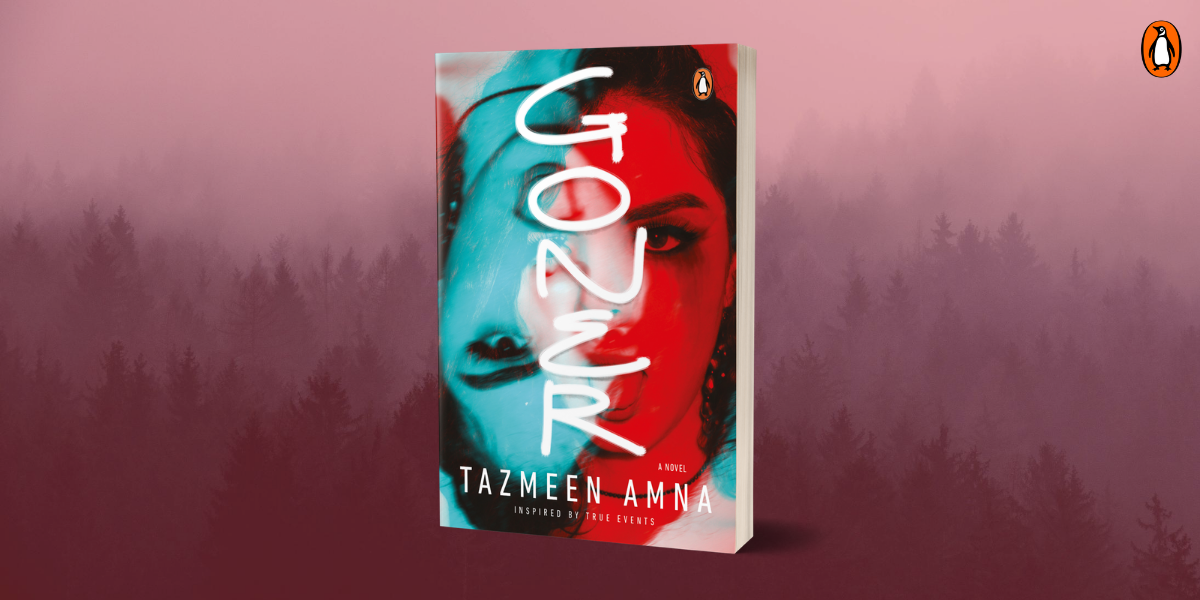
Everyone has a dark, ugly side-some of us just choose to hide it better than others
She’s a young woman going through a mid-twenties crisis, trying to deal with the dark and intoxicating side of life with haunting memories of an abusive ex-boyfriend, remnants of a broken family and obvious mental health issues.
We all find something that is therapeutic, that is personal and special to us, that helps us cope. For her – it’s art.
Find an excerpt below that talks about how she found art and how it helps us be her in the present time.
**
Goner || Tazmeen Amna
I gave the test and begged my teacher to score me the minute I submitted that piece of paper. I was so sure I’d get a 10 out of 10. I just wanted the formality of knowing out of the way, because the sooner I knew my marks the sooner I could get those crayons. My hands were itching to pull those gorgeous crayons out of the box and actually feel them gliding over paper, filling up the bland blank sheet with their colours.
The teacher raised her eyebrows at my worksheet and handed it back to me. She also patted my shoulder slightly.
Dang.
My stomach fell.
8/10.
I cried the whole bus ride back home. Or stared pointedly out of the window without even blinking.
I went home and dejectedly walked up to my mom and handed her the worksheet. She saw the score and stooped down to me and said, ‘You know what? I think you did well and I’m going to buy you those crayons anyway.’ Then she handed me fifty bucks and I ran to the shop, wild with excitement. Not only would I be the proud owner of that set of crayons, I also realized at that moment how much of a rockstar my mom was.
It was on that day that I decided that I would never put down the paintbrush, for as long as I lived, because of the faith that my mom showed in me. Sometimes it really just takes one empathetic glance, one touch of tenderness, and a teeny, tiny, minute sliver of hope to, I don’t know, set things rolling.
And since then, it’s been a pretty stable relationship (between me and my art). The only stable relationship I’ve ever had in my entire life, fortunately and unfortunately. I went from pastels to watercolours, pencils to charcoals, acrylics to oil paints, paper to canvas, and many other mediums. It is the only thing that helps me connect with myself. Not the me that is sedated with antidepressants and high on mood-booster pills. Not the me that is a lifeless machine running on tablets and capsules and surviving (barely) on therapy. But the me that’s . . . just me.
**
A hard-hitting narrative of a young woman’s struggle with mental illness, Goner is a voice that needs to be heard today.
Can she defeat her infamous trait of self-sabotage and manoeuvre her way through some hard-hitting truths?