Publish with Us

Follow Penguin

Follow Penguinsters

Follow Penguin Swadesh

Bookish Gifts for Mother’s Day!

Mother’s Day is coming and we do miss scrambling and shopping for gifts to pamper our mothers with.

While we brainstorm ideas to make this day more special than it already is – we decided to ask our fellow Penguins about the books (because, what else, right?) they would love to gift to their mothers!


My mother and I share a relationship where most things go unsaid. She lost her mum at a very young age and to bring her some comfort, I would like to gift her LEGACY by Sudha Menon which is a collection of personal and evocative letters from parents to their daughters. The wisdom my grandmother couldn’t give her now, some of these delightful and inspirational letters might!

Vaishnavi Singh, Manager – Digital Platforms & Video Rights

*

My mother loves everything written by Gulzar and ofcourse loves his voice too (she always wanted dad to speak like him). I grew up listening to ghazals and songs written by Gulzar because my mother is a huge fan of his writings  I love the way my mom actually makes me understand each and every word in a song written by him as if he actually sat with her when he was penning it.

For her undying love for Gulzar, i’d like to gift her the book, SELECTED POEMS BY GULZAR. She will love reading them!

Soumili Sen, Executive – Digital

*

I would love to gift Mumma Sudha Murty’s THREE THOUSAND STITCHES. She adores short, impactful stories and especially the ones that are more about people rather than the plot. She has enjoyed other books by Sudha Murty in the past, is an ardent fan of her writing, so I think Three Thousand Stitches would be perfect for her collection.

Ananya Mathur, Consultant – Marketing & Digital

*

While my entire family is a bibliophile, it was my mum who fired our crazy obsession for books, so much so that books became a part of our household, our home décor, our dinner tables, and our bedtime rituals. Believe it or not, she started working only to be able to afford the books she wanted to read, after her father couldn’t expend any more money to her. Presently, she is over 70 years old and books seem to have lost their charm on her. She no longer has the patience or the span of attention and I have seen her struggle to read. Now if I am asked to gift her a book, I think I will give her Sudha Murty’s HERE, THERE AND EVERYWHERE. A simple book with real stories and a message at the end of each. My mom discovered Sudha Murty at the Penguin Annual Lecture 2019 and she was thoroughly taken with her personality, her life story, and her charisma. I believe my mother would enjoy traversing through Mrs Murty’s world of timeless stories.

Pallavi Narayanan, Senior Manager – Corporate Communications

*

My pick is LEGAL CONFIDENTIAL: ADVENTURES OF AN INDIAN LAWYER. My mother’s always loved consuming content surrounding crime and the legal system. The context of this book being a memoir as well as it being based in Delhi will make it an absolutely thrilling read for her.

Veer Misra, Freelancer – Digital

*

Meditating for Healthier Emotions – a Lesson from Ikigai

Ikigai is the Japanese word for ‘a reason to live’ or ‘a reason to jump out of bed in the morning’, and we all have it. It’s the place where your needs, desires, ambitions, and satisfaction meet. A place of balance. It’s a small wonder that finding your ikigai is closely linked to living longer.

As we find ourselves in challenging times, it’s important to keep our minds healthy. Embracing the impermanence of things and meditating is hence, necessary and in this excerpt from Héctor García and Francesc Miralles’s book, Ikigai, you will learn just that.


Meditating for Healthier Emotions

In addition to negative visualization and not giving in to negative emotions, another central tenet of Stoicism is

knowing what we can control and what we can’t, as we see in the Serenity Prayer. Worrying about things that are beyond our control accomplishes nothing. We should have a clear sense of what we can change and what we can’t, which in turn will allow us to resist giving in to negative emotions. In the words of Epictetus, “It’s not what happens to you, but how you react that matters.”

In Zen Buddhism, meditation is a way to become aware of our desires and emotions and thereby free ourselves from them. It is not simply a question of keeping the mind free of thoughts but instead involves observing our thoughts and emotions as they appear, without getting carried away by them. In this way, we train our minds not to get swept up in anger, jealousy, or resentment.

One of the most commonly used mantras in Buddhism focuses on controlling negative emotions: “Om.

man.i padme hūm.,” in which om. is the generosity that purifies the ego, ma is the ethics that purifies jealousy, n.i is the patience that purifies passion and desire, pad is the precision that purifies bias, me is the surrender that purifies greed, and m. is the wisdom that purifies hatred.

The here and now, and the impermanence of things

Another key to cultivating resilience is knowing in which time to live. Both Buddhism and Stoicism remind us that the present is all that exists, and it is the only thing we can control. Instead of worrying about the past or the future, we should appreciate things just as they are in the moment, in the now.

“The only moment in which you can be truly alive is the present moment,” observes the Buddhist monk Thich Nhat Hanh.

In addition to living in the here and now, the Stoics recommend reflecting on the impermanence of the things around us.

The Roman emperor Marcus Aurelius said that the things we love are like the leaves of a tree: They can fall at any moment with a gust of wind. He also said that changes in the world around us are not accidental but rather form part of the essence of the universe—a rather Buddhist notion, in fact. We should never forget that everything we have and all the people we love will disappear at some point. This is something we should keep in mind, but without giving in to pessimism.

Being aware of the impermanence of things does not have to make us sad; it should help us love the present moment and those who surround us.

“All things human are short-lived and perishable,” Seneca tells us.

The temporary, ephemeral, and impermanent nature of the world is central to every Buddhist discipline. Keeping this always in mind helps us avoid excessive pain in times of loss.


Finding your ikigai is easier than you might think. This book will help you work out what your own ikigai really is, and equip you to change your life. You have a purpose in this world: your skills, your interests, your desires and your history have made you the perfect candidate for something. All you have to do is find it.

The Night Sparkled and So Did All of Us

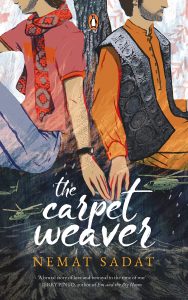
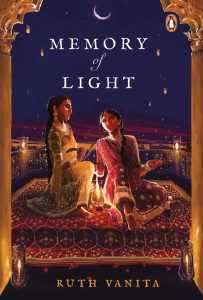
Memory of Light is a tender romance of two young courtesans in Nawabi-era Lucknow. The entire novel unfolds through the narrator, Nafis Bai’s memory of events, lending it her unique voice, which stays with the reader.

Intrigued? Read an excerpt from the book below:

Late at night before the big occasion, I tried the outfit on her; the fabrics I had chosen kissed her skin, her skin not washed-out white like the English ladies’ but kanak kamini, warm as wheat, as gold.

‘Like lightning flashing in the summer sky,’ I said, as I tied the silver drawstring with its pearl pendants, gleaming through the pale blue swirl of the peshwaz and dangling below its hem.

While I dressed her she undressed me, discarding the purple I had selected for myself.

‘Purple doesn’t suit you,’ she said. ‘Parrot-green blossoms on you. Wear this green one with—let’s see.’ She threw her red orhni over me. ‘There—it’s like a flame on you.’

Until then purple had been my favourite colour. I’ve never worn it with pleasure since.

The night sparkled and so did all of us, lit by the sheen of youth. Even I felt beautiful when her eyes touched me. The whole town seemed to be there, troops of merchants with tributes for the English, foreigners with heavily powdered hair, and every dancer worth the name. Bands were playing foreign instruments, organs bellowed and fireworks fizzed above. A group of hijras performed and then Ratan. I looked up from a dark corner where I was adjusting Chapla’s shoes with their long curling toes, to see Sharad framed in a lighted doorway, chest half-visible through lacy white embroidery—a flowering tree covered with leaves and buds. His hair was abundant in those days, long curls almost out of control, and his eyes were on Ratan.

Mir Insha was in his element—flitting from group to group, alight with laughter. ‘Even the buds are proffering their glasses,’ he whispered to me, as champagne bubbled up in crystal for a fat European lady and her young daughter. ‘Look, flowers and bunches, all are imbibing.’ I giggled; the lady’s dress, billowing stiffly round her, did make her look a bit like a bunch of large showy flowers, the kind that the white people favour.

Then he whispered to Chapla:

Chaar naachaar hu’a jaana hi Landan apna
Le ga’i chheen ke dil ek firangan apna

No choice, I have to go to London now
A foreign woman has snatched away my heart

At this, both of us burst out laughing and Ammi threw us a reproachful glance.

He brought it all to life again in his poem—glasses, bottles, free-flowing liquor, lights in the trees, delicacies laid out on tables. He ignored Azizan resplendent in magenta and gold, and devoted his attention to Chapla, doing justice to my handiwork:

With a silken drawstring flowing like water,
Satin trousers blooming like foliage,
A light blue silk peshwaz like a cloud,
Its skirt edged with silver like a moonflower,
A veil of moon and stars like a moonlit night,
Anklets tinkling like drops of rain,
Chapla Bai stood up to dance.
Seeing her, Khutan gazelles forget to leap
Nature made her replete with beauty
From her face the Pleiades borrow radiance
The envy of fairies, she’s called ‘Lightning’
Light’s world turns dark when she departs . . .
Who can praise the breasts of that infidel idol?
Oh lord, their curves and that rising youth—

Half-blossomed lotuses, two fine founts,
They shine like round swelling whirlpools
Or like chakva and chakvi sitting on two shores,
The string of pearls between is Jamuna . . .
That ring-watch blooming with delicacy
I’d sacrifice to it hundreds of sounding organs . . .
Her plait like the shade of a kadamb tree . . .

What an eye he had for detail—the verse I liked best described how her red heels made the white beads on her pearlescent white silk shoes reddish like ratti, those poisonous seeds used to weigh gold, or like red champa flowers with their creamy insides:

Those two arms boughs of the tree of Paradise—
Obtain from them what your heart desires

Her forearms male and female skinks
The sight of them drives men and women wild . . .
Those red heels make the pearls on her shoes
Look like red ratti seeds or champa flowers
. . . Today’s the fourth day of the month of June
This happy day shines with special beauty


To know what happens next, check out Memory of Light

Quarantine Travels: Take a Trip into These Books


‘Reading gives us someplace to go when we have to stay where we are.’ – Mason Cooley

If you are a reader like us – we’re sure you’d agree that we have never needed to step out to have our own adventures and travels. Times are uncertain and quarantining is not always easy. But one perk of being a book lover is that we always have an escape within reach!

We have piled up some (e)books that you can dive into if you are craving a bit of retreat from the real world!

The Best of Ruskin Bond

What better to transport you than Ruskin Bond?

This one brings together the best stories and poetry from one of our favourite storytellers. This literary landscape is worth disappearing into for its rich web of emotions and unforgettable characters.

*

The Torchbearers

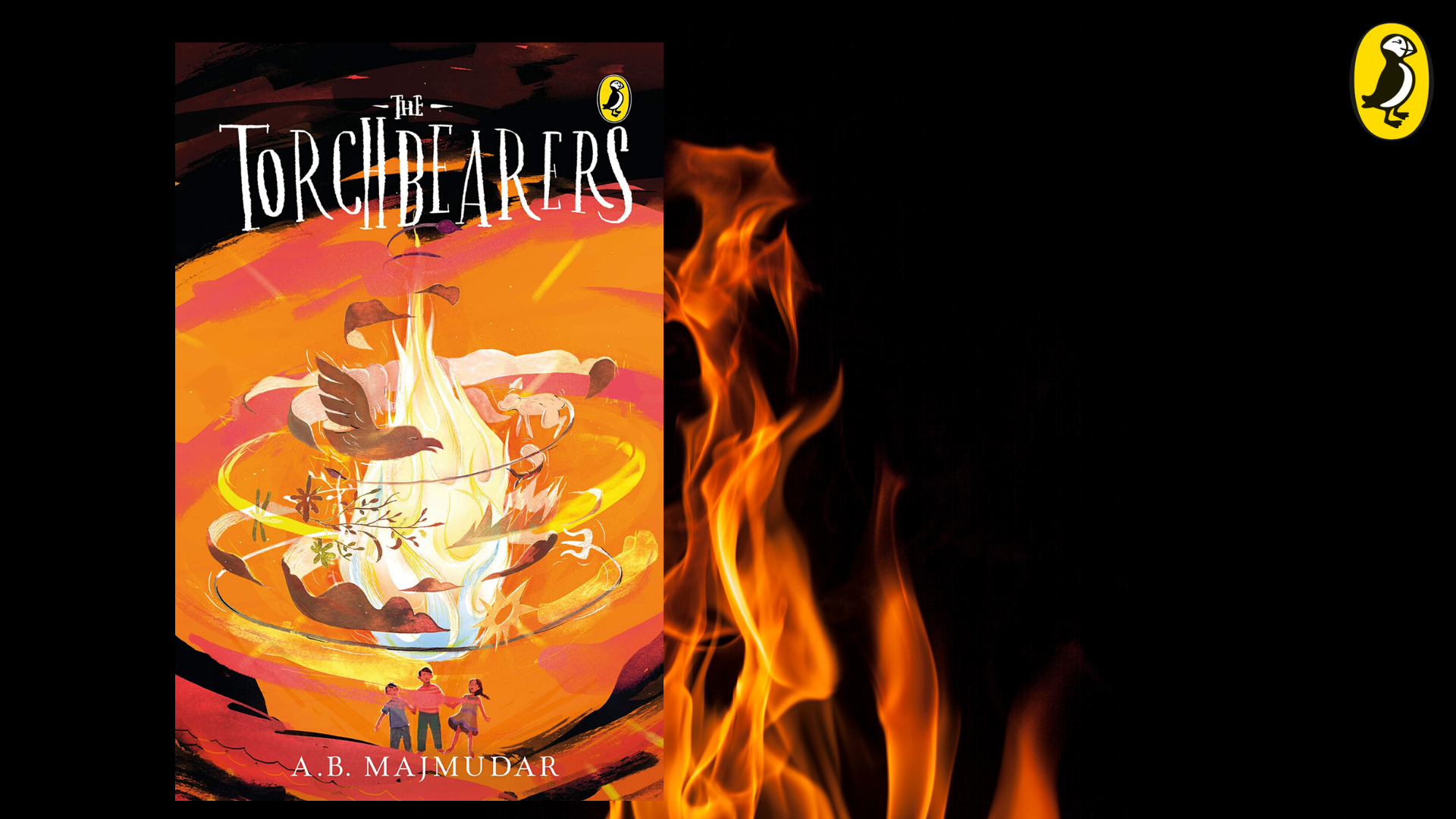
We suggest bringing some exciting adventure into your homes with Prem, Kushal and Samhita – three endearing kids whose designated roles as ‘The Torchbearers’ set them on the path to fight demons and find the Nectar of Immortality to bring the gods back in power.

Also – there is a very punny fish in there!

Puffin Book of Bedtime Stories

Here’s one for the restless young ones! From a wandering elephant to a helpful yeti, from flying houses and faraway galaxies; delight the kids with a range of imaginative stories that would make their bedtime more exciting and active.

*

Artemis Fowl Series

Impossible to recommend just one – so we advise diving into this whole series of misadventures!

Join twelve-year-old Artemis in discovering a whole new a world of armed and dangerous – and extremely high-tech – fairies.

This is a major Disney film now, so we think it’s high time to prepare on the page before the onscreen adventure!

*

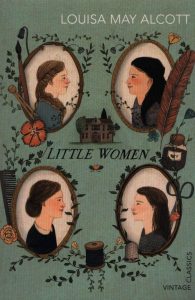
Little Women

Timeless tales are perfect to transport yourself into different times and memories. Meg, Jo, Amy and Beth are always a delight to revisit in the rural neighbourhood of Marmee in Masuchusetts.

*

The French Lieutenant’s Woman

A classic, delightful, and often irreverent postmodernist novel, this one takes you to back to the Victorian age in the most metafictional way possible. AND you get to choose from three endings!

*

The Shadow Lines

Another celebrated classic – Amitav Ghosh’s story a must-read in these times for its themes of memory and its stream-of-conscious narrative. This is a perfect read to tie in with the reflective and nostalgic headspace we are in these days.

*

Chats with the Dead

Whodunnits are so brilliant at sucking you in – and Shehan Karunatilaka’s novel puts a delightful spin on the genre! This one takes you to a lot of places: the aftermath of the Sri Lankan civil war, life, afterlife, and everything in-between.

*

Sarojini’s Mother

This literary masterpiece is in our list mostly because of Kunal Basu’s cinematic prose that would take you right into the sights and scenes of Calcutta. This is a perfect window to the city to transport you while sitting on your beds and chairs.

As eclectic as we have tried to keep this, there are ALWAYS more worlds out there to step into. If you know about them, hit us up!

The Star of India – An Excerpt

From the glitz of Hollywood to the lush chambers of Indian royalty, The Star of India weaves a spirited tale of a strong-willed woman whose fate was deeply entwined with the momentous birth of modern India.

Read an excerpt from the book below:


But this weekend, it would be just us.

It was low tide. I ran down to the water, planted my legs and felt the icy surf rush over my feet. Sporty rolled up his trousers and followed, capturing me in his arms.

As we walked along the hard-packed sand, he told   me of a boyhood passed in two worlds, the traditional one where he was a demi-god to his people and the modern one where he studied at Cambridge and lived with a freedom he could not know at home.

‘You’re cast in two different roles—but in real life.

Does it feel confusing?’

His pace slowed. ‘I do need to change hats frequently.’ ‘Or turbans? Handsome, I’ll bet,’ I flirted, thinking how dashing he’d look in royal attire. A piece of dark red sea glass caught my eye. I picked it up and presented it  to

him with my head bowed. ‘Tribute, Your Highness.’

He studied the piece, rubbing his finger over its edges, holding it up to the light.

I was embarrassed. ‘It’s nothing really.’

‘Ah, but this is a jewel from the heart.’ The smile that had flickered across his face faded. ‘After a while, when one is surrounded by so much treasure, these things become commonplace.’ The smile returned. ‘Like pebbles on a beach.’ I glanced at the shoreline, trying to imagine such a life.

Such wealth.

‘I will tell you the story of another gift,’ he said. ‘An ancient ruby, red as blood. It was brought to India by the Central Asian Mughal invaders and passed from father to son as a symbol of their rulership. You may know the name Shah Jahan?’

‘He built the Taj Mahal! For his wife who died in childbirth.’ That I remembered from my research in the library.

‘Before her death, Mumtaz gave him four sons. To prevent their eventual power struggle, Shah Jahan had the Mughal Ruby set in a special ornament, which he alone would place on the turban of his chosen successor. He would, in effect, maintain control of the “crown.”’

I paused, the surf numbing my feet, my ankles.

‘But this was not to be. After all, Shah Jahan had rebelled against his own father. And so it was with his sons, for the most ambitious was his least favourite; he was disrespectful and close-minded. To prevent the ruby from falling into his hands, the emperor bestowed it on a raja of Bengal who had saved his life in battle—the King of Koch, my ancestor. But with the gift came a prophecy: If ever he or his descendants ever lost control of this precious jewel, our family would fall.’ We set off, walking up the beach.

The curse Tony had mentioned. ‘How terrible. Don’t you worry about thieves?’

‘Not really. The ornament is kept with our everyday jewels inside a palace vault, protected by a high official. I wear it on ceremonial occasions.’

Everyday jewels.  ‘I  never  read  about  any  of  that in

National  Geographic.’

‘And you never will. Even our curses remain a secret,’ he said with a twinkle.

‘My lips are sealed.’

Sporty gave me a searing look. ‘I hope not.’

I leaned down and splashed him. ‘You said you’d never known a woman with a real job. But your mother ruled when you were young. Sounds like she had a job, too.’

He tipped his head. ‘Ma was an astute ruler, strong- minded and protective of our people. They revere her, love her.’

‘What does she do now?’

‘Ma is not shy about giving me advice.’ He grinned. ‘She travels quite a bit—friends all over Europe. She leads a different kind of life there. Freer. She is a fascinating woman with a keen intelligence and great style. I want you to meet her.’

‘I’d like to.’ His mother had telephoned his Beverly Hills Hotel bungalow from Paris a few times, and I’d heard them talk about political events back home.

‘When your film is over, we will fly to New York and you can show me around. Then I can show you Paris. How does that sound?’

Boris had hinted Sporty planned to invite me to India, but this was the first mention of travel plans. Giddy with fear and hope, I inhaled the sharp salty smell, gazing down at a ruffle of white foam. When I looked up, the sun had appeared behind his face. For an instant, I couldn’t see his features, only his golden aura. ‘I’ll check my datebook.’ I tried to be nonchalant.

An Introduction to Pashtoon Society

John Butt came to Swat in 1970 as a young man in search of an education he couldn’t get from his birthplace in England. He travels around the region, first only with friends from his home country, but as he befriends the locals and starts to learn about their culture and life, he soon finds his heart turning irrevocably Pashtoon.

He wrote about his experience in his book, A Talib’s Tale. What did he learn about the society while living in Swat?

Read on to find out:

Women are linked to honour

The most important thing for a Pashtoon is his honour. And that honour is inextricably tied to her honour: the honour of Pashtoon womenfolk.

Hippies are liked by some, disliked by some

The government disliked hippies, especially impoverished vagrants like myself. The population at large loved them, since they adopted their lifestyle…stayed in their hotels, even though they did not have much money to spend.

Rumours are pretty credible in Pashtoon society

In Pashtoon society, rumour has more credibility than confirmed truth.

The fall of Amanullah Khan in 1929 was a watershed moment

 Ever since then[the fall], the harmony between the forces of Pashtoonwali and Islam has been upset; the balance between progressive and conservative forces of Pashtoon society battered.

The progressive had no time for jihad

The progressive, nationalist, secular Pashtoon forces had no time for jihad. In fact, they were sympathetic to the socialist government in Afghanistan and even had a soft spot for their Soviet backers, against whom jihad was being conducted.

Women were able to take more risks in society

Women are able to act with a lot more impunity than men in Pashtoon society.

There’s a need to heal the rift between the different sections

If there is one lesson I have learnt from the lifetime I have spent amongst the Pashtoons, it is that the key to Pashtoons living at peace with themselves is to heal this rift between progressives and conservatives—the secular and religious elements of Pashtoon society—that bedevils their public life.


A Talib’s Tale –The Life and Times of a Pashtoon Englishman is available now (also as an e-book)!

Meet One of the Most Influential Spiritual Writers Of Our Times

A devotee of Sai Baba of Shirdi, Ruzbeh N. Bharucha is one of the most influential spiritual writers of our times. His latest book, The Fakir: The Journey Within follows Rudra, a lover and devotee of BABA.

Who is Ruzbeh N. Bharucha?  Read on to find out:


Ruzbeh N. Bharucha is the author of nineteen published  books, his bestselling Fakir trilogy has been translated into several languages.

~

A former journalist, Ruzbeh N. Bharucha is also a documentary film-maker.

~

His documentary Sehat . . . Wings of Freedom, on AIDS and HIV in Tihar Jail, was screened at the XVII International AIDS Conference in 2008.

~

He  is the 110th Master for the ‘Speaking Tree’, where he writes an immensely popular blog on spirituality.

~

His book My God Is a Juvenile Delinquent has been included in the reading list of all judicial academies in India.

~

He has appeared on national television and spoken about his  contribution to spirituality and spiritual literature.


What makes him and his writing stand out? You’ll have to read his latest book, The Fakir to find out!

Professor Shonku & Other Iconic Satyajit Ray Books for the Young Ones

We’re delighted to be marking the 99th birthday of the legendary author and film maker Satyajit Ray with launch of The Final Adventures of Professor Shonku. This is the last volume in the children’s series on Professor Shonku’s escapades and once again brings alive the wildly imaginative world of the weird and wonderful protagonist.


Who is Professor Shonku?

FULL NAME: Trilokeshwar Shonku.

In Bengali, Shonku means a cone. Trilokeshwar means the ‘lord of heaven, earth and hell’. It is also a play on the name Trishanku, a mythical figure who tried to reach the heavens but was punished by the gods to forever remain stranded somewhere between heaven and earth.

BIRTHDAY: 16 June. Birth year estimated to be 1912

QUALIFICATIONS: BSc in physics and chemistry. A child prodigy, he graduated from college when he was sixteen. Honorary doctorate from the Swedish Academy of Sciences

HOMETOWN: Giridih

PET: Cat called Newton

MANSERVANT: Prahlad

NEIGHBOUR: Avinash Babu

FRIENDS: William Crole Jeremy Saunders, John Summerville


How did Professor Shonku come to be?

The first book in which Prof. Shonku appeared was simply called Professor Shonku. Published in 1965, it was Ray’s first book, though the stories had been written between 1961 and Professor Shonku was dedicated to Ray’s son, Sandip, who was eleven years old then. The inscription in the original book read ‘To Sandip Babu’. (Sandip’s pet name is Babu.) This was the only time Ray dedicated any of his books. One of the earliest examples of science-fiction writing in any Indian language, this book won the Government of India’s prize for Best Book for the Young.


Apart from this new volume which brings alive the wildly imaginative world of Professor Shonku, there are various books by Satyajit Ray that you can read with your young ones:

The Mystery of Munroe Island and Other Stories

Join Professor Trilokeshwar Shonku, eccentric genius and scientist, on an incredible world tour as he confronts a daring doppelganger,undertakes an experiment to create pure gold, unravels the mystery of a scientist’s loss of memory and visits an unknown island to look for an amazing fruit, amongst other escapades.

Featuring the indomitable Professor Shonku and a bunch of madcap characters is presented here in a brilliant new translation that brings alive the magic and charm of Satyajit Ray’s imaginative world.

The Unicorn Expedition

Professor Shonku cannot dismiss without proof the possibility that unicorns do exist somewhere on earth. In fact, Charles Willard, a fellow scientist, claimed to have actually seen them in Tibet, but, unfortunately, died shortly afterwards. So, when Shonku learns that another expedition is starting off for Tibet, he jumps at the opportunity to trace Willard’s route and find the unicorns. Tibet is just one of the exotic places Professor Shonku’s exploits take him in this volume of stories.

The Emperor’s Ring

A stolen ring. A private menagerie. A mysterious ‘spy’ . . .

The first novel to feature master sleuth Feluda and his teenage assistant Topshe, The Emperor’s Ring is full of adventure, mystery and intrigue.

Feluda and Topshe are on holiday in Lucknow when a priceless Mughal ring is stolen. Feluda begins to investigate the case and finds himself hot on the trail of a devious criminal.


The murder of a stranger in a Calcutta hotel leads Feluda and his friends to Kathmandu, straight into the den of Maganlal Meghraj, their old adversary. With an incident at Swayambhunath, an ambush in a prayer wheel factory, a thrilling night at the casino, and a prolonged LSD-induced delusion for Jatayu, the case soon turns into a memorable adventure. In a sensational climax, the master sleuth uncovers an international racket in spurious drugs and emerges victorious yet again.


On the Run with Fotikchand

An eleven-year-old boy; Bablu; gets kidnapped by four goons. As they make their escape in a stolen car; they meet with an accident and two of the goons die on the spot while the boy loses consciousness. The two surviving kidnappers; presuming the boy to be dead; leave him stranded. When Bablu regains consciousness; he realizes he has lost his memory. In his wanderings; he befriends a street juggler; Harun; who gives him shelter and introduces him to a new way of life. Bablu; now called Fotik; spends his days working in a tea shop; while his evenings are spent assisting Harun on his street shows.

On the Run with Fotikchand is a thrilling story of everlasting friendship. Riveting and racy; it’ll have you turning the pages till the end.

Adventures Of Feluda: The Bandits of Bombay

A murder in an elevator. A trail of heady perfume. The nanasaheb’s priceless naulakha necklace.

Feluda, Topshe and Jatayu are in Bombay where Jatayu’s latest book is being filmed under the title Jet Bahadur. Soon after Jatayu hands over a package to a man in a red shirt, a murder takes place in the high-rise where the producer lives. Feluda and his companions find themselves in the midst of one of their most thrilling adventures ever, with a hair-raising climax aboard a train during location shooting.


All titles mentioned here are available as e-books. So you can start reading them today!

Meet Kunwar Narain: One of the Finest Writers of Modern Time

Kunwar Narain (1927-2017), an iconic figure in Indian literature. He is regarded as one of the finest writers and thinkers of modern time.


Kunwar Narain

He read widely, across literatures and disciplines, and blended an international sensibility with a grounding in Indian history and thought.

1960s, Lucknow Study

He has written in diverse genres of poetry and prose, including three epics recognised as classics of Indian literature, poems across eight collections, translations of poets like Cavafy, Borges, Herbert and Rózewicz, two short story collections, criticism, essays, memoirs, and writings on world cinema, ideas and the arts.

1980s, Lucknow Study

His oeuvre of seven decades, since his first book in 1956, has evolved continuously and embodies, above all, a unique interplay of the simple and the complex.

1950s, Kilbury Forest

After over five decades in Lucknow, where a major part of his writing was done, he moved to Delhi. Widely translated, his honours include the Sahitya Akademi Award; Kabir Samman; Warsaw University’s honorary medal; Italy’s Premio Feronia for distinguished world author; India’s civilian honour Padma Bhushan; the Senior Fellowship of India’s Academy of Letters; and the Jnanpith, India’s highest literary award.

2000s, Delhi Study

A reclusive presence, he has published selectively; some works remain unpublished.

1994, Venice

In vivid English translation for the first time, The Play of Dolls is a collection of Kunwar Narain’s short stories. These unusual short stories broke new ground and rejuvenated the genre when they appeared on the Indian literary landscape in 1971. The collection also offers valuable insight into what India’s struggle with social change looked like in the sixties.

1970s, Lucknow House Garden

The Play of Dolls is available now.

Can Urdu Regain Its Lost Glory?

The Minority Conundrum is the second volume in the Rethinking India series. It explicates what it means to be a minority in majoritarian times. The contributors identify vulnerabilities that encumber the quest for the realization of substantive citizenship by minority groups.

In an essay titled ‘Is There a Future for Urdu?’ Mahtab Alam explores whether the language can regain it’s glory.

Here are some points he makes:

Treat Urdu as a mother tongue


…Urdu should be treated as a mother tongue rather than just a language of a religious, cultural or linguistic minority group.

What does treating it as a mother tongue mean….

There are two components to my proposition: first, primary education should be imparted in one’s mother tongue, and secondly, it has to be of high quality, as providing mediocre education in the mother tongue will not solve the problem.

Promote the language through books

Commissioning and publishing quality Urdu translations of good books across genres and languages is another useful mechanism to promote the language.


Use Urdu to bridge the cultural gap

In addition to translating from Indian languages, useful texts from Arabic, Persian and other world languages, apart from English, should be translated into Urdu. All this is important because there is an availability of rich literature in these languages. Moreover, this will also help in bridging the cultural gap, which is very important given the growing segregation of our societies.


Provide more fellowships to scholars, researchers and translators

In order to publish and promote quality content in Urdu (translations as well as original writing), fellowships and grants must be provided to scholars, researchers and translators.

Focus on digital is also important

Similarly, special efforts should be made to make Urdu digital-friendly. In this regard, special consultation with different stakeholders (such as software developers, writers, translators, online search engine optimization specialists, etc.) must take place.


The government would also need to pitch in…

The role of the government and its agencies is very crucial because both the promotion as well as development of the language require capital investment and human resources.

His conclusion:

In short, the promotion and development of Urdu in the current scenario would require a multifaceted, long-term and planned approach straddling education, research, digital advancement, cultural activities, to making it a language of day-to-day use.


The Minority Conundrum is a thought-provoking volume that considers the minority question in India.

The essays deal with educational attainments, employment prospects in a liberalized economy, possibilities of equal opportunity, violence of the state and vigilante groups, emerging questions of citizenship and employment, linking language with the material life of its speakers, and the receding political voice of minorities amidst a majoritarian upswing.

error: Content is protected !!