Publish with Us

Follow Penguin

Follow Penguinsters

Follow Penguin Swadesh

12 Hilarious Posts for Bibliophiles

We personally love the social media community, which gives us a few smiles in these dark times with their wit and humour. We always knew our fellow bibliophiles were creative people, but some of these posts really brighten up our days at home!

Since we are all missing the smell of new books and re-reading our favourites, here are some of the best posts to add some smiles to your day!


1. Rearranging the shelves is fun though.

https://www.instagram.com/p/B-G_N_jHSp2

2. We are still learning to take it slow.

3. And our good old movie vs book debate continues. Some things don’t change even in quarantine.

4. To buy or not to buy more ebooks?

5. We TRIED, okay?!

https://twitter.com/aherman2006/status/1229208097232691201

6. In our defense, we never realize the time!

7. We are attached to our characters.

8. Guess we’ll just pick another world to step into.

9. *Taking out heaps of papers* Did someone ask for recommendations?

10. *Unfriended*

11. Well, we are allowed our rants. 

12. Your bookshelves also want you to stay home.

Facebook: The Story Of How It Went Globally Social

Based on extensive research and insightful exploration, Steven Levy tells the inside story of how a driven tech nerd took a young company from a dorm room to the global arena where the power to change the world came with the inherent danger of such wide- ranging influence.

Mark Zuckerberg acknowledges this danger when he says, “The big lesson from the last few years is we were too idealistic and optimistic about the ways that people would use technology for good and didn’t think enough about the ways that people would abuse it”.

Here are 10 interesting things about this tech giant from Steven Levy’s Facebook: The Inside Story:


Mark Zuckerberg

The man behind the mission to connect the world is the poster boy of extraordinary success-

‘He’s the CEO of Facebook, the world’s largest social network— the world’s largest human network of any kind, ever— approaching 2 billion members, more than half of whom log in every day. It’s made him, in today’s reckoning, the sixth-richest person in the world.’

From the dorm room to being the rage on campus

In 2004, while the company was in its Harvard phase, Kirkland Suite H33 was regarded as Harvard’s own Silicon Valley.

Hour by hour, the impetus for students to sign up began to flip from engaging in a diverting pastime to an absolute necessity, as not being on Thefacebook made you a virtual exile on the physical campus.

The safe social space that brought students together

Thefacebook.com, as registered when it began its journey, promised privacy and safeguarded against misbehaviour.

Privacy was perhaps the defining characteristic of this new website. By limiting enrollment to those who had emails on the Harvard.edu domain, he made a safe space for students to share information they volunteered about themselves.’

The gambles that paid off

Open Reg and News Feed were considered high risk features but actually set the growth chart soaring for Facebook.

Open Reg allowed billions of users to flock to Facebook. And the News Feed   would keep them there, making the site as totally consuming for everybody as it was for college kids when Thefacebook first appeared.’

Facebook gave people a voice

The one thing that made Facebook hugely popular was that it offered people a platform from where their voice could be heard across social groups.

 “Not only is it freedom of speech, it’s giving people a platform to actually articulate how they feel and what they think and gain support from it and make it known, which you couldn’t do unless you were being interviewed on TV or by a reporter for a newspaper prior to this.”

When Zuckerberg toyed with the idea of selling Facebook

After mulling over a deal to sell out, Zuckerberg finally said ‘no sale’ to Yahoo! and employees got to stay with the ‘cool’ company.

Furthermore, going to Yahoo! would have meant the end of the dream as well as the end of a period of their lives that would never be matched: working like crazy on a project that millions of people loved while being involved in a daily geek spring break of office romances, video games, and gonzo coding binges.

The 5 guidelines that Facebook worked on

Internal guidelines laid out for company employees listed four points, the fifth being a Zuckerberg addition-

Focus on Impact.

Be Bold.

Move Fast and Break Things.

Be Open.

Zuckerberg liked those but insisted on a fifth: Build Social Value.

The African dream that went bust 

In 2016, a Facebook satellite built to extend internet coverage to distant parts of Africa was to be launched with Elon Musk’s SpaceX rocket-

It was then that Zuckerberg learned that the SpaceX rocket, the one carrying the satellite he had been gleefully touting as an Internet savior for the struggling continent, had blown up on the launchpad, a day before the scheduled blastoff.’

The “Facebook Effect” on American election

In 2016 the unthinkable happened. As Donald J. Trump took on the world as America’s President, fingers were pointed at Facebook-

In the weeks leading up to the election, there had been reports of so- called fake news, or misinformation intentionally spread through Facebook’s algorithms, being circulated widely on Facebook’s News Feed, which had become the major source of news for millions of users.

The breach of trust that opened floodgates of criticism

 The events of 2018 became a major setback for Facebook as privacy violations by the company made headlines across the world.

And the dam burst in 2018, when news came that Facebook had allowed personal information of up to 87 million users to end up in the hands of a company called Cambridge Analytica, which allegedly used the data to target vulnerable voters with misinformation.


In Facebook: The Inside Story, Steven Levy proves his mettle as the founding guru of technology journalism by drawing on his understanding of the dynamics of the Silicon Valley and integrating inputs from key players with interviews of more than three hundred Facebook employees past and present.

About this tech Goliath, Levy writes, “It is a company that both benefits from and struggles with the legacy of its origin, its hunger for growth, and its idealistic and terrifying mission. Its audaciousness— and that of its leader— led it to be so successful. And that same audaciousness came with a punishing price.”!

#WorldHealthDay: What to Read to Improve your Physical and Mental Wellbeing

It’s an important time to stay healthy ― mentally and physically. Let’s encourage each other to look after our health and support the health of others with the help of some bookish friends!


I’ve Never Been (Un)Happier

Shaheen was diagnosed with depression at eighteen, after five years of already living with it. In this emotionally arresting memoir, she reveals both the daily experiences and big picture of one of the most debilitating and critically misinterpreted mental illnesses in the twenty-first century. Equal parts conundrum and enlightenment, Shaheen takes us through the personal pendulum of understanding and living with depression in her privileged circumstances. With honesty and a profound self-awareness, Shaheen lays claim to her sadness, while locating it in the universal fabric of the human condition.

Everyday Ayurveda

Time is scarce and precious in today’s world and we seek solutions that are quick. While allopathic medicine tends to focus on the management of disease, the ancient study of Ayurveda provides us with holistic knowledge for preventing disease and eliminating its root cause.

Dr Bhaswati Bhattacharya takes you through a day in the life of Ayurvedic living.

Made In India

How does Milind Soman do it? What makes him tick? On the twenty-fifth anniversary of ‘Made in India’, the breakout pop music video of the 1990s that captured the apna-time-aagaya zeitgeist of post-liberalization India and made him the nation’s darling across genders and generations, Milind talks about his fascinating life-controversies, relationships, the breaking of vicious habits like smoking, alcohol, rage, and more-in a freewheeling, bare-all (easy, ladies-we’re talking soul-wise!) memoir.

The Essence of Yoga

In this book Osho explains how, through yoga, one can attain the grace of the body and of God. He talks about crucial concerns of love, marriage, faith and contentment. It is a perfect blend of ancient wisdom and contemporary knowledge.

Also contains a series of questions and answers through which Osho addresses key issues like hope, worry and the relationship between the Master and his disciples.

Skin Rules

What if you could achieve glowing skin in just six weeks? Sounds unbelievable, but it’s true!

In Skin Rules, Dr Jaishree Sharad, one of India’s top cosmetic dermatologists, gives you a revolutionary six-week plan to healthy, blemish-free skin. From the basics-identifying your skin type, acquainting yourself with the fine print on labels-to home remedies, choosing the right make-up and the latest advancements in skincare treatments, this book has the answers to all your skin woes.

You’d be amazed at what a short, six-week routine can do for your skin. So what are you waiting for?

Glow

Did you know that saffron can make you calmer? Or that tulsi protects you against pollution? Or that turnips and radishes clarify your complexion?

Whoever said that great skin is purely genetic has obviously never harnessed the power of beauty foods. While it is possible to fake great skin with make-up, you can only be truly radiant when you nourish your body from within. From basic garden-variety fruit and vegetables to potent Ayurvedic herbs, this book tells you what to eat to ensure beauty inside and out.

Happy For No Reason

Mandira Bedi is a fitness icon. But behind the six-pack is also a snotty, complaining, can’t-get-out-of-bed-today girl who, in her own way, is still searching for true happiness.

Not conditional, materialistic, transactional happiness, but just happiness. So has she cracked it yet? Mandira says ‘No’. But she genuinely believes that she’s headed in the right direction. In her own chaotic way, she seems to have discovered some kind of non-scientific, non-spiritual and as-yet-non-existent formula for finding peace in everything. Just being happy-for no reason. This book is about that.

The Laughter Yoga

BBC and Google have used it in their offices.
Oprah Winfrey promoted it on her show.
Aamir Khan loved it on Satyamev Jayate.

Today, laughter yoga has become popular worldwide as a complete workout. It is practised in more than 100 countries, with as many as 2.5 lakh people laughing out loud in India alone.This comprehensive book by the founder of the laughter yoga club movement, Dr Madan Kataria, tells you what laughter yoga is, how it works, what its benefits are and how you can apply it to everyday life.

Roots to Radiance

Do you wish you looked perfect, but don’t have the time or money for expensive treatments? Look no further than Roots to Radiance-your self-care bible to good skin, hair, teeth, nails, etc., and, most importantly, good health.

From refreshing life lessons to inevitable struggles and motivational inspiration, this book will help you sail through every beauty or life concern you’ve ever had.

The Athlete in You

A diet plan may help you lose weight; a gym routine may help you with a great-looking physique—but that does not necessarily translate into a stronger, healthier you. In fact, you may not even need the gym; you can pick a sport you enjoy, even something as simple as running. Take charge of your health and achieve your fitness goals in a way that improves not just the way you look, but also your performance and quality of life—just like an athlete!

This book will help you eat, exercise, think, look and most importantly, perform like an athlete. There is an athlete in all of us and it is time to bring that athlete out.

I’m Not Stressed

Are you stressed?

The workplace has become increasingly competitive, family life has its never-ending complications, and when you step outside, you have to deal with heavy traffic, aggression, and massive pollution. No wonder that you’re tense and agitated, have hyper reflexes and blood pressure that’s higher than the midday sun. But you’re not alone. Fifty percent of Indian professionals suffer from stress with stress-related diseases from depression to lack of fertility drastically on the rise. In I’m Not Stressed, Deanne Panday, one of the country’s leading health and fitness experts, shares with you her secrets to tackle this looming lifestyle problem.

The Beauty Diet

Can eating make you look good? Yes, it’s true.

Diet provides nutrition but also makes you look beautiful by helping you lose weight, getting a proportionate body, making your skin glow and your hair and eyes shine. In The Beauty Diet, celebrity dietician Shonali Sabherwal, whose clients include Katrina Kaif, Neha Dhupia, Esha Deol, Hema Malini, Jacqueline Fernandez, Chitrangada Singh, Shekhar Kapur, and Kabir Bedi, among others, offers easy-to-follow and tried-and-tested diet advice for women of all ages to look younger and more stunning.

So get ready to welcome the fab new you!

N for Nourish

Do you know why eating right is so important? Because it’s food that makes you zip through classes, tear across the football field or win that game of chess.

With the aid of innovative models and striking visuals, this book will help you understand the components of a healthy diet, what makes the five fingers of nutrition (and how they turn into a power-packed punch) and the importance of sleep, water and exercise in your day-to-day life. Not only does this contain the ABCs of nutrition but also a series of amazing facts about how food can change your life.

N for Nourish will make you look at yourself and what you eat in an absolutely new light!

Inside a Dark Box

When you get trapped in darkness, finding your way out can be a long and lonely battle, especially when the war is within your own head. Here’s a peep inside a mind struggling with itself.

Inside a Dark Box is a simple book about what depression can feel like.


With these books you can be armed and ready to begin your health journey!

Are you Smarter than Havaldar Hook?

Are you stuck at home and want to do something entertaining with the young ones? Havaldar Hook is here for you!

He wants you and your child to give him some answers!

Did you think Hawaldar Hook was done? He has some more questions for you!


Want to have more fun with Havaldar Hook? Check out our Hook Books: Hey Diddle DiddleA Quiet Girl ,Who’s There? and My Daddy and the Well


Psst… Here are answers for Worksheet 1:
Horse – Foal or Colt (male) or Filly (female)
Goat – Kid
Hen – Chicken


Answers for Worksheet 2:
You’ll just have to ask for help from people around you!

Moral Dilemmas and Networking: How Facebook Began

How much power and influence does Facebook have over our lives? How has it changed how we interact with one another? And what is next for the company – and us?

As the biggest social media network in the world, there’s no denying the power and omnipresence of Facebook in our daily life. And in light of recent controversies surrounding election-influencing “fake news” accounts, the handling of its users’ personal data, and growing discontent with the actions of its founder and CEO, never has the company been more central to the national conversation.

Award-winning tech reporter, Steven Levy presents a never-before-seen inside look into the making and building of the company. Find below an excerpt that gives you one of the many investor stories for Facebook in its early stages:

*

Moral Dilemma

In March 2005, Thefacebook finally moved into an office. Parker secured a second- floor space on Emerson Street in downtown Palo Alto, over a Chinese restaurant.

By then Zuckerberg had moved out of the Los Altos house. As the company was getting bigger it was less seemly that the CEO was bunking with the underlings. After crashing in different locations for a few months, Zuckerberg would move to a small apartment in downtown Palo Alto, a few blocks from the office. He had no TV, just a mattress on the floor and a few sticks of furniture. He was the CEO and biggest shareholder of a company with more than a million users and he still stacked his clothes on the floor.

In the first few weeks in the office, Thefacebook faced a financial crisis. Though it hadn’t yet spent all of Thiel’s angel money, the server bills and other costs were accumulating. The company still needed a new pot of cash, ideally coming from an investor who could act as an adviser to a CEO who had never even worked for a big company before, let alone run one. There would be no problem getting the money. But the choice of lead funder was fraught.

Zuckerberg had a strong preference for who he wanted to fill that role: Washington Post chairman and CEO Don Graham. Not a venture capitalist. Chris Ma, the father of one of Zuckerberg’s Kirkland House classmates, headed business development for the Post, and his daughter Olivia’s description of Thefacebook’s conquest of the college market intrigued him. In January 2005, Parker and Zuckerberg went to Washington, DC, to explore a business relationship. Ma invited Graham to the meeting, and the Post CEO listened in fascination as Zuckerberg described how Thefacebook worked. He wondered, though, whether privacy was an issue. Are people convinced that their posts will be seen only by those whom they want to see them? he asked.

People were indeed comfortable with sharing, Zuckerberg told him. A third of his users, he said, share their cell- phone numbers on their profile page. “That’s evidence that they trust us.”

Graham was startled at how emotionless and hesitant this kid was. At times, before he’d answer a question— even something that he must have been asked thousands of times, like what percentage of Harvard kids were on Thefacebook— he would fall silent, staring into the ether for thirty seconds or so. Does he not understand the question? Graham wondered. Did I offend him?

Nonetheless, before the meeting was over, Graham became convinced that Thefacebook was the best business idea he’d heard in years, and told Zuckerberg and Parker that if they wanted an investor who was not a VC, the Post would be interested.


Facebook: The Inside Story is crammed with insider interviews, never-before-reported reveals, anecdotes, and exclusive details about the company’s culture and leadership. In the process, the book explores how Facebook has changed our world and what the consequences will be for us all.

Authors share a few tips for making the best out of working from home

The prospect of working from home can seem exciting at first. You get to stay at home and you’re grateful that there’s no rush to walk out the door to catch your train, you can watch your favourite TV shows and cook elaborate meals, or sleep through your alarm. However, the initial shine wears off and you don’t recognize one day from another. Work begins to pile up in the absence of a strict work schedule and you’re not sure what to do.

Fret not! There are things you can do to maintain a healthier work schedule and our authors share exactly those to help your work from home days easier:

Draw Boundaries to Co-Exist

One of the things the virus is teaching us is to co-exist within our family units. However, this too is presenting us with a challenge- how do we manage our family, work, deliverables, etc. on our very own and that too in the confined small spaces of our homes?  Since you have a full house with kids, spouse, and others at home, you need to protect your time. Upfront, sit down with the family and work out your schedules together. What are your work hours, when you will have meals together, who will prepare lunch or attend to different chores, when you will have break times, etc. Key is to have a clear communication on how everyone will coexist, without disturbing each other.”

Anju Jain, author of Burnout: Beat Fatigue to Thrive in an Overworked World

Establish a Daily Routine

Follow a daily routine, while working from home. Where you will sit and work, the number of hours for which you will work each day, which part of the day you will assign to creative work and which other part of the day to routine work. The discipline of establishing and pursuing a daily routine is very important, to ensure that working from home is consistent and productive.”

Harish Bhat, author of Tatalog: Eight Modern Stories from a Timeless Institution 

Dress to Trick your Brain

You must not think you are at home. Get ready as you would for a workday and follow a routine of tasks that you wish to accomplish in the day. This means that you must imbibe the ‘Work Carbohydrates’ so that the thinking part of your day, called ‘Work Proteins’ also figure. The protein and carbohydrate metaphor really works very well.”

R. Gopalakrishnan, author of Crash: Lessons from the Entry and Exit of CEOs

Don’t Let Work Encroach into your Personal Time

Just like you make time for work, guard your family time too. It is easy to get carried away with your laptop. Close your work as per your committed schedule and gear to spend time with the family.  Recall the days of your parents or grandparents, how they spent time with you in the evenings?”

Anju Jain, author of Burnout: Beat Fatigue to Thrive in an Overworked World

Be Kind to Yourself

“Be kind to yourself. You will miss a routine task, not sit for work on time on occasion but as long as these were not meetings or tasks you promised to do, go easy. That small task you promised yourself can wait, if you are stopping to smell the roses.”

Ramesh Dorairaj, author of Games Customers Play: What They Don’t Tell You About Buyer-Seller Relationships

The Bringer of Rain

Translated by Krishna Manavalli, Two Plays brings together two of the most celebrated stories from award-winning playwright Chandrasekhar Kambar.

The first play, The Bringer of Rain: Rishyashringya, tells the story of a village afflicted with a deadly famine eagerly awaits the arrival of the chieftain’s son, whose homecoming promises the return of rain.

The second play, Mahmoud Gawan, is set in the fifteenth-century Bahamani Sultanate, it follows Gawan’s rise to fame during a time of intense civil strife when empires routinely rose and fell.

Find a glimpse of the story in Kambar’s first play in the excerpt below!

*

From the play, ‘The Bringer of Rain: Rishyashringa’
Act I

SUTRADHARA: Brothers seated and brothers standing there!

We’re just raw youth, who came here

And right away got on to the stage.

The one who wrote our play is no seasoned

poet,


The ones who act are ignorant lads

If they slip up or go wrong,

Please don’t clap and laugh

And don’t try that gleeful double-whistle!

No, don’t even ask what kind of play this is!

If you don’t get it, don’t drag your chairs and

Yawn

We make no claims to poetic finesse,

But with love, we give you our little message.

Just think that this play was born here

amidst us.

Bear with us for a bit, forgive the flaws.

And you, our elders here, we salute you again!


(He breaks a coconut in a ritual manner and throws the bits on both sides of the stage. By now, it is getting dark. Village entrance. On the right of the stage, you see a raised platform. Backstage, you see a crowd. The people in the crowd are not interested in the Prelude taking place on the fore-stage. With a vacant look in their eyes, they move slowly and gather around the platform once the Prelude is over. In the Prelude, the acting, dialogue and the manner should all follow the style of the traditional folk play

Srikrishnaparijatha)

SUTRADHARA: How can I tell you of this? And how can I not?

Whatever I say, our words will sound

Like the clatter of broken pots and pans,

You miss the inner voice here, I know.

We say something, it means another thing—

True, there’s no rhyme or reason! But we can’t

walk away from this

We try to grasp ‘it’ in our words, grasp it and

see!

We struggle hard, yet when we open our lips

We are saying something, and you are hearing

another thing.

Of course, you make sense of nothing!

Where did we start, and where did we end?

All right, enough of this rant, let’s get to

business

We’ll go on the stage to act, but the play isn’t

new

If you ask me, so what? Life’s a play too, right?

Our faces are the theatres where this drama

unfolds,

God, what a lot of the daily drama!

Starts in the morning and goes on till you go

to bed

What pretensions, what masks!

Oh, True God, I pray to you,

Make the inside and outside seamless and

one!

But who knows, where, how, and in which

cave He is hiding!

Meanwhile, we talk, drink, eat and walk—

We don’t know who we are, do we?

Sometimes, when we bathe in the well—

We seem to recognize ourselves in the water.

And stretch our hands to touch it,

When we try to touch, it slips from our grasp,

When we try to grasp, it slithers from our

hold,

In the end, you just want to pinch your nose

and weep.

But weeping when you see a corpse is such an

old custom!

Anyway, what do we do now?

In the big mortar house, a huge tiger has

got in

There isn’t a drop of rain, there’s no crop in

the field.

The seeds we planted are burnt, the parched

earth is cracked,
With cracks like so many gaping mouths!
People’s faces look burnt, the green fields
have all gone dry.


Two Plays is a must-read for anyone wishing to dip a toe into the rich water of Kannada storytelling and folklore!

Can you Compare Delhi and Peshawar?

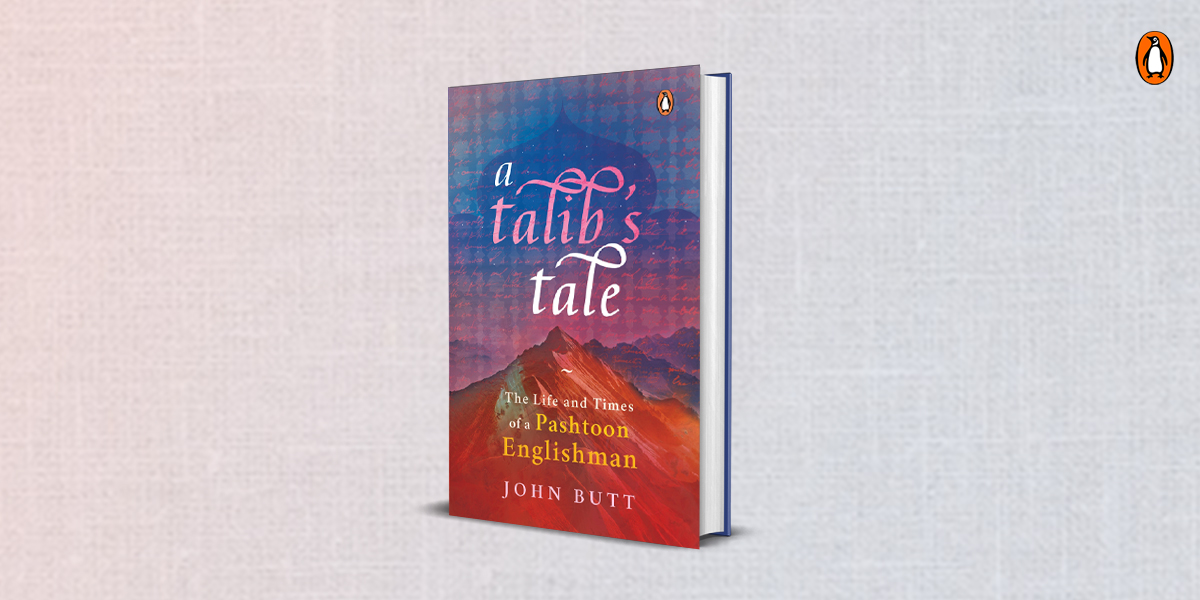
John Butt came to Swat in 1970 as a young man in search of an education he couldn’t get from his birthplace in England. He travels around the region, first only with friends from his home country, but as he befriends the locals and starts to learn about their culture and life, he soon finds his heart turning irrevocably Pashtoon.

Read an excerpt from his book, A Talib’s Tale below:


A Talib’s Trade


The best provision is that which one has worked for, with the labour of one’s own hands.

—Hadith


1973


I owe a lot to Maulana Khan Afzal, but two things in particular. For one, he instilled in me a love of India. Secondly, he showed me practically that one should always work for one’s living.

When I said to Samar Gul in Bara that I was going to the Afridi heartland of Tirah Maidan, he immediately mentioned Khan Afzal. Laiq’s family had some land in Tirah, and he and I had decided to move there for the summer. : ‘That is great,’ Samar Gul said, ‘you will be able to study with Maulana Khan Afzal.’ Like the Sarkai maulvi sahib, Maulana Khan Afzal was an eminent scholar, but at the time he did not have any students residing with him. He was able to devote all his time to tutoring me. I believe it was largely because Tirah was so inaccessible that there were no other students studying with the maulana. Later on, in the late nineties when I visited Maulana Khan Afzal again, he had a good ten to twelve students studying with him. He had become a focal point for talibs, as the Sarkai maulvi sahib had been in the 1970s.

Every day, with my books under my arm, I would make the forty-five-minute walk from Saddar Khel, where Laiq lived, to Landi Kas. Tirah Maidan is a huge, expansive plateau, the like of which there are many in Afghanistan—the Gardez and Logar plateaus are two that spring to mind. The difference with Tirah Maidan is that it is surrounded by richly forested hills, while the hills that surround other Afghan plateaus are mostly bare. Two tributaries of the Bara river meet at the centre of Tirah Maidan, the Malik-Din Khel Bagh. It is the natural capital of Tirah Maidan. The land dips towards that point, as do the streams and the people. From the eastern side, the tribes of Zakha Khel and the Lower Qambar Khels, known as Shalobaris, from the western side the huge swathe of Malik-Din Khel territory, and beyond that the Upper Qambar Khels. From Saddar Khel, I would walk down towards the Malik-Din Khel Bagh, then fork right towards Landi Kas, tucked in a hillside between Bagh and Dunga in Sholobar territory.

I had been studying a Sufi type of collection of Hadith, entitled Riyadh’as-Saliheenthe Path of the Righteous. I say it was Sufi oriented since it was mostly organized according to the virtues that Sufis strive to attain—repentance, patience, sincerity, trust in Allah, steadfastness. It is very spiritually oriented. I am glad I began my study of Hadith with this book. It has remained my favourite collection of Hadith—extremely cleansing and refreshing. However, Khan Afzal switched me to the more mainstream and standard Mishkat’al-MasabihMishkat is arranged more conventionally, according to the various strands of jurisprudence: prayer, fasting and the other forms of worship or ibadat—one’s interaction with Allah—followed by muamilat—one’s dealings with other human beings. In the entire Islamic canon, there is this distinction between the rights of Allah—huqooq’Allah—and the rights of one’s fellow beings, indeed of all Allah’s creatures—huqooq’al-ibad. While in Hadith study Khan Afzal went for the more orthodox Mishkat, in jurisprudence, his choice of book for my study was distinctly unorthodox. His preference was Taaleem’al-Islam, written in Urdu by his own teacher, Mufti Kefayatullah of Delhi. ‘Along with learning Islamic jurisprudence—fiqh—you will learn Urdu,’ he recommended. For Taaleem’al-Islam I went outside with his elder son Abdul Hakeem, then a teenager. I guess Abdul Hakeem felt more comfortable teaching me with his father not immediately on hand. We sat on the verge of the field, had a laugh and chatted a lot, while at the same time also reading Taaleem’al-Islam.

In encouraging me to learn Urdu, it was as though the maulana had a premonition or was goading me in the direction of study in India. It had not been that long, maybe twenty or twenty-five years, since he had returned from studying in the Aminiya madrasa in Delhi. India had rubbed off on him to a considerable degree, in a way making him an unusual Afridi. He even continued to wear a lungi—a skirt-like garment favoured by Muslims of India—at home. Pashtoons generally consider this garment effeminate. Even the maulana would not be seen in that garment outside the home. I have replicated Maulana Khan Afzal in this regard. Even when I am in Afghanistan, I wear a lungi in my place of residence; when I am in north India, I wear my lungi a little further afield, as far as the local shops; when I am in south India, I wear a lungi pretty much all the time. At the time when I was studying with the maulana, I used to ask him a lot about India. In a memorable phrase, he once told me that ‘even the dogs of India have manly virtues’—’da Hindustan spi ham saritob laree.’ ‘What’s Delhi like, compared to Peshawar?’ I once asked. ‘What is Hangu like compared to Peshawar?’ he asked rhetorically, referring to a town in the Frontier province, where buses set out towards Tirah. I answered that it was just a tiny town by comparison to Peshawar. ‘Well, so is Peshawar tiny compared to Delhi.’

Yet at the same time the maulana was the most staunchly Afridi of all the Panjpiris. He absolutely loved his native Tirah. I am getting ahead of myself here, but when he was expelled from Tirah along with other Panjpiris and resided for a while in Peshawar, he pined for his motherland so much that he used to console himself by reciting poems written by muhajirs—those who had emigrated from Mecca to Medina at the time of the Holy Prophet—expressing their homesickness for Mecca. He was also invariably cordial with his fellow Afridis, irrespective of whether they subscribed to his Panjpiri views or not. I never saw him take issue or argue with anyone about matters of dogma. He would enact his duties as the pre-eminent Islamic scholar in Tirah Maidan, in the course of which he would explain how important it was to believe in the oneness of Allah and to follow the Sunna of the Holy Prophet. These two things—Tauhid and Sunna—are the twin pillars on which Panjpiri dogma is founded. But he would never become aggressive towards those who did not subscribe to Panjpiri beliefs.


A Talib’s Tale The Life and Times of a Pashtoon Englishman is available now (also as an e-book)!

error: Content is protected !!