Publish with Us

Follow Penguin

Follow Penguinsters

Follow Penguin Swadesh

Channel the Worldly Wisdom of Chanakya

The names Kautilya and Chanakya, representing the same personage, are an integral part of history from the period when Mauryan Emperor Chandragupta reigned over India. Kautilya is well known as the author of the seminal Indian treatise on politics, administration, diplomacy and war called Arthashastra. But it is the vast collection of aphoristic sayings in Sanskrit attributed to Chanakya, and therefore called Chanakya Niti, that have remained relevant and memorable over the centuries.

What is that wisdom which has enabled Chanakya’s verses of observation and advice to keep the place of honour in the oral tradition of India even as these have been lauded across the world in various translations?

Chanakya lures us in with one of his introductory verses:

With perusal of these precepts,

the best of men will understand

the famous teachings on true duty,

 on good and bad, on what to do or not.


Read on for 7 nuggets of worldly wisdom from Chanakya Niti


  1. Chanakya warns against errors of judgement in choosing that which offers immediate succour over learning and values that may carry one through life and beyond.

One who discards the permanent,

and pursues just the transient—

the first values are by him destroyed,

the second perish in any case.

  1. The wise one who rose above his poverty and physical appearance to make himself indispensible to the ruler reminds us to see value in all things.

Nectar seek, even from poison,

gold even from excrement,

knowledge even from one base,

and the girl that is a gem, even from a family low.

  1. Experienced in the ways of the world, Chanakya exhorts man to speak in a measured way and reveal only what is necessary and conceal that which is yet incomplete.

Some work considered in the mind,

when speaking do not public make,

just think about it privately,

till it is indeed accomplished.

  1. Befriending one who has revealed his base nature can lead man down the road of misery. Being a keen observer of virtue, Chanakya reiterates the importance of keeping good company.

Wicked, and badly behaved,

he lives ill, casts evil looks—

one who makes of such a person

a friend will soon get destroyed.

  1. Pouring his enlightened self into a verse that is as simple as it is deep, Chanakya shares a core fact of existence in a way that equalizes all distinction.

Which family is free of faults,

which person has not suffered disease,

who has not faced adversity,

whose happiness is permanent?

  1. Mature and learned as he was, the great teacher Chanakya shares a lesson in moderation.

For beauty great was Sita seized,

Ravana slain for too much pride,

   for giving too much was Bali bound—

 as such, always, excess avoid.

  1. In an unforgettable verse that showcases him as the shrewd master of politics, Chanakya hints at the perils of walking the straight line in a crooked world.

Too upright, straight, one should not be,

go to the forest and there see:

straight trees cut down repeatedly,

while standing stays the crooked tree.


It is perhaps his ability to dig into the depth of human nature and tease out the knotted truths of human behaviour that has kept Chanakya alive for Modern India to engage with.

Haksar writes, ‘Overall, it is both their meaning and their style that has made the Chanakya verses so memorable for so long.’

Translated from the original Sanskrit by A.N.D. Haksar, read Chanakya Niti for more wisdom!

Reach for the Stars! – An excerpt from ‘Fearless’

Inspirational women from all over the world have held their own in the face of discrimination, inequality and injustice. These women have been politicians, lawyers, activists, artists and more – with the common goal of raising their voices and fighting for the greater good no matter their nationality, race or religion.

Fearless explores this notion by collating a variety of stories focused on the inspirational women of Pakistan and the strength they have displayed in their own lives.

You can read an example of one such story, about the life astronaut Namira Salim below:

Namira Salim was a quiet, meditative child whose head was quite literally in the stars. It was her dream to become an astronaut but for a little girl from Pakistan, this seemed an impossible fantasy.

Namira was obsessed with the night sky and never asked for her parents for anything— except to be sent into space! ‘I was literally born with the dream of going to space. And the unshaken belief that I would.’

Her parents caved and got Namira her first telescope at the age of 14—she never looked down again as her sights were firmly set on her goal! She was part of the pioneering astronomy society in Pakistan and would spend hours gazing at the stars. Her family moved to the UAE and Namira eagerly participated in star-gazing parties in the desert. She met David McNaughton, one of the first people in the world to go into space, here and became his mentee.

As a college student studying International Relations and later as a resident of Monaco, Namira continued to be deeply absorbed by and involved in space-related activities, even launching a range of ‘space true’ jewelry under a private artistic label called A Soul Affair.

A recognized polar explorer, Namira was the first Pakistani to reach the North Pole in April 2007 and the South Pole in January 2008. She is also the first Asian to skydive (tandem) over Mount Everest in 2008 and the only Pakistani in Virgin’s Galactic commercial space liner, an opportunity he was shortlisted for as a future astronaut out of 1,44,000 applications to travel into space.

However, Namira wasn’t about to just sit around waiting for the first commercial flight to take off! She decided to get qualified officially by completing her training in the US and became the first Pakistani to do so. She also founded Space Trust, a non-profit initiative that promotes space as the New Frontier for Peace, via novel peace initiatives to inspire change and encourage dialogue.


You can read more about Namira and other stories about inspirational and incredible women like her in Fearless – grab your copy today!

What are Stereotypes about Pakistan among Indians?

Many of us have concluded Pakistan as an economically, culturally, socially and ideologically regressive country. Most of us have dropped the idea of exploring the picturesque landscape of Pakistan due to a dangerously false perception of it being a terrorism inflicted country. That is why when a journalist – Sameer Arshad Khatlani, decided to attend the World Punjabi Conference in Lahore, his family felt extremely anxious about his decision.

The Other Side of the Divide is a journalist’s reflective travelogue that bares the complexities of culture and class in Pakistan. Khatlani’s adventurous journey to the heart of Pakistan reveals the connecting thread between two nations through stories that fail to reach the masses in India.

Here are some excerpts that render all commonly held stereotypes about Pakistan as false:


  1. Stereotype: Pakistan is a land that breeds hostility

‘The immigration clearances were prompt. I had never seen a more cheerful immigration official than the one who stamped my passport. the atmosphere was not even remotely as hostile as what it used to be a decade ago. […] I did not find any hostility. Far from it…’

  1. Stereotype: Pakistan is full of only Muslims

‘Everything across the border looked as if harmonized with the Indian side. […] An artificial line drawn through the heart of Punjab cannot be deep enough to change the shared language, culture, customs, idioms and attitudes shaped over centuries. Sikh men in their beautiful and colorful turbans in eastern (Indian) Punjab and ubiquitous Urdu in western (Pakistani) Punjab are perhaps the only outliers on the surface. Punjabi is the language of the people on the street.’ 

  1. Stereotype: Pakistan rejects everything that is Indian

‘The market was abuzz despite the cold. it could have been easily mistaken for a market in Indian Punjab had not it been for Urdu signages. Virtually every shop sold artificial jewellery, Indian beauty products and prominently displayed Amul Macho undergarments packs with pictures of Bollywood stars Saif Ali Khan and Akshay Kumar.’


  1. Stereotype: Cities in Pakistan aren’t as developed as India

‘The Pak Heritage is a budget hotel particularly popular with Sikh pilgrims. it is located on the busy and mostly gridlocked Davis road with many similarities with Delhi’s Daryaganj. […] In Lahore, posh, leafy and well-maintained areas like the Mall are located just a few kilometers away, south of Davis road. Daryaganj, likewise, is a five-minute drive from the heart of tree-shaded Lutyens’s Delhi, distinguished by its colonial-era bungalows and wide avenues.’ 

  1. Stereotype: Bollywood doesn’t have Pakistani fans

‘… one of Pakistan’s best-known newspapers, Dawn, gushed about Madhuri’s ‘dazzling and disarming smile’, which she ‘quite literally patented’ and honed ‘into an art form’. […] In Lahore, and indeed across Pakistan, Bollywood is ubiquitous and gets prime slots on TV news channels, sometimes at the cost of more pressing issues.’ 

  1. Stereotype: Pakistan has an extremely orthodox culture

‘No one disappeared after the screening. A party-like atmosphere continued outside the hall well past midnight. Television crews surrounded filmmakers and socialites for sound bites about the film. Camera flashlights brightened the dimly lit waiting area. Some spoke to at least half a dozen camera crews about the film and performances of the lead actors, Aamir Khan and Katrina Kaif.’ 

  1. Stereotype: Pakistan has an Urdu speaking community

‘Punjabi, along with its variants, still remains the mother tongue of an overwhelming number—close to 60 per cent—of Pakistanis. Beyond the urban upper-class pockets of Lahore and other bigger cities, it remains the colourful language of choice for the masses…Urdu-speakers have accounted for roughly 10 per cent of Pakistan’s population.’ 


To understand how the common people of Pakistan have often challenged the dehumanizing discourse about their country, there may be no better place to begin than The Other Side of the Divide.

The Complete Story – Warts and All

In Shashi Tharoor’s words: ‘Alistair Shearer’s The Story of Yoga offers an absorbing chronicle of the rise of yoga, tracing its evolution through history to its rapid global proliferation today, with insights into the challenges ahead.’

Alistair Shearer himself calls it a “how come” book rather than a “how to” one. For the first time, The Story of Yoga presents a narrative setting out a comprehensive and accessible history of yoga in its global cultural context.

Find a glimpse of the expansive global outreach and popularity of yoga in an excerpt below:


WAY BACK WHEN…?

It’s a typical Friday evening in downtown America. A group of youthful practitioners, mostly women kitted out in fashionable sportswear and carrying plastic water bottles, arrives at a large, well-lit gym. Tanned and toned, they have come to relax after a hard day at the office, tighten up their abs and flabs, reduce their blood pressure and cholesterol. During the session there is a lot of talk of anatomical details amidst a pervasive atmosphere of ‘no pain no gain’; the stretching and relaxing may involve blocks, ropes and other appliances, but there is a determined energy exerted in most of the postures. Everything takes place in front of the wall-to-wall mirrors and the ethos is one of goal-directed accomplishment. Everyone is getting somewhere, burning off fat and sweating out stress, improving themselves. At the end of the session, recharged and clear-headed, people chat while quickly changing back into street gear. Some are advocating the benefits of the latest detox programmes and high-energy diets, while almost all are checking their phones and consulting their upcoming schedules.

Not far away on the other side of town, another group is meeting. Its members are older than the gym-goers but, again, almost exclusively female. Here the lighting is dimmer, sitar music is playing softly in the background and the scent of sandalwood wafts from an incense stick smouldering in front of an image of the Dancing Shiva. The session, led by a Western teacher with an Indian name who is just back from a three-month stay at an ashram in Rishikesh, begins with mispronounced chanting from a sacred Hindu text, followed by some mantras that the group repeats after her. Sanskrit terminology is used to describe the postures, which are performed slowly and gently. The session is brought to a gentle close with a guided meditation, and then, after some relaxed socializing and prolonged hugging, people drift away into their various weekends.

***

The understanding of yoga typified by the first group above will be dealt with later in this book, but for the moment, let us focus on the second. As do millions of others, its members would see their practice as being in some way connected to the nourishing well-spring of Indian wisdom. However vaguely the connection may be articulated, practitioners and teachers take for granted that this yoga is the subcontinent’s practical and perennial spiritual gift to the rest of the world. One of the most popular English translations of Patanjali’s classic Yoga Sutra is How to Know God, a poetic collaboration between the California-based Indian guru Swami Prabhavananda and the English writer Christopher Isherwood. First published in 1953, this version is still the Vedanta Press’ best-selling book, and has remained so respected over the years that until very recently the official governing body of yoga in the UK, The British Wheel of Yoga, chose it as the recommended text for its teacher training courses. In the opening paragraph of their introduction, the authors tell us: ‘the yoga doctrine may be said to have been handed down from prehistoric times’. Such an impressive pedigree might perhaps be proved one day, but in fact there is currently no hard evidence to support such a claim, and certainly not as regards body-yoga. Much water has flowed under the scholastic bridge in the almost seventy years since this translation was first published, and such broad statements rarely go unchallenged today. Indeed, as we shall see, a great deal of what is practised as yoga in the twenty-first century actually has very little in common with what we now know of ancient India, in terms of both its socio-cultural norms and its spiritual aims.

**

Shearer’s book boasts of a colourful cast of characters, past and present, who tell an engaging tale of scholars, scandal, science and spirit, wisdom and waywardness. This is a definitively untold story of yoga – warts and all.

March Binges for You!

Binge-reading is the way to go for us this March!

From motherhood to building a happier and healthier lifestyle, our bookshelf this March is all about, well, life! These books will be perfect to reconnect us with ourselves, and to discover untold stories of travels and tribes.

Which one of these will you be picking up?


Amma Mia by Esha Deol Takhtani

Is my baby not well?

When can I introduce my baby to solid foods?

Becoming a new mother can be an exciting yet overwhelming time. No matter how prepared you are, there will always be many confusing moments, opinions and a whole lot of drama! And just like any other new mom, Esha Deol Takhtani was faced with many such questions soon after the birth of her two daughters – Radhya and Miraya.


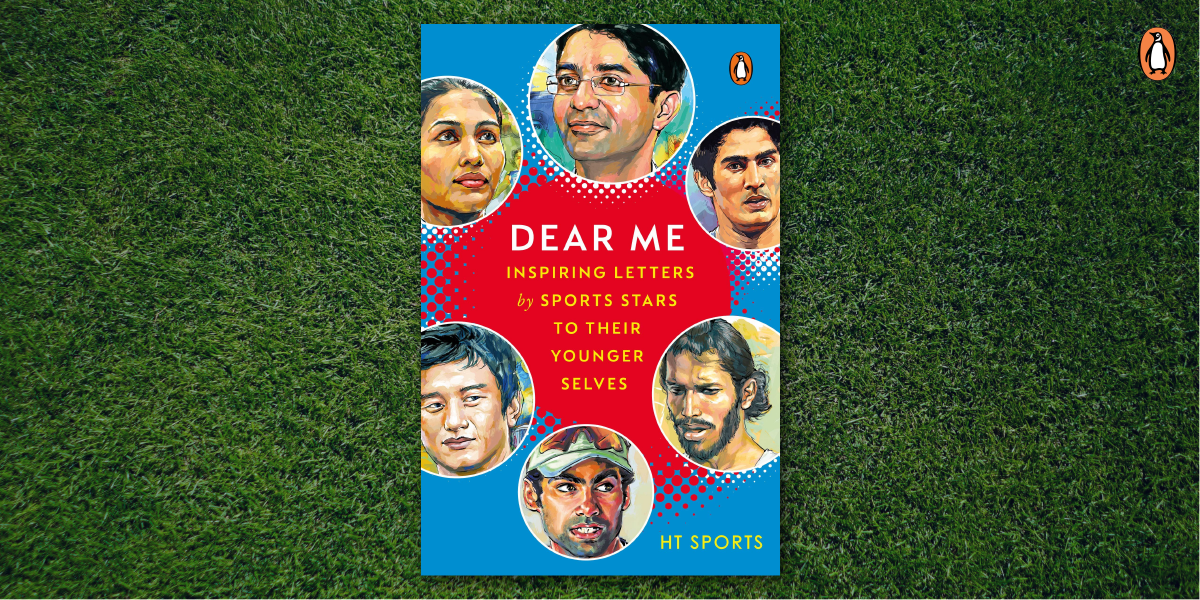
Dear Me by HT Media

India’s biggest sports stars share their secrets for finding greatness.

Dear Me is a collection of letters from some of the most-celebrated names in sports – Milkha Singh, Vishwanathan Anand, Bhaichung Bhutia and many more – who write to their younger selves and remember the moments that changed their lives. An uplifting reminder that dreams do come true, this book allows you to be inspired by their extraordinary stories.


White as Milk and Rice by Nidhi Dugar Kundalia

The Maria girls from Bastar practise sex as an institution before marriage, but with rules-one may not sleep with a partner more than three times; the Hallaki women from the Konkan coast sing throughout the day-in forests, fields, the market and at protests; the Kanjars have plundered, looted and killed generation after generation, and will show you how to roast a lizard when hungry. The original inhabitants of India, these Adivasis still live in forests and hills, with religious beliefs, traditions and rituals so far removed from the rest of the country.

This book weaves together prose, oral narratives and Adivasi history to tell the stories of six remarkable tribes of India.


The RSS by Dinesh Narayanan

Since its inception in 1925, the RSS has perplexed observers with its organizational skills, military discipline and single-minded quest for influence in all walks of Indian life. Often seen as insidious and banned thrice, the pace of its growth and ideological dominance of the political landscape in the second decade of the millennium have been remarkable.

Relying on original research, interviews with insiders and analysis of current events, The RSS and the Making of the Deep Nation traces the RSS’s roots and nearly century-long operations in the relentless pursuit for ideological dominance in a nation known for its rich diversity of thought, custom and ritual.


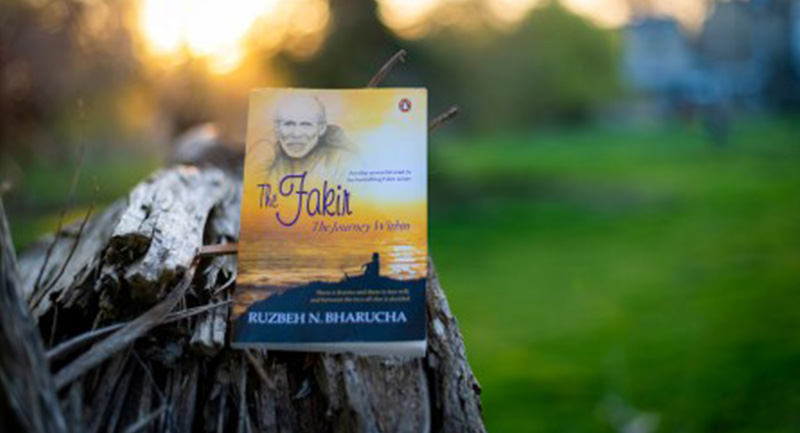
Fakir: The Journey Within by Ruzbeh N Bharucha

To be a better spiritual being and to better even that with every step is the goal of every soul so it can then ultimately merge into The One . . .

The book presents us with Baba’s words of wisdom for us to inculcate in our-day-to-day lives. Baba talks about how we should be in life, how our relationships should be, how jealousy and anger are detrimental to the development of good karma and how conducting oneself without cribbing and complaining takes on to the higher plane.


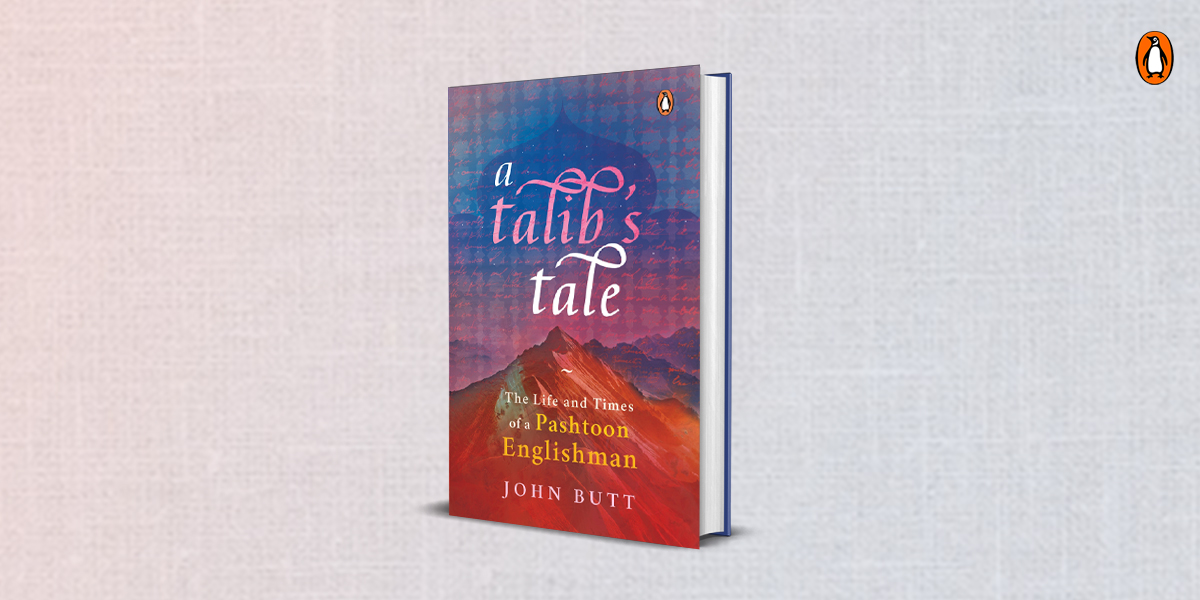
A Talib’s Tale by John Butt

John Butt came to Swat in 1970 as a young man in search of an education he couldn’t get from his birthplace in England. He travels around the region, first only with friends from his home country, but as he befriends the locals and starts to learn about their culture and life, he soon finds his heart turning irrevocably Pashtoon.

Containing anecdotes from his life both before and since he shifted to Afghanistan, John Butt tells a wonderful and heartfelt tale of a man who finds a home in the most unexpected place.


The Minority Conundrum edited by Tanweer Fazal

What does it mean to be a minority in majoritarian times?

Following from the highly relevant Vision for a Nation last month, The Minority Conundrum gives us the second volume in the series titled Rethinking India – which goes further into exploring what the idea of a ‘nation’ means for India today.

Edited by Tanweer Fazal, this volume identifies vulnerabilities that hinder the quest for the realization of substantive citizenship by minority groups.


The Dry Fasting Miracle by Luke Coutinho and Sheikh Abdulaziz Bin Ali Bin Rashed Al Nuaimi

In the olden days, people ate early because there was hardly any light after sunset. Their next meal would only be after sunrise. This practice spread to all religions as a discipline due to its health and spiritual benefits. Today, it is called the dry fasting diet-the most superior form of fasting and cleansing. Replicating it requires abstinence from all food and water for twelve or more hours.

Luke Coutinho and Sheikh Abdulaziz Bin Ali Bin Rashed Al Nuaimi teach us how this diet can stimulate the body, help one find the right balance between the ‘elimination phase’ and the ‘building phase’, aid weight loss and avoid a number of diseases.


My Girlhood by Taslima Nasrin and translated by Maharghya Chakraborty

Set in the backdrop of the Bangladesh Liberation War of 1971, this book recollects Taslima Nasrin’s early years.

From her birth on a holy day to the dawn of womanhood at fourteen to her earliest memories that alternate between scenes of violence, memories of her pious mother, the rise of religious fundamentalism, the trauma of molestation and the beginning of a journey that redefined her world; this latest translation by Maharghya Chakraborty is a tour de force.

You’re Not Listening by Kate Murphy

At work, we’re taught to lead the conversation. On social media, we shape our personal narratives.  At parties, we talk over one another. So do our politicians.

We’re not listening.

And no one is listening to us.

This book will transform your conversations, your relationships and your life.

Two Plays by Chandrasekhar Kambar and translated by Krishna Manavalli

In Chandrasekhar Kambar’s timeless classic The Bringer of Rain: Rishyashringya, a village afflicted with a deadly famine eagerly awaits the arrival of the chieftain’s son, whose homecoming promises the return of rain. As the death toll rises, age-old secrets are unravelled and mythical forces step out of hiding. Will the sky relent?

The second play, Mahmoud Gawan is set in the fifteenth-century Bahamani Sultanate. It follows Gawan’s rise to fame during a time of intense civil strife when empires routinely rose and fell.

Alluring and sublime, Two Plays is a must-read for anyone hoping to dip their toes into the rich waters of Kannada folklore and theatre.

***

Bholanath and Khudabaksh Discover German Mushrooms

Bholanath and Khudabaksh are two soldiers in the British Indian Army, sent off to Europe to fight in World War I. One happens to be Hindu and the other happens to be Muslim, but that doesn’t keep them from being the best of friends.

When a mission in a surveillance balloon goes awry, these two gentle soldiers-along with an exceptionally ill-tempered squirrel-are set adrift high above the Western Front.

Intrigued? Read an excerpt from Soar:


The two soldiers kept searching the forest for food. The only thing they found, and this only when Bholanath stubbed his toe and punctured a hollow, half-rotted log, was a clutch of gray mushrooms. They began hunting in such dark hideaways for more mushrooms, and eventually had collected whole pocketsfull of them, dirt-speckled and with droopy caps of various dun colors. Only one variety was orange. Bholanath blew the dirt off it.

“These may be good for breakfast, seeing as we have no fruit.”

They took their harvest back to the stream, where they dunked each mushroom and let the current rinse it, rubbing the more stubborn dirt stains with their thumbs. The orange caps proved even brighter after the washing. He handed Khudabaksh a few and kept a few for himself. They savored each one and chased this meal, such as it was, with more water. They were still hungry, and it was hard not to eat the rest of the mushrooms on their way back to the balloon.

They were still walking when Khudabaksh turned to Bholanath and saw his friend’s temples form little spuds. The calf’s stubs lengthened all the way to proud, S-shaped horns. His pupils dilated and kept dilating until they filled his eyes, which had no whites left. Bholanath’s nostrils flared and kept flaring until a rough, off-pink tongue slithered out of his mouth and licked them. At this point, Bholanath mooed outright, terrifying Khudabaksh, who stumbled away with one hand and one wrist-stump thrust out at Bholanath. Backing away, he tripped over a log; he knocked his ankle and steadied himself, but fell onto his rear. “Ah!” he cried. When he sat up, he was straddling the log.

This black log, in Bholanath’s eyes, immediately sprang onto four feet, a small black horse. Khudabaksh’s hand held a burning book in it, obviously, from the way his Mussalmaan companion had shouted “Allah!”, the Qur’an. A pink gauze-strip dangling from his wrist lengthened and hardened into a blood-stained Mughal dagger with a mother-of-pearl hilt. Bholanath raised his own right arm out of reflex, to protect himself, and where his wrist-stump was, Khudabaksh saw a hoof. They both shouted, Khudabaksh for Allah’s help, Bholanath for Mahadev’s, and this only redoubled their terror of one another. For several minutes, they cowered behind oak trees fifty feet apart. Finally, they called across the distance.

“Khudabaksh?”

“Bhola?”

“Put that bloody dagger away, or I won’t talk to you!”

“First you put those horns back in your head!”

“Horns? What horns?”

Khudabaksh stuck his finger in his ear and toggled it smartly, eyes squinched. “Talk Gujarati, you shapeshifting Hindu! Stop that mooing!”

Bholanath looked around the tree and gasped. “First you whistle your Arabian over! He’s still glaring at me with his—with those eyes of his!”

“My Arabian?”

“The horse, you crazed old Mussalmaan!”

“Where?”

“Right there!”

“That’s a log, Bholanath!”

Bholanath put his fists to his eyes, rubbed hard, and looked again. “No, it’s definitely a horse. And now it’s lifting its tail and shitting fire. Take a look yourself if you don’t believe me.”

He retreated behind his oak and hugged his knees for warmth. To his surprise, his own knees had grown nipples that poked suggestively through the khaki. He stared, not particularly aroused, but mesmerized. The attempted dialogue stopped here for the next several minutes. On his end, Khudabaksh watched the mushroom-caps in his pocket inflate and subside rhythmically, like jellyfish breathing themselves along. Finally, when they exhaled for the last time, he checked back.

“Bholanath? Oy Bholanath!”

Bholanath peeked tentatively around his oak.

“See? I can talk to you now that you’ve put those horns back in your head.”

“Thanks for calling off your horse. What did you do with your Qur’an?”

“It’s in my pocket.”

“I mean the one that was on fire.”

“Who would dare burn a Qur’an? In a forest no less!”

Bholanath glimpsed the dangling gauze strip and rubbed his eyes again. No, it definitely wasn’t a dagger.

The two soldiers emerged tentatively, in their own shapes, no longer demonically transformed. They felt each other’s faces like blind friends meeting after a long time apart, and, satisfied, returned to the balloon together.


What happens next? You’ll have to read Soar to find out!

Get Up to Date with Nepal’s Economic Situation

Unleashing the Vajra sets the context to understand the key issues that drive Nepal’s economy. The author examines the other key sectors—the private sector and the development sector—closely to understand the different distortions that exist in the society, from cartel behaviour to rent-seeking. The book also deals with the emergence of the global Nepali, and the dichotomy as Nepal itself continues to be inward-looking.

Below are few facts, which reflect Nepal’s economic situation currently, taking into account its economic history as well:

Influence of the caste system 

The Nepali economic system, until the abolition of the caste-system, revolved around the Hindu philosophy and way of life. So in such a society the discourse around development and the role of development partners popularly known as donors becomes very complicated.

Third World Country 

After the Second World War, Nepal, along with the least developed of the former colonies—those lacking in industrialization, capitalist institutions and democratic governance—became eligible for foreign aid as members of the ‘Third World’. The first aid package Nepal received was part of the US-led Marshall Plan.

Lack of Foreign Aid Policy

Exhibiting an attitude of dependence, Nepal did not bother to have a comprehensive foreign aid policy until 2002. The lack of a national body directing and coordinating aid was a considerable drawback—not only did it compromise the sovereignty of the nation, it often directly challenged the will and intentions of the government.

Remittances

The interest and accounting of remittances has become even more important as the total remittance crossed the billion-dollar mark in 2005. In 1993, the remittance to GDP was just 1.5 per cent, as recorded in the World Bank report. It swelled to 28.31 per cent in 2018.

The Non Resident Nepali Act

The Non-resident Nepali Act, promulgated in 2009 means that NRNs, who are not citizens of Nepal, could purchase land, acquire assets and invest in Nepal, and also have dual citizenship in the case of certain countries.

Impact on real estate

Houses are often rented from people who are close to the renting agency’s staff, while vehicles are rented from influential individuals at rates higher than the going market rate. These provide nice commissioning counters for development agency staff workers and a secondary source of income for well-placed and high-ranking officials.


Nepal has historically been at its most prosperous when it has leveraged this geographical position. Today, this opportunity emerges again-and in order to take advantage of the growth of India and China, Nepal needs to hitch its wagon to the fast-moving engines to its north and south. For a deep-dive into Nepal’s past, present and future pick your copy of the book today!

Of Love, Home, and the Outside

Loya is twenty-five, solitary and with restless stirrings in her heart. In an unexpected move, she sets off on an unexpected journey, away from her mother, Rukmini, and her home in Bengaluru, to distant, misty Assam. She seeks her grandfather, Torun Ram Goswami, someone she has never met before.

Twenty-five years ago, Rukmini had been cast out of the family home by her mother, the formidable and charismatic Usha, while Torun had watched silently. Loya now seeks answers, both from him and the place her mother once called home.

In the excerpt below, find a glimpse of the fateful wedding day in 1983, which ends up defining Loya’s exploration of home and family.


The Wedding

3 December 1983


Despite her father’s enormous love for her and her brother’s steady affection, she had been consigned to the margins of life in the Yellow House by Usha. Well, Rukmini found she did not feel so negligible any more. In a glad inversion of the way Usha diminished her, with Alex Rukmini was enhanced; she felt more of herself.

The world would alter again this morning, Rukmini thought as she walked up the path towards Alex. In a few hours, she would be a wife and Alex, her husband. She shivered again and, as if sensing her fear, Arun turned and linked his arm with hers.

At the veranda, Arun released Rukmini’s arm and she walked, instead, beside Alex, into Robin Khura’s small drawing room. It was a humble room, with its old wooden threepiece sofa set and a couple of cane armchairs. That it lacked a woman’s touch was obvious. But Jitu and Robin, with the aid of the woman hired to help around the house, had done their best to smarten it up. The cushion covers were freshly washed and ironed. There were vases of clumsily arranged flowers on the bookshelves, one tall arrangement of fragrant rajnigandha and other of red roses, overblown and already shedding petals.

‘Sit, sit!’ Robin Khura ushered the couple into the twoseater sofa. ‘The magistrate will be here any minute.’

Rukmini sat down beside Alex. Her hand resting on the seat of the sofa was alarmingly close to Alex’s. She hoped he would not reach across and take her hand. She did not know how things were done in his family down in Bangalore but here it was taboo to touch even your spouse in public view. In fact, it was bad form to express any affection or love between a wife and a husband at all. This was not a society that believed in a hug or embrace outside the bedroom.

‘Tea, anyone?’ Jitu asked.

Rukmini spoke quickly, maybe too soon, and regretting her haste. ‘Not now, later, maybe.’ She could not possibly eat or drink anything now. When would the magistrate arrive? She wanted to be done with it all as soon as she could.

‘Easy, sweetheart,’ Alex said and Rukmini felt herself flush. She was embarrassed at Alex’s use of this endearment before the assembled.

There was just the five of them this morning. There would have been more had it not been for the bandh. All eight of their study circle group and many more of their batch mates—Alex after all was a favourite with many. Some of her friends too, from school, may have shown up. The bandh had kept them all indoors. No family either, though Arun and she had three cousins—all in Jorhat. There were none they were particularly close to.

But what of Alex?

Rukmini realized she had not given any thought to Alex’s family, who were absent. His father had died two years ago, but what of his mother and sister, Rose? When asked, he had said that it was too far for them to travel and they would be going down to Bangalore the next day anyway. There, he said, there would a big reception at Bangalore Club. She had not thought it odd then, but now sitting in the still drawing room, suffocated by the cloying scent of the rajnigandhas, Rukmini was struck by how very strange it all was.

The magistrate arrived, half an hour late. At ten minutes past ten, Rukmini put down the pen she had signed her name with and allowed Alex to gather her up in a quick embrace, before bursting into tears.


Undertow presents a delicate and poignant portrait of family and all that it contains. Through Rukmini’s and Loya’s journeys, Jahnavi Barua crafts a complex exploration of home and the outside world, and the ever-evolving nature of love itself.


Steer Clear of Life’s Pitfalls with Master Strategist Chanakya’s Niti

In the rather complex history of our vast nation, the name Chanakya symbolizes the worldly aspects of India’s ancient thought and knowledge while being synonymous with legendary wisdom and political skill. Chanakya’s numerous sayings on life deal with subjects ranging from family and social surroundings, friends and enemies, adequacy or absence of wealth, official and personal encounters to benefits of knowledge and the inevitable end of everything. These sayings have been compiled in collections and anthologies with the entire corpus referred to as Chanakya Niti.

The aphorisms, written in straightforward language devoid of the ‘alamkara’ or embellishments which were used in traditional Sanskrit verse, belie the depth of the content which, in a way, is reflective of Chanakya’s position as despite being an indispensable ally to the ruler Chandragupta Maurya, he led a simple life.

A.N.D. Haksar writes ‘ …Chanakya has been described as a poor but learned person of unattractive appearance, but nonetheless skilled, determined and cunning, with a strong, vengeful personality.’

Read on to know what Chanakya Niti teaches us about friends and foes:

Know him to be your friend who stands next to you when you are beset by danger and difficulty

In times of sickness or bad luck,

in famines and enemy attacks,

at the ruler’s door or in the cemetery,

the friend is one who stands by you.

Be wary of the one whose tongue drips honey while his hand wields a dagger

He speaks before you sweetly,

but spoils the work behind your back:

such a friend should be discarded—

 like a poisoned pot with milk on top.

Value all that adds meaning to your life and aids your passage through this world

In foreign lands, one’s friend is learning,

at home it is the wife,

in sickness, the friend is medicine,

 in death it is the virtuous life.

Know those to be your enemies who give in to their weakness and stray from their righteous path

The father in debt is one’s enemy,

and the mother who is adulterous,

a beautiful wife is also a foe,

as is a son without education.

Guard your wealth as floundering fortunes cause friends to turn fickle

Friends leave one who has no money,

also servants, kinsfolk, even one’s wife,

but all come back when he has wealth—

that is man’s real friend on this earth.

Sharpen your intellect so it can become your shield against enemies

What can enemies do to one

who very intelligent may be?

They are like raindrops or the heat,

  on a chariot with a canopy.

Devise your strategy so you can turn a weakness into strength

A sharp foe may be neutralized

with the help of another enemy:

a thorn that gets stuck in the foot

with another thorn can extracted be.


A.N.D. Haksar, a well-known translator of Sanskrit classics, offers a roadmap into Chanakya’s Niti with selected aphorisms which continue to be recalled and quoted in many parts of India.

To learn how to manoeuvre through life, read Chanakya Niti!

Death is a once-in-a-lifetime opportunity- make it count!

‘Oh, I bless you with a long life, but anyway, you will die one day.’

Yogi, mystic, visionary but above all a great spiritual teacher- Sadhguru bestows both life and wisdom in this one brief, all- encompassing blessing which reminds us that death is the world’s greatest equaliser and mortality is a fact of life. The knowledge of impending death can plunge even the hardiest of souls into a dark pool of fear and misery. Contrarily, in Death- An Inside Story, Sadhguru points out-

‘Calamities, especially like death and illness, are a tremendous opportunity to look beyond the limitations of what you normally understand as life.’

What if death was not the catastrophe it is made out to be but an essential aspect of life, rife with spiritual possibilities for transcendence? For the first time, someone is saying just that!

In this unique treatise-like exposition, Sadhguru expounds on the more profound aspects of death that are rarely spoken about. And in doing that he offers an expansive perspective on death which has the power to change how we understand our existence in this universe. He says-


I was born like you, I eat like you,

sleep like you and I will die like you

but the limited has not limited me

Life’s bondages have not bound me


Here are 5 ways Sadhguru can help you change your perspective on death-


  1. ‘Moving from the physical to the non-physical is the greatest moment in your life. So is it not very important that you make it happen most gracefully and wonderfully?

The darkness that clouds our thoughts at the idea of death colours our experience of it. Sadhguru nudges us gently to look away from the repetitive activities of life and approach death as a unique experience. It is that very last moment of life when we transcend the limitations of our physical body. It can be done just once and it is the last thing we will do. And so we can choose to do it with grace.


  1. ‘If you want to make use of the opportunity that death presents, you cannot approach it with fear. This is not something that you can handle all of a sudden at that moment. So it is important that on many levels we prepare for death beforehand.’

Even though we all fear death, we must prepare ourselves for a certain day when we would experience it. Shunning the thought of death or cowering behind a wall of terror is not the best way to go. Sadhguru reminds us to learn from nature. When wild animals sense their impending demise, they withdraw from food and find a place where they just sit. This preparation is a way to bring dignity to death. If you bring in death gracefully your disembodied phase will not be hellish.


  1. ‘If you develop the necessary capability, whichever way death comes, you can maintain your awareness and die well. If you have not lived a life of awareness, the possibility of you suddenly becoming aware in an extreme situation like death does not arise at all.’

In one of the most enlightening discussions on death, Sadhguru makes a startling revelation. He explains that a man who dies in a violent encounter is in no way in any kind of disadvantage compared to one who is dying of disease or old age. Any man who has lived a life of awareness can die well as there will be that moment between injury and death where that awareness brings acceptance. Some people live well only in good situations but those who live well whichever kind of situation comes to them, die well, no matter what kind of death comes to them.


  1. ‘The fear of death has come to us because we have gotten deeply identified with this body. Our identification with this body has become so strong because we have not explored other dimensions.’

Sadhguru explains that death is as natural as life is and therefore, a morbid fear of death is unnatural. It demonstrates how we have lost touch with reality. We believe that we came with this body and that thought begins to define us. The flesh we hold so dear is what we gather in the womb after our conception and it is this flesh we shed when the end comes. To be aware of this reality we must remember to differentiate between ‘This is mine.’ and ‘This is me.’


  1. The fear of death is about what you think you will lose by death. The fear of death is essentially the fear of loss.’

The fear of losing all that we know and love limits our experiences. People who have expanded their range of thought in the pursuit of awareness are convinced that they came with nothing and therefore, would lose nothing from death, so they welcome it without fear. Sadhguru encourages us to go beyond the limitations of the body with sadhana and to use our life to know that which is beyond the physical.


At a time when the world is torn asunder with disease, violence and hate, Sadhguru exhorts us to remember the fragility of life. He says, ‘Those who are constantly aware of the mortal and fragile nature of Existence do not want to miss even a single moment; they will naturally be aware. They cannot take anything for granted; they will live very purposefully. Only people who believe they are immortal can fight and fight to death.’


To confront your fears and rise above them, read Death- An Inside Story!

error: Content is protected !!