Publish with Us

Follow Penguin

Follow Penguinsters

Follow Penguin Swadesh

For Paulo Coelho, archery is the vehicle for the clear truths of life

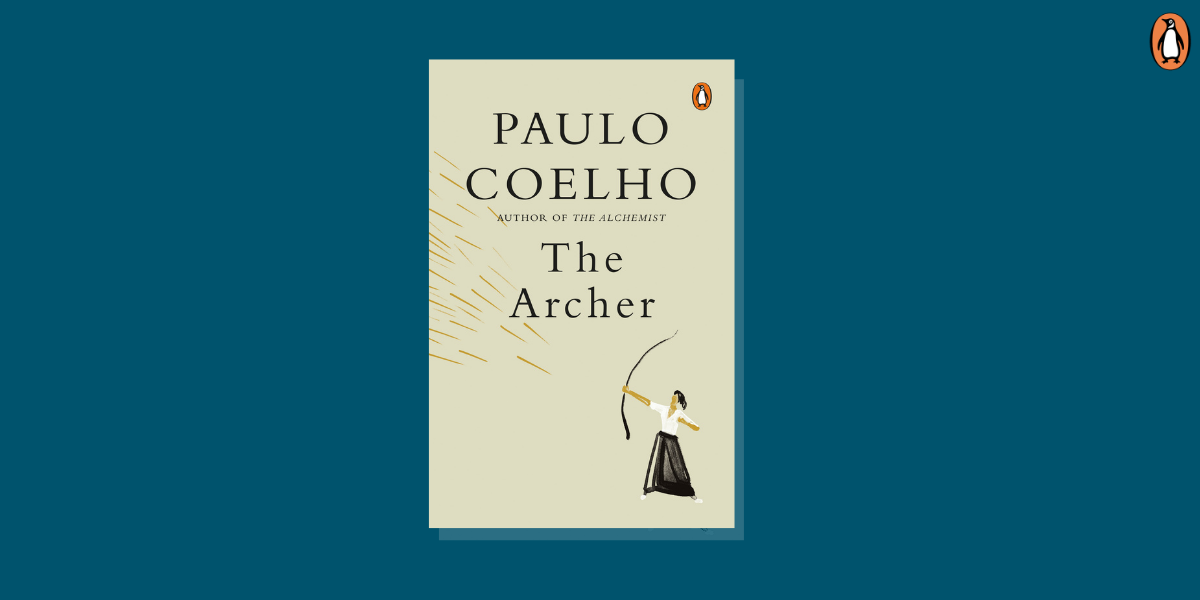
Anyone who reads Paulo Coelho is changed in some fundamental way. The power of his words is rare, and the breadth of his scope is not easily matched. Here is an excerpt from his newest book The Archer, exploring truths of life through an impactful metaphor:

~

‘Tetsuya.’

The boy looked at the stranger, startled.
‘No one in this city has ever seen Tetsuya holding a bow,’ he replied. ‘Everyone here knows him as a carpenter.’

…Tetsuya made as if to resume his work: he was just putting the legs on a table.

‘A man who served as an example for a whole generation cannot just disappear as you did,’ the stranger went on. ‘I followed your teachings, I tried to respect the way of the bow, and I deserve to have you watch me shoot. If you do this, I will go away and I will never tell anyone where to find the greatest of all masters.’

The stranger drew from his bag a long bow made from varnished bamboo, with the grip slightly below center. He bowed to Tetsuya, went out into the garden, and bowed again toward a particular place. Then he took out an arrow fletched with eagle feathers, stood with his legs firmly planted on the ground, so as to have a solid base for shooting, and with one hand brought the bow in front of his face, while with the other he positioned the arrow.

The boy watched with a mixture of glee and amazement. Tetsuya had now stopped working and was observing the stranger with some curiosity.

With the arrow fixed to the bowstring, the stranger raised the bow so that it was level with the middle of his chest. He lifted it above his head and, as he slowly lowered his hands again, began to draw the string back. By the time the arrow was level with his face, the bow was fully drawn. For a moment that seemed to last an eternity, archer and bow remained utterly still. The boy was looking at the place where the arrow was pointing, but could see nothing. Suddenly, the hand on the string opened, the hand was pushed backward, the bow in the other hand described a graceful arc, and the arrow disappeared from view only to reappear in the distance.

‘Go and fetch it,’ said Tetsuya.

The boy returned with the arrow: it had pierced a cherry, which he found on the ground, forty meters away.

Tetsuya bowed to the archer, went to a corner of his workshop, and picked up what looked like a slender piece of wood, delicately curved, wrapped in a long strip of leather. He slowly unwound the leather and revealed a bow similar to the stranger’s, except that it appeared to have seen far more use.

Front cover The Archer
The Archer||Paulo Coelho

‘I have no arrows, so I’ll need to use one of yours. I will do as you ask, but you will have to keep the promise you made, never to reveal the name of the village where I live. If anyone asks you about me, say that you went to the ends of the earth trying to find me and eventually learned that I had been bitten by a snake and had died two days later.’

The stranger nodded and offered him one of his arrows.

Resting one end of the long bamboo bow against the wall and pressing down hard, Tetsuya strung the bow. Then, without a word, he set off toward the mountains.

The stranger and the boy went with him. They walked for an hour, until they reached a large crevice between two rocks through which flowed a rushing river, which could be crossed only by means of a fraying rope bridge almost on the point of collapse.

Quite calmly, Tetsuya walked to the middle of the bridge, which swayed ominously; he bowed to some- thing on the other side, loaded the bow just as the stranger had done, lifted it up, brought it back level with his chest, and fired.

The boy and the stranger saw that a ripe peach, about twenty meters away, had been pierced by the arrow.

‘You pierced a cherry, I pierced a peach,’ said Tetsuya, returning to the safety of the bank. ‘The cherry is smaller. You hit your target from a distance of forty meters, mine was half that. You should, therefore, be able to repeat what I have just done. Stand there in the middle of the bridge and do as I did.’

Terrified, the stranger made his way to the middle of the dilapidated bridge, transfixed by the sheer drop below his feet. He performed the same ritual gestures and shot at the peach tree, but the arrow sailed past.

When he returned to the bank, he was deathly pale.

‘You have skill, dignity, and posture,’ said Tetsuya. ‘You have a good grasp of technique and you have mastered the bow, but you have not mastered your mind. You know how to shoot when all the circumstances are favorable, but if you are on dangerous ground, you cannot hit the target. The archer cannot always choose the battlefield, so start your training again and be prepared for unfavorable situations. Continue in the way of the bow, for it is a whole life’s journey, but remember that a good, accurate shot is very different from one made with peace in your soul.’

The stranger made another deep bow, replaced his bow and his arrows in the long bag he carried over his shoulder, and left.

~

We can’t wait to settle in with The Archer this winter.
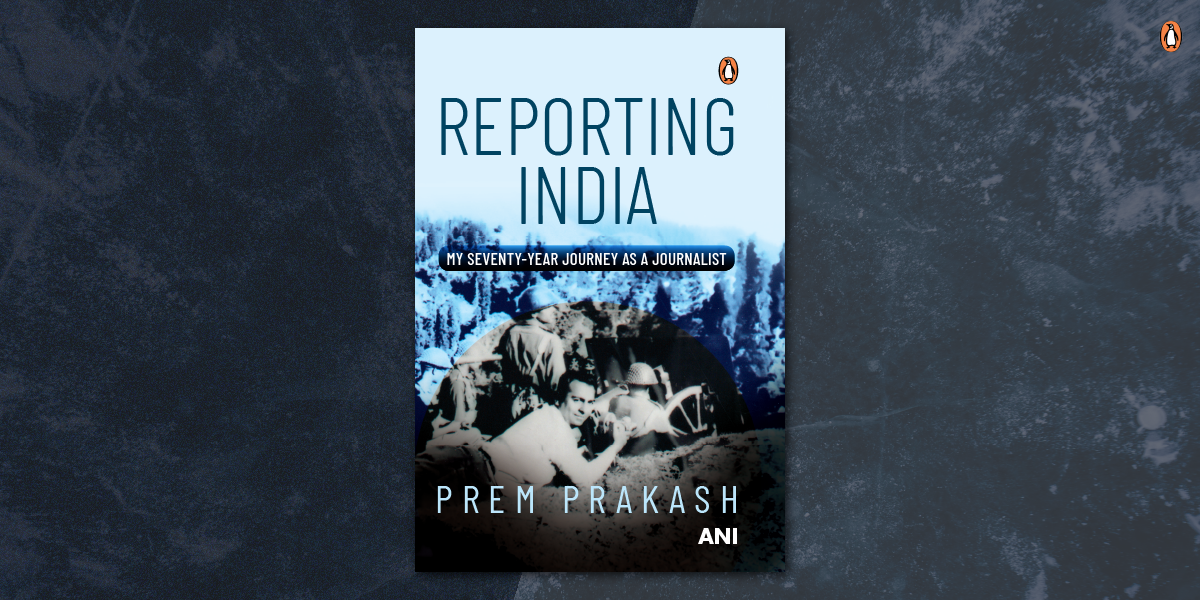


Prem Prakash watched history unfold, time and again

Having worked as a journalist for several years, Prem Prakash was witness to the turning tides of history. Read an excerpt from the account of his outstanding career and the historic moments he was a part of:


The twelfth of June 1975 was like any other summer day in Delhi— hot and humid with frequent power failures adding to the discomfort. Then there was a bolt from the blue. Suddenly, teleprinters in the newsrooms of media offices began clattering out a news alert from Allahabad. The verdict had been delivered on a lawsuit filed by the opposition’s defeated candidate, Raj Narain, against Mrs Gandhi’s election to Parliament in 1971. It was announced by Justice Jagmohan Lal Sinha. Prime Minister Indira Gandhi’s victory from Raebareli had been set aside by the Allahabad High Court following an election petition alleging malpractices and corruption.

Congress was stunned. Journalists rushed to the prime minister’s house. I was there too, along with Surinder, my colleague. Large crowds had gathered to support Mrs Gandhi, while senior Congress leaders went in and out of the house. Mrs Gandhi did not come out. The court barred Mrs Gandhi from holding elected office for six years, but it stayed the execution of the verdict to give her time to appeal against the judgment, if she chose. The media was as stunned as the government. Several were of the opinion that she should resign. By now, however, it was clear that she would put up a fight and go into appeal at the Supreme Court.

front cover Reporting India
Reporting India||Prem Prakash

After Indira Gandhi’s comprehensive victory in the 1971 Lok Sabha election, her rival, Raj Narain, had challenged the election result in the Allahabad High Court. The case had dragged on. Raj Narain insisted there were corrupt practices, but in fact there were none, except that one of Mrs Gandhi’s confidants, Yashpal Kapoor, whom I had known from Panditji’s time, was just as powerful as he used to be. This indicated that the bureaucracy believed that she hadn’t given up as yet. Raj Narain—the ‘joker in the pack’, as he was known—was elated at the verdict and demanded her resignation.

Yashpal Kapoor’s resignation came a few hours after the election was called, and he had already begun participating in the election campaign while employed by the foreign office of the government, something that the law does not permit. This was at best a technical or bureaucratic irregularity.

The case had already been argued and judgment was due towards the end of May. But the judge delayed it for some unknown reason. It was alleged that some Congressmen approached him to try and influence him in Indira Gandhi’s favour, making things worse for her. The judge was clearly peeved at this approach by the people whom he considered Mrs Gandhi’s agents.

Justice Jagmohan Lal Sinha had been avoiding public appearances for quite some time. He stayed home and called his stenographer to dictate his judgment. To guard against leakage, the judge insisted that his stenographer stay in his house. The day the dictation was completed, he asked the stenographer to disappear. That was 11 June 1975.

These are all known facts. The judgment was to be announced the next day, 12 June. Everybody across the nation was waiting. The judge arrived in court at 10 a.m., and within five minutes he allowed the petition.

The news spread like wildfire all over India and beyond. A news flash said that the court had allowed Raj Narain’s petition and found Mrs Gandhi guilty of corrupt practices. The judge then read out the judgment pronouncing Mrs Gandhi guilty on the basis of a simple technical error. It was like pronouncing a death sentence on someone for jaywalking.

Mrs Gandhi brushed aside all hints at possible corrupt practices by officials around her. At some point, when confronted with a question at a press conference as to why she was not taking steps against corruption, she had replied that corruption was a universal phenomenon. That sent a message down the line to the corrupt bureaucracy that it was okay to indulge in such practices so long as you did not get caught with your hands in the till.

After the Allahabad judgment, Mrs Gandhi was expected to resign. But she stood firm and said she would not do so, not till she went to appeal to the Supreme Court. The opposition took to the streets to protest at her challenging the judgment. This, to my mind, was totally unfair. You cannot prevent a person from exercising all their legal options. Demonstrations by the opposition, primarily led by the Jana Sangh, were not that big. These also did not resonate with the people, as by and large everyone felt that Mrs Gandhi had every right to go in for appeal.

…The Supreme Court, in its judgment on 24 June 1975, upheld the Allahabad High Court judgment, adding that Mrs Gandhi could continue as prime minister for six months and attend Parliament but not vote there. Subsequently, on 7 November 1975 (during the Emergency), the Supreme Court overturned Mrs Gandhi’s conviction in the Allahabad judgment.

Obviously, during those six months, following the Supreme Court’s conditional stay order, the prime minister’s office would be occupied by a person who was not really authorized to be there because of the Allahabad High Court order. At least this was the sensible way of looking at it—if the prime minister was disqualified she ought to resign, as the opposition insisted while holding their demonstrations.

The unrest was beginning to affect the country’s stability. The government had come to a virtual standstill, and many bureaucrats felt they were carrying out the orders of an illegal government.

Reporting India is an invaluable work, showing an intimate understanding of events we have only read about, from someone who was a part of those times.

Moving with the curve

‘Pessimism can become a self-fulfilling prophesy.’

-Martin Reeves and Jack Fuller


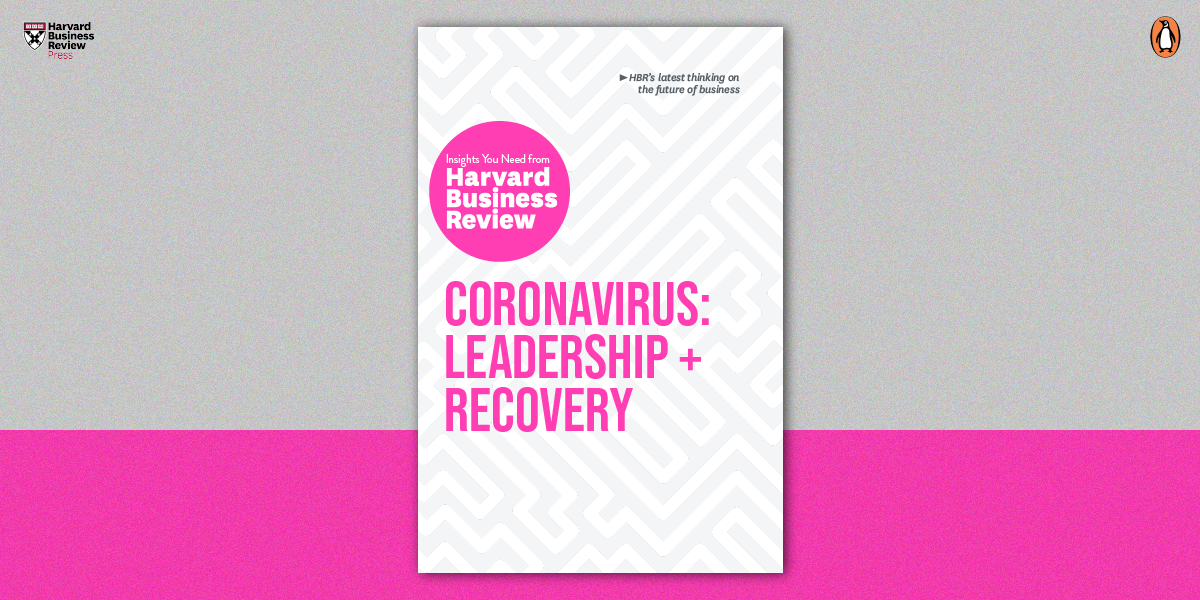
Coronavirus: Leadership and Recovery is a forward-looking work. It navigates the pandemic with innovative insights that can help businesses move ahead of crisis management at a time when imagination has become extremely crucial to problem solving. For a glimpse into the book, here is an excerpt:

~

As the coronavirus continues its march around the world, governments have turned to proven public health measures, such as social distancing, to physically disrupt the contagion. Yet doing so has severed the flow of goods and people, has stalled economies, and is in the process of delivering a global recession. Economic contagion has spread as fast as the disease itself.

This didn’t look plausible even in early March. As the virus began to spread, politicians, policy makers, and markets, informed by the pattern of historical outbreaks, looked on while the early (and thus more effective and less costly) window for social distancing closed. Now, much farther along the disease trajectory, the economic costs are much higher, and predicting the path ahead has become nearly impossible, as multiple dimensions of the crisis are unprecedented and unknowable.

Front cover - coronavirus leadership and recovery
Coronavirus: Leadership and Recovery|| Harvard Business Review

The window for social distancing—the only known approach to effectively addressing the disease—is short. In Hubei province it was missed, but the rest of China made sure not to miss it. In Italy the window was missed, and then the rest of Europe missed it too. In the United States, which was constrained by insufficient testing, the early window was also missed. As the disease proliferates, social-distancing measures will have to be enacted more broadly and for longer to achieve the same effect, choking economic activity in the process.

Another wave of infections remains a real possibility, meaning even countries that acted relatively quickly are still at risk every time they nudge their economies back to work. Indeed, we have seen resurgence of the virus in Singapore and Hong Kong. In that sense, only history will tell if their early and aggressive responses paid off.

Another wave of infections remains a real possibility, meaning even countries that acted relatively quickly are still at risk every time they nudge their economies back to work. Indeed, we have seen resurgence of the virus in Singapore and Hong Kong. In that sense, only history will tell if their early and aggressive responses paid off.

… However, we think examining various scenarios still adds value in this environment of limited visibility. The idea of “crisis management” requires no explanation right now. Something unexpected and significant happens, and our first instincts are to defend against—and later to understand and manage—the disturbance to the status quo. The crisis is an unpredictable enemy to be tamed for the purpose of restoring normality.

But we may not be able to return to our familiar precrisis reality. Pandemics, wars, and other social crises often create new attitudes, needs, and behaviors, which need to be managed. We believe that imagination—the capacity to create, evolve, and exploit mental models of things

or situations that don’t yet exist—is the crucial factor in seizing and creating new opportunities, and finding new paths to growth.

Imagination is also one of the hardest things to keep alive under pressure.

… In other words, renewal and adaptive strategies give way to classical planning-based strategies and then to visionary and shaping strategies, which require imagination.

…In a crisis, we likely won’t have immediate answers, and we therefore need to employ good questions. The most natural questions in a crisis tend to be passive, for example, “What will happen to us?” However, the possibility of shaping events to our advantage only arises if we ask active questions, such as “How can we create new options?” Creativity involves reaching beyond precedents and known alternatives to ask questions that prompt the exploration of fresh ideas and approaches.

~

Positing the power of creative imagination at the forefront, this book explicates the economic impact of the pandemic and tackles the fallout from its chokehold over businesses and economies.

The cost of freedom – Hamid Ansari’s battle for survival

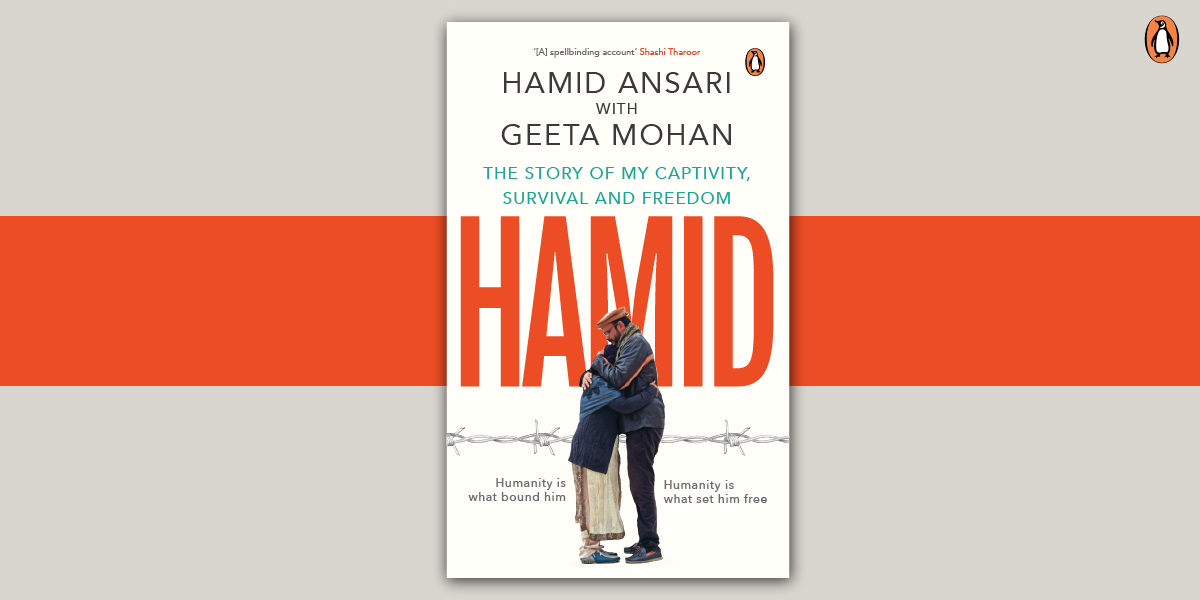
Betrayed by his friends, Hamid Ansari found himself labelled a spy by Pakistani authorities. He battled for his innocence, surviving brutal interrogation sessions and long periods of confinement. This is an important read for anyone who wishes to understand the exact machinations of the event, and how state power can irreparably alter individual lives. Here is an extract:

It was not as cold as one would have expected on 19 September 2014. Zeenat waited with her mother at the bus stop for her trip to Karak. Her mother blessed her and wished her a safe journey. ‘Be careful, Zeenat. While Fauzia needs you, your family needs you more. May Allah bring you success.’

Zeenat reached Karak and went to Atta-ur-Rahman’s residence. She paid him and he told her exactly what had happened. He mentioned Abdullah Khattak, who was to receive Hamid in Kohat and help him rescue Fiza.

With all honesty, he said that he didn’t know why and how Hamid was picked up but that he had informed Fiza’s father and that is who must have informed the authorities. ‘It could be Abdullah too, you never know,’ he added.

… Since Kohat was an hour away from Karak, she immediately took the bus there and called up Abdullah on the way, introducing herself as a journalist from Lahore, saying she wanted to meet regarding a story. He readily agreed.

They met at the bus stop and went to a dhaba nearby. Zeenat told him why she was there—to track a story about an Indian called Hamid Ansari, who had been written about in the papers. He looked worried and asked her how she knew that he was Hamid’s contact. She told him that she was following up with the family back home and they had a few numbers.

‘How did they get my number?’ He knew very well that he could be in trouble.

Zeenat figured out that he was nervous. ‘Abdullah, consider me a friend. You did what was right so you have nothing to worry about. I am just trying to join the dots. How did he manage to enter our country and what was he up to?’ she said.

Her words calmed his nerves and he told her, ‘Imagine, he thought he could just enter our country and take one of our girls from here. I made sure that didn’t happen.’

Front cover Hamid
Hamid||Hamid Ansari, Geeta Mohan

‘Good. But was she not going to be a victim of wani?’ she asked while she took out her notepad.

He nodded, embarrassed, but went on, ‘Zeenat, whatever may be the case, he shouldn’t have thought that he would get away with it. I did what I thought was right.’

… He told her about Hamid’s plans, how he had connected with him, and of Palwasha Hotel, where he was taken. He also narrated the entire episode of his arrest. Zeenat listened intently and took notes, occasionally interrupting him for details such as the address of the hotel, time of arrival, last call, etc.

…They parted ways. It was evening. But Zeenat knew what she had to do next. She went straight to Palwasha Hotel and asked the boy at the reception to call the manager. A while later, a young man stepped out.

Zeenat asked them about the Indian who had come there on 14 November 2012. The manager looked shocked but feigned ignorance. Zeenat gave him a knowing look and flashed her press card. ‘I am here to do a story and I know everything. So please share whatever information you have. Where is your guest register? Show it to me.’

He hesitated and said, ‘We are a small establishment and don’t want any trouble. Please don’t put this in the paper. We don’t want people thinking we allow shady people or terrorists in. We don’t know who or where the man was from but we did have him here around that time. He was picked up by the agencies, I think.’

She understood their concern and assured them that she was only trying to find out some details. He pulled out the register and showed it to her.

She went to the entries for 2012 and sifted through them to reach November. When she reached 13 November, she saw that the next page was for 15 November. She looked carefully and ran her fingers through the binding of the register to see the remnants of a torn page.

She looked up at the manager questioningly. He understood what she was asking and said, ‘Well, the cops had come to inquire about the man and a few days later some other officers came and tore the page out. They instructed me not to breathe a word to anyone.’

…The man was a hotel manager in a small town. He was straight in his ways and didn’t mince words. He looked down and then turned around and left, before returning with a sheet of paper in his hand.

‘I didn’t throw it away since I didn’t trust the men. In case someone else came asking for him from the agency then I would have had no proof, that is why I saved this paper. Here it is.’ He gave it to Zeenat.

She saw the paper and noticed the name of one guest registered as Hamza. The manager pointed at it and said that that was the guy. Zeenat felt that Hamid obviously must not have revealed his real name. ‘Who was here with him?’ she asked.

The younger boy who stood beside the manager said, ‘I was here that night. There was a local man called Abdullah who had booked the room in advance. This other man looked like an outsider. A city boy from Lahore or Karachi. He checked in and left immediately after. He never returned. Only cops came in late that night to collect his belongings.’

‘Where was he taken?’
The manager replied, ‘Kohat police station.’


Hamid is a tale of survival, resilience and a relentless battle against the faceless power of the state.

error: Content is protected !!