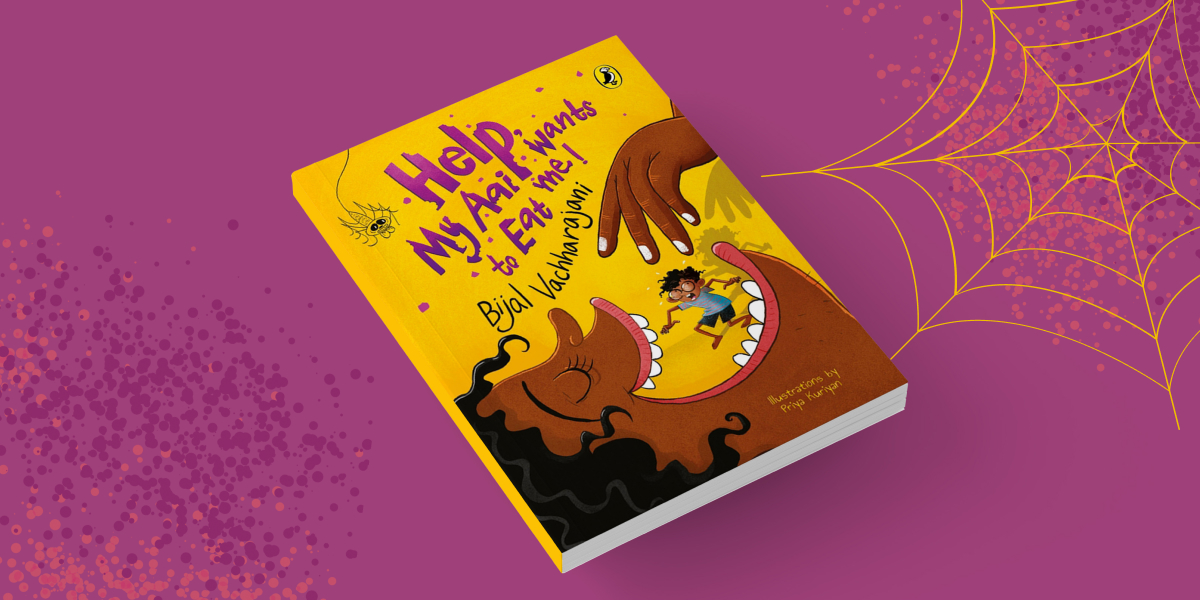
Children are imaginative and curious, which is what makes them so different from adults who almost always lead a mundane life. But what happens when a child’s brain is over-imaginative and borderline paranoid?Meet Avi, the protagonist of Help! My Aai Wants to Eat Me, who is convinced that is Aai is keen on gobbling him up, after watching a documentary that fills his mind with wild ideas. Read an excerpt from the book to find out what happened, below!
“All in all, not Avi’s favourite day.
Until it was time for environmental science a.k.a. EVS—a subject Avi LOVED.
Avi’s favourite subject, EVS
He loved it as much as figs love wasps (so much so that they let the wasp pollinate the fruit and die inside them—‘till death do us part’, just like in the movies that Baba and the Maushis watched and loved).
He loved it more than birdwatchers loved the forest owlet, which had been believed to be extinct for 113 years until it was rediscovered right here in Maharashtra—the same state that Avi lived in!
Avi loved it more than . . . well, it was his favourite subject. Unlike HJ who loved maths and art and always got 24 out of 25 marks in them. And today was EVS Film Day! Which meant they all got to watch a wildlife film instead of studying. Avi settled down next to HJ, his knees aching from having stood for thirty-four minutes outside the classroom. ‘Arre, how will I play cricket today?’
‘Yeah?’ asked HJ. ‘That bad?’ ‘Shhh . . .’ Kshama hissed like a snake and glared at the two boys. ‘Do you want to spend another class outside?’
Avi bit back a retort—Kshama was the class monitor and could easily report him and then he would have to miss EVS Film Day. He had already seen films about climate change, about a tigress called Machli, and one about ghost crabs!
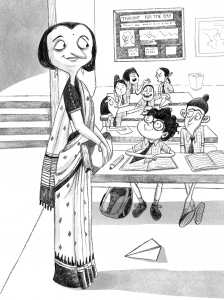
Miss Mankad
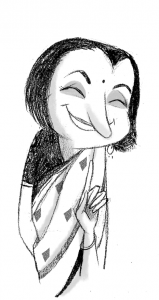
Miss Mankad, who taught EVS, walked into class. Every time Avi looked at his favourite teacher, he was reminded of a meerkat—an upright spine, broad head and large, bright eyes. Except, unlike meerkats, she was six feet and one inch tall. Clearly, she did a great job of teaching, given that Avi knew more facts about the natural world than his herd of classmates put together.
Miss Mankad shut off all the lights and Avi and Kshama closed all the curtains, turning the room into a dark den, perfect for watching a film. Even more perfect, it was about bears! Avi watched open-mouthed as jamun-like bear cubs wrestled on the screen, a mama sloth bear battled with a tiger (and won) while defending her cubs, and then . . .
SOMETHING HORRIBLE HAPPENED.
SOMETHING TERRIBLE. HORRIBLE.
DISGUSTING. EEUCHY.
Even worse than the day Avi was having. Another mama bear ate up her second-born cub.
A terrified Avi
At first, Avi thought she was licking the bear cub. But no. She just gobbled the cub up. Slurp. The baby was gone. Back into her tummy. Where he had lived for so long. Avi’s eyes widened. He gripped his pencil box tightly. What just happened? Did she . . . Really? No, that could NOT have happened. He squinted in the dark to see his classmates’ expressions. He couldn’t make out much, but did Kshama also look horrified? Or was that just her usual expression?”
As the temperature outside rises, chill out with this curated collection of new releases, which includes a plethora of genres to satiate every bibliophile’s unique taste!
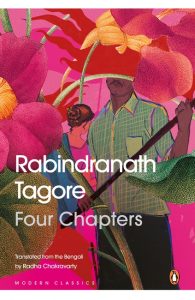
Char Adhyay (1934) was Rabindranath Tagore’s last novel, and perhaps the most controversial. Passion and politics intertwine in this narrative, set in the context of nationalist politics in pre-Independent India. Ela, a young working woman, comes under the spell of Indranath, a charismatic political activist who advocates the use of terror for the nationalist cause. She takes a vow never to marry, and to devote her life to the nationalist struggle. But she falls in love with Atindra, a poet and romantic from a decadent aristocratic family. Through their relationship, she becomes aware of the hollowness of Indranath’s politics. Afraid that she might expose them to the police, the political group gives Atin the task of eliminating Ela. In the dramatic final sequence of the novel, Ela offers herself to Atin, with tragic consequences.
This new translation, intended for twenty-first-century readers, will bring Tagore’s text to life in a contemporary idiom, while evoking the flavour of the story’s historical setting.
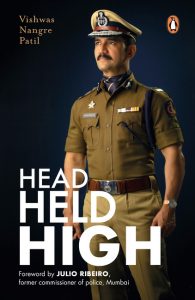
Whenever decorated officer Vishwas Nangre Patil recalls the memories of Diwali from his childhood days, the sounds of firecrackers often transform into the deafening grenade blasts from the night of 26/11. It was his grit, cultivated over the years from the neck-breaking labour of studying for the UPSC exams, that had enabled him to power on and gun down the terrorists inside the Taj Mahal Palace hotel during the 2008 Mumbai attacks.
Head Held High, translated from the Marathi book Mann Mein Hai Vishwas, is an account of IPS officer Vishwas Nangre Patil’s life-from his humble background, through school, college, long hours of studying for the UPSC examinations to the final selection to the IPS cadre and, eventually, his role in the counterterrorism operations during the Mumbai attacks. This moving and authentic account of the most formative and challenging years of his life is sure to strike a chord with those who aspire to join the Indian civil services.
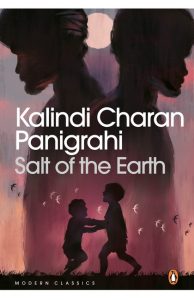
Kalindi Charan Panigrahi was a notable poet and writer in Odia. He is credited for the short but influential movement in Odia literature called the Sabuja Yug which was the age of Romanticism, inspired by Tagore’s writings. He was awarded the Padma Bhushan in 1971. Matira Manisha is his most well-known work. It has been translated into English twice before. Mrinal Sen made a film on this book and it received the National Film Award for Best Odia film in 1967.
The novel is, quite simply, the tale of two brothers, who have very different attitudes towards the land they inherit from their father. It talks about the breaking apart of the joint family and celebrates a Marxist and Gandhian approach to living.
India has a paradox of malnourishment as well as morbid obesity. While children have fewer weight-related health and medical problems than adults, overweight children are at high risk of becoming overweight adolescents and adults, placing them at risk of developing chronic diseases such as heart disease and diabetes later in life. They are also more prone to develop stress, sadness, and low self-esteem.
The contributing factors could be many, besides genetic makeup and medical factors like hypothyroidism and Cushing’s Syndrome. Children today spend far more time on screens than playing games outdoors, more so in the wake of the Covid-19 pandemic. Energy-dense foods and drinks are more readily available now than before. Psychological factors like stress also lead to overeating and increase the risk for obesity in childhood.
The book is a comprehensive roadmap for prevention and management of childhood obesity by one of India’s top bariatric surgeons. With real life case studies and examples, the book helps parents and children chart a roadmap to recovery and a fitter, healthier life. Without corrective action, there could be serious implications for future generations.
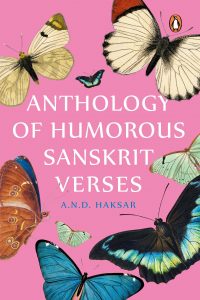
Anthology of Humorous Sanskrit Verses||A.N.D. Haksar
In recent times, whenever ancient Sanskrit works are discussed or translated into English, the focus is usually on the lofty, religious and dramatic works. Due to the interest created by Western audiences, the Kama Sutra and love poetry has also been in the limelight. But, even though the Hasya Rasa or the humorous sentiment has always been an integral part of our ancient Sanskrit literature, it is little known today.
Anthology of Humorous Sanskrit Verses is a collection of about 200 verse translations drawn from various Sanskrit works or anthologies compiled more than 500 years ago. Several such anthologies are well-known although none of them focus exclusively on humor. A.N.D. Haksar’s translation of these verses is full of wit, earthy humor and cynical satire, and an excellent addition of the canon of Sanskrit literature.
MoveMint Medicine||Dr. Rajat Chauhan, Dr Darren Player
Dr Rajat Chauhan and Dr Darren Player have seen it all. They know what it is like to break real and imaginary obstacles when it comes to exercising, whether it’s for peak performance or getting back from a disease or achieving optimal health. Drawing from a range of experiences, MoveMint Medicine empowers readers to become CEOs of their own bodies and mind-not by pushing one to the limit but by building on small victories.
Dr Chauhan and Dr Player focus on a widely ignored element of exercising: the mind. This book goes against the grain by drawing readers attention to mental health and its importance for one’s physical self. Never preachy and always funny,
MoveMint Medicine is the only book one needs to read to become a better version of oneself.
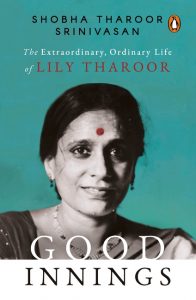
Lily Tharoor was born in a small village in Kerala in the mid-1930s. From this humble beginning, she would live around the world, raise three global citizens, and inspire multiple generations with her drive to learn and achieve. Fiercely independent and ambitious, she pushed her children, including her son Shashi, to always think outside the box. The only ground firm enough to stand on, she told them, is the one written into existence by your own hand.
In Good Innings, Shobha Tharoor Srinivasan tells her mother Lily’s ‘extraordinary, ordinary’ story through a combination of personal reflections, life lessons, and philosophical insights. The result is a collection of teachable vignettes aimed to galvanize a new generation into growth and action. Every chapter starts with an anecdote which will encourage conversations and transformations in the reader’s life. Good Innings is an intimate account of the life of a beloved matriarch with a modest background and an iron will-a woman who learned from the school of life and now has lessons to share of her own.
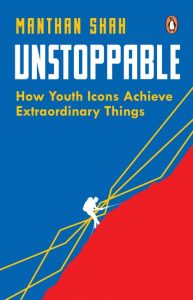
Unstoppable will take you on a journey with the best and the brightest of young Indians who overcame obstacles to achieve extraordinary success and shaped the community around them.
This new-age story of success is made interesting due to the author’s narrative, stories of young overachievers in business, sports, music, academia and entertainment, research by renowned experts in the fields of neuroscience, psychology, genealogy, social sciences and leadership, and action plans that will help you define and achieve your full potential.
If you have the drive to achieve something, this book will help you become unstoppable.
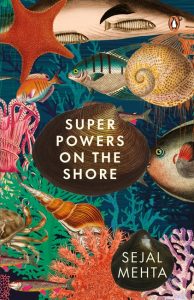
Our coasts are large, vast wildernesses that witness the mystical pageantry of life. They have given us monsters and myths, they are fathoms deep and full of whispers, home to unknown creatures and sprawling ecosystems. They are chasms of beauty and frontiers of possibility. From the space between land and sea, revealed only at low tide, comes a coruscating kaleidoscope of colours and brilliance: the intertidal zone. And the marine lifeforms of these zones are capable of superpowers. Yes, superpowers! Of the kind that comic book characters can only dream of.
The Indian coastline hosts some magnificent intertidal species: solar-powered slugs, escape artist octopuses, venomous jellies, harpooning conus sea snails, to name just a few. It is as biodiverse as a forest wildlife safari, and twice as secretive. From bioluminescence and advanced sonic capabilities to camouflage and shapeshifting, these cloaked assassins are capable of otherworldly skill. Superpowers on the Shore by Sejal Mehta is a dazzling, assured look at some of the creatures with whom we share our world, our water, our monsoons, our beaches and the sandcastles therein.
Come witness the magic of our intertidal superheroes, their fragile beauty and their iridescent drama. Put on your waterproof shoes, pack a bottle of whimsy, bring your sense of wonder. And prepare to be mesmerized.
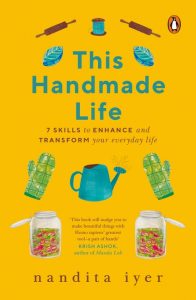
This Handmade Life is all about finding a passion and becoming really good at it. Divided into seven sections-baking, fermenting, self-care, kitchen gardening, soap-making, spices and stitching-this book tells us it is all right to slow down and take up simple projects that bring us unadulterated joy.
Written in Iyer’s signature lyrical and friendly style, the book is about hands-on activities that can be meditative and healing for the body, mind and soul. Taking the reader through myriad personal and transformative hobbies, Iyer has managed to serve up a book that is motivational and inspirational at a time when both are in short order.
Some said children were out of the question, but she is a mother of two boys.
Some said she couldn’t handle business life, but she has interviewed over a hundred CEOs, and counting.
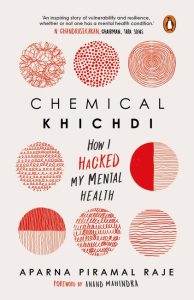
Some said she wouldn’t be able to write a book on mental health, but here it is. Aparna Piramal Raje is happy, thriving and bipolar. And this is her story.
Part memoir and part self-help guide, Chemical Khichdi provides a pathway for anyone with a mental health condition and the family, friends, colleagues, and medical professionals that love and care for them.
Empathetic, candid and accessible, it outlines ‘seven therapies’ that have enabled Aparna to ‘hack’ her mental health and find equilibrium over the years, and shows how you or someone you know can also do the same.
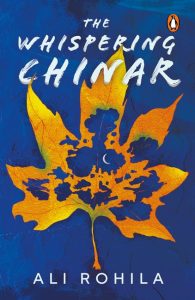
In Charbagh, Khyber-Pakhtunkhwa, a short detour from the Grand Trunk Road that leads towards Afghanistan, stands a chinar tree in the garden of Khan Mohammad Usman Khan. Legend has it that it was planted by a saint known to the grandfather of the Khan, who had told him that the family would prosper till this tree survived. The tree has stood for generations, a silent witness to the many stories of Charbagh, its grounds held sacred until the day a bullet fired by the oldest son of the Khan hit one of its branches.
In this debut collection of interlinked stories, the banker author recounts the stories as seen by the chinar tree. In Charbagh, a village where modernity slowly creeps in, there are tales of unrequited love, of family honour and religious persecution, of patriarchy and breaking its shackles, and of what it means to belong to Charbagh in tumultuous times.
Here, Fahad Khan falls in love with Saad Bibi, but it is a dangerous affair that threatens to uproot social norms. An imam competes with another for devotees, and an air-crash survivor-turned-teacher is charged with the crime of blasphemy. In Charbagh, Nazo learns why she has been sent away from her family, and Ali finds out how far friendship and trust can go. A banker struggles to make sense of his misfortunes, while Farid Khan must acquaint himself with a woman’s rejection.
Beginning from the 1970s, when the Indus was dammed near Charbagh, these stories chronicle a time and a place of belonging, of nostalgia, and of relationships and friendships. The Whispering Chinar is an extraordinary debut collection that tells stories from an unknown part of our world.
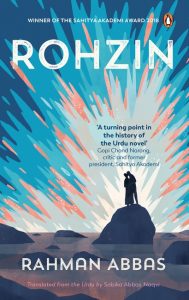
Mumbai was almost submerged on the fatal noon of 26 July 2005, when the merciless downpour and cloudburst had spread utter darkness and horror in the heart of the city. River Mithi was inundated, and the sea was furious. At this hour of torturous gloom, Rohzin begins declaring in the first line that it was the last day in the life of two lovers, Asrar and Hina.
The novel’s protagonist, Asrar, comes to Mumbai, and through his eyes the author describes the hitherto-unknown aspects of Mumbai, unseen colours and unseen secrets of the city’s underbelly.
The love story of Asar and Hina begins abruptly and ends tragically. It is love at first sight which takes place in the premises of Haji Ali Dargah.
The arc of the novel studies various aspects of human emotions, especially love, longing and sexuality as sublime expressions. The emotions are examined, so is love as well as the absence of it, through a gamut of characters and their interrelated lives: Asrar’s relationship with his teacher, Ms Jamila, a prostitute named Shanti and, later, with Hina; Hina’s classmate Vidhi’s relations with her lover and others; Hina’s father Yusuf’s love for Aymal; Vanu’s indulgence in prostitutes.
Rohzin dwells on the plane of an imagination that takes readers on a unique journey across the city of Mumbai, a highly intriguing character in its own right.
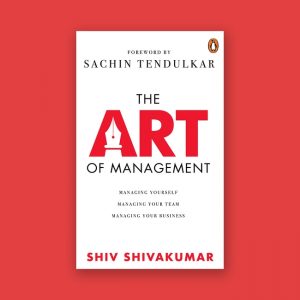
Careers are changing, and the capabilities required to stay relevant are changing even more rapidly. We seem to have endless choices, at least at the beginning of a career, but these start narrowing after middle management. How does one think about one’s own life and career in this changing decade?
In this book, Shiv Shivakumar points out that today, unlike in the past, all the three elements are your responsibility. With in-depth interviews with top leaders across the spectrum and an insightful foreword by Sachin Tendulkar, The Art of Management is a must-read.
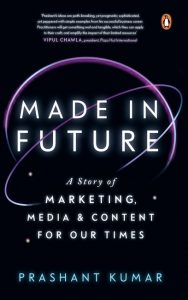
Over the last two decades, the disruption brought about by data and technology has created a wide chasm between marketing strategy and what really works in the marketplace.
Made in Future is a groundbreaking new book that seeks to recast marketing from a white sheet, with an incisive view of how vast changes in media, content, influences and people’s expectations have come together to write a new story of marketing.
The book challenges a lot of the accepted wisdom of the past, yet is brutal where the hype is ahead of substance. In the process, it offers an alternative journey that is conceptually whole, makes you think and helps you follow it all up with pragmatic decisions.
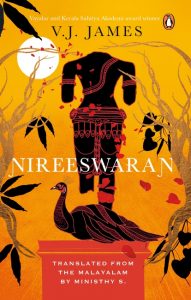
Is it possible for society to exist without religion? Nireeswaran, the most celebrated of Malayalam novelist V.J. James’ works, uses incisive humour and satire to question blind faith and give an insight into what true spirituality is.
Three atheists, Antony, Sahir, and Bhaskaran, embark on an elaborate prank to establish that God is nothing but a superstition. They instal a mutilated idol of Nireeswaran, literally anti-god, to show people how hollow their religion is. Their plan starts turning awry when miracles start being attributed to Nireeswaran-a man waking up from coma after twenty-four years, a jobless man ineligible for government employment getting a contract, a prostitute turning into a saint-leading hordes to turn up to worship the fake deity.
The trio is put in a quandary. Will they fight their own creation? Is their intractable minds an indication that atheism is a religion in itself? Belief and disbelief, it is possible, are two sides of the same coin.
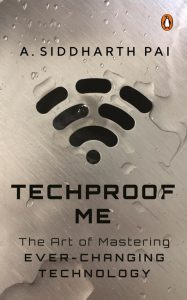
Today, we depend on technology for fulfilling almost all our needs. One thing that can be easily predicted about technology is that it is dynamic and the speed of change is intense. This book is about the new roles we need to play in our technology-oriented world. Discussing themes such as AI, machine learning and the Internet
of Things, among others, the book prepares readers for massive technology-led disruption. It provides
them with information and observations on a variety of technology-related subjects so that they can pivot
on a space as small as a coin when they need to. This book is the ultimate guide that can help readers remain relevant in the fast-changing world of technology.
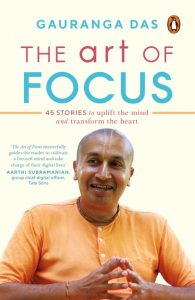
The COVID-19 pandemic has transformed the world we live in, more so than all the recent events put together. The pandemic has made humans question certain assumptions, relook at priorities and adjust life according to the new normal in the twenty-first century. As we take stock of life ahead, beyond this cusp of change, focus emerges as the fulcrum to help ease this transformation.
The Art of Focus, the second book in this three-part series, presents forty-five simple stories filled with revelations to enthral readers with learnings from the experiences of the protagonists and the dynamics of the situations that manifested in their lives.
The first book in the series, The Art of Resilience, presented ingredients to the readers to help them develop resilience in challenging situations that manifested at the start of the COVID-19 pandemic. The Art of Focus builds on the first book and inspires the resilient heart to develop a focused mind. This collective presentation will better equip the readers to take charge of their lives and adapt to the new normal effectively.
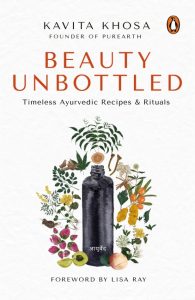
Can one make sunscreen from saffron? Can hemp oil help heal acne? How does madder root help cure hyperpigmentation? Beauty Unbottled is a unique DIY guide on how to use herbs and plants to turn your kitchen into a beauty lab. Learn how to treat hair loss, frizz, dandruff and premature greying with powerful Ayurvedic kitchen herbs. Create your own masks, moisturizers, serums and shampoos with superfoods like neem, tulsi, jasmine and sandalwood-herbs that are revered in Ayurveda. Explore the alchemy of Ayurveda and its long-lost, forgotten beauty
secrets with simple step-by-step skin and hair recipes (with vegan options) in this definitive guide and self-help book. This book will also guide you to read and understand labels, have a balanced diet for a healthy body and choose ingredients that are super effective yet gentle on you and mother earth.
Kavita Khosa, the founder of the award-winning skincare brand Purearth, brings to this book her years of experience in Ayurveda and expertise as an organic cosmetic science formulator. Beauty Unbottled debunks urban
beauty myths, drawing upon scientific research and time-honoured classic Ayurvedic texts. Rooted in Ayurveda, this book invites you to celebrate the skin you are in!
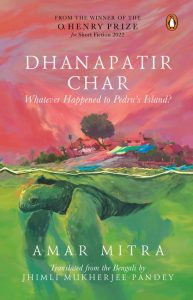
The island came out of the golden pot of Ma Kamala, which she gave to the pirate Pedru to rule. However, there are mythical and mystical elements to the story about how Dhanapati is not only the village headman but also the giant tortoise of lore that swam in from depths of the oceans and fell asleep here to be seen when the waters recede in the winter months.
Dhanapati was the last Pedru, but he was now old and blind, unable to rule his island for long. He then gifted it to his seventeen-year-old wife, Kunti. Will Dhaneshwari, the new ruler, be able to save the island and its women from the lustful eyes of the administration? Or will the government acquire the island? Or will Kunti be able to cast her spell and get the old tortoise to float away with the island on his back?
The Island of Dhanapatir combines the elements of myth, allegory and magic realism with a folklore of rare beauty.
If you find someone’s diary, would you dare open it?
Well, if you chance upon your old diary, would you dare read through your past?
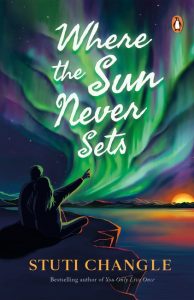
Iti is forced to move back to her hometown of Mussoorie amid worldwide lockdown to work on her first movie script. Iti’s chance encounter with her first love, Nishit, reunion with her estranged best friend, Shelly, and nights spent reading her well-kept diary, make her best memories and worst nightmares come to life. She has always run away from her past, but now has no choice.
Will reading her diary prove to be an adventure worth taking for completing the script? Will life be the same? Ever?
Set in the COVID-19 lockdown, from the national bestselling author of On the Open Road and You Only Live Once, Where the Sun Never Sets is a riveting personal account of unforgettable childhood dreams, turbulent teenage years, complicated close relationships, human resilience, and the never-ending journey of growing up.
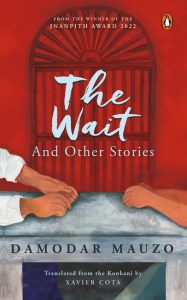
A cab driver, who assumes the identity of whoever his clients want him to be, finds himself in a tricky situation with a passenger. A late-night call leads a doctor down a path of lust and desire, but with unexpected results. A writer acquaints himself with a thief who had broken into his house. A migrant worker falls in love but wonders how he can present himself as a suitor. A young man, having lost the love of his life, takes it upon himself to resolve another couple’s dilemmas.
Konkani writer Damodar Mauzo’s sometimes bizarre, sometimes tender stories, set largely in Goa, create a world far removed from the sun and sand and the holiday resorts. Here you find villagers facing moral choices, children waking up to the realities of adult lives, men who dwell on remorse, women who live a life of regret and communities whose bonds are growing tenuous in an age of religious polarization. Probing the deepest corners of the human psyche with tongue-in-cheek humour, Mauzo’s stories reveal the many threads that connect us to others and the ease with which they can be broken. Written in simple prose and yet layered in nuances, The Wait is a collection that brings to the anglophone world one of the doyens of Konkani literature.
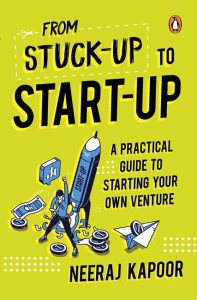
Stuck-up to Start-up is a step-by-step guide to launching your start-up without quitting your job and exploring new opportunities in a post-covid-19 world. It is suitable for those millions of professionals who are stuck in their job traps and who have dreams of starting someday but don’t know ‘how’. The book answers the ‘how to’ questions that most people have but don’t know whom to ask.
The book has been carefully crafted to become an essential handbook for students at business schools, and for every professional worth his dreams. Neeraj brings the flavour of sharing from his life that’s vivid and real to the reader, which connects with the reader and has high retention value. This enables readers to enhance their clarity, decision-making and effectiveness at work and in life to launch their start-up and rapidly scale up with ease, grace, power and freedom.
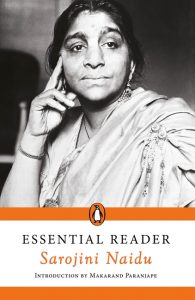
Sarojini Naidu was a prolific writer and speaker, publishing three collections of poetry during her life and delivered many rousing speeches throughout the freedom struggle and after India gained Independence. This book compiles her best-known work, as well as letters she wrote throughout her life to Mahatma Gandhi, Jawaharlal Nehru, Rabindranath Tagore and others, to provide a glimpse into the kind of person she was and the ideas she believed in.
Through these pages, we can witness her innermost thoughts and feelings, and the important role she played in shaping the country’s freedom struggle and its ideas as a young nation, particularly through rousing speeches on the Education of Indian Women and the Battle of Freedom is Over, which were broadcast over the All India Radio on 15 August 1947.
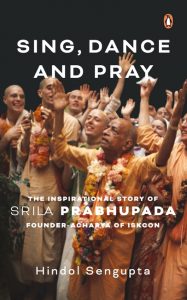
When A.C. Bhaktivedanta Swami Srila Prabhupada entered the port of New York City on 17 September 1965, few Americans took notice–but he was not merely another immigrant. He was on a mission to introduce ancient teachings of Vedic India to mainstream America. Before Srila Prabhupada passed away at the age of eighty-one on 14 November 1977, his mission was successful. He had founded the International Society for Krishna Consciousness (ISKCON), colloquially known as the ‘Hare Krishna Movement’, and saw it grow into a worldwide confederation of more than 100 temples, ashrams and cultural centers.
This is the inspirational story of Srila Prabhupada. As the founder of ISKCON, he ’emerged as a major figure of Western counterculture, initiating thousands of young Americans’.
He has been described as a charismatic leader who was successful in acquiring followers in many countries, including the United States, Europe and India. Srila Prabhupada’s story is bound to put you on a path of self-realization.
This summer, add these refreshing reads to your TBR pile and read the heat away!
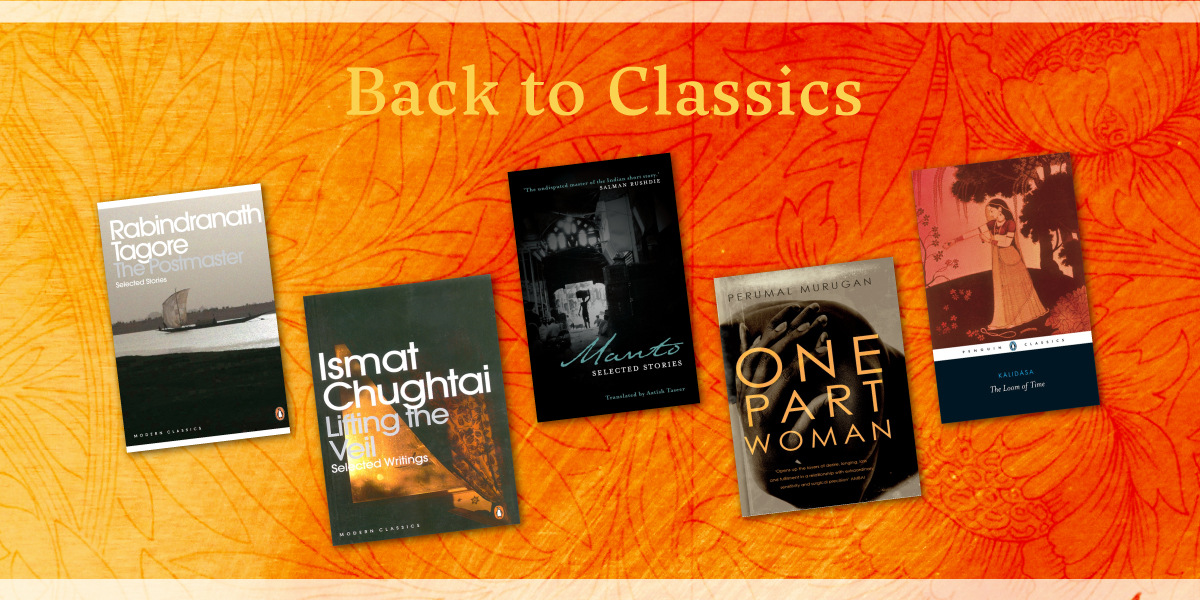
Classics are timeless reads that bring you comfort, nostalgia, and warmth to invigorate and inspire you from time to time. This World Book Day, we’re bringing you our favourite books that will stay with you for a lifetime!
Navarasa by A.N.D. Haksar
Navarasa || A.N.D. Haksar
According to Indian aesthetics, “rasa” is the sap or juice that permeates our culture, art, and helps to direct our basic human feelings. The Natya Shastra, an ancient Hindu text, first made reference to the Navarasas; our art, dance, theatre, and literature are all founded on these nine human emotions. For the first time, 99 verse translations of the nine rasas of old Hindu history are presented in Navarasa: The Nine Flavors of Sanskrit Poetry, coming soon.
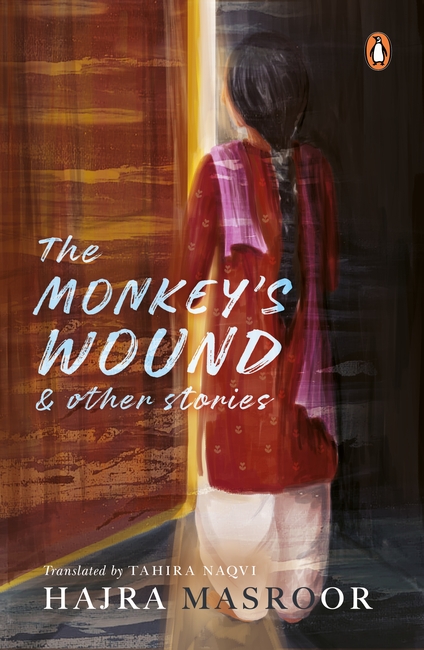
The Monkey’s Wounds by Hajra Musroor
The Monkey’s Wounds || Hajra Musroor
A compilation of sixteen short tales by Hajra Masroor called The Monkey’s Wound and Other Stories serves as an example of her unyielding voice, her piercing depictions of the bitter realities of life, and the wounds and traumas of women’s inner lives. The tales are taken from her renowned compilation of tales, Sab Afsanay Meray, and are translated from the original Urdu. They are tales that showcase Masroor at her finest.
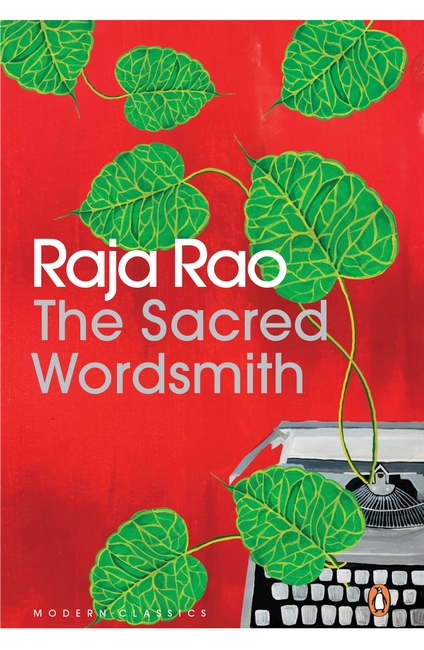
The Sacred Wordsmith by Raja Rao
The Sacred Wordsmith || Raja Rao
Raja Rao’s best works, including his autobiographical Prefaces and Introductions, are collected in The Sacred Wordsmith. The book includes a number of his well-known acceptance speeches, such as those for the Sahitya Akademi Award and Neustadt International Prize, as well as other well-known writings, including “The World is Sound,” “The Word,” “Why Do You Write?” “The West Discovers Sanskrit,” “The English Language and Us,” and “The Story Round, Around Kanthapura,” a fascinating, unpublished account of the creation of his well-known first novel.
The Postmaster by Rabindranath Tagore
The Postmaster||Rabindranath Tagore
Poet, novelist, painter and musician Rabindranath Tagore created the modern short story in India. Written in the 1890s, during a period of relative isolation, his best stories—included in this selection—recreate vivid images of life and landscapes. They depict the human condition in its many forms: innocence and childhood; love and loss; the city and the village; the natural and the supernatural. Tagore is India’s great Romantic. These stories reflect his profoundly modern, original vision. Translated and introduced by William Radice, this edition includes selected letters, bibliographical notes and a glossary.
Selected Stories by Saadat Hasan Manto
Selected Stories|| Saadat Hasan Manto
The gentle dhobi who transforms into a killer, a prostitute who is more child than woman, the cocky, young coachman who falls in love at first sight, a father convinced that his son will die before his first birthday. Saadat Hasan Manto’s stories are vivid, dangerous and troubling and they slice into the everyday world to reveal its sombre, dark heart. These stories were written from the mid 30s on, many under the shadow of Partition. No Indian writer since has quite managed to capture the underbelly of Indian life with as much sympathy and colour. In a new translation that for the first time captures the richness of Manto’s prose and its combination of high emotion and taut narrative, this is a classic collection from the master of the Indian short story.
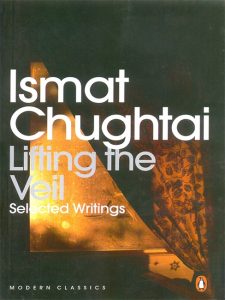
Lifting the Veil by Ismat Chughati
Lifting The Veil||Ismat Chughtai
At a time when writing by and about women was rare and tentative, Ismat Chughtai explored female sexuality with unparalleled frankness and examined the political and social mores of her time.
She wrote about the world that she knew, bringing the idiom of the middle class to Urdu prose, and totally transformed the complexion of Urdu fiction.
Lifting the Veil brings together Ismat Chughtai’s fiction and non-fiction writing. The twenty-one pieces in this selection are Chughtai at her best, marked by her brilliant turn of phrase, scintillating dialogue and wry humour, her characteristic irreverence, wit and eye for detail.
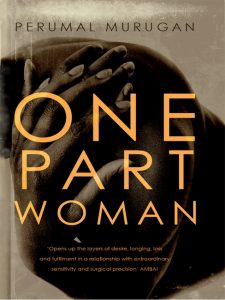
One Part Woman by Perumal Murugan
One Part Woman||Perumal Murugan
All of Kali and Ponna’s efforts to conceive a child-from prayers topenance, potions to pilgrimages-have been in vain. Despite being in aloving and sexually satisfying relationship, they are relentlessly houndedby the taunts and insinuations of the people around them.Ultimately, all their hopes and apprehensions come to converge on thechariot festival in the temple of the half-female god Ardhanareeswaraand the revelry surrounding it. Everything hinges on the one night whenrules are relaxed and consensual union between any man and woman issanctioned. This night could end the couple’s suffering and humiliation.
But it will also put their marriage to the ultimate test.Acutely observed, One Part Woman lays bare with unsparing clarity arelationship caught between the dictates of social convention and the tugof personal anxieties, vividly conjuring an intimate and unsettling portraitof marriage, love and sex.
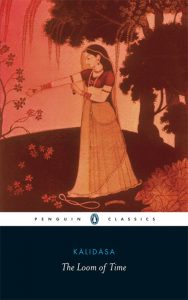
Loom of Time by Kalidasa
Loom Of Time||Kalidasa
Kalidasa is the greatest poet and playwright in classical Sanskrit literature and one of the greatest in world literature. Kalidasa is said to have lived and composed his work at the close of the first millennium BC though his dates have not been conclusively established. In all, seven of his works have survived: three plays, three long poems and an incomplete epic. Of these, this volume offers, in a brilliant new translation, his two most famous works, the play Sakuntala, a beautiful blend of romance and fairy tale with elements of comedy; and Meghadutam (The Cloud Messenger), the many-layered poem of longing and separation.
Also included is Rtusamharam (The Gathering of the Seasons), a much-neglected poem that celebrates the fulfillment of love and deserves to be known better. Taken together, these works provide a window to the remarkable world and work of a poet of whom it was said: Once, when poets were counted, Kalidasa occupied the little finger; the ring finger remains unnamed true to its name; for his second has not been found.
Loved these recommendations?
Head over to our Instagram for regular updates about amazing books and refreshing book recommendations. Happy World Book Day!
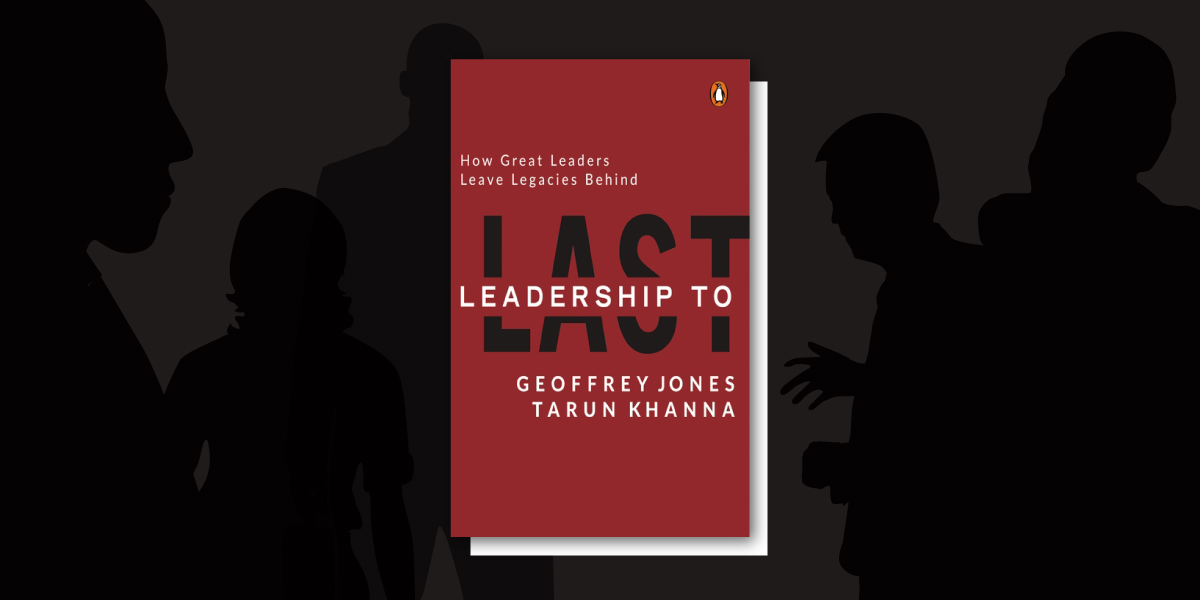
Have you ever wondered what inspires the most iconic leaders you know today to build empires and legacies that last for decades?
Leadership To Last||Geoffrey Jones, Tarun Khanna
Leadership is multifaceted and multi-dimensional. It is not a linear function: it exists and thrives in every aspect of a leaders’ life, be it personal or professional. In Leadership to Last by Tarun Khanna and Geoffrey Jones, the lasting aspect of wonderful leaderships that ultimately turn into legacies is highlighted. Through several interviews with leaders, entrepreneurs, and successful visionaries which include the likes of Ratan Tata, Adi Godrej, Shabana Azmi, Ela Bhatt, Seema Aziz, Narayana Murthy, and many more!
What sets Leadership To Last apart from other books that talk about leadership is its diversity in setting and a unique interview-like approach. Through these interviews, you are transported to a completely different world, and it’s almost as if you’re in the same room as the leader you’re reading about!
Emphasizing what makes this a riveting read for people from all walks of life, the co-authors also highlight how the focus of the book is on the long durée. By selecting cases that have led to lasting institutional changes, triggered by individuals over multiple decades, the book brings out what truly helps successful leaderships become long-lasting legacies!
Divided into 7 sections that talk about different factors that help create iconic legacies, Leadership to Last also helps you understand the importance of aspects such as managing families, committing to values, innovating for impact, contesting corruption, challenging gender stereotypes, promoting inclusion, and creating value responsibly.
Finally, the learnings from comprehensive interviews of different leaders are summarized to help you understand their experiences better, while also creating a lasting impact through a skillful writing style.
Learn how great leaders leave legacies behind, and everything in between with Leadership to Last!
It’s time to make new friends from different parts of our planet and go on adventures near and far with 30 stories bursting with intrigue, curiosity and wonder! Sift through the beautifully illustrated pages of The Book of Cultures and become a globetrotter as you travel from Japan to Peru and South Africa to Denmark, and learn about diverse cultures, customs, traditions and more.
Here’s an excerpt from this book about the Maldives Island in which Akilah, along with her sea creature friends, try to save the island.
*
The Book of Cultures || Evi Triantafyllides, Nefeli Malekou
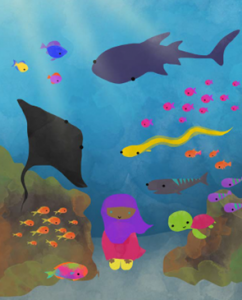
Akilah loved water. So much, that everyone called her a sea creature. She had an entire life under water. She went for long swims with her best friends, Stingray, Parrotfish, Turtle and Barracuda. In the sandcastles she built, she hid treasures she collected on their adventures. Sometimes, she even prayed under the sea.
When she found out that her island was slowly sinking, she wasn’t that worried. “Breaking news: Global warming means that icebergs are melting and sea levels are rising. The Maldives Islands, only a few feet above the sea, are in danger of disappearing under water forever,” the news anchor warned. There’s so much splendor under water, life there would be a delight, Akilah thought. But only she felt this way. “Some islands have already gone under water!” her parents confirmed. Even the neighbor, Ms. Sing Song, whose laughter penetrated through their walls, had become awfully quiet lately.
Akilah came up with a spectacular idea. Stingray, Parrotfish, Turtle and Barracuda joined to help, too. Soon, Akilah and the fish had built a wonderful underwater island. “Everyone can move here. We can call it the Island of Hope,” she said. She even made two houses next to each other, so that they could hear Ms. Sing Song laugh again.
But the more time she spent at the Island of Hope, the more she realized it simply wasn’t home. When she tried to sketch, the paper melted, and her crayons lost their color. And eating was particularly hard—water made the food all soggy. “Yuck!”
“I don’t want to leave my house,” she admitted. “We need a new idea. And this time, we need all the fish force we can get.” Stingray, Parrotfish, Turtle and Barracuda called their friends from across the Indian ocean. Within hours, so many fish squeezed and squished next to each other, you could barely see the ocean’s blue. If only these many people could help, she thought. Wait a minute, I know. “I have a message. It needs to be delivered to all corners of the planet. Please pass it along,” she asked the fish. I really love my home. I don’t want to lose it. But rising seas might make it sink under water. If every single one of you made even the smallest changes, then my house, the Maldives and the environment could be saved! What do you say? Will you help?
That night, the fish swam and swam. They passed on her message to thousands of other fish, who passed it onto millions of other fish, hoping that soon, it would reach buddies all across the world, just like you.
**
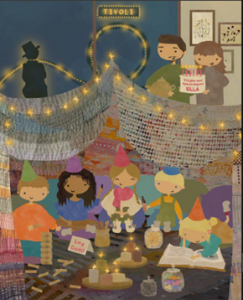
Now here’s a glimpse of Ella’s birthday in Denmark.
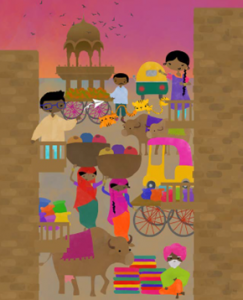
Before you go, peep into Suhail’s and Neha’s surroundings in India.
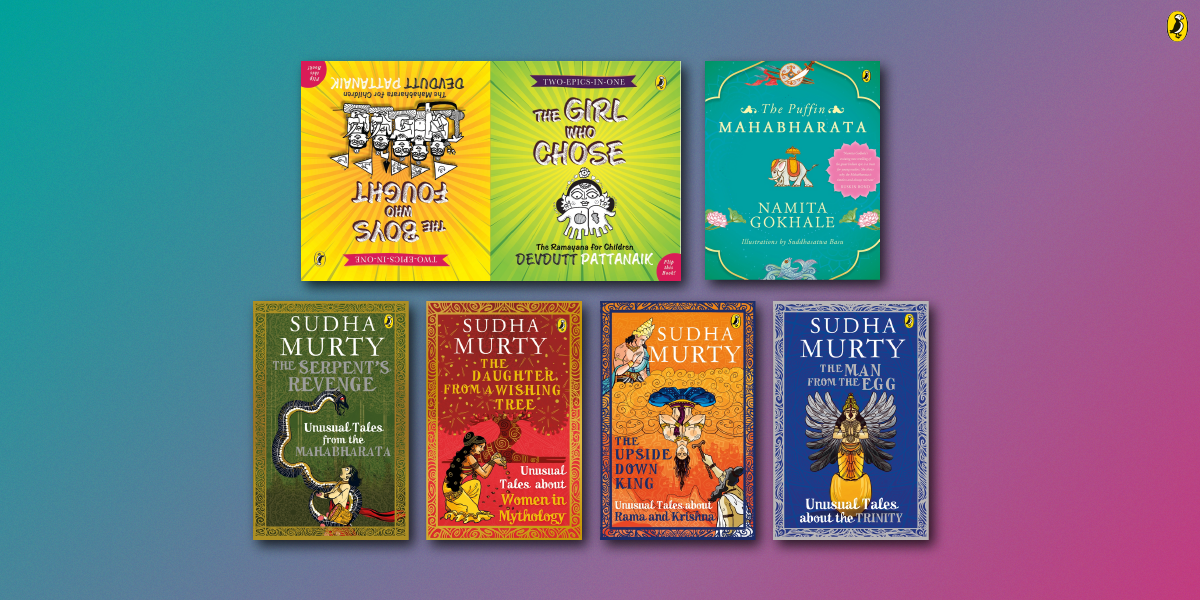
From fierce women warriors to never-told-before stories behind your greatest epics, we are bringing to you some eternal tales to introduce the next generation of readers to!
Scroll down for stories of EPIC proportions!
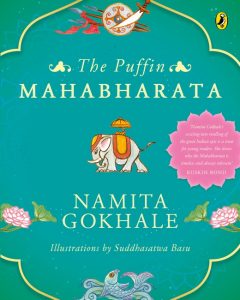
The Puffin Mahabharata by Namita Gokhale
The Puffin Mahabharata || Namita Gokhale (Author), Suddhasattwa Basu (Illustrator)
‘A long, long time ago, in the ancient lands of India, known in those days as Bharatvarsha, a family quarrel grew into a bloody war. There had been wars before, and there have been wars since, but that mighty battle between warring cousins of the Kuru clan has become a part of the mythology and history of India. Told and retold a million times, the story of the Mahabharata is about defeat as much as victory, about humility as much as courage. It is the greatest story ever told.’
Like a modern-day suta or storyteller, Namita Gokhale brings alive India’s richest literary treasure with disarming ease and simplicity.
*
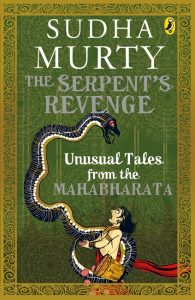
The Serpent’s Revenge: Unusual Tales from the Mahabharata by Sudha Murty
The Serpent’s Revenge || Sudha Murty
How many names does Arjuna have?
Why was Yama cursed?
What lesson did a little mongoose teach Yudhisthira?
Award-winning author Sudha Murty reintroduces the fascinating world of India’s greatest epic through the extraordinary tales in this collection, each of which is sure to fill you with a sense of wonder and bewilderment.
*
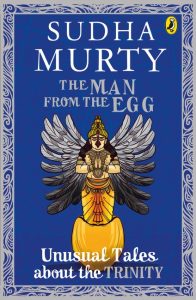
The Man from the Egg: Unusual Tales about the Trinity by Sudha Murty
The Man from the Egg || Sudha Murty
Did you know that Brahma once had five faces?
Why do snakes have a forked tongue?
Do gods cheat?
Why does Shiva sport a crescent moon on his head?
Sudha Murty walks by your side, weaving enchanting tales of the three most powerful gods from the ancient world. Each story will take you back to a magical time when people could teleport, animals could fly and reincarnation was simply a fact of life.
*
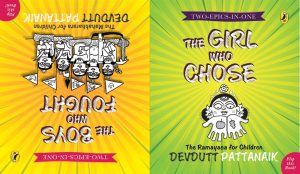
Two-Epics-in-One (The Girl Who Chose and The Boys Who Fought) by Devdutt Pattanaik
Two-Epics-in-One || Devdutt Pattanaik
What were Sita’s choices?
What was the outcome of the fight of the five brothers against a hundred princes?
A tale told two thousand years ago, of Ram and Ravan-the sun-prince of Ayodhya who follows the family rules and the king of Lanka who had little respect for others’ choices-is one that has been reinterpreted in myriads of ways, exalting the virtues of the princes. Few notice, however, that the story is actually lead by the girl who chose, Sita.
The other is the tale of the five Pandavas and their cousins, the hundred Kauravas, who threw out the family morals. Instead of taking care of their five orphaned cousins, the princes burnt their house, abused their wife and stole their kingdom. This is the saga of the boys who fought not for revenge but for dharma.
The country’s favourite mythologist, Devdutt Pattanaik, empowers and entertains with a double bill of the Ramayana and the Mahabharata for a whole new generation of readers!
*
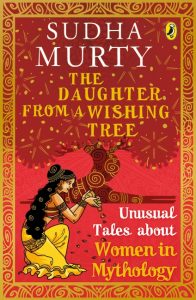
The Daughter from a Wishing Tree: Unusual Tales about Women in Mythology by Sudha Murty
The Daughter from a Wishing Tree || Sudha Murty
Did you know that the Trinity often turned to goddesses to defeat the asuras?
Did you know that the first clone in the world was created by a woman?
The women in Indian mythology might be fewer in number, but their stories of strength and mystery in the pages of ancient texts and epics are many. They slayed demons and protected their devotees fiercely. From Parvati to Ashokasundari and from Bhamati to Mandodari, this collection features enchanting and fearless women who frequently led wars on behalf of the gods, were the backbone of their families and makers of their own destinies.
*
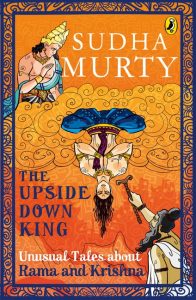
The Upside-Down King: Unusual Tales about Rama and Krishna by Sudha Murty
The Upside Down King || Sudha Murty
Did you know there was a time when bears spoke, the moon laughed and babies were found inside fish?
Have you heard of the two-horned sage who had never seen a woman in his life?
Did you know Ravana’s half-brother was the god of wealth?
Have you ever seen a man with a thousand arms?
The tales in this collection surround the two most popular avatars of Lord Vishnu-Rama and Krishna-and their lineage. Countless stories about the two abound, yet most are simply disappearing from the hearts and minds of the present generation.
Wondering how to spend one more month at home? Wonder no more! October is here and so is a brand-new list! Our new releases will keep you and your beloved young readers company and take you on a varied and delightful literary adventure. Tuck in with this list!
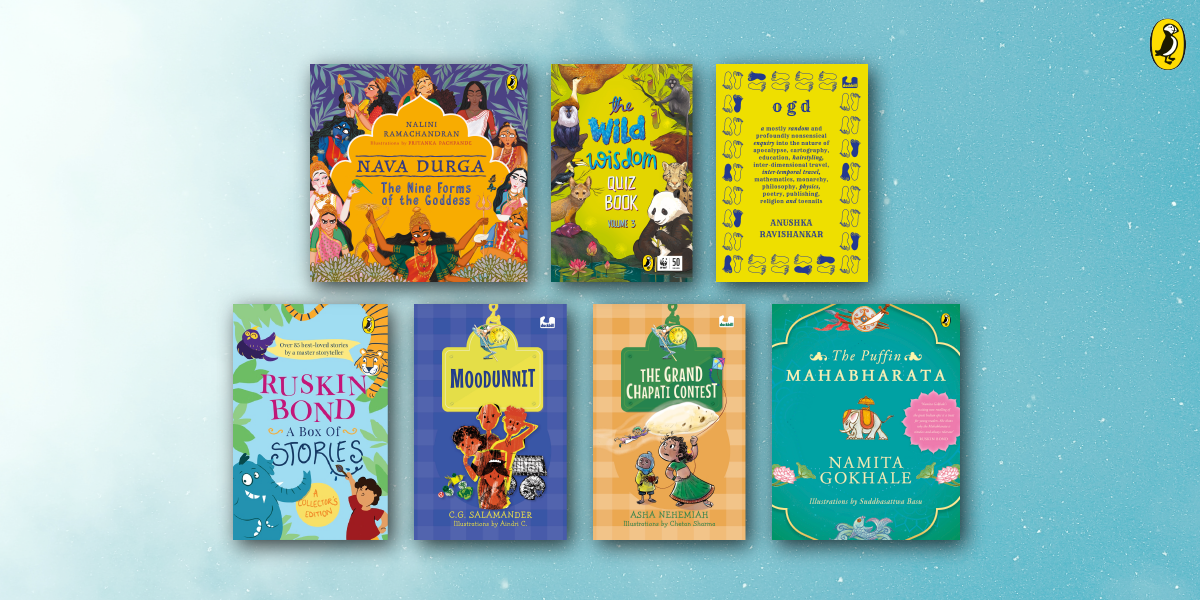
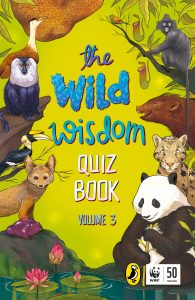
The Wild Wisdom Quiz Book Volume 3
By WWF
The Wild Wisdom Quiz Book Volume 3 || WWF
Which colour cannot be seen by bees?
What are fossilized dinosaur droppings called?
Delve deeper into the world of animals, plants and more with this indispensable quiz book that helps you explore our planet’s natural beauty and myriad facets. Based on India’s only international-level quiz on wildlife, The Wild Wisdom Quiz Book Volume 3 is packed with exciting new chapters on biomimicry, evolution, conservation heroes and so much more.
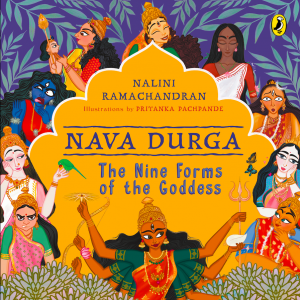
Nava Durga – The Nine Forms of the Goddess
By Nalini Ramachandran
Illustrated by Priyanka Pachpande
Nava Durga || Nalini Ramachandran
Durga, is a powerful warrior-goddess with nine special forms!
Shailaputri, Brahmacharini and Chandraghanta,
Kushmanda and Skandamata,
Katyayani and Kaalratri,
Maha Gauri and Siddhidatri . . .
Each form is unique and together they are the Nava Durga. This is their story!
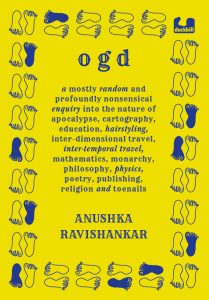
Ogd
By Anushka Ravishankar
OGD || Anushka Ravishankar
Once upon a time, in the kingdom of Ogd, a messiah was born, with her foot in her mouth. She travels through many dimensions, and teaches us about the nature of apocalypse, cartography, education, inter-dimensional travel, mathematics, monarchy, philosophy, physics, poetry and toenails. A seemingly nonsensical enquiry into things which addresses complex issues of the world.
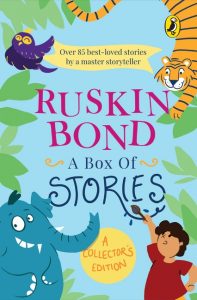
A Box of Stories: A Collector’s Edition
By Ruskin Bond
A Box of Stories || Ruskin Bond
Featuring some of Ruskin Bond’s finest stories, poetry and non-fiction pieces, this special collector’s edition brings together the best works of India’s best-loved author. Included in the collection are the two treasuries The Room of Many Colours and Uncles, Aunts and Elephants. With illustrations and a varied group of characters, this box set is a perfect collection for fans of the master storyteller.
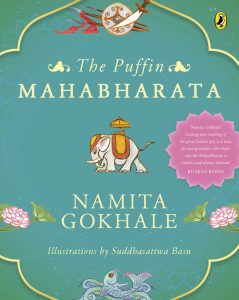
The Puffin Mahabharata
By Namita Gokhale
Illustrated by Suddhasattwa Basu
The Puffin Mahabharata || Namita Gokhale
‘A long, long time ago, in the ancient lands of India, known in those days as Bharatvarsha, a family quarrel grew into a bloody war… That mighty battle between warring cousins of the Kuru clan has become a part of the mythology and history of India. The story of the Mahabharata is about defeat as much as victory, about humility as much as courage. It is the greatest story ever told.’
This is a retelling of a timeless tale in a clear, contemporary style. It brings the epic to life through brilliant illustrations, and is a treat to be cherished.
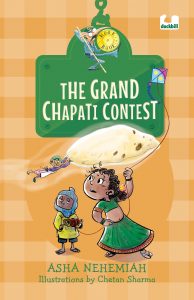
The Grand Chapati Contest
By Asha Nehemiah
Illustrated by Chetan Sharma
The Grand Chapati Contest || Asha Nehemiah
When the Royal Chapati Cook quits, there is no one to make the fluffy-puffy chapatis that the king loves. Can they find another champion chapati maker at the Grand Chapati Contest?
In this Hook Book, join Hawaldar Hook as he takes our little friends (aged 5 and above) on a colourful journey!
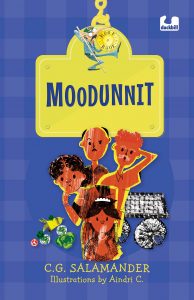
Moodunnit
By C.G. Salamander
Illustrated by Aindri C.
Moodunnit || C.G. Salamander
Hawaldar Hook is back with another adventure!
The vegetables from Ammu’s parents’ cart have disappeared! Who could have stolen them? Amma and Appa are sure the thief comes in a helicopter. But Ammu, following a trail left by the thief, finds some very strange clues …
Come join us as we try to find out where these vegetables are going!