



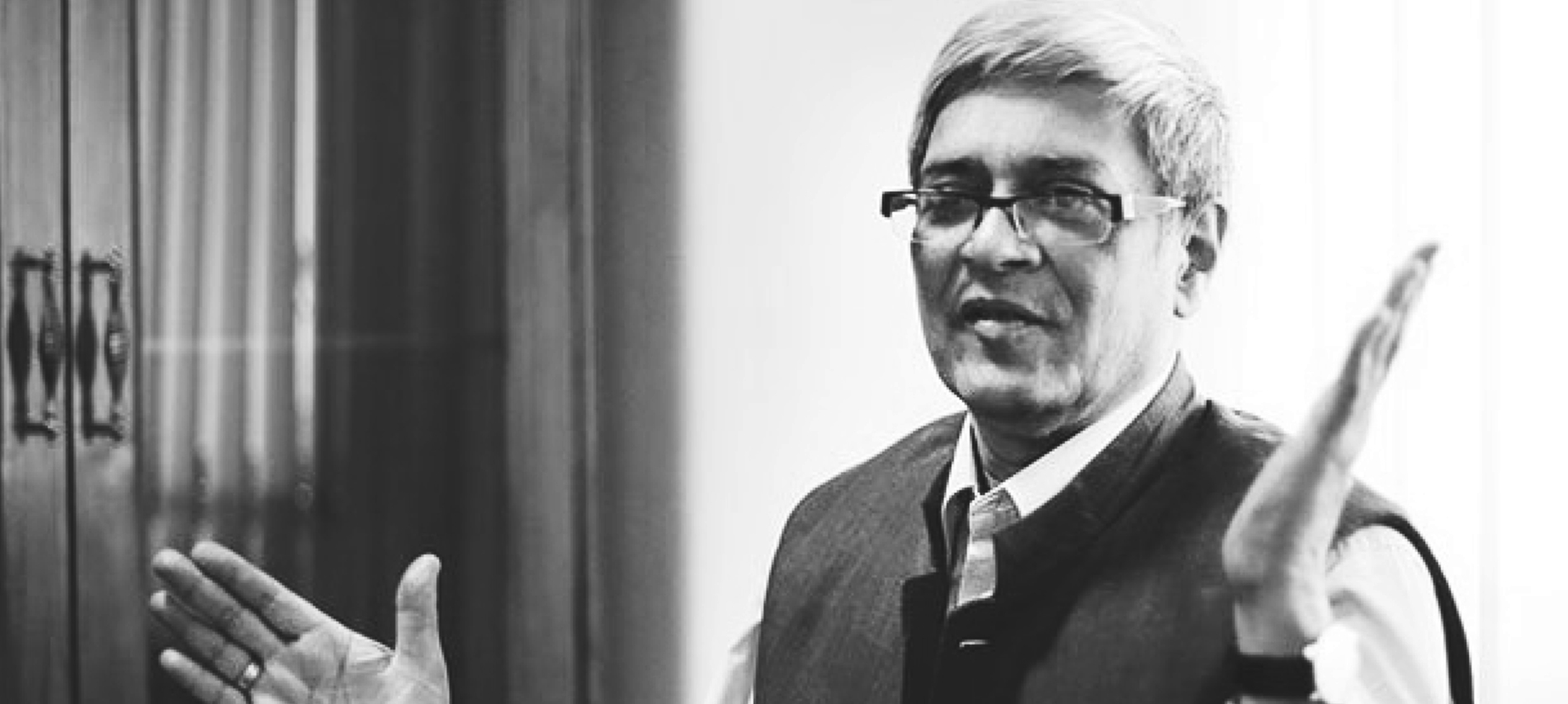
By Bibek Debroy:
There are many versions of the Ramayana and not all are in Sanskrit. However, the Valmiki Ramayana, composed by the sage Valmiki in Sanskrit, is clearly the oldest. It is the oldest surviving version. Perhaps the story was already known and Valmiki simply retold it in the form of a beautiful composition. Therefore, he may not have been the first person to tell the story. We shall never know. Nor is it important to know that to appreciate the Valmiki Ramayana.
Indeed, we are not quite sure about what Valmiki composed. In those days, there was no writing. In the process of oral transmission, subsequent composers added their own embellishments. Today, the text of the Sanskrit Valmiki Ramayana has around 24,000 shlokas, a shloka being a verse. These 25,000 shlokas are distributed across seven kandas – Bala Kanda (Book about Youth), Ayodhya Kanda (Book about Ayodhya), Aranya Kanda (Book of the Forest), Sundara Kanda (Book of Beauty), Yuddha Kanda (Book about the War) and Uttara Kanda (Book about the Sequel). Kanda refers to a major section or segment and is sometimes translated into English as Canto. “Canto” sounds archaic, “Book” is so much better. This does not mean the kanda-wise classification always existed. For all one knows, initially, there were simply chapters. Most scholars agree Uttara Kanda was written much later. It doesn’t quite belong. This isn’t only because of the content. It is also because of the texture of the text, the quality of the poetry. It is vastly inferior. To a lesser extent, one can also advance similar arguments for the Bala Kanda. Therefore, the earlier portions of the Valmiki Ramayana were probably composed around 500 BCE. The later sections, like the Uttara Kanda, and parts of the Bala Kanda, were probably composed around 500 ACE. It isn’t the case that all later sections are in Uttara Kanda.
The translation published by Penguin in three volumes is of the Valmiki Ramayana. It is necessary to stress this point. The Ramayana story is so popular that one is familiar with people, stories and incidents. That doesn’t necessarily mean those people, stories and incidents occur in the Valmiki Ramayana in the way we are familiar with them, our familiarity based on other versions of the Ramayana story. Even within the Sanskrit Valmiki Ramayana, there are many different manuscripts. Between 1951 and 1975, the Oriental Institute, Baroda, produced a Critical Edition of the Valmiki Ramayana. This translation is based on that Critical Edition, published sequentially between 1958 and 1975. Producing a Critical Edition meant sifting through a large number of manuscripts of the Valmiki Ramayana. The editors had around 2000 manuscripts to work with. It is not that there were significant differences across the manuscripts and broadly, there was a Southern Recension (version) and a Northern one, the latter sub-divided into a North Western and a North Eastern one. The earliest of these written manuscripts dates to the 11th century CE. In passing, the language may have been Sanskrit, but the script wasn’t always devanagari. There were scripts like Sharada, Mewari, Maithili, Bengali, Telugu, Kannadi, Nandinagari, Grantha and Malayalam. The translation published by Penguin is based on the Baroda Critical Edition. To repeat what I have already said, some Ramayana stories and incidents we are familiar with, many not exist in this version.
The Valmiki Ramayana consists of beautiful poetry. Valmiki is the first poet, ad kavi. The story of how it came about is known to most people who are familiar with the Ramayana. The sage Valmiki had gone, with his disciple Bharadvaja, to bathe in the waters of the River Tamasa. There was a couple of curlew birds there, in the act of making love. Along came a hunter and killed the male bird. As the female bird grieved, Valmiki was driven by compassion and the first shloka emerged from his lips. Since it was composed in an act of sorrow (shoka), this kind of composition came to be known as shloka. So the Ramayana tell us. It is impossible to capture the beauty of this poetry in an English translation. As composers, there is quite a contrast between Valmiki and Vedavyasa, the author of the Mahabharata. Both texts are in the form of poetry and both composers were poets, but there the similarity ends. Vedavyasa focuses on people and incidents. Rarely does the Mahabharata attempt to describe nature, even if those sections are on geography. In contrast, Valmiki’s descriptions of nature are lyrical and superlative, similar to Kalidasa. A translation can never hope to transmit that flavor. There is no substitute to reading the original Sanskrit, more so for the Valmiki Ramayana than for the Mahabharata.
As with the Mahabharata, the Valmiki Ramayana is a text about dharma. Dharma means several different things – the dharma of the four varnas and the four ashramas; the governance template of raja dharma, the duty of kings; principles of good conduct (sadachara); and the pursuit of objectives of human existence (purushartha) – dharma, artha and kama. As with the Mahabharata, the Valmiki Ramayana is a smriti text. It has a human origin and composer, it is not a shruti text. Smriti texts are society and context specific. We should not try to judge and evaluate individuals and actions on the basis of today’s value judgements. In addition, if the span of composition was one thousand years, from 500 BCE to 500 ACE, those value judgements also change. Transcending all those collective templates of dharma, there is one that is individual in nature. Regardless of those collective templates, an individual has to decide what the right course of action is and there is no universal answer as to what is right and what is wrong. There are always contrary pulls of dharma, with two notions of dharma pulling in different directions. It is not immediately obvious which is superior. Given the trade-offs, an individual makes a choice and suffers the consequences. Why is there an impression that these individual conflicts of dharma are more manifest in the Mahabharata than in the Ramayana?
The answer probably lies in the nature of these two texts. What is the difference between a novel and a long story, even when both have multiple protagonists? The difference between a novel and a long story is probably not one of length. A novel seeks to present the views of all protagonists. Thus, the Mahabharata is a bit like a novel, in so far as that trait is concerned. A long story does not seek to look at incidents and action from the point of view of every protagonist. It is concerned with the perspective of one primary character, to the exclusion of others.
If this distinction is accepted, the Valmiki Ramayana has the characteristics of a long story. It is Ramayana. Therefore, it is primarily from Rama’s point of view. We aren’t told what Bharata or Lakshmana thought, or for that matter, Urmila, Mandavi or Shrutakirti. There is little that is from Sita’s point of view too. That leads to the impression that the Mahabharata has more about individual conflicts of dharma. For the Valmiki Ramayana, from Rama’s point of view, the conflicts of dharma aren’t innumerable. On that exile to the forest, why did he take Sita and Lakshmana along with him? Was Shurpanakha’s disfigurement warranted? Why did he unfairly kill Vali? Why did he make Sita go through tests of purity, not once, but twice? Why did he unfairly kill Shambuka? Why did he banish Lakshmana? At one level, one can argue these are decisions by a personified divinity and therefore, mere humans cannot comprehend and judge the motives. At another level, the unhappiness with Rama’s decisions led to the composition of alternative versions of the Ramayana. Note that Sita’s questions about dharma remained unanswered. If you are going to the forest as an ascetic, why have you got weapons with you? If the rakshasas are causing injuries to hermits, punishing the rakshasas is Bharata’s job, now that he is the king. Why are you dabbling in this? Note also Rama’s justification at the time of Sita’s first test. It wasn’t about what others would think, that justification came later. The initial harsh words reflected his own questions about Sita’s purity. Thus, Rama’s conflicts over dharma also exist. It is just that in the Valmiki Ramayana, it is about one individual alone.
In conclusion, this translation is an attempt to get readers interested in reading the unabridged Valmiki Ramayana. Having read abridged versions, and there is no competition with those, to appreciate the nuances better, one should read the unabridged. And, to appreciate the beauty of the poetry, one should then be motivated to read the text in the Sanskrit. A translation is only a bridge and an unsatisfactory one at that.
——————————
Bibek Debroy (Tr.) is a renowned economist, scholar and translator. He is also a Research Professor (Centre for Policy Research) and a columnist with Economic Times. His majestic new translation The Valmiki Ramayana, can now be relished by a new generation of readers.

Tag: author
The man who gave us a magical childhood – Happy Birthday, Lewis Carroll!
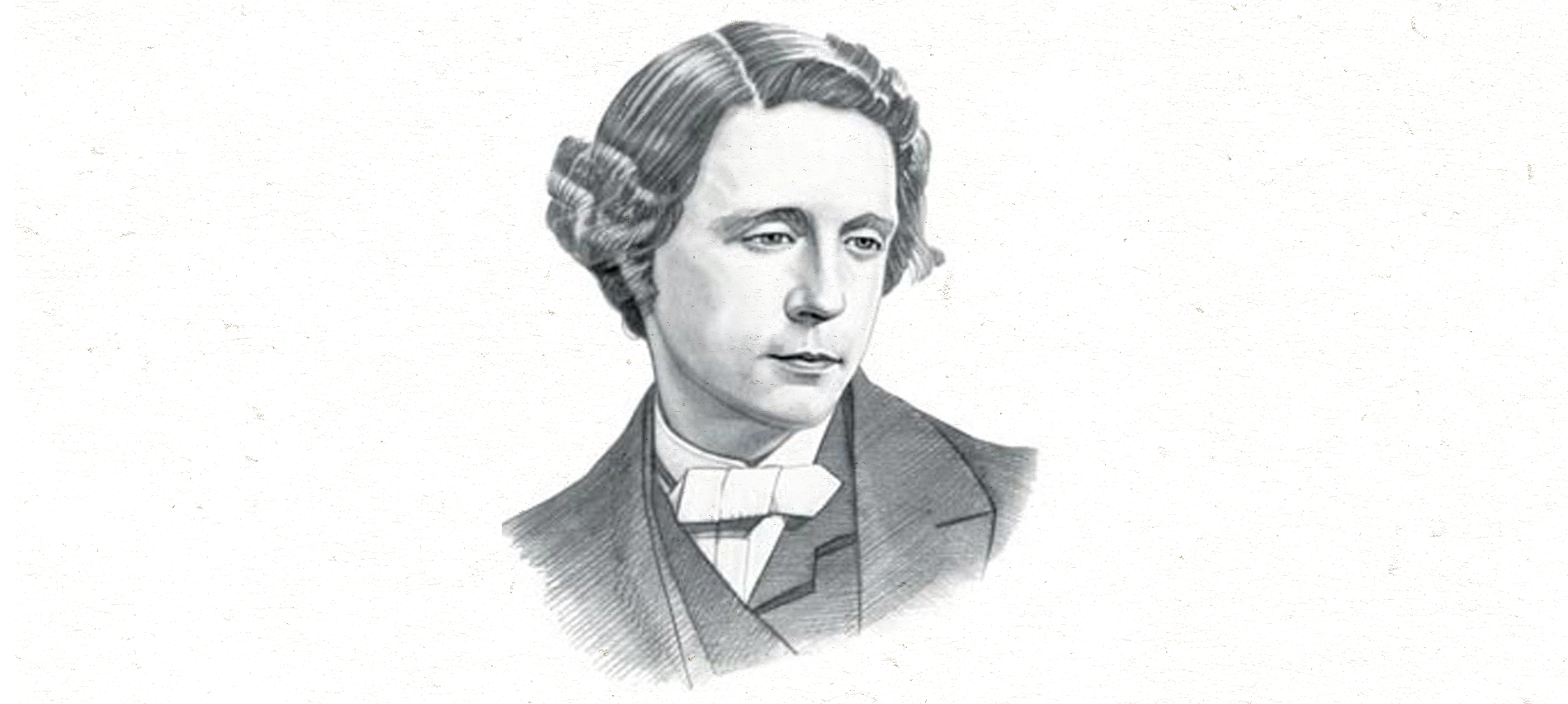
Extremely versatile, gifted and having the rare ability of creating a world of fantasy, Lewis Carroll (Charles Lutwidge Dodgson) has been one of the most cherished writers who with his literary talents has left an indelible mark in the pages of history. His best-known works are, Alice’s Adventures in Wonderland (1865) and Through the Looking-Glass, And What Alice Found There (1872). Today, as we celebrate his birthday, let’s read one of his most beautiful and sublime poems, My Fancy.
I painted her a gushing thing
With years about a score;
I little thought to find they were
A least a dozen more;
My fancy gave her eyes of blue,
A curly auburn head:
I came to find the blue a green,
The auburn turned to red.
She boxed my ears this morning,
They tingled very much;
I own that I could wish her
A somewhat lighter touch;
And if you ask me how
Her charms might be improved,
I would not have them added to,
But just a few removed!
She has the bear’s ethereal grace,
The bland hyaena’s laugh,
The footstep of the elephant,
The neck of a giraffe;
I love her still, believe me,
Though my heart its passion hides;
“She’s all my fancy painted her,”
But oh! how much besides!
With numerous fantastical and adored stories, Lewis Carroll’s quirky and larger-than-life characters continue to intrigue, through generations, both children and adults alike.
A Dream Within a Dream
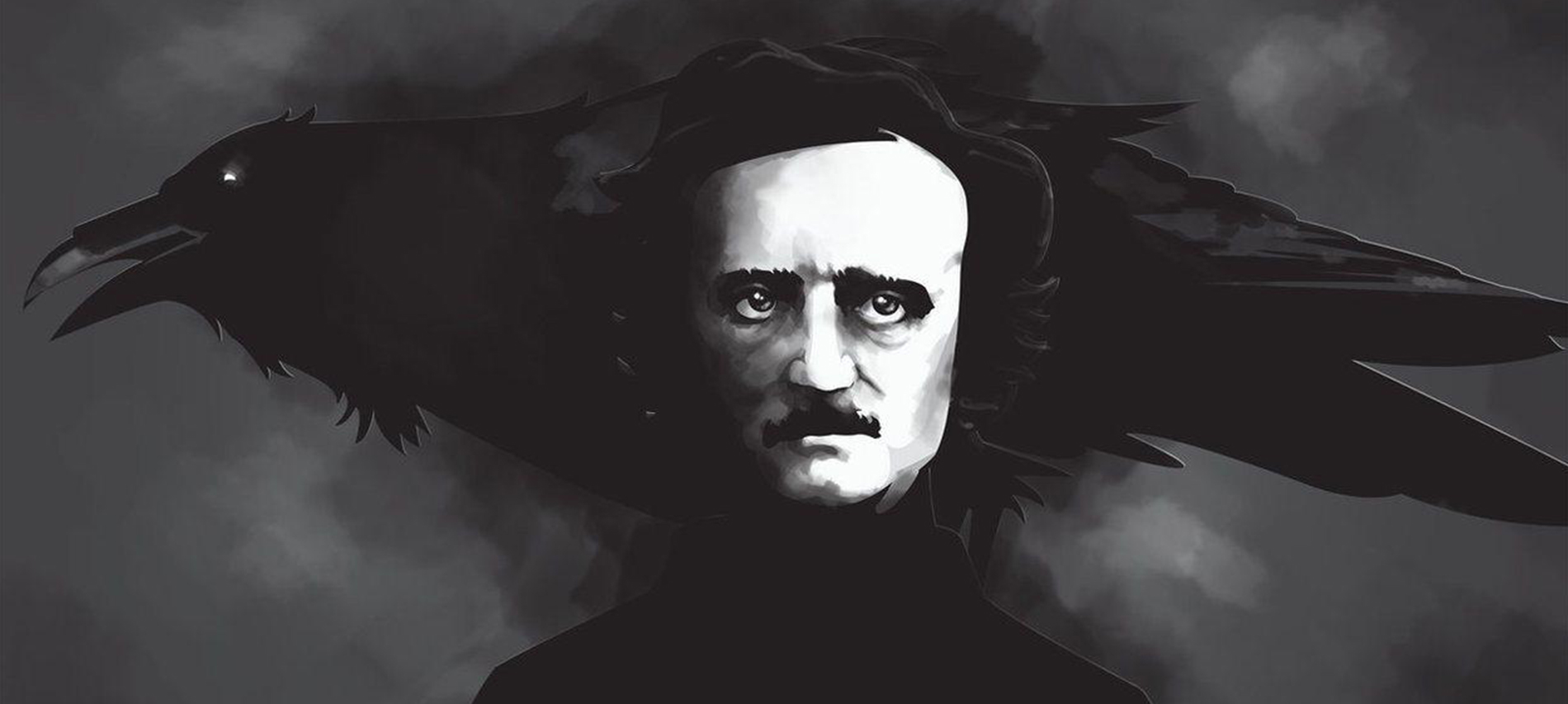
Edgar Allan Poe, the great American writer, editor, and literary critic is best known for his poetry and short stories, particularly his tales of mystery and the macabre. His poem, A Dream Within A Dream conveys an important message about human life slipping away, trickling like sand.
Here’s the poem.
Take this kiss upon the brow!
And, in parting from you now,
Thus much let me avow —
You are not wrong, who deem
That my days have been a dream;
Yet if hope has flown away
In a night, or in a day,
In a vision, or in none,
Is it therefore the less gone?
All that we see or seem
Is but a dream within a dream.
I stand amid the roar
Of a surf-tormented shore,
And I hold within my hand
Grains of the golden sand —
How few! yet how they creep
Through my fingers to the deep,
While I weep — while I weep!
O God! Can I not grasp
Them with a tighter clasp?
O God! can I not save
One from the pitiless wave?
Is all that we see or seem
But a dream within a dream?
—-
Beautiful isn’t it?

Who is Chatur Chanakya and Why Should Children Meet Him? Radhakrishnan Pillai Answers
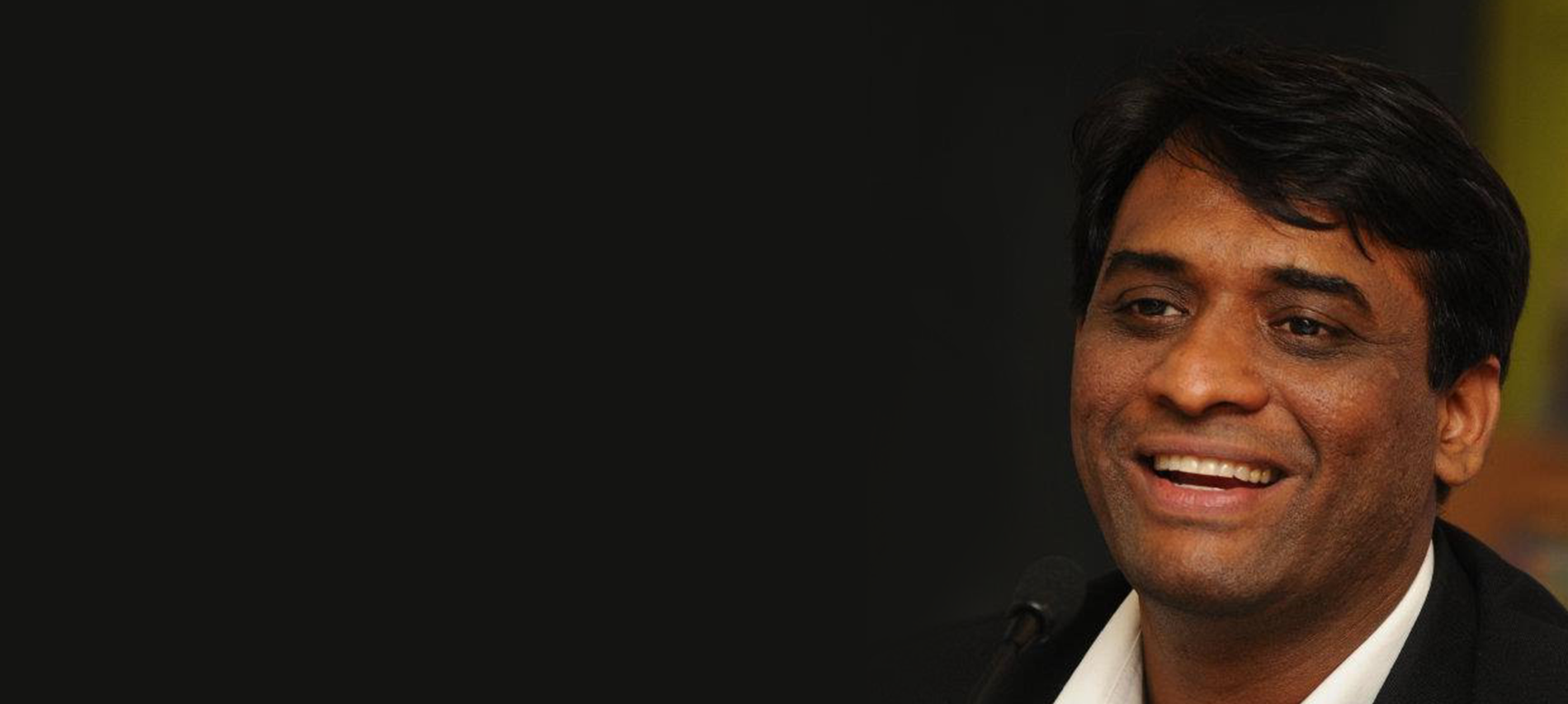
Radhakrishnan Pillai now writes for your young ones! Little Chanakya goes to school, standing up to bullies and maneuvering his way through tricky situations we all may have found ourselves in sometimes. But what inspired this journey? Let’s find out!
From Corporate Chanakya to Chatur Chanakya, what inspired this transition in writing for a different audience?
It was a new dimension for me. Even though the common connect between Corporate Chanakya and Chatur Chanakya is the same – Chanakya, it is very differently presented. Corporate Chanakya was meant as a management book especially for those who are in management and leadership positions. The audience was educated and already decision makers. While Chatur Chanakya was a different aspect. Reaching out to children who are 10 years old. The challenge was to make the profound knowledge of Chanakya from the Arthashastra, to be presented in a simple format. When the puffin team approached me with this concept to write for kids, it was a challenge. But I got inspired to try a new way of writing. And thanks – the book has really come out well. Much better than what was expected.
Is the character of young Chatur inspired by anyone from your life?
Yes and No. Chatur Chanakya is an imaginary character. Just like Superman, Batman and Chota Bheem. These characters are imaginary but have a message to give to kids. Through Chatur Chanakya we are going to bring out the best of wisdom of Chanakya (who lived nearly 2400 years ago) and his Kautilya’s Arthashastra. He was a leadership guru and a king maker. Chatur Chanakya will teach children how to think and become a leader. The other children in the book are inspired by real children. Arjun is the name of my son, who is the friend of Chatur Chanakya. Lakshmi is inspired by my daughter (her real name is Aanvikshiki). While Datta, Aditya and Milee are their friends. All of them become part of the book.
What is so special about Chatur and why should children befriend him?
Though a comic character. He is very real. Because he is a school going kid like any child of our generation. He has all the challenges that is faced by kids today. Be it bullying in schools, exam fever, being compared to other kids (even parents do that). So any one can associate with Chatur Chanakya. He is cute and nice. But he is also a fiend, philosopher and guide to his other classmates and friends. He is your friendly neighbour and ‘best friend’. He has got a choti on his head and a trick up his sleeve. You will love him. Not only children, but parents, grandparents and even teachers in schools will love Chatur Chanakya. He is what everyone wants in an ideal child – Intelligent and dynamic.
Tell us that one thing in Chatur Chanakya and the Himalayan Problem that one should look out for.
How to think out of the box. Chatur Chanakya faces a huge problem. Himalaya is a class mate of his, who is huge and bullies everyone. While Chatur Chanakya is not physically as strong Himalaya, he uses his intelligence to defeat Himalaya. So through this book we are giving a message to children, teachers and parents that – If you are mentally strong you can defeat any Himalayan (huge) problem.
Revisit school and relive all the memories with your little one in Radhakrishnan Pillai’s Chatur Chanakya and the Himalayan Problem!

The Life Cycle of an Innovation

R. Gopalakrishnan has been a professional manager for forty-two years and is an expert on practical managerial experience. In his book A Biography of Innovations he defines thought as the ancestor of innovation. He further argues that the life cycle of an innovation is similar to that of a human being.
Here’s how he equates the life cycle of an idea to that of humans:


Fascinating, isn’t it?

Things You Need To Know About Ravi Subramanian
An author, a banker, a columnist — Ravi Subramanian dons many hats and juggles multiple roles successfully while writing amazing books! Subramanian has not only written several books on his area of expertise — money, but also recently, a gripping thriller. Ravi Subramanian is definitely a man of many moods.
But did you know these facts about the author of In the Name of God?


And now, Ravi Subramanian is ready with yet another book on money, this time, for his younger readers. We know you’re super excited about My First Book of Money too!

Author Akash Verma on writing "Urban Thrillers"
By Akash Verma
My idea of writing an urban thriller is creating a story that is believable, riveting and strongly impassioned. I have read some nerve wracking murder mysteries, stories about outstanding secret agents, adventure thrillers from across the world; yet to be absolutely honest, it is tough to recreate one such story. My writing can’t be simply borrowed from other books of a similar genre. It needs to be personal, influenced by stories I have lived, seen or heard. This personal touch triggers what I would call a unique idea, which if compelling enough, becomes my next big story.
After the unique idea comes the task of looking out for characters. In my recent book You Never Know, developing Sid’s character wasn’t the plan and it happened gradually. I fleshed him by visualising someone I knew from before. This book otherwise had only two voices earlier, Dhruv and Anuradha, but by adding the third voice, I thought the narrative became much stronger. Drawing from such insights, here are the six definite formulas that work when I am writing an urban thriller:
Be to the point – No lengthy descriptions or history of characters or explaining why someone did what they did. I expect the story and characters to evolve on its own and the readers to deduce the hidden nuances themselves. Having written love stories earlier, thriller is a different ball game altogether. A writer gets abundant time in building the characters in love stories through its various sub-plots; encountering love – falling in love – being in love – a happy love story/a tragedy. A thriller doesn’t allow you that luxury. If not cautious, your verbose narrative can soon take away the promise of a crackling whodunit and leave the reader disappointed. So I keep a strong leash and never let the story wander.
People are never all black or all white – The reason why I choose my characters to be grey is because that’s who we all are if we choose to look deep within. My characters defy normal sensibilities, change colours like a chameleon or do things that can never be expected of them. It is a daring task to create such characters, but then as a writer you need to start walking the road of fearlessness. The farther you walk, the better your writing becomes. You might end up creating disturbing characters, that might intimidate some of your readers and draw flak, but in the long run it’s a small price to pay.
Story always comes first – This is definitely a mantra I swear by. Thrills, chills, all your twists and turns, and the right amount of suspense; all these add up to make a story better but these can never be more important than the storyline. So before I begin writing, I place the storyline firmly in my head or rather jot it down in the form of chapters somewhere. It’s never a descriptive version but just how the plot would unfold bit by bit. The twists are added later as I progress further. I may make changes in the sequence of chapters, and tweak them a bit but the basic storyline always remains the same.
Keeping the narration simple and lucid – I admit of not having a gargantuan vocabulary and I believe most of my readers don’t have it either. So I stick to my limitations with no desire to floor my readers with heavy handed words but rather with my story-telling skills. The usage of too many words as frills is a big NO! I would rather say ‘She looked at him angrily’ than ‘She looked at him as if a raging fire burnt inside her.’ I have seen the latter working for many authors fabulously, but this just isn’t my style. To me, if a writer can tell a great story in simple words it is by no means a lesser achievement.
Editing a book is as important as writing it – I have started believing this to be a gospel truth over the years. For me a really kick-ass book can turn out to be average if not edited well while an average book can become good with some solid editing. I prefer reading my entire manuscript multiple times, editing, and re-editing before sending it to a professional editor. It’s only after so many checks, that I send my work to a publisher. For all first-time authors this should be a golden rule. To write a good thriller, you need a sharpened pair of scissors that you should hold first, ready to chop off dispassionately all those words, lines, paragraphs and pages that you think shouldn’t be there. Just trade places with your reader and it will be so much easier. Trust me, it’s the best thing you will do to your book.
The first and the last chapters should do the magic – Though there isn’t a set formula to it, but getting the reader hooked from the first chapter works better than doing it later. If you can grab his/her attention right from the start lesser chances that he or she will leave it midway. The climax on the other hand can be fashioned in multiple ways, either it can be sudden and nerve wracking or it unfolds calmly, but the ending should be nothing less than fantastic. It should leave the reader thinking about the book long after they have read it. If you are able to gather this response from your reader then as a writer you have done an excellent job.
About the Author
Akash Verma is the bestselling author of four books. Apart from being a writer, he is the co-founder of two start-ups in the fashion and food sectors. Prior to being a writer, he has tackled various roles in the corporate sector. Akash’s latest novel, You Never Know: Sometimes Love Can Drag You Through Hell…, is a romance thriller which will keep you hooked till the last page.
A Look Into the Works of Writer, Publisher and Festival Director, Namita Gokhale
As we move another day closer to getting our hands on Namita Gokhale’s newest book for children, Lost in Time: Ghatotkacha and the Game of Illusion, here’s revisiting the beautiful books written by the celebrated author through the years, on a wide gamut of subjects.
The Book of Shiva

Shiva: Destroyer and Protector, Supreme Ascetic and Lord of the Universe. He is Ardhanarishwara, half-man and half-woman; he is Neelakantha, who drank poison to save the three worlds-and yet, when crazed with grief at the death of Sati, set about destroying them. Shiva holds within him the answers to some of the greatest dilemmas that have perplexed mankind. The Book of Shiva by Namita Gokhale answers many interesting questions about this enigmatic deity in Hindu mythology.
The Puffin Mahabharata

A modern-day retelling of the Mahabharata, Namita Gokhale presents this timeless tale of mortals and immortals and stories within stories, of valour, deceit, glory and despair, for today’s young reader in a clear, contemporary style. A brilliant series of evocative and thoughtful illustrations by painter and animator Suddhasattwa Basu brings the epic to life in a vibrant visual feast.
In Search of Sita: Revisiting Mythology

Sita is one of the defining figures of Indian womanhood, yet there is no single version of her story. In Search of Sita presents essays, conversations and commentaries that explore different aspects of her life. It revisits mythology, reopening the debate on her birth, her days in exile, her abduction, the test by fire, the birth of her sons and, finally, her return to the earth—offering fresh interpretations of this enigmatic figure and her indelible impact on our everyday lives.
In Travelling In, Travelling Out: A Book of Unexpected Journeys, Namita Gokhale puts together an eclectic collection of twenty five stories that take the reader on a journey that is surprising, moving and, sometimes, mischievous. From Advaita Kala’s piece on her reaction to an intrusive security pat-down to finding one’s identity as an immigrant in Amsterdam in an essay by Ali Sethi, there is a wide range of experiences to choose from. With contributors like M.J. Akbar, Rahul Pandita, Dayanita Singh, Urvashi Butalia and others among the guides, the reader sets off on an unusual journey, one without the fear, moreover, of getting lost.
And finally, the wait for her latest work on mythology, fantasy and everything magical is almost drawing to a close! Have you pre-ordered your copy yet?

A Global Dessert Trail by Monish Gujral

Restaurateur, award-winning cookbook author and celebrity chef, Monish Gujral in a tête-à-tête on what inspired him to write his latest book, ‘On the Dessert Trail’, everything that went behind the scene and his enriching experience of presenting the best desserts from across the world with a unique twist.
How did this book come about?
I have been writing cookbooks since the last 12 years and On the Dessert Trail is my latest. Besides books I am also into writing food blogs, a popular one is Foodies Trail and food columns in leading newspapers. Food has always fascinated me. Since childhood, I have always been intrigued by inventions of famous recipes and cuisines as my own grandfather, the legendary Kundan Lal Gujral was a pioneer of many. He not only invented the famous recipes of tandoori chicken, butter chicken, dal makhani and chicken pakioa but also invented the tandoori cuisine one hundred years ago. Hence, I am very well aware of how each dish or cuisine invented has an intriguing story behind it – often enough drama as well.
In my last book. On the Kebab Trail, I showcased various international kebabs and their recipes. Taking a completely different route, in On the Dessert Trail, I wanted to go on a dessert safari bringing out the best, most popular and national desserts from across the world and also the personal stories behind their inventions. Having had the good fortune to travel around the world on my gourmet trails, experiencing various cuisines, and meeting master chefs, I know that each one has a great story to tell and there is a lot to learn from their profound culinary experiences.
Hence, the unique experiences I gathered on my dessert trail is what I want to share with all of you. While researching for this cookbook, I was surprised to find out how these recipes were invented—few out of love, few out of duty, few out of need or requirement of time and, of course, few accidentally. Such insights helped me to bring out even the fantasies, fairy tales and myths associated with the best sweet things in this beautiful world.
It must have been quite a task selecting over 80 desserts for the book. I guess all of them were specially prepared to be photographed?
Well, it was difficult to decide which of the very famous and legendary desserts to include in the book because for me each one is unique. I finally went with the most popular and the national desserts of the world. Of course, I had to prepare all the dishes and tweak the recipes a little to make them easy to cook at home, I then had to decide which desserts had to be photographed and fashioned them accordingly for the photoshoot. There are several snaps of these in the book.
Tell me something about the research process and the timeline from conception to finish.
Well, I have been associated over a long time with the best chefs from across the world and with Gourmand for a decade. I travel to various counties to be a part of the global food and cook shows, and even visit Le Cordon Bleu, the world’s largest hospitality chain, to demonstrate and interact with international students aspiring to be chefs. When I decided to write On the Dessert trail, my travels became focused on trying out the most popular desserts and interacting with the local chefs to research and cook with them. It has been a long journey as I have been researching for more than 4 years for this book and finally it is here.
What of the future?
I am sure that my readers will find this book very interesting with my personal anecdotes about each recipe’s origin and the intriguing stories behind how they were invented. I have simplified all the recipes so that the readers can actually make them in the comforts of their home. In future, I will be again trailing the globe, yet again in search for more recipes and will bring their stories alive for my readers.

Things You Didn’t Know About the Bestselling Author John Green
John Green is one of the internationally acclaimed writers of YA Books. In his glorious career, he has won accolades like the Printz Medal, a Printz Honor, and the Edgar Award. He has twice been a finalist for the LA Times Book Prize and was selected by TIME magazine as one of the 100 Most Influential People in the World.
Here are a few things you should know about the star of the YA Books.


How many of these did you know?