




Dr. Annie McKee is an advisor to leaders of Fortune 500 companies, governments and NGOs around the globe. Her book, How To Be Happy At Work will deepen our understanding of what it means to be truly fulfilled and effective at work and provides clear, practical advice and instruction for how to get there—no matter what job you have.
Here’s an excerpt.
In this chapter, I will show that having friends at work is critical. When we feel cared for—even loved, as one does in a friendship—and when we belong to a group that matters to us, we are generous with our time and talents because we’re committed to people, not just the job or the company. You will also read about how to build the foundations for friendships in the workplace and how you can improve your relationships at work.
If you like the people you work with, you probably also like your job and your company. If you don’t like them, or if relationships are tense or disrespectful, chances are you don’t look forward to getting up every day to go to work. And it isn’t just that it makes us happy to belong and to have friends. Good relationships lead to good outcomes. This is just as true at work as it is in our families, neighborhoods, and tribes.Unfortunately, that’s not what we’ve learned along the way.
When I ask people, “Do you need to be friends with people at work?” they usually hesitate. Then they rattle off reasons why it’s a bad idea: “I’ve got to keep a distance or I won’t be able to have the tough conversations,” “I might get in trouble,” or “You’ve got to have clear boundaries.” A few come right out and say that it’s dangerous to have friends at work.
Something funny happens, though, when I ask people to describe what they do want in their relationships at work:
“I have to like the people I work with.”
“I want to be myself at work without being afraid that people will shut me out or shut me down.”
“I can’t take risks with people I don’t trust, or when I know they don’t care about me.”
“I want to have fun at work. Sharing a laugh helps me deal with stress.”
Clearly, there’s a disconnect. We think we should have relationships that are distant, polite, and guarded. But we want much more than that. We want to feel safe to be ourselves, we want to enjoy one another, and we want to like people at work. We also want them to like us.
This seems like common sense to me—why wouldn’t we want warm and friendly relationships with people we spend so much time with? Moreover, if we don’t like people (or they don’t like us), it’s going to be hard to find common ground, making it even harder to work through disagreements and conflict. If we suspect that someone’s out for themselves or trying to take advantage of us, we’re not likely to share our ideas or resources. Instead, we will be on guard and hesitant to collaborate. This is not a recipe for success—a lesson David McWilliams learned early in his career.

Tag: Book Excerpt
Monetize Your Expertise

Dorie Clark is a marketing strategy consultant and professional speaker who teaches at Duke University’s Fuqua School of Business. In her book, Entrepreneurial You she shares the stories of entrepreneurs of all kinds—from consultants and coaches to podcasters, bloggers and online marketers—who have generated six- and seven-figure incomes. It shows you how you can liberate yourself financially and shape your own career destiny.
Some professionals may hesitate to monetize because they fear the audience reaction. Indeed, people who are used to getting something for free may well rebel once you ask them to start paying. That’s what happened to Andrew Warner. A successful entrepreneur, Warner and his brother built a multimillion-dollar online greeting card business. “I felt like I was invincible,” he recalls, and assumed his next venture, a foray into online invitations, would be an even bigger hit. But it didn’t work out that way. “I ended up spending hundreds of thousands of dollars on this idea that really didn’t turn into gold. It turned into mud,” he says.
Looking for answers, he decided to reach out to other business owners: “I said, ‘I want to learn from as many entrepreneurs as I can how to build a business and never make this mistake again.’” He recorded the interviews on Skype and, in 2008, launched Mixergy, a website and video podcast where he compiled them. For a couple of years, he offered them all for free. But eventually, Warner was devoting so much time to the enterprise—including hiring a staff to help him with editing and doing pre-interviews of his guests—that he decided to start charging $25 per month for access.
As soon as he did, he heard about it. “People were posting publicly that I shouldn’t be charging, and people were emailing me and saying ‘What are you doing?’” he recalls. The feedback stung. “I felt hurt that my audience didn’t like me as much.” But charging an access fee enabled him to keep investing the time in creating the site, which now contains more than twelve hundred interviews. “If you do something that matters, some people are going to dislike you,” he says. “Some people are going to disagree with you. It’s not an indication that you’re on the wrong track.”
Try This:
As you start psyching yourself up to monetize, it’s worth considering the following:
- Get clear on what it costs you to share your work with others. Are there recording or editing expenses? Website hosting fees? The cost of your time? The first step is to understand what you’re already putting in, so you can determine what break even (and beyond) would look like.
- Think about various pricing models. Can you continue to offer some material for free, for those who genuinely can’t pay, while offering exclusive paid content to your super-fans?
- Brace for criticism. You’ll inevitably face some blowback, but don’t take the outliers too seriously. If 90 percent of your audience is upset, you may want to reconsider. But if three people send you churlish emails, try to put it out of your head.


ICE with Very Unusual Spirits, An Excerpt

A devotee of Sai Baba of Shirdi, Ruzbeh N. Bharucha is one of the most influential spiritual writers of our times. His new book, ‘ICE with Very Unusual Spirits’ is about Irashaw Cawas Engineer (Ice), a world-renowned painter of Divinity, who turns his back on his Master and spirituality after the death of his young children. The book is derived from the sages and is about the wisdom of life and living, and understanding, accepting and seeking a higher purpose.
Here’s an excerpt from the book.
Why is he called Ice?’ his wife asked.
‘Apparently, at the boarding school where he studied, children had to write their initials on all their possessions—bags, clothes, etc.—to avoid misplacing them. His real name is Irashaw Cawas Engineer, thus I.C.E. Since then, he’s known by his initials. He signs off on his paintings as ICE too.’
‘What is he doing here? Wasn’t he in New York or somewhere abroad? I have a bad feeling, Ashish. It’s not going to be good with him living next door, you mark my words. This man brings doom with him.’
‘Don’t say this, Maya. It was this man’s painting of Lords Ganesh, Krishna, Jesus, and Hanumanji and Sai Baba playing together as kids with a small baby girl that helped you get through your pregnancy. You yourself told me that if it weren’t for that painting, you would never have wanted to be a mother and undergone eight months of bed rest . . .’
‘Bed imprisonment, Ashish! All you men are dogs . . . ’
‘Breathe, sweetheart. Yes, bed imprisonment . . . and you used to bless Ice every day. Remember, when you went into depression after hearing about the accident and the death of his kids?’
‘I know, but he was a different man back then. This man here is a ghost of him. Trust me, Ashish, he walks with death itself. Why the hell did you help him get this flat adjacent to ours?’
‘What did you want me to do? Imran called me up saying Ice wanted to shift here. I couldn’t refuse him. He has stood by me through thick and thin.’
‘Imran I understand, but why do you feel so much for Ice?’
Ashish looked at his wife. By God, she was beautiful. He could never understand why she had agreed to marry him; she had every affluent man waiting in line to marry her. During those days he had no money, not much of a career, in fact nothing going for him. It had taken them years to get settled. But Maya had never complained. The only thing missing in their marriage was physical intimacy. Fortunately, he wasn’t too keen on getting into the sack himself and often thought that his disinterest in sex was probably the reason why she had married him. But she loved him and took care of him and their child, and yes, she had her issues and she could drive him up the wall, but he loved her in spite of everything.
‘Okay, I am going to tell you something I haven’t shared with you. Remember, how much I wanted to be a father? For whatever reason, you weren’t keen on getting pregnant. I know you love me, but there are certain areas in your life that you don’t share with me. Anyway, nine years ago, I had met Imran at his house for dinner and we had drunk a bit too much and during our conversation, I had mentioned that it would be a miracle if you ever agreed to become a mother. Ten days later, he came home and gifted you that painting. You fell in love with it and then slowly, over time, decided to be a mother.’
‘So?’
‘It seems Imran told Ice about our conversation and a week later, Ice presented him the painting to be given to “that neurotic woman and her daft husband who want a kid”. Do you know how expensive this painting is now? All our savings, investments and gold put together won’t be worth as much. If we were to sell it today, we would be able to buy this or any other house like this in the city. Ice gave it to us because he wanted his friend’s friend to be at peace. Come on, Maya, who would do such a thing for strangers? People don’t even help their families nowadays and here is a man who gifted us a painting that could have fetched him enough to live lavishly for a long time. Ice used to be a workaholic back then but he still took time to paint the portrait for us. Even now, whenever Ice has an exhibition, his paintings are sold out even before they are displayed. I am indebted to Ice for life. He had as much a role in Ayesha’s birth as you and I. And haven’t you noticed one thing? Look at the girl in the painting. Doesn’t Ayesha look like her?’
Maya looked at the painting. There was no doubt that the girl in the painting was a spitting image of Ayesha. Nobody could deny the similarity. It was as though Ayesha had posed for the painting herself. Damn that Ice! She looked down from the drawing room window. Ice was standing with a cigarette between his lips. He had lost a lot of weight. A huge black dog with tan stripes lay next to him. Both needed a haircut. Ice was wearing a pair of jeans and a light-blue T-shirt, both of which were soiled with paint. People stared at him. Passers-by turned around to get a better look. They recognized him but didn’t dare approach him for an autograph. He was temperamental, to put it politely. On good days, Ice would chat and laugh for a long time; on the not-so-good days, it was rumoured that he had broken many a journalist’s camera and phone. Even now, he didn’t pay attention to anybody. He just stood there and smoked. After a while, he looked up, straight at her, and Maya felt her blood turn cold. This man was trouble. She just knew it.
What happens next? Find out in ‘ICE With Very Unusual Spirits.’

Assessing the Prototypes

Jennifer Riel is a strategic adviser to senior leaders at a number of Fortune 500 companies. Her book, Creating Great Choices is an insightful and instructive blend of storytelling, theory and hands-on advice to help any leader or manager facing a tough choice. The book includes fresh stories of successful integrative thinkers that will demystify the process of creative problem solving, as well as practical tools and exercises to help readers engage with the ideas.
Storytelling converts a possibility into a narrative— a tale of events that proceeds over time and has a beginning, a middle, and an end. A story lets you explain what happens within the possibility— the plot points of your new and better world. Narrative is an effective way to capture and explain a new idea because humans are naturally drawn to stories; stories are the way people have learned and shared critical information since our ancestors were crouched around a campfire.
Using stories lets you engage deeply with ideas, because you can fully picture the possibility in your mind’s eye. Once you do that, you will be able to communicate that picture to others. As screenwriting teacher Robert McKee puts it, “If you can harness imagination and the principles of a well- told story, then you get people rising to their feet amid thunderous applause instead of yawning and ignoring you.”
Our friend Claudia Kotchka, former head of design at P&G, is a master storyteller. To illustrate the impact of human- centered design to her peers at the sometimes- rigid consumer goods giant, she would tell a story about Altoids. Yes, the curiously strong mint introduced in the 1780s and now owned by Wrigley. Kotchka would illustrate the special appeal of Altoids by describing the process of looking at the cheerful metallic box with its nostalgic typeface and then opening the tin, hearing the liner paper crinkle, smelling the wafting scent of peppermint oil, and seeing the uneven little mints, seemingly hand-made, lying haphazardly within.
Kotchka would go on to describe what Altoids would look like if they’d been developed through P&G’s structured, rigorous, and highly reliable processes: perfect, uniform mints in a simple plastic container with a slightly garish sticker on the front. The “waste” of the liner paper and the expensive metal box would be eliminated. The “imperfection” of the varied mints would be remedied. The understated label design would be “livened up.” And voilà, all the distinctiveness of Altoids would disappear— along with the brand’s intense consumer loyalty and price premium.
Kotchka called her imaginary new product Proctoids, after the irreverent nickname sometimes applied to P&G employees. Her vivid and funny story hit home with audiences inside P&G and out, illustrating her point more clearly than reams of data on failed innovations.
Try This
Think back to the invention of the iPod. Craft a short narrative that would explain the core of the idea and the way it works to create new value for users and for Apple. Try the same for one of the possibilities you generated in chapter 7.
For each of your possibilities, think about the story you could tell about it, focusing on how each possibility would be experienced by real people. The story needn’t be long or obsessively detailed. The objective of the narrative should always be to help you, and others, understand the core value of the possibility.

What is the meaning of fitness?

Shivoham is one of India’s foremost fitness trainers. In his book,‘The Shivfit Way’ he shows how to work out without any equipment or machines. He combines cardio, strength training and weight exercises for a full-body workout. He also offers a whole new perspective on what it means to be fit and how to motivate yourself to start exercising. This book is coauthored by Shrenik Avlani, who is a newsroom veteran with nearly two decades of work experience as a leading writer in the field of endurance sport and fitness.
The Merriam-Webster dictionary defines fitness as ‘the quality or state of being fit’, while fit is defined as ‘sound physically and mentally’. Though the word was first used in 1580 ad, its dictionary definition does not tell us much about what fitness actually is.
We have seen triathletes compete in Ironman races which involve swimming 3.86 kilometres, followed by cycling 180.25 km and then immediately running a full marathon of 42.195 km, being crowned the fittest men and women in the world. but put them in a gym and ask them to lift weights, and you will find that they fare rather poorly. Even a boy or girl of average strength will be able to lift more than the fittest men and women on earth if endurance sport is the measure of fitness, as it mainly enhances the aerobic capacity of an individual.
But walk into a weightlifting clinic or lifter training for the Olympics and you would find the smallest of them lifting much more than their body weight. Lifters usually describe their colleagues as strong, not fit. Now ask them to run a couple of kilometres or swim just 500 metres, you are most likely to see them struggling and gasping for breath pretty quickly. so, strength alone also cannot be a parameter to measure fitness.
Clearly, fitness means different things to different people. Depending on who you ask, fitness is likely to be defined in terms of things people are good at or specialize in. For a runner, being able to run a full marathon in under four hours is being fit. For a body-builder, big muscles are clear indicators of fitness. Then again, talk to weightlifters, and they will tell you that their ability to lift weights three times heavier than themselves is proof of their fitness. For the average person, fitness could mean something as simple as going through an entire day of work and having enough energy to indulge in their hobbies or run and play freely with their kids without feeling exhausted.
In the many years I have spent in this industry, and during the course of my own journey, I have come to realize that no single parameter can measure fitness. several factors measure different attributes of your body, and the ones you pay more attention to depend on which school of fitness you follow. For example, if you believe having sculpted abs is a mark of fitness, then you will strive for low body fat percentage. For others, it could be achieving the ideal weight according to their height and body type.
Since I believe in and practice CrossFit, I follow its founder Greg Glassman’s definition of fitness, which is based on the following ten general physical skills:
Cardiovascular or respiratory endurance: The ability of the body to gather, process and deliver oxygen to its different parts.
Stamina: The ability of the body systems to process, deliver, store and utilize energy.
Strength: The ability of a muscular unit, or combination of muscular units, to apply force.
Flexibility: The ability to maximize range of motion at a given joint.
Power: The ability of a muscular unit, or combination of muscular units, to apply maximum force in minimum time.
Speed: The ability to minimize the time cycle of a repeated movement.
Coordination: The ability to combine several distinct movement patterns into a singular distinct movement.
Agility: The ability to minimize transition time from one movement pattern to another.
Balance: The ability to control the placement of the body’s centre of gravity with regard to its support base.
Accuracy: The ability to control a movement in a given direction or at a given intensity.
Find this book: The Shivfit Way

Meet Rishi Mathur—An Excerpt from ‘Love Curry’

Pankaj Dubey is the bestselling author of —’What A Loser!’, ‘Ishqiyapa—To Hell with Love’. His latest book ‘Love Curry’ is about three flat mates in London who fall in love with the same girl. This make them arch-rivals but when things take a turn, they don’t find anyone else but eachother to turn to.
Here’s an excerpt from the book which introduces you to one of the flat mates.
He came from Agra—the city of the Taj Mahal, a monument that stood for a timeless love. A monument that simply kept standing when his love had wandered off. No wonder he had left the city and its Mahal. Choosing England instead with all its apparent coldness. He wanted to be away from all that had always been with him. No one knew him here or cared to. But there was a comfort in this anonymity. It was only months after he shifted to house number 104, George Street, that some of his neighbours began to recognize him, or what little they saw of him. For he would leave in the morning and return only after it got dark. He could have been the night watchman for all they knew. No words he exchanged with anyone. No twitch of a smile to a face that looked familiar. His socializing was restricted to giving someone way if they were in a rush.
His name was Rishi Mathur, the guy whose door was locked. The occupant of the third room in house number 104. A house that was almost a subcontinent, harbouring as it did three South Asian boys, flying the flags of India, Pakistan and Bangladesh. Besides the Indian—Rishi—docking in the house were Shehzad from Dhaka and Ali from Lahore.
Rishi in Agra had been quite a talkative fellow. This was a different version. No, the Queen wasn’t to blame for this sudden, sullen silence. At the heart of the matter was a breakup. One he was finding difficult to chew. So he went quiet and fled to England. He had seen people go to London to study or to get rich. But he came to recover. People arrived here with big dreams. He landed with promises—three promises that he’d made to himself. Three promises that were perhaps the opposite of what any other immigrant from India would have made
The first was to stay away from girls—especially the beautiful ones. He could not trust them now.
The second vow was to never return home. He would do all it took to make this island nation his new home. There was nothing waiting for him in India—and absolutely no one that mattered to his broken heart.
Thirdly, he would lie low. No soaring aspirations for him. No growth, no riches. He would not be the next British-Indian industrialist or Indian lord in Parliament. All he would be was a nobody.
It was easy to do the third thing. He simply didn’t need to do much. The limelight ignored him automatically. High denomination pounds stayed away. The few notes he earned kept hopping in and out of his wallet. The heartbroken hero strived for no comeback as a happy success story. All he wanted and got was a corner seat in life.
No one knew what Rishi did, not even his two housemates. Shehzad from Dhaka and Ali from Lahore lived in the same house with him, but in blissful ignorance. Each one had a story of his own that each wished to keep to himself. Though they shared a subcontinent and now a house, the three were reluctant to overlook the fact that they came from three different countries. This fourth country that they came to live in however threw them together in more ways than one. For starters, they got branded ‘Bloody Pakis’ the second they set foot here!
In their three-bedroom house, the room in the middle went to Rishi. Shehzad occupied the one to his left. The Bangladeshi was almost twenty-three, but still had a somewhat wild streak, which was announced by the sheer number of tattoos covering his five-foot-eight-inch frame. No, he didn’t need them to enhance his looks—he had plenty of those already. His angular face and curly fringe were a photographer’s dream. The decoupage tattoos advertised the person he was—a question mark. No one knew what he would say or do next, not even Shehzad. Only one thing was reasonably clear— rehab would figure somewhere in his future! For, the fellow smoked up relentlessly.
What made him so unpredictable was an even bigger mystery. No one knew the painful backstory. It featured a father who was an airline pilot in his home country. But that was before he lost one of his limbs in a ground accident. The tragedy, however, didn’t end there. His mother eloped soon after, forsaking his father for another pilot who was a friend of the family. The six-year-old boy was left behind with a handicapped father, a pit of a future and so many wagging tongues.

The Beginning of an Adventure Like No Other: ‘Lost in Time: Ghatotkacha and the Game of Illusions’ — An Excerpt

We all love going on trips as soon as holiday season kicks in, don’t we? But have you ever been on a journey that ended with you travelling to another plane of reality, maybe one from the books you’ve read? Sounds impossible, doesn’t it?
Well what if we told you this happened?
Get ready for the gripping story of young Chintamani Dev Gupta who while on a birding camp is magically transported to an unknown world of improbable creatures. Things get stranger still when he meets the master of illusions, Ghatotkacha and his mother, the demoness Hidimba.
Read on to know what happens next!
I am Chintamani Dev Gupta, male, 4’11”, thirteen years of age. Almost fourteen. It won’t surprise anyone to know that my name was, at an early and vulnerable age, shortened to Chintu, then mutated to Chintu Pintu. It’s ignominy to have a name like Chintu Pintu, but it’s a cross I’ve learnt to bear. I feel like telling them—the sneerers—‘Man, you don’t know where I’ve been, you don’t know what I’ve seen!’
The story that will unfold in these pages has been recorded with all the memory megabytes at my disposal, but when you— one—me—travel through time, across time, the grey cells tend to seize up and short-circuit in transit.
But let me begin at the beginning. If there ever is a beginning, if time follows a straight line, follows a predictable geometrical pattern in its unfolding. Which I happen to know, from my incredible personal experiences, it does not.
Those of you (possibly in the minority) who have read Carl Sagan’s book Contact might appreciate wormholes and the ways to fool or get fooled by time. Whereas those of you (more hands up this time maybe) who are fans of Terry Pratchett, might remember that he said, ‘Stories of imagination tend to upset those without one.’
But I’ve nattered on enough. Let’s get to the flashback with Chintamani Dev Gupta (aka Chintu Pintu) off on an enforced holiday to the Sat Tal Birding camp. I remember it as though it were yesterday. My parents had just split up, even though they continued to be holed up in the same house. Mum’s lady lawyer practically camped on our living room sofa. Papa hadn’t shaved for several days. Things were bad. And to get me out of the way, I had been dispatched here, to an insect-infested field near the aforementioned Sat Tal Lake.
It’s not as though I was wildly interested in birds. I suspect it was just the most convenient way to pack me off, dumping me in ornithology heaven. So there I was, amidst the tweets and the cheeps and the trills and twitters of birdsong, dreaming of football and butter chicken and the joys of home.
Can’t wait to find out more? Don’t forget to be the first one to grab your copy of this magical tale of time-travel, unusual friendships and a whole lot of adventure!

Letters from a Father to his Daughter – An Excerpt
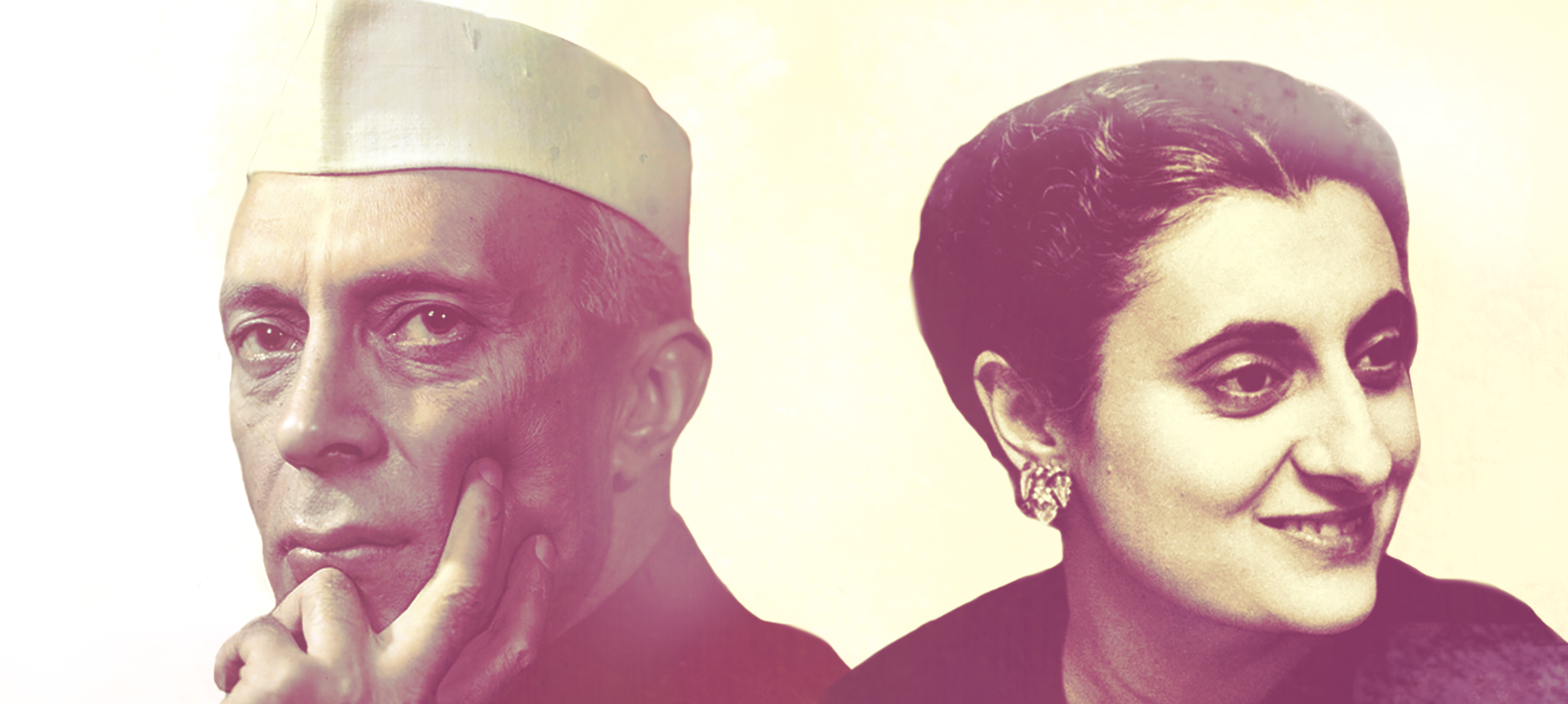
Jawaharlal Nehru, the first prime minister of independent India, was one of the prominent figures during the Indian freedom struggle. He started writing letters to his daughter Indira when she was ten years old. He wrote to her about diverse topics, ranging from the origin of the Earth to history of races and faith.
In a collection of 30 letters, Pandit Nehru imparted wisdom to his growing up daughter, while steering the movement to Indian freedom.
Here’s an excerpt from the book.
We saw in our last letter that the chief difference between man and the other animals was the intelligence of man. This intelligence made him cleverer and stronger than enormous animals who would otherwise have destroyed him. As man’s intelligence grew, so also grew his power.
To begin with, man had no special weapons to fight his enemies. He could only throw stones at them. Then he began to make out of stone: axes, spears and many other things, including fine stone needles. We saw many of these stone weapons in the South Kensington Museum and also in the museum in Geneva.
The Ice Age, about which I said something in my last letter, slowly ended and the glaciers disappeared from Central Europe and Asia. As it became warmer, men spread out.
In those days there were no houses or other buildings. People lived in caves. There was no cultivation, that is working in the fields. Men ate fruits and nuts and the animals they killed. They had no bread or rice because they did not grow anything in the fields. They did not know cooking but perhaps they just heated the meat on the big fires they had. They had no cooking vessels or pots and pans.
One thing is very curious. These savage men knew how to draw. Of course they had no paper or pens or pencils or brushes. They simply had their stone needles and pointed instruments. With these they scratched or drew animals on the walls of caves. Some of their drawings are quite good but they are almost all profiles. You know that it is easier to draw profiles, and children usually draw in this way. As the caves must have been dark it is probable that they used some kind of simple lamp.
These men that we have described are called Palaeolithic men, or the men of the old Stone Age. That period is called the Stone Age because men made all their tools with stone. They did not know how to use the metals. Today most of your things are made of metals, specially iron. But iron or bronze was not known then, and so stone, which is much more difficult to work with, was used.
Before the Stone Age came to an end, the climate of the world changed greatly and became much warmer. The glaciers had gone far back to the Arctic Ocean, and in Central Asia and Europe great forests arose. Among these forests we find a new race of men living. These people were cleverer in many ways than the Palaeolithic men whom we have just described. But they still made their tools out of stone. These men also belonged to the Stone Age but it was the later Stone Age. They are called Neolithic men or men of the new Stone Age.
We find when examining these Neolithic men that great progress has been made. The intelligence of man is making him go ahead fast compared to the other animals. These Neolithic men made the very great discovery of cultivation. They started tilling fields and growing their food there. This was a great thing for them. They could now get their food more easily instead of having to hunt animals all the time. They got more leisure, more time to rest and think. And the more leisure they had, the more progress they made in discovering new things and methods. They started making earthen pots, and with the help of these they began to cook their food. The stone tools were much better and were beautifully polished. They also knew how to tame animals like the cow, the dog, the sheep and the goat. They also knew how to weave.
They used to live in houses or huts. These huts were very often made in the middle of lakes as the wild animals or other men could not attack them easily there. These people are therefore called lake-dwellers.
You will wonder how we know so much about these people. They wrote no books of course. But I have already told you that the book where we read the story of these men is the great book of nature. It is not easy to read it. It requires great patience. Many people have spent their lives in trying to read this book and they have collected large numbers of fossils and other remains of old times. These fossils are collected together in the great museums, and we can see there the fine polished axes and the pots and stone arrows and needles and many other things which were made by the Neolithic man. You have seen many of these things yourself but perhaps you have forgotten them. If you see them again you will be able to understand them better.
There was, I remember, a very good model of a lake-dwelling in the Geneva museum. Wooden poles were stuck in the lake, and on top of these poles a wooden platform was made. On the platform the wooden huts were put up and the thing was connected by a little bridge to the land.
These Neolithic men clothed themselves with the skins of animals or sometimes with a rough cloth of flax. Flax is a plant which has a good fibre used for making cloth. Linen is now made out of flax. But in those days cloth of flax must have been very rough.
These men went on making progress. They started making tools of copper and of bronze. Bronze, as you know, is a mixture of copper and tin and is harder than either of these. They also used gold and were vain enough to make ornaments out of it!
These people must have lived about 10,000 years ago. Of course, we do not know the exact dates or periods. All this is largely guesswork. You will notice that so far we have been talking of millions of years. We are now gradually getting nearer and nearer to our present age. From the Neolithic man to the man today there is no break or sudden change. But still we are very different from him. The changes came slowly, as is nature’s way. Different races developed and each race went its own way and lived its own life. The climate being different in different parts of the world, people had to adapt themselves to it and changed greatly. But we shall talk about this later.
One thing more I want to tell you today. About the end of the Neolithic age a very great disaster happened to man. I have told you already that at that time the Mediterranean was not a sea at all. There were just some lakes there and in these lakes many people lived. Suddenly, the land near Gibraltar, between Europe and Africa, was washed away and the waters of the Atlantic Ocean poured into the low valley of the Mediterranean. The water went on pouring and filling it up, and large numbers of the men and women living near or over the lakes must have been drowned. They could not escape anywhere. There was water all over the place for hundreds of miles. The Atlantic Ocean continued to pour in till it had filled up the valley, and the Mediterranean Sea came into existence.
You have heard, of course, and perhaps read, about the great flood. The Bible speaks about it and some of our Sanskrit books also refer to it. It may be that this mighty flood was the filling up of the Mediterranean. It was such a terrible disaster that the few people who managed to escape must have told all about it to their children, and they to their own children, and so the story was handed down from generation to generation.

‘The Tale of the Turban’: ‘Junior Lives: Mahatma Gandhi’ — An Excerpt

Mahatma Gandhi’s journey is inspirational for reasons one and many. His struggle to lead India to independence did not only happen on home ground in India, it went far beyond that, all the way to South Africa.
In this excerpt from Sonia Mehta’s Junior Lives: Mahatma Gandhi, we catch a glimpse of the man with his principles and values holding steadfast even during an hour of crisis.
Was GandhiJi’s time in Durban a good one? Let’s find out!


Amazing, isn’t it? To share the lesser known story of the Father of our Nation with your child, grab a copy of the book today!

The Story of Amit Burman, An Excerpt from ‘The Inheritors’

Sonu Bhasin is one of the early and senior women professionals in the industry and has led businesses in senior leadership positions during her corporate career. In her book ‘The Inheritors’ she provides a behind-the-scenes look at what goes behind big family business brands like Dabur, Marico, Dabur, Keventers, Berger Paints, Select Group, Max Group and many others. It also gives an account of the inheritors who play a pivotal role in making or breaking huge business empires.
Here’s an excerpt from the book.
I am confused. Did I not have an appointment with Amit Burman, vice chairman of Dabur India—the 133-year-old company known for iconic products like Hajmola, Dabur Chyawanprash and Dabur Amla Hair Oil? Amit had asked me to come to his office for the meeting. As I walk into the building, I see posters of well-known brands. But to my knowledge, none of these are Dabur’s. I walk up the stairs with posters of Café Delhi Heights, Zambar, Fres Co, Punjab Grill, Street Foods and Baker Street accompanying me. Am I in the wrong office? I begin to wonder. I turn back and ask the guard at the gate, ‘Yeh Amit Burman sa’ab ka office hai? Sa’ab hain kya office mein? (Is this Amit Burman’s office? Is he in the office?)’ The guard merely nods in a bored manner. Shaking my head in confusion I go back up the stairs to the office. The receptionist, with a bright smile, confirms that I am expected and guides me to Amit’s office. Phew! At least I am in the right place.
Amit laughs out loud when I ask him why no Dabur brands are displayed in the office of the company’s vice chairman. ‘This is my personal business, with my own money, and Dabur has nothing to do with it,’ explains Amit. He is certainly the vice chairman of Dabur India Limited, but that role is a quasi-non-executive one.
‘Dabur is in the hands of professional management, so my role is to guide them to follow the Burman family’s vision for the business,’ says Amit. As a person who finds it difficult to sit at home even on a weekend, Amit certainly needed something to keep himself occupied once he moved into the non-executive role at Dabur. ‘Food has always been a passion with me,’ he says. With time on his hands and unwilling to lead a life only of leisure, he decided to follow his passion and set up a food business in the mid-2000s. Today, his real passion and real business, no pun intended, is Lite Bite Foods, the food company set up by him. His business has the dineout brands that I saw on my way to his office. Punjab Grill, Fres Co, Zambar, Asia Seven and Hahn’s Kitchen have very quickly become the restaurants of choice for the customer segment targeted by Amit. ‘But running a restaurant business is extremely hard work, and people don’t realize it,’ says Amit.
Hard work is something Amit has never shied away from. In fact, it energizes him. He comes from a family that has worked for more than a hundred years to get Dabur placed among the largest fast-moving consumer goods (FMCG) companies in India. ‘I grew up in Delhi. I was used to seeing my dad come back home from work and talk about his day, while we had dinner,’ remembers Amit. The business of Dabur, hence, was very much a part of his growing-up years.
His father, Gyan Chand Burman, was the head of Dabur. G.C. Burman was a pharmacist but he had transformed into an operating businessman when he took charge of the family business. Amit was born in Calcutta, where his family, along with four other Burman families across three generations, lived in their ancestral home. The mansion was called Dabur House and the business at Garia was just a stone’s throw away.
The families had their own living quarters, but they shared a common kitchen and dining area. G.C. Burman used to go to the factory every day. During a labour unrest in the city, he was gherao-ed by his own workers at the factory and the situation turned unpleasant. This prompted Burman’s decision to move to Delhi. He set up a factory in Sahibabad. Over time, G.C. Burman’s brothers relocated to Delhi with their families as well. The new factory, along with the business, thrived and
Dabur became a company headquartered in Delhi. Calcutta’s loss was Delhi’s gain.
Early years in Delhi and the US
Amit studied at St Columba’s School in Delhi while his cousins went to other schools in India and abroad. While he did not go to the factory during his schooldays, he soaked in details about the business at the dining table. These discussions also helped him understand his father’s decision-making processes. For any young boy finishing high school in the mid-eighties, the norm was to become either a doctor or an engineer. Amit’s father also wanted him to study engineering as he believed that it was the future. Amit chose to study industrial engineering in the US. ‘My dad was very happy when he heard about it,’ he says. The days spent at Lehigh University in America gave him an opportunity to understand the theory behind the manufacturing business—his trusted dinner-table companion during his childhood and adolescence.

