Publish with Us

Follow Penguin

Follow Penguinsters

Follow Penguin Swadesh

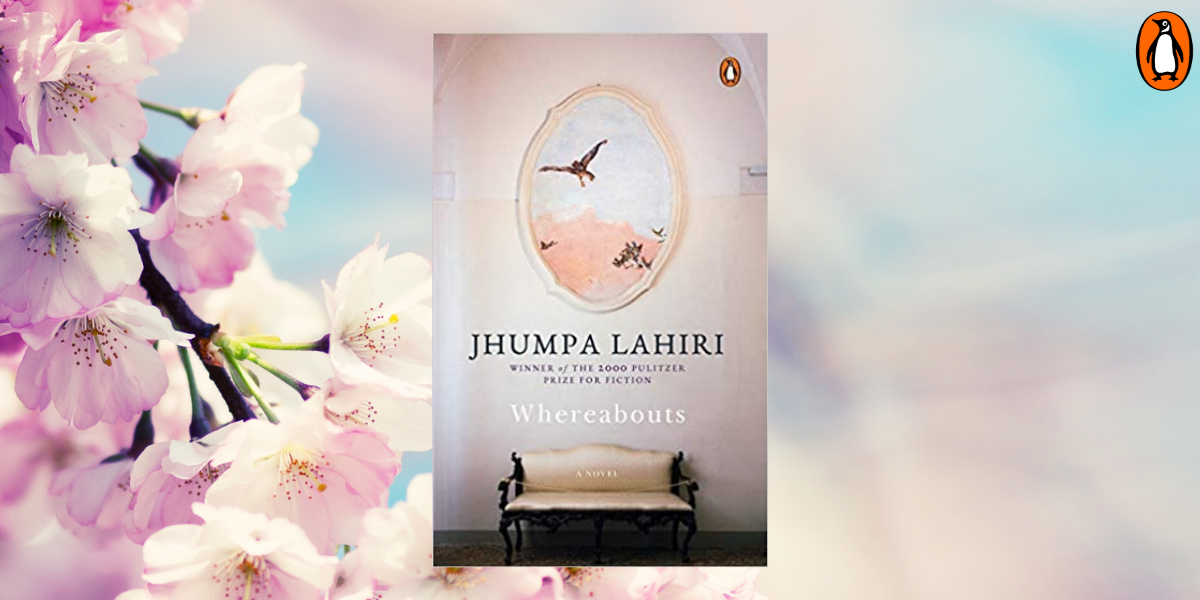
Whereabouts: Jhumpa Lahiri’s latest literary landscape

Exuberance and dread, attachment and estrangement: in this novel, Jhumpa Lahiri stretches her themes to the limit. The woman at the center wavers between stasis and movement, between the need to belong and the refusal to form lasting ties. The city she calls home, an engaging backdrop to her days, acts as a confidant: the sidewalks around her house, parks, bridges, piazzas, streets, stores, coffee bars. We follow her to the pool she frequents and to the train station that sometimes leads her to her mother, mired in a desperate solitude after her father’s untimely death. In addition to colleagues at work, where she never quite feels at ease, she has girl friends, guy friends, and “him,” a shadow who both consoles and unsettles her. But in the arc of a year, as one season gives way to the next, transformation awaits. One day at the sea, both overwhelmed and replenished by the sun’s vital heat, her perspective will change. This is the first novel she has written in Italian and translated into English. It brims with the impulse to cross barriers. By grafting herself onto a new literary language, Lahiri has pushed herself to a new level of artistic achievement.


Here is an excerpt from the book Whereabouts by Jhumpa Lahiri:


The city doesn’t beckon or lend me a shoulder today. Maybe it knows I’m about to leave. The sun’s dull disk defeats me; the dense sky is the same one that will carry me away. That vast and vaporous territory, lacking precise pathways, is all that binds us together now. But it never preserves our tracks. The sky, unlike the sea, never holds on to the people that pass through it. The sky contains nothing of our spirit, it doesn’t care. Always shifting, altering its aspect from one moment to the next, it can’t be defined.


Whereabouts| Jhumpa Lahiri


This morning I’m scared. I’m afraid to leave this house, this neighborhood, this urban cocoon. But I’ve already got one foot out the door. The suitcases, purchased at my former stationery store, are already packed. I just need to lock them now. I’ve given the key to my subletter and I’ve told her how often she needs to water the plants, and how the handle of the door to the balcony sometimes sticks. I’ve emptied out one closet and locked another, inside of which I’ve amassed everything I consider important. It’s not much in the end: notebooks, letters, some photos and papers, my diligent agendas. As for the rest, I don’t really care, though it does occur to me that for the first time someone else will be using my cups, dishes, forks, and napkins on a daily basis.


Last night at dinner, at a friend’s house, everyone wished me well, telling me to have a wonderful time. They hugged me and said, Good luck! He wasn’t there, he had other plans. I had a nice time anyway, we lingered at the table, still talking after midnight.


I tell myself: A new sky awaits me, even though it’s the same as this one. In some ways it will be quite grand. For an entire year, for example, I won’t have to shop for food, or cook, or do the dishes. I’ll never have to eat dinner by myself.


I might have said no, I might have just stayed put. But something’s telling me to push past the barrier of my life, just like the dog that pulled me along the paths of the villa. And so I heed my call, having come to know the guts and soul of this place a little too well. It’s just that today, feeling slothful, I’m prey to those embedded fears that don’t dissipate.

Why are so many Indian women out of the labour force?

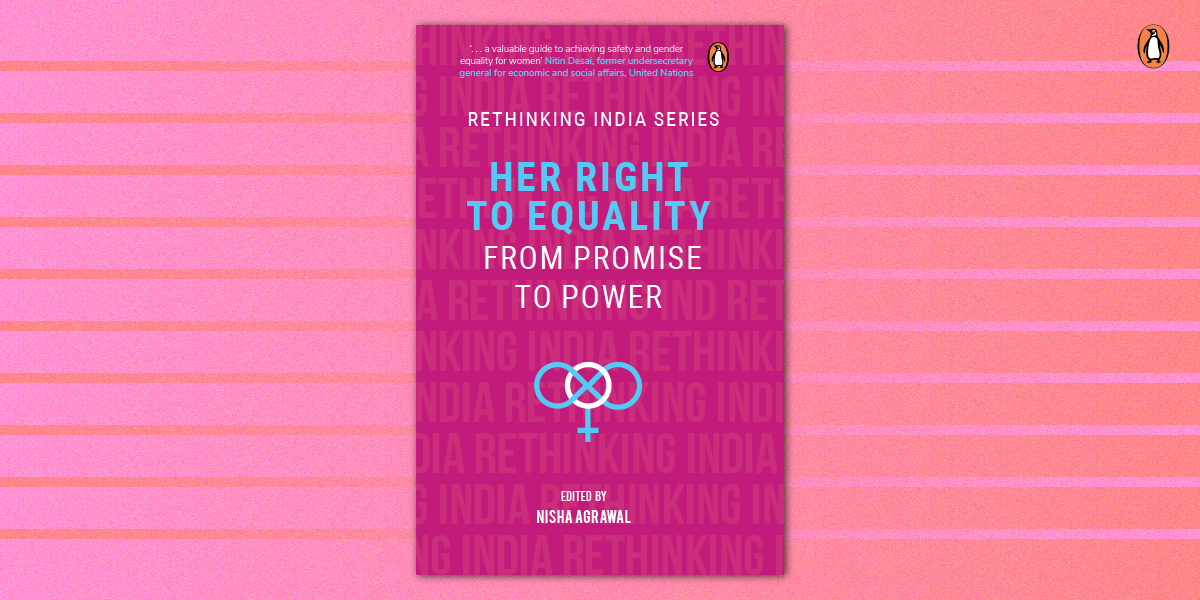
Promises of gender equality and justice have been made, repeatedly. They have failed repeatedly. The roots of misogyny form the foundations of our civil society, and the essays in Her Right to Equality raise crucial questions about the status of gender equality in our country. It scrutinizes institutions that are meant to safeguard the rights of women and minorities, and sheds light on the colossal amount of work that needs to be done. This is an excerpt from the volume:


A great deal of focus in this discussion is on the decline. However, an equally (if not more) important issue is the persistently low level of women’s LFPR in India, lower than our other South Asian neighbours, Bangladesh and Sri Lanka. In joint work with Naila Kabeer, we explore factors that shape the low level. Our results are based on a large primary household survey in seven districts in West Bengal. We collect data on all the indicators included in the official surveys, and on additional variables that are usually not included in surveys. Since we wanted to focus on which specific internal constraints inhibit women from working, we asked specific questions on whether they were primarily responsible for childcare, for elderly care, for standard domestic chores (cooking, washing clothes, etc.), and if they covered their heads/faces always, sometimes, or never. The latter is taken as a proxy for cultural conservatism; indeed, internationally, the fact of women covering their faces in public spaces is often criticized as an oppressive practice. Of course, the context in the West is different in that covering heads/faces is associated with being Muslim. In India, the practice is followed by both Hindus and Muslims, and in recognition of that, we label it more broadly as ‘veiling’, and not as wearing a burqa or hijab. We implemented simple changes to the official survey questionnaires in order to get better estimates of women’s work that lie in the grey zone. Accordingly, our estimates are higher than official estimates, but even with improved measurement, a little over half (52 per cent) get counted as ‘working’. Which means that participation in work is low, even after work in the grey zone is included.


The Critical Role of Domestic Chores

front cover Her Right to Equality
Her Right to Equality||Nisha Agrawal

We then investigated the main constraints to women’s ability to work. Our main findings were that women being primarily responsible for routine domestic tasks such as cooking, cleaning and household maintenance, over and above the standard explanations in the literature (age, location, education, marriage and so on) as well as elderly care responsibilities, lowers their probability of working. If domestic chores emerge as an important determinant of women’s labour force participation, after controlling for the standard explanatory factors, the question that arises is this: to what extent do the low LFPRs found in India in particular, but in South Asia and MENA (Middle East and North Africa) countries more broadly, reflect international differences in women’s involvement in housework? There is some indicative evidence that indeed, in these regions, women spend more time on unpaid care work, broadly defined (including care of persons, housework or other voluntary care work), relative to a range of other developing and developed countries in the world. According to OECD (Organisation for Economic Cooperation and Development) data, in 2014, the female-to-male ratio of time devoted to unpaid care work was 10.25 and 9.83 in Pakistan and India respectively—the two countries with the lowest female LFPRs within South Asia—compared to 1.85 in the UK and 1.61 in the US. Factors traditionally viewed as cultural norms that constrain women’s participation in paid work, such as the practice of veiling or adherence to Islam, are insignificant in our analysis after the conventional variables have been accounted for. Given that the primary responsibility of domestic chores falls on the woman, we suggest that the conventional definition of cultural norms needs to be revised and shifted to focus on the real culprit, viz., the cultural norm that places the burden of domestic chores almost exclusively on women.


Is There an Unmet Demand for Work?

Do women really want to participate in paid work, or have they either internalized the male breadwinner model which relegates them to take care of the home and the family? What about the ‘income effect’, according to which women work only if necessary for economic reasons, and withdraw from work as soon as they don’t need to? What about the marriage penalty, that is, women dropping out of the labour force once they are married? Thus, women’s work might be a sign of economic compulsions of trying make two ends meet rather than an expression of their desire for economic independence. We explore the evidence for this in our survey. Married women are less likely to be working than unmarried women, but marriage in India is near universal (making marriage the most common career choice for women), and asking women to choose either marriage or paid work is not a fair or realistic choice. We asked women who were currently not working if they would accept paid work if it was made available at or near their homes; 73.5 per cent said ‘yes’. When questioned further, 18.7 per cent expressed a preference for regular full-time work, 7.8 per cent for regular part-time work; 67.8 per cent for occasional full-time work and 5.78 per cent for occasional parttime work. It would appear that there was indeed a major unmet demand for paid work, whether regular or occasional, full-time or part-time, as long as the work in question was compatible with their domestic responsibilities. Based on this, we suggest that being out of the labour force is less a matter of choice for large numbers of women, and more a reflection of the demands of unpaid domestic responsibilities.

~

Her Right to Equality is an urgent and meticulous study of how far we have come in terms of gender justice, and how far we need to go.


An unforgettable portrait of being impetuous women

Impetuous Women is about women who step across the Lakshman Rekha, whose transgressions fly in the face of the establishment, the patriarchy, often their own families and loved ones. From two housewives who play a potentially lethal game of keeping up to an expert baker who serves revenge with chocolate sprinkles on top; from a stern hostel warden who examines her relationship with the teenagers she must surveil to a grouchy widow shuts out the world; from a couple madly in love and desperate for a bit of privacy to a tender bond between a husband and wife, these stories create an unforgettable portrait of modern-day India and the experiential realities of being impetuous, of being women.


Here’s an excerpt from the book, Impetuous Women:


I could have moved at that very instant, if I wanted to. I’m a verb after all. But I decided to wait for the right moment. Having been inert for so long, I wanted to savour it. I mean really savour it. So, here I am, narrating the events of the last poetry meeting She-poet ever attended. If I had fingers, I’d rub them in glee! Someone had dropped me during a meeting. Thereafter, unnoticed, I slipped and slid around the table at the centre of the grey conference room, until I finally found a crack in the wood. I remained there, half-buried by a sticky blanket of grey-black erased words, each wrapped tightly in its casing of rubber. I was, for once, watching things unfold around me instead of being in the thick of it. The conference room was inside a squat grey building, which was a cultural centre and library.


There was also an auditorium. The other rooms were full of books and magazines, and soft piped music. Bulletins about cultural activities and happenings in the city were tacked on to felt- covered notice boards in the main hall. Everything inside was grey. The walls were grey. The tables were grey. The chairs were tubular steel with grey foam seats. Even the floor was a greasy grey colour. The conference room had a glossy calendar with a blood red arty print. It was the only bright thing in the room. But it was so arty that it failed to make things cheery.


It is a funny thing. I must have been in that room dozens of times, before my involuntary and sudden
imprisonment within the table, but I had never bothered to look around properly. I had never truly seen the room and its inhabitants. I had never breathed in its atmosphere, so to speak. But once I was bundled up in the crack, I began to observe people closely. Perhaps that is why I was able to understand her the way others in the grey room never would.


She-poet was one among the two-dozen odd poets who gathered in the grey room every fortnight to read
the poems they had written according to a theme chosen in the previous meeting. They assembled at six on the dot in the evening, which was close to dinner time for some of them. I watched them squirm when their stomachs grumbled, and cough to cover up for the sound. The others ignored these un-poetic sounds, and continued with the reading, discussing the merits and demerits of the poems, in soft cultured voices, careful not to irk one another, at least not too much. They reminded me of student ballet dancers doing pirouettes in front of a distinguished surprise-visitor at school.


Each poet brought a sheaf of poem-bearing papers. These were distributed to the members present, and extras were put away on one side of the table for latecomers. Some were habitually late. She-poet was one of them. She was late not because she was tardy by nature, but because she hated the city. The language was strange to her, even though they were all from the same country, and the locals treated her as if she was an unwanted foreigner. You could tell by the way she blundered in that she had not come out of her house until it was nearly time for the poetry reading to begin. She was relatively, but only relatively, new to the city. She had lived in a cleaner, quieter place before, another country. She was used to wide expanses of greenery between her and other people. Some water had flowed under the bridge since, so now the ‘being used to’ bit was more of a mind thing than what being used to really meant.
Nevertheless, She-poet remained faithfully wistful about her past expatriate status.


Impetuous Women | Shikandin


She had spent many years away, and after her return, felt overwhelmed by the blatant consumerism that had mushroomed all over her homeland. The country was now dirtier and more chaotic. She could not bear the sloppiness, the lack of civic sense in her fellow countrymen. It seemed to her that the new-found wealth had taught them nothing good; if anything, the sudden money was making everyone behave worse than ever.


She-poet found it difficult to come to terms with those who were less impressed by foreign things, and had travelled to more places in the world than she, without ever having been an expatriate. She was dismayed too, by the poverty on the pavements outside glittering hotels and malls, festering like the weeping sores of lepers. She-poet had many complaints. And though she took care not to voice them openly, her secret privations remained unresolved. And unknown to her, she was observed by others with pursed lips. ‘I remember a land that was poor but genteel,’ she once told the poets, after they had reacted blandly to one of her sugary patriotic poems.


A professor of English, sporting a French-cut beard and a thick provincial accent, held up the paper which contained her poem and said, ‘So, according to you, that is the patrimony we deserve after being colonized?’ Before She-poet could think of a suitable retort, a member giggled and said that perhaps she was disappointed because they had progressed so much during the years she had lived abroad. There was a mocking silence as She-poet struggled to reply. The words were half-formed inside her head, but her tongue was too slow to lob them. A silver-haired lady with spectacles so thick that they looked like glass blinkers, and who was the de facto convener of the meetings, looked around owlishly for two or three seconds before reciting an absentee member’s poem loudly. She-poet lost her chance, and inwardly fumed for the rest of the session.


Another time, another professor-poet, who, despite having a doctorate in English and being the principal
of a suburban college, could barely write grammatically correct English, annoyed her so much that she didn’t attend many sessions after that. He called himself a poet, wrote poetry and got it published. It was another matter that the books were shabbily printed by an obscure vanity press. Some gossiped that it was his own publishing house, set up to make money off desperate poets. Barely- literate-professor-poet also enjoyed bashing the erstwhile colonizers in his poetry and lectures. Nothing the ex- rulers did was good. But he had taken pains to get his degrees in English literature, albeit from questionable institutes, and had got his first job as a lecturer of English through much palm-greasing and bum-kissing. He was ingratiatingly nice to the other academics in the group. He seemed desperate to cling to a group of poets writing in the English language. The others knew that he had succeeded over the years because of his ability to hobnob with people with political clout, people who could fund and sanction arts grants and awards.

R.I.P. India’s sense of humour

Who do we laugh at and who do we laugh with? Avay Shukla, an ‘unserious’ writer, has a clear vision of what has been going off-track in India in the past decade. And he says it all with clarity and a biting humour. Here is an excerpt from his book PolyTicks, DeMoKrazy & Mumbo Jumbo: Babus, Mantris and Netas (Un)Making Our Nation.

I belong to a generation that was weaned on the Reader’s Di- gest feature “Laughter, the best medicine”, MAD comics, PUNCH magazine, Mark Twain, Oscar Wilde, Groucho Marx and quotations from a mysterious “Confucius” (“a man who be both a fool and an arsehole is an ignoranus”) who bears no resemblance to the original sage. Armed with the understanding of human character acquired from these astute observers I have gone through life realising that humour is the ultimate gift of expression that relieves, criticises, elevates, weeps, embraces. But most important, it always teaches, whether it be by the understatement, the mimicry, the pun, the satire, the suggestio falsi, the paraprosdokian or even the humble limerick. There is no more effective (but civilised) commentary on the times, and no more perceptive (but amiable) assessment of individuals. Societies and civilisations which espouse humour are tolerant. sensitive to public opinion, unbigoted and open-minded. By the same definition, those which seek to curb humour, either by legal fiat or street violence, are just the opposite, destined either for fascism or anarchy.

front cover PolyTicks, DeMoKrazy & Mumbo Jumbo
PolyTicks, DeMoKrazy & Mumbo Jumbo||Avay Shukla

India today seems to be headed in this latter direction. Powerful groups – both state and non-state actors, to use a preferred phrase – who brook no criticism, and mis-guided bleeding hearts or seekers of the two minute fame appear to have launched a war against all forms of humour in this country under the specious banner of “political correctness.” It began with Sashi Tharoor’s “cattle class” comment: in the ensuing din it is still not clear who was more offended – the champions of the poor who did not like the poor being “bovined”, as it were; or the Hindutva brigade who resented the disparaging reference to the cow.

Then came the arrest in Mumbai of the cartoonist Aseem Trivedi who dared to publish a caricatured version of the Ashoka Pillar, in order to show how our polity had been debased, distorted and corrupted over time. Cases were slapped against him for sedition and under the provisions of the Information Technology Act and Prevention of Insult to National Honours Act. One could be forgiven for thinking that he is a member of ISIS! Some time later a once-glamorous member of Parliament complained in the House how lawmakers were being made fun of in the media, and demand- ed steps to curb this tendency – she received a bi-partisan support that has not been seen since. Thereafter the Information and Broad- casting Ministry wrote to all TV channels not to make light of the Prime Minister’s sombre image, and to show more respect for his position. Last year this intolerance continued as criminal cases were registered against the entire team of AIB (All India Bakchod) and the presenters for staging the “Roast” show. There was even a demand to rope in some of the more prominent members of the audience. And this when everybody who watched the show had a rollicking good time and no one had complained!

And things are getting worse. Just yesterday a comedian, Kiku Sharda (a regular on the Kapil Sharma show) was arrested and sent to jail for mimicking – hold your breath – Baba Ram Rahim Insan of Sachha Sauda fame! The charge? (Hold your breath again) – hurting the religious feelings of his followers! (Sec. 295A of the IPC). It’s bad enough when this antiquated law is applied to any of the 33 crore Gods in the Hindu pantheon; now it is being used to protect even so called God men. Asa Ram’s lawyers must be watching these developments keenly – maybe the same argument can be used to spring him from jail.

~

Avay Shukla is a much-needed contemporary voice. His book tackles difficult topics with nuance and an acerbic sharpness.

The kite rises into the air

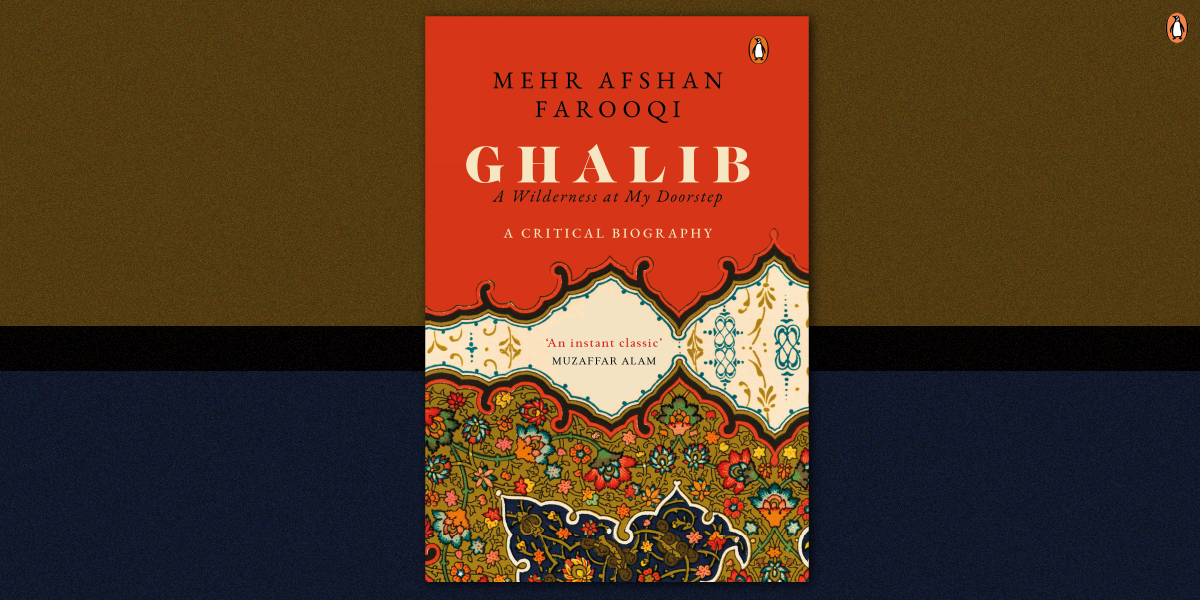
Mirza Asadullah Khan Ghalib was born in Agra in the closing years of the eighteenth century. A precocious child, he began composing verses at an early age and gained recognition while he was still very young. He wrote in both Urdu and Persian and was also a great prose stylist. He was a careful, even strict, editor of his work who took to publishing long before his peers.

Ghalib’s voice presents us with a double bind, a linguistic paradox. Exploring his life, works and philosophy, Ghalib is an authoritative critical biography of Ghalib and opens a window to many shades of India and the subcontinent’s cultural and literary tradition.

Here is an excerpt from the text by Mehr Afshan Farooqi:


One day, my heart like a paper kite,

Took off on freedom’s string,

And began to shy away from me,

Became so wayward, it pestered me.


Ghalib, from an early composition


To tell the truth – for to hide the truth is not the way of a man free in spirit – I am no more than half a Muslim, for I am free from the bonds of convention and religion and have liberated my soul from the fear of men’s tongues.


Ghalib, in Dastanbuy


front cover of Ghalib
Ghalib || Mehr Afshan Farooqi


‘Mirza Asadullah Khan Ghalib, known as Mirza Naushah, titled Najmuddaulah Dabir ul-Mulk Asadullah Khan Bahadur Nizam Jang, with the nom de plume Ghalib for Persian, and Asad for Rekhtah (Urdu), was born on the eve of 8th of Rajab 1212 hijri (27 December 1797) in the city of Agra.’ Thus begins Maulana Altaf Husain Hali’s important biographical account, Yadgar-e-Ghalib.

Indeed, Hali’s critical, path-breaking memoir of his great ustad reconstructs the poet’s life story in a thrilling narrative woven with anecdotes, letters, personal trivia, first-hand observations and, most importantly, a penetrating analysis of Ghalib’s poetry and prose. Ghalib’s colourful personality shines in Hali’s lucid prose. It is hard to imagine how much or how little we would have known of Ghalib without Hali’s seminal work. There were Ghalib’s letters – volumes of them, a vital source of information – but the inspiration and direction that Hali’s work provided to generations of scholars remains undeniable.

In his youth, Ghalib was counted among the most handsome men in the city, be it Agra or Delhi. He was tall, with broad shoulders; his hands and feet were noticeably strong. Even in old age, when Hali first saw him, the signs of beauty were apparent on his face and demeanour. He was married on the 7th of Rajab, 1225 hijri (1810 ce) to Umrao Begam, the daughter of Navab Mirza Ilahi Bakhsh Khan Ma’ruf. Ghalib was thirteen years old at the time, and his bride eleven. Some years after his marriage, Ghalib moved to Delhi. It appears that he lived in Delhi for the next fifty years, till the end of his life. According to Altaf Husain Hali, in this long period, he never bought a house. He chose to live in rented houses; when he got tired of one house, he moved to another, but always remained in the same neighbourhood: Gali Qasim Jan, or Habsh Khan ka Phatak, or a place nearby.

Ghalib became an orphan at the impressionable age of five, when his father, Mirza Abdullah Beg Khan, was killed by a stray bullet in Rajgarh, Rajasthan, where he had gone with a force from Alwar to quell a rebellion. He was buried in Rajgarh. Raja Bakhtawar Singh of Alwar fixed a generous allowance for Ghalib and his siblings – his older sister, known as Chhoti Begam, and his younger brother, Mirza Yusuf. The children and their mother had always lived at the maternal home in Agra. In fact, Ghalib was born in the grand mansion of his maternal grandfather, Khwaja Ghulam Husain Khan Kamidan. Khwaja Ghulam Husain, a military commander (kamidan in colloquial speech) in the province of Meerut, was among the leading elite of Agra. His estate included numerous villages, and he owned many properties in the town itself. Ghalib’s mother, Izzatun Nisa Begam, was literate. Because Ghalib’s father lived with his in-laws, he was fondly known as Mirza Dulha, or Mister Bridegroom. Ghalib himself was known as Mirza Naushah, which, too, means Mister Bridegroom. Such nicknames were terms of affection used for males living with their in-laws. Presumably, Ghalib’s father died in 1801 (although Ghulam Rasul Mehr gives 1803 as the date), because we know that his paternal uncle, Mirza Nasrullah Beg Khan, died some five years later, in 1806, because of the injuries he suffered after accidentally falling off his elephant. Although Ghalib recorded his uncle’s death as an important event in his life, there is no evidence that he was close to his uncle; however, he and his siblings did become entitled to a pension because they were among Mirza Nasrullah Beg’s dependents.

**

Forces: consolidation of a rajasic India

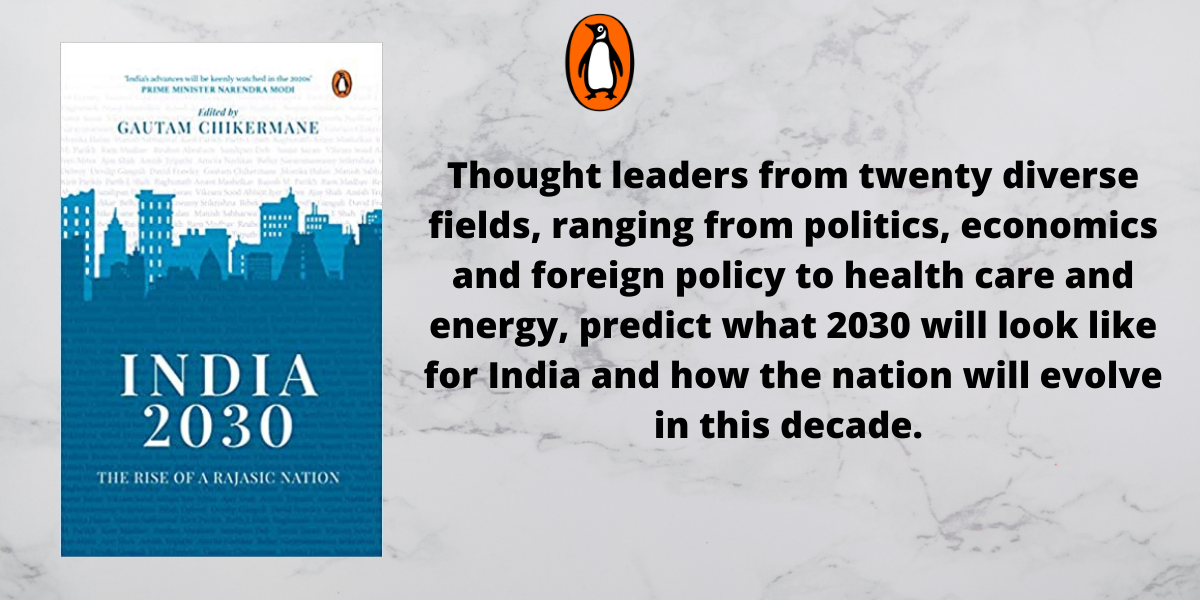
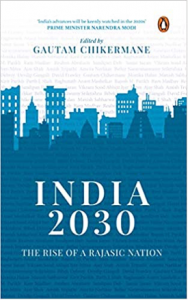
Thought leaders from twenty diverse fields, ranging from politics, economics and foreign policy to health care and energy, predict what 2030 will look like for India and how the nation will evolve in this decade.


Editor Gautam Chikermane has masterfully weaved together essays by Abhijit Iyer-Mitra, Ajay Shah, Amish Tripathi, Amrita Narlikar, Bibek Debroy, David Frawley, Devdip Ganguli, Justice B.N. Srikrishna, Kirit S. Parikh, Manish Sabharwal, Monika Halan, Parth J. Shah, Raghunath Anant Mashelkar, Rajesh Parikh, Ram Madhav, Reuben Abraham, Samir Saran, Sandipan Deb and Vikram Sood into a single volume that looks towards India’s future.


India 2030 | Gautam Chikermane


Here is an excerpt from the book India 2030-


Beyond all other transformations in India, the 2020s will see a rajasic reawakening of the nation. This dynamic surge in the country’s soul will be driven individually, one citizen at a time; it will articulate its self-becoming as a coming together of India’s collective soul. Its manifestations will be physical and mental, its driving force spiritual. Supported by a political leadership that is in tune with the soul of India, Bharat, this change began in the 2010s. It will consolidate in the 2020s and reset the material destiny of India in the 21st century.


It will create a new balance between two forces. First, a centripetal force that will concentrate the energies of India to the principles of its nationhood, be informed by its own intellectual traditions and expressed through a modernity rooted in its soul. And second, a centrifugal force that will expand its footprint outwards, through a deeper and stronger engagement with civilised nations going hand in hand with a self-assured confidence that will keep a check on barbaric powers on its borders.


The 2020s will be a decade of transition. The transition will impact every aspect of India – its psychological approach, its democratic institutions, its diverse people, its global engagements. The shift will impact individuals, bind them, it will be powered by them and will simultaneously serve them as a collective. It will be a time when the very life force of India will be in constant motion towards a new equilibrium that will take inspiration from the nation’s swabhawa (essential character or spiritual temperament) in order to follow its swadharma (express its true essence).


The life and dilemmas of Ruby R.

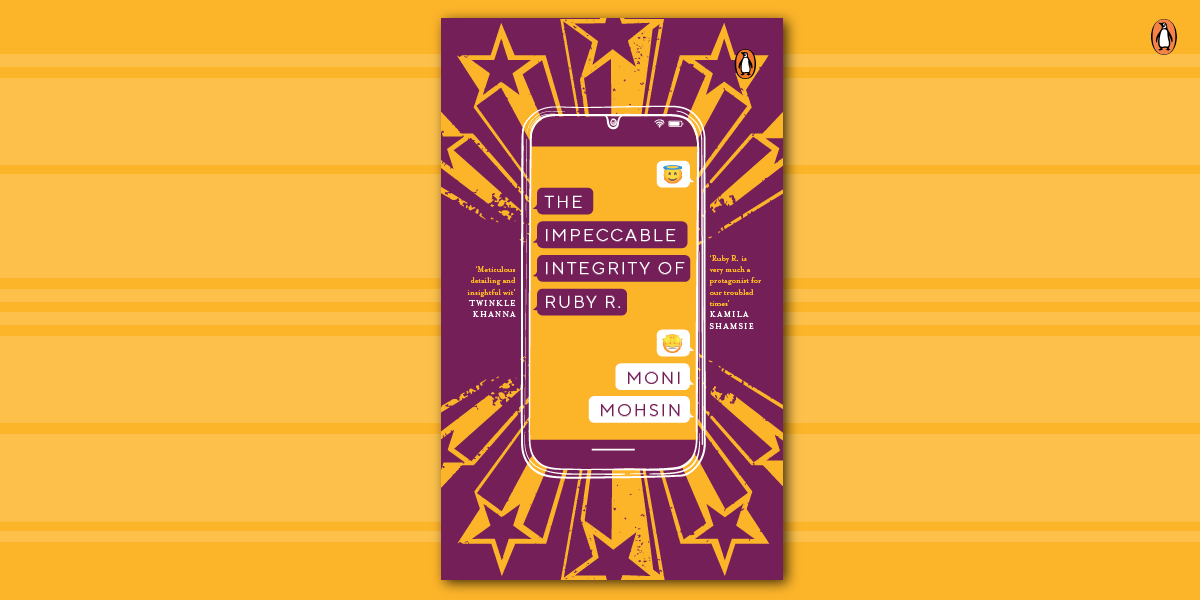
Ruby finds herself in politics, a field where even the best of people like Saif Haq have the moral compass of a plastic bag. But this is a game where Ruby will not be defeated. Get a glimpse into Moni Mohsin’s delightful new read through this excerpt:


Ruby had intended to push her way through the crowd to congratulate Saif on his rousing speech. Though neither as sophisticated nor as socially connected as Kiran, Ruby was not lacking in confidence. She knew from experience that diffidence in a woman was seldom rewarded. But once near the lectern, she was overwhelmed by unaccustomed shyness. Hugging her folder to her chest, Ruby lingered at the edge of the cluster around Saif. A couple of girls, she saw with a stab of envy, had managed to push through the thicket of boys and were now at his side, their radiant faces turned up to him like sunflowers.

He beamed at them from his great height. His caramel- coloured eyes crinkled at the corners and long vertical grooves creased his cheeks. Their voices raised in excitement, the boys were all speaking at once. One was suggesting they repair to the college canteen; another was asking how Saif intended to win the next election; a particularly loud one was demanding a selfie with him; Jazz was insisting that they go to a restaurant, while the handler with whom Saif had arrived—a beefy, middle-aged man sporting an ill-fitting blazer and a comb-over—stood by impassively.

Saif raised his hands as if in surrender and said in a loud but amused voice, ‘All right, everyone. All right.’ They fell silent at once. ‘I had a prior appointment, but you know what?’ He grinned at his fans. ‘I’ll cancel it. How’s that?’ His announcement was greeted with whoops of joy. Looking over the bobbing heads surrounding him, Saif glanced briefly at his companion who nodded and turned away. Pulling out a cell phone from his jacket pocket, he went towards the exit. Saif turned back to his admirers and laughed.

‘Okay,’ he said, clapping his hands, ‘let’s go to your restaurant then. But it better be a desi place. I’m sick of bland white food.’

Front Cover Ruby R
The Impeccable Integrity of Ruby R||Moni Mohsin

An ecstatic Jazz, his face lit up by a gigantic grin, whipped out his cell phone and spoke rapid Punjabi into it. Then he announced: ‘It’s arranged. Choy Saab says there’s only one small table  of diners and they’re finishing. Restaurant is empty otherwise. He’ll hold it for us.’ Several students peeled away, citing essays and other commitments, and slouched reluctantly towards the exit. Kiran, brushing past Ruby without a word, followed them out. Ruby had to leave for her babysitting job. She would have to hurry if she wanted to be on time. But she was finding it hard to wrench herself away. It was as if Saif exerted some gravitational pull that forced her to stay in his orbit.

‘Ruby?’ Jazz called out. Their posse, now reduced to a core of about fifteen fans and Saif, was heading towards the exit. ‘You coming?’

‘Er, I’d love to, but I have to go somewhere,’ she said, edging away.

‘Can “somewhere” wait?’ asked Saif. He broke away from the crowd and approached her. ‘You’re a student here, right?’

‘Yes, master’s in business and media,’ she said primly, tightening her grip on her files. ‘But I did my undergrad in political science. From Punjab University, Pakistan,’ she added stupidly, colouring in embarrassment.

‘Wow! I would love to hear your views on our plans.’

Ruby patted her hair to ensure that her protuberant ears hadn’t burst through.

‘It’s just that I have this, er . . . commitment and I . . .’

‘Well, if it’s with someone significant then I mustn’t keep you.’ He smiled his crinkly smile at her.

‘Oh? Oh, no.’ Her hand flew to her mouth. ‘It’s not that. Not at all, no, no.’

‘So, then?’ He cocked a teasing eyebrow.

The group was getting restless behind them. Jazz cleared his throat noisily. Saif, his gaze squarely on Ruby, gave no indication that he had heard. Ruby fiddled with her folder. If she didn’t make it to her job tonight, she would be letting down Annie and Jack. She couldn’t really afford to forgo the payment and fall behind in her bills . . .

‘Okay, I’ll come,’ she said impulsively. ‘But I have to quickly send a text first.’

Ruby was not the impulsive sort. She was, in fact, quite the opposite—calm, cautious, deliberate. But much like the committed dieter who gives into temptation and has a slice of cake, and then follows it with a milkshake because the damage is already done, having broken her iron schedule once at Kiran’s behest, Ruby succumbed again. Knowing for certain that tomorrow would find her back at the library table in her usual place beside the window in the third aisle from the door, Ruby allowed herself this one indulgence. It was a once in a lifetime opportunity. In what world would Saif Haq ever invite Ruby Rauf to dinner again?

~

The Impeccable Integrity of Ruby R is exciting, and we can’t help but wonder how Ruby will fare in Saif’s ruthless world.

Cloudy with a chance of fruitfall

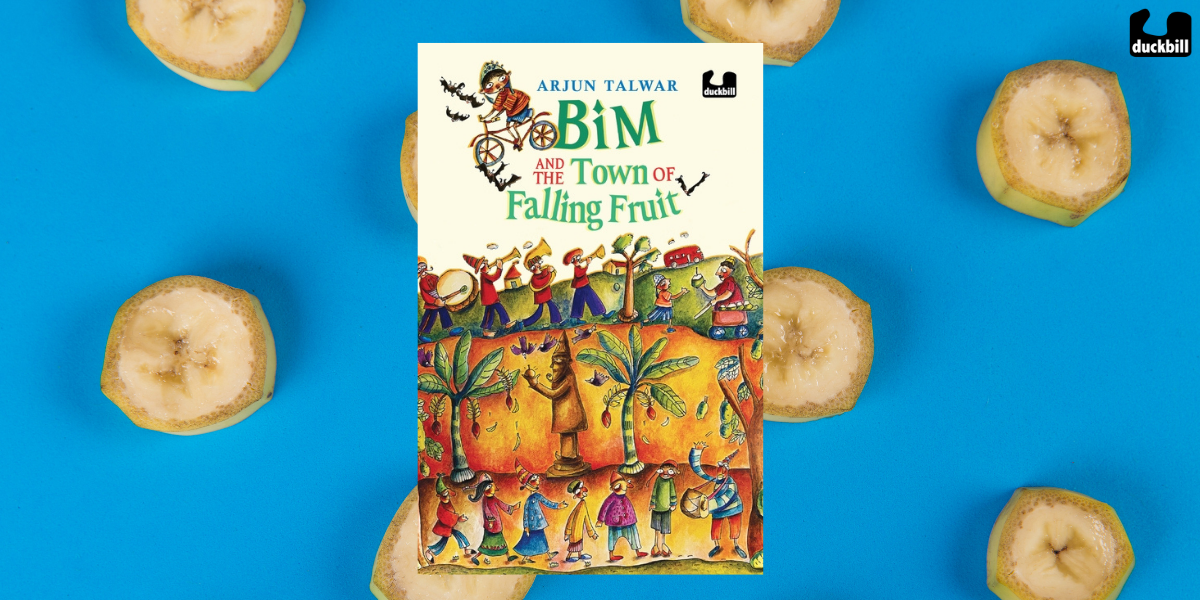
Poondy’s weather reports feature fruits. They fall from the skies. But there’s a lot more happening in this quaint town. Get a glimpse into the magic with this excerpt from Arjun Talwar’s delightful new book, Bim and The Town of Falling Fruit:

Bim

Most of Miss Chitty’s passengers were people who’d just arrived to Poondy. This meant that she had to carry their suitcases and put them on top of her car before taking them to town. If the passengers discovered they were in the wrong Poondy, Miss Chitty had to take these down and say sorry, as if it was all her fault. So she had a habit of telling these newcomers where they were before she touched their bags.

‘This is the Poondy where fruit always falls,’ she would say.

Because if there’s anything special about Poondy, it’s the jackfruit, coconut and toddy trees that are always threatening to drop their fruit on everyone’s heads. Most of these trees lean away from their roots at an angle, so fruit floats above the whole town. There are skinny trees, fat trees, trees you could climb and trees you couldn’t, but the sound of fruit falling is always the same: thrrrump.

…There are two approaches to the problem of falling fruit in Poondy. One is simply to always look up. You see when a jackfruit or coconut breaks off its branch. You move away, your head is saved. On the other hand, two up-lookers might bump into each other. But there are ways to avoid this (for example, by whistling). Even then, an up-looker can easily step into a pile of cow poo. Can you imagine scraping poo off your sandals while looking up?

For a long time, this was the only strategy they had in Poondy. Then Falwala came up with the idea of a fruit-helmet.

A fruit-helmet is a piece of headgear, with or without chinstrap, intended to save the skull from the force of falling fruit. What makes a fruit-helmet special is the gap between the top of the helmet and the head below it. Because of the gap, the head is safe, even when a jackfruit lands on it. A statue of Falwala in a prototype fruit-helmet stands in the middle of the Big Square (Falwala didn’t enjoy his success for long; he was pummelled by a coconut while washing the prototype in a pond).

The helmets look silly. But you can walk freely, whistle or not whistle, have clean feet and, in general, lead a normal life, while living in a world of falling fruit. For these reasons, fruit-helmets are popular with Poondizens. They’re traded in various forms—brightly coloured or unpainted, steel or wooden—and can be ready-made or made to order. You can find pointy ones that split the fruit open, so it can be eaten. You can have a hole in the back to put your ponytail through. But the essence of a fruit- helmet is the same as it was in Falwala’s day. It boils down to that invisible ingredient: the gap.

front cover Bim and The Town of Falling fruit
Bim and The Town of Falling Fruit||Arjun Talwar

Our fruit helmets are ready. How about you?


The road to scale: challenges and prescriptions for success

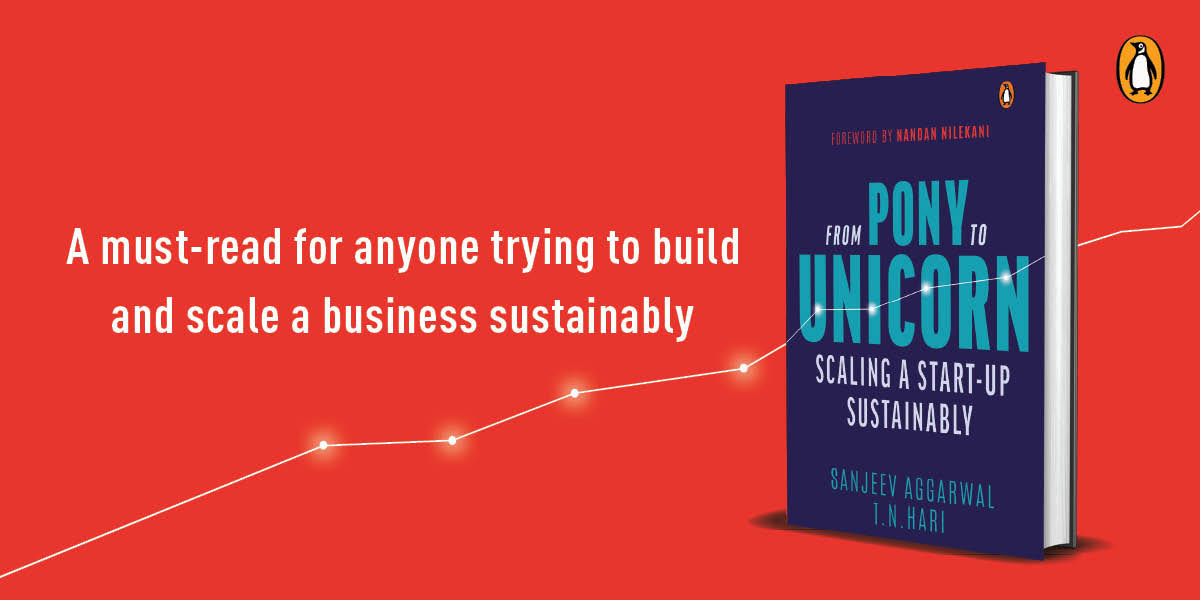
From Pony to Unicorn lucidly describes the X-to-10X journey that every start-up aspiring to become a unicorn has to go through. The book effortlessly narrates the fundamental principles behind scaling. Guaranteed to make for a very interesting read, the book will be useful to entrepreneurs, leaders and investors involved in scaling start-ups. Here is an excerpt from the book From Pony To Unicorn:


In his epochal book, Small Is Beautiful, Ernst Friedrich Schumacher says, ‘even today, we are generally told that gigantic organizations are inescapably necessary; but when we look closely we can notice that as soon as great size has been created there is often a strenuous attempt to attain smallness within bigness.’ Big companies have tried to act small to preserve innovation. Extreme proportions, whether for a life form or an organization, is not natural. It is only in science fiction that one comes across animals the size of Godzilla. The network of blood vessels and nerves and the bone structures needed to support a life form of this size don’t exist in the real world. Even large organizations need intricate structures, speedy communication channels, an extremely strong foundation and flawless management. From time to time, a few organizations defy all odds and make it really big until a small start-up somewhere ends up disrupting them. However, the quest for scale is never-ending. One of the most enduring human pursuits throughout history has been to create things on a grand scale. Whether it was building mammoth pyramids in Egypt or connecting the mediterranean with the red sea through the Suez, or laying undersea cables across the Atlantic, the attraction for grandeur and scale has been incessant. Despite the obsessive and timeless allure of scale, the failure rate has been high. Failure to scale can be because of many reasons, some of which are quite universal and pervasive. They show up in almost every scaling scenario. An understanding of these reasons can be very helpful. It does not guarantee success but can raise the odds in favour of success appreciably. There are also unique challenges in every scaling scenario. You need to deal with these like you would deal with any ‘first time’ problem. Tolstoy’s quote from Anna Karenina is beautiful and sublime, but there are underlying nuances and variations in its meaning. It is the sheer variety and number of nuances that make universal prescriptions for success and scaling, as much as for happiness, almost impossible and often meaningless. This applies as much to start-ups as to families. The closest universal prescription for success was from Arthur Rubinstein, who once said, ‘there is no formula for success, except perhaps an unconditional acceptance of life and what it brings.’ Insights and prescriptions make sense only to individuals who recognize deeply that lessons and wisdom are meaningless in the absence of context, and there is no wisdom or prescription that can’t be challenged. However, given a clear context, an insight drawn from similar contexts can be very powerful, create those ‘Aha!’ moments and help you rapidly overcome the hurdle that is holding you back. Steve Blank, a highly respected author on entrepreneurship in Silicon Valley, in an interview with Kevin Ready published by Forbes magazine, defines a start-up as a ‘temporary organization designed to search for a repeatable and scalable business model’. Eric Ries, a successful American entrepreneur and prolific author, in his seminal book The Lean Start-up, defines a start-up as an organization that is dedicated to creating something new under conditions of extreme uncertainty. He further adds, ‘this is just as true for one person in a garage as it is for a group of seasoned professionals in a Fortune 500 boardroom. What they have in common is a mission to penetrate that fog of uncertainty to discover a successful path to a sustainable business.’


From Pony To Unicorn
By Sanjeev Aggarwal || T. N. Hari

This is a reasonably accurate description of what every start-up sets out to do. However, it is a bit too broad and would include many organizations, such as research laboratories and Fortune 100 companies that wouldn’t be considered start-ups. Therefore, let’s narrow this down by adding three other unambiguous filters before an organization dedicated to creating something new under conditions of extreme uncertainty can be called a start-up: a) the founder/s should still be active; b) it should be funded by venture capital (vc); and c) it should still be a private company. if these filters are applied, companies like Amazon, Google, Flipkart, Uber and Lyft would fail to qualify as start-ups, while Bigbasket, Doordash, Rubrick, Dunzo, Paytm and Swiggy would all qualify. While founder/s being active and the start-up not yet being a public company are understandable filters, the additional filter of the organization being VC-funded is relevant because that helps exclude mom-and-pop businesses that don’t have the same appetite for scaling as VC-funded start-ups.


Geoffrey West in his seminal book Scale, published by Penguin Press in May 2017, points out that scaling laws, whether for organizations, organisms or cities, are consequences of the optimization of network structures that sustain these various systems, resulting from the continuous feedback mechanisms inherent in natural selection and survival of the fittest. There is compelling evidence, even though there are the rare exceptions, that scaling of organizations follows certain power laws. He also points out that after growing rapidly in their youth, almost all companies end up floating on top of the ripples of the stock market with their metaphorical noses just above the surface. This is a precarious situation because they can drown in the next wave, and they are even more vulnerable if they can’t deal with the uncertainties of the markets and their own finances. While it is important to be optimistic and believe that by doing the right things your start-up could deftly navigate through the labyrinth of challenges, it is equally important to have the wisdom to understand that scale, especially extreme scale, is truly an exception and nature has stacked all the odds against it!

The fine art of balance – Deanne Panday’s guide to a wholesome life

Deanne Panday tackles all facets of modern life in her new book, from home-cooked food and finances to spirituality and joy, nudging us towards a holistic approach to wellness. Here is a glimpse into her insights on climate change:

~

The COVID-19 pandemic changed the way we experience life in so many ways. One of the most drastic impacts was on the environment when half the world was forced to stay home, and reduce movement and travel. All those days, I woke up to a clear, blue sky instead of the smoggy, unclear one I’ve gotten used to in the years I’ve lived in Mumbai. With no vehicles on the streets and polluting industries shut, people were able to breathe probably the cleanest air of their lives. It’s a pity it took a life-threatening virus to steer us to a way of life we should anyway strive for.

Our reckless and ignorant attitude towards the environment has brought us where we are today. We are all guilty of willingly choosing the things that convenience us, no matter how much it endangers others. As long as it doesn’t harm us, as long as our needs are met, we’re ready to turn a blind eye to the destruction we leave in our wake. I see children learning about various subjects in school and then spending more hours gaining more knowledge, but yet not enough to change their lives in a way that they can reduce pollution in their surroundings and work to reverse it.

According to the National Green Tribunal, more than 60 per cent of sewage generated by urban India is untreated and enters water bodies, such as rivers, making the water in them unfit for consumption.1 We somehow think that whatever we throw away will be cleaned by someone else. It’s an ignorant attitude, and we need to raise our children to be responsible for their own actions. Littering, even if it is a small packet of single-use plastic, doesn’t do any immediate harm, but this attitude is part of the reason we are the fifth most polluted country in the world. People blame it on several things, but it’s never themselves. The power to reverse ecological damage lies with the people, but we often forget the responsibilities that accompany that power.

Front cover balance
Balance||Deanne Panday

I learnt a lot more about our impact on the environment when I took up an online course offered by Harvard University  during the lockdown. I discovered just how badly we have abused our planet without realizing that we have abused ourselves in the process. Working out regularly and eating healthy can mean very little when the air we breathe is of poor quality. We are all partly responsible for that unbreathable air. By not taking care of the environment, we are endangering the lives of our children and our grandchildren. If you’re as old as I am, think back to your childhood. Wasn’t the environment much cleaner then? In just thirty to forty years—barely a blip when we consider the age of the Earth—we have damaged our planet to such a grave extent that we, along with other living creatures, are all struggling to live. If just a few decades can do this, imagine how bad it will be in the next couple of decades. I shudder at the thought.

That is why I decided to include this chapter in my book. Turning a blind eye towards climate change does not make you immune to it. I hope better awareness will help you take a step towards a better life for yourself and the coming generations.

…While governments need to bring out drastic changes in policy to go green, on an individual level there is a lot we can do too. After all, when a toxic environment can affect our health so badly, how can we not make changes to our lifestyles? We can all contribute in the simplest ways, whether it is by walking or hopping on to a bicycle instead of taking the car to places that are close to us. Not only will this result in more exercise, but it will also ensure the air we breathe is cleaner.

A clean environment is one of the vital foods of a balanced life. As we work internally and externally on making ourselves happier and our lives more fulfilled, we also have to be mindful that our existence doesn’t impact the world adversely. After all, all that we do today affects our children’s and grandchildren’s lives in the future. I don’t want my loved ones to struggle to breathe clean air because of our ignorance and mistakes. Do you?

… I strongly believe that once our mindset changes, everything else will follow. In school and college, we’re taught about finance, science and history, yet spreading knowledge about the environment is overlooked and treated as less significant. We are raising our children to be intelligent enough to hold top rankings in prestigious universities around the world but ignorant of how the world is inhabited, polluted and taken for granted. For every action, there is an equal and opposite reaction. It’s time we inculcate respect for the planet in our lives rather than just our test papers and studies, and understand that every negative action of ours has an equal or more drastic effect on our planet. Climate change is more real than ever now. It is time to act.

~

Balance focuses on thirteen key elements that we all need for a happier, healthier life. It is customized to our benefit, and also serves as a guide to managing the deteriorative aspects of our life – anger, stress and dissatisfaction.

error: Content is protected !!