Publish with Us

Follow Penguin

Follow Penguinsters

Follow Penguin Swadesh

From Ithaca to Mumbai: How Winter the Dog Helped Heal a Lost Adult – An Excerpt

In Thinking of Winter, Shantanu Naidu reflects on isolation, responsibility, and the small, life-altering choices we make in moments of despair. The following excerpt captures the quiet transformation that begins when Winter enters his life.

 

Front cover Thinking of Winter
Know more!


***


People do selfish things when they are lonely. I don’t know if that justifies it, but I did them too.

In the eighth month of university, all the love letters posted abroad were spent, all the attempts to make friends had failed, and all that there was to do at the end of every day at Cornell, was to look in the mirror in disbelief: This was not how I thought it would be.

I would like to believe that a lot of smaller breakdowns over a longer period of time lead to a single moment that brings you to your knees and makes you give up once and for all. It can be losing your keys, or a phone call that wasn’t picked up, or missing the last bus home.

But what did ‘giving up’ even mean? There was a library of answers to that question. I, however, chose the most selfish one.

His name, was Winter.

Let’s be abundantly clear. Bad dogs do not exist. This is a blanket rule. There are no bad dogs, and we could, of course, delve deeper into unpacking this and talk about bad parenting and other reasons for some dear souls come to have behaviours that make them seem like bad boys, but for now, we’re just going to establish the inexistence of bad dogs.

I am in favour and support of a very large community of human beings who greet every dog with ‘whoozagoodboy’’ and sure enough the answer is and always should be, hesagoodboy.

But not Winter, no. A few million times during this story I will remind you with sweet frustration that I simply do not know what it was: genetics, soul, character or maybe something beyond our limited understanding of the world. But I do not know what was wrong with Winter.

Winter was a golden retriever, a runtof-the-litter puppy in a far-off town called Moravia while I studied in Ithaca. Forsakenness had me ride there, claim him one night in the fall of 2016, and bring him home a month later with the only friend I had: a Taiwanese introvert called Wen-Ko.

In the first week of Winter in my student apartment, while I contemplated daily whether I was even remotely capable of taking care of another life, Winter was busy stuffing himself in every gap that could be defined as one, even the ones that barely qualified. The only way to find him was to spot an absolute bushy butt sticking out of one place or the other. Some days easy to spot, some days laying still, waiting to be discovered, or worse, rescued.

As the urine stains on the carpet began to stay as contemporary art forms, depending on how hard you squinted, me and Wen would sit amidst them, saying very little but with the shared activity of looking at whatever Winter was up to in the room. Which, of course, was identifying gaps and stuffing himself in them.

Wen, a germophobe, who likes every aspect of her life in complete order, would watch in silence as Winter would create another pee spot next to her. Wen, the germophobe, would say nothing. As one loner to another, she accepted, in not so many words or any words, the reason why Winter was there in the first place. Her being there with us a was a strong nod in my direction saying, ‘If this is what will rescue you, I will support it.’

The Barron’s dog bible on golden retrievers that I had picked up in Boston instead of attending a job interview had me brace myself for what was to come after pee spots: poop on the carpet, furniture chewing, destroyed shoes, destroyed cables, lots of biting—unruly, unhinged, drunk puppy behaviour—and I was very ready for the damage. My roommate, on the other hand, was unaware, let alone prepared.

But it never happened.

Shoes stayed intact and the furniture unbothered. Cables right where I left them. Not a bark or a whimper. Nor a bite or a scratch. And while I waited patiently, anticipatingly almost, for Winter’s standard puppy phase, he seemed to have missed the memo.


***


Get a copy of Thinking of Winter from Amazon or wherever books are sold.
How a WhatsApp Vision Board Turned Impossible Dreams into Reality

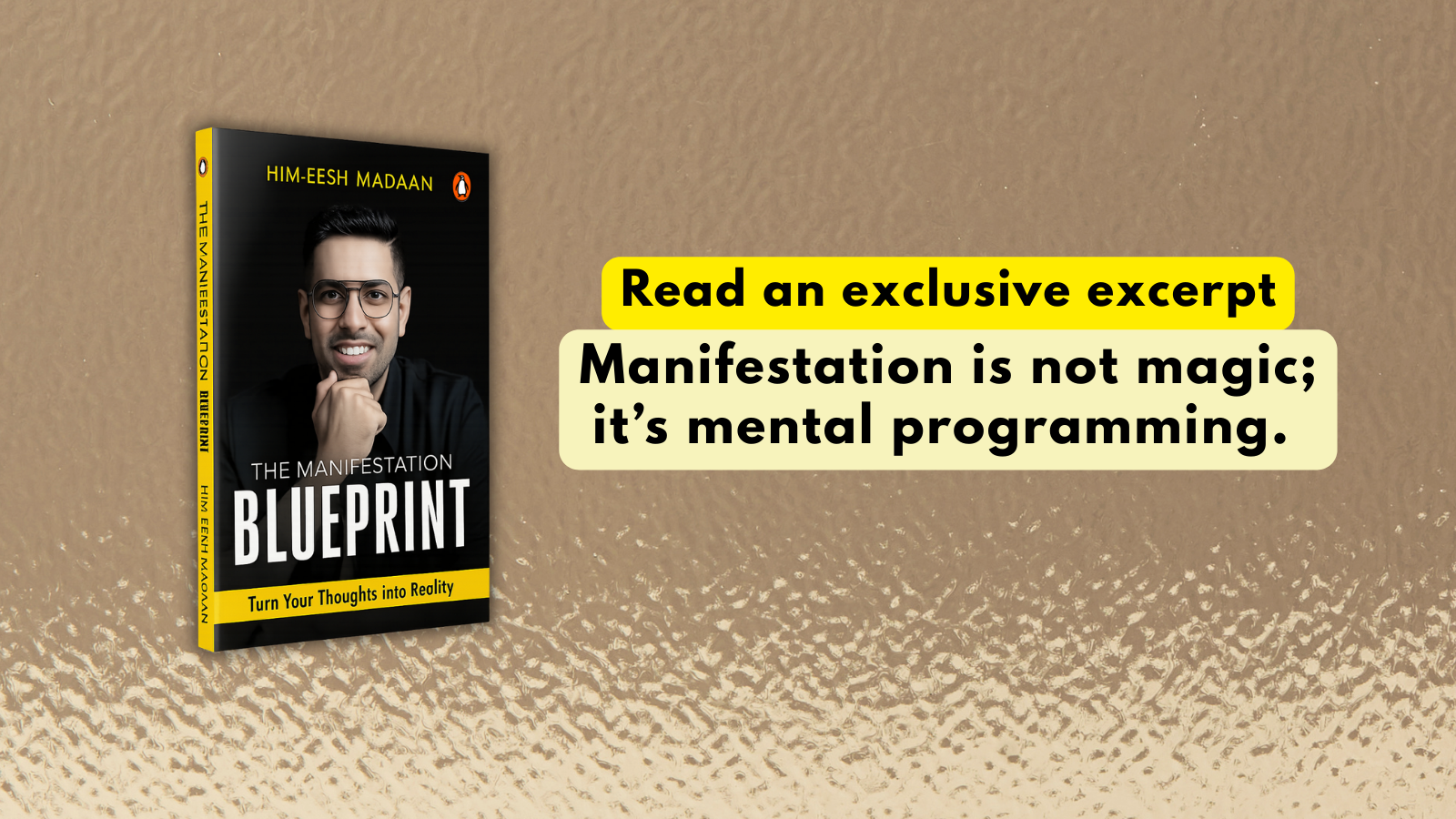
In The Manifestation Blueprint, Himeesh Madan doesn’t speak from theory – he writes from lived experience. In this excerpt, he opens up about the moment everything began to change.


Front cover The Manifestation Blueprint
Know more


***

On 25 December 2018, I was reflecting on the previous year. I had been working hard for the last few years but had not been able to create much financial progress in my life. During this introspection, I unearthed some magical elements that had influenced my life positively but had remained under-utilized. Now, as the new year approached, I started writing down all my aspirations
with renewed hope and determination. They weren’t just ‘New Year’s Goals’—I named them my ‘New Life Goals’!

As 1 January 2019 dawned, I made a WhatsApp group with myself. I downloaded a few images from the Internet and even edited some of them to suit my purpose. These were the images of objects and places that seemed out of my reach at that time, but I dared to make them my goals.

This part of my life is personal and could lead to judgment, but in this book, I want to be 100 per cent transparent with you as I believe that my journey, filled with a touch of madness and a step-by-step approach, can inspire and help you lead the life you desire.

One of my aspirations was to buy two Apple watches—one for me, one for my wife—and a MacBook for my work. So, I downloaded an image of a couple wearing Apple watches and sent it to my WhatsApp group along with the photo of a MacBook.

Another dream involved owning a Mercedes—not for external validation, but for deeply personal reasons related to a childhood experience. So, I even photoshopped a picture of a Mercedes car alongside us.

I also envisioned the type of house where my family would live and found an image on the Internet that matched my vision. Anyone can call this act as ‘foolish’. It won’t be wrong in saying, ‘If you don’t have money to buy an Apple watch, you don’t dream to own a luxury car or a house.’

And yes, as a coach and trainer, I aspired to deliver TED talks too.

My childhood was marked by financial hardships, and I never believed I’d have the opportunity to travel outside of India. However, my wife, Gunjan, came from a family that travelled to some parts of the country annually. I photoshopped an image to place me and my wife in front of Sydney’s Opera House.

As I was never able to go to college because of financial constraints, my wife and I wanted to contribute to the education of others. Hence, we resolved to fund the education of at least 100 students. My other goals included freedom to work from anywhere, a nice office for my team, a fit body, and many more.

Now, let me share the results.

I was able to achieve 100 per cent of my goals using the fundamentals I am going to discuss in this book.

Even the goals which were 100x of my financial worth, even the goals which sounded impossible to many—I was able to achieve them all.

2019: We got Apple watches and my MacBook.
2020: We moved to a nice office.
2021: We moved to a beautiful house and bought a Mercedes.
2022: I delivered my first TED talk and worked from Goa for a fortnight.
2023: We funded the education of 100 students, took a ‘one-way’ flight to Australia, visited the Oprah House, clicked the exact same picture as I had photoshopped and worked from Australia for a month. In 2024, we worked from the US for a month, and then in 2025, visited four new countries.


***

Get your copy from Amazon or wherever books are sold!

How the Most Beautiful Girl in the World Redefines Perfection!

Sixteen wonderful writers come together in this powerful anthology to share narratives that explore multiple themes on body positivity with the hope of helping empower teenagers navigate their modern worlds.

Read the excerpt below to explore these stories.

Front Cover Hug Yourself
Hug Yourself || Vinitha et al.


She crosses the gravel path and starts climbing the stairs leading to the main door of the building. Now, nudges are being exchanged, heads are turning as she walks down the corridor. Little explosions of laughter come to her ears. She sees eyes widen and jaws drop. Don’t they know that their faces give them away? These eyes-widened, jaw-dropping-in-surprise people—surely, they aren’t that dumb? She passes groups of boys and girls, giggling, sudden snorts of laughter bursting out of them. Why, it’s almost as if there’s a huge newspaper-style headline hovering over their heads, in bold letters, that says: It’s an elephant; it’s a hippo . . . no, it’s a new girl!


Headlines are meant to be read, which is why they are in those thick, dark letters. And that’s why no one tries to hide them. No one attempts to make them smaller . . . or less hurtful. Except at home, of course, where Amma is constantly scanning the things people say and do so that she can stop the ugly words from reaching Shalu’s ears, so that she can save her from the hurt. It’s like there’s a constant headline over Amma’s head, too. At times, it says: Keep it from Shalu! At other times, it says: What not to talk about to Shalu.


Shalu knows that Amma has two lists running through her head. One is a list of the things that she can tell her daughter. This one has silly, everyday things that aren’t likely to upset Shalu. On this list is also anything to do with school, studies, exams and higher education. There’s a certain logic that’s at work here, and after years of observing the grown-ups around her, Shalu now knows what that logic is.


Amma (and the world with her) thinks fat girls ≠ love life. And so, Amma (and the world with her) decide, fat girls = studies + books + interest in academics.


The other list of Amma’s has things that she tells Baba when Shalu isn’t around. On it are stories about girls who do the kinds of things that teenagers are supposed to do— partying with hordes of friends and spending the rest of the time talking to them on the phone. Exciting tales of ongoing battles with their parents about the clothes they buy and the things they do also feature here. Amma’s friends and cousins and colleagues supply her with these stories, and she laps up the details and then pours them out to Baba when he’s trying to read the newspaper.


Amma says none of this to Shalu, who has moved schools too often to have friends. And who, therefore, has no one to chat or go to parties with. And she says nothing at all about the boyfriends these girls begin to acquire and the ecstasy and heartache they bring. She’s doing it to protect Shalu, but surely, she can’t think her daughter is blind and stupid. After all, Shalu spends all day with boys and girls. Normal boys and normal girls. She sees the way they look at each other, eyes sliding casually before they stop at the face that’s taken their fancy. Sometimes, the eyes catch and hold, and Shalu knows then that there’ll be a new couple in the class in a few days. Those same eyes slide over her when she walks into her new classroom. But once they’ve taken in her size, they widen and jump, as if she’s the obstacle they want to avoid. And instantly, headlines appear over their heads: Is that the new girl? How much does she weigh?


The boys are turning away, their shoulders shaking as they laugh into their cupped hands. They slap each other’s backs on the new joke that’s walked into their lives. The girls stare at her, seeing the way the school skirt bulges out under the belt in the front and back. The uniform looks like a sack tied around her middle. They manage to see everything in that one sweep—the thickness of Shalu’s legs, the wobbly bits that hang from her arms and jiggle with every movement. They are glad to see all this. Shalu can see it in the words dancing over their heads: That’s not me! I am thinner than her!


They exchange glances, congratulating each other, celebrating their thinness, their extraordinary normalness. It takes them a minute more to realize what Shalu’s entry means, and when it does, Shalu sees the horrified headline that appears over them: Who will sit beside her?


***


Get your copy of Hug Yourself by  on Amazon or wherever books are sold.
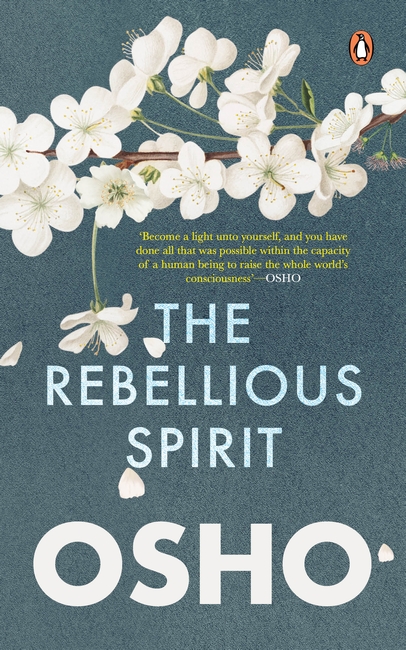
Were the teachings of Osho as radical as you think?

The rebel is one who lives according to his own light, moves according to his own intelligence. He creates his path by walking on it.’ 

– Osho

***

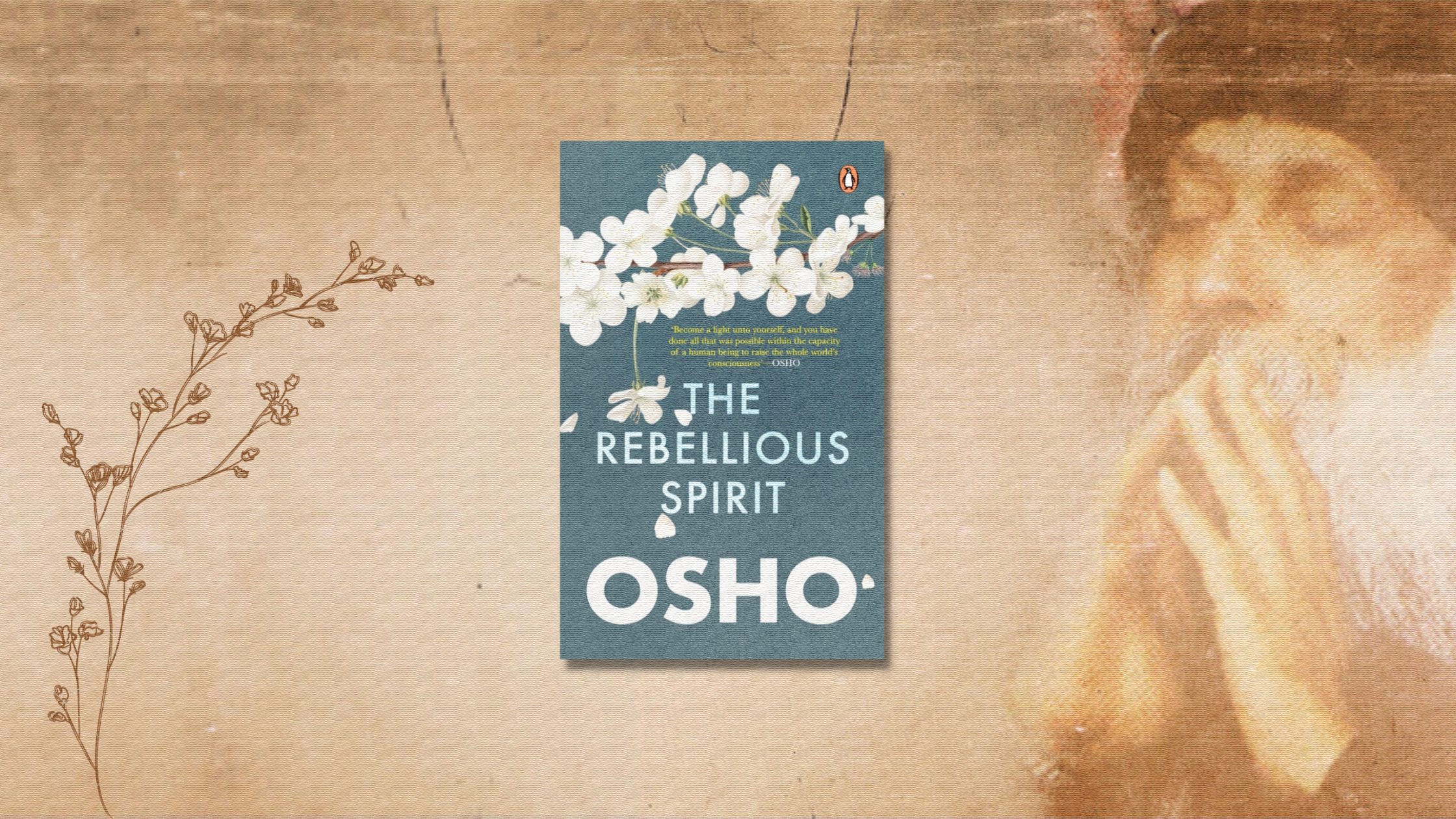
In The Rebellious Spirit, Osho addresses the spirit that dwells beneath our societal conditioning and fans a flame powerful enough to burn through layers of debris, allowing us to see with the enlightened being’s crystal-clear vision. This is a novel that will captivate you, make you laugh out loud, and give you the confidence to live your authentic life in the modern world.

Read this insightful excerpt from The Rebellious Spirit, a book in which Osho helps you become an enlightened being.

The Rebellious Spirit
The Rebellious Spirit || Osho

***

I do not have any teaching. My life is that of a rebel. I do not have a doctrine, a philosophy, a theology to teach you. I have only my own experience of rebellion to share, to infect you with rebelliousness. And when you are a rebel, you will not be a copy of me, you will be a unique phenomenon in yourself.


All Buddhists are trying to be carbon copies of Gautama Buddha. He has a teaching: ‘If you follow this certain discipline, you will become just like me.’ All Christians are carbon copies—the original is Jesus Christ.


I don’t have any teaching, any doctrine, any discipline to give to you. My whole effort is to wake you up. It is not a teaching; it is just cold water thrown into your eyes. When you wake up, you will not find that you are like me, a carbon copy of me. You will just be yourself, neither Christian, nor Hindu, nor Mohammedan—a unique flower. There are no two persons alike. How can there be so many Christians? How can there be so many Buddhists? The whole of history is proof of what I am saying.


For twenty-five centuries, millions of people in the East have tried the discipline and the teaching of Gautama Buddha. But not a single one has been able to become a Gautama Buddha. Nature does not allow two persons to be the same. Nature is not an assembly line where cars are produced, so you can see hundreds and thousands of Fords coming off the assembly line; the same, exactly the same. Nature is very creative, very innovative. It always creates a new man. It has created millions and millions of people, but never two people the same. You cannot even find two leaves on a tree exactly the same, or two pebbles on the seashore exactly the same. Each has his own individuality.


I don’t have a teaching. But whatever I have experienced is a living phenomenon I share with you—not words, not theories, not hypotheses. I can give you as much closeness as you need. Just as when you bring an unlit candle close to a candle that is burning, there is a point where suddenly the fire jumps from the lit candle to the unlit candle. The lit candle loses nothing, and there has not been a transfer of any teaching, but a transfer of fire.


I would like to say that I don’t have any teaching, but I have a great fire in my heart, and whoever comes close to me becomes aflame. These people here are not my followers. They are just friends who are sharing in an experience that can burn all that is false in them, and can purify that which is their essential individuality, their authentic potential. This is an alchemical school, a school of mystery. I am not a teacher, I don’t have any ideas, concepts. But I have a life to share, I have a love to share, and to those who are ready, I am ready to give all that I have. And in no way will they be enslaved. The closer they come to me, the more they understand me, the more they will be themselves. That is the miracle.


I don’t believe that walking on water is a miracle—it is sheer stupidity. The real miracle is to wake you up, to bring the message of freedom to you—freedom from all fetters. I do not replace your imprisonment with new fetters and new chains, I simply leave you in the open sky. I fly with you for a little while so that you can gather courage.

***

Get your copy of The Rebellious Spirit by Osho on Amazon.

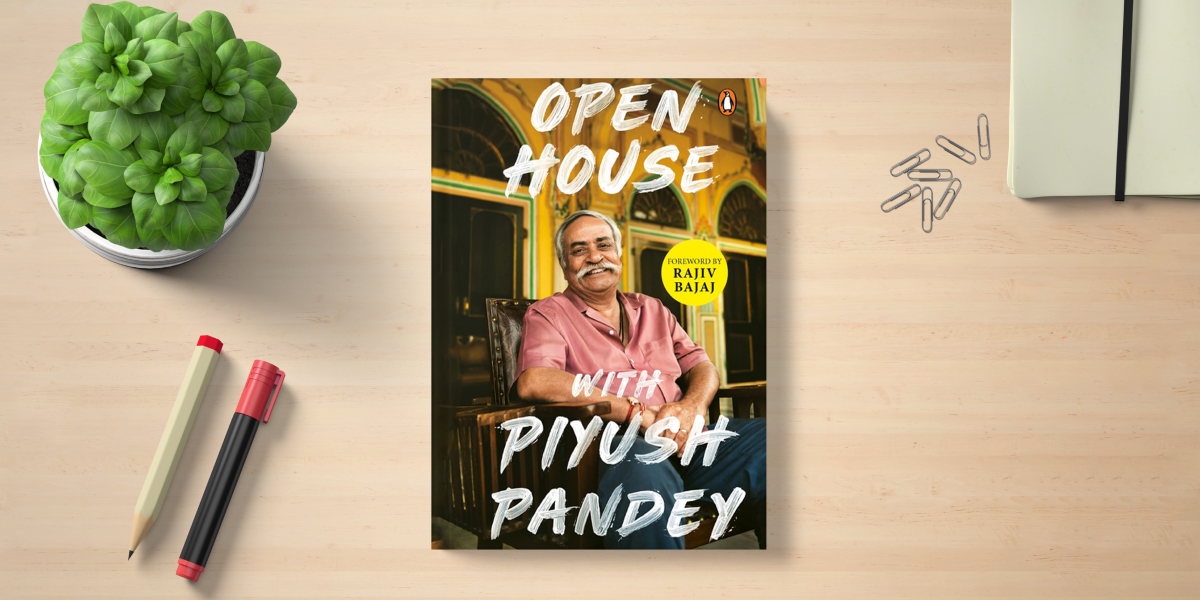
What makes organizations successful? Here’s Piyush Pandey’s take

What makes organizations successful in the long run? 

Is it money, projects, or growth? 

According to Piyush Pandey, the advertising legend of India, emphasizes the importance of building an organization where every single member is aligned to the same extraordinary goal of creativity. Community building, an integrated audience, and an environment that fosters and promotes individual creativity without compromising on the essence and ideals of the company is crucial for success in the long run. Read this excerpt from Open House with Piyush Pandey to know more! 

Open House Book Cover
Open House||Piyush Pandey

“I must say that while Apple, indeed, is extraordinary, there are many other companies that have done reasonably well in building a company, products, brands and communities. Off the top of my head, I could name Nike, Coke, Burger King, Mondelez and, closer home, Pidilite and Asian Paints. Perhaps Google would be another. 

In each of these instances, the principles are the same.  

Apple’s employees, anecdotally, love going to the office. They seem free to express themselves, and seem unhampered by rules and structures. 

And yet there is a system; it’s not that it’s free for all. They have created an environment of creativity seemingly freed from constraints to express oneself. In most companies, for example in network agencies and other communication companies, rules and procedures are created to prevent chaos or the unpredictable. Apple, from the time they began with the 1984 release of the Mac to the second journey under Steve Jobs, was unsatisfied with the normal or the staid – they wanted extraordinary products and took extraordinary punts in the quest for the extraordinary products.  

The success with the iPod gave them the courage to invest more in experiments and risks and the products that followed ensured that success. 

Companies such as Apple spend an extraordinary amount of time – and money – in creating the culture that fosters out-of-the-box thinking. We admire the company because of the successive successes that they’ve had. And we will continue to admire them till they continue to succeed. 

The product basket, thanks to the near monopoly market that they enjoy in the early stages, sees them enjoying high margins – which in turn allows them to invest in the next big idea. 

Such companies are almost like close-knit families. The rules exist but are unwritten and unsaid. However, the ‘ecosystem’, the family, is, as a collective, aware of problems and unhappiness and challenges that particular members of the family might be experiencing.  

A critical party of the ecosystem is the partners of the business; they’re also family and need to be treated as such. The role that Lee Clow and TBWA Chiat Day played in the success of Apple has been described many times by Jobs himself. Apple has worked with Lee’s team literally since inception.  

These are unusual, but visionaries like Jobs chase their dreams and not bow to the pressures of the stock market. That allows them to take a long-term view of their product portfolio and their brand – something very few have the courage to do. 

I’ve had the pleasure of working with some brands for over 20, 30, 40 years. The ones that easily come to mind are Fevicol, Asian Paints, Cadbury Dairy Milk, many HUL brands. Other companies who have invested in their partners becoming long-term ‘family members’ include Amul. 

The performance of these brands is there for all to see.  

Can another Apple be born? Only if we see another Steve Jobs. Is Tim Cook the new Steve Jobs? That answer will help us understand if there is indeed an ecosystem that can win every time, or whether it was the vision of Steve Jobs. Apple’s performance post the passing of Steve Jobs suggests that there is, indeed, an ecosystem that works.” 

Intrigued? 

Get your hands on this honest, irreverent and informative read now! 

About Anirudh’s dream and the adventures that follow

Here’s an excerpt from Deepak Dalal’s Sahyadri Adventure: Anirudh’s Dream, the first part of the riveting series. It’s about Anirudh’s dream and the strange events that unfolded in Pune, Mumbai, and the splendid hills of Sahyadri.

*

Sahyadri Adventure: Anirudh’s Dream
Sahyadri Adventure: Anirudh’s Dream || Deepak Dalal

Anirudh’s face was tense an hour later when Vikram and his father escorted him to the jetties. Commander Dongre watched critically as they rigged their boat. They were almost done when Chitra turned up.

‘Is this your friend, Anirudh?’ she asked, halting beside them.

The droop suddenly vanished from Anirudh’s shoulders. He shook hands with Chitra when Vikram introduced him. ‘This is Commander Dongre,’ continued Vikram, turning to Anirudh’s father. ‘He is our host, and this wonderful bay and the sailing facilities are run by him.’

Chitra’s eyes lit up. ‘Wow!  All these boats and your father in charge of them. Anirudh, you are a lucky man.’

‘He’s making use of the opportunity.’ Commander Dongre smiled, covering smoothly for his son. ‘Vikram and Aditya have spoken a lot about you, Chitra. My wife wants to meet you too. She wants to invite you to join us for dinner tonight. She’s at the spectator tent. Shall we go there? We can watch the last race together.’

Anirudh’s eyes weren’t dull anymore. Vikram didn’t try figuring out what had brought about the change; he was simply thankful for having a sunny, helpful partner. Aditya and Kiran’s boat pulled away from the jetty. Anirudh yelled and waved at them. Vikram cast off and they followed, their sail fluttering and hull creaking as their boat cut through the dark waters of the bay.

A tongue of land jutted like a breakwater to starboard, sheltering the waters of the bay, and though the lake was only gently ruffled where they sailed,  ahead, beyond the protective barrier,  there were waves and a deep swell.  A strong wind was sweeping the lake and dark clouds were mobbing the sky.

‘Prepare yourself,’ hollered Vikram.  ‘Action stations! The wind is going to belt us when we hit open water.’

The lake turned restless and suddenly,  like a howling express train, the wind was upon them. The boat shuddered, listing sharply to port.

‘Hike out!’ screamed Vikram, as he pulled the rudder and trimmed the sail.

Sahyadri Adventure: Koleshwar’s Secret
Sahyadri Adventure: Koleshwar’s Secret || Deepak Dalal

Anirudh leaned out across the water, his eyes closed. The competition had elevated  Vikram’s skill at the helm several fold and a delicious thrill of accomplishment coursed through him as his  Enterprise-class sailboat shot forward. The speed of the vessel was heady, the fastest he had ever achieved on a boat. They were scything forward as if jet-propelled.

The upper half of  Anirudh’s body was hiked out across the water.  The brilliant orange of his life jacket contrasted brightly against the asphalt-black water. His long hair was wet and his face seemed calm, exhibiting no sign of fear.

The white wake of their Enterprise boat was one of several streaking the lake. Sails flapped noisily everywhere and whoops of exhilaration reverberated across the lake.  Amongst sailors, there is only one climatic condition that stokes wild enthusiasm and excitement: the wind. This was a genuine wind, and its tumultuous presence was conjuring a grand setting for the regatta’s final race.

It wasn’t long before their boat neared the far shore of the lake. Vikram tacked around and Anirudh responded like a seasoned professional, shifting smoothly to the opposite sideboard and adjusting his body weight perfectly.

An imaginary line between two buoys was the starting zone for the race and boats were already massing there. Their colourful sails seemed butterfly-like as they clustered about the invisible line. The race was to start at 3.30 p.m. and Vikram’s watch indicated it was time to join the butterflies and hover between the starting posts.

Loud voices greeted them as they fell in with the boats prowling the start zone.

‘We’re going to thrash you, Vikram!’

‘Give yourself a break, Anirudh, you’re shaking like the sails.’

‘You’re a crummy sailor, Vikram. The wind is going to sink you.’

‘Best of luck, buddy.’Though the banter sometimes sounded coarse, it was always conducted in good spirit.

Dive into the world of tales

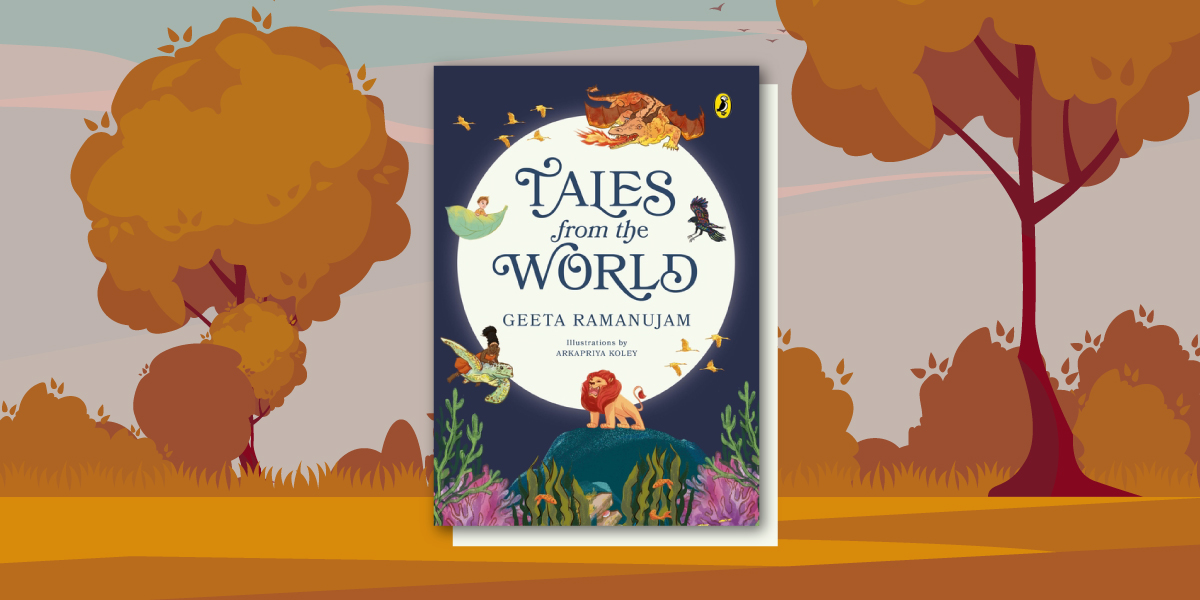
Geeta Ramanujam’s Tales from the World will take you on a long journey and introduce you to many fascinating characters. Collected from storytellers on snow-capped mountains, and in eerie forests, opulent palaces and countries near and far, the captivating folk tales in Tales from the World have mesmerized old and young alike. Travel along with this imaginative storyteller and author as she shares peculiar myths and incredible trivia from around the world in this beautifully illustrated volume of twenty tales from Russia, Japan, France, Tibet, India, Korea, Scotland and more.

Let’s read an excerpt from the book about a story from Russia.

*

Tales from the World
Tales from the World || Geeta Ramanujam

Just after the world was created, filled with its trees and mountains and birds, God created a young maiden called Lindu, and left all the birds in her charge. She lived with her father Uko at the very edge of the world, between the sky and Earth. Lindu had the powers to recognize the song of each bird and sing them too. She knew where the birds had flown in autumn, and sent each flock on its way.

Lindu cared for the birds tenderly; she was a godmother to them. She knew how to direct winds to assist the birds as they flew to their destinations. She set fierce dust storms upon hunters who tried to kill her birds or hunt them down. It was not surprising that all the world loved her, those who dwelt in the sky most of all.

The North Star wished to marry Lindu and drove up to her father’s palace in a dusky coach drawn by six black horses. Adorned in a silver cloak and crown in shades of silver, he came bearing ten fine presents for Lindu and drove gracefully through the gates of Uko’s palace to ask for her hand.

However, Lindu was not very fond of the North Star. ‘Why don’t you want to marry me?’ inquired the disappointed North Star. ‘Well, I like to move and travel whereas you just stay fixed in one place in the sky. You are the watchtower of heaven.

Please, sir, return to your place, for I cannot accompany you there.’ Now, the moon decided to take his chances and drove to the palace in a beautiful coach of silver with six grey horses made of clouds. Dressed in white robes and a crown filled with white dewdrops, he presented her with twenty presents and said, ‘Lindu, will you be my wife?’

‘You change your face too often, moon, and that does not suit me,’ she said. The moon waned and returned to the night sky.

‘Well,’ thought the sun, ‘perhaps Lindu might like my bright gold face.’

The sun arrived in a beautiful coach of gold, led by gold and red horses, and rode through dusk to the forest where Lindu was taking care of her birds. Lindu walked up to him, bowed her head and said, ‘I know what you are thinking. I am sorry, but I love change. I love the changing seasons, the climate, the winds and anything that is not constant. You are so precious and graceful, but you have to be vigilant and cannot change at all. That might not suit me, sir.’

The sun too rode away into the purple-pink sky, disappointed and sad. Now, the Northern Light had been watching each suitor drive away disappointed and decided to ask for Lindu’s hand himself, confident that he’d be triumphant. He emerged from his home at midnight, his beautiful colours lighting up the night sky. He’d crafted a coach with diamonds, which was drawn by a thousand white horses. He wore a rainbow cloak and a crown made of gems from the sea. Behind him was another coach filled with gold, silver, pearls and gifts for Lindu. He looked radiant as he left an indigo, purple, blue and pink trail across the sky on his way to Uko’s palace.

‘Lindu,’ he called out, ‘if you marry me, you will not have to follow me like a shadow. You will not have to travel the same path as the others. You can set out anytime you wish and rest when it pleases you. Would you like to be my bride?’ He bent down on his knees to ask for Lindu’s hand.
So, what do you think Lindu said? Lindu’s choice was made.

It was agreed that the wedding would take place when the birds flew south. The wedding day was announced, and guests from the four corners of the sky and Earth arrived to bless the couple.

The torrential winds brought Lindu her silvery bridal veil and the Frost King wove her laces so fine, they had to be stored in cold blocks of ice for safekeeping. Birds from all over brought her robes the colours of butterfly wings. For her feet, she got sandals made of thick clouds and decorated with petals fallen from flowers. The weaver birds stitched them together and hid them under the cotton tree. Back to his home in the midnight land went the Northern Light, knowing that Lindu loved him best.

Mapping the ascendance of the BJP

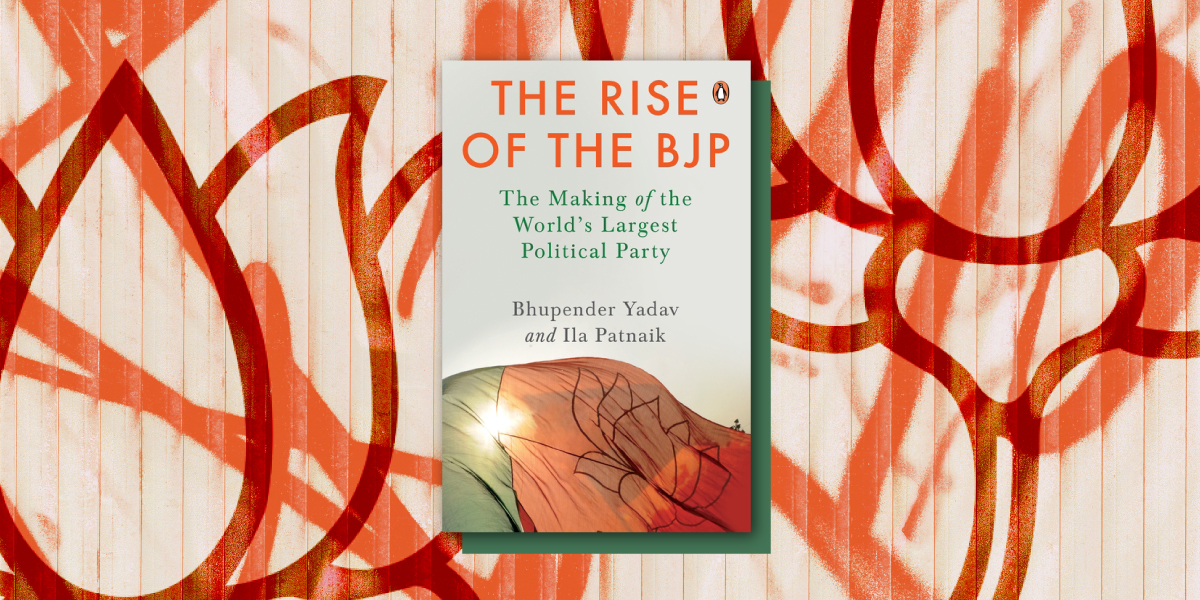
In The Rise of the BJP, co-authors Bhupender Yadav and Ila Patnaik chart the journey of how BJP came into existence and established itself as one of the most powerful political parties. It delves into the political strategies and the organizational design that made the party successful and drove the transformation.

Let’s read this excerpt to understand BJP’s position in the government, starting from 1996 and how it eventually rose to becoming the single-largest party.

*

The Rise of the BJP
The Rise of the BJP || Bhupender Yadav, Ila Patnaik

After the fall of the Vajpayee government, thirteen parties came together as the ‘United Front’ to form a government with the support of the Congress from the outside. The new administration started with H.D. Deve Gowda as the Prime Minister, on 1 June 1996. The coalition depended on Congress support. However, the Congress began to soon feel uncomfortable with the decisions of the Deve Gowda administration. For one, Gowda showed a lack of interest in post-poll adjustments in the run-up to the 1996 UP state elections. Further, he announced the creation of Uttarakhand as a separate state in his Red Fort speech on 15 August 1996, without consulting the Congress. He was also unhelpful towards the Congress leaders who had pending cases against them with the agencies. Issues such as these led to a change of heart in the Congress and the party withdrew its support to the Deve Gowda government.

On 11 April 1997, Gowda had to face a floor test after the Congress withdrew support. When Gowda spoke during the floor debate, he referred to Kesari’s prime ministerial ambitions, describing the Congress president Sita Ram Kesari as an ‘old man in a hurry’. As expected, the Gowda government lost the trust vote by 292 to 158 votes.

After Gowda was voted out, Congress supported another coalition, and a new Prime Minister was sworn in. Inder Kumar Gujral, who was foreign minister in Gowda’s government, became the Prime Minister, again with outside support of the Congress. However, Gujral’s term was also short-lived. Following a hung Assembly in the Uttar Pradesh elections of 1996, a powersharing agreement had been reached between the BJP and BSP in April 1997. It was decided that for the first six months, BSP leader Mayawati would be the state’s chief minister and for the next six months, Kalyan Singh from the BJP would head the state.

However, during Kalyan Singh’s tenure, the BSP decided to withdraw its support due to disagreement over certain issues. This led to considerable friction and some violence in the streets, which prompted the BJP government led by Kalyan Singh to call for a vote of confidence. In response to BSP’s decision, BJP state leader Rajnath Singh announced that if the BSP wanted to withdraw its support, it could do so. He was optimistic about the BJP winning the vote of confidence as it was the single-largest party in the state.

Prime Minister Gujral responded to this by recommending the imposition of President’s Rule in the state. In a rare act of autonomous decision-making by the office of the President, President K.R. Narayanan did not act on this; he asked the government to review its recommendation. To avoid a confrontation with the President, the United Front government was forced to reverse its decision to dismiss the Kalyan Singh government. While most allies in the United Front agreed that a confrontation was best avoided, the Congress wanted the BJP government to go. The Congress felt that the BJP was gaining ground in Uttar Pradesh and could become the major force in the state. In stark opposition to the Congress party, prime minister Gujral did not want President’s Rule to be imposed in UP. However, as his government was in place with the Congress’s support, his decision not to dismiss the BJP government in UP made the collapse of his government imminent.

It was, however, the investigation into Rajiv Gandhi’s assassination that brought the coalition government led by I.K. Gujral to a premature end. The inquiry commission’s report on the assassination of Rajiv Gandhi, led by Justice Milap Chandra Jain, said that the conspiracy to assassinate Rajiv Gandhi had a connection to the DMK. The Jain Commission report concluded that the DMK had provided sanctuary to the Liberation of Tamil Tigers Eelam (LTTE) and was thus an accomplice in the assassination. These explosive findings triggered a chain reaction that shattered reputations, forced realignments and brought down Gujral’s fragile government. When the Gujral government did not dismiss the DMK from the Cabinet, despite these allegations, Congress president Sita Ram Kesari announced the withdrawal of support from the government. Gujral’s time as prime minister lasted eleven months.

In his resignation letter, Gujral wrote, ‘. . . My Council of Ministers and I hereby submit our resignation from my Government. In my communication to the Congress President [Kesari], I have said that it is unfair and unethical to tarnish the fair name of a party only because the Jain Commission’s Interim Report—without any substantiated data—has chosen to blame the party and, I say with sadness, the entire Tamil people . . . My Council of Ministers and I hereby submit our resignation.’

Mid-term Lok Sabha elections were held in 1998. The BJP built on its growing success in elections and scaled up its methods. A large-scale mobilization of voters had been accomplished through numerous yatras at the national stage and within many states. By this time, measurement of the populace through polls had become an important activity, both within the media and as an information system to support decision making in election campaigns. The BJP brought in greater professionalism to do the number crunching in order to chalk out winning strategies.


The results were consistent with the long journey of the BJP towards growing influence.

A Delightful Glimpse into the Beautiful World of Chamor

Chamor Book Cover
Chamor||Sheba Jose

Do you crave nostalgia in this sultry weather? Chamor is our most heartfelt novel of 2021. This gritty novel, while offering the reader delightful glimpses of daily life in the two regions of southern India that form its setting, also brings them face to face with the less savoury and disturbing aspects of the human condition. The mostly lovable characters, who are at the mercy of a universe that does not discriminate between good and evil, cannot take anything for granted. Whether man, beast or bird, each must deal with their destiny according to their nature and instincts. Here’s an excerpt to give you a taste of this beautiful novel!

**

The car that my father drove was an old one—a grey Morris Minor. It looked weird to me, like a bug, but its colour reminded me of a certain grey, syrup-filled toffee that used to be a favourite of mine as well as of my school friends. The car had belonged to my father’s brother, who had arrived in it with a friend, but when they tried to drive it back to Kerala it would not go. Uncle did not care to have it returned to him, and between the mechanic, Raju, and my father, they managed to keep it running, though it could not be taken for long trips. As dinnertime approached, my mother would still be busy with her books, and Jency could be seen bustling about, clinking utensils in the kitchen as she hurried to finish making the last dish. With both of them wanting me out of the way, I would go looking for my father and find him lying on his wheeled plank under ‘the Morris’, as he called it, tinkering with its wires and nuts and bolts. The sound of wrenches and spanners being put aside is, in my memory, associated with the urgent cawing of crows and the plaintive cry of the cuckoo as late afternoon merged into the evening. Clouds of sparrows kept swooping in and bursting out of the thorny acacia shrubs that were their home, and a flock of tiny silverbills, with their distinctive, black-tipped tails that looked like wet paintbrushes to me, sat in a long row on an overhead cable, waiting for the right moment to dive together into their home, which too made for a pretty thorny dig—a jujube tree. A stout, old date palm inside the park thronged with colourful bee-eaters, the two needle-like feathers sticking straight out of their tails making them recognizable in flight, while species of parrots and other birds fought angrily for holes and hollows on the cycads and coral trees. Sadly, at this time, inside the houses, too, feelings ran high as students suffered corporal punishment over mere homework. I would have a brush with this medley of sights and sounds as I hung about my father, kicking my heels. Sometimes, I would lie beside him under the car, shining a torchlight up at its brown, metal underbody. After the job was done, I would be rewarded for my help with a ride around the block, at the end of which we stopped at Mr Nair’s thatched establishment. While my father waited at the wheel, I took the rupee note that he gave me and went inside the lantern-lit shop, which was reputed for its quality goods and hygienic tea stall. Jency and I were regulars there as it was the only shop near us that

sold our breakfast staple of Nendran bananas. As I entered, I found that there were no other customers, and Mr Nair and his wife were busy arranging the stock. Bhavani Auntie cast a glance outside, concerned that I had come alone until she saw my father, and fished out from her mixed candy jar the two specific ones I wanted—the round orange-flavoured coconut bonbon for Jency and the aforementioned grey confection for myself. As per the slip that I had handed in, Auntie gave me a slab of wax paper-wrapped burfi, which was for my mother, and some change. This indulgence was a rare thing, as my father was strictly against ‘putting rubbish in the mouth’.

**

Poignant and perceptive, Chamor will haunt you for a long time. Get your copy and explore vulnerability and honestly like never before!

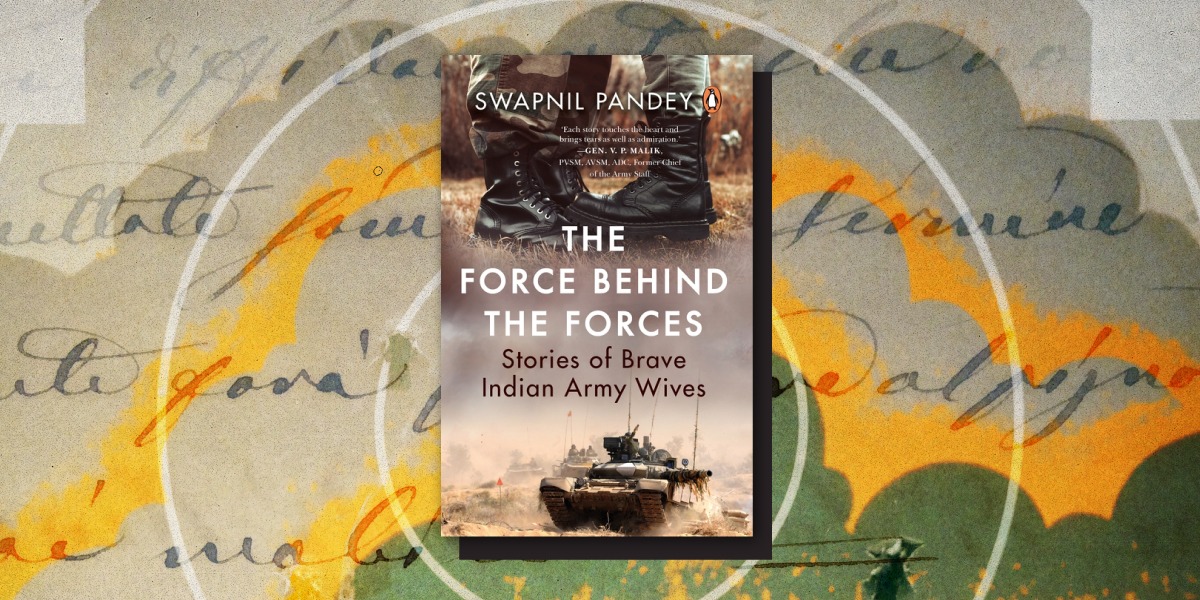
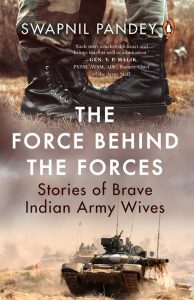
What happens when the force behind the Forces shatters?

The term ‘widow’ is said to have its roots in the Sanskrit word vidhuh meaning lonely, bereft and solitary. Widowhood marks a drastic shift, characterised by an air of despondency and melancholia. The weight this word carries pulls down the spirits and hopes of a living body until it burns down into ashes, literally and figuratively. The ripples of widowhood reverberate through the rest of the women’s life.

However, many women find their way back to life. They don’t give up, even when they’re shattered.


Here’s an excerpt from Swapnil Pandey’s The Force Behind the Forces about Priya, whose world, as she had known, had collapsed.

*

The Force Behind the Forces
The Force Behind the Forces || Swapnil Pandey

A crushed and grieving Priya sat at an awkward angle, jammed into a small corner of the room. She was forcing herself to face the people around. There was an ocean of them. It was the funeral of a soldier killed in action after all. And many of his companions regarded him with feeling, almost religious devotion. Naik Amit Sharma, the lad who had been killed in action, was the pride of the family. A few children ran around, but Priya could not see her five-year-old daughter—Khwaish. She did not bother to locate her either. Her world, as she had known it, had just collapsed. The atmosphere was mournful. Female relatives were howling and tearing their hair. There was also deep silence during mealtime in the house of mourning. Nothing mattered now, not even her existence. It was confusing.


She wanted to lie down and mourn in silence, away from all the people, but it was not possible. She had to sit there and be tagged as a ‘bechari’. Her mother reached out to embrace her. She didn’t know whether to console her or to cry on her shoulder herself. Priya looked at her wrinkled face. Her mother had begun to look several years older within a span of a few days.


The voices grew in intensity; the incessant whispers swung between viciousness and apathy:

Ma-beti dono widhwa hai. Kya naseeb leke aayi hai bechari. [Mother and daughter both are widows. What horrible destiny.]’

Paise kisko milne hain? Biwi ko ya ladke ki ma ko? [Who will get the money? The wife or the boy’s mother?]’

Widhwa ho gayi bechari, ab kya karegi paison ka?

[The poor woman is a widow now. What will she do with the money?]’

Bhari jawani me widhwa, baap bhi nahi hai. Beti bhi hai. Bhagwan na dikhaye aise din kisi jo. Bechari. [She’s been widowed so young. She has no father to turn to either. An she has a little daughter besides. Nobody should have such a fate. Poor woman.]’

Iski ma ko dekh, kya karegi aab? Natini bhi itni choti hai. [Look at her mother. What will she do now? Her granddaughter too is so young.]’


She swallowed every remark and rubbed her hands in her lap—desperately. Her eyes were bloodshot; she looked as tired as she felt—dishevelled hair and dark circles beneath her blazing black eyes. She had not just lost her husband—the one she loved with all her heart—but her existence as well. It was a brutal realization that left her devastated, and pushed her from hope to despair within thirteen days.


The ‘Terahvin’ marks the end of the mourning period which lasts thirteen days from the day of the cremation of the deceased. Those thirteen days are meant for the rituals performed for the sake of salvation of the departed soul. These thirteen days provided a lot of time to Priya to mourn. She felt alone and depressed, and even howled at nights remembering Amit—who had promised to walk beside her for the next seven lives.


Priya knew this was not salvation. Shattered, she would lie down on the bed and stare at the flame in the lantern. Sometimes she looked in the mirror, scrubbed her face vigorously, panicked, and wondered in utter dismay—why her? Sometimes she would wake up panting in her damp sari, from the nightmares of her dead husband. But what troubled her the most was the consistent taunts from the people that shrunk her dignity. People forgot she was not just a widow, but a flesh-and-blood person. Suddenly, not only her own identity but the identities of her mother and her daughter were also forgotten. They were not persons any more, but rather a bunch of weak, meaningless women, not eligible for a respectable social status.


The women did not see a grieving young woman, rather a widow, a ‘bechari’ who had almost lost the right to live as a free citizen. Priya lived in a society surrounded by endless myths and stigmas. She certainly did not belong to the progressive class, but came from a conservative background where women lived in shackles and under limitations. Her resources were also limited, and so was her financial condition.


Cruel remarks thrown casually at her made her life miserable, and the mourning almost intolerable. There was also a point when she felt she was losing the will to live, but her beautiful five-year-old daughter, Khwaish, whom the couple had named with hope and happiness when she was born three years after their marriage, on 16 July 2007, helped her cope. It was as if all their wishes had been fulfilled with her arrival, and their life was complete.

**

Read The Force Behind the Forces to find out if Priya succumbed to her destiny and grief or she decided not to give up.

error: Content is protected !!