Publish with Us

Follow Penguin

Follow Penguinsters

Follow Penguin Swadesh

Daydreamer Dev loves volcanoes!

Daydreamer Dev loves volcanoes…and daydreams of course!

Forever daydreaming-that’s Dev. Sitting in class or watching the clouds from the roof of Kwality Carpets, he floats off to places all over the world and has wonderful, bizarre adventures.

Mild-mannered schoolboy Dev is no stranger to survival in extreme environments. Classroom trances and home-made flights of fancy take him all over the place-what other kid could have visited Amazon rainforests, summited Mount Everest and crossed the Sahara? Along with the challenges of all this, he also needs to avoid the wrath of teachers and make Amma and Baba proud . . . Not so easy when your brain lives elsewhere!

**

Dr Ira wore dark-rimmed glasses and had a soft, round face and a gentle voice. Dev could imagine her speaking calmly as the Titanic went down. She listened carefully to Amma and adjusted her glasses to read the two pages supplied by Dev’s headmaster. Dev imagined himself shrinking very steadily so that by the time she looked up, he would be gone.

‘Dev, what do you think about all this?’ Dev realized that he must still be visible. ‘Ma’am, I think it’s very bad that Mrs Kaur needs to write so many notes,’ Dev said. ‘Amma doesn’t like them, and Baba must spend his time lecturing me about concentration and teaching me the meaning of words like “lamentable” and “deplorable”.’

‘Would you be able to tell me about one of your daydreams, Dev?’

Dev told her about the time he hit a six off the final ball at Wankhede Stadium to win the match against Australia, and about riding on a dolphin.

Front cover of Daydreamer Dev
The Astoundingly True Adventures of Daydreamer Dev || Ken Spillman (Author), Suvidha Mistry (Illustrator)

He was launching into another story when she interrupted.

‘Do you have some good friends, Dev?’

Surprised that she wanted to talk about his friends, he told her about Vihaan, Adil and the best of friends ever, OP—Omprakash, as only Mrs Kaur preferred to call him.

Dr Ira asked more questions and looked over his school reports. Eventually, she sat back and looked as squarely at Amma as a round-faced woman could manage.

‘It would be valuable if I could spend some time with Dev alone on another occasion. Would that be all right, Dev?’ Dr Ira paused and when Dev did not say no, she went on. ‘Let’s be clear—daydreams are normal. But recently, there has been some good research on what is called “maladaptive daydreaming”. This is when fantasy tends to takeover. And when fantasy takes over, it can get in the way of everyday things, such as education, or the jobs people do.’

Amma was like a sculpture. She was sitting bolt upright with her head tilted and her lips squeezed together.

‘Dev seems well adjusted socially,’ Dr Ira said.

‘And he’s managing at school. But Mr Bannerji and the school counsellor believe he is gifted and might do very much better.’

The sculpture beside Dev became Amma again.

She nodded vigorously. Dr Ira leant forward.
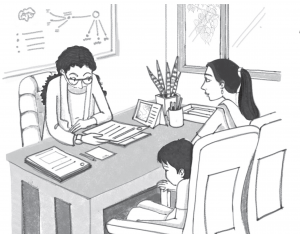
‘I’d like to explore this a little. Maladaptive daydreamers tend to imagine worlds and stories as relief in times of stress or boredom. In Dev’s case, I suspect it is boredom. But the ability to daydream so vividly that you experience a sense of presence in an imagined environment can be addictive. I can work with Dev to help him develop some strategies to manage it.’

The word ‘maladaptive’ came as a relief.

Evolution was all about adaptation. Dr Ira probably thought Dev needed to adapt, to evolve.

At least he wasn’t going to have an operation or an electric shock.

‘It will be quite painless, young man,’

Dr Ira assured, as if reading his thoughts. ‘Think about it like this. Active volcanoes don’t erupt every day. In fact, most of them very rarely erupt. Your daydreams can rumble away in the background and that’s healthy. We can try to limit unwanted eruptions that affect your education. Does that make sense?’

Actually, it did. And Dev rather liked volcanoes.

*

For ages 7+!

Cognitive journey of a brand

Brands, in what they show, tell, feel, smell and taste like, say a lot. Our five senses play a significant role in the recognition of a brand and how it is received by the audience. Sandeep Dayal tells how brain sciences can help brand ambassadors and brand theatres of operations engage the human senses. It would be right to say that all the cognitive brand marketers must note the finer nuances for branding that this book offers.

Let us read this extract from his book to understand that when designing and executing brand experiences, it is important to think of a plan for each sense, or at least consider its impact on them.

*

Right Between The Ears
Right Between the Ears || Sandeep Dayal

Most real-world brands have a ‘theatre of operations’ and ‘ambassadors’. They go to market through retail stores and/or a salesforce.

Sergio Zyman was the chief marketing officer of the Coca-Cola Company when they sponsored the Summer Olympics in Atlanta in 1996. Years later, I was Sergio’s chief marketing officer in his consulting company. Sergio told me that at the time when he ran the sponsorship for the Olympics, he had his teams build a thick binder called the ‘Red Book’, which was a detailed playbook for everything that Coke would do at the games. How and where Coke would be seen, who would do and say what and when, what it all meant and how it fit together in a single brand mosaic.

The Olympics would be Coke’s theatre of operation. Anyone with the red Coke shirt would be a brand ambassador, and every moment would be choreographed according to the Red Book.

When consumers step into a brand’s theatre of operations or interact with its brand ambassadors, there is an opportunity to build immersive experiences for them by engaging their five senses. The strongest brand experiences, as we learnt before, are those that are associated with other prior experiences. They are recalled more easily and better than others, last longer and feel more important to the brain. When marketers weave their brands with the human senses, they create even more associations with the experience, making it easier to recall. That’s why immersive sensory brand experiences make deep impressions on our brains.

If you walk down the Magnificent Mile in Chicago, even if you have never done that before, you can recognize the Burberry store with its trademark black-and-brown tartan cross hatches from blocks away with no help at all. The store design itself makes a statement about the brand. As you step inside, you can smell it.

During spring and summer, Zaluti scent machines diffuse the spring crocus scent and during autumn and winter, a special autumn scent. You look around and see that the wall colors are neutral with darker accents and furniture. That is deliberately orchestrated to bring to mind Burberry’s classic trench coat or tartan.

The personal shopper who greets you leaves an impression with how they look and sound, and how they gently direct you to where you want to go in the store. Every one of those sensations embody the Burberry brand.

The brand theatre of operations does not end with the store. Burberry also live-streams its runway shows, to share the excitement of decloaking new fashions as they happen with its fans worldwide, and lets them buy select new products online with its ‘see now, buy now strategy’.

Even brands like Away, Glossier, Farmer’s Dog, Made In Cookware, Lively Intimates and Everlane, which started out as pure online brands, have opened exciting stores on Lafayette Street in New York. They realized that bringing people to a brick-and-mortar store was the best way to create immersive experiences for customers—and that is what many consumers want. Virtual companies like Facebook and Google have opportunities to expand their brand theatre of operations into the real world with events and sponsorships.

**

Read Sandeep Dayal’s Right Between the Ears to get insights into the fascinating world of branding and hold on to the anchors in the age of hyper-competition by understanding why people make the choices they do and how to keep a brand relevant.

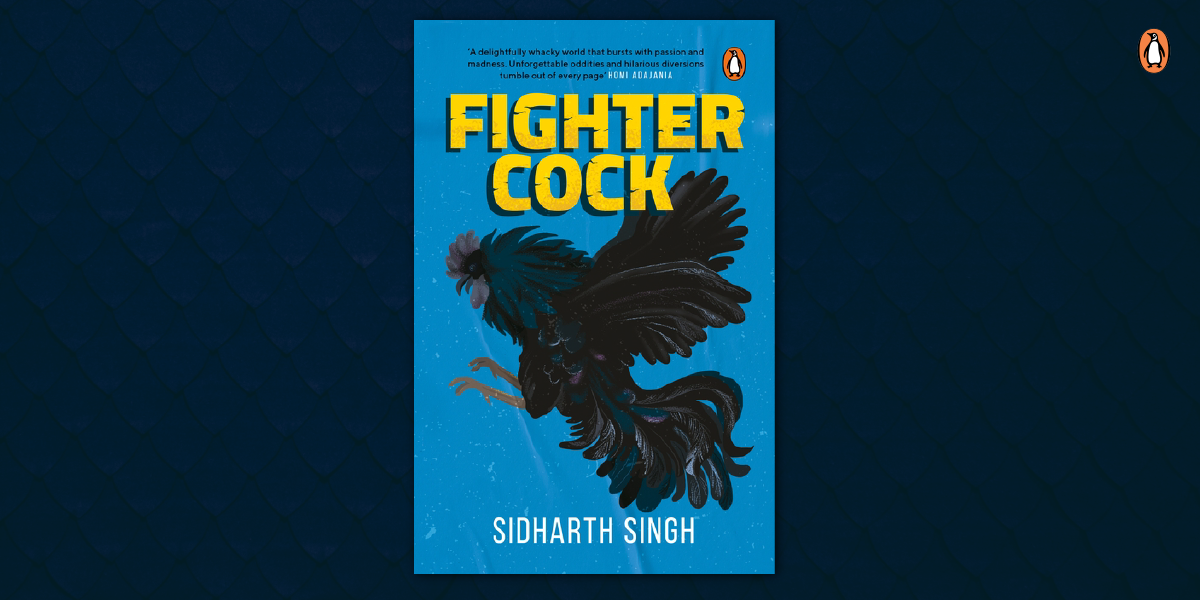
Of cockfights, royalty, power, and politics

This is a narrative about the clash within the royal family which traces the arc of gory violence and brutal bloodshed. In all of Raja Ratan Shah’s life, nobody had made him feel more insecure than his own bastard son, Teja. With no heir in sight, Teja felt entitled to usurp the power. This marked the beginning of a series of cockfights and conflicts.

Here’s an excerpt from the book which gives a glimpse of one of the many cockfights.

*

Fighter Cock || Sidharth Singh

One of Teja’s men brought a fierce-looking Aseel into the pit. The raja picked one of his Karianaths, a young battle stag that was taken inside the pit by its handler. The cocks were pitted by a touch of beaks, and the fight began. The Karianath was aggressive from the get-go, circling the Aseel in top spinner style, using quick footwork. The Aseel, a battle cock of some repute, stood its ground, weaving and bobbing, looking for an opening. As the Karianath tried to take the Aseel head-on, the Aseel jumped up in the air and came crashing down on its head, slashing its neck with a short-blade fitted on its left foot, killing it instantly. Half the crowd ‘ooh’ed in pity while the other half ‘aah’ed in joy. A lot of money exchanged hands. This was Teja’s sixth straight win of the night, and he was jubilant.

An old Bollywood hit played shrilly on loudspeakers installed around the arena. Teja and his henchmen danced wildly to the song, rousing the crowd to join in, and turned the arena into a rave. The raja plied Sheru with more mahua as he moved on to another ganja chillum, blowing smoke like a steam engine and descending further into the grip of lunacy. By now, Sheru was also drunk and had no choice but to drop his guard and enjoy this insane spectacle. The raja signalled for the music to stop and for the next fight to begin. Teja decided to field the winning cock once again while the raja entered his top fighter, the champion battle cock ‘Toofani’, in this bout.

As earlier, the cocks were pitted beak to beak and the fight began. Teja’s Aseel, overconfident from the previous bout, went for the kill immediately, attacking the Karianath from all angles, in a departure from its earlier bob-and-weave style. Toofani circled around in a slinky top-spinning style, its quick hopping reminiscent of B-grade kung fu films. The Aseel took a few quick jabs at the Karianath, who warded them off with ease. Then the Aseel charged down the pit and took a giant leap. The Karianath countered with a massive on-the-spot jump, and, in a gory mid-air collision, kicked the Aseel in the eyes with both its long-bladed feet and blinded it completely.

Blood gushed out of the Aseel’s eyes and the crowd went berserk, shouting with bloodlust. The raja jumped up from his seat and screamed, ‘Kill the bastard! Kill the motherfucker!’ The Aseel hopped around the pit in panic. Toofani strutted to the far end for a long run-up and, then, charging down the pit, leapt into the air and pounced on the helpless Aseel, pinning it to the ground. It then proceeded to kill its foe with repeated machine-gun pecks to its head and neck in a crazed quick-beak style. By the end of the fight, Toofani was drenched in the blood of its victim. It walked up, as if drunk on its gory victory, towards the cheering spectators and fanned its wings violently, splashing blood on the crowd, and making them ecstatic.

**

To know more about the conflicts and cockfights in the royal household of Shikargarh dive into the pages of Sidharth Singh’s rough and ready noir titled Fighter Cock.

A lyrical tale of resurrection, return and redemption

Banaras, Varanasi, Kashi. India’s holy city on the banks of the Ganges has many names but holds one ultimate promise for Hindus. It is the place where pilgrims come for a good death, to be released from the cycle of reincarnation by purifying fire.

As the dutiful manager of a death hostel in Kashi, Pramesh welcomes the dying and assists the families bound for the funeral pyres that burn constantly on the ghats. He lives contentedly with his wife, Shobha, their young daughter, Rani, the hostel priests, his hapless but winning assistant, and the constant flow of families with their dying.

But one day the past arrives in the lifeless form of a man pulled from the river-a man with an uncanny resemblance to Pramesh. Called ‘twins’ in their childhood village, he and his cousin Sagar were inseparable until Pramesh left to see the world and Sagar stayed back to look after the land. For Shobha, Sagar’s reemergence casts a shadow over the life she’s built for her family. Soon, an unwelcome guest takes up residence in the death hostel, the dying mysteriously continue to live and Pramesh is forced to confront his own ideas about death, rebirth and redemption.

***

Front Cover The City Of Good Death
The City Of Good Death||Priyanka Champaneri

As the sun broke free from the horizon like a balloon slipping from a child’s grasp, the light lift ed the veil of fog from Kashi and beyond. The white sands of Magadha winked with the allure of crushed pearls. Birds skated along the air above, traveling in perfect circles over the land, dipping toward a pair of dogs that snarled and fought, spiraling above a tented barge that trundled along the river on an aimless journey. The Ganges, calm and composed in the absence of the monsoon, gathered the early morning pink over its expanse like a sari laid out to dry in the sun, the edges curling against the many carved stone steps leading up to the city . The buildings towering above the ghats gleamed iridescent in the halo of light washing over the water. The bells rang in the temples; the monkeys watched with indifferent faces from their perches atop the roofs. Men bobbed in the water, dunking themselves once, twice, holding their noses closed with one hand while the other directed the holy river over heads, arms, bellies. Women wrung out their wet saris and crowded near each other as they changed into fresh clothing. The ghaatiye—priests who sat on snug platforms with large umbrellas fanning behind them like cobra hoods—collected coins from the bathers, passed a cracked mirror to one man, said a blessing for another, listened to the dilemma of a third. A perpetual stream of people flowed down to the river and back up the steps, hurried feet sidestepping the drunk stretched out with an earthenware pot clutched in his arms. Funeral pyres crowded a stone platform at the bottom of the steps, Flames crackling, the surrounding men looking like cotton spindles from a distance with their shaved heads and sheer white dhotis. Chants laced the air, each word crisp and new as if emerging for the first time from the lips of red-eyed priests. Black smoke spangled with the occasional swirling orange spark rose up and over the stairs, where the walls bordering the alleyways and lanes drew closer, cinching all who passed through in a concrete embrace that blocked out all light and sense of direction. Four men shouldering a bier navigated tight corners

and crowded alleys. Wrapped in coarse white fabric that rose in crisp lines over the nose, the shoulders, the knobby toes, the body had become nameless, an insect tucked and tightly wound with spider’s silk. Their voices, frozen in a monotone chant, echoed in the lanes. Rama Nam Satya Hai. Rama Nam Satya Hai. Rama is truth. God is truth. The chant chased after the feet of a delivery boy, an old woman walking with quick steps, a white dog trotting out of the open mouth of an alley. The dog sniffed at a discarded tobacco wrapper and paused to scratch behind its ear. It looked back and then raised its nose into the air and disappeared into the alley, its tail held upward like a sail, intent on an errand whispered by the breeze. The news traveled quickly, and speculation trailed after to fill the holes that remained. The note found in the dead man’s pocket could have pointed to suicide . . . but the rope tied around the wrist suggested an accidental drowning. And what of the two boatmen who dragged the body back, who certainly could have been murderers? All the other boatmen at Lalita ghat stuck up for the pair except for Raman. Annoyed that his craft required exorcizing and purification by priests, who insisted that it would take an entire day and a hefty sum of rupees, Raman sat on the topmost steps of the ghat cursing his luck and smoking beedi after mango-flavored beedi. The others sat around gossiping or shouted theories as they passed each other on trips up and down the river. All focused on one detail. “They found a note, didn’t they? Has anyone read it?” “A love letter, most probably,” a priest called out from the middle of the ghat as he scratched his chest. “Always a woman to blame,” he added to no one in particular as he labored up the stairs. “Debts, more likely.”

“Perhaps he had a curse on his head.”

“Or he was looking for Yamraj—see how close he was to Magadha?” “Nonsense. He was drunk and fell over.” “That Raman should have secured things better. What kind of duffer leaves his boat free for anyone to take?” “Well, he died in Kashi, so at least he will find peace.”

“What fool would call that a good death, Kashi or no?”

*

Priyanka Champaneri’s novel is an exquisitely lyrical ode to Banaras where where death is so blatantly placed alongside everyday life.

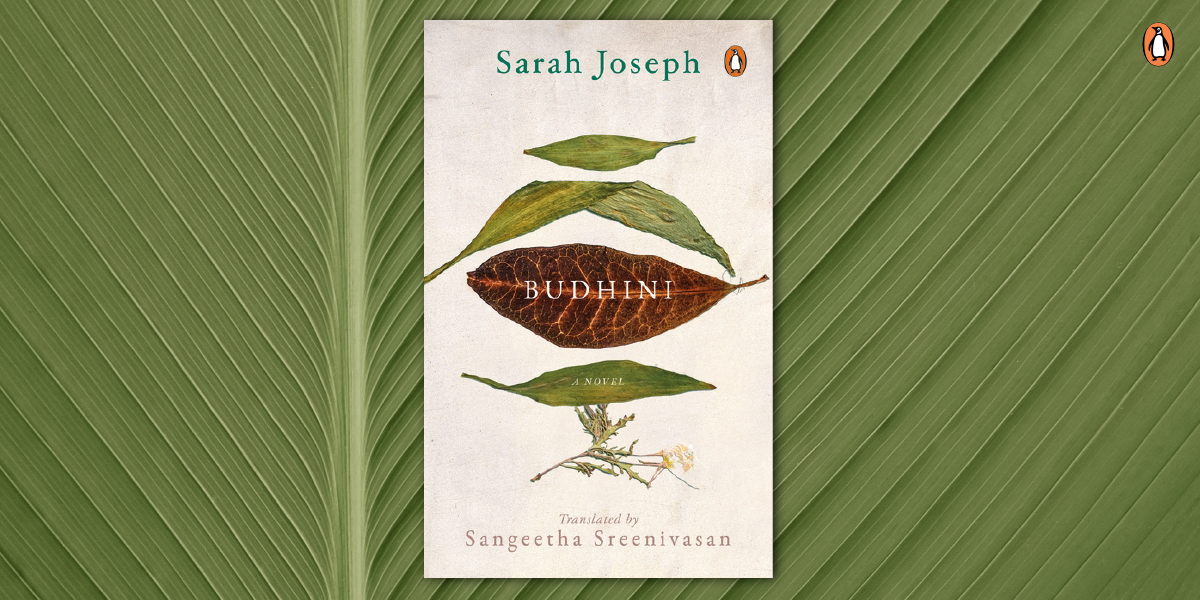
Budhini Mejhan – ‘The woman who persevered’

The story of  Budhini Mejhan is a nexus of several socio-political strcutures. She was ostrasized by her village and lost her job for an innocent gesture, which was seen as a violation of Santhal traditions. Through Sangeetha Srinivasan’s beautiful translation, Sarah Joseph’s literary sketch of Budhini Mejhan is vivacious, hopeful and endearing. Here is an excerpt:

~

Let us begin with the woman who persevered. Not how she recaptured the dancing ground, but how she ran incessantly without knowing whose land to set foot in. Waking up in the fourth phase of the night, she lit her stove and boiled some water. If she had a pinch of tea leaves or rice, she would have made some tea or gruel.

Front Cover of Budhini
Budhini || Sarah Joseph, Sangeetha Sreenivasan (Translator)

‘Oye, Ratni, wake up! We have to be there straight away. Please don’t wake your baba. The moment he’s up he will start whining, “Why toil over something in vain, Ratni’s ma? You have been running for a long time now, haven’t you? Will your complaints reach their ears? Better get back to sleep than wear off the soles of your feet.” But, Ratni, it doesn’t work like that; we should barge in and vex them as often as not. In the end, they will be forced to make a decision. Your baba is depressed, but could we endure more than this! Put your blankets over those boys, Ratni. Poor kids, they have been cold all night. Here, take this hot water. It’s not likely that Jauna Marandi will wait for us. His tongue has no bones. And if we don’t make it on time, he will go on grumbling about it till we get there.’

Languorous but still on her feet, Ratni staggered out of the house. Could this shack covered with asbestos sheets, tattered burlaps and rags, sandwiched between the walls of two multi-storeyed buildings, be called a home? Shoving the ragged fabric covering the back of the house aside, the child squatted on the ground and peed. From the mud kanda on the ground, she diligently filled water in a coconut shell and rinsed her mouth and face. She shuddered because of the cold.

‘Ratni Mei!’ Hearing her mother call out in a hushed voice, she went inside without delay. A little black dog followed her into the room, squeezed itself to make space between the sleeping boys and then curled up on the floor. Looking into her eyes, it wagged its tail in concern.

…‘We are very late, Ratni Mei. It seems Jauna Marandi has already left.’ Ratni’s mother was dejected. Loosening the knot at the end of her pallu, she took out some coins and counted. ‘Jauna had promised to take us for free. What should we do now! I saved these coins to buy medicine for your baba, but now we will have to spend them on bus tickets. But if you can walk, Ratni, there is a shorter route through the forest.’

Ratni didn’t say whether she could walk or not. Her teeth chattered, thanks to the cold.

While life saunters, the sun might as well rise in the west one day, marking the end of order. Then daybreak will turn into the hour of darkness. Like time suspended, nothing will be understood. Not everyone will overcome the bewilderment that is yet to come.

As Jauna’s jeep climbed up the road from Asansol to Dhanbad, an arm adorned with thick silver bangles suddenly appeared right in front of his vehicle. A strong arm! Nothing else was visible in the fog. Jauna forced his weight down on the brake pedal.

‘Get in,’ he bawled.

The DVC workers noticed the woman and child get into the jeep through the impenetrable fog. The woman wore a mud- coloured sari with a green border and the girl a crimson sweater. The child carried a bundle of clothes which she hugged close in a bid to protect herself from the insufferable cold. She looked not more than seven or eight. The woman had a grey shaded shawl wrapped around her and a lengthy red fabric bag on her shoulder. There was no seat. They hunkered down on the floor.

It was only the next day that Jauna Marandi realized, much to his shock, that the woman and child had boarded his jeep and alighted at the gates of the DVC to commit suicide.

~

Budhini is an exploration not only of the social laws of identity through the story of Budhini Mejhan but also the imbalanced burden that modernization and urbanization places on communities reliant on ecological methods of sustenance.


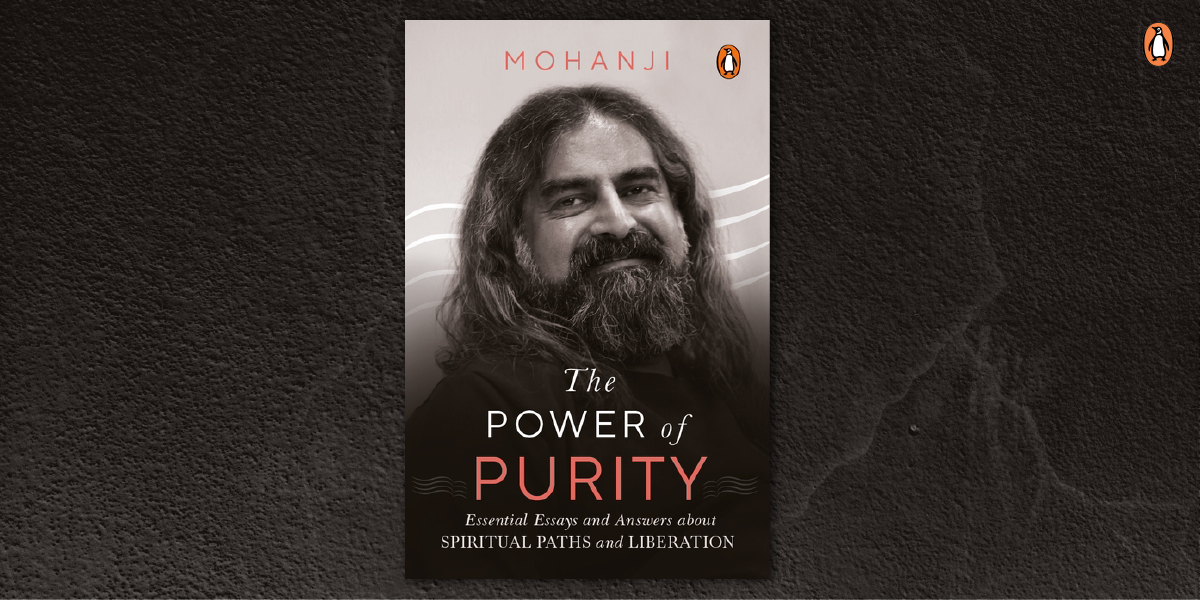
Lighten your soul—Love, forgive, bless

With our birth begins our life cycle and it ends with our death. We all are transitory beings. We can own nothing on Earth on a permanent basis. When we understand that all relationships, situations, sufferings, and emotions are perishable, we realise that the only conquest useful to us is our own mind. The real and only worthwhile journey is into our selves and our soul, for our soul is our greatest guru. When we understand our own soul, we understand all souls. They are all one. The Power of Purity aims to familiarise us with the nuances of our lives and to remind us to steer away from the illusions that the world offers.

Here’s an excerpt from the book in which the author introduces us to a way of life that will help us become aware of ourselves and elevate our soul.

*

Front Cover of The Power of Purity
The Power of Purity || Mohanji

Bless all. It will make you serene and light. Blessing expands you. It makes you light. When we bless all the people we like and all the people we do not like, we truly become the perfect expression of the Almighty. His true expression is unconditional love. When we remove all hatred and fear from our mind, we become an embodiment of love. Love expands. Love makes our life enjoyable. When we express sincere gratitude to all the objects and beings that helped our existence on Earth, we become universal. Once we understand the true relevance of the food that we have consumed so far, the houses that sheltered us, the books that gave us knowledge, our parents and our teachers, and, above all, the element of divinity that sustained us, we will be filled with humility and deep gratitude. Most of our vital functions, including respiration, circulation, digestion, heartbeat and even sleep, for that matter, are controlled by our subconscious mind. All these things are working in perfect synchronization because our conscious mind has nothing to do with it. We are given the time, space, intellect and situation to act out our inherent traits. What do we have in our control? Why do we blame others? Why do we entertain guilt at all? What is there to be afraid of? All experiences have been lessons. We could not have changed anything. So what else can we do, except express unconditional love and compassion? What else can we do but bless everybody and everything? When we realize that we are not really the one who does everything, we will see our ego getting nullified and our doership getting dissolved. We will then operate in perfect awareness and gratitude.

God is within us. God is to be loved, not feared. The soul element that fuels our existence is the God within all of us. God, the one who generates, operates and dissolves. Hence, all of us possess the same god element. No one is inferior nor superior to anyone. Some evolved higher through rigorous practices, contemplation and meditation. Through lifetimes of efforts, they attained higher awareness. That’s all. In principle, all are one and the same. The same soul element fuels the existence of all living beings, which includes plants and animals. Just like the same electricity is used to operate various equipment, the same soul operates various bodies, and some of them are human.

All of us are temporary custodians of a body, of money and possessions. It is the same with relationships. Everything is temporary. Everything has a definite longevity. There is no room for egocentric expressions, if we digest this truth. All we can do is forgive everything. Bless everything.

**

To understand your consciousness, the meaning of life, and the various facets of existence, read Mohanji’s The Power of Purity.

A diving holiday, disturbing discovery, and kidnapping

Far out in the Arabian Sea, where the waters plunge many thousands of metres to the ocean floor, lies a chain of bewitching coral atolls – the Lakshadweep Islands. Vikram and Aditya dive into lagoons with crystal-clear water and reefs that are deep and shrouded in mystery. But when they stumble upon a devious kidnapping plot, their idyllic holiday turns into a desperate struggle for survival.

Here is an excerpt from Deepak Dalal’s new book, Lakshadweep Adventure where Faisal – the boy who’s care Vikram and Aditya are left in – makes a disturbing discovery.

Front Cover A Vikram–Aditya Story: Lakshadweep Adventure
A Vikram–Aditya Story: Lakshadweep Adventure

Faisal was in a bad mood. His uncle’s impending arrival hovered like a dark cloud above him. And his friends’ decision to abandon him for the day only made things worse.

Faisal had noticed the wind the moment he had strolled out on to the beach, and his mood had soured even further when he saw his friends enjoying themselves. He wished he had accepted Aditya’s offer as he watched them speed their boards across the lagoon. But it was too late now. His uncle would be arriving shortly.

Faisal sat under a palm tree. He passed time drawing figures in the sand. Above him, palm fronds shook and fluttered as the wind whistled through them. The sun shone brightly. The sand intensified its glare, forcing Faisal to shut his eyes. It was pleasant under the tree and the wind was crisp and enjoyable. The rustling of the palms overhead soothed him and he soon fell asleep.

The tide slowly crept up the beach and finally washed over Faisal’s feet, waking him with a start. He looked at his watch, muttering softly to himself. It was past midday.

Basheer uncle would have arrived by now. He dusted sand from his clothes and rose hurriedly to his feet.

Faisal heard raised voices from the living room window when he entered the yard. He crept forward till he was below the window and peeped in.

His uncle was standing in the centre of the room, facing a group of men.

Basheer Koya was a copy of Faisal’s father, except that he was fatter and there was hardly any hair on his head. But unlike his brother, whose manner was calm and collected, Basheer Koya’s face was contorted with rage. His cheeks were dark and red and he was shouting like a man possessed.

‘Fools!’ thundered Basheer Koya in Malayalam. ‘Monkeys have more brains than you lot. Idiots. I thought you had ears. But obviously you don’t. You weren’t to set foot in Kalpeni. How many times did I tell you not to come here? Yet, not only do you come to the island, but even more brainlessly, you visit my home.’

A bearded man with big, wide shoulders spoke. ‘Sir,’ he began. ‘Sir—’

Basheer Koya ranted on, cutting off the man. ‘I travelled all the way to Kochi to make certain that no suspicion fell on me and I returned only after the operation was over. And you? I come home and see you fools sitting in my house. I take all these precautions and now everyone on this island can link me to you and from there to the operation.’

‘But, sir—’

‘You were under orders to head to Tinakara Island. What are you doing here?’

‘Sir. I was trying to explain just that, sir. We were headed for Tinakara. But we had engine trouble, sir. A terrible rattling noise came from the engine and we were forced to head for the nearest island. You can speak to the mechanic, sir. He looked at our boat and said we were lucky to make it here to Kalpeni.’

The explanation diminished Basheer Koya’s rage, yet he continued to glare at the bearded man. ‘Kumar. Where is Kumar?’ he barked.

‘Kumar is safely on board, sir. There’s no need to worry about him. He is in the lower cabin and one of our men is with him all the time. He can’t make a sound or do anything. He won’t be able to alert the mechanics.’

Faisal froze. This was not for his ears. It was wrong of him to eavesdrop. He wondered if he should leave, but who was Kumar and what was his uncle up to?

‘No one is to know that we have a prisoner on board,’ growled Basheer Koya. ‘Even Allah will not be able to help you if he is discovered. I make no allowances for mistakes.’ Basheer Koya stared at his men, shifting his gaze from one to the other. ‘Do you understand?’

There was silence in the room.

Faisal understood full well what his uncle meant. He shuddered.

***

Journey through these breath-taking islands with a tale of scuba diving and sabotage, set in one of India’s most splendid destinations.

Different perspectives of the same time and story

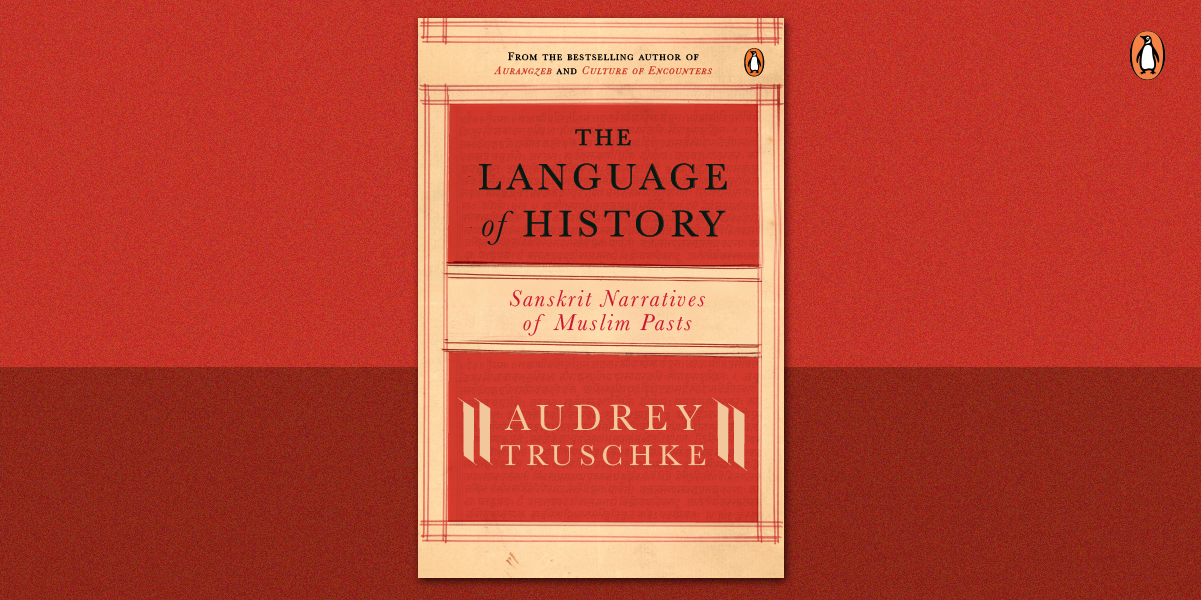
The Language of History by Audrey Trushchke analyses a hitherto overlooked group of histories on Indo-Muslim or Indo-Persian political events, namely a few dozen Sanskrit texts that date from the 1190s until 1721. This book seeks, for the first time, to collect, examine and theorize Sanskrit histories on Muslim-led and, later, as Muslims became an integral part of Indian cultural and political worlds, Indo-Muslim rule as a body of historical materials. This archive lends insight and perspectives into formulations and expressions of premodern political, social, cultural and religious identities.

Here is an excerpt from the chapter titled Local Stories in Fourteenth-Century Gujarat and Fifteenth-Century Kashmir.

*

Different perspectives, different storytellers, always complicate the narrative; that’s good because what we are trying to make sense of is complex.

—Githa Hariharan, 2016 interview

As Indo-Muslim rulers made further inroads into parts of the Indian subcontinent from the fourteenth century onwards, authors developed locally based traditions of Sanskrit historical writing that detailed this political trend. In this chapter, I investigate and compare two regional traditions that took off in the fourteenth century and fifteenth century, respectively: Gujarati prabandhas and Kashmiri rajataranginis. Gujarat and Kashmir had both witnessed Muslim-led military activities and, at least in parts, Muslim- led rule for centuries prior to the inauguration of these respective bodies of Sanskrit texts. Both sets of materials narrate some of that history as relevant to their region. Additionally, because they are plural rather than single texts, these materials allow me to compare authorial choices and see trends and exceptions within a deepening interest in Indo-Muslim history among premodern Sanskrit intellectuals.

Front cover of The Language of History
The Language of History || Audrey Trushke

The Gujarati and Kashmiri materials that I discuss here differ from each other in numerous ways. Four Gujarati texts were composed within a tight time-frame, dating between 1301 and 1349. A trio of Kashmiri works stretch across more than three centuries, with Kalhana penning his Rājataraṅgiṇī (River of Kings) in 1149 and two successors writing in 1459 and 1486, respectively. The two series of texts were authored by men belonging to different religious communities: Shvetambara Jains (prabandhas) and Kashmiri Brahmins (rajataranginis). They exhibit distinct styles and foci. Nonetheless, both constitute regionally based Sanskrit traditions of history writing in areas shaped, relatively early on, by Muslim-led political activities. I consider Gujarati prabandhas and Kashmiri rajataranginis together here, not as two sides of the same coin but rather as two distinct local traditions. When read against each other, these series of texts enable us to sketch out the increasingly complex contours of Sanskrit historical writing on Muslim-led incursions and rule in the fourteenth and fifteenth centuries.


Pairing Difference in Gujarati and Kashmiri Materials

The Gujarati and Kashmiri works both addressed local audiences, although delineated in rather different ways. Jain monks envisioned the four prabandhas I discuss below as being inspirational to the Jain faithful. Two authors, Merutunga and Rajashekhara, penned collections of stories about Jain ascetics and laymen. The other authors—Kakka, Jinaprabha and Vidyatilaka (Jinaprabha’s continuer)—structured their narratives around Jain pilgrimage destinations. Extant manuscript evidence indicates that the four prabandhas were often read in and around Gujarat. In contrast, Kashmiri Brahmins penned the first three rajataranginis for a more politically defined audience. Kalhana, who completed the inaugural Rājataraṅgiṇī in 1149, claimed to write for others who lived through the vicissitudes of sovereignty. For Kalhana, this was a personal subject since his father had been ousted from the court of King Harsha (r. 1089–1101), leaving Kalhana unemployed. Kalhana’s chronicle found a reception, a bit ironically, among those who enjoyed royal patronage, and Jonaraja and Shrivara, the authors of the next two rajataranginis—who imitated Kalhana in style and focus—were court poets of the Shah Miri dynasty. The Rājataraṅgiṇīs of Jonaraja and Shrivara doubled as extensions of Kalhana’s text and as official court chronicles for an Indo-Persian polity.

Despite the distinct origins of these two bodies of historical materials, the founding authors of both local traditions envisioned the same key antecedent: the Sanskrit epic Mahabharata. Kalhana alludes to the Mahabharata throughout his work and also assigns his chronicle the same unusual aesthetic goal attributed to the epic in the Kashmiri thought of his time, namely, inducing quiescence (śāntarasa) in the reader who would shun the world after perusing the monstrous cycle of politics. Merutunga, who penned the earliest prabandha work I discuss here, was more direct. In an opening verse, he billed his Prabandhacintāmaṇi (Wishing-Stone of Narratives, 1305) as ‘pleasing like the Mahabharata’. Neither Kalhana nor Merutunga refer to any of the historical materials that I have dealt with earlier in this book, which accords with the generally fractious nature of Sanskrit historical writing on Indo-Muslim political events. But neither did these authors posit their works as clean breaks with the Sanskrit literary tradition. Rather, the authors imagined themselves as updating established ways of writing about past events in Sanskrit, modernizing (or early modernizing?) them for new times and in response to new occurrences. Analysing the prabandhas and rajataranginis together here underscores the self-proclaimed continuity of both sets of authors as well as their differences in interpreting what it meant to write political history in Sanskrit.

Kalhana and Merutunga headline focusing on the present as a crux of their innovation. Again, Merutunga is more forthcoming. In an opening verse, he claims that his work narrates recent history (vṛttaistadāsannasatāṃ), which sets it apart from old stories (kathāḥ purāṇāḥ). Kalhana indicates his emphasis on recent history by becoming more precise and verbose as he comes closer to his present day, such that his later chapters, on events increasingly close to his own time, are far longer and denser than his earlier ones.9 More than half of Kalhana’s Rājataraṅgiṇī concerns the sixty years prior to the text’s composition. In this emphasis on recent history, Kalhana’s Rājataraṅgiṇī is a far cry from the Mahabharata epic that was always, even in its own internal frameworks, about times and people that were long gone. More generally, the prabandhas and rajataranginis I discuss here concentrate on the lives of real, historical people and sometimes include specific dates and citations of sources. Their authors coupled these historiographical innovations with an incorporation of stories about how Indo-Muslim political actors were shaping the contemporary political and social realities of Gujarat and Kashmir, respectively. By reading these two bodies of works side by side, we can see both their shared similarities and substantial divergences that added texture and depth to the growing tradition of Sanskrit historical writing.

**


The quest for an egalitarian society

It all began in the late-nineteenth-century Kerala, with a Dalit man flamboyantly riding a bullock cart along a road. What might sound mundane was actually a defiant form of protest, as riding animal-pulled vehicles was a privilege reserved for the upper castes.

Featuring several such inspiring accounts from the lives of individuals who tirelessly battled divisive forces all their lives, Makers of Modern Dalit History seeks to enhance the present-day Indian’s understanding of the Dalit community.

Backed with thorough research on historical and contemporary figures such as B.R. Ambedkar, Babu Jagjivan Ram, Gurram Jashuva, K.R. Narayanan, Ayyankali, Soyarabai and Rani Jhalkaribai, among many others, this book promises to be a significant addition to the Dalit discourse. It opens a path to initiating an overdue discussion centred around Dalit identity, history and politics.

~

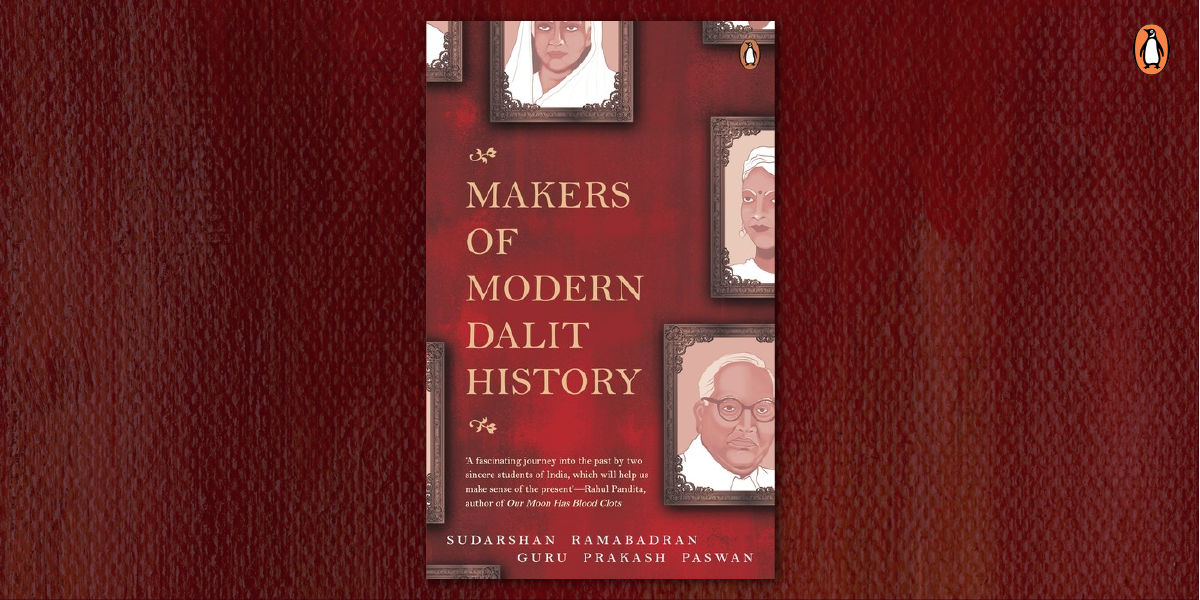
Makers of Modern Dalit History cover
Makers of Modern Dalit History||Sudarshan Ramabadran, Guru Prakash

Bhagwan Das, author of In Pursuit of Ambedkar, says:


The newspaper used to publish a lot of things about Gandhi, Jawaharlal Nehru, Azad, Subhas Chandra Bose and Jinnah but hardly a thing about the untouchable communities. I used to wonder, ‘Who is our leader?’ I asked Abba this, and he replied,

‘Umeedkar, the one who brings hope,’

which is how Abba saw Babasaheb Ambedkar.1


Original thinker, scholar, jurist, legislator, economist, public policy leader, development practitioner and chief architect of the Indian Constitution, Bhimrao Ramji Ambedkar was all this and more.

His thoughts were crisp, his views precise and clear, and words unabashed and unapologetic on every platform he spoke from. The more one reads about Ambedkar, the more one admires his unique intellect and understands his significance, the circumstances under which he jolted the status quo and truly sought disruption in calling for complete annihilation of the caste system.

Ambedkar saw society like no one else from the prism of brute force and caste-based discrimination. Thus, he stood for the cause of all-round empowerment of the socially disadvantaged till his very last breath. Even when he was on his way to England for the first roundtable conference in 1930, it is recorded that he wrote in a letter to ‘Dadasaheb’ Bhaurao Gaikwad how the people there were sympathetic towards him and that he was happy to see them inclined to favour the demands of the untouchables.2

As a child, Ambedkar, a Mahar, was made to sit separately in primary school because of his caste.3 When someone served him water, it was from a height to avoid physical contact with him; he was even denied a haircut because he hailed from the Mahar community.4 All this is just a glimpse of the treacherous  discrimination that a six-year-old Dalit child had to go through.

Who would have thought then that this child, born on 14 April 1891 in the tiny military village of Mhow, would one day establish himself as one of the founding fathers of independent India? Ambedkar came from a financially stable family, which enabled him to have a primary school education. However, this access never could remove the ‘untouchable’ tag from his consciousness. The thought of being ‘untouchable’ plagued his mind, especially when he was denied the services of a barber or a

driver because of it.

During his primary-school days, he was treated differently and ridiculed solely because he was a Mahar. This left a huge impact on him. However, Babasaheb took the fight to the orthodoxy, and at no point did he give up. For it is these very incidents that made him realize that the fight for the dignity of Dalits had to begin and be a constant one, until his very last breath. He recorded the experiences of untouchability faced by him in the newspaper Janata, which he founded in 1929.5 Dhananjay Keer’s biography, Dr Babasaheb Ambedkar: Life and Mission, published in 1954, also recounted all of Babasaheb’s experiences.6

While his journey to educate himself was excruciating, he was determined to venture into the unknown. His secondary education was funded by the Maharaja Sayajirao Gaekwad III, the erstwhile ruler of Baroda (now Vadodara), and he studied at the Elphinstone High School in Bombay. Ambedkar’s quest to arm himself with education never ceased, be it when he was in Columbia University, the London School of Economics or Gray’s Inn, where he excelled in academics. The years spent in Europe and America made him feel the stark difference in the treatment he received there and the treatment meted out to him in India.

In 1942, when he founded the All India Scheduled Castes Federation (AISCF), which he later dissolved to found the Republican Party of India, he also initiated scholarships for Dalit

students to study abroad.7

Ambedkar was always a firm advocate of education. He believed that if this revolution for the marginalized was to be won, access to quality education was crucial. He was never violent in his methods. He knew that equipping oneself with education would ensure a battle of dignity for the Dalits that could be fought and won. It was only after education that he felt empowered, for he believed only power could defeat power. Ambedkar being elected to the Bombay Legislative Council in 1926 and him founding the Independent Labour Party in 1936 are testimony to how crucial political representation was for Dalits.8

This focus on education was inculcated in him by his teacher at Columbia University, Professor John Dewey. Ambedkar has often said that he owes his intellectual life to Dewey, who was an American philosopher and psychologist but, above all, a reformer of education. Dewey was also one of the central figures associated with functional psychology, philosophy and progressive education.9

Very few Indian leaders have been educated in America. Ambedkar studied with the best minds at Columbia University in the three years he spent there. When he enrolled, he took a number of courses, including railroad economics. He was keen to learn from the top-ranking professors at the university.

All his life, Ambedkar sought the complete eradication of caste, for only this, he believed, would lead to an honourable society. As Bhalchandra Mungekar writes in his introduction to The Essential Ambedkar, ‘Ambedkar’s basic arguments were against institutionalization of caste-based isolation and discrimination

prevalent in the Hindu mind.’10

~

Makers of Modern Dalit History is a essential read for anyone who wishes to understand the Indian experience in its totality.

Yet another unjust ritual


On the third day after the death of Bangaravva, a solemn procession that made its way towards the graveyard encountered a strange obstacle. A blast of wind rose up in revolt, the embers flared and the sacred ritual fire fell to the ground. The ceremony was ruined because custom demanded that the ritual fire never touch the ground.

What followed was chaos and confusion. The people sought a sacrifice to bear the blame for things going awry, and a solution to set it all right. The division between castes and communities came to the fore as the panchayat struggled to pronounce justice.

A poetic work calling for change in our casteist society, Karya unfurls a kaleidoscope of perspectives. Studded with symbols drawn from nature and myth, this small but significant novel explores the politics and power embedded within a Dalit community.

Here’s a peek into the main action of the book.

~

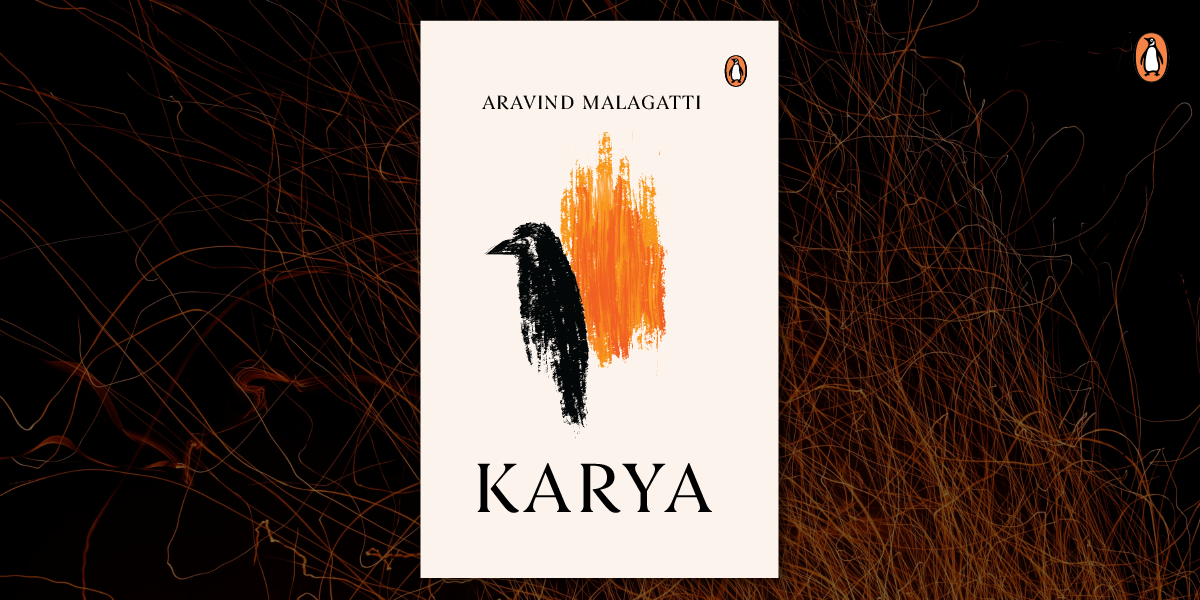
Front cover of Karya
Karya||Aravind Malagatti

The men on the way to the karya stopped suddenly at the boundary stone as they reached the limits of the village. The women in the third group were still some distance away.

A buffalo was swimming in a tank within the bounds of the village. Akkavva, from among the women going to the karya, stopped in her tracks to gawk at it, even as she handed over her pitcher of water to another. Her face, screwed tight with weeping, filled out suddenly like a pumpkin, beaming. It was three months since she had lost that buffalo while grazing it and she had been fretting. Now, she recognized it by the ornamental tipcovers on its horns. For a moment, she thought of the dead Bangaravva and turned back to get her buffalo. Who

knows if it would come home on its own or not? Some of the women who had seen her, turned up their noses at her and walked on.

The men had the, ‘ask them to hurry up’ expression, aimed at no one in particular but as if surely meant for the one particular group that was lingering. Just that no one said it aloud. The women stepped up their pace. The woman who had taken the pot from Akkavva walked briskly, ahead of them all. The men stood facing the village, with their back to the boundary stone. Once water was poured over the stone, they continued on their way facing the graveyard. All of men had the same solemn expressions. The women followed them, matching their strides.

That was when they removed the fresh white cloth covering the kavala mora. Their faces perked up to see the crows that had followed them, thanks to the aroma.

The wind picked up as soon as they crossed the village. Even before this, smoke from the smouldering kullaggi in Mallappa’s right hand had touched the dung cakes in his left; turning some of them too to ash. Once they crossed the boundary stone, the front wind caused the smoking kullaggi to catch fire. To keep his fingers from burning, Mallappa kept moving them to safer spots on the berani and screaming for fresh ones, ‘Ei, this is hot! Give me some more.’

Their feet swallowed the distance. All at once, the men opened their mouths; they murmured:

‘Ei, don’t let the kullaggi fall.’

‘It shouldn’t touch the ground.’

‘It’s bad luck if it does.’

‘Don’t let it fall. Come what may. Control the blaze; don’t let it burn so bright.’

Some even tried to put it down. But the flame would not be subdued. A boy picked up a fistful of mud to throw at it.

‘Ei, into whose mouth are you trying to throw mud?’ shouted Shivappa, Bangaravva’s husband. The fingers of the fist that held the mud loosened slowly, on their own. Mud dribbled through as flour from a flourmill, all along the way. They were getting closer to the graveyard. Mallayya tried his

best to press the dung cakes against one another to control the fire. But the headwind was too strong.

‘Chikkappa, kullu!’ he shouted for dry dung cakes to his uncle, Chandappa.

His uncle had fallen behind. All eyes turned towards him even as their strides quickened. Chandappa, feeling their eyes, darted towards Mallappa.

‘Why, didn’t you bring enough?’ he asked.

‘I did . . . but they’re over . . . You said you’d bring some, didn’t you?’

‘I? When did I say that?’

Mallappa went cold. He broke out in a sweat. His mouth went dry.

‘What do we do now?’

‘We’ll do whatever. But don’t drop it.’

‘Chikkappa?’

‘Chikkappa, he says, Chikkappa,’ Chandappa muttered to himself. And then to the men around, ‘Ei, go and gather some kullu drying in the fields.’

Even before he could finish, a few youngsters jumped the fence and entered the field with a standing crop. But none of them returned. Everyone scolded Mallappa. Everyone cautioned him from letting the ritual fire touch the ground. More than anyone else, Chandappa kept at it. Mallappa’s hands trembled as the heat touched them.

‘Chikkappa—at least fetch a flat stone to place under the burning cakes,’ Mallappa screamed but his uncle showed no concern. He was waiting for those who had gone to get some dry dung cakes from the field. When Shivappa brought a flat stone to help Mallappa, he shouted at him,

‘Why, do you want to snuff out your progeny by blocking the fire with stone?’

‘Not just his offspring,’ added another elder, ‘Looks as if he wants to burn down his whole house.’ Then Shivappa remembered his only son, Suryakantha, the fruit of many vows to many gods. He was already nearly chest-high. Not willing to lose him, Shivappa did not let the stone fall gently

to the ground; he dropped it with a thud. It fell on his big toe and . . . blood flowed.

Mallappa, caught amid the words of caution from everyone, tried his best to put out the fire with his hands but in vain. Already the hair on his hands was singed. The flame was trying to burn them. He gasped, helpless. Tears ran down his cheeks. And, finally, when the burning dung cake scorched his iron-like hands, he screamed and let go of the kullaggi! He looked at his hands, sobbing. They were covered with blisters. He looked around at the others.

Their looks were like knives. Those who had gone to fetch dry dung returned with some. They looked from Mallappa to the burning kullu on the ground. The ash was blown away by the wind and sparks of fire flew from them, happy to have won!

Everyone stood silent for a while. The wind had lost its gusto. All those who had come to attend the karya felt the whole world had come to a standstill. They had even forgotten they were alive.

All this happened in just a few moments.

~

Karya is a depiction of the unfairness of certain customs and how they discriminate harshly, even in dangerous, but easily remedied situations against one section of individuals, the Dalit community.

error: Content is protected !!