



Dr.Vineet Aggarwal embarked on a writing spree after his initial stint with the family occupation. The author of three successful books Vishwamitra – The Man Who Dared to Challenge the Gods, The Legend of Parshu – Raam and his recent, Bharat – The Man who Built a Nation’ Aggarwal experiments with the genre of mythological fiction.
Here are a few things you should know about the author


 How many of these did you know about?
Tag: featured
5 Facts About Pythagoras You Might Not Know

Osho’s Philosophia Perennis Series gives readers a peek into the life of renowned mathematician Pythagoras. The wisdom and intellect of Pythagoras were known to all.
But, did you know that he wasn’t just a mathematician? Pythagoras was an explorer who was a synthesis between the rational West and the mystic East, who taught both religion and science in his mystery school.
Discover more about him here


How many of these facts did you know?


India Turns East, An Excerpt
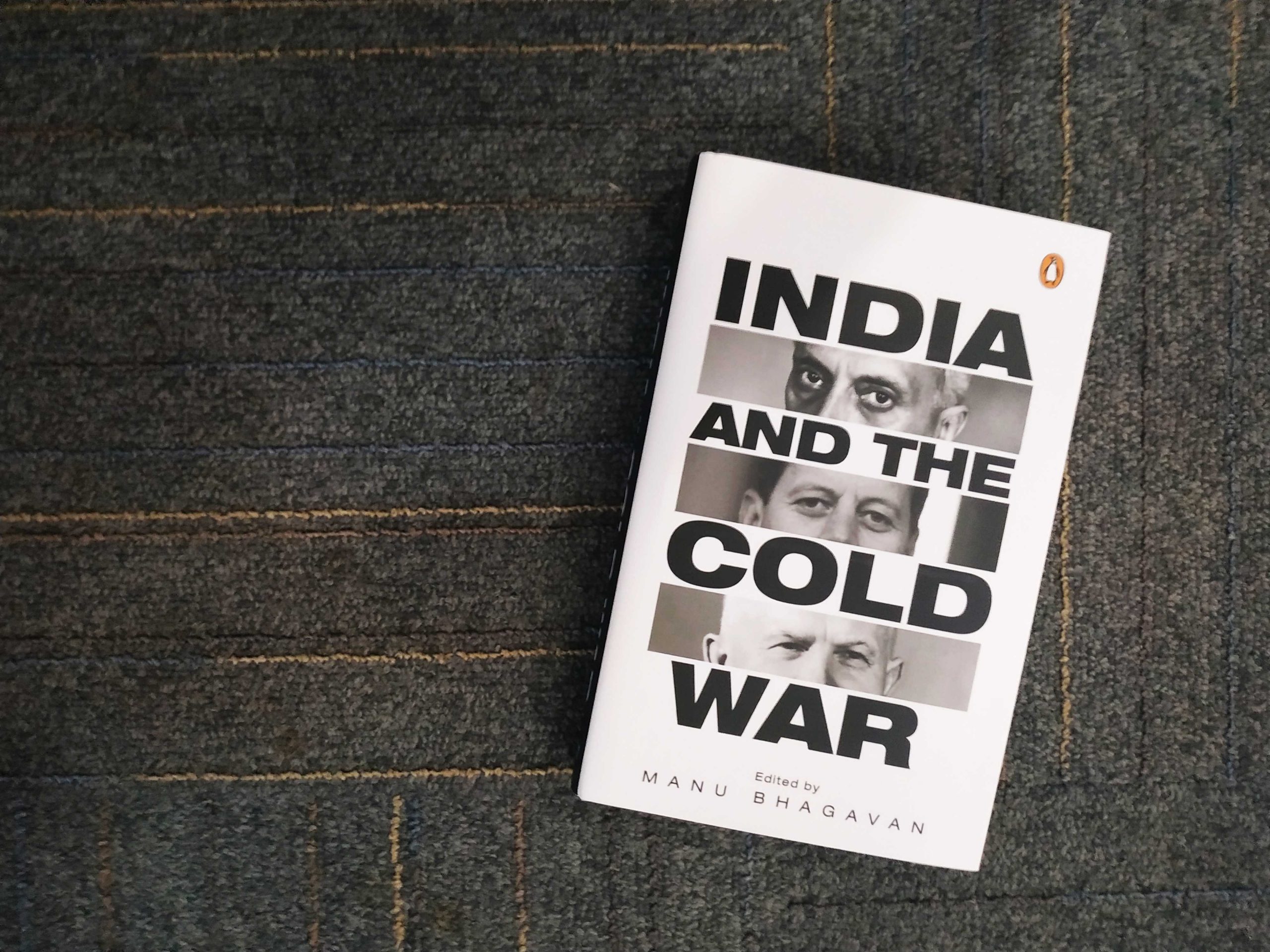
Frédéric Grare is a senior associate in the Carnegie Endowment’s South Asia Program. His book ‘India Turns East’ tells the story of India’s long and difficult journey to reclaim its status in a rapidly changing Asian environment increasingly shaped by the US–China rivalry and the uncertainties of US commitment to Asia’s security.
Here’s an excerpt from the book.
India’s Look East policy cannot be entirely explained by China’s rise and India’s desire to counter it. Yet ongoing bilateral disputes and mistrust between Beijing and New Delhi, coupled with China’s growing economic, political, and military role in Asia and beyond, have been important motivators behind India’s engagement with the region. India’s rich and evolving ties with countries in Southeast and East Asia have been partly but increasingly molded by China’s rise.
The relationship between India and China is complex. It includes territorial and border disputes and elements of rivalry for political dominance in Asia, but also strong economic incentives for cooperation. Many (if not most) components of the India-China relationship are of a strictly bilateral nature. Yet these bilateral issues also affect India’s larger regional policy. It is therefore necessary to analyze the various determinants of the relationship between Beijing and New Delhi and the ways in which India’s relationship with China has shaped its interactions with the broader regional community. The Look East policy is consequently an attempt not only to balance and deter, but also, and perhaps more importantly, to engage China at the same time. India seeks to create a virtuous cycle, by which engagement with Asia will not only mitigate the consequences of the capacity gap between India and China but will also, over time, provide India with the economic, military, and political resources necessary to alter the Asian power structure in its favour.
This chapter does not intend to recall the combined histories of China and India since time immemorial or even since independence. Nor does it aim at establishing a narrow correlation between India’s diplomacy vis-a-vis China and the development of the Look East policy. Instead, it identifies key characteristics of the evolution of the relationship and analyzes the various dynamics at play between the two countries since the early 1990s in order to better understand both India’s approach to regional relations and the way the India- China relationship might play out in the future, specifically with regard to the Asian power structure. By pointing out some obvious gaps in the rhetoric of some Indian strategic circles and the reality of a policy whose initial objectives were only secondarily linked to China, it also seeks to define the constraints under which India’s diplomacy is operating.
The India-China relationship leading up to and following the LEP For India, conflict with China is not an abstract concept. It is a painful, real memory. In November 1962, disputes over the demarcation of the McMahon Line, the border inherited from the colonial era, escalated into a full-scale war. China defeated India in less than a month and withdrew to the current Line of Actual Control (LAC). This humiliating episode has had a dramatic impact on the bilateral relationship—the trust deficit between the two countries has never disappeared—but also on New Delhi’s larger foreign policy which became almost entirely reactive after this episode.
Following the 1962 debacle, diplomatic relations between India and China were suspended for almost fifteen years. They resumed only in 1976, when both countries exchanged ambassadors. It took three more years for the first official visit since 1960 to take place, when External Affairs Minister Atal Bihari Vajpayee went to China to discuss the border issue and China’s support to insurgent groups in Northeast India. China’s attack on Vietnam, following the latter’s invasion of Cambodia, interrupted the visit but did not end the dialogue between the two countries.
In May 1980, soon after her re-election, Indira Gandhi met Chinese premier Hua Guofeng at Tito’s funeral in Yugoslavia. The meeting led to the June 1980 Chinese proposal of a “package deal” institutionalizing the status quo, which India refused. The same year, however, India informed China that it was ready to resume the process of normalization. An annual dialogue at the level of vice-ministers started in June 1981 and continued until 1988 when Rajiv Gandhi visited Beijing, the first visit an Indian prime minister had made to China since 1955. India dropped its earlier demand “of asking for settlement of the border as a precondition for any improvement in relations in other fields.” Two joint working groups were established to deal with trade negotiations and the border issue.

6 Facts About The Mahabharata You Might Not Know About
Mahabharata is one of the major Sanskrit epics of ancient India. It has been retold in various locales, and in many histories. Devdutt Pattanaik in The Boys Who Fought retells the story of Mahabharata, the significant Kurukshetra War, and fates of Pandava and Kaurava princes in a charmingly illustrated form.
Here are a few significant facts on the Mahabharata and its episodes


How many of these facts did you already know?

Discover the world of the gods and goddesses like you have never before
Celebrated author Usha Narayanan’s new book, Prem Purana, is a chronicle of love, longing, and the unexpected trials and tribulations one takes on in the journey of love. The book explores how even the mightiest of Gods and Goddesses have not remained untouched by love — with Ganesha taking on the challenge to please his wives, Ravana sharing an unbreakable bond with Mandodari, and Nala and Damayanti’s love withstanding the test of time.
Here are a few times the Gods surprised us with their deeds in love.
Myriad of stories

Fable of the mouse

The wonders of charming Gajamukha

Lord Ganesha’s vast appetite

Bad angel vs good angel

The game of Chaturanga

The story behind the fall

Hamsa, the cupid

Aren’t these facts fascinating?

8 facts on Perumal Murugan You Didn’t Know About
Perumal Murugan is no stranger in the world of Tamil literature. His works have not only garnered both critical acclaim and commercial success but also have been translated in many languages.
Here are a few things you did not know about the author.


How many of these facts did you already know?

A Neighing Man And His Son: ‘The Puffin Book of Spooky Ghost Stories’ — An Excerpt

Get ready for 13 ghostly, ghastly tales for bravehearts. Be prepared for eerie hauntings, dreadful happenings and creatures that go bump in the night. In this spine-chilling collection you will encounter a creepy spirit that occupies a deserted bungalow, the reincarnation of a goddess who wants the sacrifice of blood, an ominous swing that makes one fly far away into a dark, deathly world, and the sheer wrath of the dead. Read about a haunted school, a spooky wind-chime, a possessed doll and other supernatural elements that will take you on a nightmarish expedition into fear. Written by the best contemporary authors including Ruskin Bond, Jerry Pinto, Paro Anand, Subhadra Sen Gupta, among others.
Here’s a small excerpt from‘The Puffin Book of Spooky Ghost Stories’ for your child that is sure to fascinate them and make them want to read more!
Like Father Like Son — Paro Anand
Mr Anderson had stayed with us for three months. I’d got on very well with him. I think that was because both of us were slightly offbeat. He actually discussed stuff with me the way no other adult did. Although he worked in the Norwegian company where my dad worked too, Mr Anderson was also interested in the supernatural and other weird stuff. Not like most company executives who can be so stuffy.
In fact, that’s why he had come to India. He wanted to study Tantra and the exotic, mystical things that India is famous for. He also got very involved in yoga. There was an ashram in Bangalore that he visited once. He came back so excited about it that he put in an application for a year’s leave, and then called his wife and son in Oslo to ask them to join him.
He said he would take about a fortnight to settle down at the ashram and make arrangements for them to join him. ‘It’s wonderful there, Bhavani,’ he said to me one day. ‘You would love it. So peaceful. So spiritual. Like heaven on earth. If I were to die there, I would die a happy man.’
‘Oh, don’t say things like that,’ I protested.
‘Don’t you worry,’ he assured me. ‘Even if I go to the next world, be sure that I will contact you somehow or the other to tell you all about it!’ And he laughed that peculiar laugh of his. Almost as if he was neighing.
‘I must have been a horse in my last avatar,’ he joked to me once. He loved horses passionately. And then he would pull the right lobe of his ear, which was another one of his peculiar mannerisms.
Soon Mr Anderson left for the ashram, having bid us goodbye, promising to be in touch. But he never did; he just disappeared. Literally vanished off the face of this earth. Or so it seemed.
His wife called from Oslo about two and half weeks later to find out why he hadn’t called. We didn’t know, presuming all this while that he was safely at the ashram, settling in. But inquiries revealed that he had never shown up. The police department was duly informed, and a couple of months passed without anything significant being found. Dad’s company hired a private detective from an agency, but all they came up with was what we already knew: he had never reached the ashram. Somewhere between boarding the train and arriving in Bangalore, he had mysteriously disappeared.
Following this, Mrs Anderson called to say that she and her son were planning to come to India to try and carry out some search themselves. Naturally, they were wild with worry. And who could blame them? Dad and Ma asked them to come and stay with us.
So now I stood at the window of my newly clean room, awaiting Mrs Anderson and her son. I must admit that I had mixed feelings about this. On the one hand, I felt that it was quite an invasion of my privacy to have some strange boy in my room. I had to move to a couch in my parents’ room, while Mrs Anderson would sleep in the guest room. On the other hand, the idea of a possible mystery-laden adventure was thrilling. And on the third hand, if there is such a thing as a third hand, the idea of a thirteen-year-old Norwegian boy was exciting. With a little bit of luck, he might turn out to be, you know, something out of Baywatch. I knew that his name was Jan, pronounced Yarn, but I didn’t know much else. Somehow, Mr Anderson had been closed about his son, dismissing him with a ‘Oh! He has his problems’ type of remark.
The car drove up at last, and I went out to meet our guests. Mrs Anderson came out first; it was obvious that she was trying to be brave. Then I glanced inside the car to get my first look at Jan. My father was leaning in and supporting someone who seemed to be having trouble getting out.
Oh, he was blond and blue-eyed alright, but in such a faded sort of way that it was like some cloth that has been left out in the sun too long. Yeah, cloth-like was what he was. Limp, lightening-white skin, pain washed eyes and an almost boneless, muscleless body. Baywatch type he certainly was not. My heart sank as Dad put a supporting arm around him and brought him slowly out.
‘Jan, this is our daughter, Bhavani,’ Dad introduced me. Awkwardly, I held my hand out which only served to make things worse, for Jan’s arms continued to hang uselessly by his side.
‘Hello,’ he said, ‘I’m sorry, I cannot…’
‘Oh!’
Later, while helping Ma get the tea, I hissed, ‘What’s wrong with him?’ almost as if it were her fault.
‘He had an accident as a young boy,’ answered Ma, and went on to lecture me about how I should be good to him. ‘Be kind to dumb animals…’ I muttered meanly. His mother helped him eat, although he could manage a bite once he’d been propped up properly in a chair. I felt embarrassed just to look at him, let alone talk to him as Dad said I should, muttering under his breath in Hindi. Then an already embarrassing situation became worse when Mrs Anderson started to cry.
Things gradually did get better. At least the guy could talk. Ma and Mrs Anderson would go out frequently in search of clues which could help them trace Mr Anderson. And since we had our vacation, I stayed home with Jan. He talked quite a bit about his school, friends, music and stuff like that, but actually very little about his father.
Then one day the truth was out: the reason behind why the father and son hardly talked about each other.
It turned out that Jan had been born perfectly normal, the pride and joy of his parents. His father had always loved to ride, and wanted his son to be a champion horseman. But to his disappointment, his one and only son had no talent with horses. Let alone talent, he was actually terrified of them. The father couldn’t accept this. He continued to force him. Hard. Way too hard, against the boy’s wishes. Until . . . one day the boy fell from his horse while taking a jump. The accident left him damaged, half human, half vegetable.
The guilt and remorse on the one hand, and the resentment and frustration on the other, led to the father-son relationship being fragmented. Jan said that they hardly talked to each other, and I knew that they hardly talked about each other. ‘But when he disappeared,’ said Jan quietly, tired with the effort of having relived those painful moments, ‘I suddenly realized that both of us were being stupid. What was done was done. We should try to rebuild our relationship, forget the past. But now. . . now I don’t know if we’ll ever have the chance….’ Pain, regret and loss swam in his pale eyes as they filled with tears. But he didn’t let them fall.
‘I’m sorry… ’ said Jan.
‘Yeah, I’m sorry too,’ I said.
And then he did it. He pulled the lobe of his right ear, just as his father always did. I didn’t make a big deal out of it. At least not right away. After all, lots of kids pick up odd habits from their parents. It took me a moment to remember. Remember that he couldn’t lift his arms. He hadn’t been able to shake my hand when he arrived. Yet, his right hand had tugged casually at his ear, just as his father used to do. I looked carefully at him, but he didn’t seem to find anything strange in what he had done.
That night the weirdest thing happened. I dreamt of Mr Anderson. He didn’t actually say anything to me, but smiled and waved, as if saying goodbye. And then, as I watched, he looked at me and pulled the lobe of his right ear, and threw back his head and laughed his horsy laugh. And then he turned into a horse and galloped past me! I tried to grab hold of his mane, shouting, ‘Wait…wait! You don’t understand…!’
I woke up in a sweat, not able to make much sense of it. Next morning, I laughed at myself for worrying over such a ridiculous thing, and put it out of y mind.
When Jan and I were alone, he suddenly said, ‘I dreamt of my father last night.’ I had my back to him and fairly leapt around to face him. And I found him doing that wretched ear lobe thing again. ‘Did he turn into a horse?’ I blurted out.
‘Pardon?’ he said, looking shocked and hurt, and I felt stupid. ‘Er…nothing…’ I mumbled.
‘A horse? Did who turn into a horse?’ he persisted.
‘I’m sorry, I don’t know what I was thinking…’ was the best I could manage. He gave me a strange look after this, and his hand went up to his ear. I held my breath, but he didn’t pull the lobe.
Naturally, with him so much on my mind, Mr Anderson appeared in my dream again. This time he spoke to me and said the strangest thing, ‘I told you that I’d come back. That I’d contact you somehow, didn’t I?’
‘Are you dead?’ I asked, but he laughed, or rather neighed and galloped past me as a horse again. I ran after him, trying to catch hold of the horse’s flying tail. But he was gone.
Spooky, isn’t it? We’re sure you and your child want to find out more about what happens to the disappeared Mr Anderson and his distraught son. So hurry up and grab a copy of the book now!
The Puffin Book of Spooky Ghost Stories will have horror-story addicts craving for more. Deliciously horrifying, these sinister stories will unnerve the mind and chill the heart.
5 Quotes That Show PG Wodehouse Was The Master of Humour
Pelham Grenville Wodehouse is one of the best humorists known today to bibliophiles. He wrote more than ninety novels and some three hundred short stories over 73 years.
Along with his iconic characters Bertie Wooster and Jeeves, Wodehouse also created the world of Blandings Castle, home to Lord Emsworth and his cherished pig, the Empress of Blandings. His stories are never complete without the disreputable Ukridge; Psmith, the elegant socialist; the ever-so-slightly-unscrupulous Fifth Earl of Ickenham, better known as Uncle Fred; and those related by Mr Mulliner, the charming raconteur of The Angler’s Rest, and the Oldest Member at the Golf Club.
Here are 5 quotes by Wodehouse that make him a renowned humorists in the world of literature.


Did you just laugh your guts out? Tell us which quote did you find the funniest.
The classic pair returns! Jeeves and Wooster are all prepared to tickle your funny bone. Get your box sets here.
Read an Excerpt from John Green’s book ‘Turtles All the Way Down’.

John Green is no stranger to us. The author has never ceased to awe and amaze the hearts of young readers and fiction lovers. From ‘Looking for Alaska’ to his recent novel, ‘The Fault in Our Stars’ the readers are kept on a loop, asking for more from Green. His new book ‘Turtles All the Way Down’ explores the story of Aza and her friends.
Who is Aza Holmes and what is her story?
Here’s an excerpt from his new book.
I WAS WATCHING VIDEOS ON MY PHONE the next morning when the call came in. “Hello?” I said.
“Aza Holmes?”
“This is she.”
“This is Simon Morris. I believe you’re acquainted with Davis Pickett.”
Hold on.” I slipped on some shoes, snuck past Mom, who was watching TV in the living room while grading tests, and went outside. I walked down to the edge of our yard and sat down facing the house.
“Okay, hi,” I said.
“I understand that you’ve received a gift from Davis.”
“Yeah,” I said. “I split it with my friend; is that okay?”
“How you handle your financial affairs is unimportant to me. Ms. Holmes, you may find that if a teenager walks into a bank with a vast array of hundred-dollar bills, the bank will generally be suspicious, so I’ve spoken to one of our bankers at Second Indianapolis, and they’ll accept your deposit. I’ve set an appointment for you at three fifteen p.m. on Monday at the branch at Eighty-Sixth Street and College Avenue. I believe your school day ends at two fifty- five, so you should have adequate time to get there.”
“How do you know—”
“I’m thorough.”
“Can I ask you a question?”
“You just have,” he noted dryly.
“So you’re taking care of Pickett’s affairs while he is gone?”
“That’s correct.”
“And if Pickett shows up somewhere . . .”
“Then the pleasures and sorrows of his life will belong to him again. Until then, some of them fall to me. May I request that you come to your point?”
“I’m sorta worried about Noah.”
“Worried?”
“He just seems really sad, and there’s kind of no one there to look after him. I mean, isn’t there any other family?”
“None with whom the Picketts have a good relationship. Davis has been declared an emancipated minor by the state and is his brother’s legal guardian.”
“I don’t mean a legal guardian. I mean someone who actually, you know, looks after him. Like, Davis isn’t a parent. I mean, they’re not just gonna be alone forever, are they? What if their dad is dead or something?”
“Ms. Holmes, legal death is different from biological death. I trust that Russell is both legally and biologically living, but I know he is legally alive because Indiana law considers an individual alive until either biological evidence of their death emerges or seven years pass from the last evidence of life. So, the legal question—”
“I don’t mean legally,” I said. “I just mean, who’s going to take care of him?”
“But I can only answer that question legally. And the legal answer is that I administer the nancial affairs, the house manager administers the home affairs, and Davis is the guardian. Your concern is admirable, Ms. Holmes, but I assure you that everything is cared for, legally. Three fifteen tomorrow. Your banker’s name is Josephine Jackson. Do you have any other questions of pertinence to your situation?”
“I don’t think so.”
“Well, you have my number. Be well, Ms. Holmes.”
Prepare yourself for another of Green’s masterpiece!

Why Osho was inspired by Pythagoras?
Pythagoras, as we know, was not just a mathematician – he had the power to explore the workings of the inner mind and the outer world. The wisdom of Pythagoras influenced Osho to embark on matters of politics, love and meditation, obedience and surrender.
Pythagoras, the spiritual and divine master stirs an effect in Osho’s ‘Philosophia Perennis’. Osho, in this volume, speaks of the little-known teachings of Pythagoras.
Here’s an excerpt from the book.
The truth of Pythagoras, the truth of the greatest synthesis ever attempted, can trigger a process in you, can start something so immense, about which you could have never have dreamed. That is the whole purpose of satsang: being in communion with a master. His presence, his utterances, his silences start working on you—sometimes even in spite of you. Sometimes you become aware of those processes, sometimes you are not aware of them; they start working underneath your consciousness. One day, they explode into a great blossoming.
Pythagoras really tried the impossible, not only tried, he succeeded. But the world wants to live in division, because the world can only understand conflict. It cannot understand synthesis. Synthesis can only be understood when some synthesis inside you starts happening; otherwise synthesis is non-understandable, will be misunderstood.
Everybody was against Pythagoras. All religions, all sects, all the so-called gurus of those days were against Pythagoras. In fact, they should have been there for him because he was bringing together all the scattered fragments of truth. But it hurts . . .
If I say that the Koran is true, as true as the Vedas, and people understand this, then both Mohammedans and Hindus would be tremendously happy. But that doesn’t happen; both become angry. The Mohammedan becomes angry because I have compared his holy book to an ordinary book, the Vedas; the Hindu becomes angry because I have compared his holy book to an ordinary book, the Koran. They both become angry because their egos are hurt.
You can understand what must have happened to Pythagoras because it is happening to me, it is happening to you, the same process. Hindus are against it, Mohammedans are against it; Jains, Buddhists, and Christians are against it. Why?
I am bringing Christ, Buddha, Mahavir, Zarathustra, Lao Tzu and Krishna to the highest possible synthesis, but still they are all against it. The reason is: they are divided within themselves. They can only understand that which they are. You can never understand anything beyond your consciousness. If you are split, you can only understand a split world. If you are in a subtle harmony inside, only then will any harmony happening outside be understood.
It is good that you felt great gratitude arising in you listening to the synthesis. It shows that something has started becoming integrated in you—something that is bringing you together, that is creating a kind of unity between the two hemispheres of your brain, the left and the right.
These two hemispheres of the brain have to be understood, and very deeply, because much depends on that. Now scientists are also in deep agreement with the ancient mystic lore that unless these two brains are bridged and bridged rightly a man remains schizophrenic. They are bridged, but in a very, very small way; just a small thread bridges them. That thread can be cut.
