Publish with Us

Follow Penguin

Follow Penguinsters

Follow Penguin Swadesh

Gift Your Child These Deliciously Spooky Tales This Halloween

Halloween is just around the corner and the chill in the air has begun to set in! As we pull out our pumpkin delicacies and prepare to make merry in the creepiest of costumes, here are a few amazingly spooky books for your child to feast on this Halloween!
Trick or treat? You tell us!

Secrets by Ruskin Bond


Set in the 1940s, all is not what it looks like in the sleepy little town of Dehradun. The quaint place has its set of dark secrets — from plucky old women to mysterious murderers, Ruskin Bond’s Secrets brings to life the delectably dark tales of a small town set in the black and white days.

Amelia Fang and the Barbaric Ball by Laura Ellen Anderson

Have you met the inhabitants of Nocturnia yet? Nocturnia — a place where sparkles, colours and unicorns are things to be afraid of. Oh, and it’s also home to the little Amelia Fang and her pet pumpkin Squashy, who are in for some trouble as they race against time and discover that Nocturnia is much darker than they thought it is!

The Puffin Book of Spooky Ghost Stories

An ominous collection of 13 spooky stories where you meet spirits in deserted bungalows, death traps on swings that take you a little too far away, a reincarnated goddess with an insatiable bloodthirst and a whole lot others from beyond the grave and the unknown!

The Witches by Roald Dahl


The Grand High Witch is out to get you! She loathes children and schemes to trick you by dressing up as an ordinary woman, while being an extraordinarily evil witch all along! Only a little boy and his grandmother can stop The Grand High Witch from coming for you. Will they succeed?

This Halloween, tell us which story you read to your child in the dead of the night and celebrated the autumn nip with a chill down your spine. Happy Halloween!

Oh No! There’s Just One Tub of Popcorn for Nicky and Noni!: ‘Sharing is Cool’ — An Excerpt

Sonia Mehta’s super cool twins, Nicky and Noni, are in some trouble again! This time over sharing a tub of popcorn.
From her newest series — My Book of Values, Sonia Mehta explores how totally cool it is to instill and nurture some important values in children from an early age. While value education classes might be preachy, boring even, Sonia Mehta’s books make it fun for one and all, especially for your little one.
In Sharing is Cool, Sonia Mehta lets Nicky and Noni show us why indeed it is cool to share. How? Let’s find out!


That fight over the popcorn seems far from over! Do you think Nicky and Noni make peace finally? Grab a copy for your child today and find out!

9 Amazing Facts On Bilal Siddiqi You Should Know

Bilal Siddiqi, a shining star among the young authors has authored three novels till date and is embarking on his fourth.
Siddiqi is a fan of the world of espionage and thriller. Currently, Siddiqi is working as a screenwriter for Red Chillies Entertainment headed by Shahrukh Khan and Gauri Khan.
His new novel The Stardust Affair will transport you into an adrenaline-filled world of danger and deceit.
Here are some facts about the intrepid author.
His first novel was called The Bard of Blood

Personal interest evoked his instincts to pick up the pen

Woah!

Aww!

B-town’s creative child

Siddiqi, the magician with a pen

We hope to see the magic on the big screen soon

Like master, like protege

How many of these facts did you know about?

Excerpt from 'Bharat: The Man Who Built a Nation'

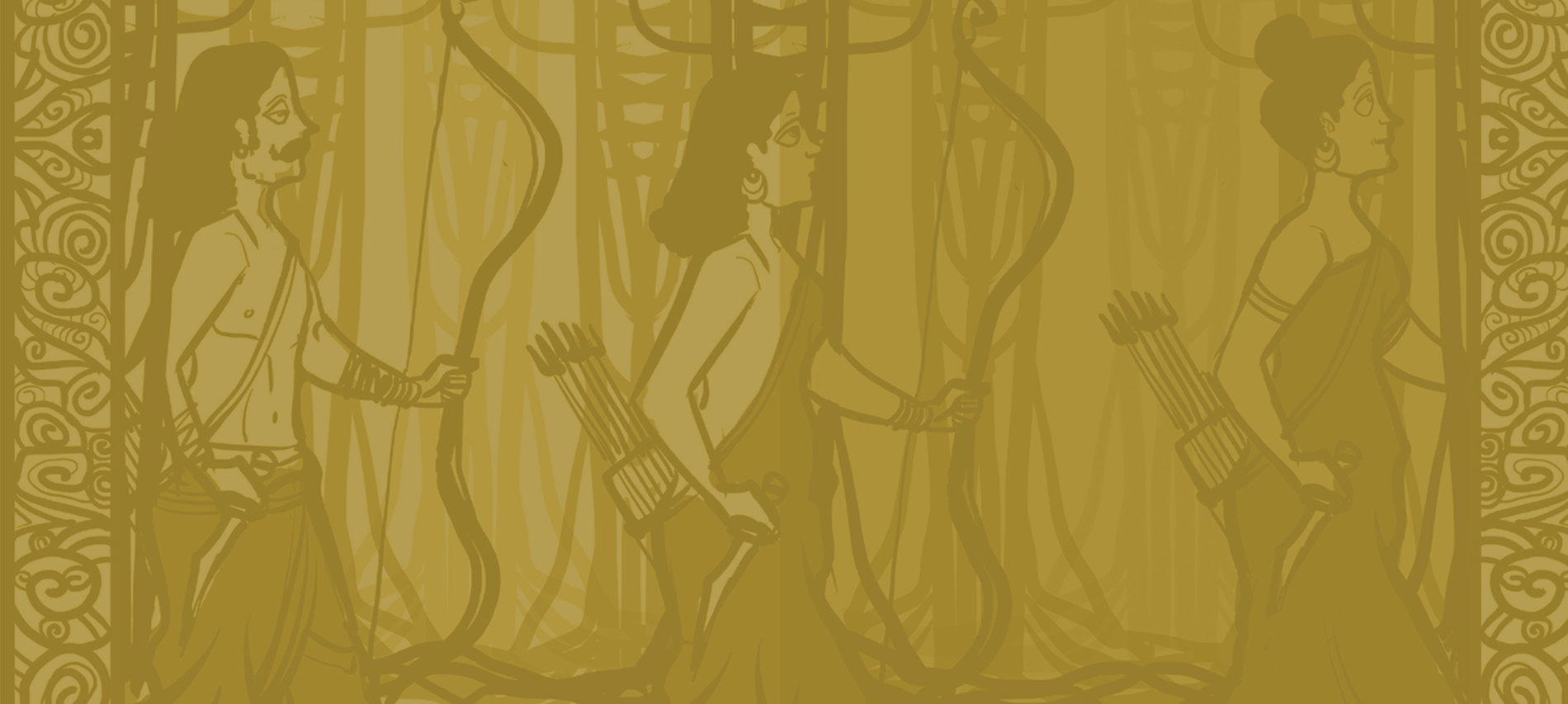
Dr Vineet Agarwal brilliantly retells the story of the son of Dushyant and Shakuntala, the grandson of Brahmarishi Vishwamitra in his latest book, Bharat: The Man Who Built a Nation.
Here’s an excerpt from the book.
Voices filled the royal hall of Hastinapur, bouncing off the two dozen marble pillars that supported the high vaulted ceiling. Wide latticed windows provided illumination as well as ventilation to the cavernous hall that was full of people watching the royal debate.
Aileen, ruler of the Puru kingdom, sat on a beautifully carved sandalwood throne that had been fashioned to resemble the vehicle of the moon god, the founding father of the Chandravansh. It was shaped like a chariot drawn by eight antelopes, and the king occupied the central seat, sheltered by a silver umbrella. The elderly king was presiding over a debate between his eldest son and the royal council. Of his five sons, Dushyant, the eldest, was quite simply the best.
Since the day he had first stepped into the court, the crown prince had shown a flair for solving the tricky situations that arose in the running of a kingdom. Dushyant was almost twenty-five now, and towered over his sire. Aileen saw a glimpse of his own younger self in him; they had the same tan complexion, sharp nose and dark eyes but the king had a greying beard and his face had assimilated fine lines from years of looking after the kingdom, while his son’s visage had the freshness of youth. Rigorous training had made Dushyant’s body lithe like that of a cheetah and his mind as sharp as a needle. He was practical and perceptive, and even now seemed to be winning the debate that had almost reached its conclusion.
For more than a prehar now, the councillors and the prince had been debating the need to change old policies followed by the kingdom—three hours and counting. Aileen had been trying to get his council to formulate new guidelines for more inclusive development, but to no avail. Change was not easy for anyone, let alone senior members of the court who were set in their ways and accustomed to their lavish lifestyles, but the king hoped that his son would be able to convince them.
Rising to his full six feet, Dushyant addressed the assembly emphatically, ‘The time has come for Hastinapur to introspect. We must decide which of our traditions are redundant and which can be retained. As the wielder of Shiva’s axe, Parshu Raam showed us, there is no place for practices that encourage corruption in this new world order.’
Aileen watched the seasoned councillors wince, a tiny smile playing on his lips. The use of Parshu-Raam’s name was a clever touch. Over the past year, the son of Rishi Yamdagni had gone on a rampage, annihilating autocratic rulers from the Himalayas to the southern ocean, paving the way for a new and just class of kings. Brahmins, Vaishyas and Shudras were the new Kshatriyas of Nabhi-varsh and what remained of the old guard was still haunted by the prospect of Parshu Raam’s return. Aileen himself had been lucky to escape with his life. His superior, Kartavirya Arjun, the emperor of the world, had not been so fortunate.
Dushyant’s closing argument had made even the most reluctant of councillors agree to the demand for modernization and as they passed a unanimous motion in favour of the idea, Aileen dismissed the court for the day and called his son to the throne.
‘My son,’ he said in a tone that betrayed his satisfaction, ‘seeing the way you have convinced the senior councillors to change their stance for the benefit of the people, I am confident that you are quite ready to look after the affairs of this kingdom. Acharya Dirghatamas, other senior members of the family and I concur that the time has come to pass on the crown of Puruvansh.’

The Interesting Story of the Pandavas’ Forefather: ‘The Serpent’s Revenge’ — An Excerpt

The great war of Kurukshetra is synonymous with the epic ‘Mahabharata’, a war fought between brothers and sons — stories that have lived on through generations. But have you ever wondered about where it all began for the Pandavas?
Sudha Murty’s ‘The Serpent’s Revenge: Unusual Tales From the Mahabharata’ brings to life hidden gems from the pages of the ‘Mahabharata’ that are sure to leave your little one enthralled and asking for more.
Here’s a snippet from the book.
The Man Who Became a Woman
According to the Mahabharata, the lunar dynasty (also called Chandravansha or Somavansha) is one of the most prominent warrior houses in India. As the name suggests, it is believed that this dynasty descended from the moon.
A long time ago, there lived a man named Vaivasvata Manu, considered to be the first man on Earth, and his wife, Shraddha. The couple didn’t have a child for many years, so they decided to perform a yagna in the hope of pleasing the gods. However, Shraddha secretly hoped for a daughter, while Manu wanted a son. In time, their prayers were answered and a son was born to them, whom they named Sudyumna.
Years passed and Sudyumna grew up to be a fine young man. One day, he went hunting with his friends to the beautiful forest of Sharavana (the forest of reeds). No sooner had the all-male troupe entered an enchanted portion of the forest than they were magically transformed into young women. None of them had any idea how it had happened or what they were to do.
As the troupe began wandering deeper into the forest as women, Sudyumna decided to reinvent himself according to the body he now had, and called himself Ila. When Ila and her friends became desperate to leave their beautiful surroundings and return to their homes, Goddess Parvati appeared in front of them. ‘You and your friends have entered my garden,’ she said. ‘Look around you—this is no ordinary place. In fact, no men are allowed to come here. If they do, they turn into women immediately and permanently.’
Seeing Ila’s dismayed face, Parvati smiled. ‘I know you came here by accident,’ she said gently. ‘So I will bless you, child. May you lead a happy life irrespective of your gender. From this day on, you will be able to choose what you want to be—male or female—whenever you want.’
To everyone’s surprise, beautiful Ila chose to remain a girl, and embraced her new identity with her heart and soul. Meanwhile, Budha, the god of the planet Mercury and the son of the moon-god, Chandra, noticed Ila’s exquisite beauty and fell hopelessly in love with her. Ila reciprocated his feelings and the two were wed. In due course, Ila gave birth to a son called Pururava.
Time passed and Ila chose to revert to her male form, Sudyumna. He returned to his kingdom and ruled it wisely. As was expected of a king, Sudyumna got married and had many children of his own. He continued taking care of his subjects until he was old, after which he handed over the kingdom to his first son, Pururava, and retired to the forest to live out the remainder of his days.
Pururava, the grandson of Chandra, thus introduced the lunar dynasty. He ruled from his kingdom’s capital, Pratishthana (today’s Allahabad in Uttar Pradesh).
The great Pandavas of the Mahabharata are a part of this dynasty. King Yayati, one of the ancestors of the Pandavas, was succeeded by his youngest son, Puru. His dynasty came to be known as the Puru dynasty.
Another one of Puru’s descendants was Emperor Bharata, the son of King Dushyanta and Shakuntala. Bharata was such a great king that our country was named after him and called Bharat or Bharatvarsha.
King Kuru was born after twenty-five generations of the Puru dynasty, and gave rise to the Kuru dynasty. After fifteen more generations, the Pandavas and the Kauravas were born. In theory, both the Pandavas and the Kauravas are descendants of King Kuru, but the Pandavas, who were the sons of Pandu, chose to carry their father’s name and not the identity of the clan.
How fascinating is this story! Get a copy of this charming book for your little one and dive right into those corners of ‘Mahabharata’ you missed out on before!
And oh, while you’re at it, don’t forget to pre-order your copy of ‘The Man from the Egg: Unusual Tales about the Trinity’ by Sudha Murty. The second in this series of a Pandora’s box of stories is just about to open up!


8 things you didn’t know about Indian football

Did you know India was called the “Brazil of Asia”? Novy Kapadia’s Barefoot to Boots delves into the glorious legacy of Indian football through riveting descriptions of on-field action, stories of memorable matches, lively anecdotes, and exclusive conversations with legendary players and officials.
Here are a few facts you probably didn’t know about the Indian Football.


Front cover of Barefoot to Boots
Barefoot to Boots || Novy Kapadia

Aren’t these facts mind blowing? Find more of these in Novy Kapadia’s Barefoot To Boots.

Bollywood: The Films! The Songs! The Stars! Foreword by Amitabh Bachchan

Who isn’t enchanted by the glitz and glamour of the world’s largest cinema industry AKA Bollywood?
With Bollywood: The Films! The Songs! The Stars!, be mesmerized by the glamour and colour of Bollywood. Known for their glittering costumes and epic song-and-dance routines, the charming movies produced in Mumbai have captured the hearts not just of Indians but of people the world over. 
Here’s what Amitabh Bachchan has to say in the foreword of this lavishly illustrated book.
I abhor the title of this book. The Indian Film Industry is what I shall always refer to as Cinema in India. We are an independent creative industry and not a derivative; any attempt to imply otherwise, shall not find favour with me.
But the absence of any kind of film documentation is another malaise that has been of great concern to me; one that I lament greatly. To find a global publishing house now wanting to tap into “the increasing interest in the Hindi film industry from national and international quarters” is indeed most laudable.
Hindi cinema, indeed the entire cinema in India, is the largest film-producing unit in the world. To me it has always played the role of a unifier, an integrator. When we sit inside that darkened hall we never ask who the person sitting next to us is – his or her caste, creed, colour, or religion. Yet we enjoy the same story, laugh at the same jokes, cry at the same emotions, and sing the same songs. In a world that is disintegrating around us faster every day, where can one find a better example of national integration than within those hallowed portals of a cinema hall? There are not many institutions left that can boast or propagate such unity.
I once asked a Russian gentleman in Moscow what it was that attracted him to Hindi cinema. He replied: “When I come out of the theatre after watching a Hindi film, I have a smile on my face and a dry tear on my cheek!” There can be no better assessment of our films than this – and that too from an individual who was not an Indian. But my father, the great poet and litterateur, Harivansh Rai Bachchan, summed it all up most succinctly. On asking him one day what Hindi cinema meant to him, he said: “I get to see poetic justice in three hours! You and me shall not see this in a lifetime… perhaps several lifetimes!”
SMM Ausaja, a friend and a passionate film admirer, curator, and journalist, contributes to a section of this book. My wishes to him and to the publication.

5 Things You Probably Didn’t Know About Orhan Pamuk

A critically acclaimed author, and winner of Nobel Prize in Literature in 2006, Orhan Pamuk is one of the most iconic authors of our times. Pamuk is a multi-dimensional writer whose novels have witnessed major success over the years. His style of writing is described as ‘unsettling but intriguing’ as he often explores the East and West dichotomy.
Here are some interesting facts about the wordsmith

How many of these facts did you already know?

Prince Amritsena Saves the Day!: ‘The Bird With Golden Wings’ — An Excerpt

Master storyteller, Sudha Murty, weaves magical tales of princesses and little girls, talking animals and an enchanting world of the good and the evil for children in her book, ‘The Bird With Golden Wings: Stories of Wit and Magic’.
In the short story, ‘Skills for a Prince’, Amritsena, a young and intelligent prince finds a unique way to test the honesty and integrity of a few of his subjects. How? Let’s find out!
Skills for a Prince
Amritsena, a young prince, was very popular with his subjects. Everyone praised his sense of fairness. He also loved to play pranks and made the courtiers laugh. He often disguised himself and roamed the streets of the capital city, listening to what the people were saying and learnt about the problems of the common man in this way.
During one such tour, he came across three young men in the outskirts of the city. From their attire they appeared to be strangers. They were huddled together, talking to each other.
Amritsena walked up to them and said, ‘You look new to this city. Can I help you?’
One of the men replied, ‘We are students of the sage Kashyapa and have recently finished our studies. We are looking for work, where we can put our special skills to use.’
At once, Amritsena’s ears pricked up. ‘And what are these special skills? I work in the king’s court and I may be able to help you find a job there.’
One young man said, ‘Just by tapping my feet, I can make out what is below the ground.’
The second one said, ‘I can always tell in which direction one may find hidden treasure.’
The third said, ‘Once I have seen a person, I can recognize him anywhere, even if he is in disguise.’
Amritsena heard them out, thought for a minute and said, ‘I am also a man with a special quality.’
‘What is that?’ they asked.
‘If anyone is in difficulty, I can always find a solution and rescue the person.’
‘From where did you get this gift? Who taught you?’
‘I have always had this gift, since I was a child,’ replied Amritsena with a smile. Then he said, ‘Why don’t you show me a sample of your special skills as we walk to the city? I can then tell the king about you.’
The four men began walking. After some time, one stopped and said, ‘Below us lies a tunnel.’
They started digging and, sure enough, they found a tunnel. They began to walk through the tunnel, which led them into the palace.
Now the second man stopped suddenly and said, ‘Just around the corner there is a secret treasury.’
Amritsena, who knew this to be true, was amazed. He smiled secretly to himself and said,
‘You three wait here. If the guards see you they will mistake you for thieves. Let me go and check.’ Then he walked quickly ahead, turned a corner where he stripped off his disguise, and presented himself before the guards.
‘There are three men in the tunnel plotting to loot the treasury,’ he told them. ‘Go and arrest them immediately. They should be produced in court first thing tomorrow morning.’ Saying this he walked away to his room and went to bed.
The next morning, the three men were presented in the king’s court. Seeing Amritsena on the throne, the third man realized he was the same man who had got them arrested. He whispered this to his friends. Now they were scared that the prince would punish them for having entered the royal treasury just to show off.
‘How did you find the way into the secret tunnel?’ thundered the king, Amritsena’s father.
‘We…we j-just…’ stammered the men, shaking in fear.
Amritsena watched them, trying not to laugh. Then he stepped in and whispered in his father’s ear, ‘They are not thieves. I met them last night just outside the city. They are learned men with wonderful gifts. I only wanted to test them to see if they were telling the truth or not. We should keep them in our kingdom as their talents will help us in many ways.’
The king nodded, and said, ‘On the request of the prince I release you. You will work for me from now on, and use your gifts for the betterment of this kingdom.’
The three men sighed in relief. Amritsena had rescued them—just as he had said he could!
Dive into the world of fascinating tales in Sudha Murty’s ‘The Bird With Golden Wings: Stories of Wit and Magic’ and get to know some amazing stories of wit, humour and love!


‘Shoot. Dive. Fly’, Foreword by M.S. Dhoni

Rachna Bisht Rawat’s ‘Shoot. Dive. Fly’ aims to introduce teenagers to the armed forces and what it is like to have a career in the forces. The book is a collection of twenty-one nail-biting stories of adventure and thrill of a career in uniform. The book also has army personnel talk about what the armed forces have taught them.
Here’s the foreword by Mahendra Singh Dhoni, ex-Indian cricket team captain.
My dear friends,
It gives me great pleasure to write the foreword for Shoot. Dive. Fly. The Indian Army is one of the most respectable and exciting careers our country offers young people and it surprises me that the Army faces a shortage of officers year after year. This is probably because most of us do not know what an amazing variety of jobs it offers. Perhaps this is also because Army officers are not permitted to talk to the media and so we never get to hear about the amazing things they do.
I compliment the Army on giving Rachna Bisht Rawat access to young serving officers to share with us the experiences of the fascinating jobs they do.
This book will help bust the false belief that an Army officer is a man with a gun who lives on the borders of the country, cut off from the rest of civilization, waiting for a war to begin, which might sound like a boring job to a lot of teenagers. They do that, of course, and we are very proud of them for it, but that’s not the whole truth. Army officers do a lot of other things too that most teens want from a career. The Army has engineers, doctors, helicopter pilots, drone fliers, cyber warriors, Olympians, Everest summiteers, skydivers, sailors, marathon runners, shooters—and yes, even cricketers—and a host of other professionals that we often don’t get to hear about. These are men and women who are all trained for combat but they work in their particular fields with all the support of the Indian Army to reach the top. You, too, can choose one of these opportunities and get paid to be trained and excel in your dream job. Not many, if any, industries or institutions give you this freedom. And how do I know all this? Because I happen to be an officer in the Indian Territorial Army too.
I am sure you will enjoy reading the real-life stories of young officers who went beyond the ordinary to reach great heights. This book includes the story of Colonel Ivan J. Crasto, SC, who climbed down a rope from a hovering helicopter to rescue all ten tourists trapped on board a trolley hanging from a snapped wire. It also tells of Colonel Rajesh Unnikrishnan who climbed down forty feet into a dark, gaping borewell to rescue a small child who had fallen in. In these pages, you will meet Colonel Sameer Singh Bisht, SM, whose gun jammed in an encounter with Kashmiri terrorists but he managed to keep his nerve and emerge victorious. You will read of young mountaineer Major Deepika Rathore, who has climbed the mighty Mount Everest twice and of my fellow paratrooper Major Sandesh Kadam, who jumped out of a plane at 8,500 feet to find that both his main and emergency parachutes would not open. How did he land alive and undamaged in spirit to the extent that he is raring to recover completely and go back to his duty, you might ask? To know that, you will need to read this book, and/or join the Army.
I shall sign off by wishing you the best in whatever career you choose. When I am old and sitting in front of the TV watching some of you play cricket for India, or some of you do amazing things that the news channels report, I shall smile and applaud for you—just like you do for me, when I hit a six or take a catch. I shall be proud of all of you. Go on and do your best in life. But do consider wearing the uniform once before you make a final choice. I did!

Jai Hind! Jai Hind ki Sena!
Lieutenant Colonel Mahendra Singh Dhoni


error: Content is protected !!