Publish with Us

Follow Penguin

Follow Penguinsters

Follow Penguin Swadesh

"Where are the words I wrote yesterday?"

Do you remember the last time you took a moment from your busy life to celebrate its little joys?
Ruskin Bond gives us a solution with ‘Words From the Hills’ — a journal that urges you to stop, take a breath, and appreciate the gift of life.
Here’s a short snippet from the book and a prompt for you to pick it up, if you haven’t already!
When I opened my window, the wind came in and snatched my words away. And perhaps that’s where all words go in the end—over the hills and far away, to be lost forever.
A few stray words found their way to the desks of Penguin’s editor Premanka Goswami and design head
Ahlawat Gunjan, and these good souls decided to preserve them for no special reason other than that they were words of love and joy (if not wisdom), and had emanated from my abode in the hills and lent themselves to lyrical watercolours from Ahlawat’s favourite paintbox.
Among other favourite things, he has depicted the rubber plant that flourishes on my bedroom wall. I am not
sure if it wants to make love to me, or simply strangle me. When I returned from a trip to Delhi (or rather Gurgaon,
where everything seems to happen now), I found the rubber plant had spread its tentacles across my pillow, almost as though it was lying in wait for me.
As this is a book of a few words and many colours, I must make this introduction a brief one. The book is really intended for your words, dear reader, and you will find that we have given you the freedom of every page, with space for you to put down your thoughts, feelings and observations before they are carried away by the wind.
This is your book, and the words and decorations are simply there to persuade you to use it.
Ruskin Bond
Ivy Cottage, Landour
August 2017


Inspiring, isn’t it? So grab a pen and get started, because every memory is worth remembering.

Why the Judiciary is Important and How the Legislative Can Take Advantage

Lawyer and activist Prashant Bhushan’s The Case that Shook India is a blow-by-blow account of the watershed case that led to India’s Emergency in 1975.
The book also depicts how the judiciary can be misused by powerful members of the legislative body to their advantage, thereby emphasising on the increasing need of a stronger, robust judiciary.
Here are 5 instances from the book that the author highlights.


Grab your copy of India’s most thrilling courtroom drama today!

9 Things That Will Make You Pick John Green’s ‘Turtles All The Way Down’

John Green is the bestselling author of several literary marvels. He is no stranger to the Young Adult genre and his works have been immortalized on the big screen as well. For his works, he has won laurels such as the Printz Medal and the Edgar Award. He has also been also selected by TIME magazine as one of the 100 Most Influential People in the World.
He is back with his fifth solo novel, Turtles All The Way Down’.
Here are ten things about the book you should know.


Don’t wait any more and pick up the book right now!

The Story of Mahatma Gandhi And Where It All Began: ‘Junior Lives: Mahatma Gandhi’ — An Excerpt

Mahatma Gandhi, lovingly called Gandhiji and the Father of the Nation, has been remembered by the entire world for his honest, non-violent methods of leading a nation to independence.
In Sonia Mehta’s ‘Junior Lives: Mahatma Gandhi’, the author explores the life of Gandhiji from his childhood and shows us how he became the leader that he is today.
Here’s a short excerpt from the book.
The thirteen-year-old lad was impatient.  He wanted to get back to his friends, who were having a great time playing outdoors. But here he was—stuck indoors, made to dress up in clothes that were icky and uncomfortable.
‘Can I go now?’ he asked his mother, trying to shrug off the elaborate outfit she was trying to get him to wear.
‘No, Mohan,’ she replied. ‘You can’t go play with your friends today. It’s your wedding day.’
That young boy was Mohandas Karamchand Gandhi. At thirteen years of age, he was about to get married to a girl who was just a little older than he was. His family would never have believed it then, but this boy was to grow up to become one of the world’s greatest leaders, who would lead India to freedom. He showed people a nonviolent way of life. Millions of people adored him and gave him titles like Father of the Nation, Bapu (meaning father) and Mahatma (meaning great soul). What an incredible achievement for such an ordinary boy, born to such ordinary parents!
A Happy Family
Young Mohan (for that was what his family called him) was born to Karamchand and Putlibai on 2 October 1869. Theirs was a large, happy family. Mohan had a sister and two brothers—all older than him, so you can imagine how much he was loved and petted. The family was quite wealthy and lived in a big, three-storeyed house in the Indian port-city of Porbandar, in what is now Gujarat. Karamchand was an educated man. The ruler of Rajkot admired him and made him the diwan of Porbandar. As diwan, he managed the business of the state. People respected Karamchand a lot and came to him for advice.
When Mohan was a young boy, he was very shy. He would spend all his time with his books.  This made him very thoughtful. However, he didn’t love studies; in fact, he found maths rather hard. But he was a good student overall, and his teachers thought well of him. One day, Mohan got his father’s permission to see a play about a king named Raja Harishchandra. The special thing about this king was that he never lied, no matter what happened to him. Mohan was so impressed by this play that he swore to never tell a lie in his life.
Always, Always Truthful
One morning, Mohan’s class was given a spelling test. Mohan knew all the spellings, except that of ‘kettle’. The English teacher, keen to prove that he was a good teacher, wanted all his students to know every spelling so that he could impress his superiors. When he saw that Mohan was unsure, he prodded him to peep at his neighbour’s slate and see the spelling.
‘But that would be cheating,’ an aghast Mohan thought. He refused to look at his neighbour’s slate, and eventually was the only boy in class who did not get all his spellings right. But that didn’t bother him. He was more bothered that his teacher had told him to cheat.
One of the only times Mohan lied was when he was in his early teens. He stole some gold from his brother and sold it. But it wasn’t for himself. He gave the money to his other brother to help him get out of debt. He couldn’t sleep that night. He tossed and turned, feeling awful. Finally, he confessed to his father. He was ready for any punishment. But instead of getting upset, Mohan’s father wept. He was hurt that his son had lied,  but happy he had confessed.
Mahatma Gandhi’s fascinating life goes way beyond the years documented in the pages of history. Get to know Mohandas Karamchand Gandhi before he became GandhiJi with Sonia Mehta’s ‘Junior Lives: Mahatma Gandhi’!

5 Books That Will Brighten Up Your Diwali

Diwali is a celebration of lights, homecoming, and the victory of good over evil. This Diwali, come home to stories of hope and triumph of humanity over darkness, fear and hopelessness.
Here are 5 books you should read this Diwali 

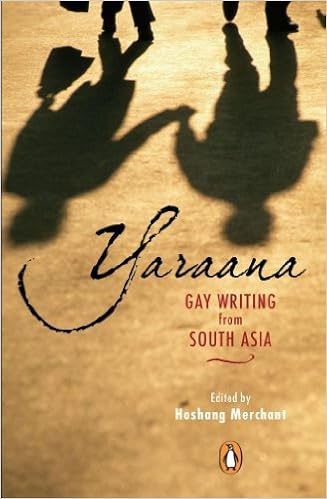
Yaarana


Hoshang Merchant in this collection captures the true meaning of yaraana or male friendship and bonding, an often ignored facet of South Asian life and sexuality. The collection features some enigmatic stories like  Ashok Row Kavi’s autobiographical piece on growing up gay in Bombay and Vikram Seth’s brilliantly etched account of a homosexual relationship in The Golden Gate. The book shows how love and companionship can brighten up any dark day.

Kanshiram

Kanshiram: Leader of the Dalits by [Narayan, Badri]
Fetching from various oral and written sources, Badri Narayan shows how Kanshiram mobilized dalits with his homespun idiom, cycle rallies and, uniquely, the use of local folk heroes and myths, rousing their self-respect, and how he struck opportunistic alliances with higher-caste parties to seize power for dalits. Authoritative and insightful, this is a rare portrait of the man who changed the face of dalit society and, indeed, of Indian politics. The book inspires one to fight for their rights, and combat the force of darkness.

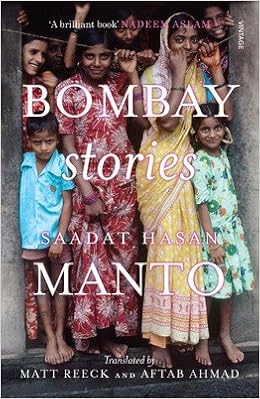
Bombay Stories


Bombay Stories is a collection of short stories about actors, prostitutes, intellectuals, conmen and more. Originally written in Urdu by Saadat Hasan Manto, it is set in the 1930s and 1940s, when the author had just arrived in the city. Anyone who is interested in the history and culture of Bombay or is a fan of translated Urdu literature, can enjoy reading this book. It will guide one to seek what is good, and annihilate the evil in this world.

Unheard Voices

In this book, civil servant and social activist Harsh Mander draws on his own and his colleagues’ experiences to explore the lives of twenty people who have survived and coped despite being pushed to the hopeless margins of society. The stories act like beacons of hope that will make Diwali seem a little brighter. The book will enlighten one to seek light in this weary world.

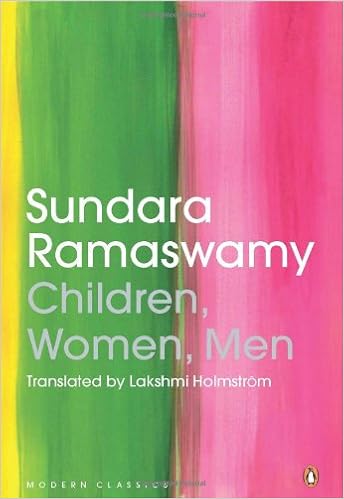
Children, Women, Men


Set in the late 1930s and reflecting the political and social turmoil of the pre-war years, it chronicles the psychological conflict between Srinivasa Aiyar and his nine-year-old son, Balu. The ambitious novel also tells the story of Anandam, a young widow, as she considers remarriage, and Sridaran, who chooses to break off his studies in England in order to join nationalist activities at home. The book in its true essence display how happiness is found in the darkest days.
So, which book are you reading this Diwali?

Did You Know These Facts About Writer Michael Morpurgo?

Author Michael Morpurgo is best known for his children’s work War Horse that was released in the year 1982.
With a series of books that explore well-known stories from myths and epics, but with a magical twist, Morpurgo’s writings have been termed as “magical storytelling”.
With multiple literary awards to his name, Michael Morpurgo has written a wide range of fascinating books for children in a literary career spanning over decades.
Here are a few facts you may not have known about this amazing writer!


We bet you can’t wait to grab your copies of Michael Morpurgo’s amazing books after reading this. Don’t forget to tell us which ones you liked best!
(Author image credit: https://ichef.bbci.co.uk/images/ic/1920×1080/p01gzy0x.jpg)

‘This is no ordinary cat’: The Nine Lives of Montezuma — An Excerpt

As the famous saying in English tells us every cat has nine lives, Michael Morpurgo’s The Nine Lives of Motenzuma proves that cats indeed are survivors in this big, bad world.
Montezuma, a ginger cat, is anything but your ordinary furry friend. As soon as he is discovered, the characters in the story realise that this cat is not a normal alley cat but a creature with magical powers, much like its namesake, the survivor King of the Aztec.
Here’s a short excerpt from the book.
He found Montezuma crouching at the end of a long tapering branch that hung out over the pond. The branch looked thick enough and safe enough near the trunk, but the further away it stretched the more fragile it looked. Matthew stood in the fork of the tree and considered all the alternatives, trying to ignore the warnings and advice from below. He could not climb out along the branch to Monty – the branch would not take his weight. He needed a net to throw out over the cat, but there was no-one who could bring a net up to him – neither his father nor his mother could climb trees – at least he had never seen them. He would have to talk the kitten back to safety, that was the only way.
‘Monty,’ he said in as soothing a tone as he could manage. ‘It’s me, Monty. You can’t stay out there all day. You’ll be all right now. I’ll take you down. Come on then, come on. I won’t hurt you.’
But the kitten crouched low, glued to the branch like lichen. He blinked back at Matthew, swallowing hard and mewing weakly every so often. Matthew talked on in a consoling, sympathetic tone; but he received no encouragement from Montezuma who never moved a muscle.
From down below his father was shouting up to him. ‘Can’t you get him down?’ A question which Matthew didn’t feel he could answer politely.
‘Fire Brigade,’ his mother shouted up. ‘What about the Fire Brigade?’ They looked so small down there in the yard. Matthew felt his parents had been getting smaller in recent years, but he had never seen them this small.
‘Not yet,’ Matthew shouted back. ‘Not yet. I’ll try one more thing.’
‘Do be careful, dear. Do be careful.’ His mother’s voice sounded hysterical, but then it always did whenever she shouted.
Matthew held onto the branch above him and edged out onto Montezuma’s branch, stepping sideways like a cautious crab. The two branches ran parallel for a few yards and then the upper one that Matthew was holding onto came to an abrupt halt. Matthew went as far as he could and then released the upper branch. For a moment he stood balancing with nothing to hold onto. The branch swayed underneath him and he lowered himself carefully until he was sitting astride the branch, his hands clasping it firmly in front of him. Like this he pulled himself along inch by inch until he knew he could go no further. The kitten was still well out of reach.
‘That’s far enough.’ His father’s shout was sharp. ‘No further. That’s far enough. The branch won’t take the weight. No further.’
Matthew knew he was right, but he was nearly there and it was only a few more feet. He lay now flat along the branch gripping behind with his feet, his hands holding on in front of him. ‘Come on Monty, come on down. Please, there’s a good kitten. Come on now.’ But as he released one hand to reach out towards the cat, he lost his balance and had to grab at the branch suddenly to retrieve himself. Alarmed, the kitten backed away, lost his grip and tumbled down through the air towards the pond. Matthew watched for the splash and saw his father running down across the yard towards the pond. The ducks evacuated the pond noisily, leaving Matthew’s father alone in the pond striding waist deep to the spot where Montezuma had fallen in. Matthew waited, closed his eyes and prayed. When he opened them his father was shouting up at him and laughing, holding up a dripping kitten. ‘Got him. He’s all right. The little divil’s still breathing.’
By the time Matthew had made the descent, his father was out of the pond and had pulled off his shoes. He was sitting on the ground taking his socks off and wringing out the water. ‘Your father will catch his death,’ said Matthew’s mother, who was holding on to Montezuma in a vice-like grip. ‘Here’s your Monty,’ she said. ‘You take him. And for God’s sake hang on to him. You worry me to death, you two. First you go climbing up trees and then he goes jumping into cold ponds – at his age. You should know better. Could have killed you both and all for what? For a kitten.’
‘For Monty,’ said Matthew, rubbing the kitten dry with the tail of his shirt. ‘This is no ordinary cat, you know. Can you imagine my Dad jumping into a pond to rescue any other cat? He’s dropped plenty of kittens into this pond, but this is the first one he’s ever pulled out and that’s a fact.’
‘And the last,’ said his father wriggling his wet toes. ‘Definitely the last.’
Find out which adventure Montezuma encounters next in this enchanting book by Michael Morpurgo!

5 anecdotes from Kalam’s autobiography ‘The Life Tree’

Dr.APJ Abdul Kalam’s vivacity and creative energy traverses its way through in his autobiography, The Life Tree. The poems in the autobiography capture the essence of nature, human relationships and love for the country.
On the occasion of his birthday, here are a few moments from his life, immortalized in poems.
The picturesque view that Dr.Kalam and his friend, Vidyasagar witnessed is expressed in the lines below.

APJ Abdul Kalam, in the poem below, reflects on his childhood and the meaning of communalism

Dr Kalam was overjoyed receiving the Padma Vibushan in 1990. The lines below capture the emotion he felt upon receiving it.

The late President was distressed on hearing about Mother Teresa’s illness. The poem below captures his anguish.

Dr Kalam’s father said – “Never receive a gift; a gift is always accompanied by some purpose”. At 70, he recollects a lesson from the past.

Aren’t these lines magnificent just like him?

‘A Checklist For God’s Own Office’, An Excerpt

What happens when a vacation turns into a business opportunity? James Joseph, an NRI professional decided to take a family vacation in Aluva, Kerala where he stumbled upon a business opportunity in the form of jackfruits. Today, he is the founder of a successful entrepreneurial venture called Jackfruit365, an initiative to create an organized market for nutrient-rich jackfruits in India.
His book, God’s Own Office is a part-memoir, part how-to on how to integrate with the local community and set up a home office alongside nurturing your entrepreneurial ambitions.
On October 14, 2017, James is going to share his wisdom in a TedX Talk on how to set up God’s own office. He’s also going to dedicate the book to the late President APJ Abdul Kalam.
Here’s an excerpt from the book God’s Own Office, it’s a checklist of what you need to have to set up your own home office in a remote part of the country.
A Checklist For God’s Own Office
1.Do you have an unwavering conviction to return home?
2. Do you have a constant focus to return home? Does that keep you awake?
3. Have you earned the right to return? Can you pass the Mohammed versus Mountain test?
4. Can you still uproot your family? Can you still pass the inchworm test?
5. Do you have the right location for God’s Own Office?
a. Easy travel connectivity to your base office
b. Reliable digital connectivity
c. Constant source of positive energy to work alone
6. Can you arrange enough backup to avoid disruptions?
a. Power
b. Broadband
7. Do you or your employer have the right technology for remote working?
a. Digital presence information
b. Instant messenger
c. Online audio/video conferencing
d. Desktop sharing
e. Remote access to corporate network
f. Cloud services to store and share data
8. Can you make your home office sound proof?
9. Do you have the discipline?
a. Work without supervision
b. Handle interruptions by family and guests
10. Can you still stay on top of the mind of your colleagues and management?
11. Can you be a local ambassador for your employer?
12. Do you have options to adopt start-ups near your home town?
13. Can you ensure the safety of your family when you are away from home?
14. Can you allocate sufficient time to help your children remain globally competent in a small town?
15. Can you help your children integrate well in a regular school?
16. Are you willing to help people around you?
17. Are you happy to reconnect with extended family back home?
18. Can you find enough activities to recharge yourself in a sleepy village?
a. Adopt a farm
b. Participate in cultural activities
19. Do you have the resilience to stomach the dark sides of a small town?
a. Avoidable deaths around you
b. Bureaucracy
c. Need for extra humility, patience and tolerance
20. Will the economics of God’s Own Office work for you?

Are you Connected? An Excerpt

Venugopal Acharya is a monk at the ISKCON and has spent eighteen years living with over 100 people in a small monastery. Prior to becoming a monk, he worked with an investment bank, and has an honours degree in economics, a Masters degree in international finance and an MBA in finance.
In his book, Are You Connected, Acharya emphasizes on sharing mutual success and growing with care and compassion.  He shares the different skills and experiences that help one feel loved and in touch with one’s self, the people who matter and God. Here is an excerpt from the book:
In one of Shakespeare’s most powerful soliloquies, Hamlet, struggling with his private thoughts, asks himself:
What is a man, if his chief good and market of his time be
but to sleep and feed? A beast, no more. Sure, he that made
us with such large discourse, looking before and after, gave
us not that capability and God-like reason to fust in us
unused.
Prince Hamlet regrets that a man who simply eats, sleeps and carries on his life as an animal does no good to anyone. He reflects that God created us for a reason, and it’s up to each one of us to fulfil it.
We live, love and leave. We seek to live peacefully, in harmony, with who we truly are. We also desire to love and be appreciated by others. And for more evolved humans, to leave a legacy—to serve, add value—and to contribute to others’ happiness is as sacred a need. In other words we have three aspects to our existence—our relationship with ourselves, others, and with divinity, also referred to as God in most cultures, that transcends our matter-centred routine life.
There are many people who work hard for their family and have good friends, yet they feel a vacuum in their hearts. They wonder if they have chosen a wrong career or a partner. Thinking they are not doing things that truly represent their innermost values and purpose in life, they feel disconnected
from their own self.
There are, of course, some who do what they want, but realize over time that their relationships have suffered. After all, we need to love and feel loved. Despite measurable success and money, it’s love that we seek.
Marilyn Monroe, one of the most popular sex symbols of the 1950s, rose from a miserable childhood to Hollywood stardom. She always wanted to be an actor and she did become a legend. Yet, weeks before her death, suspected as suicide due to an overdose of drugs, she confessed in an interview, ‘I never quite understood this sex symbol. I always thought symbols were those things you clash together. That’s the trouble; a sex symbol becomes a thing. I just hate to be a thing . . .’ She got
what she wanted, but her heart remained starved of love. She felt disconnected.
A few people do manage to live on their own terms, and they also get love from others. Yet, an incompleteness stares at them until they seek a deeper relationship with their spiritual existence. A divine being, also known in various traditions as Bhagavan, Supreme Lord or the Almighty, is at the core of our existence. Our spiritual reality is as inseparable to us as sunshine is to the sun. Yet, we chose to be covered by the clouds of ignorance. Spiritual practices—meditation, prayer, chanting—help us dispel these clouds; they unravel the mysteries of our own identity; we connect to our eternal spiritual self and to God, our loving friend and parent. And as a by-product, we also bond with our fellow brothers and sisters on this planet. Spiritual practices flood our hearts with love and help us leave behind a legacy of love.
The articles compiled in this book have been categorized into two broad categories: One, connecting and succeeding with self, and two, living and growing with others.
The first section, ‘Connecting and Succeeding with Self’, contains twenty-seven articles that focus on transcending internal barriers to go deeper into the spiritual aspects of our lives. Likewise, under the second category, ‘Living and Growing with Others’, you’ll find twenty-nine articles on principles that could help us succeed in our relationships with others; so we can care, serve and love better. Altogether, these fifty-six articles are elaborations of the twenty-five keys, which form the base of a truly connected life.


error: Content is protected !!