Publish with Us

Follow Penguin

Follow Penguinsters

Follow Penguin Swadesh

9 Things You Didn’t Know About Anurag Garg

Anurag Garg studied to be an engineer but was destined to be a writer. He found his forte in writing by putting random thoughts in the form of a heartfelt story. The bestselling author of A Half-Baked Love Story and Love . . . Not for Sale, he is back with another enigmatic tale of friendship and redeeming power of love called Love Will Find A Way.
Here are 9 things you probably didn’t know about the bestselling author:
Mountains calling!
Love Will Find A Way - Blog Creative 1.jpg
Aren’t we all?
Love Will Find A Way - Blog Creative 2.jpg
The Storyteller
Love Will Find A Way - Blog Creative 3.jpg
Wow!
Love Will Find A Way - Blog Creative 4.jpg
Next time the Indian cricket team qualifies for a final, you know where to be.
Love Will Find A Way - Blog Creative 5.jpg
Aww!
Love Will Find A Way - Blog Creative 6.jpg
Woah!
Love Will Find A Way - Blog Creative 7.jpg
Heart-melting!
Love Will Find A Way - Blog Creative 8.jpg

Adorable!

Love Will Find A Way - Blog Creative 9.jpg
How many of these facts did you know about the Anurag Garg?
Creative-Blog-Footer

5 Things You Didn’t Know About Abir Mukherjee

Abir Mukherjee is the author of the bestselling crime fiction novel A Rising Man. He is the child of Indian immigrants from Calcutta and grew up in West Scotland. A graduate of the London School of Economics, he currently works in finance in London.
He is back with another enthralling crime fiction called A Necessary Evil.
Here are five things you probably didn’t know about him.
That’s how it started!
Abir Mukherjee Blog 01.jpg
Wow!
Abir Mukherjee Blog 02.jpg
He didn’t even expect it!
Abir Mukherjee Blog 03.jpg
He was born in London.
Abir Mukherjee Blog 04.jpg
This time Captain Wyndham and Sergeant Banerjee are in Sambalpore, investigating the assassination of the Maharajah’s son.
Abir Mukherjee Blog 05.jpg
Indulge in suspense and thrills with the Captain Wyndham and Sergeant Banerjee’s latest adventures in A Necessary Evil.
Abir Mukherjee Footer.jpg

Why Should Every Child Know the Story of Auggie Pullman?

The answer to that question is rather simple. It is because August ‘Auggie’ Pullman’s story teaches one about the importance of kindness, and how kindness is the only way one can stand up to bullies.
R. J. Palacio’s novel, Wonder, is a moving tale of how young August Pullman battles some of life’s most cruel adversities from a very young age with the simplest of weapons — kindness and love.
Here are a few times Palacio’s novel reminded us as to why it’s kindness that keeps the world going.
Sometimes, one needs to walk that extra mile.
Wonder---Blog---Creative---1.jpg
The difference between being friendly and being a friend.
Wonder---Blog---Creative---2.jpg
Kindness is a choice one has to make, not a quality one is born with.
Wonder---Blog---Creative---3.jpg
The world could always do with a little more kindness.
Wonder---Blog---Creative---4.jpg
Learn more about August’s extraordinary journey as he leaves home for the first time in his life to go to school in fifth grade. All August wants now is to be treated like an ordinary child. But what makes him extraordinary? Grab your copy today and find out!
Wonder---Blog---Creative---Footer.jpg

6 Important Milestones in U.S. and Pakistan’s Defence Relationship

After the enforcement of the Pressler amendment, U.S. aid and military sales to Pakistan were blocked, including a consignment of F-16 fighter aircraft. This move soured the defence relationship between U.S. and Pakistan. However, after the 9/11 attacks, U.S. for its fight against terror, had to seek Pakistan’s help, leading to the repeal of the Pressler Amendment.
Larry Pressler in Neighbours in Arms exposes the enormous power wielded by the military-industrial complex, which he terms ‘Octopus’, and how it controls significant aspects of the American presence in the Indian subcontinent.  Here are 6 important milestones in United States and Pakistan’s relationship till the Pressler Amendment was invoked.
In an attempt to prevent the transfer of nuclear materials and technology, Senators Glenn and Symington had sponsored the Symington Amendment in 1976. A year later, the Glenn Amendment added more language to the Symington Amendment. These amendments were clearly directed at Pakistan and were intended to close any loophole that Pakistan, the ISI or the Octopus tried to find.
Blog---Creative-3
Presidents Carter and Reagan effectively ignored Pakistan’s nuclear programme and began to turn the spigot back on for military aid to flow to Pakistan.
Blog---Creative-1.jpg
Almost immediately, Congress also authorized a six-year $3.2-billion package of military and economic assistance to Pakistan, in order to make sure that they continued to cooperate with US regarding the Soviet invasion of Afghanistan.
Blog---Creative-2.jpg
The Pakistanis were further angered because they were forced to pay storage fees for the unused F-16s, housed in a boneyard in Arizona.
Blog---Creative-5.jpg

Pakistanis were particularly concerned with the blossoming military relations between India and U.S.
Blog---Creative-6.jpg
This move by the Bush administration came after 9/11 in order to forge new relations with Pakistan.
Blog---Creative-4.jpg
Tell us which aspect of the relationship of U.S. and Pakistan did astonish you the most.
Neighbour In Arms Footer.jpg

8 Things that Scaachi Koul Said that Will Always Matter (Even When We are All Dead)

As children growing up, we tend to question everything and everyone. More often than not, we rebel against age-old customs imposed on us at every step, only to be told by our elders that we are too young to understand the ways of the world. Amidst this hormonal and social chaos that we are suddenly pushed into, it can be difficult to know that you’re not the only one who feels this way. Sometimes you just need someone to tell you that at the end, everything will turn out to be just fine.
Here are 8 times Indian-origin Canadian writer Scaachi Koul said things that would have made growing up so much easier.

When she told us that it’s okay to be any size, but not okay to be shamed for it.
Creative-1.jpg
When she showed us how a piece of clothing might define our waistlines, but not how we are as human beings.
Creative-2.jpg
When she taught us how it’s important to rationally question everything, including our parents.
Creative-3.jpg
When she held a mirror to our society’s face and magnified the ugly truth.
Creative-4.jpg
When she reminded us of our first childhood heroes.
Creative-5.jpg

When she showed us why it’s alright to do everything ‘forbidden’ and not feel guilty.
Creative-6.jpg
When her humour was self-deprecating, yet, damn honest.
Creative-7.jpg
And finally, when she told us exactly what we all need to know…
Creative-8.jpg
So, what is your advice to your teenage self?
One-Day-We'll-All-be-Dead---Blog-Footer

“Where I sweated and wilted, Edwina was as cool as a cucumber”, 'The Last Vicereine' — An Excerpt

In the spring of 1947, Lord and Lady Mountbatten set foot in the sultry heat of Delhi. A woman of unparalleled charisma, influence and beauty, Edwina Mountbatten was also one of Jawahar’s closest. Little did anyone know that their lives were about to change forever as lines would be drawn through the soul of undivided India.
A beautiful, heart-breaking tale of love, loss and unflinching faith, Rhiannon Jenkins Tsang’s The Last Vicereine takes us through a blossoming relationship that was one of a kind, amidst the storm of Partition.
Here is an excerpt from the novel:
My God, India was hot! Standing on the tarmac at Palam airport, the heat took my breath away. Everything was white. My eyes ached from the brightness. Had I been living so long in the darkness that I had forgotten the light?
Where I sweated and wilted, Edwina was as cool as a cucumber. We had landed ages ago and the boxes were mostly unloaded. The Viceroy and Vicereine Designates had been received by the waiting dignitaries and Dickie had long since finished inspecting the guard of honour. Yet she tarried.
She stood about ten feet away from the foot of the steps to the aircraft. All fizz and sparkle, her weight resting seductively on to one hip, she was deep in conversation with two Indian men. Already, they were under her spell. They were Liaquat Ali Khan, General Secretary of the Muslim League, and Jawaharlal Nehru, Vice President of the interim government. Both of them were famous and I recognized them immediately from newsreels, papers and books. The handsome, charismatic Nehru was the man most likely to be the Prime Minister of the new independent India after we left. But it looked like Edwina knew them personally. She had greeted them like they were long-lost friends. Now she was chatting animatedly, talking French style, with her hands and shoulders, as was her way.
The rest of us were gathered by the cars, waiting to leave the airport. Dickie’s face was inscrutable. But he pulled awkwardly at the hem of his jacket as if trying to straighten it when it was not creased. It was getting embarrassing. She was almost flirting. Did she know she was keeping everyone waiting? If she did, she didn’t seem to care.
Squinting and shading my eyes against the sun, I saw that now Nehru was doing the talking. He must have said something very funny for Khan rolled his eyes to the sky and all three of them burst out laughing.
It was a relief when at last we got in the cars.
‘Best keep the windows up as much as you can once you enter Delhi,’ the young British officer from the 14th Punjabi Regiment warned. He closed our car door gently, almost as if he were tucking children up in bed.
I was squashed between the side of the car and Ronnie Brockman who seemed owl-like in his spectacles. He, in turn, was wedged against a bulging padlocked briefcase and Elizabeth Ward. Just after we landed Edwina had thrust the shoebox containing the tiara into my hands for safe keeping. Tenderly, I cradled it in my lap as the cars sped towards New Delhi.
On the outskirts of the city we stopped so that Edwina and Dickie could transfer into the horse-drawn landau for the final leg of the journey to Viceroy’s House. I could not see the point of such a show for there was a marked lack of crowds to welcome the new Viceroy and Vicereine. Out of nowhere, I remembered that in 1912 someone had thrown a bomb at the elephant carrying the then Viceroy, Lord Hardinge, and his wife when they were passing through Chandni Chowk in Old Delhi. The Viceroy had sustained serious injuries, and the mahout had been killed. And now Dickie and Edwina were out in front in the open-topped carriage. They smiled through clenched teeth at the non-existent crowds, and hated one another. They had not exchanged more than a few words during the whole flight.
Through the windscreen of the car I watched the landau with its mounted escort of the Viceroy’s bodyguard, wheel past India Gate. Facing the Gate was a high stone canopy underneath which stood a monumentally square, almost Soviet-style statue of King George V.
‘Look!’ Ronnie Brockman pointed to the great cupola dome of Viceroy’s House. In the distance, it seemed to float on a cushion of the palest blue. ‘Designed by Sir Edwin Lutyens. Isn’t it magnificent?’ Ronnie had been in New Delhi during the war when he was Secretary to Lord Louis in his capacity as Supreme Allied Commander South East Asia. He was gearing up for the role of tour guide. ‘The city of New Delhi was commissioned in 1911, and designed by Lutyens and his colleague Herbert Baker. It is in a unique style, as you will see, combining Western classicism with Indian decorative motifs.’ Elizabeth and I nodded dutifully. Judging the danger of bombs, stones and Molotov cocktails to be minimal by this point, I rolled the window down.
There was no wind, not even the promise of a breeze. The pennants on the lances of the Viceroy’s bodyguard barely moved. The men were tall in their turbans, splendid in white breeches, black jackboots and red jackets. The hooves of their horses clattered as they rode a neat collected trot.
‘North Block, South Block.’ Ronnie Brockman was feeling at home, proudly indicating the two great administrative blocks of red sandstone, one on either side of the road, each topped with its own miniature dome. Here was the heart of the British Raj that ruled over four hundred million people. I wondered who might be looking down at us from behind the black unblinking windows. The size and the scale of the buildings made Whitehall look like a toy town. Surely it was Britain that was ruled by India, not the other way round?
Grab your copy of ‘The Last Vicereine’ here today!


Why is 2008 an Unforgettable Year for India?: ‘India at 70’ — An Excerpt

Author Roshen Dalal in her new book, ‘India at 70’, explores the journey of India through its 70 years since Independence in the minutest details. The enthralling read is not just a dive into the rich history of the country, but also a celebration of the major milestones in every aspect and field of society.
In the following excerpt from the book, Roshen Dalal takes a deeper look into why the year 2008 will always be considered unforgettable in the history of modern India.
The year 2008 had some unforgettable moments.
Floods are not uncommon in the monsoon season, but in August that year, the floods in Bihar were exceptionally severe. River Kosi changed course, and over 2.3 million people were affected.
In October, the Indo-US Civil Nuclear Agreement was signed and was considered a landmark treaty. According to this, the US would provide India with nuclear fuel and technology for peaceful use.
On 26 November, disaster struck. Terrorists attacked Mumbai. Over 150 people were killed, and more than 300 were injured. The places attacked were Chhatrapati Shivaji Maharaj Railway Terminus, Oberoi Trident Hotel, Taj Mahal Palace Hotel, Leopold Cafe, Nariman House and Cama Hospital. Showing great bravery, police official Hemant Karkare of the Mumbai Anti-Terrorist Squad, Vijay Salaskar, senior police inspector, and Ashok Kamte, additional commissioner of Mumbai Police, tried to stop the terrorists, but lost their lives in the process. Major Sandeep Unnikrishnan of the National Security Guard was also killed. In response to these attacks, the National Investigation Agency was set up in December as a counterterrorism body.
THE 2008 SUMMER OLYMPICS: In the 2008 Olympics, held in Beijing, Abhinav Bindra won a gold medal in shooting, in the men’s 10 m air rifle event. Vijender Singh won a bronze medal in boxing, in the middleweight category, and Sushil Kumar won a bronze medal in wrestling, in the 66 kg freestyle category.
SLUMDOG MILLIONAIRE: Slumdog Millionaire, a 2008 British film directed by Danny Boyle, is based on the novel Q & A (2005) by Vikas Swarup, an Indian diplomat. It tells the story of Jamal Malik, an eighteen-year-old from the Mumbai slums, who wins the Indian version of Who Wants to Be a Millionaire? by answering every question correctly. He is arrested and accused of cheating, but through flashbacks, he explains how he came to know each answer. The film won eight Academy Awards and seven BAFTA Awards. The lead actors were Dev Patel, Freida Pinto, Madhur Mittal, Anil Kapoor and Irrfan Khan.
The music, by A.R. Rahman, was a great hit, particularly the song ‘Jai Ho’. Rahman won the Golden Globe Award in 2009 for the best original score and two Academy Awards—for the best original score and the best original song (‘Jai Ho’). Resul Pookutty, along with Richard Pryke and Ian Tapp, won the Academy Award for the best sound mixing.
Revisit every significant moment in India’s journey since 1947 with Roshen Dalal’s ‘India at 70’!
India at 70 Footer (1)

7 Things You Didn’t Know About the Law of Freedom of Speech

Freedom of Speech is one of the pivotal fundamental rights granted by the Constitution to the citizens of India. Abhinav Chandrachud’s Republic of Rhetoric brings to light the law of free speech in India and how it has transformed over the years. Also analysing the present law relating to obscenity and free speech, this book evaluates whether the enactment of the Constitution made a significant difference to the right to free speech.
Here are 7 things about the law of freedom of speech that will leave you stunned.
A closer look at its history and evolution reveals that the enactment of the Constitution made little or no substantive difference to the right to free speech in India.
Republic of Rhetoric blog creative 1.jpg
The Indian Press Act, 1910, said that the government could not ask a newspaper to furnish a security of more than Rs 2000, while later, the Indian Press (Emergency Powers) Act, 1931, said that the security could not exceed Rs 1000.
Republic of Rhetoric blog creative 2.jpg
This decision was perhaps taken because members of the Sub-Committee believed that non-citizens could not be trusted with the right to free speech because they would not necessarily have had India’s best interests at heart.
Republic of Rhetoric blog creative 3.jpg
No person can show his film to the public without a certificate from the Censor Board.

Republic of Rhetoric blog creative 4.jpg
After the enactment of the Constitution, laws relating to hate speech in India have only been strengthened.

Republic of Rhetoric blog creative 5.jpg
The inclusion of the word ‘reasonable’ in Article 19(2) was an important compromise.
Republic of Rhetoric blog creative 6.jpg
Judgments of the Supreme Court and the Punjab, Patna and Madras High Courts had made it difficult for the government to restrict hate speech or speech which promoted enmity between different groups
Republic of Rhetoric blog creative 7.jpg
Which aspect of the freedom of speech surprised you the most? Tell us.
Republic of Rhetoric blog Footer.jpg

A ‘Great Tragedy’: ‘Raymie Nightingale’ — An Excerpt

‘Raymie Nightingale’, by Kate DiCamillo, is a beautiful story of friendships born in a storm. As Raymie realised that everything in her world depends on her, she finds herself competing with her close friends and coping with loss and grief. What emerges as a result are everlasting bonds of friendship that change their lives forever.
Here’s an excerpt from the novel.
There were three of them, three girls.
They were standing side by side.
They were standing to attention.
And then the girl in the pink dress, the one who was standing right next to Raymie, let out a sob and said, “The more I think about it, the more terrified I am. I am too terrified to go on!”
The girl clutched her baton to her chest and dropped to her knees.
Raymie stared at her in wonder and admiration.
She herself often felt too terrified to go on, but she had never admitted it out loud.
The girl in the pink dress moaned and toppled over sideways.
Her eyes fluttered closed. She was silent. And then she opened her eyes very wide and shouted, “Archie, I’m sorry! I’m sorry I betrayed you!”
She closed her eyes again. Her mouth fell open.
Raymie had never seen or heard anything like it.
“I’m sorry,” Raymie whispered. “I betrayed you.”
For some reason, the words seemed worth repeating.
“Stop this nonsense immediately,” said Ida Nee.
Ida Nee was the baton-twirling instructor. Even though she was old – fifty at least – her hair was an extremely bright yellow. She wore white boots that came all the way up to her knees.
“I’m not kidding,” said Ida Nee. Raymie believed her.
Ida Nee didn’t seem like much of a kidder.
The sun was way, way up in the sky, and the whole thing was like high noon in a Western. But it was not a Western; it was baton-twirling lessons at Ida Nee’s house in Ida Nee’s backyard.
It was the summer of 1975.
It was the fifth day of June.
And two days before, on the third day of June, Raymie Clarke’s father had run away with a woman who was a dental hygienist.
Hey, diddle, diddle, the dish ran away with the spoon.
Those were the words that went through Raymie’s head every time she thought about her father and the dental hygienist.
But she did not say the words out loud any more because Raymie’s mother was very upset, and talking about dishes and spoons running away together was not appropriate.
It was actually a great tragedy, what had happened.
That was what Raymie’s mother said.
“This is a great tragedy,” said Raymie’s mother.
“Quit reciting nursery rhymes.”
It was a great tragedy because Raymie’s father had disgraced himself.
It was also a great tragedy because Raymie was now fatherless.
The thought of that – the fact of it – that she, Raymie Clarke, was without a father, made a small, sharp pain shoot through Raymie’s heart every time she considered it.
Sometimes the pain in her heart made her feel too terrified to go on. Sometimes it made her want to drop to her knees.
But then she would remember that she had a plan.
Join Raymie on her quest to find her father, order your copy today!
Raymie Nightingale Footer.jpg

‘The Story of Ravana, Ram or Sita?’: ‘The Girl Who Chose’ — An Excerpt

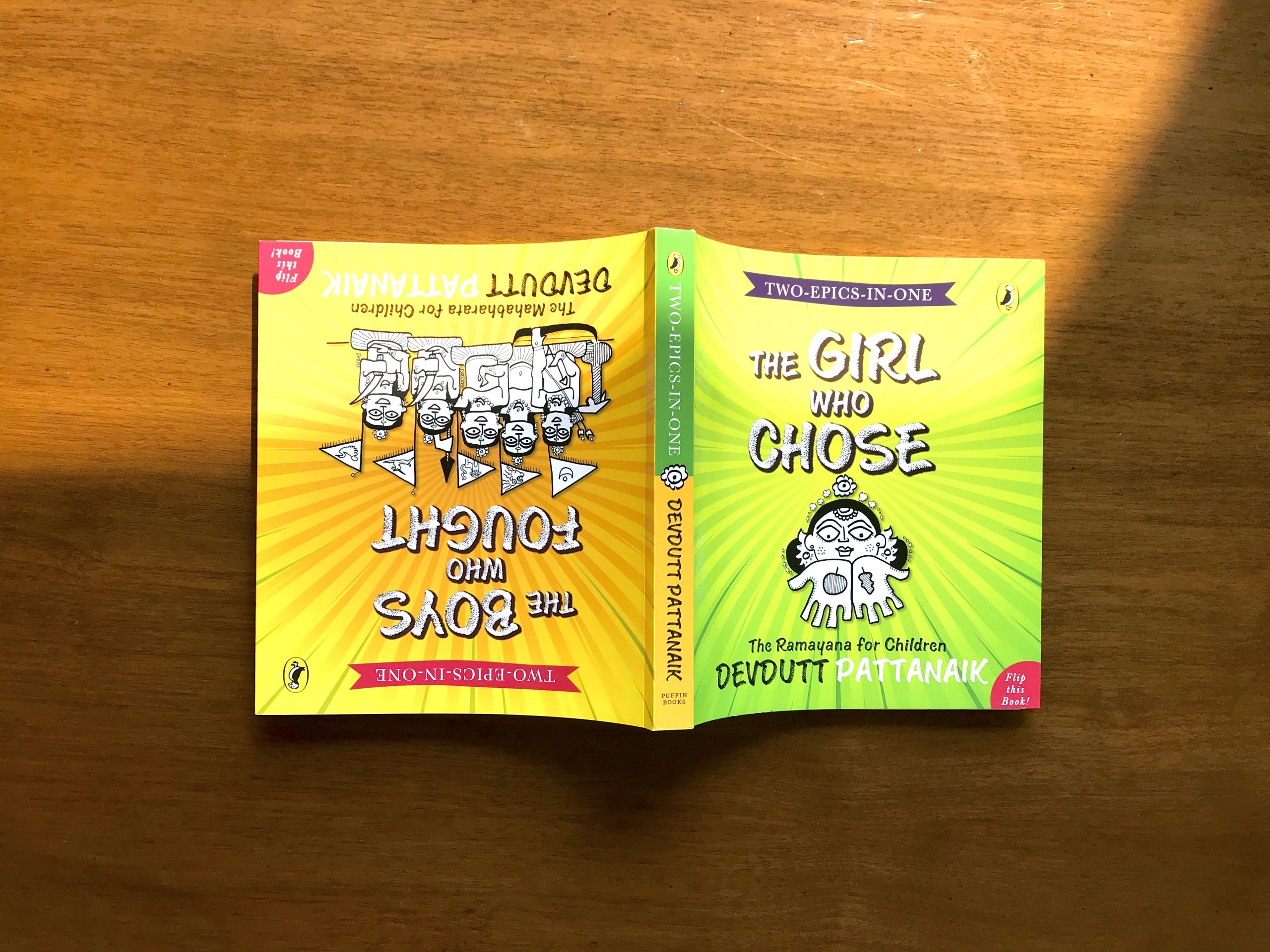
India’s favourite mythologist Devdutt Pattanaik’s ‘The Girl Who Chose’ brings a fresh perspective to what we have commonly known of the Ramayana — the story of Ram.
However, it has largely gone unnoticed that it was the choices that Sita had made which becomes the pivot for the Ramayana.
Here’s an excerpt from Devdutt Pattanaik’s book telling us why the story of Sita is at the heart of all that happens in the epic.


“Once upon a time, there was a man called Ravana, also known as Paulatsya—being the descendent of Rishi Pulatsya from his mother’s side. He was king of Lanka and ruler of the rakshasas, who tricked a princess called Sita, dragged her out of her house in the forest and made her prisoner in his palace. He was killed by Sita’s husband, Ram, the sun-prince. This story is called the Pulatsya Vadham, or the killing of the descendent of Pulatsya.
The story of Ravana’s killing is part of a longer tale called the Ramayana, which tells the story of Ram from his birth to his death. However, in the din of Ravana’s cruelty and Ram’s valour, something is often overlooked—the story of Sita, the girl who chose.
Valmiki, author of the Ramayana, written over 2000 years ago, tells us how Sita is different from Ram and Ravana. Ravana does not care for other people’s choices, while Ram never makes a choice as, being the eldest son of a royal family, he is always expected to follow the rules. But Sita—she makes five choices. And had Sita not made these choices, the story of Ram would have been very different indeed. That is why Valmiki sometimes refers to the Ramayana as the Sita Charitam, the story of Sita.


Do you know what were the choices that Sita had made? Grab a copy and find out now!

error: Content is protected !!