



Akhil Sharma’s works have been hailed as being “as hypnotic as those found in the pages of Dostoevsky” and a “glowing work of art” by leading publications in the world. In his new collection of short stories, ‘A Life of Adventure and Delight’, Sharma weaves eight unpredictable tales of the volatile human heart.
Here’s an excerpt from the book.
Late one June afternoon, seven months after my wedding, I woke from a short, deep sleep, in love with my husband. I did not know then, lying in bed and looking out the window at the line of gray clouds, that my love would last only a few hours and that I would never again care for Rajinder with the same urgency—never again in the five homes we would share and through the two daughters and one son we would also share, though unevenly and with great bitterness. I did not know this then, suddenly awake and only twenty-six, with a husband not much older, nor did I know that the memory of the coming hours would periodically overwhelm me throughout my life.
We were living in a small flat on the roof of a three-story house in Defense Colony, in New Delhi. Rajinder had signed the lease a week before our wedding. Two days after we married, he took me to the flat. I had thought I would be frightened entering my new home for the first time, but I was not. I felt very still that morning, watching Rajinder in his gray sweater bend over and open the padlock. Although it was cold, I wore only a pink silk sari and blouse, because I knew that my thick eyebrows, broad nose, and thin lips made me homely, and to win his love I must try especially hard to be appealing, even though I did not want to be.
The sun filled the living room through a window that took up half a wall and looked out onto the concrete roof. Rajinder went in first, holding the heavy brass padlock in his right hand. In the center of the room was a low plywood table with a thistle broom on top, and in a corner three plastic folding chairs lay collapsed on the floor. I followed a few steps behind Rajinder. The room was a white rectangle. Looking at it, I felt nothing. I saw the table and broom, the window grille with its drooping iron flowers, the dust in which we left our footprints, and I thought I should be feeling something, some anxiety, or fear, or curiosity. Perhaps even joy.
“We can put the TV there,” Rajinder said softly, standing before the window and pointing to the right corner of the living room. He was slightly overweight and wore sweaters that were a bit large for him. They made him appear humble, a small man aware of his smallness. The thick black frames of his glasses, his old-fashioned mustache, as thin as a scratch, and the fading hairline created an impression of thoughtfulness. “The sofa before the window.” At that moment, and often that day, I would think of myself with his smallness forever, bearing his children, going where he went, having to open always to his touch, and whatever I was looking at would begin to waver, and I would want to run. Run down the curving dark stairs, fast, fast, through the colony’s narrow streets, with my sandals loud and alone, until I got to the bus stand and the 52 came, and then at the ice factory I would change to the 10, and finally I would climb the wooden steps to my parents’ flat and the door would be open and no one would have noticed that I had gone with some small man.
I followed Rajinder into the bedroom, and the terror was gone, an open door now shut, and again I felt nothing, as if I were marble inside. The two rooms were exactly alike, except the bedroom was empty. “And there, the bed,” Rajinder said, placing it with a slight wave of his hand against the wall across from the window. He spoke slowly and firmly, as if he were describing what was already there. “The fridge we can put right there,” at the foot of the bed. Both were part of my dowry. Whenever he looked at me, I either said yes or nodded my head in agreement. We went outside and he showed me the kitchen and the bathroom, which were connected to the flat but could be entered only through doors opening onto the roof.
From the roof, a little after eleven, I watched Rajinder drive away on his scooter. He was going to my parents’ flat in the Old Vegetable Market, where my dowry and our wedding gifts were stored. I had nothing to do while he was gone, so I wandered in and out of the flat and around the roof. Defense Colony was Raj composed of rows of pale two- or three-story buildings. A small park, edged with eucalyptus trees, was behind our house.
Rajinder returned two hours later with his elder brother, Ashok, and a yellow van. It took three trips to bring the TV, the sofa, the fridge, the mixer, the steel plates, and my clothes. Each time they left, I wanted them never to return. Whenever they pulled up outside, Ashok pressed the horn, which played “Jingle Bells.” I was frightened by Ashok, because, with his handlebar mustache and muscular forearms, he reminded me of my father’s brothers, who, my mother claimed, beat their wives. Listening to his curses drift out of the stairwell each time he bumped against a wall while maneuvering the sofa, TV, and fridge up the stairs, I felt ashamed, as if he were cursing the dowry and, through it, me.
On the first trip they brought back two suitcases that my mother had packed with my clothes. I was cold, and when they left, I changed in the bedroom. My hands were trembling by then, and each time I swallowed, I felt a sharp pain in my throat that made my eyes water. Standing there in the room gray with dust, the light like cold, clear water, I felt sad and lonely and excited at being naked in an empty room in a place where no one knew me. I put on a salwar kameez, but even completely covered by the big shirt and pants, I was cold. I added a sweater and socks, but the cold had slipped under my skin and lingered beneath my fingernails.
Rajinder did not appear to notice I had changed. I swept the rooms while the men were gone, and stacked the kitchen shelves with the steel plates, saucers, and spoons that had come as gifts.
Get your copy of Akhil Sharma’s delightful new book here!

Tag: featured
In Conversation with Pankaj Bhadouria
We recently spoke to Pankaj Bhadouria, the winner of MasterChef India Season 1. Pankaj has written two more cookery books, Barbie: I am a Chef and Chicken from My Kitchen.
Below are a few questions we asked her:
What was the very first dish that you cooked and for whom?
From what I remember, the first was probably breakfast for my Dad. The dish was nothing but toast, butter and tea with a rose on the tray. I must have been eight or nine years old at that time so the memory is very precious to me.
What is the best cooking related memory you have?
I think my best cooking related memory is when I was cooking for the finale at MasterChef. I was very calm and not under any pressure at all! I think that not only prevented me from making any mistakes but also reflected in the food that I created that day and helped me win.
Tell us the go-to spice mix in your kitchen.
That would be the Kadhai Masala! Be it with potatoes, chicken, paneer, cauliflower, stuffed paranthas – I use it almost everywhere!
Share with us a secret that you think helped you become the first MasterChef of India.
It is difficult to say…maybe a lot of homework that I’d done over the years aided by the fact that I could work well within limited time or perseverance and not giving up under pressure. Also I would pay a lot of attention to what comments my competitors would get from the judges and made it a point to not repeat those mistakes myself.
Are there more books coming from your kitchen?
Of course, there are! Just wait for what is next to come!

5 Reasons You Should Read Vikrant Khanna’s Latest Book
The Girl Who Knew Too Much is about a thirteen-year-old girl who hears about the miraculous reunion of a young woman and her dead boyfriend.
Here are 5 reasons The Girl Who Knew Too Much is your next read.
Vikrant Khanna is also the best-selling author of When Life Tricked Me and Love Lasts Forever.

It is a story about love and loss.

It is the story of hope.

Life goes on even after death.

Vikrant Khanna’s imagination of Yamaraj is pretty cool. He even calls the protagonist ‘bro’.

Ready to get your hands on the book? Tell us which part did you like the most.

The Making of Pressler Amendment— An Excerpt
As chairman of the US Senate’s Arms Control Subcommittee, Larry Pressler advocated the now-famous Pressler Amendment, enforced in 1990 when President George H.W. Bush could not certify that Pakistan was not developing a nuclear weapon. Larry Pressler was adjudged a hero in India and a ‘devil’ in Pakistan due to his stance on giving military aid to Pakistan. In his book ‘Neighbours in Arms’ Pressler provides a comprehensive account of how US foreign policy in the subcontinent was formed from 1974 till today and ends with recommendations of a new US-India alliance that could be a model for American allies in future.
Here’s an exclusive excerpt from the book.
In December 1981, a new section was added to the 1961 Foreign Assistance Act. It allowed the President to exempt Pakistan from the original Symington Amendment ‘if he determines that to do so is in the national interest of the United States’. (It is important to note that Pakistan was the only nation specifically exempted by name from these restrictions.) Almost immediately, Congress also authorized a six-year $3.2-billion package of military and economic assistance to Pakistan. I was opposed to this move, as I knew it would further encourage Pakistan to continue the development of their nuclear weapons programme.
Many of us in Congress knew that we could not trust President Zia to be honest with us about his nuclear ambitions. Everyone knew that Pakistan was continuing to acquire material and technology
to develop a bomb. Despite this fact, the Reagan administration wanted a new law that would give him a permanent waiver from the Glenn–Symington Amendment. At the time, guaranteeing Pakistan’s assistance in the fight against the Soviets in Afghanistan was more important than stopping Pakistan’s acquisition of nuclear weapons technology. The only way the administration could get Congress to go along with this permanent waiver was to include language in a new law that would punish Pakistan if it was determined that Pakistan actually possessed a nuclear weapon. This made the Glenn–Symington waiver more politically feasible to those of us in Congress who were working hard on non-proliferation issues. I was tapped to carry the ball and the Pressler Amendment was born.
My goal was to give this new amendment as much ‘teeth’ as possible. On 24 March 1984, the Senate Committee on Foreign Relations introduced an amendment offered up by California Democratic senator Alan Cranston and Senator Glenn. This first amendment stipulated that ‘no military equipment or technology shall be sold or transferred to Pakistan’ unless the President could
first certify that Pakistan did not possess nor was developing a nuclear explosive device, and that it was not acquiring products to make a nuclear explosive device. On 18 April 1984, the committee instead introduced a substitute offered by me, Maryland Republican senator Charles Mathias and Senator Charles Percy.
My former staff member, the late Dr Doug Miller, recalled that Senator Cranston’s face appeared ‘crestfallen’ when his amendment did not pass. In retrospect, while Cranston’s amendment and my
subsequent amendment were very similar, I feel his amendment would have cut off aid to Pakistan sooner. But the Republican Party was in control at the time. They wanted a Republican name on the
amendment.
The revised amendment offered by Senators Mathias, Percy and me instead tightly tied the continuation of aid and military sales to two presidential certification conditions: (1) that Pakistan did not possess a nuclear explosive device; and (2) that new aid ‘will reduce significantly the risk’ that Pakistan would possess such a device. This text was further revised with a provision offered by me, Senator Mathias and Minnesota Republican senator Rudy Boschwitz that the ‘proposed U.S. assistance [to Pakistan] will reduce significantly the risk of Pakistan possessing such a [nuclear] device’. It forced the President to affirm that increased aid was reducing the risk of Pakistan
getting nuclear weapons. I thought at the time that this was going to be impossible for any President to certify—based on Pakistan’s past behaviour and what President Reagan had assured me he would do.
The final text of Section 620E of the Foreign Assistance Act of 1961 read:
No assistance shall be furnished to Pakistan and no military equipment or technology shall be sold or transferred to Pakistan, pursuant to the authorities contained in this Act or any other Act,
unless the President shall have certified in writing to the Speaker of the House of Representatives and the chairman of the Committee on Foreign Relations of the Senate, during the fiscal year in which assistance is to be furnished or military equipment or technology is to be sold or transferred, that Pakistan does not possess a nuclear explosive device and that the proposed United States assistance program will reduce significantly the risk that Pakistan will possess a nuclear explosive device.
This text, which was signed into law by President Reagan on 8 August 1985, soon became known as the ‘Pressler Amendment’, even though I was not the only sponsor. I never referred to it as the Pressler Amendment. But when President George H.W. Bush later enforced it, the Pentagon wrote a series of worldwide memos and briefings explaining that Bush had to act in such a way towards Pakistan because of ‘Senator Pressler’s amendment’, mentioning me by name and making the amendment eponymous. It is important to understand that this legislation was passed at the request of and with the support of the Reagan administration. That is why I was so astounded when later Reagan never enforced it.
In summary, it made a law out of what had already been an official policy: our conventional arms assistance and financial aid to Pakistan would reduce the risk of nuclear proliferation. It used the power of the purse. It allowed us to pursue our communism-containment goals in the region, but it was also intended to force our leaders to proactively assert—on the record—that Pakistan was not making progress on its nuclear goals. Again, this policy seems counter-intuitive and, unfortunately, it had the opposite effect on Pakistan. And, with the help of the Octopus, Pakistan took our aid and flagrantly ignored the Pressler Amendment restrictions.

7 Things You Did Not Know About MGR
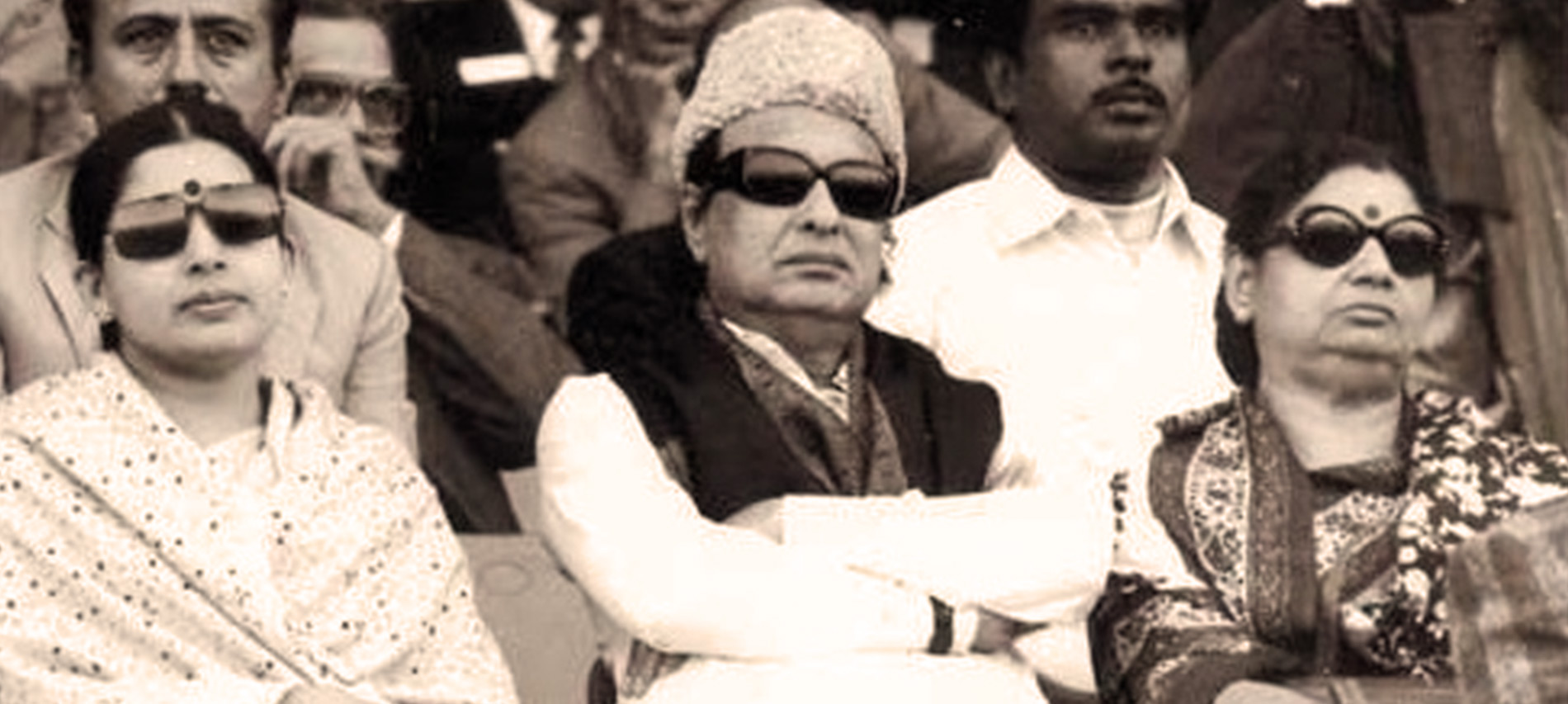
Marudur Gopalan Ramachandran, or MGR was the founder of the AIADMK and three-time chief minister of Tamil Nadu. A Bharat Ratna recipient, he dominated the state’s stratosphere for four decades.
A brilliant new book by R. Kannan dissects MGR’s years in power: his early administration, the legendary midday meal scheme launched in 1982 that fed 92 lakh schoolchildren, his well-intentioned farm subsidies and freebies that strained the exchequer, his largesse to the Liberation Tigers of Tamil Eelam, as well as his unabashed sponsorship of liquor barons and private medical and engineering colleges that aided the transformation of the state, but also fueled corruption.
Here are seven things you did not know about the legendary actor-politician!
A Larger-than-life Figure

Innate Sense of Giving and Hospitality

Being His Own Man

He Was Considered an ‘Avatar’ of God

Watchful While Sitting Tall

The Spirit of Meting Out Judgement

Eye for detail

Looking for more? Get the story of India’s very first actor-politician here!

6 Times Our Prime Minister Surprised Us
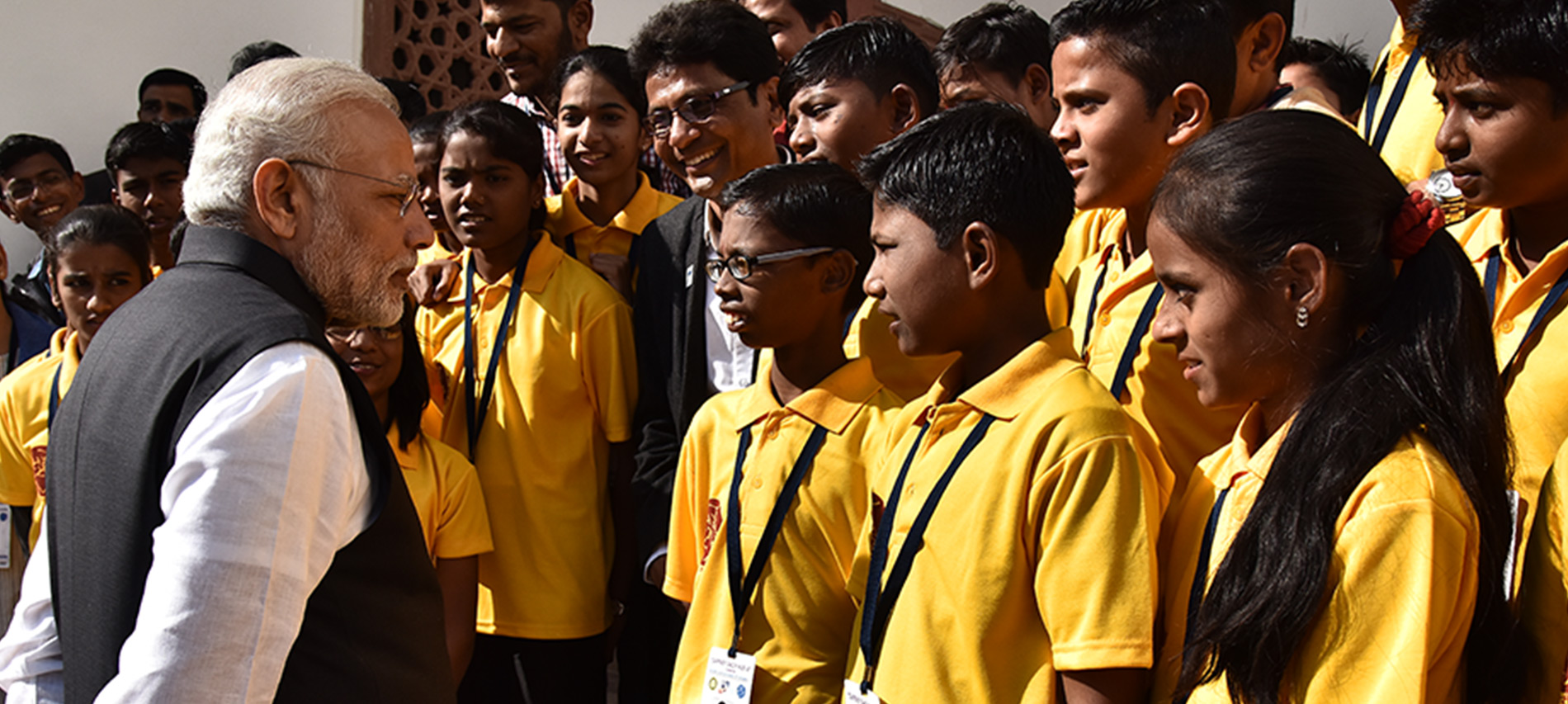
Prime Ministers don’t always have to be serious, do they? India’s current Prime Minister Narendra Modi has often shown a side that reaches outside of his bureaucratic, stoic demeanour.
Here our 6 instances when Prime Minister Modi pleasantly surprised us:
Moshe, the 26/11 survivor met Narendra Modi with affection, on his recent visit to Israel.

When the Canadian and Indian PM talked about a sporty partnership.


When our PM broke protocol to hug a little girl.

When Ravi Shastri was bowled over by our PM.

When PM Modi became nostalgic.

PM Modi has a unique way of reaching out to his fans.


Tell us which instance surprised you the most.

The Story of India’s Very First Actor-Politician: An Excerpt

Marudur Gopalan Ramachandran, or MGR – founder of the AIADMK, three-time chief minister, and Bharat Ratna recipient – dominated Tamil Nadu’s stratosphere for four decades. In MGR: A Life – a richly detailed biography of the man often called vathiyar or teacher – R. Kannan traces MGR’s life from his early poverty-ridden years to his rise as a matinee idol, before becoming a politician of repute.
Here’s an excerpt from the book.
“I am overcome with shock and melancholy on hearing that my dear friend Dr MGR has passed away. Our friendship blossomed in 1945 with Jupiter Pictures’ Rajakumari, directed by A.S.A. Samy, in which he starred as the hero and I was the scriptwriter.
The memories of us staying in Coimbatore in the same house, exchanging views on politics and society, working together in the film world—our friendship maturing to the point of us serving in the same movement—cannot be forgotten and will forever remain green. Our comradeship in the film world would grow strong through our association in several films such as Abhimanyu, Marudhanaatu Ilavarasi, Mandhirikumari, Naam, Malaikallan, Kanchi Thalaivan, Engal Thangam, Pudhumaipithan and Arasilangkumari.
With that same sense of friendship, we were inseparable and as one in politics, up to 1972. We remained extremely friendly even in the aftermath of the changed political circumstances and through our differences.
[MGR] reigned as the unparalleled hero of Tamilagam’s (Tamil Nadu) film world. He created a new era in the film arena. Few had made the film world theirs as he did and conquered it the way he did. He has the honour of making his party, the ADMK he founded in 1972, rise to power in a short span of time. There is none who would not praise his resolute will to serve tirelessly—even through his two–three years of illness—during the ten years he served as chief minister. By his ceaseless hard work and not giving up, he shone, winning people’s affection.”
This is how Muthuvel Karunanidhi, popularly called Kalaignar, once MGR’s leader, and later bête noire and political antagonist, reacted to the death of Tamil Nadu’s chief minister Marudur Gopalan Ramachandran, or MGR.
J. Jayalalithaa, MGR’s protégé and political heir, said she wished to commit ‘sati’ now that MGR who ‘was everything to [her]’ was no more.
The matinee idol’s fans had always considered their puratchi thalaivar, and the founder of the All-India Anna Dravida Munnetra Kazhagam, as immortal both on screen and in real life. They could not even stand their hero being killed in movies, to the point where an otherwise promising film like Pasam (Affection, 1962) died at the box office.
However, on the morning of 24 December 1987, his devoted fans woke up to a harsh reality when their leader succumbed to a cardiac arrest—like any other mortal. Overcome by grief, thirty-one people committed suicide. For three years, MGR had been living on a transplanted kidney and with a speech impairment. Yet, his fans’ belief in his immortality is explicable. Twice, their god had cheated death: On 12 January 1969, screen villain Madras Rajagopal Radhakrishnan, aka M.R. Radha, shot MGR and then himself, and the second occasion, when MGR’s vitals failed on 5 October 1984. Even a few minutes delay would have been fatal, and yet he survived.
Fans were rapturous when in September 1967, in the aftermath of his brush with death, their hero was fittingly welcomed by heroine Jayalalithaa in Kavalkaran (Guard, 1967) when she sang, ‘Ninaithaen vandhaai, Nooru vayadhu (I thought of you and you showed up; you will live a hundred years)’—indicating the popular belief in MGR’s longevity. In 1970, MGR himself triumphantly sang, ‘Naan sethu pozhachavanda, Emaney paathu sirichavanda (I died and came back alive; I have mocked the god of death).’ The movie, Engal Thangam (Our Gold, 1970), featuring this song, was produced by Kalaignar’s nephew Murasoli Maran and featured Jayalalithaa opposite MGR.
In 1972, he broke away from his parent party, the Dravida Munnetra Kazhagam (DMK), accusing its leader and then chief minister, Kalaignar, of corruption. Named after his late mentor and the DMK’s founder, Conjeevaram Natarajan Annadurai (Anna), MGR’s AIADMK created history when it captured power in Tamil Nadu in 1977, only five years after its founding. To his followers, his rise meant that the meek had inherited the earth. Their leader’s success was theirs.
No actor or individual had ever possessed such a sway over Tamils in recent memory. In October 1984, as MGR, by then chief minister for a second time, fought for his life, twenty-two of his fans immolated themselves, unable to bear their hero’s suffering. Twenty more had unsuccessfully attempted suicide, only to escape with burn injuries. On 5 November 1984, an air ambulance flew MGR to Downstate Medical Centre, Brooklyn, New York.
MGR returned to Madras to a hero’s welcome on 4 February 1985. During all this time, not a day passed without radio and television stations airing the memorable song from Oli Vilakku (The Lit Lamp, 1968), his hundredth film.
Get R. Kannan’s riveting biography of MGR here!
10 Things You Didn’t Know About Vikram Bhatt
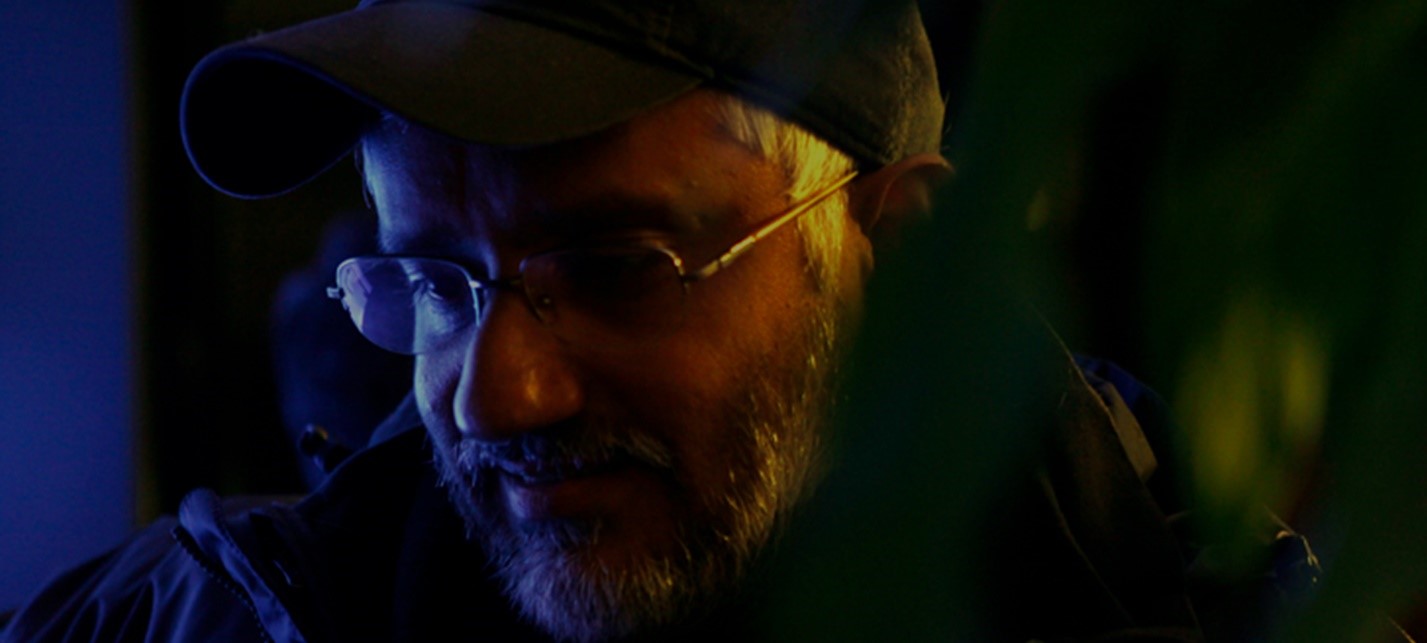
Vikram Bhatt is a reputed filmmaker and considered one of the pioneers of the Hindi film industry. Hailing from a family of cinema stalwarts, his father Pravin Bhatt is the acclaimed director of photography of more than a hundred films in a career spanning more than fifty years. In a career span of more than 25 years, Vikram has directed more than 35 films and written screenplays for more than 15 films. Currently, he heads Loneranger Productions Pvt. Ltd—a company that specializes in film, television and now also the Web.
Here are 10 things you did not know about the author of A Handful of Sunshine.


How many of these facts did you know about Vikram Bhatt?

The Fascinating Life of Ernest Hemingway: War-Veteran, Journalist, Wordsmith

Nobel laureate, Ernest Hemingway, was born on July 21, 1899 in Illinois, USA. With his works influencing generations of writers after him, Hemingway’s journalistic, pragmatic and prosaic approach became famous for conveying some of the most difficult subjects.
The evolution of Hemingway’s writing style has everything to do with the course his life had taken. For Whom the Bell Tolls and A Farewell to Arms talk about life during the times of war, a reality Hemingway had lived through for a major part of his life. But before Hemingway settled for a life as a writer, his tryst with other professions is what shaped him as the wordsmith that he is.
Here’s looking at Ernest Hemingway’s life through his different professions.
Life as an ambulance driver for the Red Cross: After graduating from high school, Hemingway turned eighteen and tried to enroll in the army as World Was I was raging in Europe. The United States had joined the fight against Germany and Austria in 1917. However, Hemingway did not make it to the army due to poor vision in one eye, something that had been passed down to him by his mother. But soon enough when he heard that the Red Cross was taking volunteers as ambulance drivers, he did not think twice before signing up. Soon after joining as an ambulance driver in Italy he was severely injured due to a mortar shell exploding a few feet away from him. Hemingway was consequently awarded the Italian Silver Medal for Valor for his services in war. A Farewell to Arms was inspired by this phase of Hemingway’s life.

Life as a journalist: Between graduating from high school and joining the Red Cross in Italy, Ernest Hemingway had his first tryst as a cub reporter for the Kansas City Star for six months. Later, after returning from war in January 1919, he had a difficult time coping with the tranquillity of life back home – a far cry from the adventurous days in the battlefield. Despite not having turned 20 yet, the war had made Hemingway mature by years in a matter of just a few months. He began to work as a staff writer and foreign correspondent for the Toronto Star Weekly later that year. In 1920, Hemingway moved to Chicago and continued to write for the weekly from there.
After his marriage, Hemingway moved to Paris in September 1921 on being hired as a foreign correspondent for the Toronto Star. In his first 20 months in Paris, he filed 88 stories for the newspaper. His years as a journalist overlapped with his years as a writer, as is often the case with many others.

Birth of the writer: Ernest Hemingway needs no introduction as a writer. He has won some of the most prestigious awards in the world of literature. Not only has he written works of fiction, like The Sun Also Rises, A Farewell to Arms, The Old Man and the Sea and For Whom the Bell Tolls, his works of non-fiction too, like Death in the Afternoon and Green Hills of Africa, have been widely read across the world through generations. Writers after his time have tried relentlessly to emulate his style that is crisp, sharp and prosaic, displaying a major hangover from his journalist days. Hemingway had become a spokesperson of World War I for his generation, thereby establishing his style distinctively from the other writers of his times.

Ernest Hemingway’s legacy lives on not only through his literature, but also through the millions of tributes made to him. From pens to planets, clothes to highway inns, Hemingway and his words have continued to live on, inspire, fascinate.
What’s Ailing Our Legal System: 5 Big Challenges

India has the second-largest legal profession in the world, but the systemic delays and chronic impediments of its judicial system inspire little confidence in the common person. In India’s Legal System, renowned constitutional expert and senior Supreme Court lawyer Fali S. Nariman looks for possible reasons.
This frank and thought-provoking book offers valuable insights into India’s judicial system and maps a possible road ahead to make justice available to all. Here are the five challenges that the book underscores.
Proliferation of Appeals

Judicial Interference in Administrative Actions

Judicial Attitudes

Excessive burden of case law, and lack of effective case law management

Overcommercialization

In your opinion, what is the gravest challenge facing the Indian Legal System? We would love to know!