Publish with Us

Follow Penguin

Follow Penguinsters

Follow Penguin Swadesh

The Lost Art of Scripture – An Excerpt

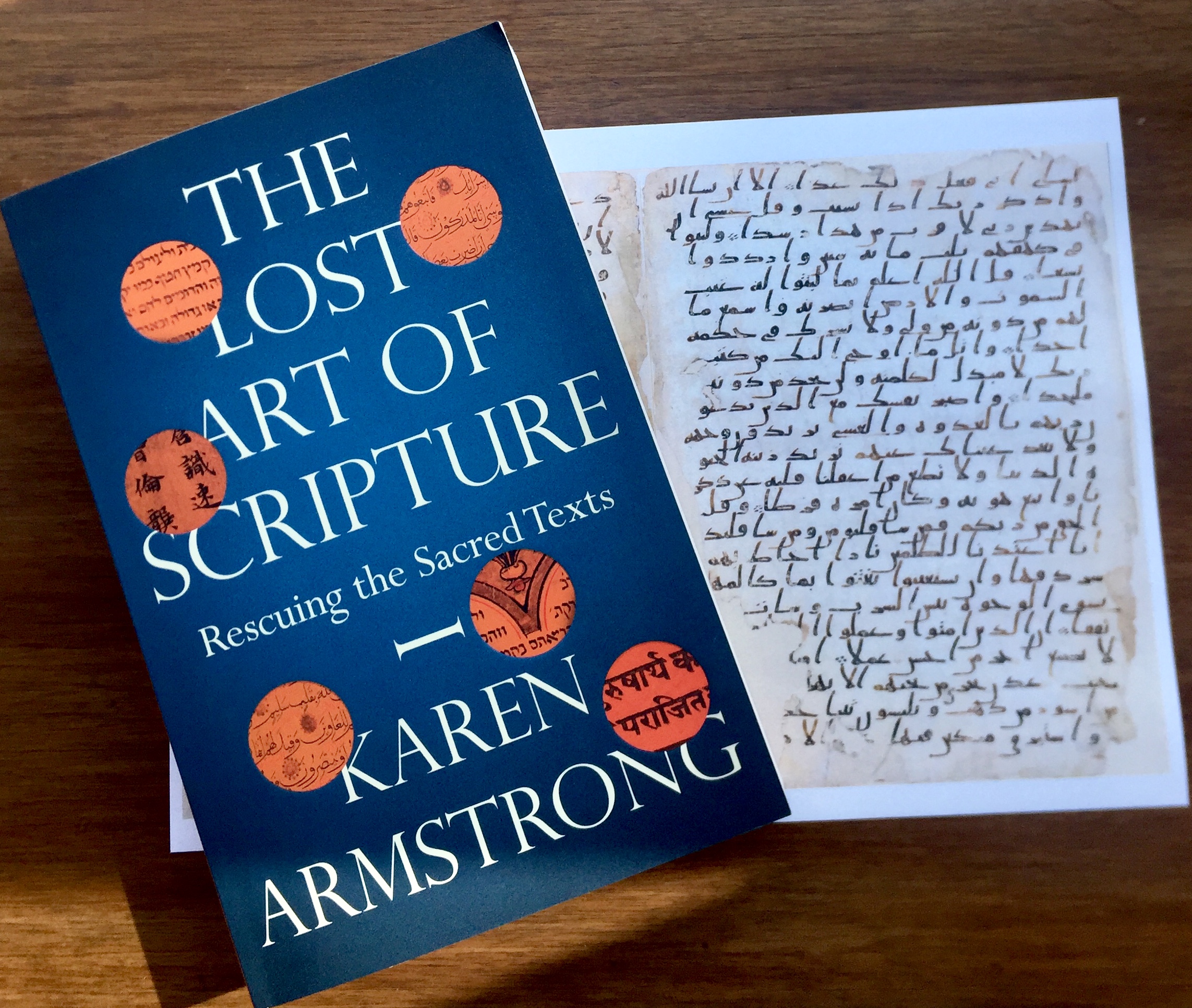
Today we see the Quran being used by some to justify war and terrorism, the Torah to deny Palestinians the right to live in the Land of Israel, and the Bible to condemn homosexuality and contraception. The holy texts at the centre of all religious traditions are often employed selectively to underwrite arbitrary and subjective views. They are believed to be divinely ordained; they are claimed to contain eternal truths.

In our increasingly secular world, holy texts are at best seen as irrelevant, and at worst as an excuse to incite violence, hatred and division. So what value, if any, can scripture hold for us today? And if our world no longer seems compatible with scripture, is it perhaps because its original purpose has become lost?

In her book The Lost Art of Scripture, Karen Armstrong, a world authority on religious affairs, shows in this fascinating journey through millennia of history, this narrow reading of scripture is a relatively recent phenomenon.

Read the excerpt from the first chapter here!


The fall of Adam and Eve is one of the most famous stories of the Hebrew Bible. Yahweh, the divine creator, placed the first human beings in Eden, where there was every kind of tree, enticing to look at and good to eat, with the tree of life and the tree of knowledge of good and evil in the middle of the garden”. But Yahweh gave Adam a stern warning: he could eat the fruit of all these trees except the fruit of the tree of knowledge,’ for on the day you eat of it, you shall most surely die’. But, alas, Eve succumbed to the temptation of the serpent and she and Adam were condemned to a life of hard labour and suffering that could end only in death.

This story is so deeply embedded in the Judaeo- Christian consciousness that it is, perhaps, surprising to learn that in fact it is steeped in the Mesopotamian Wisdom traditions that embodied the ethical ideals that bound the ruling aristocracy together. Civilisation began in Sumer in what is now Iraq in about 3500 BCE. The Sumerians were the first to commandeer the agricultural surplus grown by the community in the fertile plain that lay between the rivers Tigris and Euphrates and create a privileged ruling class. By about 3000 BCE, there were twelve cities in the Mesopotamian plain, each supported by produce grown by peasants in the surrounding countryside. The Sumerian aristocrats and their retainers – bureaucrats, soldiers, scribes, merchants and household servants – appropriated between half and two-thirds of the crop grown by the peasants, who were reduced to serfdom. They left fragmentary records of their misery: ‘ The poor man is better dead than alive,’ one lamented. Sumer had devised the system of structural inequity that would prevail in every single state until the modern period, when agriculture ceased to be the economic basis of civilisation.

Adam and Eve, however, lived at the beginning of time, before the Earth yielded brambles and thistles and humans had to wrest their food from the recalcitrant soil with sweat on their brow. Their life in Eden was idyllic until Eve met the serpent, who is described as arum, the most ‘subtle’, ‘shrewd’ and ‘wise’ of the animals.’ Did God really say you were not to eat from any of the trees in the garden?’ the serpent asked her. Eve replied that only the tree of knowledge was prohibited on pain of instant death. The arum serpent’s prediction of what would happen to Adam and Eve drew heavily on the terminology of Sumerian Wisdom: No! you will not die! God knows in fact that on the day you eat it your eyes will be opened and you will be like gods, knowing good and evil.’ Of course, Eve succumbed: she wanted to transcend her humanity and become godlike, The couple did not, in fact, die as soon as they ate the forbidden fruit, as Yahweh had threatened. Instead, as the serpent promised,’the eyes of both were opened’ – words that recall the exclamation of a Mesopotamian student to his teacher:

Master-god, who [shapes] humanity, you are my god!

You have opened my eyes as if I were a puppy;

You have formed humanity within me!


Get your copy of The Lost Art of Scripture today
7 Reasons Why Indian Economy Didn’t Recover After the Global Financial Meltdown

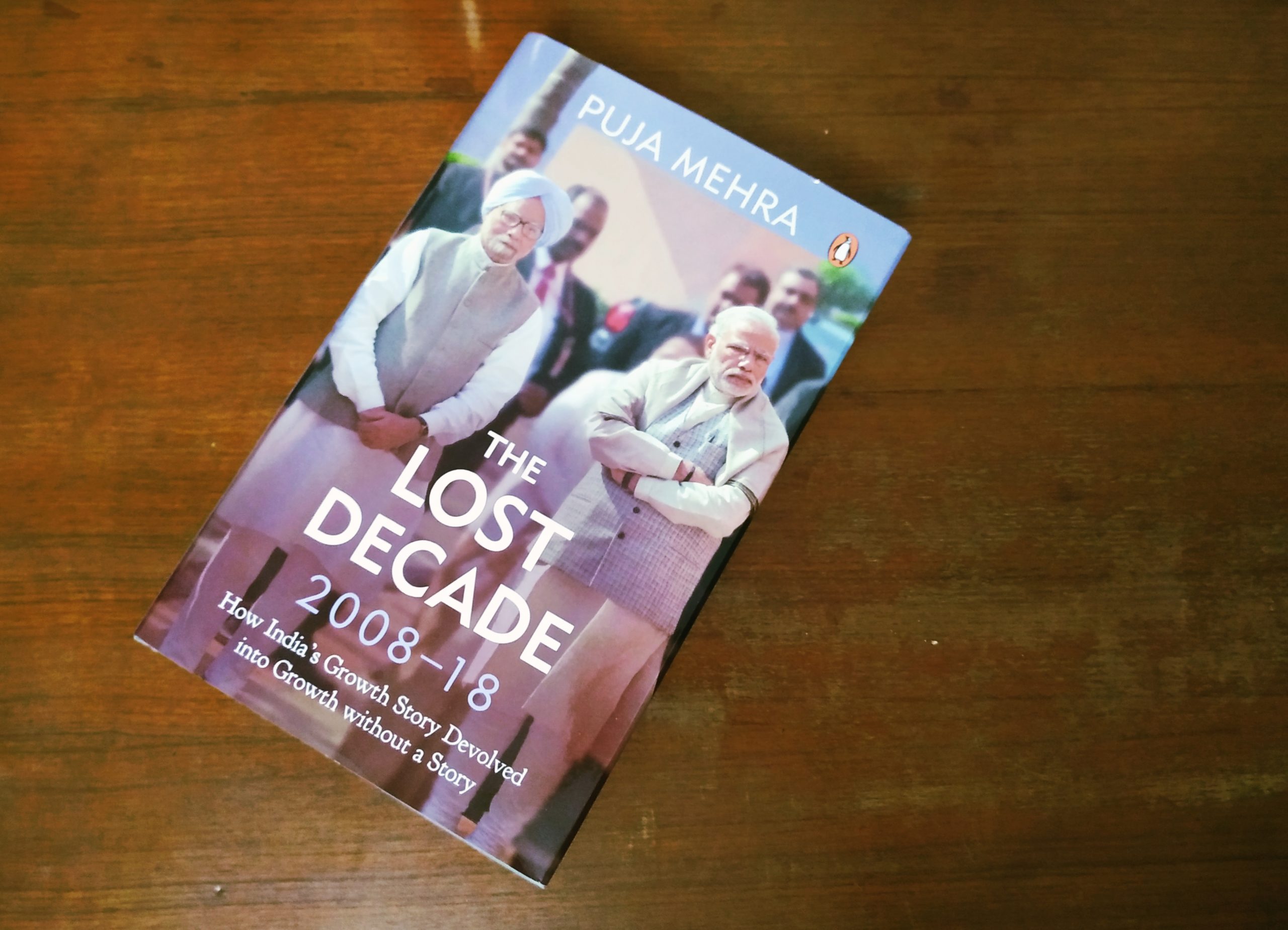
Puja Mehra’s book The Lost Decade is a reconstruction of the ten years after the global financial  shock of 2008, in which the Indian economy could not achieve its potential or its pre-crisis growth momentum. Prior to the global financial crisis, India’s economy was growing impressively. But after the shock,  that momentum could not be achieved again due to the influence of politics on policies. Puja Mehra explains this failure of the Indian economy to regain the pre-crisis momentum in her book with sharp analysis and in-depth reporting, drawing on her journalistic experience, of the policy decisions taken by two different governments in the last ten year.

Here we chart a few of the reasons discussed in the book for the continued state of decline in the growth of the economy:

1. The shock of the financial crisis in September 2008 slowed the economy for one year. It rebounded a year later, but that recovery was not sustained.

2. In the following year after the financial crisis had hit the country, the then finance minister’s policy decisions and approach only weakened the recovery. Mr. Pranab Mukherjee, who the finance minister wrongly assessed the need of the hour and rolled out a third fiscal stimulus package even though two stimulus packages were already in place.

3. Furthermore, he sharply increased allocations for social-sector spending by the finance ministry without factoring in the revenue position. As a result, the fiscal deficit expanded even as the economy’s capacity for absorbing the fund releases in a productive manner failed to keep pace. 

4. The failure to focus on reforms  in the recovery period in 2009, further weakened the industrial sector that was already reeling under impact of the global economic downturn that followed the global financial shock. 

5. After a tedious and slow recovery of the country’s economy during the years 2012-15, economic growth was hampered yet again by the failure to address the problem of bad bank loans in a timely and effective manner.

6. The incumbent government chose to prioritise the infrastructure sector, rather than concentrating on the bad bank loans, resolving which was more important for building the growth momentum. 

7. Even by 2018, the rates of increase of investments, consumption and exports, the three engines of growth in the economy, were not robust enough, and the sustained high GDP growth seen in the runup to the September 2008 shock was still out of reach for the Indian economy. 


The Lost Decade tells the story of the slide and examines the political context in which the Indian economy failed to recover lost momentum.

Examining the Muslim Demographic through ‘Siyasi Muslims’ – Excerpt

How do we make sense of the Muslims of India?

Do they form a political community?

Does the imagined conflict between Islam and modernity affect the Muslims’ political behaviour in this country?

Are Muslim religious institutions-mosques and madrasas-directly involved in politics?

Do they instruct the community to vote strategically in all elections?

What are ‘Muslim issues’?

Is it only about triple talaq?

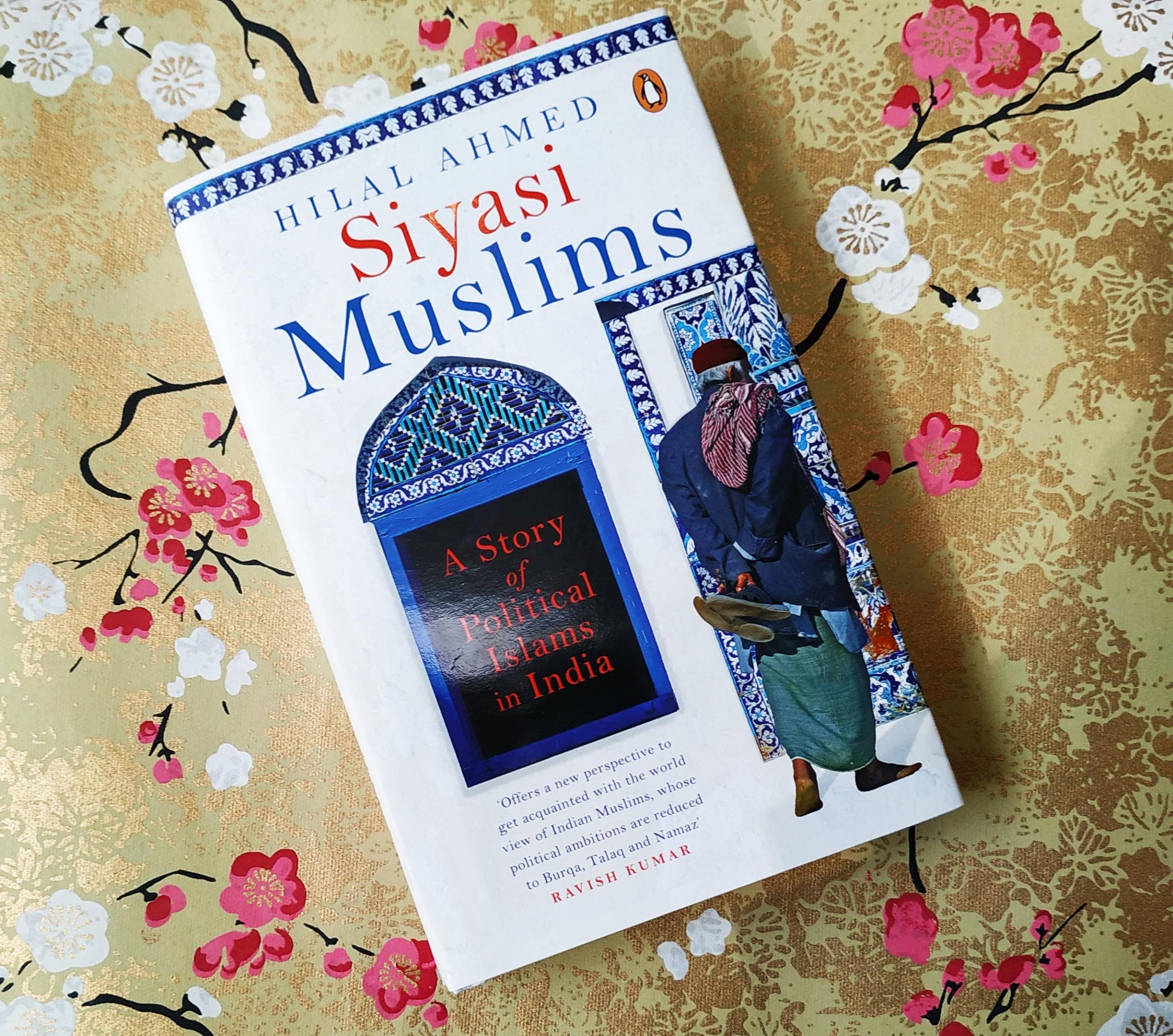
While these questions intrigue us, we seldom debate to find pragmatic answers to these queries. Examining the everydayness of Muslims in contemporary India, Hilal Ahmed’s Siyasi Muslims: A Story of Political Islams in India offers an evocative story of politics and Islam in India, which goes beyond the given narratives of Muslim victimhood and Islamic separation.

Here is an excerpt from Siyasi Muslims Triple Talaq as an MCQ:

————————————————————————–

The question of ‘triple talaq’ is posed as an objective-type MCQ (multiple choice question)! We are given two options—support it (say yes) or oppose it (say no). The meaning of yes and no are also premeditated in this schema: Yes refers to closed Islamism, while No stands for gender equality and progress.

This dominant (and somewhat stereotypical) representation of the triple talaq issue is based on a  few strong assumptions about Muslims in general and Muslim men in particular:

  • The Muslims of India constitute a single, closed, homogeneous community, which is inevitably male-dominated.
  • This male-dominated community is governed by a few established Islamic norms which are highly anti-women in nature. Islamic religiosity as well as Islamic practices, hence, are intrinsically patriarchal.
  • The Islamic clergy functions as the true representative of the community. It has an ultimate right to interpret religious texts and, at the same time, speak on behalf of all Muslims.

These convictions, interestingly, are often presented to us as hard facts—not merely by the government, political parties and the ulema class but also by those who prefer to be identified as ‘liberals’. As a result, a media-centric discourse of political correctness emerges, which virtually freezes any possibility of a nuanced and meaningful discussion on the nature and functions of patriarchy among Muslims.

The recent debate on triple talaq is an example of such stereotypical public imagination. No one bothered to look at the arguments and positions of various Muslim women’s groups on the status of Muslim women in India, the internal debates among them on the question of Muslim patriarchy, their varied interpretations of the Quran and Hadith, their critical responses to the much-debated idea of the Uniform Civil Code and, above all, their critique of Muslim personal law and the role of the ulema in nurturing the anti-Muslim attitude of Hindutva politics.

The triple talaq debate, surprisingly, is seen as a battle between the conservative ulema represented by the All Indian Muslim Personal Law Board (AIMPLB) and the committed BJPled NDA government. The discussion in the Parliament on the triple talaq bill and, later, on the triple talaq ordinance seems to ignore the nuanced arguments made by Muslim women’s groups, especially the Bharatiya Muslim Mahila Andolan (BMMA). The purpose, therefore, of this chapter is to clarify and contextualize the public debate so as to make sense of the various aspects of the controversy. In addition, an attempt is made to analyse the politics of triple talaq in the wake of emerging Hindutva.

Let us begin with a few frequently used terms:

  • ‘Triple talaq’ refers to a practice which empowers a man to divorce his wife by saying ‘talaq, talaq, talaq’ in one go.
  • ‘Mehr’ is a sum of money or other property to be delivered to the bride by the bridegroom at the time of the nikah as a prerequisite for the solemnization of their marriage, as specified in the nikahnama.
  • ‘Iddat’ is the period of time (approximately three to four months) during which a divorced woman/widow cannot remarry another man.
  • Nikah’ is a contract of marriage between a man and a woman. The nikahnama is a document which specifies the terms and conditions of this agreement.
  • ‘Sharia’ or ‘shariat’ is a collection of rules and norms that have been codified following the Quran and Hadith (laying out the sayings and acts of Prophet Muhammad). Since this codification is subject to various interpretations, there are various shariats among Sunnis and Shias.
  • Nikah halala’ is also a frequently used term. Once a woman has been divorced, her husband is not permitted take her back as his wife unless the woman undergoes nikah halala, which involves her marriage with another man who subsequently divorces her so that her previous husband can remarry her.

The practice of triple talaq, we must note, is legitimate among Sunni Muslims of the Hanafi shariat. Although we do not have adequate statistical information about the sect-wise population of Muslims in India, it is believed that Sunni Hanafis are in the majority, at least in the northern states. But there are four other schools of Sunni shariat—Hanbali, Shafi, Maliki and Ahle- Hadith. These schools have their own interpretations of rituals and customs and specific norms for divorce.

The AIMPLB itself recognizes this Islamic religious plurality in India. In fact, one of the stated objectives of the AIMPLB is:

To promote goodwill, fraternity and the feeling of mutual cooperation among all sects and schools of  thought     among Muslims, and to generate the spirit of unity and coordination among them for the common  goal of safeguarding the Muslim Personal Law.1

There are two questions are important here: Does the AIMPLB determine the everyday conduct of the religiously diversified Muslim communities? If so, do Muslims, particularly the followers of the Hanafi shariat, practise triple talaq precisely because of their religious adherence to Islam?


Know more in Hilal Ahmed’s Siyasi Muslims: A Story of Political Islams in India

You might have misunderstood Muhammad Bin Tughlaq all your life. Read why in these 6 points!

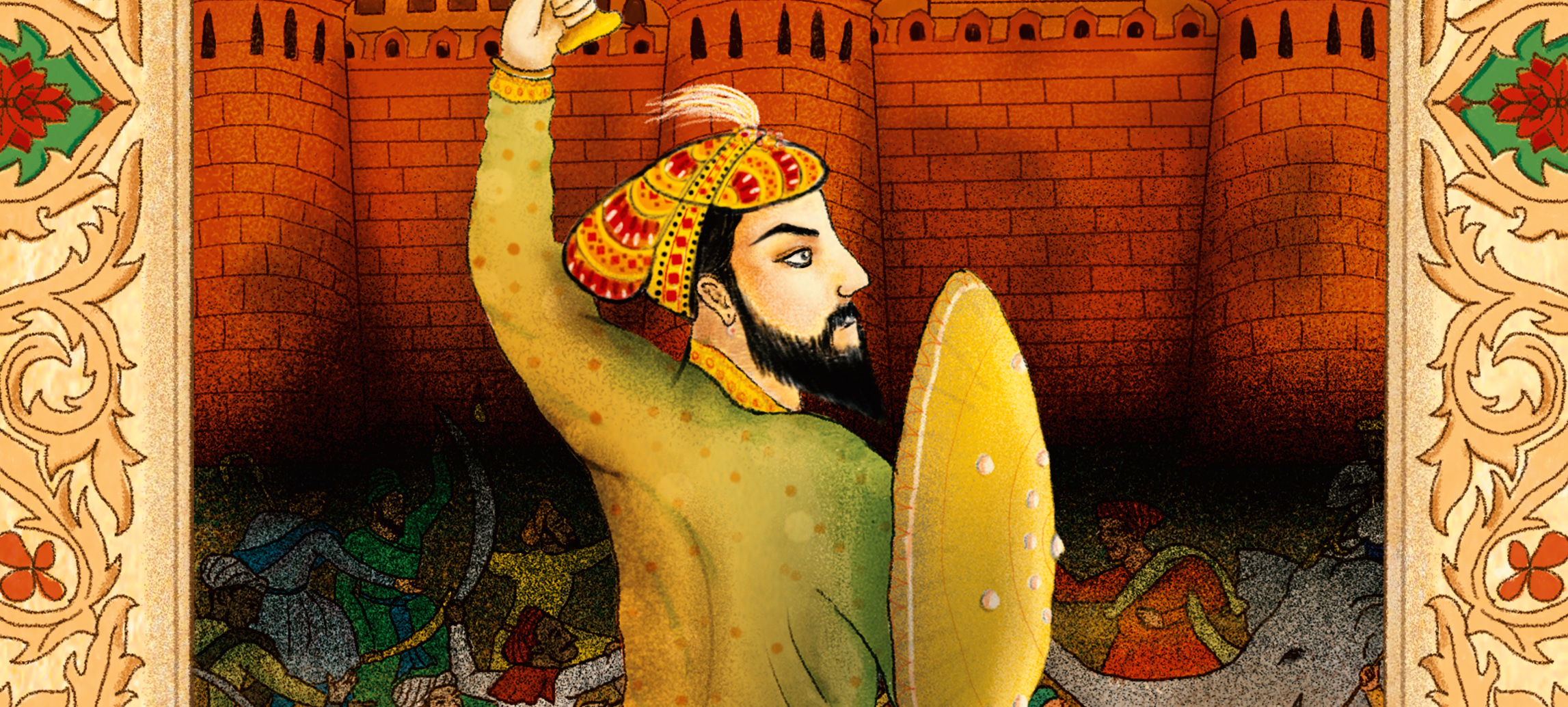
Muhammad bin Tughlaq – Tale of a Tyrant by Anuja Chandramouli is an attempt to recreate the life and times of Muhammad bin Tughlaq and clamber into the chaotic headspace of one who was considered to be a “mad monarch”.

Modern historians concur that he has been terribly misunderstood, and so-called scholarly accounts from the likes of Ibn Battuta, Barani and Isami reek of bias. He was exceedingly unpopular among the followers of his own faith for daring to be tolerant to his subjects who belonged to other religions, failing to zealously guard the principles of Islam from idolatry and heresy, and raising non-believers to high posts instead of dealing with them using the savagery he was infamous for.

This listicle attempts to demystify Muhammad bin Tughlaq:


The challenges of ruling an unwieldy empire where Tughlaq’s subjects in the various provinces had their own language and customs, and all of whom were uniformly proud and prickly about their roots, proved too much for him.


In this fictional retelling, Anuja Chandramouli, one of India’s best mythology writers, reimagines Muhammad bin Tughlaq‘s life and times in incredible detail to bring to life the man behind the monarch.

The Reluctant Billionaire – An Excerpt

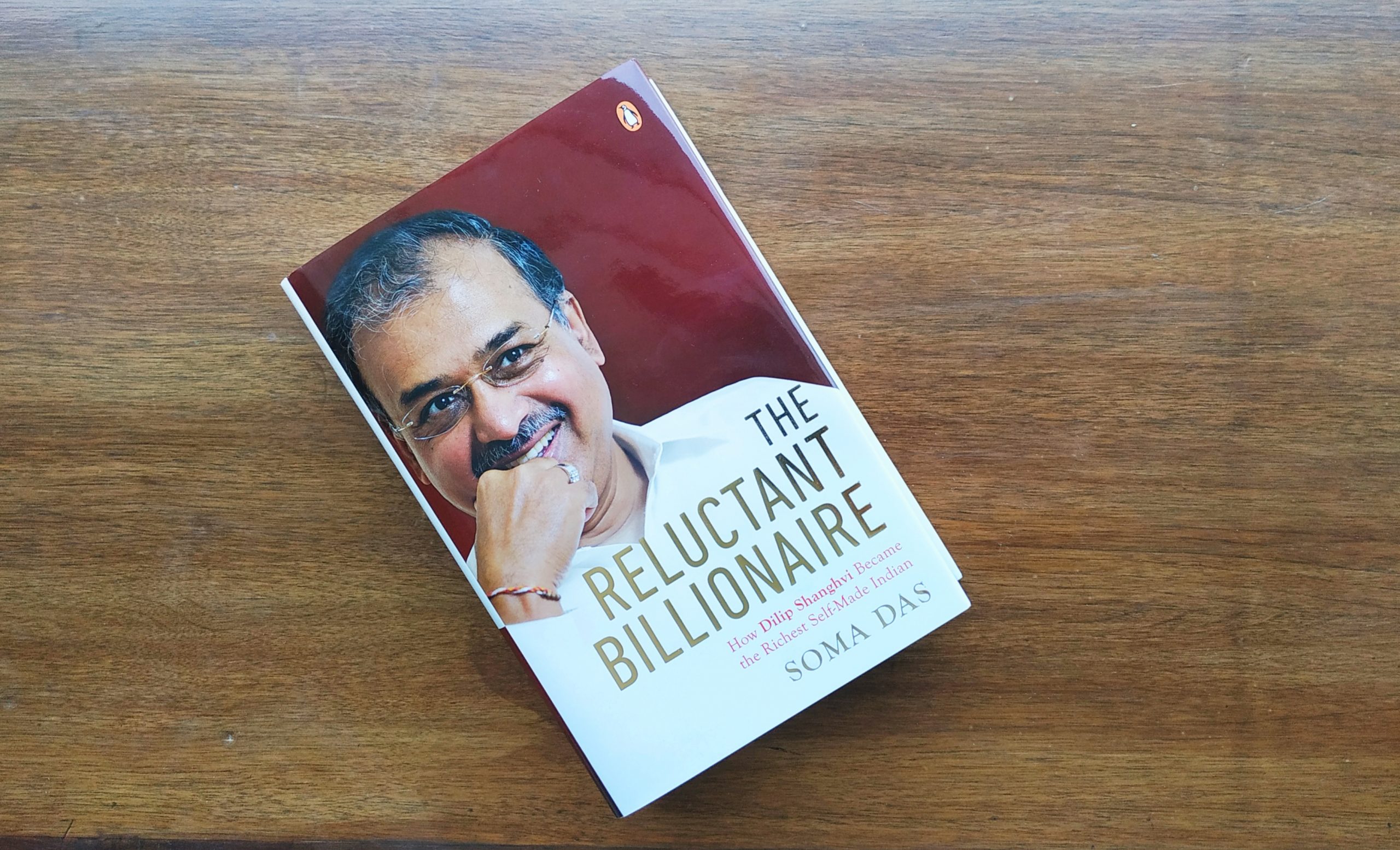
Dilip Shanghvi is one of the most interesting and least understood business minds whose journey has been shrouded in mystery because of his reticence.

The Reluctant Billionaire reveals the riveting story of the fiercely intense personality that lies beneath his calm demeanour. Based on interviews with over 150 friends, family members, rivals, former aides and Shanghvi himself, it traces his transformation from a quiet, curious child working in his father’s small shop to an astute strategist, who built India’s largest pharma company, Sun Pharma, despite being untrained in science.

Here’s a gripping excerpt from the book that talks about the acquisition of Taro and Ranbaxy.


Should a story be told when the subject is unwilling? Maybe ‘not’ if it’s an ordinary story of a private person, or maybe ‘yes’ if it’s in the guise of fiction where it is easy to speak the truth. But what if the story happens to be of a man who arose from the anonymity of a small wholesaler to become the richest man in a country of a billion-plus people and as many dreams? And he did so, not by creating a conglomerate, which depends on cronyish connections and government concessions, but by building a global firm focused only on making medicines. Isn’t his story more than just his, a story that belongs to a generation, a nation?

And when he became the richest man of the country in 2015 and was asked how he felt, he replied, ‘Uncomfortable, very uncomfortable.’ Despite living what could be argued as one of the most remarkable life of his generations, his mind feels like a black box. Dilip Shanghvi is one of the most interesting and least understood business minds of India today. For someone, unschooled in degrees of sciences and management, who worked his way up from a tiny shop in the bylanes of Dawa Bazaar in Calcutta of the 1970s to create one of the country’s most valuable enterprises, he is also one of the least documented and least studied capitalists. One reason behind this is his own unwillingness to share his story.

He doesn’t care about being celebrated, and stubbornly disapproves, even casts off attempts to document him. Another part is because with no drama, no modulation in pitch, few words and fewer expressions, he neither fits the bill of a conventional inspiring pin-up business leader nor does he make for a great colourful flamboyant story. It is easy to miss the intensity of someone who is more presence than personality. What compounds this conspicuous absence from mainstream is a past yet unsearched but which, on the surface, doesn’t show up juicy controversies to merit an investigation, and a lifestyle that could appear normal enough to be boring. No wonder the media was ready to spare him the limelight he so avoided.

From time to time, when the need arose, he was profiled with a few recycled facts thrown in—that he borrowed 10,000 rupees from his father to start his firm Sun Pharma with two medicines for psychiatry and that in his sixties now, he is a fan of Harry Potter books. What happened in the interim was left to the imagination.

This un-deliberate arrangement of mutual disinterest worked fine till one day—the maths of life changed it all. That day in March 2015 his net worth crossed that of Mukesh Ambani and he was pronounced India’s richest man. The country was curious to know who this guy was, how he had done it.

If the search and discovery had been so easy, answers to these questions wouldn’t have remained so elusive. Shanghvi, known to shun press conferences, interviews and parties expressed his unwillingness for this book when approached initially. ‘You will probably put my face on the cover and I would be recognized by many more people on the streets and that’s always a problem. It takes away from my freedom.’


The Reluctant Billionaire is a tale for everyone who has once had a secret dream, an insanely bold one.

The Best of Ruskin Bond’s Years with his Daddy

At age eight, Ruskin goes to live with his father in Delhi. His time in the capital is filled with books, visits to the cinema, music and walks and conversations with his father—a dream life for a curious and wildly imaginative boy, which turns tragic all too soon. 

This Father’s Day, we revisit the story in the form of quotes from the book!


Long Ago in New Delhi

“My father would come home – usually by pony-driven tonga – at five or six in the evening, and after having tea together (lots of bread and jam for me), I would help him sort and arrange his postage stamps. He was an avid stamp collector with separate albums for different countries.”

*

“There were four cinema halls showing the latest Hollywood and British films, and whenever my father came home early he would take me to the pictures. That year I must have seen at least twenty films with him!”

*

“It was impossible to escape the gnats and mosquitoes. My father fell ill with a sever attack of malaria. he had to be admitted to the military hospital, out at Palam. I was on my own.”

*

“But towards evening I began to feel lonely. I missed my father. I missed his presence at the dining table, the talks we had, the discussion about stamps, the visits to the cinema, the touch of his hand.”

*

“After nearly a fortnight my father came home from the hospital, looking very weak and tired…As winter set in, my father’s health improved, and we began visiting the bookshops and cinemas again. He took me to see the Red Fort in Old Delhi, and we wandered about the palaces and pavilions.”

*

The School in the Hills 

“I did not cry or make a fuss when my dad said goodbye. He had promised to come up and see me at the first opportunity, and I knew he would keep his word. Having spent many days on my own in the Atul Grove flat, I had developed a certain fortitude, an ability to stand alone, a dependence on myself rather than on others. I was devoted to only one person – my father. And when he wasn’t around, I got on with what I wanted to do.”

*

“A long letter came from my father – the first of many. He wrote about his plans for the future – of leaving India when the war was over, and of finding a good school for me in England.”

*

“My father came to see me towards the end of August… In spite of the mist and the rain, it was wonderful day – a day that I would never forget. It was to be the last time I saw my father – but, of course, I did not know that at the time.”

*

“Mr Young did his best. He put his hand on my shoulder and let me down past the school gate, down an avenue of young deodars.

‘Your dear father,’ he stammered. ‘Your dear father – God needed him for other things -‘

I knew what was coming, and I burst into tears. I had no one else in the world – just that one dear father – and he had been snatched away. We had been taught that God was a loving, merciful being, and here he was doing the cruelest possible thing to a small boy. Why did he need my father? What could be possible want him for? Did he want his stamp collection?”


For years, Ruskin Bond has regaled and mesmerised readers with his tales. In Looking for the Rainbow, Bond travels to his own past, recalling his favourite adventures (and misadventures) with extraordinary charm.

Know the untold history of the first all-India team

On the morning of 6 May 1911, a large crowd gathered at Bombay’s Ballard Pier. They were there to bid farewell to a motley group of sixteen Indian men who were about to undertake a historic voyage to London. The persons whom the crowd cheered that sultry Saturday morning were members of the first All-India cricket team.

Conceived by an unlikely coalition of imperial and Indian elites, it took twelve years and three failed attempts before an ‘Indian’ cricket team made its debut on the playing fields of imperial Britain in the blazing coronation summer of 1911.

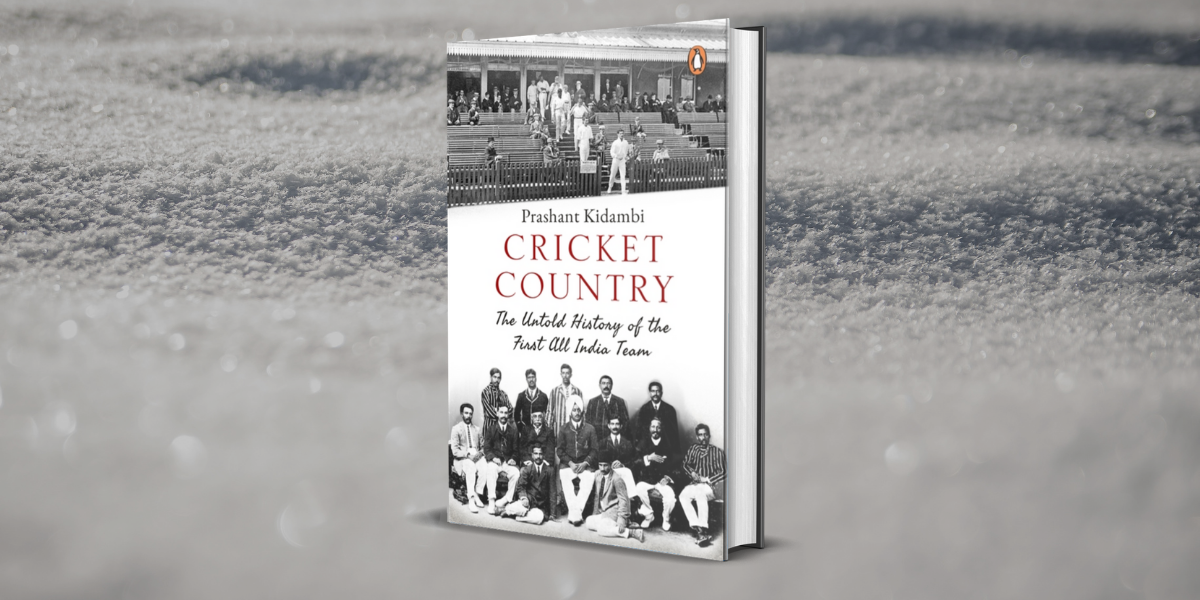
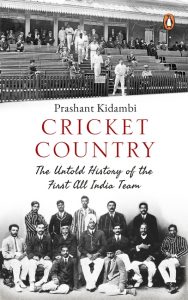
Prashant Kidambi, an associate professor of colonial history at the University of Leicester, introduces us to the first ever cricket team of India, in his book, Cricket Country.

Get to meet the team!


Maharaja Bhupinder Singh of Patiala :The First Captain of the Indian Cricket Team

Maharaja Bhupinder Singh was not the organizers’ initial choice to lead the first Indian Cricket Team. In fact, Framjee Patel wanted H.H. Jam Saheb to become the skipper of the team. The Maharaja was known to use cricket to serve his own political interests. In 1931, he shared strained relations with the Viceroy Willingdon and used cricket to regain influence on imperial affairs.


Major K.M. Mistry

“Said to be in a ‘class by himself’, Mistry had first made his mark as a bowler for the long- established John Bright CC in Bombay… But it was while playing for the famous Patiala team in the late 1890s that Mistry developed into a truly great batsman. This left-handed Parsi was adept at playing strokes all around the wicket, ’attaining the maximum of power with the minimum of power.’


Maneck Chand

“The Bombay Gazzete described the Punjabi as a ‘fast right hand bowler’ who could prove   ‘very deadly’ if the conditions were favourable. Some even considered him the quickest bowler in the entire country.”


Dr. H.D. Kanga

“..Homi was said to possess ‘nerves of steel’ and play ‘a scientific game’…. ‘He is one of those    brilliant cricketers who can bat against all kinds of bowling as calmly as possible and make runs freely.’ wrote one contemporary on the eve of the Parsis’ encounter with the Presidency in September 1905.”


P. Baloo

Palwankar Baloo belonged to the class of ‘untouchables’, “However, it was precisely his tireless toil on the cricket pitch in the face of deep-seated caste prejudice that defined Baloo’s long cricket career.”  In fact, Baloo was considered to be one of the finest bowlers of the twentieth century and gave stellar performances in matches.


J.S. Warden

“The Bombay- born Warden, described by his captain Pavri as ‘a magnificent fellow’ was a relatively new find for the Parsis. This talented twenty-six-year old slow bowler – reputedly ‘one of the best in India’- was said to send down ‘balls which would beat the most wary of batsmen’.” He was a left handed bowler.

M.D. Pai

Mukund Damodar Pai was born in Bombay on 29th July 1883. His early cricket career was marked by consecutive success in playing cricket at schools and clubs. “The Bombay Gazette described Pai as a ‘fast run-getting bat, though. . . not quite of the hurricane type’; besides, he was said to be ‘a brilliant fielder’.”


H.F. Mulla

“Born in Bombay on 4 May 188, Mulla had first burst onto the cricketing scene as an undergraduate at Elphinstone College…. Even half a century later, one observer nostalgically recalled the ‘fabulous Homi Mulla. . . whose very turn to go in was the signal for us small boys to rush out of the tent or shamiana so as to be able to follow the ball as it became a tiny speck in the very clouds’.” He was considered to be a fine wicket keeper too.


K. Seshachari

Seshachari was one of the finest stumpers India has ever had.  He was trained by Charles Studd, one of the most well- known cricket players of his time. In 1906, the Cricket noted that Seshachari’s “… wicket-keeping is quite first-class and brilliant enough for any country…”


Salamuddin Khan

Born as a Pathan, in the Basti Sheikh Darwesh  district of Jullender, Salamuddin Khan was an all-rounder cricketer .It is said that he“ ‘ favourably impressed the Committee with his batting and bowling during the Bombay tour of the Aligarh team’.”


Shafqat Hussain

According the Bombay Gazette, Hussain had “ ‘been a revelation to local cricketers’ and commended his ability to bowl at varying speeds and lengths. ‘He scarcely bowls two balls alike in an over and we have seen no fast bowler in India who more admirable works with his head,’ the paper added.”


Syed Hasan

Syed Hasan was born in Moradabad and belonged to the North Indian Service Gentry. He was considered to be a reliable batsman- wicket keeper. Due to his cricketing abilities, he had also been a part of the Aligarh elite.

M.D. Bulsara

Maniksha Dadabhai bulsara was born in Daman on 2 September 1877. He was considered to be “‘a fast round- arm bowler of exceptional merit’, he was said to be ‘the only man in India who can make the ball “swerve” ‘“. It was said that he “could deliver a vicious leg break ‘that would beat the most wary of batsmen’. ”


R.P. Meherhomji

Meherhomji was a right handed batsman who,  “possessed the ability to time his strokes ‘to a nicety’, and therefore make them look effortless.” In 1905, Framjee Patel wrote that, “ ‘One finds it difficult whether to award the palm to him or Mistry as the most graceful batsman of the present time,’”


B. Jayaram

Jayaram had to face many obstacles in order to learn how to play cricket. However, when he scored his first century against the Yorkshire Regiment, he attracted ‘ widespread attention’  throughout the country. Cricketer Edward Sewel, even commented ,“… cutting is his forte and he is always dashing a bat, never scoring slowly.”

front cover of Cricket Country
Cricket Country | Prashant Kidambi


Noor Elahi

Noor Elahi was considered to be a ” ….fine batsman and a useful bowler”. I t was when he was playing in Kashmir, that he was invited to take part in the Indian Cricket Team tour of Britain. However, in the end Noor Elahi along with Maneck Chand withdrew from the tour. It is assumed that their employer, the Maharaja of Kashmir withdrew his decision of letting them travel abroad with the Indian Cricket team.


Drawing on an unparalleled range of original archival sources, Cricket Country is the untold story of how the idea of India was fashioned on the cricket pitch in the high noon of empire.

Ruskin Bond on friendship and farewells

‘It was 1947, and life was about to change quite dramatically for most of us’

In the third part of his memoir, thirteen-year-old Ruskin Bond is back at school, doing what he loves – reading, goal-keeping, spending time with his friends and eating lots of jalebis. But things seem to be rapidly changing all around him. Whispers of a partition haunt the corridors of his school. Does the formation of a new, independent India mean saying goodbye to old friends-and, with it, the shenanigans they got up to?

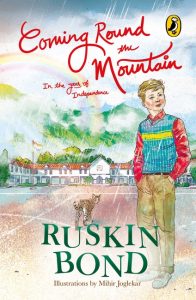
In Ruskin Bond’s inimitable style, Coming Round The Mountain gives us some wonderfully wistful and poignant snapshots of friendship and the farewells brought on by the relentless change at the end of an era. Here are some of them:

~

The fearsome-sounding cliques one forms in childhood

‘I was turning thirteen in May that year. My best friends were Azhar Khan, who was my age; Brian Adams, who was a year younger; and Cyrus Satralkar, who was the youngest. We called ourselves the ‘Fearsome Four’, although there was nothing very fierce about us.’

*

The best friends are those who extend a hand when we need it most, whether or not we know precisely that we need them

‘I’d been going through a different period, adjusting to my stepfather’s home in Dehra and learning to cope with the world at large. Although a shy boy, I needed friends, and I was quick to respond to those who offered me friendship.’

 *

The irrelevance of cultural barriers in schoolboy comradeship

‘We were not in the least interested in each other’s religions or regional backgrounds. Adults seemed to think it important; but at thirteen, friendship and loyalty seemed to matter more.’

*

When adversity (or at least a compatibility of vices) brings you together

‘The catalyst for our bonding was that early -morning rouser for PT. For some reason— or different reasons—the four of us overslept one morning and failed to turn up on the first flat for our exercises. Our absence was duly reported by a senior prefect, and we were summoned to the headmaster’s study for the usual punishment. At least three strokes of the cane were to be expected.’

*

A friend who feeds is a friend indeed

‘World War II had been over for more than a year, but some food items—butter, cheese, chocolates—were still hard to come by. Brian divided his Kraft cheese into four portions, and each of us had his share. Now, there was a friend!’

*

The difficult feelings of older people who have to see enormous upheaval in all they have held dear

‘Dunda Hawkes had been deeply affected by the division of India. He was a simple man who, like my father, had been to army school and spent most of his life in barracks or on the march. He had become a boxing champion and was responsible for making sportsmen and athletes out of most of us.’

 *

The poignant uncertainty of goodbyes in that year of changes

‘Azhar was beside me, his arm around my shoulders. ‘Time to say goodbye,’ he said. ‘I’ll write to you. We’ll meet again—some day, somewhere.’ Surely we would meet again. The world hadn’t come to an end. But the light was going out in a lot of lives, and it would be some time before it came on again.’

*

 When the absence of a friend seems like a removal of an aspect of one’s own being
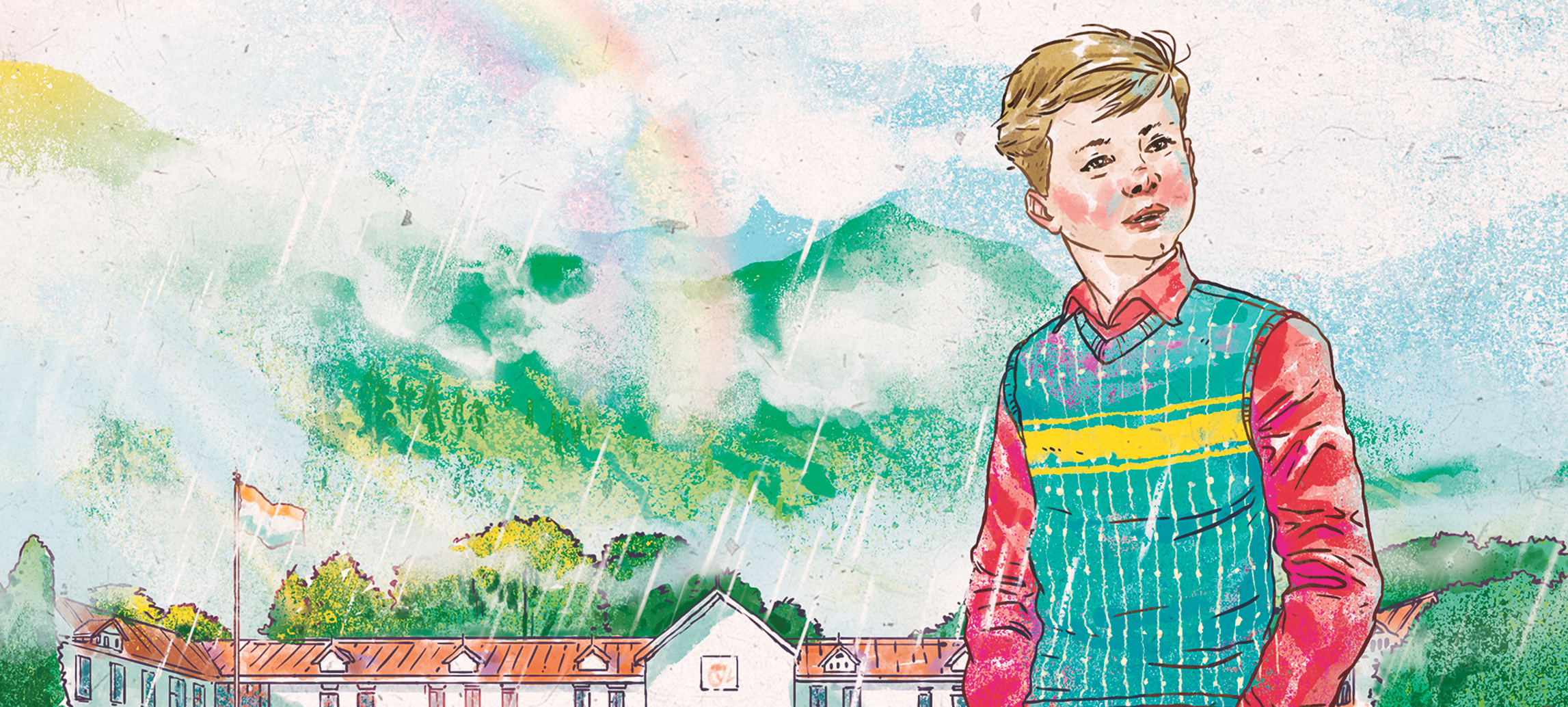
Front cover of Coming Round the Mountain
Coming Round the Mountain || Ruskin Bond

‘Sometimes we don’t really value our friends till we have lost them. Azhar’s departure left quite a gap in my life. He had been someone to whom I could talk freely, someone to whom I could confide and share my dreams.’

 *

The love of a friend does not need to be put in words for one to know that is there 

‘Send me lots of beautiful postcards,’ I said. We shook hands. In those days we were not given to hugs and demonstrations of affection. But I loved my friends, and they knew it and loved me too.’

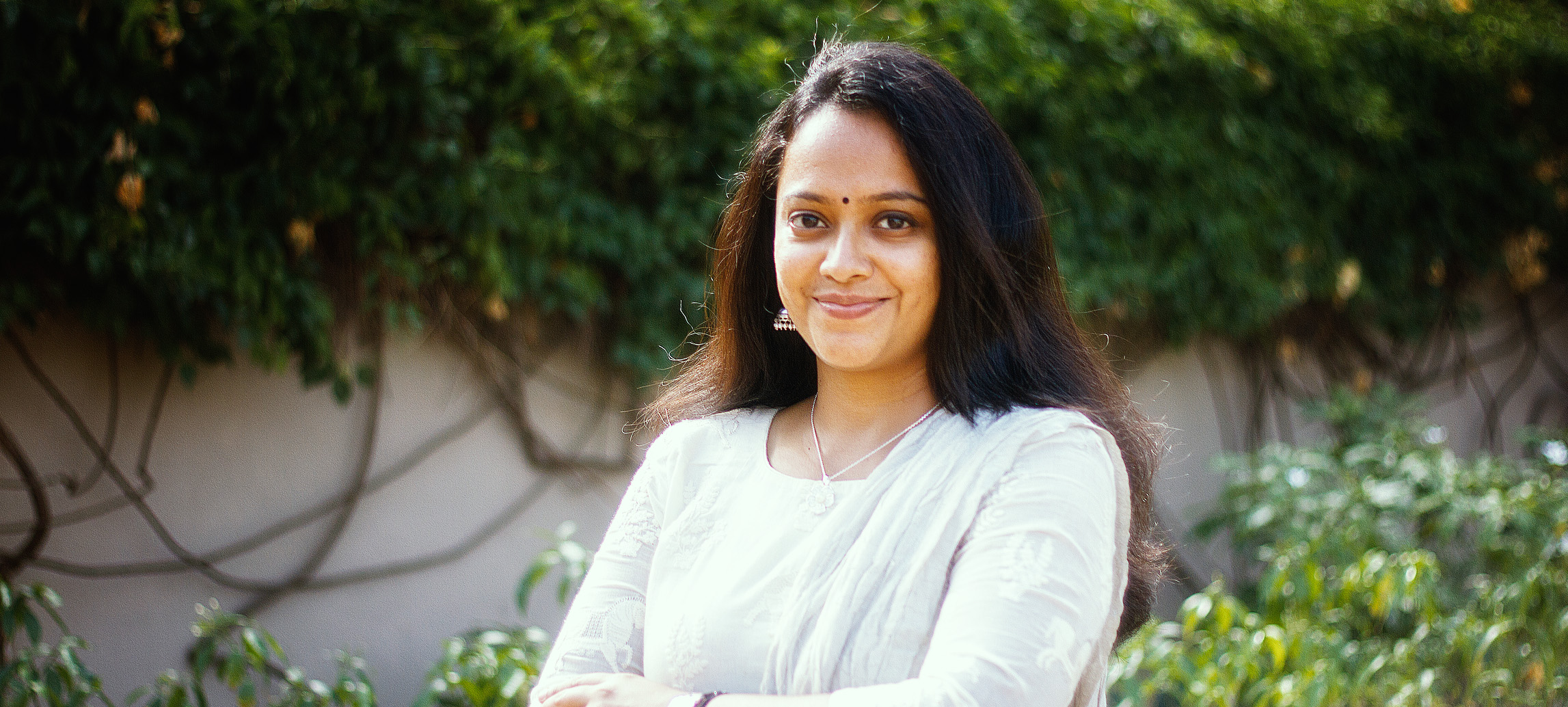
Know Anuja Chandramouli, the author of ‘Muhammad Bin Tughlaq’

When his father dies, Prince Jauna Khan succeeds to the throne of Delhi as Muhammad bin Tughlaq. His reign will prove to be epic and bloody, but unsurpassed in splendour, innovation and defeat. A formidable strategist and remarkable scholar, the Sultan will go down in history for his brutality as well as his brilliance, unfairly remembered only as a cruel tyrant who might have been raving mad.

In Muhammad Bin Tughlaq, Anuja Chandramouli, one of India’s best mythology writers, reimagines Muhammad bin Tughlaq’s life and times in incredible detail to bring to life the man behind the monarch.

Here are 6 interesting facts about the author:

————–

Her highly acclaimed debut novel, Arjuna: Saga of a Pandava Warrior-Prince, was named by Amazon India as one of the top five books in the Indian Writing category for 2013. No wonder she swears Arjuna is the great love of her life. Always.

*

Anuja Chandramouli’s articles, short stories and book reviews appear in various publications like the New Indian Express and The Hindu. She says she appreciates the bouquets and doesn’t mind the brickbats or trolls just as long as readers don’t complain to her mom.

*

Anuja regularly conducts story-telling sessions and workshops on creative writing, empowerment and mythology in schools, colleges and various other platforms. She says she is grateful to all who listen to her (or pretend to) and refrain from pelting her with rotten eggs (which apparently is a recurring nightmare).

*

Anuja is a student of classical dance and yoga. She blames the former for her hips and the latter for her inability to sock the deserving in the jaw.

*
Anuja’s first novel along with the second, Kamadeva: The God of Desire and the third, Shakti: The Divine Feminine are getting translated into Hindi, Marathi, Gujarati and Bengali. The author hopes to learn the above mentioned languages by then, and says she has made progress with the cuss words.

*

In 2017, Anuja achieved what many authors dream of – three books in a row released by different publishers. The author is grateful for the love and accolades she received for the triplets but wishes she would lose the baby weight already.


Anuja Chandramouli’s latest novel, Muhammad Bin Tughlaq: Tale of a Tyrant  is AVAILABLE NOW!


Super Century – An Excerpt

What is it about the Indian psyche that makes us so incapable of fulfilling our promise as a nation? Why are we so averse to risk, resigned to mediocrity and mired in a collective lack of confidence? India has so much potential but seems forever stuck on the brink of actualization, unable to muster the political will and geo-economic force to clear the final bar. The stakes are higher than ever, and India’s moment is now.

In Super Century, Raghav Bahl offers a cogent and candid assessment of how we got where we are and a clear blueprint of what we need to do, both at home and in the world, to fulfil our promise going forward.

Here is an excerpt from the book:

—————-

The dawn of the twenty-first century brought new geopolitical opportunities for India and the other fast-developing nations christened the BRICS (Brazil, Russia, India, China and South Africa). In the first decade of the new millennium, the twin catastrophes of 9/11 and the 2008 financial meltdown deeply shook America, weakening its position as the world’s sole superpower. With the US suddenly vulnerable and preoccupied with wars in Iraq and Afghanistan, the BRICS— especially China—stepped into the void, asserting themselves in the economic and diplomatic spheres. They got a boost from the forces of globalization, which levelled the playing field and transformed the very nature of geopolitical power. No longer could a strong, successful state impose global influence solely through its military; the new world order valued economic prowess—leveraged by citizens, businesses and nongovernmental agencies through trade, aid and culture capital—above all else. For India and other rapidly rising countries with huge populations and untapped potential, that shift opened up a world of new possibilities.

As India’s economy grew, Delhi gradually adopted a larger and more defined role in global affairs, increasingly willing to take a principled stand on matters of national—and international—importance. Still, we struggled to win the world’s respect, denied a seat on the United Nations (UN) Security Council and membership in the Group of Seven (G7)—even though India’s economy is bigger than both Canada’s and Italy’s, which do belong to the G7. Such snubs only feed our national insecurity and spur greater defensiveness.

When Modi took office in 2014, he enthusiastically advanced the narrative of India as a leading power, and Indian confidence swelled. The government abandoned all vestiges of non-alignment and introduced an expansive new policy of multi-alignment, centred on increasing engagement—bilateral as well as multilateral and with friends as well as rivals. Delhi revitalized its partnership with Washington, stepped up its leadership in Southeast Asia and artfully managed China through a balance of engagement and containment. Modi took a more assertive stand against Pakistan, retaliating against persistent small-scale crossborder attacks with open and unapologetic surgical strikes, rather than employing covert actions while pretending to ‘turn the other cheek’. And he gave maritime strategy top priority, particularly in the Indian Ocean, with a focus on new security agreements and greater cooperation with India’s democratic neighbours; in 2015, Delhi agreed to build its first overseas military base in the Seychelles.

Modi himself relished the role of traveller-in-chief. In his first three and a half years in office, he visited forty-nine countries— including the US four times—and met with a dizzying array of heads of state, foreign dignitaries and business leaders, among others. His tireless jet-setting may have helped elevate India’s standing abroad, but it earned him ridicule at home, with critics mocking his jovial banter and awkward bear hugs. In retrospect, all that time on the road might have been better spent overhauling India’s economic policy. But Modi was determined to demonstrate his commitment to multi-alignment; in 2016, he became the first Indian leader since 1979 to skip the annual Non-Aligned Movement summit.

In keeping with this mandate, India has asserted itself diplomatically in sophisticated new ways. While continuing to seek entry into traditional Western-dominated international organizations such as the Nuclear Suppliers Group, Asia-Pacific Economic Cooperation (APEC) and the UN Security Council—as well as gain commensurate influence with the West in bodies such as the World Bank and the IMF—Delhi has also embraced the newer, more nimble BRICS-based alternatives, such as the Asian Infrastructure Investment Bank (AIIB) and the Shanghai Cooperation Organisation. Against all odds, India has become a leader on climate change; after years of complaining that emissions caps were unfair to developing countries, Delhi abruptly changed course at the 2015 Paris Climate talks, with Modi joining France’s then President

François Hollande to create an India-based international solar power alliance. And India has taken more initiative in addressing global crises; when a Saudi attack trapped thousands of foreign nationals in Yemen in 2015, India rushed to the rescue, safely evacuating not just its own citizens but civilians from more than two dozen countries—including the US and Pakistan. Indian troops make up one of the largest national contingents of UN peacekeepers.

Going forward, India must continue to pursue greater global engagement. We must look not just West or East, but North and South too, working with big powers and small to shape the global agenda. We have nothing to lose and everything to gain from participating in such diverse multilateral groupings as the ‘Quad’ talks (with Japan, the US and Australia)—as we did for the first time in 2017—and the RIC (Russia–India–China) annual foreign ministerial meetings. Our country’s sheer size, geography and status as the world’s largest democracy make it essential—if not inevitable—that we assume a bigger leadership role in preserving peace and security, both in Asia and the world. That is especially true given today’s rapidly evolving world order, with the US retreating from its multilateral commitments and China eagerly stepping in to fill the void. With Xi Jinping consolidating power and hot-headed rulers in both Russia and the US, India looks relatively stable, reliable and transparent by comparison. It would be a shame to waste that political capital at a time when the world is starved for decisive, rational leadership.


In Super Century, Raghav Bahl offers a cogent and candid assessment of how we got where we are and a clear blueprint of what we need to do, both at home and in the world, to fulfil our promise going forward.

error: Content is protected !!