Publish with Us

Follow Penguin

Follow Penguinsters

Follow Penguin Swadesh

5 Things You Need to Know About GST’s Impact on the Common Man

On 1 July 2017, Goods and Services Tax (GST) became a reality. The government hailed it as the biggest tax reform of independent India which would herald a new freedom for the nation and unify it with ‘One Nation One Tax’. Some of the claims made by the government were that GST would bring about ease of doing business; increase tax collection; lower inflation; increase GDP growth by 1-2 per cent; and check the black economy.  More than a year later, we have more questions than answers.
Why did the economy slow down? Is the government likely to collect more taxes? Why have prices continued to rise? Why has Malaysia withdrawn GST?

It turns out that problems with GST are both transitional and structural. To correct for these there have been a few hundred notifications and orders from the government which have added to the confusion.
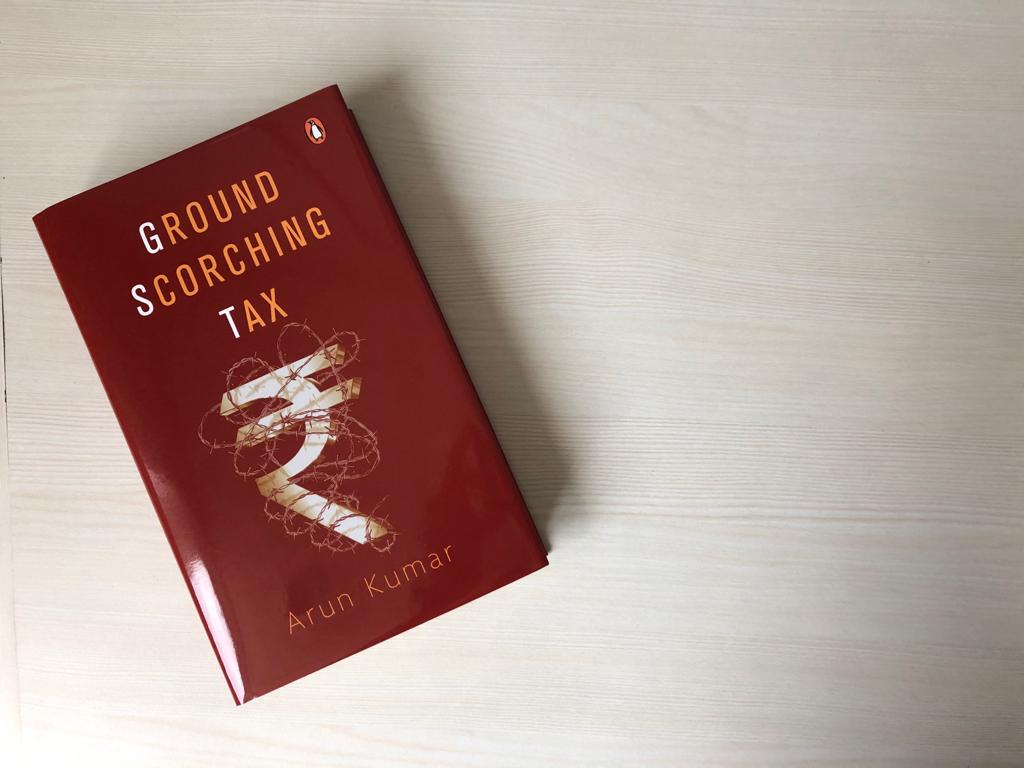
In Ground Scorching Tax, well-known economist and India’s leading expert on the black economy, Arun Kumar systematically and lucidly explains the reality behind GST, demystifying this complex tax for ordinary citizens.

Known for not pulling any punches, the author explains why GST is truly a ‘ground scorching tax’ and  a double-edged sword for the common man, why it will increase inequality across sectors and regions, why it will hurt small businesses – everything the government does not want you to know.

He also proposes an alternative which will convert this tax into a `Ground Nourishing Tax’.

Read on to learn how the common man is affected by the ‘Ground Scorching Tax’


The unorganized sector employs the vast majority of the workforce so the setback caused to this sector by the GST renders a large number of people unemployed and lowers the overall real wage rate

GST and digitization accelerate this ongoing process of marginalization of the unorganized sectors. As pointed out in the previous section, marketization marginalizes the weak in the market—it favours the large over the small businesses. While in economic terms this may seem to be ‘efficient’ with growth being fuelled by the large scale sector, it leads to growing inequality which has political and social implications. Since it is the unorganized sector that employs the vast majority of the work force, any setback to this sector leads to growing under employment and crisis in the lives of these people. With the growth of the organized sector, while wage rate may rise, employment available declines since the large and medium sectors are far more automated than the small sectors. Thus, the overall wage received by workers would fall. The purchasing power of those employed in the unorganized sectors and of workers as a whole would decline. (p. 186)

 ~

Small businesses are financially affected by not being able to receive or offer Input Tax Credit.

The concern for the small suppliers led to their being exempted from registration under GST. So, suppliers with turnover of up to Rs 20 lakh have been exempted. But they will not be able to get input credit (ITC) and if they sell to any other business they cannot offer ITC. A very big disadvantage indeed. Similarly, those with a turnover between Rs 20 lakh and Rs 1 crore will fall under the Composition Scheme and will neither get ITC nor be able to offer ITC. They would also not be able to make inter-state sales. Further, the tax that they should have paid under GST but did not pay since they are exempt will have to be paid by the business purchasing from them. This is the reverse charge mechanism (RCM). Thus, the purchasers’ cost would go up. (Pp. 103-4)

(Subsequently, due to changes announced, units with turnover up to Rs.40 lakh are exempt from registration and the limit for Composition Scheme has been raised to Rs.1.5 crore)

~

Some of the GST rates are higher than the rate they were paying under the earlier system which has increased prices and expenses for the common man

The GST rate on goods and services have been fixed close to the rate they were already paying under the old regime. So, if some good was being taxed at the rate of say, 15 per cent then it was moved largely to 18 per cent under GST. Most services were at the rate of 15 per cent and that has increased to 18 per cent. This has proved to be inflationary. (p. 104)

 ~

Since indirect taxes are applied on goods and services consumed, they affect all sections of society unlike direct taxes which are collected from those who are well off and can afford to pay it. Indirect taxes are also regressive as they typically result in the impoverished sections paying a greater proportion of their income then the well off. The overwhelming focus on GST and indirect taxes as opposed to direct taxes is antithetical to the interests of the common man.

It was argued that indirect taxes are stagflationary while direct taxes are the opposite and hence more desirable. Thus, it would have been more desirable for the nation to collect more of direct taxes than indirect taxes. In 2005, the UPA I government had also talked of the need to introduce the direct tax code (DTC) to reform direct taxes. However, little headway has been made in that direction. The emphasis has been on GST and collecting more of indirect taxes—indicating a political bias. It was also shown that indirect taxes tend to be regressive while the direct taxes can be progressive. Thus going for more collection of indirect taxes increases the regressive component of India’s tax system. It also does not put greater pressure to tackle the black economy and collect more of direct taxes. Again this benefits the elite sections of society. They can continue to earn large sums of incomes through the black economy on which they do not have to pay taxes. (p. 172)

 ~

 The local bodies have been deprived of their sources of revenue from taxation under the new regime.

As some of the important sources of revenue of local bodies (like Octroi and entertainment tax) have been absorbed in GST, they needed to be also provided with independent source of revenue. This has not happened. There is no mention of devolution to the local bodies. It is not clear whether the Centre or the states are to pass on a share of the resource. (p.190)


In Ground Scorching Tax, well-known economist Arun Kumar explains the reality behind GST.

Eight Inspirational Intrapreneurs from ‘Jugaad 3.0’

DIYer n. A disrupt-it-yourselfer; a Jugaad 3.0 innovator; an employee who acts and behaves more like an entrepreneur in the context of an established organization

Dr. Simone Ahuja – consultant, author, speaker and entrepreneur, is the CEO of Blood Orange where her mission is to empower innovators in large organizations and mobilize them with entrepreneurial tools for a single purpose: to transform the corporate culture from the inside out using design and lean principles. In Jugaad 3.0 Hacking the Corporation, she shifts the focus from ‘entrepreneurs’ to ‘intrapreneurs’, the incredible ‘corporate hackers’ who tap into and around the bureaucratic machinery surrounding them to advance their projects. Or we could call them ‘constructive disrupters’,since today’s intrapreneurs often seriously challenge existing business from product offering to business model, yet they do it actively from the inside and, by doing this, help keep the enterprise viable.

Based on hundreds of interviews, as well as the author’s consulting work within companies, Jugaad 3.0 Hacking the Corporation identifies the competencies these corporate hackers possess. It also offers a spectrum of carefully crafted archetypes to help people see themselves in this trend and allow organizations identify the innovators in their midst.

Read on to learn more about eight inspirational intrapreneurs whose passion and innovation transformed organizations from within-


Balanda Atis —As a chemist formulating mascara at L’Oréal USA, she set her sights on formulating foundations that did not look ashy on darker skins.

“Although Atis and her colleagues were not freed from doing their day jobs, L’Oréal gave the trio access to a lab. Fuelled by passion and purpose, they produced and tested foundation samples on their own time. Lacking opportunities for data collection, they tagged along on trips to existing conferences and fairs across the country, collecting skin tone measurements from thousands of women of colour. The big breakthrough came when Atis discovered they could work with an existing colour compound. Ultramarine blue was seldom used in cosmetics and difficult to work with, but it allowed them to create richer, deeper shades without the muddy finish that was so common in existing darker foundations. Atis and her tiny team succeeded in satisfying a massive customer need that had existed for generations.”


Ravi Ramaswamy— He led the innovation team behind the Efficia ECG100 an easy to use ECG after realizing that resource-constrained settings needed medical systems should not only be easy to buy but also easy to use and did not require expensive specialized training.

“The prototype exceeded everyone’s expectations. What is now a diagnostic-quality electrocardiogram started with the team’s purchase of an off-the-shelf mobile device. Any Android phone or tablet could act as the user interface after the simple installation of an app. The team’s energies went into making an ECG acquisition box that was just as compact (the finalproduct weighed fewer than ten ounces) and intuitive to use. ‘We worked on it for about six to eight months,’ Ramaswamy recalled, before asking for a meeting with Philips Healthcare’s business unit leader. After hearing the idea and trying out the prototype, the executive said: ‘This is a fantastic product. It’s going to be the pathway to the future.’ Ramaswamy reported that ‘from then on, there was no looking back. We had the complete support of the business unit in terms of driving this model.’”


TOYOTA US TEAM—They worked on the margins of Toyota’s organization to redevelop the Toyota Avalon.

“Take the wholesale redevelopment of the 2013 Toyota Avalon. Led by designers and engineers working far from the company’s Japanese headquarters, the initiative was culture defying for Toyota. When the US-based team told their story to industry analyst Mark Phelan, they stressed that they ‘worked in the margins of Toyota’s playbook, following the old adage that it’s better to beg forgiveness than permission’”


Doug Dietz—After seeing the discomfort of young children getting CT scans, he developed the GE Adventure Series—which involves turning dark, scary CT scanning tunnels into inviting storybook hideaways for young patients.

“First, it was by visiting a customer’s facility—the paediatric oncology department of a major hospital—that industrial designer Doug Dietz recognized a customer problem crying out for a better solution. He tells the story of how he had just finished working on a CT design project and thought he’d done a wonderful job. He was very proud of himself, and in 2005 he went to one of the hospitals where the equipment was being installed for the first time. But it only took an hour of observation for him to realize how reductively he had pursued his mission. The first people he watched interacting with the new machinery were a family with a young child. The child was so terrified by the machine that she needed to be sedated. Dietz had to be there to get that the key to better outcomes—including better image capture, higher machine utilization and better patient experience—was decreasing the need for sedation. It wasn’t just about making machines more capable; it was about making children—and families—more comfortable.”


Lars Kolind—His spaghetti organization at Oticon allowed employees across the board to choose projects according to their skills or as an opportunity to develop new skills, and share equal responsibility for projects.

“Going back even further to 1990, an executive named Lars Kolind arrived at the Danish company Oticon with a bold new structural idea he called ‘the spaghetti organization’. If you think about the clean boxes and lines on the traditional command and- control organization chart, and then you think about what happens to those lines in a Holacratic or Hollywood system, you see where he got his metaphor. To the great surprise of the engineers working on Oticon’s innovative hearing aids, asvwell as all its functional groups from finance to sales and from HR to PR, Kolind in one fell swoop did away with everyone’s job title and moved them all from their accustomed offices and desks too. Most important, he told them that it was up to them now to decide where their talents could be best applied. No one would be assigned to projects where they would receive topdown mandates from project bosses.”

 
Kishore Biyani—His innovative intra-organization recruitment to create more ‘Kishore Biyanis’ for leadership roles.

“In January 2016, he put the call out across his organization for applicants interested in those leadership roles. Already, this was unusual, since the recruiting did not look outside FCL’s walls: this was a campaign, called Ban Jao Biyani, run wholly within the organization. More interesting still, having received 450 applications from employees, he and his team then ‘shortlisted’ fifty applicants, and put them through a boot camp where they were ‘trained on management aspects and asked to present a business plan for the brand they had bid for’. This was, in effect, the kind of competition some organizations today host for proposed innovation projects—but in this case, it was not intrapreneurial ideas but the intrapreneurs themselves who were being chosen for further development and investment.”


SHARMILA SAHA AT Mindtree—Mindtree’s programme

‘5 X50’ chose five intrapreneurial projects, each of which was judged to have the potential to grow to $50 million in revenues. The five were carefully selected through a competitive process and the winning teams were given the full support of an incubator-style experience of mentoring and resource provision.

“A quick win from that programme was a new line of business: Mindtree’s Digital Surveillance unit, launched in 2013. The team behind it, led by Sharmila Saha, was driven by the new market demand for better public-space surveillance technology in the wake of high-impact terrorist attacks, seen on a global scale by the 11 September 2001 attacks in the United States and the Mumbai attacks of 26 November 2008. It saw that potential clients like US Homeland Security were struggling with conventional CCTV feeds, which required hours of tedious monitoring, and thought it could come up with next-generation capabilities. Prior to the 5 X 50 initiative announcement, Saha and four colleagues had been working for half a year on the concept, which features audio-video analytics and real-time updates. Winning the competition meant that Mindtree invested about $1.5 million (about Rs 9 crore) to incubate it to the point where it was ready for its first client, the Bangalore City Traffic Police.”

Babak Forutanpour—He found himself the accidental founder of a movement Qualcomm. The group acquired a name—FLUX, for ‘forward-looking user experience’.

“This is what Babak Forutanpour was up against as a software engineer at Qualcomm circa 2004. Once he was onboarded and unpacked his laptop, he realized there was no suitable place to bring a new idea to have it vetted and considered for development. ‘No one was listening, and my boss didn’t even want to brainstorm,’ he recalled. Eventually he was so desperate for a sounding board that he pulled together a ‘little biweekly luncheon’ with like-minded people outside his usual circle. ‘If nothing else,’ he figured, they could all ‘eat a ham sandwich with someone interesting’. But that initial group quickly decided to go beyond the sandwich and try to accomplish something more substantial together. In short order they came up with a cool new technical solution for reducing ambient noise. After a thorough vetting of prototypes by subject-matter experts, a patent that eventually produced real value for Qualcomm was applied for and awarded.”


For more, get a copy of Jugaad 3.0!

Matching The Bhagwaan To The Pakwaan : A Taste of ‘Bhagwaan Ke Pakwaan’

The rice beer bellies of a Christian village in Meghalaya; food fed to departed Zoroastrian souls; a Kolkata-based Jewish community in decline; Tibetan monks who first serve Preta, the hungry ghost; and fifty-six-course feasts of the Jagannath temple-these are the stories in Bhagwan Ke Pakwaan (or, food of the gods), a cookbook-cum-travelogue exploring the connection between food and faith through the communities of India.

Here are some soul-stirring delicacies from the book that explore diverse faiths and unite us with God:

Rongmesek, Meghalaya 

Rice beer is the one true food of the gods…To the Karbi people, rice beer is the fuel that refreshes you with the sweet buzz of life.

Udvada, Gujarat 

 Papra and Bakhra are two of the religious dishes that are made specifically for the Stum ceremony in the death rituals. For us still living, they make great snacks.

Spiti, Himachal Pradesh 

No trip to Kye Gompa would be complete without the breakfast combination of Butter Tea (also known as ‘gur gur chai’ due to the sound it makes when churned) and Puk. There also might not be a more divisive dish than Butter Tea if your idea of tea conflicts with one that is buttery and salty. Very buttery and salty.


There are legends and lore, angsty perspectives, tangential anecdotes, a couple of life lessons and a whole lot of food. Get your copy today!

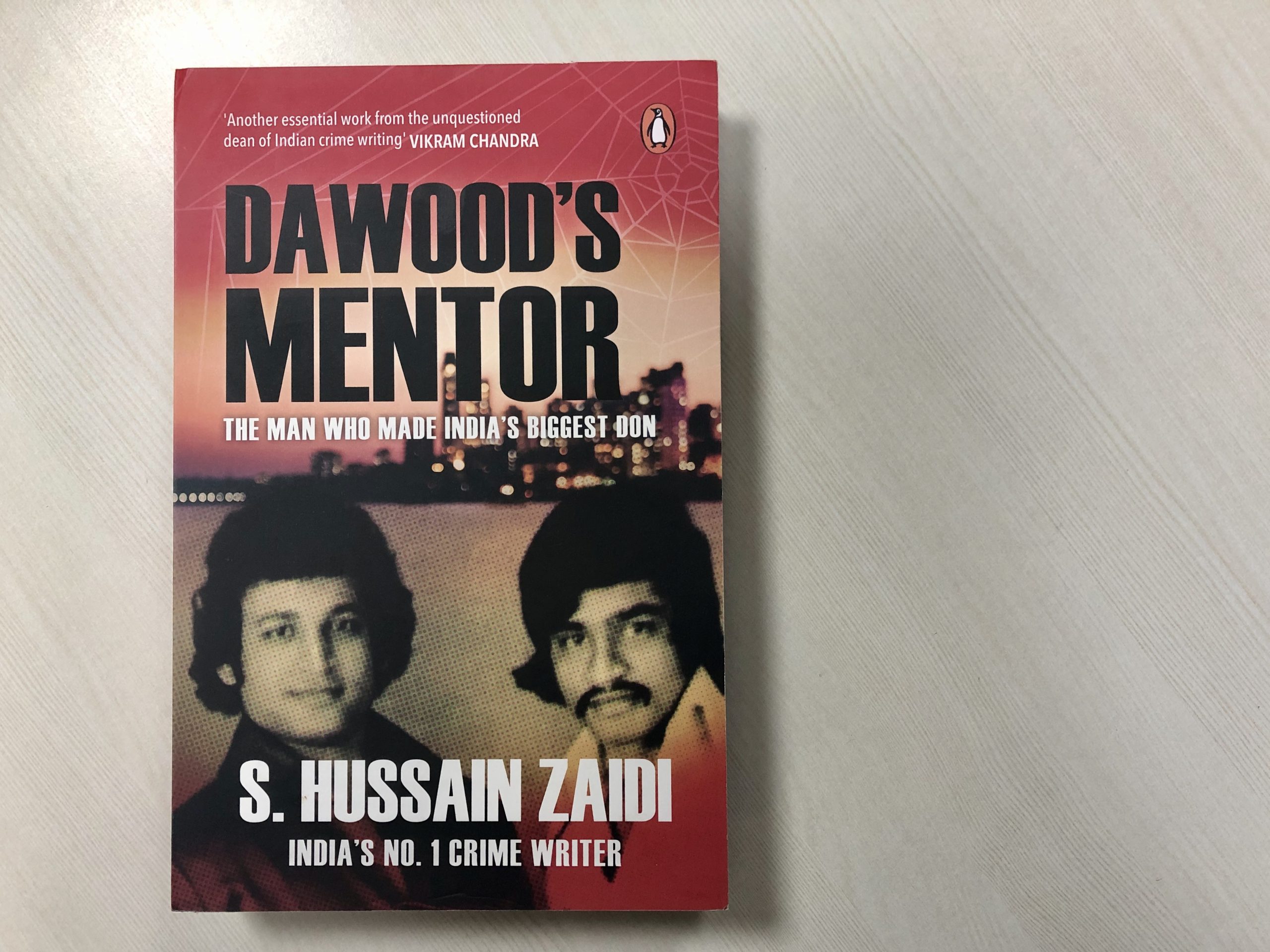
The Pathan Threat – an excerpt from ‘Dawood’s Mentor’

Tired of being bullied, a scrawny, impoverished Dawood Ibrahim is looking for a saviour, Khalid Khan Bachcha, who would teach him the ropes of handling a bunch of hooligans. Instead, what he gets is a mentor who eventually transforms him into a cunning mafia boss.

Here is an excerpt from the first chapter of Hussain Zaidi’s new book, Dawood’s Mentor


The barrel of the gun was pointed at Dawood Ibrahim’s heart. The gunman had been training his focus for a long time. He was waiting for the right moment to pull the trigger. The gunman had only one chance. If the bullet missed the target, the man at the other end would certainly gift him a not-so-exquisite death.

The man pointing the muzzle at Dawood had been sent by his arch-rivals from the underworld. The gunman was accompanied by his cronies, who were huge, hefty men called the Pathans, with Peshawari and Afghan ancestry. Since the 1950s, the Pathans, known for their moneylending habits, had taken to crime. Cousins Amirzada and Alamzeb wanted Dawood dead. The man was a menace. An audacious chit of a boy, he challenged the Pathan hegemony, and since the time he had emerged in the area as a small-time criminal, was proving to be a headache for the Pathans.

In the 1970s, the turf war among the mob generally ended with some serious skirmishes. But the Pathans were so furious with the tenacious Dawood Ibrahim that they decided to investigate his sources of power. They found a nexus between local newspaper-owner and crime reporter Iqbal Natiq and Dawood. The two shared an amazing rapport, with Dawood invariably spending a couple of hours every day at Natiq’s office in BIT Blocks in Dongri. And Natiq’s newspaper—Raazdaar (The Confidante)—exposed the Pathans often, which brought the police to their doorstep.

As retribution, the Pathans killed Natiq brutally. Dawood and his brother Sabir Kaskar swore revenge. Their first target was Saeed Batla. They did not kill Batla, preferring, instead, to maim him and amputate his fingers, something unheard of in the Indian underworld in those times. Before they could proceed with such ‘special treatment’ for the other Pathans, the police picked them up. However, the Kaskar brothers managed to secure bail on attempt-to-murder charges.

Upon receiving bail, as is routine in any police prosecution case, Sabir and Dawood were supposed to intermittently present themselves at the Nagpada police station in central Bombay (now Mumbai). They had to assure the cops that they were not up to any mischief and that they were miles away from any criminal activities. The slang for these routine police-station visits is haazari lagana (marking one’s attendance), where the accused meet the police inspector, answer a few questions and leave within a few minutes.

Dawood preferred the formality of the official haazari to the cold walls of the prison and, of course, it helped that these visits ensured that the police did not land up at their house and complain to their father, Ibrahim Kaskar, who was also a cop. Kaskar senior was an absolute disciplinarian who was known to reserve his leather-belt treatment for the unbridled Dawood, his third child.

On that cool afternoon in October 1980, a defenceless Dawood, along with Sabir, was the target. The Pathans—Amirzada and Alamzeb—knew that Dawood would not be carrying any weapons to the police station. They decided to take advantage of this particular visit to finish off Dawood, because under no other circumstances would they find him unarmed.

But what they did not see coming was another Pathan, Khalid Khan, who shepherded Dawood to the police station that day. Built like a mountain, with a towering height of 6 feet 2 inches and a brawny physique, Khalid was very attached to the promising young Dawood.

Earlier, Khalid had cut his teeth in crime with another don, a local strongman by the name of Bashu Dada. But that was long before Dawood endeared himself to him. Khalid was very protective of Dawood, and that particular day his instincts told him that Dawood would be vulnerable and in a tight spot around the police station. He rationalized that since Nagpada was closer to Kamathipura and Tardeo, the stronghold of the Pathans, they might make a play for Dawood.

Khalid cancelled all his engagements scheduled for that day and decided to follow Dawood to the police station. He also decided to escort him back to his headquarters at Musafir Khana, safe and unharmed. Since Khalid’s name was not in the First Information Report (FIR), he could safely accompany Dawood and also carry a weapon on the sly. The cops would not frisk him for weapons, he surmised.

After Dawood and Sabir signed their attendance and completed other formalities, they saluted the cops—there was a lot of respect for the uniform; it came from their father—and were on their way towards the exit.

They were oblivious to the face of death staring at them from the opposite building and were nonchalantly walking out unaware that their lives would irrevocably change after a few minutes. What transpired in the next few minutes, however, changed Dawood forever, making him invincible.

Khalid, who was extremely alert and looking around, scanning the perimeter, eyes darting like a panther after its prey, suddenly sensed the movement even before he saw the gun. He spotted the barrel of the gun, held by a man at the ground-floor window of Memnani Mansion next door. Khalid knew the man wanted Dawood first, not Khalid or Sabir. In that split second, both the gunman and Khalid acted swiftly.

The gunman pulled the trigger and a bullet flew out, whizzing towards Dawood.

‘Dawood, hato!’ Khalid screamed.

Khalid moved with amazing speed and, before the bullet could complete its trajectory, he managed to push Dawood aside and, in the same moment, whipped out his revolver hidden in the small of his back. Amirzada’s bullet, which was meant for Dawood’s heart, grazed Khalid’s left arm. Khalid began firing at the gunman. Amirzada, who was firing at Dawood, was oblivious to Khalid and Sabir. He had to kill Dawood and kept firing at him. By the time he realized that Khalid had retaliated, he had already been hit below the hip and the bullet got lodged in the flesh. His crony, Alamzeb, saw the blood gushing out and realized that their game was up.


What happens next? Read Dawood’s Mentor to find out!

Eight Steps to Hacking your Corporation with Jugaad 3.0

Dr. Simone Ahuja – consultant, author, speaker and entrepreneur, is the CEO of Blood Orange where her mission is to empower innovators in large organizations and mobilize them with entrepreneurial tools for a single purpose: to transform the corporate culture from the inside out using design and lean principles. In Jugaad 3.0 Hacking the Corporation, she shifts the focus from ‘entrepreneurs’ to ‘intrapreneurs’, the incredible ‘corporate hackers’ who tap into and around the bureaucratic machinery surrounding them to advance their projects. Or we could call them ‘constructive disrupters’, since today’s intrapreneurs often seriously challenge existing business from product offering to business model, yet they do it actively from the inside and, by doing this, help keep the enterprise viable.

Based on hundreds of interviews, as well as the author’s consulting work within companies, Jugaad 3.0 Hacking the Corporation identifies the competencies these corporate hackers possess. It also offers a spectrum of carefully crafted archetypes to help people see themselves in this trend and allow organizations identify the innovators in their midst.

Read on to find out how to ‘hack’ your corporation from within itself with these eight essential principles

Keep It Frugal

Intrapreneurs actively solve problems and seek opportunities, relying on pre-existing elements and recombining resources for novel uses.

What organizations need now are the right tools and a ready mindset to innovate from within. The Jugaad 3.0 agenda items that follow directly support my main message: deep-six the deep pockets. Simple tools, small budgets and human ingenuity can deliver impressive results, including maximum agility with fewer ‘business as usual’ strings attached. Knowing that nothing innovative

is ever truly linear (or one size fits all), consider these to be á la carte strategies for keeping it frugal:

  1. Remain Asset-Based
  2. Keep It Simple
  3. Encourage Frugal Experiments
  4. Focus on Teams
  5. Rethink Incentives

~

Make It Permissionless

Lets leaders provide support without crushing the creativity and potential of upstart intrapreneurs. Companies need a culture of permissionless innovation a innovation isn’t something that you should be asking approval for.

Making intrapreneurship sustainable requires creating a permission-lite environment for intrapreneurs. It’s autonomy with guardrails. The goal is to establish a network of support rather than a system of tight control by leaders. This ‘support, don’t control’ mantra reinforces frugal funding and has two additional benefits. First, it is an easy fit for intrapreneurs, who want a safe space to pursue new ideas and side projects. Second, it doesn’t oblige large companies and their leaders to bend over backward to manage and measure early-stage projects. Here are the plays that put permissionless to work:

  1. Support, Don’t Control
  2. Say ‘Yes’ More Often
  3. Add Light Structure

 ~

Let Customers Lead

Even though being ‘customer-led’ might sound obvious, it isn’t put into practice by many would-be innovators. Rather than sitting in an ivory tower and thinking about what the customer needs, ask the customer what they want. Look at how the customer is using your product.

Organizations that allow intrapreneurs to take their cues from customers create an instant advantageand avoid many of the barriers that derail internal innovation. These are the plays that I have seen work best in industries and environments across the board:

  1. Create Leading-Edge Customer Focus
  2. Hack Better Access to Customers
  3. Turn Customers into Innovation Partners
  4. Make Intrapreneurship a Sales Priority

~

Keep It Fluid

Since fluid team formation does not happen naturally in most organizations, companies need light structures to enable new levels of information sharing, networking and mobility across their talent pools.

Fluidity delivers more control and autonomy to individual intrapreneurs and small groups, and less to the management layers above them. This tricky little paradigm switch packs a positive punch that promises to increase innovation if managed properly. The trouble is that the type of organizational structure that enables fluidity is less rigid than we are accustomed to today. Just as everything digital tears down existing walls, we need to eliminate artificial, outdated boundaries and allow intrapreneurs some latitude to selfdirect, self-manage and self-organize. Here’s a look at how

to make it work:

  1. Create a Team of Teams
  2. Make Management Fluid
  3. Support Agility Through Structure

 ~

Maximize Return on Intelligence

‘Return on intelligence’ is a reformulation of ROI that puts the short term emphasis on intellectual rather than financial gains.

Intrapreneurs rely on constant learning in an open, agile environment where the culture can balance structure with autonomy and metrics with flexibility as part of these J3.0 principles:

  1. When in Doubt, Test It Out
  2. Make Learning a Priority
  3. Measure Return on Intelligence
  4. Make Failure Feasible

 ~

Create the Commons

The corporation should create ‘the commons’, or a space where information is openly shared, for the whole development community,  involving many more types of people and thinking.


The idea that intrapreneurship should be open and inclusive should not surprise anyone. Still, we are left with the question of how to achieve that goal. My approach throughout this book has been to hold up principles to help you create your own J3.0 playbook. That approach reflects the realities that (a) best practices are forever changing, and (b) the ‘best’ answers will, in any case, never come down to cookie-cutter solutions but will be customized to particular settings. With that in mind, start your playbook with these field-tested, flexible ideas for inclusive intrapreneurship:

  1. Plan for Full Inclusion
  2. Make It Safe to Innovate
  3. Use Technology in Appropriate Measure
  4. Train Future Intrapreneurs
  5. Create Porous Networks

~

Engage Passion and Purpose

Passion is what motivates intrapreneurs to keep going when the work seems thankless or when seemingly insurmountable challenges arise.


Recognizing the passion and purpose parts of intrapreneurship allows companies to think more broadly about how to match their people with the problems they care most about. For employees, having the opportunity to work on passion projects creates greater engagement. For companies, it makes the most of creativity and ingenuity. Here’s how to put this win-win dynamic to work in a Jugaad 3.0 way:

  1. Make Purpose Programmatic
  2. Leverage Passion That Bubbles Up
  3. Push Passion Viral

~

Add Discipline to Disruption

There should be a full spectrum of innovation options for intrapreneurs in any organization, from eye-popping, potentially disruptive innovations to clever little hacks on existing solutions. They are all valid, and companies can create disciplined systems by thinking through three streams of innovation.

 The J3.0 approach requires structure and discipline in the right measure in order to extract the most value from each stream of innovation and install metrics that guide and measure success

without losing the learning or limiting the idea. The prescriptive plays look like this:

  1. Develop Multiple Streams of Innovation
  2. Create a Culture That Enables Hybridity
  3. Manage Disruption with Discipline

Jugaad 3.0: Hacking the Corporation will prove that every organization’s best chance, to survive and become better than ever, lies within itself.

Why Taxes? Understanding the Role of Government in an Economy – an excerpt

On 1 July 2017, Goods and Services Tax (GST) became a reality. The government hailed it as the biggest tax reform of independent India which would herald a new freedom for the nation and unify it with ‘One Nation One Tax’.

But why taxes? Here is an excerpt from the first chapter of Arun Kumar’s new book, Ground Scorching Tax to help understand the role of the Government in an economy and elaborates on the kinds of taxes.


GST is an indirect tax that is levied on goods and services. It is supposed to cover the entire chain of supply from raw material to the final stage of sale. By themselves, indirect taxes result in an increase in the prices of the goods and services on which they are imposed. So, why levy such a tax? And, what is the importance of putting a tax on goods and services?

In modern day economies, governments have to perform a variety of tasks which the markets are unable to perform efficiently. As societies have become more complex, the markets have not been able to perform many of the essential tasks and the public sector has been given a larger and larger role in the economy in most
countries. A key task in a poor country like India has been promoting development to overcome poverty and deprivation.

For a majority of the poor, the market does not provide a solution in crucial areas like education, health, drinking water, food, sewage and energy. So, the government has to provide these services in addition to what the individual cannot provide like defence, foreign policy, security and functioning of money. All these activities need to be financed and taxes are a source of revenue. So, people pay for the services that the government provides. In effect, services become available collectively rather than each one creating services on their own.

Kinds of Taxes: Direct and Indirect

GST has run into a plethora of problems from day one. But, there were difficulties with the earlier forms of taxes which were replaced by GST and that is why the need was felt for introducing the new tax. So, one could ask, why not do away with indirect taxes altogether. But then resources for running the government would be short. Are there other taxes that could substitute for indirect taxes? To understand whether one should replace one kind of taxes by another or not, it is necessary to understand the nature of the different kinds of taxes.

Broadly speaking there are two kinds of taxes—direct and indirect. Both fall on the income of the citizens but there is a difference as to how they work. As the name suggests, direct taxes fall on the income, the moment an income is earned. That is why they are called direct taxes. The indirect taxes fall on incomes when the goods and services are purchased/used.

Differences between Direct and Indirect Taxes

The implication is that direct taxes cannot be postponed while the indirect taxes can be postponed by not purchasing goods and services. As soon as an income is earned a direct tax becomes due. Due to this difference which at first glance appears to be small or inconsequential, the macroeconomic impact of these two kinds of
taxes on the economy is different.1 So, one is not equivalent to the other. Thus, one cannot replace direct taxes by indirect taxes without some (adverse) macroeconomic consequences.

Why do these differences arise when the tax is paid either way by the citizen? In the case of direct taxes, cost of production is not directly affected. It is paid on the income after costs are subtracted from the revenue earned. To explain better, let us consider this in greater detail. In the process of production, economic entities (individual and firms) earn an income—it can be profit or wage and salary. Out of profit, interest, rent and dividend are paid.

Profits are calculated as revenue minus costs, that is, revenue of the firm from the sales less the cost of production. When a tax (corporation tax) is levied on this business income, it does not change the cost of production. It only affects the firm’s income in hand (called disposable income). Similarly, when a worker gets a wage or a manager the salary, an income tax on this income does not impact the production cost. The employer does not adjust the wage or salary when the income tax changes (except in rare cases).

An indirect tax like excise duty or sales tax is levied on the value of the good or the service being sold and that raises the price of the good or the service. No wonder each time an excise duty is raised, the price of the good on which it is levied, rises. This leads to inflation and a fall in demand. All else remaining the same, indirect taxes are ‘stagflationary’, that is output stagnates while prices rise. No wonder, when the government wishes to stimulate the demand for a good, it cuts excise duty or sales tax on that item. During the global financial crisis starting in 2007, the Government of India cut excise duties.

In brief, indirect taxes add to the cost of a good or a service while direct taxes do not do so. Thus the former impacts production while the latter does not do so.


In this book, well-known economist Arun Kumar explains the reality behind GST. Known for not pulling any punches, the author explains why GST is a double-edged sword for the common man, why it will increase inequality across sectors and regions, why it will hurt small businesses-everything the government does not want you to know.

Know All About The New Silk Road in ‘Belt And Road’

China’s Belt and Road strategy is acknowledged to be the most ambitious geopolitical initiative of the age. Covering almost seventy countries by land and sea, it will affect every element of global society from shipping to agriculture, digital economy to tourism and politics to culture. Most importantly, it symbolizes a new phase in China’s ambitions as a superpower: to remake the world economy and crown Beijing as the new centre of capitalism and globalization.

Bruno Macaes in his book, Belt and Road traces this extraordinary initiative’s history, highlighting its achievements to date and its staggering complexity.

Here are some unique facts about the Silk Road:


Bruno Macaes asks whether Belt and Road is about more than power projection and profit. Will it herald a new set of universal political values, to rival those of the West? Is it, in fact, the story of the century?


Eight Things you need to know about the Delusional Politics of Brexit and its Aftermath

Hardeep Singh  Puri’s forty years of professional life as a senior diplomat, India’s permanent representative to the UN and Union Minister of State for Housing and Urban Affairs in New Delhi has given him a unique vantage point to see the fault-lines in political narratives and the ‘delusional’ idiosyncrasies of politicians.

Many democratically elected leaders of the twenty-first century have displayed streaks of recklessness, megalomania, bizarre self-obsession and political views that are difficult to characterize.

Delusional Politics studies the actions of these contemporary political leaders with the example of one of the most momentous events our times-Brexit-exposing the self-serving, poorly calculated behavior at the heart of significant governing decisions.

It traces the rise of the right-wing anti-immigration paranioa in Britain, pitted against a Prime Minister who despite his intentions failed as a leader of the Remain campaign. Puri describes Brexit as three supreme examples of delusional thinking and politics. One, calling a referendum that was not required. Two, allowing the referendum’s outcome to be shaped by the uncertainties of democratic politics without due diligence, hard work and safeguards being put in place to ensure the nation’s future. And finally, calling an election when it was not due and when the government had a comfortable majority.

Read on to find out more about the delusional politics of Brexit

 A poorly calculated and casually reached decision to decide the future of a nation and its place in the world

As the story goes, Cameron had been eating pizza at O’Hare while waiting for a commercial flight home following a NATO summit. He was with his Foreign Secretary William Hague and Chief of Staff Ed Llewellyn. The conversation that ultimately led to the unravelling of the United Kingdom apparently went something like this: We have a lot of Euro-sceptics in the party. Let us smoke them out. Let us have a referendum.

 ~

Dissent within Cameron’s own party, the Conservatives, reflected poorly on the party’s leadership

Members of Cameron’s party had essentially backed the agenda of the UK Independence Party (UKIP). UKIP had, over time, reframed its identity to become the party of the ‘leftbehinds’ of the country’s economic development. Their rallying cry became the face of the growing anti-immigrant sentiment that would pull the United Kingdom out of the EU. The rebel Tories supported Brexit for economic reasons, whereas UKIP supported it, at least in its messaging, for cultural reasons, calling for the UK’s identity to be reclaimed.

 ~

 Parties on the right capitalized on the blue-collar angst and anti-immigrant sentiments.

Right-wing populists maintained their economic agenda behind the scenes, while prioritizing—publicly, at least—anti-immigration. The UK Independence Party (UKIP) spearheaded this movement, with its primarily less-educated, blue-collar, white male base at its tail. Founded in 1993 during a transformational point in the UK, UKIP called its base the ‘left-behinds’ of the country’s economic growth and pledged itself as the people’s voice against the establishment that coddled the immigrants. UKIP’s base expanded in waves, most notably in the mid- 2000s, when some Eastern European countries joined the EU, bringing with them another influx of immigrants.

  ~

David Cameron failed to galvanize his youth voter base the way the pro-Brexiters captured the imagination of their own

In the 2015 referendum, the votes of Cameron’s ‘new generation’ were pivotal. Although the young people who did turn up at the booths voted in Cameron’s favour—to remain in the EU—their overall turnout was insufficient. As the Liberal Democratic leader Tim Farron put it, ‘Young people voted to remain by a considerable margin, but were outvoted.’ UKIP and the pro-Brexiters had successfully secured the older, less educated, working class votes.

  ~

David Cameron’s incredibly privileged and well-connected background made it difficult for him to combat populist sentiments

But it is undeniable that Cameron’s privileged upbringing, his confines to the upper legions of society, and his rapid-fire ascension up the political ladder detached him from the people he so earnestly desired to serve. Regardless of his intentions, Cameron was a perfectly unfit contender to combat the populist insurgency of the right-wing Eurosceptics.

  ~

The peculiar politics and character of Nigel Farage

On the other side of the battle, the Brexit campaign was led by Nigel Farage, a self-professed ‘middle-class boy from Kent’ with an arsonist tongue characteristic of a populist leader. He correctly felt the mood in parts of the country and rode the anti-immigrant tide. He tethered the resurrection of the British identity—a past-time homogeneous white identity that so many of the Leave voters yearned to return to—to the referendum. Privileged though his background is,  Farage convincingly painted himself as one of the ‘left-behinds’ who his party fought for. He fostered a connection with his base that in many ways Cameron failed to do with his. Farage’s brazen and open discontent with the establishment resonated with far too many people.

  ~

In calling the general election in April 2017, Theresa May made a decision that would turn out to be superfluously tumultuous path as Cameron’s.

On 18 April 2017, in an attempt to gain more power for the Tories in preparation for the Brexit negotiations, May called for general election, which was not due until 2020.60 Polls at the time had been showing promising figures for the Conservative Party’s success, and May thought she could turn these numbers into parliamentary seats. The election, she argued, was ‘necessary to secure the strong and stable leadership the country needs to see (it) through “Brexit” and beyond’. The elections took place less than two months after May’s announcement, on 8 June 2017. The Conservatives lost their parliamentary majority, and Labour gained seats. After the embarrassing results, May then resorted to forming a new government with the Democratic Unionist Party in order to secure a governing majority.

 ~

 The emerging consequences of a referendum that was won on a ‘campaign of lies’

As Inter Press Service founder Roberto Savio succinctly put it, ‘Only now the British are realizing that they voted for Brexit, on the basis of a campaign of lies. But nobody has taken on Johnson or Farage publicly, the leaders of Brexit, after Great Britain accepted to pay, as one of the many costs of divorce, at least 45 billion Euro, instead of saving 20 billion Euro, as claimed by the “Brexiters”. And there are only a few analysis on why political behaviour is more and more a sheer calculation, without any concern for truth or the good of the country.’


Delusional Politics brings to light the fact that at the heart of delusional politics is perhaps the delusional politician.

Tips to Not Lose your Mind over your Weight

There is no such thing as going ‘on’ or ‘off’ your diet. Eating correctly has to be a lifelong commitment, and the diet should be a reflection of this. This automatically rules out any extreme diet or crash diets which require you to go ‘off’ them.

Don’t Lose Your Mind, Lose Your Weight has revolutionized the way Indians think about food and their eating habits. The author, Rujuta Diwekar is one of the country’s best nutritionists, with deep roots in yoga and Ayurveda.

Here are some things to remember from the book to not lose your mind over your weight

Extreme diets don’t work

Most diets are impossible to keep at because they always advocate something extreme. Besides being difficult to maintain, they’re harmful for you physically and mentally.

Any programme/plan which discourages you from exercising is worthless

Being on a diet might help you lose weight, but without exercise we lose our muscles and bone density. And loss of bone density and muscle is ageing. The human body is designed for continuous activity. The least we can do is give it 30 to 45 minutes of exercise for 3 days in a week to keep it in good shape and condition.

Low fat and sugar free options are not healthy

So should you not eat them at all? Of course you can eat them, but eat them knowing that they are just as harmful as the full fat, full sugar, fried items. Sometimes even more.

Having fruit as dessert isn’t the wisest idea

A few years ago, it was discovered that fructose (the sugar we get from fruits) gets converted to triglycerides (especially when eaten on a full stomach), a type of fat which circulates in our blood stream. High levels of triglycerides are responsible for heart disease, insulin insensitivity and of course lead to bigger fat cells.

Eat your fruit, but don’t think that it’s safer than eating a dessert. Its nutrients only work for us if we eat if as a meal by itself.

Be attentive while you eat

The key to staying within your threshold of how much your body can digest is to be attentive while you eat. Savour every bit of what you eat, slowly and mindfully, and you will naturally find your threshold. All you need to train yourself to do, is to be attentive to your stomach.


For more tips and lessons, grab your copy of Don’t Lose Your Mind, Lose Your Weight by Rujuta Diwekar


She Walks She Leads: Meet the Women Who Inspire India

She Walks, She Leads by Gunjan Jain profiles twenty-four iconic women in modern India. These leaders tell their stories, up-close and personal. Their relentless ambition to shatter the glass ceiling, their pursuit for excellence and the challenges that came their way – all of this is captured vividly in this exclusive anthology.

Here are some quotes about some of the women from this book. Each chapter is available as an eShort on Penguin Petit!


Read about each woman on Penguin Petit, available on Amazon for as less as INR 15!

error: Content is protected !!