



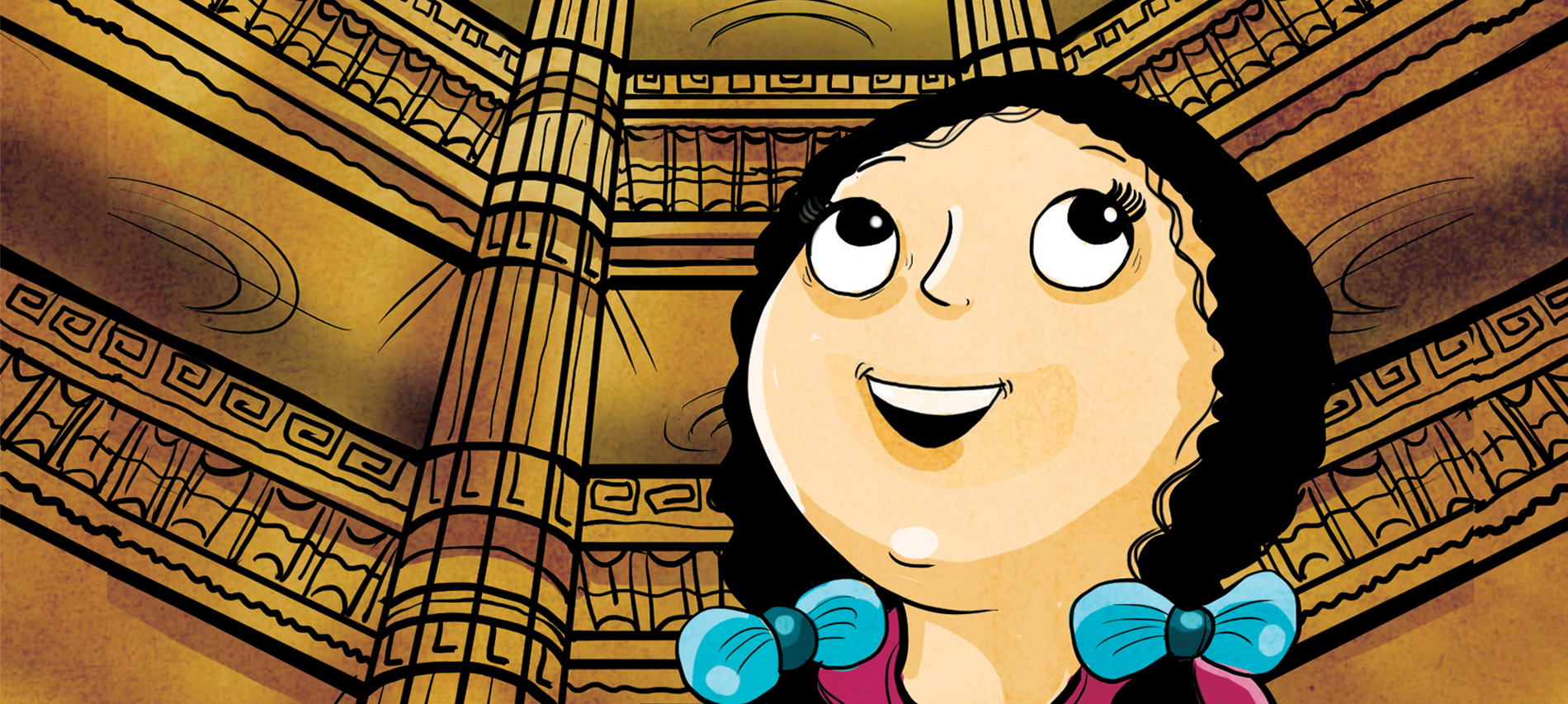
Whether it’s the concrete jungles in cities or the fresh, clean air in villages, a world of fantasy opens up if we look for one. Sudha Murty’s magical collection of stories, where little Nooni from the city goes exploring the village where her grandparents stay, opens up a pandora’s box of wonderful memories of our childhoods!
Read this excerpt of a story from ‘The Magic of the Lost Temple’, about a king, women from the moon, a stepwell and the unfortunate downfall of his kingdom.
‘Ajji, tell me a story,’ Nooni insisted once the lights were off.
‘Nooni, aren’t you tired? I’ll tell you a story tomorrow.’
‘No, Ajji, I want to hear a story now. Ever since I have come to the village, you haven’t told me even one story,’ Nooni persisted.
Ajji got up and pulled the curtains aside. It was a full moon night and the moonlight came through the window into the room. ‘It’s as if a magic lamp has been switched on,’ thought Nooni.
‘I don’t see such bright moonlight in the city or in our house, Ajji. How has the moon lit the entire bedroom?’
‘You live in an apartment. Your bedroom faces another apartment complex and all the streetlights are on in the night. Then how will you see the effect of natural light in the city? Here, we have very few streetlights and there aren’t any highrise buildings. My room faces the garden where there’s open space and windows for the light to come in easily.’
‘Ah, now I understand, Ajji! Tell me a nice story about the moonlight then. I know you have a story for every occasion,’ grinned Nooni. Ajji smiled and said, ‘Of course. What I’m about to tell you happened a thousand years ago in this very village.
‘Long, long ago, there lived a handsome king named Somanayaka. He was brave, kind, courageous and very generous. His kingdom lay in the delta between the rivers Varada and Tungabhadra. There was a thick forest around the area and many wild animals lived there. Sometimes, they would enter villages and scare the people, destroy the crops and eat the cattle. After a number of such complaints and no improvement in the situation, the king decided to hunt these wild beasts himself. Two days later, he went hunting on his horse with his soldiers by his side. Soon, he had left his soldiers far behind and lost his way.
‘The day passed and turned into late evening. The king’s horse became tired and Somanayaka
tied him to a tree and went in search of food. He collected some fruits, ate them and brought some grass back for his horse. Suddenly, he felt very sleepy. It was a full moon night and the breeze was cool and pleasant. Somanayaka noticed a flat rock behind some bushes and decided to rest. Within minutes, he was asleep. Suddenly, he was awakened by the sound of girls chatting. He opened his eyes and glanced at the sky. To his surprise, there was a ladder coming down from the moon which joined some stairs that went all the way from the moon to the Earth. A group of beautiful women were coming down the steps. They all wore white saris and pearl ornaments and carried golden pots at their waists. He squatted near the bushes and counted them—they were seven in all. He wondered what they would do next.
‘As soon as they reached the Earth, the oldest woman touched the ground with a stick and he saw the ground give way and open up. All of them slowly disappeared inside the ground. Somanayaka was not scared but he was desperate to know where they had gone. Carefully, he came out of the bushes and peeped. Then he felt a little bolder and walked towards the big hole in the ground. He was surprised to find himself looking into an enchanting stepwell!’
‘Ajji, what is a stepwell?’ Nooni asked.
‘It is a well that has steps inside so that it is easy to get to the bottom. There are many stepwells in our country. In fact, some of them are very famous. Remember that picture of the well you sent me from your trip last year to Abhaneri near Jaipur?’
‘Oh, that’s true. There was a huge well there with almost three thousand steps. Are you talking about something similar?’
‘Yes, I haven’t seen Abhaneri myself and the one that Somanayaka saw was a small stepwell. It had only twenty-one steps. But there were seven small exquisitely carved Shiva temples inside the well. Somanayaka looked down and observed the stunning carvings and pillars and the beautiful angelic women. He enjoyed seeing them play hideand-seek for some time. Then they filled their pots with water, poured it on an idol of Lord Shiva and performed a puja. The whole process took several hours. By then, the sky started getting lighter as it was daybreak and the moon started fading. Somanayaka hid behind the bushes again. Soon, the women climbed the steps and went back to the moon. The steps disappeared and the ground closed up.
‘Somanayaka sat in the bushes for a long time. Suddenly, he felt confused. Had it been real or had it all been a figment of his imagination? Did he really see the ground open up and a well underneath? He stood up and came out of the bushes. He searched everywhere for a sign of the well but with no luck. There was not a single remnant of the incident he thought he saw. “I must have been so tired that I slept off . . . and had such an elaborate dream that I thought that it was real,” he said to himself. He turned and started walking back to his horse. Suddenly he saw something sparkling on the ground—it was a broken pearl necklace. Somanayaka collected all the pearls and realized that it hadn’t been a dream after all.
‘He tried to recall if he had ever heard about a stepwell in his kingdom but nothing came to mind. By then one of his followers had traced him and come to his rescue. But Somanayaka told him, “Go back and inform everybody that I am safe. I will stay here for a few days. Give me your food ration before you leave. I know the route and I will come back on my own.”
‘The next day, he waited near the bushes again, but nothing happened. He waited for one more day and still, the women did not appear. After another uneventful day, he thought of other possibilities, “Maybe these beautiful maidens come only on full moon days.”
‘Keeping that in mind, he got on his horse and went back to the capital. He met the royal astrologer and found out the date of the next full moon night.
‘When the night came, he waited behind the bushes and this time, he was not surprised when the ladder came down from the moon. He knew the whole process by now and looked forward to the puja of Lord Shiva. Somanayaka was an ardent devotee of Lord Shiva. After the puja, he decided to take a chance and meet the maidens. Boldly, he came forward and stood near the stepwell. “Beautiful maidens, please don’t be alarmed. Here’s my pranaam to all of you.” He folded his hands together and continued, “You have chosen our land for your worship of Lord Shiva and I am really grateful to you. I have noticed that when you go back, the ground closes on its own. May I earnestly request you not to make the well disappear? Please keep it open so that everyone can worship Lord Shiva in this beautiful ambience.”
‘The women looked up at him in fright. It was a rude shock for them to see Somanayaka there and they gathered closely together. Then the eldest maiden took the lead and said, “Who are you? Why have you been observing us without our knowledge? This stepwell was built by a great architect of the celestial heavens. It can’t be used by the selfish people of Earth.”
‘Somanayaka bowed his head and said, “My sisters, I am Somanayaka, the ruler of this land. I know that this holy stepwell couldn’t have been made by human beings. But Lord Shiva is fond of all his devotees, isn’t he? Please grant me my wish. If you have any conditions, please tell me and I will fulfill them.”
‘The maidens spoke to each other in hushed whispers. Then the eldest one said, “We are impressed by your humility and your prayer. The water here tastes like nectar. That is Earth’s specialty. Even though we live in the celestial world, the water there isn’t as tasty as what we get here. So, we come every full moon night not to take a bath or spoil the well but to just drink and enjoy ourselves.
As long as you promise me that you will not dirty the premises and that this water will be used only for drinking, we will leave it as it is. People of your land can come and worship and take the water but before entering the stepwell they must take a bath and wash their feet. If your people do not follow the rules, the well will disappear along with your kingdom. Think about it. It is a big price to pay. Are you ready to take the risk of losing your kingdom?”
‘Somanayaka thought for a minute and said confidently, “A source of water is a source of life. I will ensure that all your conditions are taken care of.”
‘The maiden continued, “We have one more condition. On full moon nights, the temple must remain closed so that we can continue our visits here. Nobody must be allowed inside to observe us or talk to us. We want our privacy to be protected.”
‘Somanayaka agreed. He stepped forward and gave back the necklace to the maiden. He said gently, “I think this belongs to one of you.”
‘The women were very happy with his honesty. They drank the water, climbed the steps and vanished. The stepwell remained where it was.
‘Somanayaka went to the nearest water body to have a bath and then he entered the stepwell for the first time. It was much more beautiful from up close. When he reached the bottom, he cupped his hands and drank a sip of water. It was very tasty. He felt that it was better than nectar, which he had never drunk before anyway.
‘The next day, he came back to the kingdom and proclaimed, “There exists a beautiful stepwell of Lord Shiva in our kingdom. People who would like to go there and perform puja can do so but on one condition—they have to bathe and cleanse themselves before entering the stepwell. The water there will be used for no other purpose except for drinking. Everyone can carry away one pot of water and no more. These rules are to be strictly followed and there will be no exceptions. The temple will remain closed on full moon nights and nobody will be allowed inside.”
‘Somanayaka wanted to make his people comfortable so he ensured that there was another water body for them near the stepwell. There, people could bathe, change their clothes and then enter the stepwell. The news spread like wildfire. People came from all over the kingdom to see the architectural masterpiece and pay their respects to Lord Shiva. The well remained open on all days except on full moon nights.
‘Days passed and word spread. People started coming from far and wide and from different lands. A small tourist spot was set up near the stepwell and named Somanahalli.
‘Despite the increase in the number of visitors, the well was kept clean and guards monitored the premises around the clock.
‘After some years, Somanayaka married a lovely lady—Queen Ratnavati. She was beautiful and courageous but headstrong. Somanayaka told her about the way the well had been discovered and how the celestial maidens had agreed to his request. Ratnavati wanted to know whether the maidens were more beautiful than her or not but she knew that she would never get a chance to meet them because they came only on full moon nights when no one was allowed inside the temple.
‘One day, the king had to go to an important event in the neighbouring kingdom. Ratnavati told her husband, “I am not feeling very well. I think that I will stay back in the palace.”
‘The naive king believed her and departed for the event. As soon as he left, Ratnavati called for her chariot and headed towards the stepwell. She thought to herself, “I am the queen of this land. Every inch of it belongs to me. So what if the well is a gift of the maidens? The well exists on my land and I am the legal owner. My husband doesn’t want to take a risk and obeys those maidens’ words without question. I want to show him that nothing will happen if we break their rules.”
‘When the charioteers reached Somanahalli, the officers stopped her and requested, “O Queen. Please don’t visit the temple today. It is a full moon night and as per the government rules, no one is allowed to go inside. Why don’t you stay in the guest house tonight? You can visit the well tomorrow.”
‘Ratnavati did not listen to them. “How dare you stop me? I am the queen. Everything is under my control.” ‘Without another word, she barged into the stepwell. Since it was a full moon night, the entire complex was shining like silver. The water was shimmering and looked irresistible. She went into the water to bathe. Suddenly, she heard a noise. When she turned, she saw seven women standing on the steps. Though her heart told her that they were more beautiful than her, her ego did not allow her to accept the truth. When the maidens saw Queen Ratnavati in the water, they became upset. “Who are you? How dare you come here today? Has King Somanayaka forgotten our conditions?”
‘Arrogantly, Ratnavati replied, “I am his queen. This land belongs to us and I make the rules—you can come the day I want you to visit. You can’t tell me when I can and can’t come here. The water here is the way it is because of the Earth and not because of anything you did.”
‘“Who are you to talk to us like this? You have not only disobeyed our rules but you have also dirtied the water. Once someone has bathed in this water, no one can drink it again.”
‘The women turned to leave. While going up the steps back to the moon, the eldest maiden said, “Rani Ratnavati, you are going to regret this.”
‘They climbed the ladder and vanished. Queen Ratnavati tried to get out of the water to go behind them and talk to them but all her efforts were in vain.
‘Suddenly, there was thunder and lightning, followed by a huge gust of wind and rain. Ratnavati quickly climbed up the steps of the well. The earth quaked and within a few seconds, the well closed.
‘The queen was scared. She had been warned of the consequences—she was going to lose her kingdom! She cried to herself and said, “I should not have done this. I have polluted the water and disobeyed my husband. I have destroyed my kingdom because of my arrogance.”
‘Somanayaka never came back from his travel and Ratnavati went mad crying in the streets. After a few days, nobody heard from her again. The kingdom was eventually abandoned. It was sad that the queen, who should have been the protector of her kingdom, had destroyed a precious water source, disobeyed royal orders, broke a promise and caused such a catastrophe.
‘People say that our village, Somanahalli, is near the location of the stepwell. This story has been passed down from generation to generation but no one has actually seen the well.’
Ajji finished the story. Nooni looked at the moon with sleepy eyes, waiting for the maidens to appear.
More such enchanting stories await you and your little one with Sudha Murty’s ‘The Magic of the Lost Temple’.
And don’t forget to pre-order our favourite storyteller’s newest collection of magical stories!

Tag: Penguin India
6 Things You Didn’t Know About The Bangalore Underbelly

Jyoti Shelar explores the story of local goons turned powerful dons of India’s Garden City in her newly released The Bhais of Bengaluru. From Muthappa Rai to Agni Shreedar, Shelar researches the history of the influential figures of Bengaluru’s underbelly.
Here are a few things you might not have known about the dark underworld of Bengaluru:


Did you know all of these?

The Ministry of Utmost Happiness with Arundhati Roy — Opening Day at Penguin Fever 2017

“One of the great risks of success and fame in the arts is that you could become domesticated or domesticate yourself by wanting to replicate or…reward people’s expectations,” — said the inimitable Arundhati Roy in her lucid voice, enrapturing a packed auditorium as she opened this year’s Penguin Fever, a special edition of the Spring Fever, celebrating 30 years of Penguin in India.
As the autumn chill in the air slowly descended upon an enthusiastic audience queueing up at the gates of the India Habitat Centre in Delhi on October 26, the hall inside warmed up to the lilting voice of Arundhati Roy reading pages from The Ministry of Utmost Happiness.
In conversation with professor and documentary filmmaker, Shohini Ghosh, Roy reflected upon her journey through the years as an author and more.

“The God of Small Things blew my life apart, in good and bad ways,” she said, on being asked the question of her 20-year-long sabbatical from fiction writing.
This led Ghosh to ask the writer about the connections between her two works of fiction, especially the curious question — “Where do old birds go to die?” that took off from the pages of The God of Small Things two decades ago and flew all the way into the pages of The Ministry of Utmost Happiness. Some connections were deliberate, while some others were not, came the reply.

The quaint, haunting world of the Jannat guest house, as built by her character Anjum in the middle of a graveyard, (in The Ministry of Utmost Happiness) houses “social, sexual and political dissidents”, Ghosh remarked. She went on to ask what inspired the writer to sketch these wonderfully unique characters, only to interrupt her own question and ask “Are they around?” to a delighted Arundhati Roy and an amused audience.
“They are here, can’t you see them? They are always around,” quipped Roy as she continued, “They moved in and they are not moving out. They are not going anywhere.”
The author revealed how her early days as a student (and a topper) of architecture had a rather heavy influence on her love for structuring a story. She went on to say, “One of the joys of writing fiction for me, is the joy of being able to describe landscape.” This explains her lavish descriptions of the lands her characters lived in, evoking sparkling images of flowing rivers and animals that can think out loud.

Roy dwelled upon how her stories may have initially seemed to her like cities — concrete, urban jungles, but in reality, they turned out to be “underwater cities”.
On writing, the author said that she does not approve of labels being put on them — “I want to write something that I can’t describe. I want to write something on the air we breathe,” she insisted.

As the floor was opened for the eager, enthralled audience, questions one and many came in from every corner of the auditorium.
To one such query about how she decided to zero down on certain “issues” while writing The Ministry of Utmost Happiness, Roy said she refuses to treat anything as an “issue”.
“It’s a very impersonal thing,” she remarked. To her, “it’s a way of seeing the world,” it’s about the “air we breathe”.
The evening seemed to have passed in the blink of an eye as Roy, on a closing note, left her audience to ponder over a few words — “A novel is a universe I create for a person I love to walk through. I never write for one person.”
As she read a few more lines from her newest book and drew the curtains for the evening, Arundhati Roy’s session set the perfect premise for the festival of words to prepare for the coming five days of Penguin Fever, in the heart of the capital.
5 ‘Consolidators’ You Should Know About

Prince Mathews Thomas is a renowned journalist who has written various reputed national dailies such as Economic Times, Business Standard, Dow Jones Newswires and Forbes India. In his book The Consolidators he tells the success stories of seven second-generation who turned around the companies they inherited from their fathers with their imagination, foresight, and gumption.
Here are five success stories from the book:
Ajay Bijli, Chairman and Managing Director of PVR Ltd.

Mithun Chittilappily, Managing Director of V-Guard Industries

Rituraj Sinha, Chief Operating Officer at SIS

Vikas Oberoi, Chairman and Managing Director of Oberoi Realty Ltd.

Priya Paul, Chairperson of Apeejay Surrendra Park Hotels

Aren’t these stories inspiring?

5 Quotes that Show Indira Gandhi was the Iron Lady of India
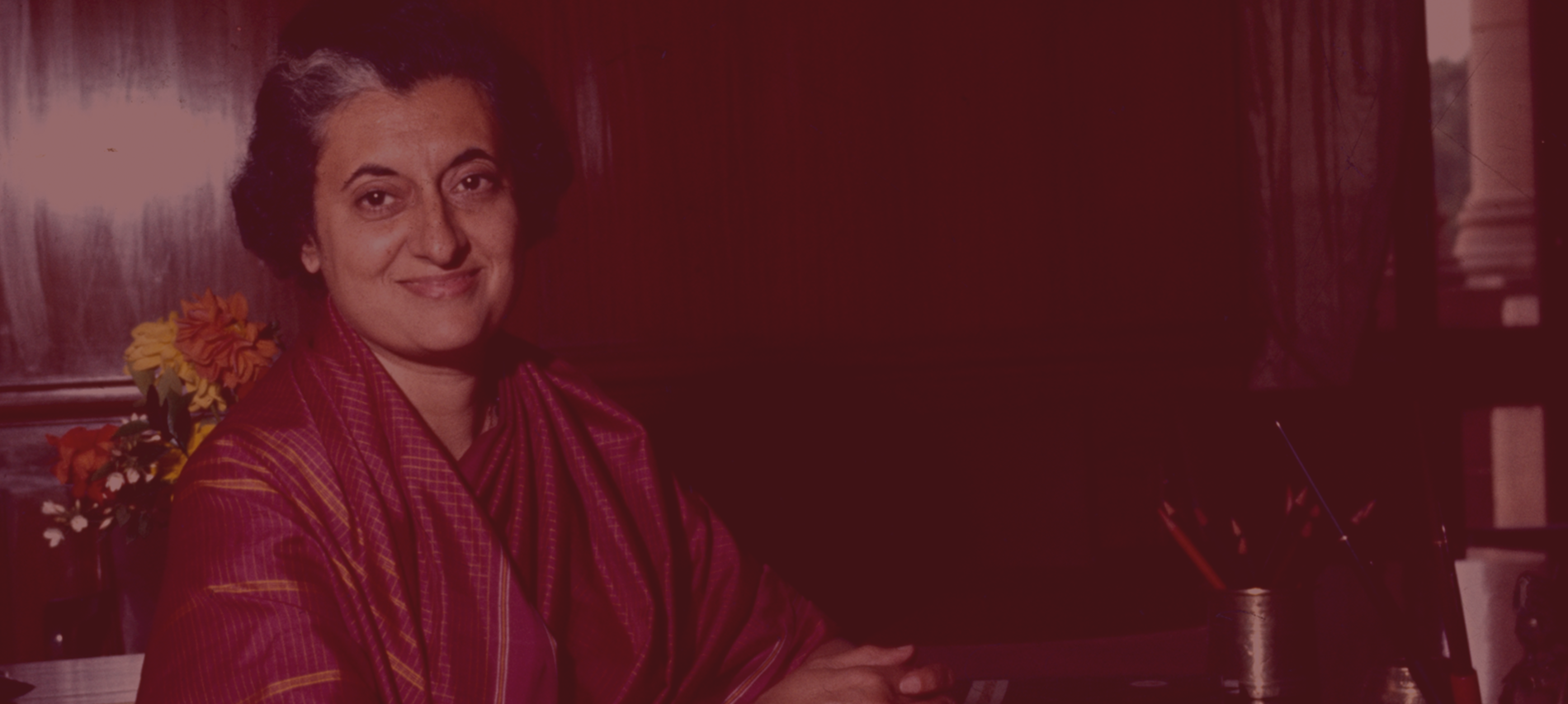
Indira Gandhi is not only remembered as the only woman prime minister of the country but also as a political leader with nerves of steel. She broke the conventional, democratic ruling method that her family had been using and adopted a somewhat authoritarian way of ruling the nation.
Nayantara Sahgal in her book Indira Gandhi: Tryst with Power answers the questions everyone ponders upon about her rule.
Being Mrs Gandhi’s cousin, Sahgal articulately talks about her individualized style of functioning in politics and the changes the country went through during her rule.
Here are five quotes that show why Mrs Gandhi was called the Iron Lady of India:


Read more about Indira Gandhi’s political regime in Nayantara Sahgal’s Indira Gandhi: Tryst with Power.

A Glimpse Into the Emotional Side of Indira Gandhi, An Excerpt from ‘Indira Gandhi: A Biography’

Indira Gandhi was the first female Prime Minister of India. While most of her life was dominated by politics, only a few knew Indira’s non-political persona.
Pupul Jayakar’s ‘Indira Gandhi: A biography’ seeks to uncover the many personalities that lay within Mrs Gandhi. The book also reveals the complex personality of Indira Gandhi—her thoughts and feelings, her hates and prejudices, her insights and her faults, her loves and emotional entanglements.
Here’s an excerpt which gives a glimpse into the emotional side of the late prime minister.
Motilal Nehru died in Lucknow in the early hours of 6 February 1930. His son Jawaharlal Nehru, released from jail a week earlier, in view of his father’s deteriorating condition, had, in desperation, moved his father from Allahabad to Lucknow where the medical facilities were
better. Motilal had been like an elder brother to Gandhiji and it was as part of the family that Gandhiji, released from detention by the British Government, hastened to see Motilal and accompanied him to Lucknow. He found Motilal’s face swollen beyond recognition, his body racked by asthma and his kidneys failing. The old patriarch died cradled in the love of his family and friends. He remained a nonbeliever to the end of his life; scorning priests and the recitation of mantras, he had joked with Gandhiji, challenging him to a race to heaven. He said if they were to die at the same time, the Mahatma would probably walk alone across the river of death, while he, Motilal, would speed across it in a motor-boat and shoot past the gates of heaven. Whether he would be allowed into heaven or not was a totally different matter. In a more serious mood he told Gandhiji, ‘I am going soon and I shall not be here to see Swaraj, but I know you have won it and will soon have it.’
On the night of Motilal’s death Jawaharlal was with him till midnight. Jawaharlal later told Gandhiji:
A very strange thing happened to me. Papa told me last
night that he had been taught the Gayatri Mantra in his
childhood, but he never cared to repeat it and thought he
had forgotten it completely long ago, but that night as he
lay in bed it all came back to him and he found himself
repeating it.
Motilal’s body, wrapped in the Congress flag, was brought from Lucknow to Anand Bhawan. He was cremated at the Sangam in Allahabad, at the point where the three rivers met. His ashes were cast into the rivers, to journey to the oceans. Vast mourning crowds accompanied the cortège. Gandhiji was present, so were Swaroop Rani, Vijayalakshmi, Krishna, Kamala and Indira.
Jawaharlal cried out in grief at the loss of his father, a mountain had crumbled; he was now head of the family, responsible for his mother and sisters. He resolved to make them feel that nothing had changed in the old home. The bond between father and son had matured beyond love into mutual respect and pride; a relationship that united them in a commonality of work though, perhaps, not of mind. Jawaharlal was in those early years an austere man of few needs,
Motilal, a man whose laughter filled the vast house, who could gather his extended family and friends in his embrace, savour abundance and give with a generosity of heart. He had a razor-sharp intellect and a joie de vivre seldom seen amongst Indians in the third decade of the twentieth century.
Indira had loved her grandfather with the intensity of a child. He had protected her, come to her aid when her parents rebuked her, listened to her tiny problems and laughed them away. He was the anchor in her insecure, chaotic world; the foundation stone that was always there; a presence so total that there was no space left to be alone or insecure. Alone, almost forgotten in Anand Bhawan, Indira wept, hidden behind a pillar. It was her first introduction to sorrow; her body was racked by an emotion with which she was not familiar.
Referring to her grandfather Motilal five decades later, Indira said, ‘With his death Anand Bhawan was silent. His resounding voice no longer echoed in the rooms or along the verandahs.’ She described his warmth and his fierce short-lived anger. Smiling at her memories, she said:
He always seemed to fill a room, although I now realize
he wasn’t really that tall, but at that time I thought he was
very tall and broad . . . and when he laughed the whole
house sort of shook and laughed with him. He was a
biform human being, both man and woman, with strength,
intellect and an abundance of feeling.
With a twinkle in her eye she went on to say that she felt that she was like him. Jawaharlal felt depleted. After his father’s death, he felt the need to renew himself, to lay down the complex political problems that surrounded him, to relax, to look at trees, meet people, to have a holiday. So he sailed with Kamala and Indira on the S.S. Cracovia to Ceylon (now Sri Lanka).

5 Reasons Why Margaret Atwood’s ‘The Handmaid’s Tale’ Resonates the Current Times

Margaret Atwood is one of the renowned names in the literary world. Some of her works include The Handmaid’s Tale (winner of both the Arthur C. Clarke Award for Science Fiction and the Governor-General’s Award, shortlisted for the Booker Prize and made in a major film) and The Robber Bride and Alias Grace.
Margaret Atwood wrote The Handmaid’s Tale while living in in West Berlin in 1984. The themes of the book reflected the sentiments associated with standing of the Berlin Wall. Although it has been more than three decades, the themes are still relevant.
Here are five quotes that depict how The Handmaid’s Tale is a powerful evocation of the present time:


Get your copy of Margaret Atwood’s poignant novel here.
Things You Didn’t Know About Angie Thomas

Angie Thomas is the author of The Hate U Give. It’s her debut novel, and she was first inspired to write it while still a senior in college after news that an unarmed young black man, Oscar Grant, had been shot in the back by police. A supporter of the #BlackLivesMatter movement, she was enraged by his killing and the way the media and authorities reported it. Through her writing, Angie wants to challenge the racism that is perpetuated by those in power
Here are some more things you didn’t know about the author.


Pick up your copy of The Hate U Give now.

6 Things You Didn’t Know About Dan Brown

Dan Brown is the bestselling author of many acclaimed novels. His works include masterpieces like Digital Fortress, Deception Point, Angels and Demons, The Da Vinci Code, The Lost Symbol and most recently, Inferno. Three of his Robert Langdon novels have been adapted for the screen by Ron Howard, starring Tom Hanks. They have all been international blockbusters.
Here are some of his things you should know about the renowned author.


Did you know all of these facts about the author?
Get your copy of Dan Brown’s latest novel Origin here.
The Beginning of an Adventure Like No Other: ‘Lost in Time: Ghatotkacha and the Game of Illusions’ — An Excerpt

We all love going on trips as soon as holiday season kicks in, don’t we? But have you ever been on a journey that ended with you travelling to another plane of reality, maybe one from the books you’ve read? Sounds impossible, doesn’t it?
Well what if we told you this happened?
Get ready for the gripping story of young Chintamani Dev Gupta who while on a birding camp is magically transported to an unknown world of improbable creatures. Things get stranger still when he meets the master of illusions, Ghatotkacha and his mother, the demoness Hidimba.
Read on to know what happens next!
I am Chintamani Dev Gupta, male, 4’11”, thirteen years of age. Almost fourteen. It won’t surprise anyone to know that my name was, at an early and vulnerable age, shortened to Chintu, then mutated to Chintu Pintu. It’s ignominy to have a name like Chintu Pintu, but it’s a cross I’ve learnt to bear. I feel like telling them—the sneerers—‘Man, you don’t know where I’ve been, you don’t know what I’ve seen!’
The story that will unfold in these pages has been recorded with all the memory megabytes at my disposal, but when you— one—me—travel through time, across time, the grey cells tend to seize up and short-circuit in transit.
But let me begin at the beginning. If there ever is a beginning, if time follows a straight line, follows a predictable geometrical pattern in its unfolding. Which I happen to know, from my incredible personal experiences, it does not.
Those of you (possibly in the minority) who have read Carl Sagan’s book Contact might appreciate wormholes and the ways to fool or get fooled by time. Whereas those of you (more hands up this time maybe) who are fans of Terry Pratchett, might remember that he said, ‘Stories of imagination tend to upset those without one.’
But I’ve nattered on enough. Let’s get to the flashback with Chintamani Dev Gupta (aka Chintu Pintu) off on an enforced holiday to the Sat Tal Birding camp. I remember it as though it were yesterday. My parents had just split up, even though they continued to be holed up in the same house. Mum’s lady lawyer practically camped on our living room sofa. Papa hadn’t shaved for several days. Things were bad. And to get me out of the way, I had been dispatched here, to an insect-infested field near the aforementioned Sat Tal Lake.
It’s not as though I was wildly interested in birds. I suspect it was just the most convenient way to pack me off, dumping me in ornithology heaven. So there I was, amidst the tweets and the cheeps and the trills and twitters of birdsong, dreaming of football and butter chicken and the joys of home.
Can’t wait to find out more? Don’t forget to be the first one to grab your copy of this magical tale of time-travel, unusual friendships and a whole lot of adventure!
