



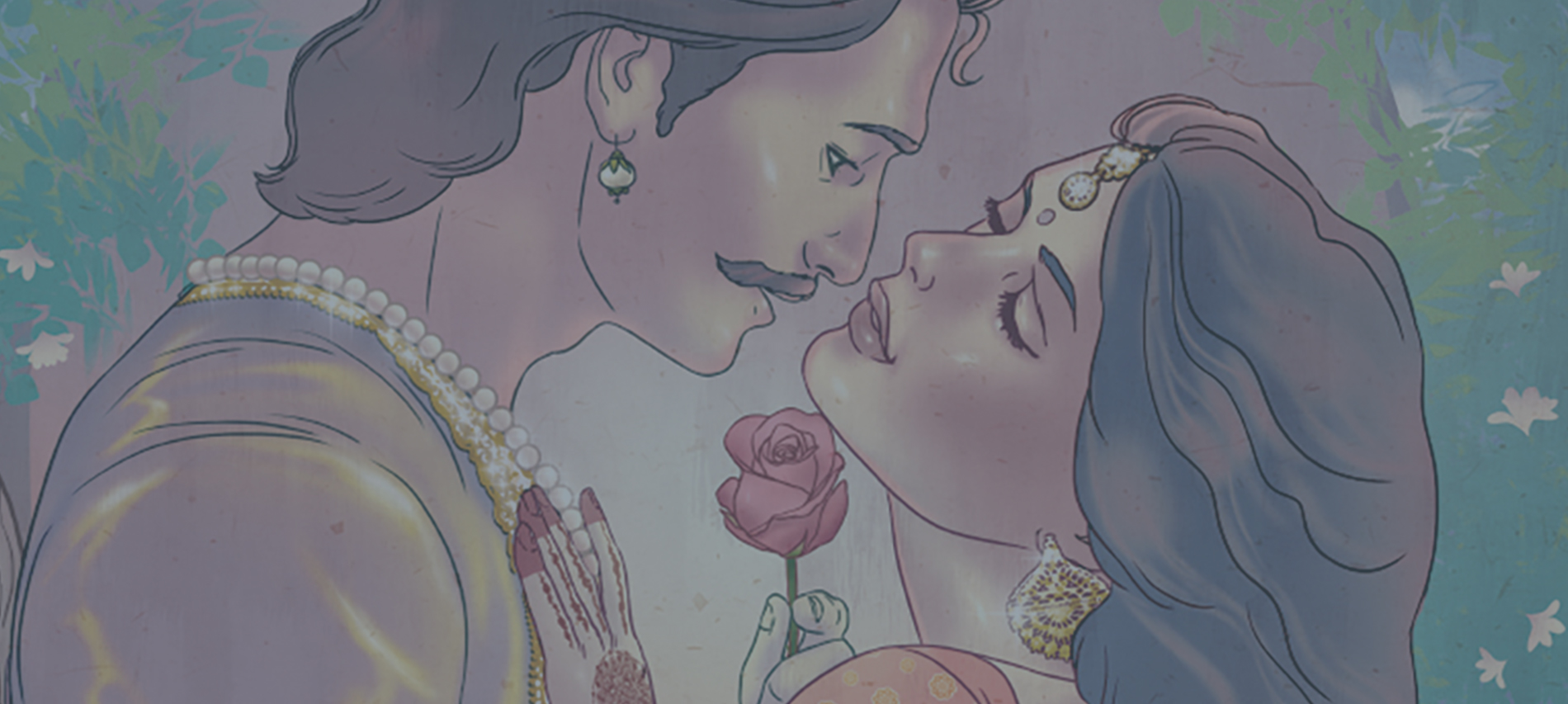
Usha Narayanan, author of Prem Purana, has donned many hats, before becoming a successful full-time author. In her glorious career, she has dabbled with genres like thriller and romance, before turning to mythology. Her works Pradyumna: Son of Krishna and The Secret of God’s Son have been praised as ‘Indian mythology at its fiercest and finest’.
Her latest book, Prem Purana is about stories of love and extraordinary devotion found in Hindu mythology. On the launch of the book we asked her what about the mythological stories attracted her to write about them.
Here’s what she had to say.
The idea of writing mythological love stories was born during a conversation with my editor Vaishali Mathur at the Jaipur Literature Festival when she suggested that I should combine my strengths in writing mythology and romance. At that point, I was busy with The Secret of God’s Son and it was only after it was completed that I could think seriously think about this. I knew that our epics and Puranas focused more on the battle between good and evil, with heroic gods and fearsome demons confronting one another. Only a few love stories were widely known, such as the one of Kama shooting his arrow of love at ascetic Shiva, or of Arjuna winning Draupadi’s hand at her swayamvara.
I began my quest by re-reading all the ancient lore with an eye to discovering tales of the heart. As always, when writing mythological fiction, I wished to focus on untold stories, using my imagination to bring alive minor characters or lesser-known aspects of major ones. The first character who caught my eye was Ganesha. We think of him as the lovable elephant-headed god with a fondness for modakas. But who did he marry? People in the south of India swear that he is single, but others state vociferously that he is married. The images in temples show him either alone or with a wife or two. What are their names? Some say Siddhi and Riddhi, while others think their names are Siddhi and Buddhi. That was enough intrigue to stimulate my mind!
Another interesting layer to the story is the idea that Buddhi, Siddhi and Riddhi represent intellect, spiritual power and prosperity. As their names are merely mentioned in passing in most Puranas, I could give full rein to my imagination in portraying them. I endowed the three with distinct characteristics and showed Ganesha wooing them in different ways, according to their particular likes and dislikes. My Riddhi is sprightly, Buddhi is silent and deep, and Siddhi is fierce and opposed to the very idea of marriage! Their stories span three realms and four yugas, shedding light on many engaging aspects of Ganesha, the first among the gods. To add to the appeal, I discovered that in Bengal, during Durga Puja, Ganesha even has a banana bride!
I think readers will enjoy seeing Gajamukha in a refreshing new light in Ganesha’s Brides, the first of the three stories in Prem Purana.
“Siddhi watched as more and more arrows struck Ganesha, causing blood to flow like a flood. Was he ready to meet death rather than forsake his promise to her? Would he sacrifice everything for the sake of his love?”
**
For the second story, Mandodari, my inspiration came from the Ramayana. Ravana was Brahma’s great grandson on his father’s side and an asura prince on his mother’s. Choosing to follow the asura path, he pillaged heaven and earth, ravished women and abducted Rama’s wife Sita. What I found of interest was not his war with Rama, but his relationship with his wife Mandodari. How did she react to all this? Did she protest or did she submit silently to his actions? What was her background? Did the rakshasa love her? And the most exciting question of all―did Mandodari come face to face with Sita, the woman she regarded as the instrument of doom that would bring down Lanka?
I found no answers in the commonly available texts where Mandodari features in a mere two or three scenes. Fortunately, however, there are many Ramayana versions available. I followed the uncommon trails, used my imagination and fleshed out the queen’s character, placing her emotions at the centre of the narrative. The story also reveals startling new facets of Ravana’s character and motivations. I think Mandodari, with all its twists and turns, will be riveting and revelatory to readers.
“‘Snatching a woman by force or stealth is not an act of valour, Ravana. She is not an object of lust or a means to settle scores with your enemy,’ said Mandodari, her voice loud and clear. She would speak the truth regardless of consequences. It was a risk she had to take for Ravana and her people.”
**
After delving into the lives of a merry god and a dire rakshasa, it was time to move to the human plane, with the story of King Nala and Princess Damayanti. She turned down the gods who courted her at her swayamvara and chose Nala as her husband. Though she chose love over immortality, Nala was driven by his own demons and abandoned her in a dangerous forest. Damayanti struggled to survive the perils that confronted her at every turn, but forged forward regardless. She did not give up hope and devised various stratagems to reclaim her happiness.
I was fascinated by her strength and also by the magical swan that plays a key role as the messenger of love. I named the swan Gagana, meaning sky or heaven, and created a charming and audacious companion to Damayanti. The Kali demon, who plays a major role in my previous books, Pradyumna: Son of Krishna and The Secret of God’s Son, is the enemy that Nala and his queen must confront. How can a mortal pair combat the power of the demon who reigns over a dark yuga that signals the end of the world? Love, loss, hope and despair form the chequered background of this poetic tale.
“‘Majestic Ashoka, whose name signifies one who destroys grief . . . Free me from pain and unite me once more with my Nala!’ cried Damayanti, sinking to her knees under a soaring Ashoka tree. Alas, the tree made no answer and all she could hear was the wind rustling among the leaves.”
**
A major part of my excitement in writing these stories came from the opportunity to focus attention on the women in our epics who are often sidelined. We often find that a woman is regarded as a prize to be won, someone who is forced to watch quietly while her husband makes disastrous decisions. However, the heroines in Prem Purana are central to the action. They are strong, independent thinkers who inspire the males in their lives―god, asura or king―to do the right thing and live up to their responsibilities.
I hope readers enjoy reading these tales which provide a good mix of fervour and fury, heroism and heartbreak, set against a spectacular backdrop spanning heaven and earth.

Tag: Penguin India
An Unresolved History: A Legacy Of Partition
By Urvashi Butalia
It is close on two decades now that I have been researching and writing on the human histories of Partition. As story upon story unfolds, and terrible, painful histories begin to emerge, it does not, contrary to popular wisdom, become any easier to deal with them.
One of the many grave consequences of Partition—and one which remains all the more prevalent today—has been the ease with which so many Indians and Pakistanis fall into a pattern of mutual demonisation, so that virtually everything, whether it relates to bombs, or to violence or to foreign relations or to territorial claims, can be laid at the door of the ‘other’. If it was not so serious, it would be laughable: imagine two mature, intelligent (if one can use those terms for nation states) countries in the twenty first century placing virtually every failure at the door of the ‘other’. Indeed so powerful is the jingoism, and so deep the suspicion, that attempts to move out of that are seldom successful.
The story below provides an illustration of this.
I once received a letter from Pakistan, sent by a young man called Tanveer Ahmed, who had made it his mission in life to bring his grandmother, originally from Kashmir, to Indian Kashmir to meet her siblings, and he wrote to ask if I could help in getting her a visa.
His letter started by recounting the facts of his story. They are as follows:
- I have been trying to re-unite my maternal grandmother with her siblings since 1989, having met them that year (They live about 90kms apart, divided by the LOC since October 1947)
- After objecting for many years, my maternal grandfather finally agreed to allow me to seek an Indian visa for my maternal grandmother after learning of the death of her younger brother. He even expressed interest himself in visiting her remaining family members.
- Being a British citizen (I have lived in the UK since the age of 4) it was obvious that I would seek my Indian visa from London (I have been to India twice before—1989 and 1993). After meeting the concerned Visa Officer and outlining my reason for travel, he stipulated that I should request a fax from my relations in India to verify our relationship. After confirming that to be the only stipulation, I duly received a fax from my Indian uncle in Rajauri and presented it to the visa officer. He, in turn, expressed that he found it impossible to believe that Hindus and Muslims could be related and insisted that I re-apply for my Indian visa from the IHC in Islamabad. He was at pains to insist that IHC (Islamabad) would merely request an NOC from IHC (London) and that I would promptly receive my visa within a matter of days. He even gave me his personal phone number in case of any problem with IHC (Islamabad). On his persistence, I felt I had no option but to trust him on his word despite my scepticism.
- When I applied in Islamabad, I was initially told to check after a few days, then a couple of months, then I was told that my case was in the Indian Home Ministry pending approval. After a few months, I was informed that the issue could take up to two or two and a half years.
- I also applied for the LOC crossing in November 2005 only to learn a few months ago that people applying after me have been and come back.
Tanveer wrote in desperation, anxious to find a way of getting his grandmother to Indian Kashmir to meet with her relatives. Concerned that both her age and her heart condition would make it increasingly difficult for her to travel, he gave up his job in London to come to Pakistan and devote all his energy to achieving the goal he had set himself. To him, getting his grandmother to Indian Kashmir was not only a personal mission—she was the one who had brought him up as a child—but also a way of contributing to the lessening of tension between India and Pakistan. He saw visits to and reunions with relatives across borders as one way of doing so. As he said:
My personal and professional experience of life equips me well to make a positive and constructive input into Indo-Pak Relations. It’s a real pity that neither country has been able to read that about me thus far. I completed a cycle ride from Torkhem (Pak-Afghan border NWFP) to Wagah (PAk-Indian border Punjab) in the sweltering heat recently to display my seriousness for peace between the two countries. I aim to continue this cycle ride from Attari to Kolkatta as soon as my grandmother has been re-united with her family.
Despite his best efforts Tanveer Ahmed’s labours continued in vain, with little hope of a visa being granted for his grandmother to travel to India. With some help from him, I was able to explore this story further and to meet with his grandfather in England, and as the story unfolded, other aspects became clear.
His grandfather was among the many Pathans, men who came to Kashmir in October of 1947 as part of what has come to be known as the raiders’ attack. A little over sixteen at the time, Tanveer’s grandfather said he knew very little about why they went to Kashmir, but that as a group of young boys, they found the whole enterprise to be something of an adventure. At some point they came across a group of young girls who were running away from the violence, in search of safety. The boys divided up the girls between them, and Tanveer’s grandfather married the girl who came to ‘his share’.
At the time, the assumption was that her family had all been killed. She converted to Islam and stayed on with her husband in Pakistan-administered Kashmir, believing all the while that everyone else in her family was dead. After some years, her husband moved to England, and she stayed behind, and it was a chance encounter with a relative of hers in England—a distant cousin—that led her husband to the discovery that some members of her immediate family had survived and were still living in India-administered Kashmir. And among them was her brother.
Keen to go back to what she still thought of as her home, Tanveer’s grandmother began to focus all her energy—as so many Partition survivors do—on meeting her family again. But her husband, fearful of this new element in their lives, was not at first willing to let her go. Eventually he agreed, but at that stage, it was bureaucracy and the political standoffs between the two countries that continued to work against this family.
As with so many Partition stories, this one too remains unfinished in its telling. Many years later I heard from Tanveer that a visa had finally been granted and his grandmother did finally manage to go to her family home across the border. What we do not know is what that visit meant to her – did it finally resolve something for her? Put a closure on a history that had so far remained unfinished, perhaps incomplete? And what did this search mean for Tanveer, born after Partition, with no direct memory of it, but with its constant presence in his life? These are questions to which we’re not likely to find satisfactory answers. These are questions that still do not easily enter the histories of our countries for the tension between history and memory prevents us from seeing how they can so fruitfully overlap and enrich each other.
This story is in no way adequate to even begin to understand the complex and multiple legacies of Partition that stretch their long arm into the present of India and Pakistan and that still influence the ways in which both nations and indeed their peoples relate to each other. There are not many countries in the world where, after seventy years, the divide is still so deep politically, that any contact is difficult, sometimes, as in Tanveer’s family’s case, virtually impossible, and looked upon with suspicion. No matter that travel restrictions have eased in the last several years but there is still the very real fear that the moment things go wrong in the India-Pakistan equation, the first thing to be affected will be the issuing of visas. Traumatic histories leave many scars that take several generations to heal, and India and Pakistan are no stranger to these, but the opening up of contact, the easing of travel barriers, the issuing of visas—these things signal a return to the ‘normal’ behaviour that is so necessary for nation-states to own, regardless of how terrible their pasts have been.
AUTHOR BIO:
Urvashi Butalia is a publisher and writer based in Delhi. She is co founder of Kali for Women, India’s first feminist publishing house and now runs Zubaan, an imprint of Kali. She has written and published widely on a range of issues. Among her published works are a co-edited volume, Women and the Hindu Right: A Collection of Essays, Speaking Peace: Women’s Voices from Kashmir and the award winning history of Partition: The Other Side of Silence: Voices from the Partition of India which has been translated into eleven languages. (Urdu, Hindi, Malayalam, Tamil, Assamese, Marathi and French, German, Bahasa, Japanese, Korean)
10 Things You Should Know About Akash Verma

Akash Verma is a man of many talents. Not only is he a bestselling author but also an established entrepreneur. His profile lists him as the co-founder of two start-up companies before which he had also dabbled various roles in major corporations like Coca-Cola, Big FM and Red FM.
Akash is back with his fourth novel, You Never Know: Sometimes Love Can Drag You Through Hell…, a romance thriller which will keep you at the edge of your seat till the last page.
Here are a few things facts about the bestselling author.
Early beginnings!

Master of many talents

Woah!

It’s all in the genes.

Relate!

Quite a quirk that is…

The next time you want some gossip about the tinsel town, you know whom to turn to.

Wow!

Aww!

How many of these facts did you already know about the author?

Just Before We Set Off For Earth — 'Earthward Bound'
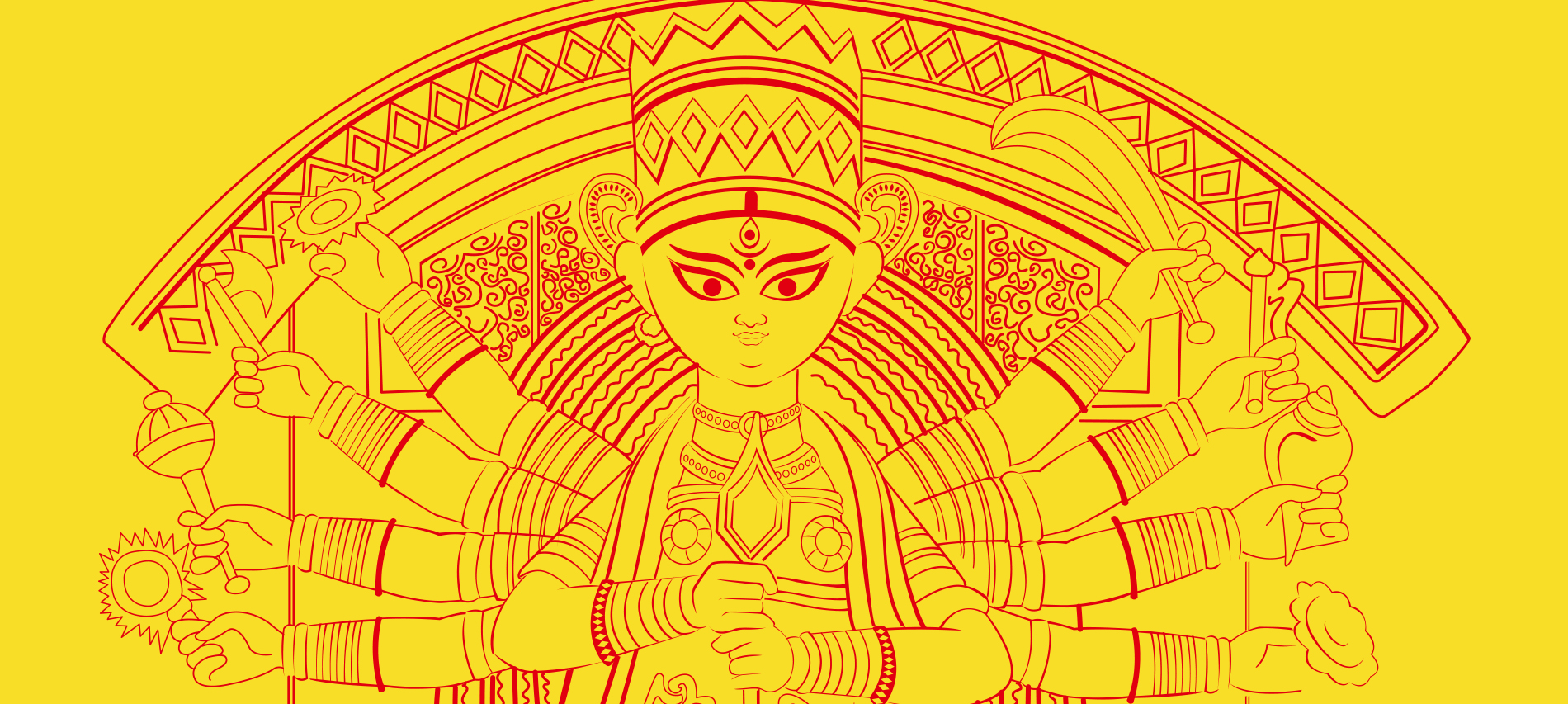
As one recovers from the heavy hearts left behind after a brilliant week of Durga Puja fun and festivities, here’s a little throwback with a short story, ‘Earthward Bound’, by writer Nayanika Mahtani, on what happens in Goddess Durga’s household just before she descends on earth with her children, ushering in a joyful autumn!
‘Come on kids, get ready – we’re off on a little journey,’ said Goddess Durga. Her four children Lakshmi, Saraswati, Kartikeya and Ganesha were busy having a snowball fight in the mountains of Kailash.
‘Where are we headed, Ma?’ asked Ganesha.
‘To Earth of course, silly!’ said Saraswati.
‘Have you forgotten – we go every year when Ma is invited by her devotees?’ said Lakshmi.
‘I knew that – obvio!’ mumbled Ganesha.
‘Yup, he would never forget the sweets at Puja,’ piped in Kartikeya.
‘Could you four please stop squabbling – we need to get there in time!’ said Ma Durga. ‘Oh, quick check – have I taken everything?’
‘Hmm, let’s see Ma,’ said Saraswati. ‘Have you got Vishnu’s discus, Shiva’s trident, Varuna’s conch and noose, Agni’s flaming dart, Vayu’s bow, Surya’s quiver full of arrows, Yama’s sword and shield, Vishwakarma’s axe and armour and Indra’s thunderbolt?’
‘Whoa! That’s quite a handful – good thing you have so many hands, Ma!’ said Ganesha. ‘How come you get to keep all the weapons that the Gods gave you to fight Mahishasur – even though he is now long dead?’
‘Well, Mahishasur may be dead but evil lives on, Ganesha – and I always need to be ready to fight evil,’ replied Ma Durga.
‘Will we be riding on the lion given to you by Himavat?’ asked Lakshmi.
‘Of course!’ said Ma Durga. ‘Now as you know the Devi Paksha rituals start from Mahalaya, when we begin our journey to Earth. Who remembers what Mahalaya means?’
‘Ahem, I do!’ said Kartikeya, casting a sideways glance at Ganesha. ‘“Maha” means ‘big’, and “laya”, means ‘destruction’. It refers to the colossal war between the Devtas, Rishis and Asuras – where many Devtas and Rishis died at the hands of the Asuras. People on Earth consider Devtas and Rishis to be their forefathers. That’s why the ritual of Tarpan or Shraddh happens on Mahalaya, when prayers are offered in remembrance.’
‘Bah! Such a show-off!’ muttered Ganesha, whose mind was now feasting on the soon-to-be-had sandesh and laddoos.
‘Though the actual Puja starts from the sixth day, the Shashthi, when we five arrive on Earth,’ added Saraswati.
‘That’s right,’ said Ma Durga. ‘It begins with Bodhan, which marks the moment when I was given all the divine arms to rid the Earth of Mahishasur’s tyranny. On Shashti, my face is uncovered – to show that I have arrived on Earth. The next day is Saptami and it starts with a ritual called “Kola Bou”.’
“Ha ha! Kola Bou’s your wife, Ganesha!’ teased Lakshmi. ‘Such a pretty banana tree stalk, bathed and draped in a white sari with a red border and placed by your side!’
‘Tsk, don’t make him blush, Lakshmi!’ chided Ma Durga. ‘Actually it is not just a banana stalk that is bathed; nine plants are placed by my Ganesha after the bathing rituals. It’s called “Nabapatrika” puja – and these nine plants represent the nine forms of Shakti, of which you are one too, my Lakshmi.’
‘I feel a bit sidelined, to be honest,’ said Saraswati.
‘Come on! You get a day all to yourself to be worshipped,’ said Kartikeya.
‘Well, you get a day like that too, Kartikeya’ said Ma Durga. ‘Anyway, let’s not get sidetracked, kids! So then follows Ashtami which is considered the most auspicious day of Durga Puja – with its most significant ritual being the Sandhi Puja.’
‘Let me elaborate,’ said Kartikeya with a flourish. ‘Sandhikshan, when Sandhi Puja is done, falls between the last 24 minutes of Ashtami and the first 24 minutes of Navami. This is the exact time when the Asuras Chanda and Munda were slain by Ma.’
‘It for this reason I am also called Chamunda,’ said Ma Durga.
‘Aarrgh! Why doesn’t our family keep just one name for each of us?’ asked Ganesha. ‘I have such a hard time keeping track of all my names. It’s so tricky figuring out when I’m being called!’
Ma Durga smiled and carried on. ‘Then comes Dashami or Vijaya Dashami which is the day I killed Mahishasura – and freed the Earth of his torments. Vijaya Dashami is the last day of the puja.’
‘And it’s also when Ma’s idol is taken to a water body and immersed, denoting her journey back to Kailash,’ said Saraswati.
‘That’s right! Well done, all of you!’ said Ma Durga. ‘Now hold on tight – we’re about to take off!’
‘Have a safe journey, family,’ boomed a deep voice in the background. He watched Ma Durga and the children fly earthwards. Lord Shiva closed his eyes. ‘Ah! Now for some peace and quiet, finally.’
Would you like to look up what each of the weapons of Goddess Durga signifies? Hindu mythology is such a treasure trove – there’s always more than what meets the eye. Look for these treasures – you won’t be disappointed!
Note: Ganesha was of course just pretending to not know all the answers in this story, to rile his Mum and siblings. He in fact is quite the know-it-all. Though he can get distracted when sweets are involved. ☺
Nayanika Mahtani is a copywriter by day and a storyteller by night. She lives in London with her husband, two daughters and their two goldfish named Sushi and Fishfinger. Nayanika has published two books with Puffin, ‘Ambushed’ and ‘The Gory Story of Genghis Khan’.
Can Emotional Intelligence Be Learned?

FOR AGES, PEOPLE HAVE DEBATED if leaders are born or made. So too goes the debate about emotional intelligence. Are people born with certain levels of empathy, for example, or do they acquire empathy as a result of life’s experiences? The answer is both. Scientific inquiry strongly suggests that there is a genetic component to emotional intelligence. Psychological and developmental research indicates that nurture plays a role as well. How much of each perhaps will never be known, but research and practice clearly demonstrate that emotional intelligence can be learned.
One thing is certain: Emotional intelligence increases with age. There is an old-fashioned word for the phenomenon: maturity. Yet even with maturity, some people still need training to enhance their emotional intelligence. Unfortunately, far too many training programs that intend to build leadership skills—including emotional intelligence—are a waste of time and money. The problem is simple: They focus on the wrong part of the brain.
Emotional intelligence is born largely in the neurotransmitters of the brain’s limbic system, which governs feelings, impulses, and drives. Research indicates that the limbic system learns best through motivation, extended practice, and feedback. Compare this with the kind of learning that goes on in the neocortex, which governs analytical and technical ability. The neocortex grasps concepts and logic. It is the part of the brain that figures out how to use a computer or make a sales call by reading a book. Not surprisingly—but mistakenly—it is also the part of the brain targeted by most training programs aimed at enhancing emotional intelligence. When such programs take, in effect, a neocortical approach, my research with the Consortium for Research on Emotional Intelligence in Organizations has shown they can even have a negative impact on people’s job performance.
To enhance emotional intelligence, organizations must refocus their training to include the limbic system. They must help people break old behavioral habits and establish new ones. That not only takes much more time than conventional training programs, it also requires an individualized approach.
Imagine an executive who is thought to be low on empathy by her colleagues. Part of that deficit shows itself as an inability to listen; she interrupts people and doesn’t pay close attention to what they’re saying. To fix the problem, the executive needs to be motivated to change, and then she needs practice and feedback from others in the company. A colleague or coach could be tapped to let the executive know when she has been observed failing to listen. She would then have to replay the incident and give a better response; that is, demonstrate her ability to absorb what others are saying. And the executive could be directed to observe certain executives who listen well and to mimic their behavior.
With persistence and practice, such a process can lead to lasting results. I know one Wall Street executive who sought to improve his empathy—specifically his ability to read people’s reactions and see their perspectives. Before beginning his quest, the executive’s subordinates were terrified of working with him. People even went so far as to hide bad news from him. Naturally, he was shocked when finally confronted with these facts. He went home and told his family—but they only confirmed what he had heard at work. When their opinions on any given subject did not mesh with his, they, too, were frightened of him.
Enlisting the help of a coach, the executive went to work to heighten his empathy through practice and feedback. His first step was to take a vacation to a foreign country where he did not speak the language. While there, he monitored his reactions to the unfamiliar and his openness to people who were different from him. When he returned home, humbled by his week abroad, the executive asked his coach to shadow him for parts of the day, several times a week, to critique how he treated people with new or different perspectives. At the same time, he consciously used on-the-job interactions as opportunities to practice “hearing” ideas that differed from his. Finally, the executive had himself videotaped in meetings and asked those who worked for and with him to critique his ability to acknowledge and understand the feelings of others. It took several months, but the executive’s emotional intelligence did ultimately rise, and the improvement was reflected in his overall performance on the job.
It’s important to emphasize that building one’s emotional intelligence cannot—will not—happen without sincere desire and concerted effort. A brief seminar won’t help; nor can one buy a how-to manual. It is much harder to learn to empathize—to internalize empathy as a natural response to people— than it is to become adept at regression analysis. But it can be done. “Nothing great was ever achieved without enthusiasm,” wrote Ralph Waldo Emerson. If your goal is to become a real leader, these words can serve as a guidepost in your efforts to develop high emotional intelligence.
This is an excerpt from HBR’s 10 Must Reads (The Essentials). Get your copy here.
Credit: Abhishek Singh
Cooking Tales From the ‘Suriani Kitchen’
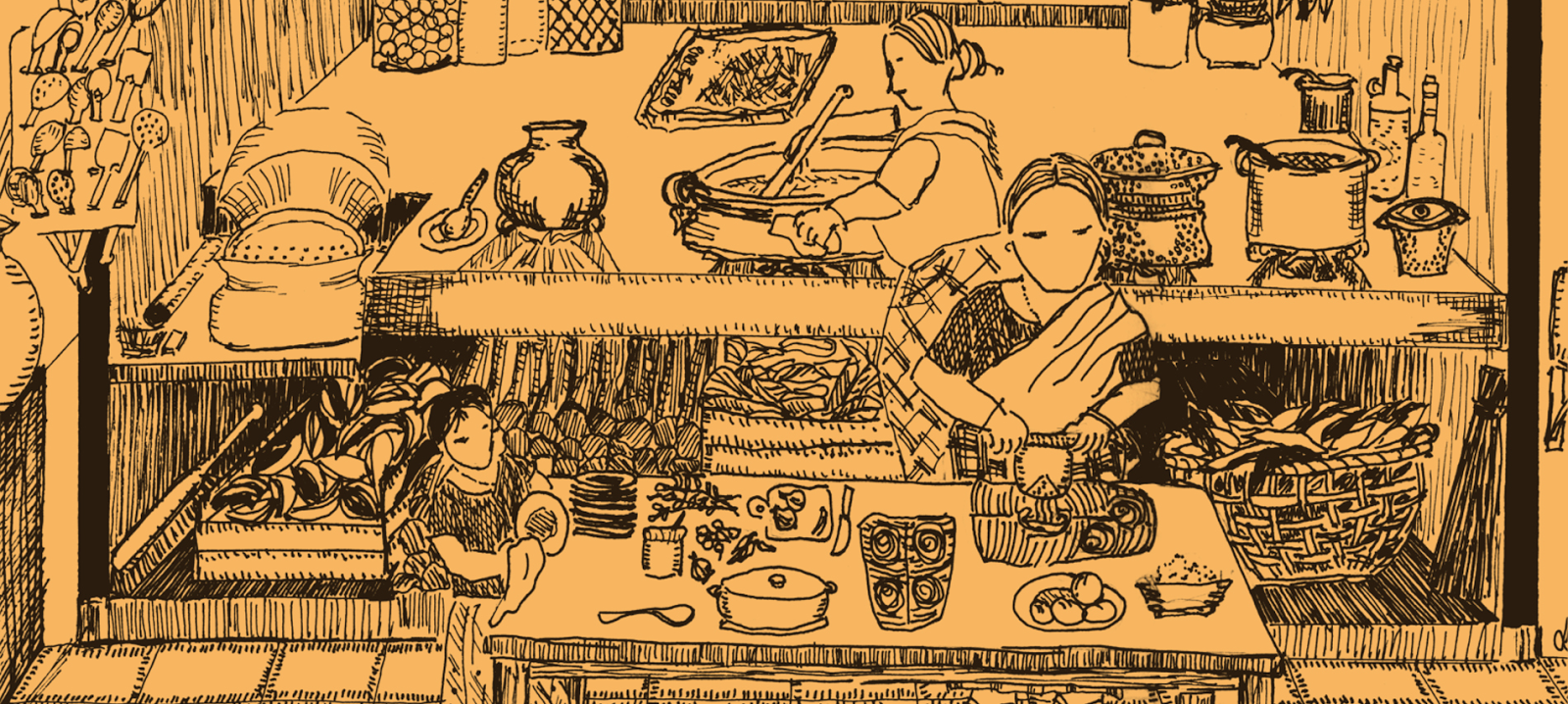
The lure of spices has drawn all to Kerala since time immemorial. The vibrant Syrian Christian community of Kerala brings together not just a rich history, but an equally delightful assortment of flavors and aromas with its amazing culinary secrets.
Lathika George’s The Suriani Kitchen gives us a glimpse into the fascinating kitchen of the Syrian Christians of Kerala with their unique stories of cooking and mouth-watering dishes.
Here are a few snippets from the book.


Can’t wait to find out more from this gastronomic heaven? Get your copy today!

Excerpt 3: ‘Origin’ by Dan Brown – Chapter 1 (Continued)

About a year ago, Kirsch had surprised Langdon by asking him not about art, but about God—an odd topic for a self-proclaimed atheist. Over a plate of short-rib crudo at Boston’s Tiger Mama, Kirsch had picked Langdon’s brain on the core beliefs of various world religions, in particular their different stories of the Creation.
Langdon gave him a solid overview of current beliefs, from the Genesis story shared by Judaism, Christianity, and Islam, all the way through the Hindu story of Brahma, the Babylonian tale of Marduk, and others.
“I’m curious,” Langdon asked as they left the restaurant. “Why is a futurist so interested in the past? Does this mean our famous atheist has finally found God?”
Edmond let out a hearty laugh. “Wishful thinking! I’m just sizing up my competition, Robert.”
Langdon smiled. Typical. “Well, science and religion are not competitors, they’re two different languages trying to tell the same story. There’s room in this world for both.”
After that meeting, Edmond had dropped out of contact for almost a year. And then, out of the blue, three days ago, Langdon had received a FedEx envelope with a plane ticket, a hotel reservation, and a handwritten note from Edmond urging him to attend tonight’s event. It read: Robert, it would mean the world to me if you of all people could attend. Your insights during our last conversation helped make this night possible.
Langdon was baffled. Nothing about that conversation seemed remotely relevant to an event that would be hosted by a futurist.
The FedEx envelope also included a black-and-white image of two people standing face-to-face. Kirsch had written a short poem to Langdon.
Robert,
When you see me face-to-face,
I’ll reveal the empty space.
—Edmond

Langdon smiled when he saw the image—a clever allusion to an episode in which Langdon had been involved several years earlier. The silhouette of a chalice, or Grail cup, revealed itself in the empty space between the two faces.
Now Langdon stood outside this museum, eager to learn what his former student was about to announce. A light breeze ruffled his jacket tails as he moved along the cement walkway on the bank of the meandering Nervión River, which had once been the lifeblood of a thriving industrial city. The air smelled vaguely of copper.
As Langdon rounded a bend in the pathway, he finally permitted himself to look at the massive, glimmering museum. The structure was impossible to take in at a glance. Instead, his gaze traced back and forth along the entire length of the bizarre, elongated forms.
This building doesn’t just break the rules, Langdon thought. It ignores them completely. A perfect spot for Edmond.
The Guggenheim Museum in Bilbao, Spain, looked like something out of an alien hallucination—a swirling collage of warped metallic forms that appeared to have been propped up against one another in an almost random way. Stretching into the distance, the chaotic mass of shapes was draped in more than thirty thousand titanium tiles that glinted like fish scales and gave the structure a simultaneously organic and extraterrestrial feel, as if some futuristic leviathan had crawled out of the water to sun herself on the riverbank.
When the building was first unveiled in 1997, The New Yorker hailed its architect, Frank Gehry, as having designed “a fantastic dream ship of undulating form in a cloak of titanium,” while other critics around the world gushed, “The greatest building of our time!” “Mercurial brilliance!” “An astonishing architectural feat!”
Since the museum’s debut, dozens of other “deconstructivist” buildings had been erected—the Disney Concert Hall in Los Angeles, BMW World in Munich, and even the new library at Langdon’s own alma mater. Each featured radically unconventional design and construction, and yet Langdon doubted any of them could compete with the Bilbao Guggenheim for its sheer shock value.
As Langdon approached, the tiled facade seemed to morph with each step, offering a fresh personality from every angle. The museum’s most dramatic illusion now became visible. Incredibly, from this perspective, the colossal structure appeared to be quite literally floating on water, adrift on a vast “infinity” lagoon that lapped against the museum’s outer walls.
Langdon paused a moment to marvel at the effect and then set out to cross the lagoon via the minimalist footbridge that arched over the glassy expanse of water. He was only halfway across when a loud hissing noise startled him. It was emanating from beneath his feet. He stopped short just as a swirling cloud of mist began billowing out from beneath the walkway. The thick veil of fog rose around him and then tumbled outward across the lagoon, rolling toward the museum and engulfing the base of the entire structure.
The Fog Sculpture, Langdon thought.
He had read about this work by Japanese artist Fujiko Nakaya. The “sculpture” was revolutionary in that it was constructed out of the medium of visible air, a wall of fog that materialized and dissipated over time; and because the breezes and atmospheric conditions were never identical one day to the next, the sculpture was different every time it appeared.
The bridge stopped hissing, and Langdon watched the wall of fog settle silently across the lagoon, swirling and creeping as if it had a mind of its own. The effect was both ethereal and disorienting. The entire museum now appeared to be hovering over the water, resting weightlessly on a cloud—a ghost ship lost at sea.
Just as Langdon was about to set out again, the tranquil surface of the water was shattered by a series of small eruptions. Suddenly five flaming pillars of fire shot skyward out of the lagoon, thundering steadily like rocket engines that pierced the mist-laden air and threw brilliant bursts of light across the museum’s titanium tiles.
Langdon’s own architectural taste tended more to the classical stylings of museums like the Louvre or the Prado, and yet as he watched the fog and flame hover above the lagoon, he could think of no place more suit- able than this ultramodern museum to host an event thrown by a man who loved art and innovation, and who glimpsed the future so clearly.
Now, walking through the mist, Langdon pressed on to the museum’s entrance—an ominous black hole in the reptilian structure. As he neared the threshold, Langdon had the uneasy sense that he was entering the mouth of a dragon.
——-
Origin by Dan Brown Releases on October 3’ 2017.
Preorder your copy today!

The Simple Messages Hidden in ‘Mahabharata’: ‘The Boys Who Fought’
The story of Mahabharata has been retold countless times through generations and one instinctively comes to identify it with the great battle of Kurukshetra.
But going beyond all the animosity and rivalry that overarches the epic, Mahabharata espouses some important messages for life, an aspect Devdutt Pattanaik has brought forth for us in The Boys Who Fought.
Here are a few times we were reminded of the simple but impactful messages from the Mahabharata that transcend time and remain equally relevant even today.
When Vyasa wondered about the progress humankind had truly made.
When Ekalavya showed us the meaning of control, as opposed to destruction.

When we were reminded of the true meaning of ‘life’.

When we were told about the vicious cycles humankind gets trapped in.

Know more about the timeless messages of the Mahabharata with Devdutt Pattanaik’s beautifully illustrated book today!

Excerpt 2: ‘Origin’ by Dan Brown – Chapter 1

‘Origin’ by Dan Brown, which is the 5th installment in Robert Langdon’s adventures, is based on Langdon’s travels in Spain.
Let’s read more to find out what happens next in the second of our three excerpts from ‘Origin’.
Read the first excerpt here
——
Prologue Continues…
The bishop sighed loudly, sounding more bored than concerned. “An intriguing preamble, Mr. Kirsch. You speak as if whatever you are about to show us will shake the foundations of the world’s religions.”
Kirsch glanced around the ancient repository of sacred texts. It will not shake your foundations. It will shatter them.
Kirsch appraised the men before him. What they did not know was that in only three days’ time, Kirsch planned to go public with this presentation in a stunning, meticulously choreographed event. When he did, people across the world would realize that the teachings of all religions did indeed have one thing in common.
They were all dead wrong.
CHAPTER 1
Professor Robert Langdon gazed up at the forty-foot-tall dog sitting in the plaza. The animal’s fur was a living carpet of grass and fragrant flowers.
I’m trying to love you, he thought. I truly am.
Langdon pondered the creature a bit longer and then continued along a suspended walkway, descending a sprawling terrace of stairs whose uneven treads were intended to jar the arriving visitor from his usual rhythm and gait. Mission accomplished, Langdon decided, nearly stumbling twice on the irregular steps.
At the bottom of the stairs, Langdon jolted to a stop, staring at a massive object that loomed ahead.
Now I’ve seen it all.
A towering black widow spider rose before him, its slender iron legs supporting a bulbous body at least thirty feet in the air. On the spider’s underbelly hung a wire-mesh egg sac filled with glass orbs.
“Her name is Maman,” a voice said.
Langdon lowered his gaze and saw a slender man standing beneath the spider. He wore a black brocade sherwani and had an almost comical curling Salvador Dalí mustache.
“My name is Fernando,” he continued, “and I’m here to welcome you to the museum.” The man perused a collection of name tags on a table before him. “May I have your name, please?”
“Certainly. Robert Langdon.”
The man’s eyes shot back up. “Ah, I am so sorry! I did not recognize you, sir!”
I barely recognize myself, Langdon thought, advancing stiffly in his white bow tie, black tails, and white waistcoat. I look like a Whiffenpoof. Langdon’s classic tails were almost thirty years old, preserved from his days as a member of the Ivy Club at Princeton, but thanks to his faithful daily regimen of swimming laps, the outfit still fit him fairly well. In Langdon’s haste to pack, he had grabbed the wrong hanging bag from his closet, leaving his usual tuxedo behind.
“The invitation said black and white,” Langdon said. “I trust tails are appropriate?”
“Tails are a classic! You look dashing!” The man scurried over and carefully pressed a name tag to the lapel of Langdon’s jacket.
“It’s an honor to meet you, sir,” the mustached man said. “No doubt you’ve visited us before?”
Langdon gazed through the spider’s legs at the glistening building before them. “Actually, I’m embarrassed to say, I’ve never been.”
“No!” The man feigned falling over. “You’re not a fan of modern art?”
Langdon had always enjoyed the challenge of modern art—primarily the exploration of why particular works were hailed as masterpieces: Jackson Pollock’s drip paintings; Andy Warhol’s Campbell’s Soup cans; Mark Rothko’s simple rectangles of color. Even so, Langdon was far more comfortable discussing the religious symbolism of Hieronymus Bosch or the brushwork of Francisco de Goya.
“I’m more of a classicist,” Langdon replied. “I do better with da Vinci than with de Kooning.”
“But da Vinci and de Kooning are so similar!”
Langdon smiled patiently. “Then I clearly have a bit to learn about de Kooning.”
“Well, you’ve come to the right place!” The man swung his arm toward the massive building. “In this museum, you will find one of the finest collections of modern art on earth! I do hope you enjoy.”
“I intend to,” Langdon replied. “I only wish I knew why I’m here.”
“You and everyone else!” The man laughed merrily, shaking his head. “Your host has been very secretive about the purpose of tonight’s event. Not even the museum staff knows what’s happening. The mystery is half the fun of it—rumors are running wild! There are several hundred guests inside—many famous faces—and nobody has any idea what’s on the agenda tonight!”
Now Langdon grinned. Very few hosts on earth would have the bravado to send out last-minute invitations that essentially read: Saturday night. Be there. Trust me. And even fewer would be able to persuade hundreds of VIPs to drop everything and fly to northern Spain to attend the event. Langdon walked out from beneath the spider and continued along the pathway, glancing up at an enormous red banner that billowed overhead.
AN EVENING WITH EDMOND KIRSCH
Edmond has certainly never lacked confidence, Langdon thought, amused.
Some twenty years ago, young Eddie Kirsch had been one of Langdon’s first students at Harvard University—a mop-haired computer geek whose interest in codes had led him to Langdon’s freshman seminar: Codes, Ciphers, and the Language of Symbols. The sophistication of Kirsch’s intellect had impressed Langdon deeply, and although Kirsch eventually abandoned the dusty world of semiotics for the shining promise of computers, he and Langdon had developed a student–teacher bond that had kept them in contact over the past two decades since Kirsch’s graduation.
Now the student has surpassed his teacher, Langdon thought. By several light-years.
Today, Edmond Kirsch was a world-renowned maverick—a billionaire computer scientist, futurist, inventor, and entrepreneur. The forty-year-old had fathered an astounding array of advanced technologies that represented major leaps forward in fields as diverse as robotics, brain science, artificial intelligence, and nanotechnology. And his accurate predictions about future scientific breakthroughs had created a mystical aura around the man.
Langdon suspected that Edmond’s eerie knack for prognostication stemmed from his astoundingly broad knowledge of the world around him. For as long as Langdon could remember, Edmond had been an insatiable bibliophile—reading everything in sight. The man’s passion for books, and his capacity for absorbing their contents, surpassed anything Langdon had ever witnessed.
For the past few years, Kirsch had lived primarily in Spain, attributing his choice to an ongoing love affair with the country’s old-world charm, avant-garde architecture, eccentric gin bars, and perfect weather. Once a year, when Kirsch returned to Cambridge to speak at the MIT Media Lab, Langdon would join him for a meal at one of the trendy new Boston hot spots that Langdon had never heard of. Their conversations were never about technology; all Kirsch ever wanted to discuss with Langdon was the arts.
“You’re my culture connection, Robert,” Kirsch often joked. “My own private bachelor of arts!”
The playful jab at Langdon’s marital status was particularly ironic coming from a fellow bachelor who denounced monogamy as “an affront to evolution” and had been photographed with a wide range of supermodels over the years.
Considering Kirsch’s reputation as an innovator in computer science, one could easily have imagined him being a buttoned-up techno-nerd. But he had instead fashioned himself into a modern pop icon who moved in celebrity circles, dressed in the latest styles, listened to arcane underground music, and collected a wide array of priceless Impressionist and modern art. Kirsch often e-mailed Langdon to get his advice on new pieces of art he was considering for his collection.
And then he would do the exact opposite, Langdon mused.
(Continues…)
Stay tuned for the third excerpt—
Origin by Dan Brown Releases on October 3’ 2017.
Preorder your copy today!
‘We Don’t Really Know Fear’: ‘India’s Most Fearless’: An Excerpt

The Army major who led the legendary September 2016 surgical strikes on terror launch pads across the LoC; a soldier who killed 11 terrorists in 10 days; a Navy officer who sailed into a treacherous port to rescue hundreds from an exploding war; a bleeding Air Force pilot who found himself flying a jet that had become a screaming fireball . . .
India’s Most Fearless is a collection of their own accounts or of those who were with them in their final moments.
Here’s an excerpt from Chapter 1 of the book ‘We Don’t Really Know Fear’ :The September 2016 Surgical Strikes in PoK
—-
Uri, Jammu and Kashmir 18 September 2016
Final checks on the AK-47 rifles. Final checks on the stacks of ammunition magazines and grenades stuffed into olive-green knapsacks. The 4 men shoved fistfuls of almonds into their mouths, chewing quickly in the darkness and swallowing. Small, light and packed with a burst of energy, mountain almonds are as much a staple for terrorist infiltrators as their weapons are. The high-protein mouthfuls would have to sustain the 4 men for the next 8 hours.
At least 8 hours.
Dressed in deceptive Indian Army combat fatigues, and shaven clean to blend in, the 4 emerged from their concealed launch point below a ridgeline overlooking a stunning expanse of frontier territory. In total darkness, they trekked for 1 km down to the powerfully guarded premises of the Indian Army’s Uri Brigade in Jammu and Kashmir’s Uri sector, on the LoC.
The 4 men knew their mission was not particularly extraordinary. Indian military facilities had been attacked by Pakistani terrorists before. In fact, just 8 months earlier, in January 2016, an identical number of terrorists had infiltrated the Indian Air Force’s base in Pathankot, where they had managed to kill 7 security personnel before being eliminated.
But there was something these men did not know. What they were about to do would change India like nothing else had in the past quarter century. It would compel India across a military point of no return that it had resisted until then.
Above all, it would awaken a monster that Pakistan had been arrogantly certain would remain in eternal slumber.
Infiltrating the Army camp at Uri before sunrise, the 4 men crept forward with an unusual sense of familiarity. Their Pakistani handlers had clearly ‘war-gamed’ the attack with maps and models of the camp. Wasting no time in familiarizing themselves with the camp’s layout, they headed straight for a group of tents where the soldiers were sleeping.
By the time the sun was fully up and Special Forces (SF) commandos had been diverted to Uri as reinforcements, 17 Indian soldiers lost their lives. Two more would die later in hospital.
In a valley that has steadily numbed India with uninterrupted spillage of blood, the Uri terror ambush was special. Other than the horrifying scale of casualties the 4 terrorists managed to achieve, it was the hubris of the Uri attack that ignited unprecedented anger. It had come while families still mourned those who had died defending the Pathankot Air Force base only 8 months before.
Like the 4 terrorists, Pakistan was probably confident that India’s ensuing wrath would be confined to public outrage and diplomatic condemnations, a standardized matrix of responses that it had learnt to handle with mastery. But Pakistan did make 1 devastating miscalculation. India was about to use precisely its reputation for inaction to exact a hitherto unthinkable revenge.
As blanket coverage of the Uri attack took over television news and the Internet on the morning of 18 September, a chill descended upon India’s Raisina Hill in Delhi. Emergency meetings were held in the most secret ‘war rooms’ of the security establishment, one of them presided over by Prime Minister Narendra Modi along with National Security Adviser Ajit Doval.
It was at this meeting that the Indian leadership secretly took 2 major decisions: (1) the Indian military would take the fight to the enemy this time to deliver a brutal response to the Uri attack; (2) the country’s ministers, including Modi himself, would play their parts to perpetuate and amplify India’s reputation for inaction until such a time when the response had been delivered. An elaborate, carefully crafted political masquerade would thus begin the following morning.
Meanwhile, 800 km away and high up in the Himalayas, a young Indian Army SF officer sat grimly in front of a small television in his barracks. Uri was his area. His hunting ground. Away on a special 2-month mission to the Siachen Glacier with a small team of men from his unit, the calm of Maj. Mike Tango’s demeanour belied the fury that consumed him within. He watched familiar pictures from the Uri Army camp flicker on the screen in front of him. And just as the Indian government was about to decide on an unprecedented course of action, a prescient warning rang in the Major’s mind.
‘We knew the balloon had gone up. This wasn’t a small incident. There was no question of sitting silent. This was beyond breaking point,’ he says.
As second-in-command, or 2IC, of an elite Parachute Regiment (Special Forces), or the Para-SF as it is called, Maj. Tango had spent a decade of his 13 service years in J&K. He had been part of over 20 successful antiterror operations. And yet, the morning of 18 September had sent a knife through the officer’s heart. He could not wait to get back to the rest of his unit deployed in and around where the terrorists had struck.
Upon receiving the call from Udhampur that he had been expecting, from his unit’s Commanding Officer, or CO, Maj. Tango gathered his men immediately for a quick return to the Valley. The team reached Dras that same night of 18 September—a date the men would never forget.
The next morning, as they began their journey to Srinagar, things were already in motion in Delhi. The first minister to make a statement was former Army Chief, Gen. V.K. Singh, who, after the traditional condemnations, made a remarkably generous appeal in the circumstances—he said that India could not act on emotion. It would be a critical spark to the success of the masquerade, followed shortly thereafter by Defence Minister Manohar Parrikar, who declared that the sacrifice of the Uri soldiers would not go in vain. Speaking to the Army in Srinagar, Parrikar sounded a familiar note, asking the Army to take ‘firm action’, but not specifying what such action needed to be. This was standard-issue Bharat Sarkaar (Indian Government) response after a terror attack.
However, to ensure that the government’s messaging was not so measured as to rouse suspicion, junior ministers were tasked with adding some fire to the proceedings. That crucial bit was deftly served up by Manohar Parrikar’s junior minister, Subhash Bhamre, who declared that the time had come ‘to hit back’.
Two more top-level meetings took place on 19 September— one chaired by Home Minister Rajnath Singh, who had cancelled his visit to Russia, and the other by Prime Minister Modi at the PMO. Army Chief Gen. Dalbir Singh, who had dashed to the Kashmir valley just hours after the previous day’s attack, had been conveyed the government’s clear political directive. He arrived in Srinagar with the green signal that the SF had so far only ever dreamt about: permission to plan and execute a retaliatory strike with the government’s full backing.
Over the next 24 hours, the Army would draw up a devastating revenge plan, with options for the government leadership to choose from.
The Army routinely simulates attacks on enemy territory during combat exercises and as preparation for possible hostilities. But as the COs of the 2 SF units (one of them being Maj. Tango’s unit) began listing their options, they knew that history was being written then and there.
On 20 September, just as Maj. Tango and his team arrived in Srinagar, the Army’s Northern Commander, or GOC-in-C of the Udhampur-headquartered Northern Command, Lt. Gen. Deependra Singh Hooda, had in his hands a final list of mission options and was preparing to present them to the government in Delhi through encrypted channels. The options were presented with remarkable detail.
‘We just needed clearance. In the SF, we are war-ready at all times. When we are not in operations, we are preparing for them. There’s a purpose behind everything we do,’ Maj. Tango says.
At the Army Headquarters in Delhi, the mood was expectedly sombre, but focused. Aided by a team that had been galvanized by the attack, Vice Chief of the Army Staff (later Chief) Lt. Gen. Bipin Rawat was steeped in the planning phase, bringing decades of infantry training to what would be the most decisive operation he would help oversee. What happened on 18 September was personal for Lt. Gen. Rawat. As a young Captain, he had commanded a Gorkha Rifles company in Uri in the early 1980s and had gone on to command a brigade in one of the most restive parts of the Kashmir valley. He would return years later as a Major General to command the Baramulla-based 19 Division. As he focused on the unprecedented plans on his table, Lt. Gen. Rawat had no way of knowing that a few months later, his experience in J&K and his crucial role in planning India’s response to Uri would be high on the government’s mind when it entrusted him with leadership of one of the largest armies in the world.
(Continued…)
