




Do you remember your first teenage love? Nicola Yoon’s debut novel Everything Everything is here to remind you of your first love, when anything seems possible and no problem is insurmountable. A gripping tale of love, relationships and world as we know it, Everything Everything has everything to make you laugh, cry and feel everything in between.
Here are six times the book warmed our hearts.
Oh! The feeling when your crush calls!

When Maddy’s clay astronaut is at a dining centre but can’t eat!

When mom cooks something you hate!

The disease at least one teenage girl has every 30 seconds.

The “Out of the World” feeling!

The sickness we don’t mind!

Taking you to the world of young innocent love that knows no bounds, Everything Everything will leave you with a warm, fuzzy feeling in your heart, wanting for more!

Tag: romance
Taking the Hating Out of Dating
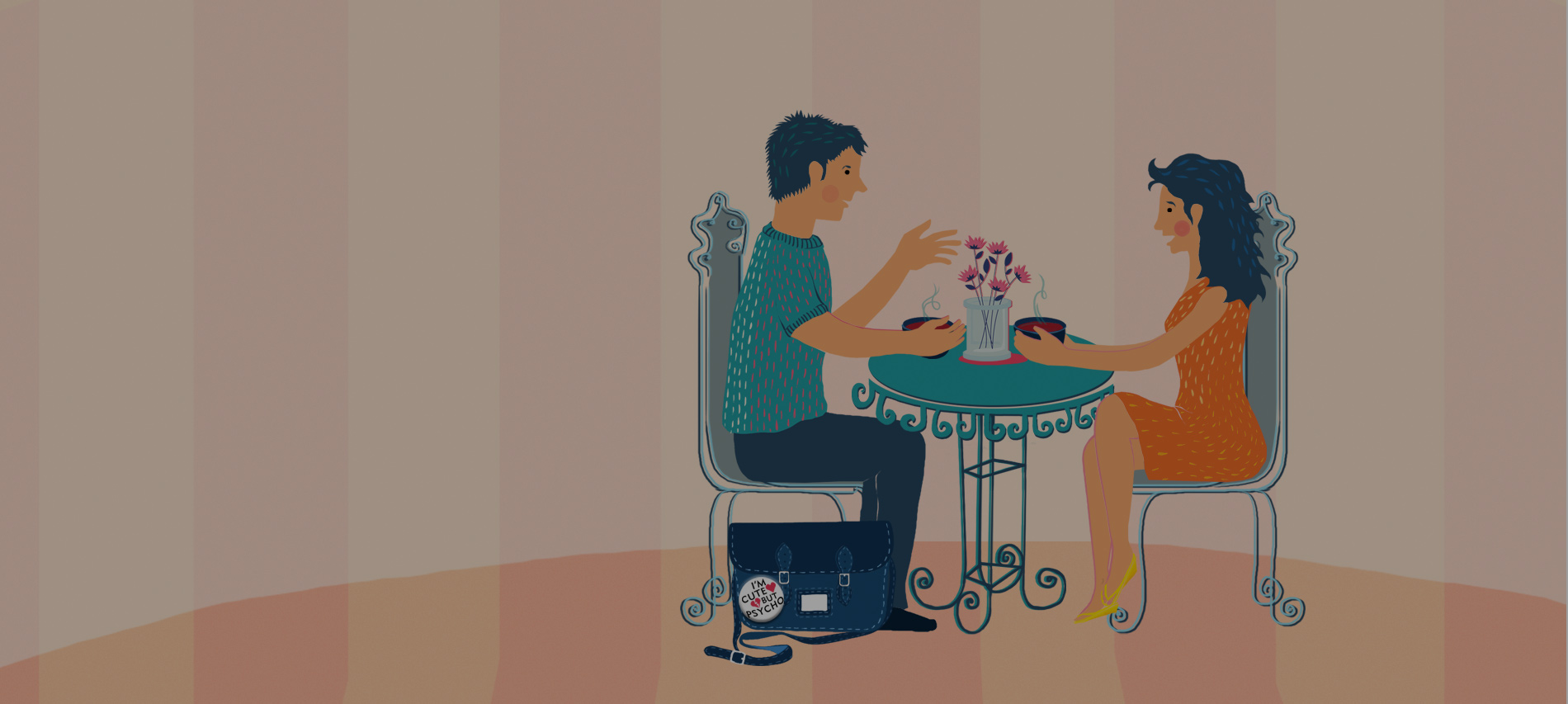
Some take to fishing. Some don’t. It’s as simple as that.
Likewise, with arranged-dating (modern dating expressly for the purpose of finding a spouse). Some thrive on the anticipation of a good catch, while for some (my personal guess is for many) the uncertainty, the awkwardness of a ‘catch and release’ and of course returning empty-handed (again), can be nothing short of a mild coronary.
While my friends and acquaintances invariably fell in the latter anxiety-stricken category they often spoke with wistful resentment of a creature I dubbed as the Overly Enthusiastic Dater [OED].
An effervescent giant ball of sunshine and an energy drink, OEDs apparently don’t exhibit the slightest tremor. In fact they are enthused at the prospect of sharing their hobbies, family composition, occupation, job history and of course the much contentious dietary habits (Veg? Non-veg? Egg? Fish? Wine? Whisky? Smoke?!?) with strangers… again and again and again.
Nerves of steel? Adrenalin junkies? Extreme Extroverts? How do OEDs survive this minefield, not only unscathed but also brimming with enthusiasm?
A few leisurely cuppas and they were spilling the beans. I’m not sure if these ‘skills’ were innate or evolved to protect their tickers, but they do explain the OED’s joie de vivre.
- Date Martyr
Competition is fierce when it comes to far-out dating stories and every girl wants her slice of sympathy as she narrates the cuckoo-capades to a bunch of wide-eyed happily-married couples. Which is why this OED no longer cringes and prays for Potter’s invisibility cloak but rubs her hands in glee (mentally of course) when she encounters a delusional dude.
Delusional Dude 1: “Hi there, Prepare to be amazed and astounded by me”
OED: Beams like a cat that got the cream
Delusional Dude 2: “I’m into crystal gazing which is why I know there are limited fate portals in the next few years. Yes, yes, we just met but we must marry before the portal shuts”
OED: Beams like a cat that got more cream
- Truffle Hunter
This OED won’t waste time researching her date. Instead she scours through a dozen food guides and reviews before she selects the date venue. Tried the Burmese café last time, what next? Isn’t there a new Caramelised Melon Cappuccino in town? How about an experiment in non-judgement at the new ‘dine-in–the-dark’ cafe? Don’t see chappie, don’t judge chappie. He’s not roasted and her taste buds are singing. It’s a win-win.
Dating in the dark doesn’t scare this OED, running out of new eateries does.
- Errand-dater
This OED is an efficiency machine. She lives by the phrase ‘Location, location, location’. She first browses through her pantry, then through her closet, then her medicine cabinet and finally through the now yellowed piece of paper that was once her to-do list. Flour will run out by Monday? Lycra tops have inexplicably shrunk? Great. Now she plans a weekend date at a café in the mall where she can shop for these.
Some say bumping into your date in the hosiery check-out line right before the date is embarrassing, but she says it’s a chance to practise your poker face and strengthen your peripheral vision (as you surreptitiously glance into his shopping basket).
- Date Mate:
The last and final OED (that I know of) is nothing but a social butterfly and a chatterbox at heart. Despite the obvious incompatibility she can’t resist buddying up with her fellow date.
“Maybe the problem is you are address women as ‘yo! hot mamma’. If you don’t mind my asking what’s your relationship with your mum like?”
“I must fix you up with Vina. She too adoooores Justin Bieber.”
“….and that’s why I decided to walk away. What’s your perspective as a guy?”
“Where did you buy this black lace shirt? Stitched? Really? What was the cost per metre?”
Having met OEDs in person was quite revealing. They weren’t super women or the other extreme – oddballs. They were simply women who saw beyond ‘Mission Groom’.
Every coffee date wasn’t a do or die situation, a sword hanging over their heads; in fact there was always an upside – be it a good meal, scratching errands off a list or finding a new buddy.


The Boy Who Loved — An Exclusive Excerpt

1 January 1999
Hey Raghu Ganguly (that’s me),
I am finally putting pen to paper. The scrunch of the sheets against the fanged nib, the slow absorption of the ink, seeing these unusually curved letters, is definitely satisfying; I’m not sure if writing journal entries to myself like a schizophrenic is the answer I’m looking for. But I have got to try. My head’s dizzy from riding on the sinusoidal wave that has been my life for the last two years. On most days I look for ways to die—the highest building around my house, the sharpest knife in the kitchen, the nearest railway station, a chemist shop that would unquestioningly sell twenty or more sleeping pills to a sixteen-year-old, a packet of rat poison—and on some days I just want to be scolded by Maa–Baba for not acing the mathematics exam, tell Dada how I will beat his IIT score by a mile, or be laughed at for forgetting to take the change from the bania’s shop.
I’m Raghu and I have been lying to myself and everyone around me for precisely two years now. Two years since my best friend of four years died, one whose friendship I thought would outlive the two of us, engraved forever in the space– time continuum. But, as I have realized, nothing lasts forever. Now lying to others is fine, everyone does that and it’s healthy and advisable—how else are you going to survive the suffering in this cruel, cruel world? But lying to yourself? That shit’s hard, that will change you, and that’s why I made the resolution to start writing a journal on the first of this month, what with the start of a new year and all, the last of this century.
I must admit I have been dilly-dallying for a while now and not without reason. It’s hard to hide things in this house with Maa’s sensitive nose never failing to sniff out anything Dada, Baba or I have tried to keep from her. If I were one of those kids who live in palatial houses with staircases and driveways I would have plenty of places to hide this journal, but since I am not, it will have to rest in the loft behind the broken toaster, the defunct Singer sewing machine and the empty suitcases.
So Raghu, let’s not lie to ourselves any longer, shall we? Let’s say the truth, the cold, hard truth and nothing else, and see if that helps us to survive the darkness. If this doesn’t work and I lose, checking out of this life is not hard. It’s just a seven-storey drop from the roof top, a quick slice of the wrist, a slip on the railway track, a playful ingestion of pills or the accidental consumption of rat poison away. But let’s try and focus on the good.
Durga. Durga.
12 January 1999
Today was my first day at the new school, just two months before the start of the tenth-standard board exams. Why Maa– Baba chose to change my school in what’s said to be one of the most crucial year in anyone’s academic life is amusing to say the least—my friendlessness.
‘If you don’t make friends now, then when will you?’ Maa said. They thought the lack of friends in my life was my school’s problem and had nothing to do with the fact that my friend had been mysteriously found dead, his body floating in the still waters of the school swimming pool. He was last seen with me. At least that’s what my classmates believe and say. Only I know the truth.
When Dada woke me up this morning, hair parted and sculpted to perfection with Brylcreem, teeth sparkling, talcum splotches on his neck, he was grinning from ear to ear. Unlike me he doesn’t have to pretend to be happy. Isn’t smiling too much a sign of madness? He had shown the first symptoms when he picked a private-sector software job over a government position in a Public Sector. Undertaking which would have guaranteed a lifetime of unaccountability. Dada may be an IITian but he’s not the smarter one of us.
‘Are you excited about the new school, Raghu? New uniform, new people, new everything? Of course you’re excited! I never quite liked your old school. You will make new friends here,’ said Dada with a sense of happiness I didn’t feel. ‘Sure. If they don’t smell the stench of death on me.’ ‘Oh, stop it. It’s been what? Over two years? You know how upset Maa–Baba get,’ said Dada. ‘Trust me, you will love your new school! And don’t talk about Sami at the breakfast table.’ ‘I was joking, Dada. Of course I am excited!’ I said, mimicking his happiness.
Dada falls for these lies easily because he wants to believe them. Like I believed Maa–Baba when they once told me, ‘We really liked Sami. He’s a nice boy.’ Sami, the dead boy, was never liked by Maa–Baba. For Baba it was enough that his parents had chosen to give the boy a Muslim name. Maa had more valid concerns like his poor academic performance, him getting caught with cigarettes in his bag, and Sami’s brother being a school dropout. Despite all the love they showered on me in the first few months after Sami’s death, I thought I saw what could only be described as relief that Sami, the bad influence, was no longer around. Now they use his name to their advantage. ‘Sami would want you to make new friends,’ they would say. I let Maa feed me in the morning. It started a few days after Sami’s death and has stuck ever since.
Maa’s love for me on any given day is easily discernible from the size of the morsels she shoves into my mouth. Today the rice balls and mashed potatoes were humungous. She watched me chew like I was living art. And I ate because I believe the easiest way to fool anyone into not looking inside and finding that throbbing mass of sadness is to ingest food. A person who eats well is not truly sad. While we ate, Baba lamented the pathetic fielding placement of the Indian team and India’s questionable foreign policy simultaneously.
‘These bloody Musalmans, these filthy Pakistanis! They shoot our soldiers…

The Woman Jinnah Fell in Love With
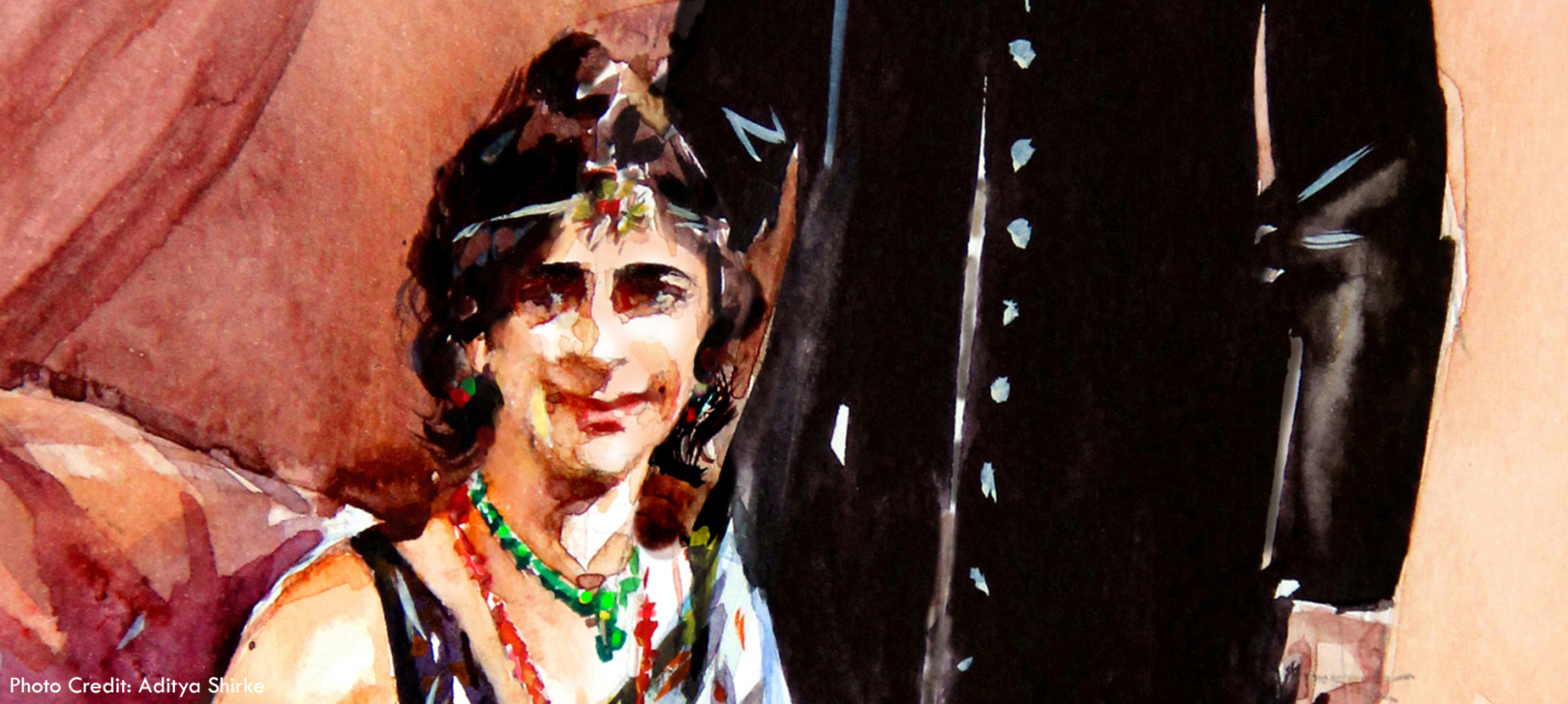
The news of Mohammad Ali Jinnah’s marriage to Ruttie Petit in 1918 shook pre-partitioned India. Everyone wondered about this woman who had made the serene yet strait-laced national leader fall in love with her.
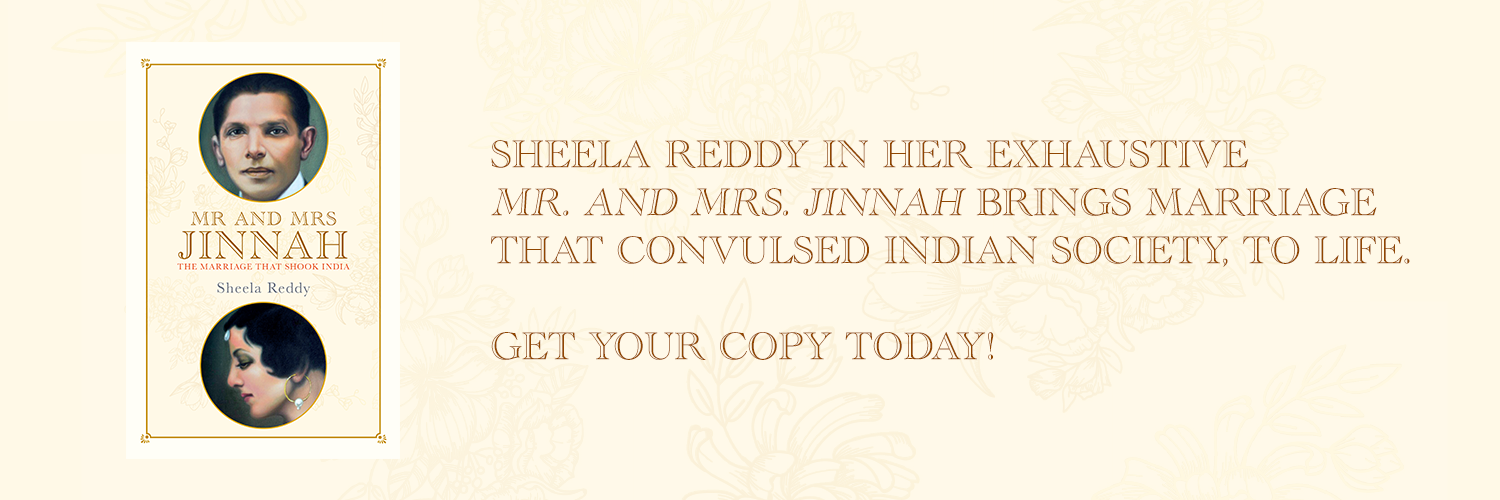
Sheela Reddy in her exhaustive Mr. and Mrs. Jinnah paints an interesting portrait of the enchanting Ruttie Petit Jinnah.
Wasn’t she enigmatic? Tell us how you perceive Ruttie Jinnah.
7 William Wordsworth Quotes that will Brighten Your Weekend
Born on 7 April 1770 in Cockermouth, Cumberland, William Wordsworth debuted as an author in 1787 when he published a sonnet in The European Magazine.
As a youngster, he was encouraged by his father to learn large portions of verse, by authors such as Shakespeare and Milton.
In 1793, Wordsworth published his first set of poems in a collections titled An Evening Walk and Descriptive Sketches. In 1795 after receiving an endowment of £900 from Raisley Calvert, he decided to pursue a career as a poet. With Samuel Taylor Coleridge, he published Lyrical Ballads in 1798 and launched the Romantic Age in English literature. Wordsworth was regarded as Britain’s Poet Laureate from 1843 until his death in 1850.
Today, as we celebrate his 247th birthday, here are some of his profound words.


Do you have a favourite quote by William Wordsworth?
A Poem by William Wordsworth You Should Fall in Love with
She was a Phantom of Delight
She was a Phantom of delight
When first she gleamed upon my sight;
A lovely Apparition, sent
To be a moment’s ornament;
Her eyes as stars of Twilight fair;
Like Twilight’s, too, her dusky hair;
But all things else about her drawn
From May-time and the cheerful Dawn;
A dancing Shape, an Image gay,
To haunt, to startle, and waylay.
I saw her upon nearer view,
A Spirit, yet a Woman too!
Her household motions light and free,
And steps of virgin-liberty;
A countenance in which did meet
Sweet records, promises as sweet;
A Creature not too bright or good
For human nature’s daily food;
For transient sorrows, simple wiles,
Praise, blame, love, kisses, tears, and smiles.
And now I see with eye serene
The very pulse of the machine;
A Being breathing thoughtful breath,
A Traveller between life and death;
The reason firm, the temperate will,
Endurance, foresight, strength, and skill;
A perfect Woman, nobly planned,
To warn, to comfort, and command;
And yet a Spirit still, and bright
With something of angelic light.
—William Wordsworth
10 Delightful Quotes that will Dazzle Your Day
“I’d rather people read my book twice than only half-way through,” Mohsin Hamid replied once when asked about his compelling and minimalist prose. It’s this splendid literary ambition that seals the position of Mohsin Hamid among the most brilliant writers of our time.
Here are ten exemplary quotes from his books that will leave you awe-struck!


Dazzled for the day? Grab your copy of Mohsin Hamid’s latest novel – Exit West – here and soak in the magic of his storytelling.
6 Sessions to Look Out for at JLF ’17
It’s that time of the year!
10 years since the first JLF, the Festival has grown into the world’s largest free event of its kind. Having hosted 1300 speakers and welcomed nearly 1.2 million book lovers, its success has been astonishing and heartwarming.
Some of the biggest Penguin authors have rocked the stage at JLF and this year promises to be even better. From commercial superstars to critical bigwigs, this year we are getting the crème de la crème from our author roster.
Here are a few of the sessions you’ll not want to miss at the Festival.
Gulzar
Gulzar and Pavan K. Varma in conversation

People usually run out of superlatives when talking about the evergreen Gulzar. One of the greatest artists to ever grace the JLF, Gulzar Sahib’s session, along with Pavan K. Varma, will be on his latest work – Suspected Poems. You’ll not want to miss his musings on poetry, literature and the state of the world.
Tabish Khair
Manju Kapur and Tabish Khair in conversation with Ashok Ferrey

Currently teaching English at Aarhus University in Denmark, Tabish Khair was born and educated in Bihar. At the session, the former journalist will be talking to Ashok Ferrey about the context and inspiration for his works. He will also talk about his book Jihadi Jane, a powerful novel about two Muslim girls who decide to join ISIS.
You can also catch him at the Festival along with Saeed Naqvi, Qaisra Shahraz, Sadia Dehlvi and Ornit Shani as they talk of the conflicts and polarities of being an Indian Muslim in an increasingly divided world.
Ashok Ferrey
Ashok Ferrey, Kyoko Yoshida and Marina Perezagua in conversation with Sunil Sethi

Ashok Ferrey will be in conversation with Sunil Sethi on the pursuit of fiction that involves a leap of faith between material and literary reality. He will be joined by other notable contemporary writers as they also discuss how writers enter and access fictional journey. The bestselling Sri Lankan author will also explore the devil within as he discusses his latest book The Ceaseless Chatter of Demons.
From talking about the thin red line between a person’s beliefs and politics with Tabish Khair to joining Ashwin Sanghi on his talk about the art of writing thrillers, Ashok Ferrey will also be at various other sessions with other authors.
Ravinder Singh
Ira Trivedi and Ravinder Singh in conversation with Lucy Beresford
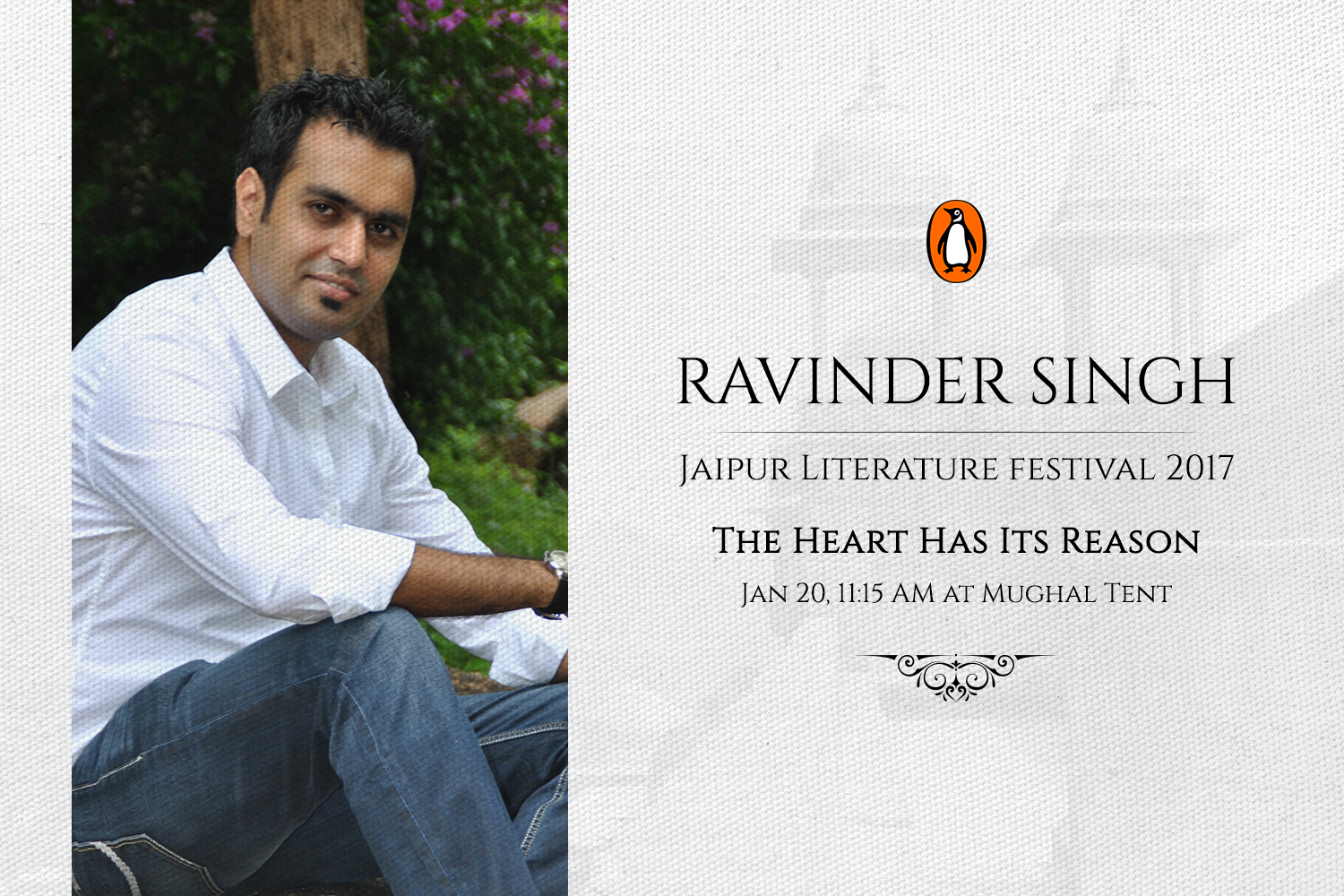
Romantic fiction reaches out across time and history to every successive generation with tales of love. The King of Romance, Ravinder Singh’s session is about love in contemporary India. The author who is known for writing from the heart, about the heart will speak about the psychology and the changing mores of love in our times.
Devdutt Pattanaik
Devdutt Pattanaik introduced by Amrita Tripathi

Ancient Greece and India have both bequeathed a lasting body of myth to the world. In his latest work Olympus, Devdutt Pattanaik attempts to understand how an Indian reader raised on a steady diet of local myths and legends might respond to classical Greek mythology. By reversing the gaze, he explores the fascinating connections between these stories and sagas. At the Festival, Pattanaik will talk about both the mythologies and their lasting legacy.
Devdutt Pattanaik will have two more sessions at JLF – on the history and legacy of the Vedas and on his book The Girl Who Chose.
Arshia Sattar
Arshia Sattar and Volga in conversation with Vayu Naidu

A symbol of chastity and loyalty, the goddess Sita has evolved into a feminist icon for her silent strength and endurance. In her session, Arshia Sattar will talk about her highly acclaimed translation of the ‘Uttara Kanda’. She will talk about the sacrifice, choice and the complex moral universe of the Ramayana.
Arshia Sattar will also be in various other sessions at the Festival discussing atheism in the ancient world to understanding the brilliant A.K. Ramanujan.
———
The themes of equity and democracy run through the Festival’s veins bringing humanitarians, historians, politicians, business leaders, sports people and entertainers together on stage. Access to these renowned thinkers along with some of the finest writers in the world provides a potentially life-changing opportunity to visitors.
We hope to see you at Jaipur!
—————–