





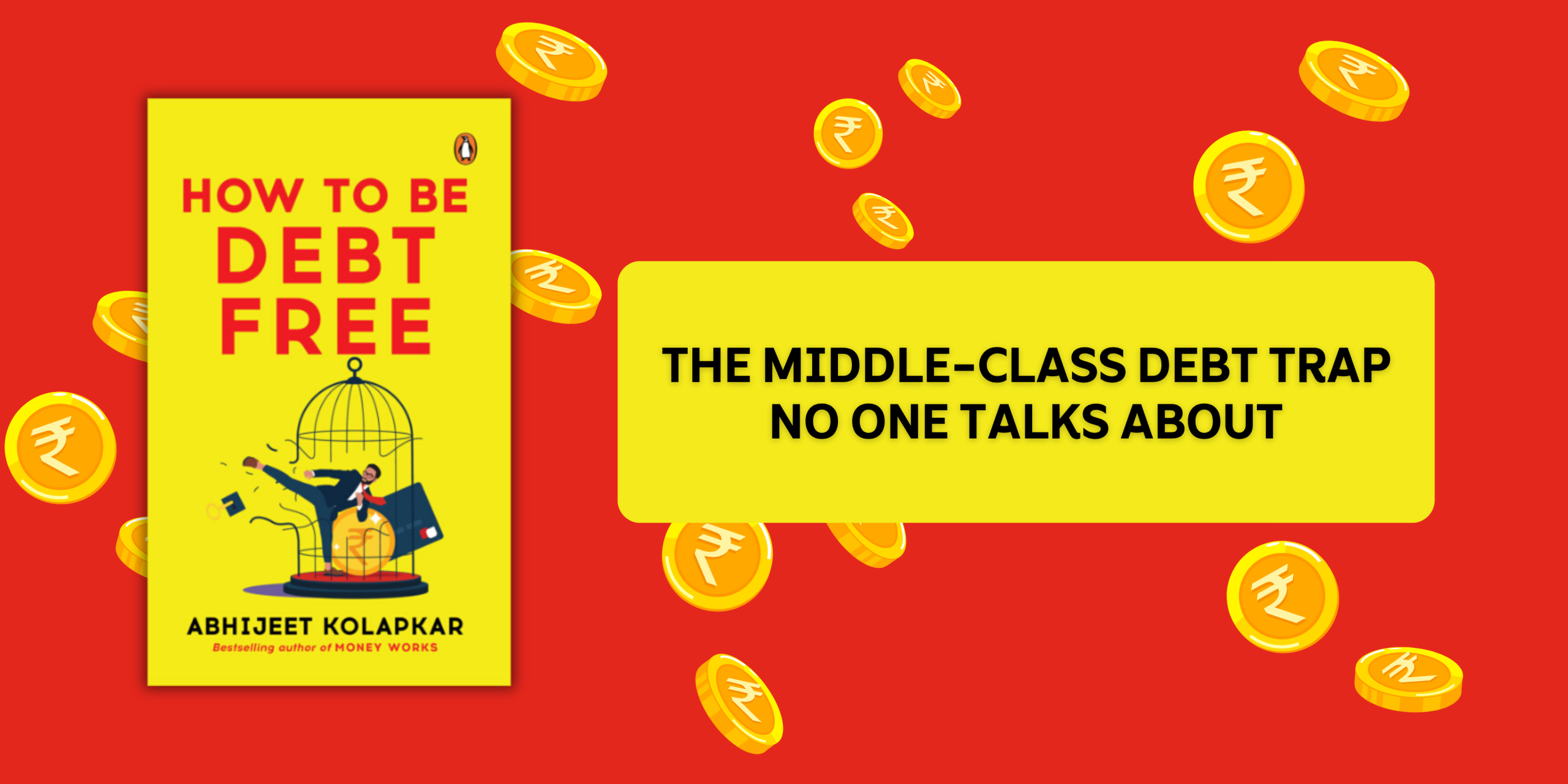
Debt rarely begins with a bad decision. Sometimes, it begins with a dream—a home, a car, a better education or simply a better life. In this excerpt from How to Be Debt Free, bestselling author and chartered accountant Abhijeet Kolapkar unpacks how easily everyday borrowing can turn into a financial burden, and what it takes to regain control.
***
You might meet ten people in your office or neighbourhood and I can guarantee that most of them will say ‘yes’ if you ask if they have any loan. Taking a loan has become a very common part of modern life. However, most borrowers look for excuses not to repay their debt quickly. Let’s look at some common misconceptions that lead to poor financial decisions.
The Regulatory Framework
• RBI Guidelines: The Reserve Bank of India sets the master rules for all financial institutions.
• Credit Information Systems: Agencies like CIBIL and Experian track every detail of your debt and repayment history.
• Modern Technology: Banks now use AI and machine learning to analyze massive amounts of data and identify the risks in lending to you.
Misconceptions about Debt
Taking a loan is a vital part of your financial planning. Disciplined planning makes debt a tool for your progress. Here are a few common misconceptions related to debt and borrowing, and why they aren’t true.
1. ‘Debt is a burden on my head!’: You take a loan to help yourself or to grow. Therefore, you should stop viewing it as a ‘burden.’ Debt is a financial support system. If you buy a house you love, the loan helps you achieve that. You should simply use the bank’s help wisely. Today, people choose loans to fulfil many goals: education, travel, business or buying a home. You must simply decide to repay the loan as quickly as possible.
2. ‘Debt ruins your financial status.’: Taking a loan without a repayment plan or financial discipline certainly ruins your mental and financial health. However, properly planned loans help you achieve your goals faster. You can use debt to fund education, expand a business or buy a new home.
3. ‘What’s the harm in taking a loan?’: Borrowing is common, but you must pay interest to the bank. If you take loans for unnecessary expenses, you hinder your own progress. You must ask yourself: ‘Am I cheating myself by calling this debt “sweet”?’
4. ‘Borrowers have plenty of time.’: Many borrowers want to get free from debt, but they don’t know which priority to set. You should prioritize your education funds, but sometimes people use that money for a sudden medical emergency instead. Proper planning ensures you use the right money for the right purpose. To escape the cycle of illness, treatment is vital. Similarly, saving a little money from the start helps you manage your debt better over time.
5. ‘I must maintain a high credit score.’: Many borrowers feel proud of a high credit score. Using credit cards is one way to increase this score. If your score is good, the bank offers you loans at lower interest rates. However, you should not take unnecessary loans just to maintain a ‘good name’ on your credit report.
6. ‘Becoming debt-free is not easy.’: Many borrowers feel hopeless after a few failed attempts to pay off their debt. You should maintain a positive mindset and work toward long-term repayment. Actionable steps, like saving more and spending less, will lead you to success.
7. ‘Missing an EMI doesn’t matter much.’: This is a huge misconception. The bank will charge penalties and higher interest. Your credit score will drop instantly. You will find it harder to get cheap loans in the future. Missing a payment causes long-term financial damage.
8. ‘I can ignore notices from the bank.’: If you cannot pay an EMI due to financial trouble, you must contact the bank immediately. The bank may offer a restructuring plan. Ignoring notices only makes your situation worse and forces the bank to take legal action.
9. ‘I don’t need professional advice.’: If you feel confused about your debt, you should seek expert help. A professional advisor can help you create a budget and a repayment plan. This guidance can lead you to a debt-free life much faster.
10. ‘Credit cards have no alternative in life.’: Buying now and paying later seems convenient. However, unplanned spending on a credit card ruins your savings. You should prioritize using UPI, debit cards or cash. Always keep a credit card only as a secondary option for emergencies.
11. ‘I can just pay the minimum due amount.’: If you only pay the minimum amount, the bank charges massive interest on the remaining balance. This habit traps you in a long-term debt cycle. You must avoid this at all costs.
12. ‘Becoming debt-free is impossible for me.’: This negative mindset is wrong. You can definitely get out of debt. It requires discipline and a strict management plan. You must prioritize your repayments and avoid unnecessary expenses.
13. ‘I don’t have enough money to repay my debt.’: You should focus on saving more alongside your current income. Finding ways to earn more or cut costs will help you become debt-free sooner. Focusing on the solution rather than the problem is essential.
14. ‘Cutting expenses is not that important.’: While planning to be debt-free, increasing your income is vital, but reducing your expenses is equally important. You must avoid unnecessary spending on luxury items, hotels or frequent vacations.
15. ‘I need to buy that too!’: When a friend buys a new car, you suddenly feel the urge to change yours. When your brother buys a large 2BHK flat, your 1BHK suddenly feels too small. This mindset is natural, but you must realize that your friend or brother might have taken a massive loan to afford those things. You should carefully consider whether you can actually afford an expensive purchase before you follow the crowd.
16. ‘If my income increases, my spending must increase too.’: A salary hike or business profit brings joy. Celebrating or buying something nice is fine, but you should not change your entire lifestyle just because you earn more. You should use the extra income to save and become debt-free faster. You must understand the difference between need and want. Meeting your needs with your current income allows you to save your surplus and enjoy a debt-free life sooner.
17. ‘I can’t enjoy life while repaying debt.’: Many people believe that prioritizing debt repayment means they must stop enjoying life. This is not true. Frugal people can still have fun. The main difference between a saver and a spender is planning. A saver plans their purchases and avoids impulsive spending. You can go on a vacation, but you should save for it in advance rather than saying ‘buy now, pay later.’ You must celebrate the simple joys in life. Your children will not remember expensive toys, but they will remember the time you spent with them. A rich life is not just about money.
If you manage your debt and plan your finances from the start, you can enjoy the right things at the right time. Early financial planning is the key.
***