From The Author’s Desk
We’ve heard it hundreds of times at our centre in Ahmedabad.
‘We were beaten and abused, and we still became successful. So this is all nonsense.’
It’s said with pride. Sometimes irritation. Often with conviction. And the people saying it aren’t entirely wrong. Indian parenting, with all its toughness and silences, has produced generations of capable, resilient adults.
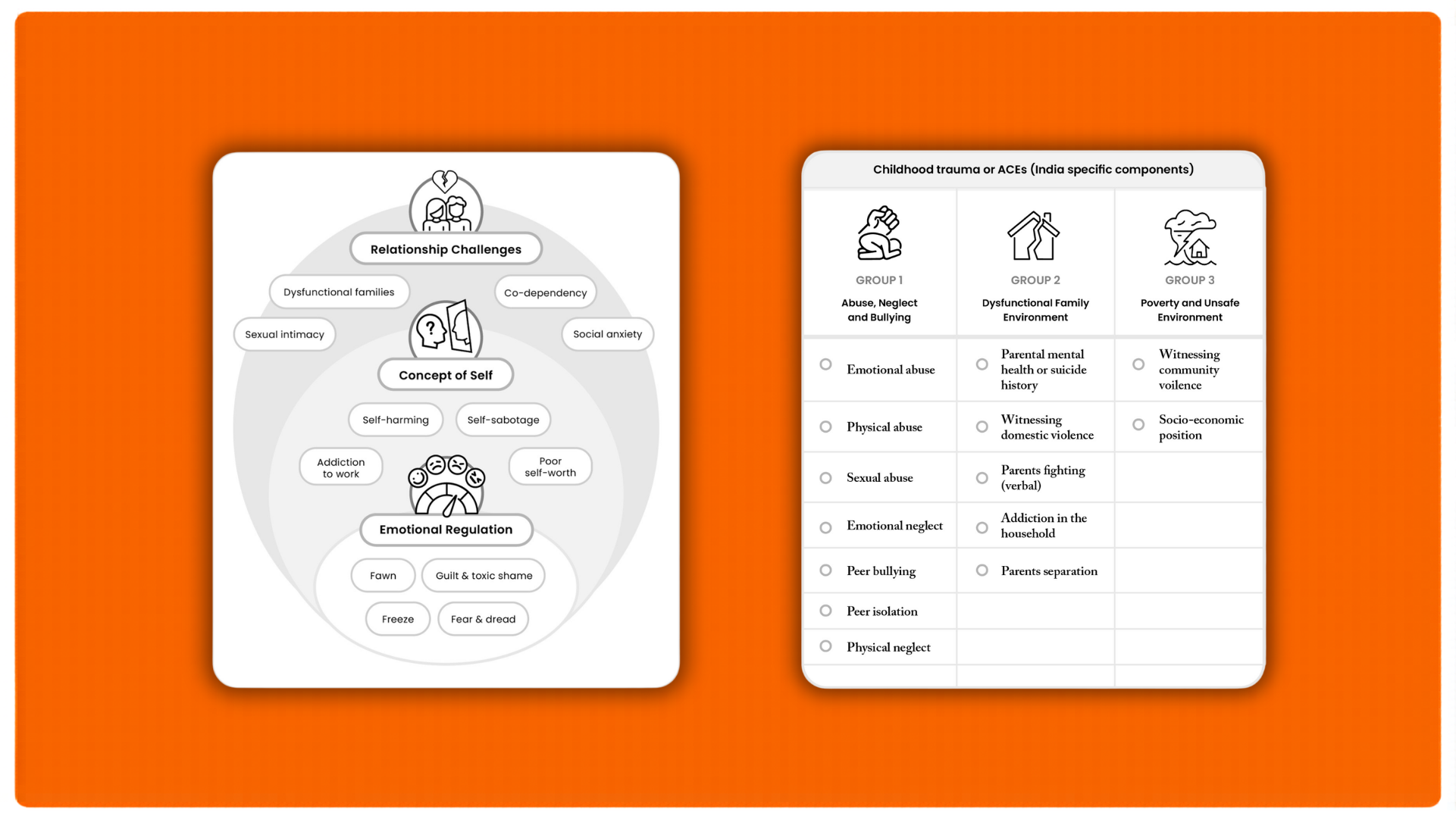
But across 3,000 childhood trauma assessments and 14 peer-reviewed studies at Wellness Space, we’ve also seen what gets masked beneath that success: the anxiety that arrives without warning. The relationships that keep repeating the same painful patterns. The exhaustion no sleep can fix. The quiet, persistent sense that something is fundamentally wrong with you.
Most people ask: What’s wrong with me? Our book asks a different question.
And that difference, we believe, is where healing begins.
Why the global ACE framework misses India
Adverse Childhood Experiences (ACEs), stressful events before age 18, are now firmly linked to adult anxiety, depression, PTSD, and even physical illness. But it was built in America in the 1980s. It doesn’t capture the emotional pressure of constant comparisons: Why can’t you be more like your cousin? It doesn’t account for joint families where a child has no privacy, no safe space, no language for what they’re feeling. It doesn’t measure parenting that equates love with obedience and strength with silence. And it ignores the verbal fights between parents who, in a culture of low divorce rates, force themselves to stay together.
You don’t need to prove your childhood was bad enough to deserve recovery. Many people dismiss their struggles because someone else had it worse. But trauma isn’t measured by comparison. It’s measured by impact.
Why time alone doesn’t heal trauma
‘It happened so long ago. Why is it still affecting me?’
Because trauma isn’t stored only in memory. It lives in the body, the nervous system, and what the Indian Knowledge System calls the Pancha Kosha, the five layers of being: Annamaya (body), Pranamaya (energy), Manomaya (mind), Vijnanamaya (intellect), and Anandamaya (the blissful core). Trauma may disrupt all five, surfacing as body tension, disordered breathing, distorted beliefs, low self-esteem and disconnection from inner peace.
This is why talking alone isn’t enough. Recovery must reach all five layers.
What’s inside the book
The book explores how childhood experiences affect adult mental health, introduces the Pancha Kosha framework as a lens to understand trauma, and offers evidence-based approaches to recovery, including breathwork, nervous system regulation, guided visualisation, and self-hypnosis. It also provides mental health professionals with clinical frameworks and tools developed through years of research and practice in India.
Who this is for
For anyone who has spent years quietly wondering what’s wrong with them. For parents repeating the patterns they promised they wouldn’t. For therapists whose academic training didn’t quite prepare them for real clinical complexity. For anyone told, ‘Everyone had a tough childhood — move on,’ and quietly knew that wasn’t the whole truth.
You don’t need to remember everything.
You don’t need to blame anyone.
You don’t need to prove your childhood was bad enough.
You only need the courage to ask a different question.
Not: What’s wrong with me?
But: What happened to me?
That’s where recovery begins.
What Happened to Me? vs What’s Wrong with Me?: Indian Perspectives on Childhood Trauma and Recovery by Dr Gunjan Y Trivedi, Dr Riri G Trivedi and Dr Hemalatha Ramani is published by Ebury Press on 22 June 2026.
Also by the authors: This Book Won’t Teach You Parenting: But It Will Make You a Better Parent — Dr Riri G Trivedi and Anagha Nagpal (Penguin Random House India, 2025).